


Letter to Bauchi State electorate
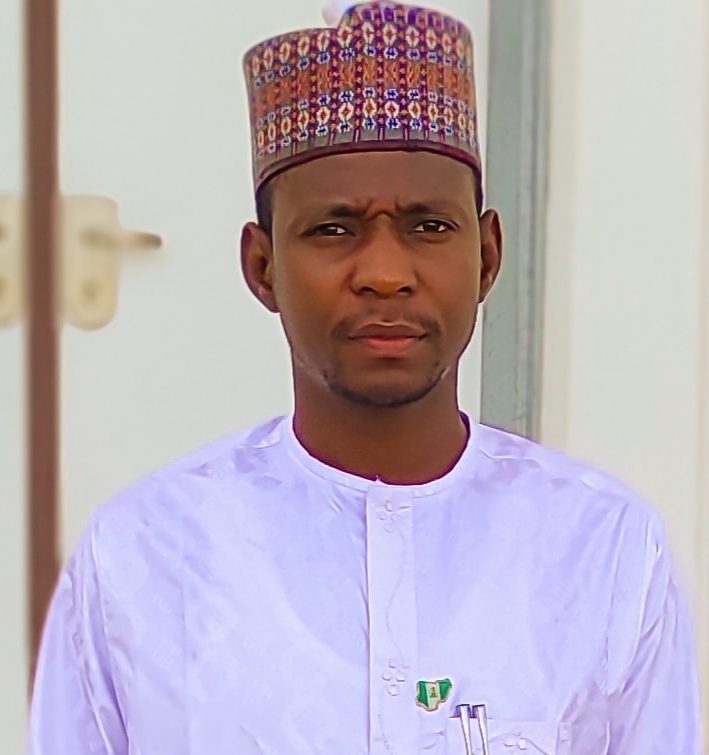
By Tajuddeen Ahmad Tijjani
All political parties’ primary elections have come and gone, leaving a slew of gladiators in the political arena plotting to sway the electorate into their camp to win the general elections.
From the return of democracy after a long military rule, Bauchi State had Adamu Mu’azu from 1999 to 2007. There was massive infrastructure in every nook and cranny of the state with little human development. However, many of these capital projects were concentrated in Bauchi, the state capital. When Isa Yuguda came on board from 2007 to 2015, he shifted to human development. Nevertheless, there was some infrastructure that would stand the test of time, like the Bauchi State University Gadau and the Abubakar Tafawa Balewa International Airport.
Indeed, there appears to be no better time when the good people of Bauchi State seek a governor who will serve them all than now. Certainly, there is a leadership vacuum regarding equal opportunities and the distribution of meagre resources. Not only that, I bet you, anything that leadership entails is comatose.
Nonetheless, there is still time for the current administration to make amends, and it is up to the people to decide their fate on who will take the mantle of leadership. As the election of 2023 approaches, who is the best candidate for the job?
What’s at stake is the ambiguity surrounding the payment of civil servants’ salaries. Unfortunately, no one on the state government payroll can be guaranteed that they will not be “deliberately omitted”. As a result, people have families under their control, and their only source of income is routinely squandered.
For instance, a credible report was that a particular ministry lodged their complaints to the state Accountant General. He bluntly told them it was beyond his power to make amends for the simple fact that the number one citizen is the architect of the lingering crisis. Shall we continue this way? It is left for the civil servants to seal their signatures if they are comfortable with the recent developments.
We’re not calling for people to vote based on primordial sentiments but rather to look for a competent hand who will never joke with workers and pensioners that have expended their energy on the development of Bauchi State. Yet, ironically, the end of their reward is to deny them their entitlements while the leadership is living flamboyantly with taxpayers’ money.
However, we will consider changing the narrative. The state is more significant than any individual to have a mindset of doing as he so wishes to the detriment of the larger society. Indeed, our people are waiting for the appropriate time to give him a dose of his own medicine.
Recall that Governor Muhammad Abdullahi Abubakar was unceremoniously voted out for the same offence that the current administration deliberately neglects or refuses to tackle.
There are insinuations that some power blocks or powerful forces are fighting the government of PDP in Bauchi. This fictitious or imaginary claim is far from the truth and can’t hold water. When a leader does the right thing, no one can stop or sabotage him. Therefore, I can boldly affirm that we are good at speaking the “language they understand”.
We hope that the good people of Bauchi will resolve to vote for a candidate who will treat all segments of the states as his constituency rather than focus on working for a single local government as if it were the only one that gave him votes. Even other sectors such as health and commerce are not receiving the attention they deserve. Thus, the internally generated revenue is not healthy, and our industries are left unattended. We need a governor who has the competence to address these issues head-on. The ball is in our court to take us out of the wounds or retrogress in the party of failure.
Tajuddeen Ahmad Tijjani writes from Galadima Mahmoud, Kasuwar Kaji, Azare, Bauchi state.
El-Rufa’i appoints Ashafa KASU acting VC
By Sumayyah Auwal Ishaq
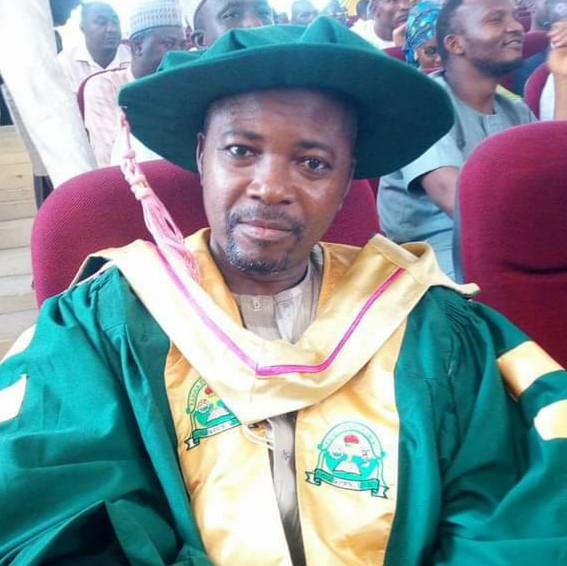
Governor Nasir Ahmad El-Rufa’i has approved the appointment of Professor Abdullahi Musa Ashafa as the new acting Vice-Chancellor, Kaduna State University.
Ashafa, a professor of diplomatic history and the immediate past Deputy Vice-Chancellor (Academic), was announced by the Kaduna State Commissioner for Education, Halima Lawal.
Before his appointment, Prof. Ashafa was Head of History Department, Dean, Faculty of Arts, Dean of the School of Postgraduate Studies and the immediate past Deputy Vice-Chancellor, Academic, Kaduna State University.
Ashafa served as Vice President, Historical Society of Nigeria, North West Zone. He is also a Research Fellow at the Nigerian Institute of International Affairs (NIIA).

Drug abuse and the future of Nigerian youth
By Usman Muhammad Salihu
The menace of drug abuse, spreading like a wildfire in our contemporary society, is gradually or has already become rampant among many members of our society, ranging from old, young and adult and at the same time men and women, rich and the poor.
Drug abuse is in essence, the misuse of drugs or taking them without doctor’s, physician’s or pharmacy’s directives for the purpose of pleasurable effects on the brain, especially by the youths.
The problem keeps on escalating to the extent that you hardly see a group of ten to fifteen youths without finding a member or two that engage themselves in drug abuse.
Nowadays, many people tend to misunderstand why or how some people become drug abusers to the extent that some people look at those addicts as people who lack proper upbringing and thereby ridiculing them instead of counselling them.
According to the National Institute of Health Espanol, as a person continues to use drugs, the brain adapts by reducing the ability of cells in the reward circuit to respond to it. This reduces the high nature which the person feels compared to the high mood they felt when first taking the drug — an effect known as tolerance. They might take more of the drug to try and achieve the same high mood. These brain adaptations often lead to the person becoming less and less able to derive pleasure from other things they once enjoyed, like food, sex or other social activities. These changes are what lead to drug addiction.
As an addict continues taking drugs improperly, the brain adapts by reducing the number of ability cells in the brain circuit that responds. This reduces the high one enjoys when taking the drugs for the first time and thereby increases the dosage for the enjoyment of the first high. Long-term drug usage causes changes in the brain circuit as well as affects its functions.
Despite that, no one may be able to predict the exact causes of drug abuse and addiction in our society, especially among the youth but rather common factors such as the environment, which includes friends, family, peer pressure, and economic status among others.
Other contributing factors are parental guidance, early exposure to drugs, physical abuse, stress, age, gender inequality, ethnicity, genes and mental disorder, all of these contribute immensely to the phenomenon.
The consequences of drug abuse on Nigerian youth, if not properly curtailed, may result in so many social vices as we witness today. These include; poor academic performance, mental disorder, increasing number of out of school, financial instability, sexual abuse, diseases, difficulties in decision making, depression, anxiety and rampant deaths. Others are troubled relationships, increased crime rate in society, hopeless feelings, etc.
Despite the above-mentioned effects, many youths continue engaging themselves in drug abuse how would one measure the future of our youths in Nigeria? Doom indeed!
Drug abuse is a disease whose quitting takes more than good intentions. It changes the thinking capacity of humans and as such makes quitting it very hard even for those intending to.
But the good news is that drug abuse can be prevented and the best way of resisting and preventing the drug abuse phenomenon in our society is through the creation of awareness of the dangers of the menace. By informing the public about the effects of drug abuse, especially among our youths who are the leaders of tomorrow, the problem will be drastically reduced if not eradicated entirely when teachers, parents, health care providers, media personnel and community leaders join hands together in educating the populace.
Making goodwill intention of resisting drug abuse by an addict, and also seeking God’s intervention is indeed a greater move of bringing an end to the problem.
Usman Muhammad Salihu is an HND 1 student of Mass Communication, Abubakar Tatari Ali Polytechnic Bauchi State. He can be reached via muhammadu5363@gmail.com.

Nigeria records 252 new cases of COVID-19 in one week
By Ahmad Deedat Zakari
Nigeria Centre for Disease Control, NCDC, has announced that 256 new people have been diagnosed with the deadly Coronavirus in the country.
The NCDC disclosed 52 new cases of the virus on their verified Facebook page on Tuesday, June 14, 2022. This brought the total number of confirmed cases within one week to 256.
The 52 new cases were reported in Lagos, Rivers, FCT and Delta State. While Lagos tops the chart of states with most cases, others like Imo and Kano featured prominently in the reported diagnosis.
According to the NCDC report, the 52 new patients made the total number of people confirmed to be affected with the virus to 256 404, while the total number of discharged patients was put at 250,137. The number of people who were confirmed to have died due to the virus was put at 3,144. This made the fatality rate about 3% of the total confirmed cases.
However, many Nigerians do not believe in the existence of Coronavirus, and this poses a significant challenge to the administration of vaccines. Many others believe in its existence but are sceptical of the situation being used as a conduit pipe for government officials to divert public funds.
2023: The imperative of a Muslim-Muslim ticket for APC
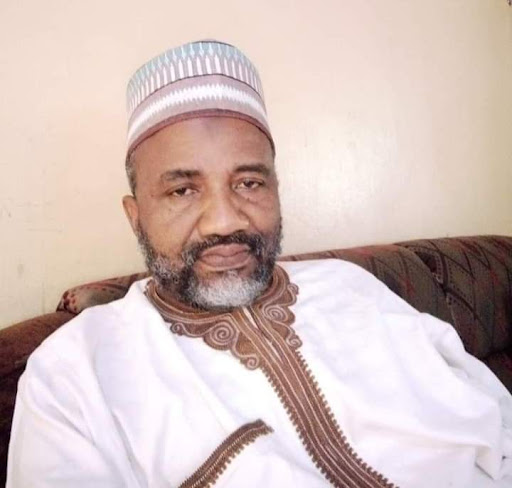
By Prof. Abdussamad Umar Jibia
The All Progressive Congress (APC) is undoubtedly a party that brings together some of the most outstanding politicians in Nigeria. However, what makes the APC most attractive is the fact that it is in power. It seized this power from the People’s Democratic Party (PDP), a party that ruled Nigeria for 16 years and was also adjudged a failure by the majority of Nigerians. That is why many people do not see PDP as the solution despite all the shortcomings of the APC-led government and the economic and security challenges confronting Nigerians.
One manifestation of the interest Nigerians have in the APC is the occupation of social media discussions, radio and television programmes and interpersonal group discussions by the APC Presidential ticket. Last week, Asiwaju Bola Ahmad Tinubu, a devout Muslim from Lagos, won the APC Presidential primary election with a landslide to qualify as the party flag bearer in the 2023 presidential election. As is the tradition, Alhaji Tinubu, a southerner, is expected to pick a Northerner as his running mate.
But there is also another tradition. Christian flagbearers usually pick Muslim running mates, and Muslim flagbearers choose Christian running mates. The examples are many. In fact, since Nigeria’s return to party politics, that has been the case. First it was Obasanjo/Atiku, then Yaradua/Jonathan followed by Jonathan/Sambo and now Buhari/Osinbajo. But in all these examples, the Muslims are Northerners, and the Christians are southerners. There is no problem since it can be said with a reasonable degree of accuracy that Christians are the majority in the South and a negligible minority in the North.
Now, should Asiwaju pick a Northern Nigerian Christian as his running mate? I listened to many arguments. The Governor of Kaduna State, Mallam Nasiru El-Rufai, for example, said religion does not matter in the choice of a running mate. What matters, according to him, is competence. This argument is faulty because democracy is about the choice of the majority, a choice characteristically influenced by many factors, including ethnicity, religion, gratifications, etc., in our country. If it is just about merit, candidates would be selected based on their performance in a standard examination on governance organized by my colleagues in Political Sciences Department.
The position of the Christian Association of Nigeria (CAN) is the most uncouth and uncivilized. CAN thinks they have a monopoly for violence and always use threats instead of valid logic. Suppose their position was backed by sound logic. In that case, all they have to do is present their arguments to Nigerians including Christians and non-Christians like every other individual and group does. The rest shall be for Nigerians to judge. Again, in politics, threat is the language of someone who has no one to influence, and it is obvious that peace-loving Nigerian Christians have lost faith in CAN and are no longer controlled by its rantings.
The fact is, any step taken by a political party preparing for an election is carefully handled to attract majority votes from the electorates. This includes the choice of its flagbearer and their running mate, its manifesto, which, unfortunately, most Nigerian voters do not read, its campaign strategy, etc.
Now, who are the majority voters in Northern Nigeria and what is their relationship with the minority? What would happen to the chances of APC if this majority realizes that the party is succumbing to threats like that of CAN to select its running mate? Is it by force to vote for the ruling party after all? Can’t they look and vote for an alternative?
Religion was not captured in the 2006 census. Still, we can have a good idea of the Muslim: Christian ratio in the North by considering the ratio of elected politicians in the North. Of the 19 elected governors in the North, 16 are Muslims representing 84.2 %, while three are Christians representing 15.8 % in the North and 8 % nationwide. Of the 58 senators from the North, nine are Christians representing 15.5 % in the North and 9 % in the entire country. In the North Central geopolitical zones, there are more Muslims than Christians. Four of the North Central elected governors are Muslims, with the other two being Christians.
These figures mean Northern Christians are a tiny minority compared to their Northern Muslim compatriots. Their number is even smaller when the country is considered as a whole and much smaller if we remember that most Christians in the North would not vote for APC regardless of its flagbearer or his running mate. You may wish to look at the voting pattern of Benue, Taraba and Southern Kaduna.
Over the years, activities of groups like CAN have set the Northern Christian minority against the Muslim majority. It is so bad that in any Northern Nigerian community where Christians are the majority, the story is about hate and violence against Muslims. The examples are many.
For example, as I am writing this piece, there is no single Muslim left in Tafawa Balewa, the hometown of the first Nigerian prime minister. The few Muslims who have not been killed have migrated to Bauchi and other places. Incidentally, that is the constituency of Yakubu Dogara, one of the Northern Christians being mentioned in the selection of a running mate for the APC flagbearer. In the event Dogara becomes the running mate of Asiwaju, the question every Northern Nigerian Muslim would ask is, is it compulsory for me to vote for my killer?
Other examples of Christian communities known for their violence against Muslims are Plateau State and Southern Kaduna. Over the last several decades, whole Muslim communities have been attacked and nearly wiped out in these places. Yet, when commissions of enquiry are set up, the grievances of the Northern Christians have always been that emirs dominate them, their great grandparents were enslaved, they are not given opportunities, etc.
Muslims have made many overtures in states where they have the majority in order to take Christians along and make them feel at home. An example of this is Kaduna state. It has always been ensured that the Deputy Governor of Kaduna is a Christian even though a Muslim-Muslim ticket can win with a landslide, as demonstrated in 2019. In their efforts to give Christians maximum opportunity, Muslim politicians were once suppressed to allow a Christian to become the governor. Where in the whole of the Christian world has this ever happened?
Moreover, chiefdoms were created for them by the Ahmed Makarfi administration to address Christians’ complaints of being traditionally ruled by emirs. After all these overtures, the same people killed over 1000 Muslims on one day in Zonkwa. Those who are saying that appointing a Christian as the running mate of Asiwaju would bring Christians and Muslims closer are probably not aware of this.
Compare the case of Kaduna with that of Plateau. Plateau has a population of Muslims equivalent to the population of Christians in Kaduna State. Yet, a Muslim has never been a Deputy Governor, much less a Governor. Attacks on Muslim communities in Plateau and Southern Kaduna only ceased because of the Fulani herders who, unlike the Hausa, would always take revenge when attacked. When the intolerant Christians realized it was a war they could not win, they had to declare peace.
That does not mean Muslim travellers are not intercepted in Plateau and massacred. We are very much aware of the murder of General Idris Alkali by Lafendeg non-Muslims. Yet, somehow, all the suspects arrested have been released due to the influence of the Governor, Simon Bako Lalong. We saw how he was running up and down between the state house and the Defence Headquarters to ensure that the culprits were not punished. Today, not even a fly of Plateau state has been convicted due to the murder of General Idris, a high-profile Muslim Army General.
Those pushing for Lalong to become Asiwaju’s running mate are probably ignorant of this. Suppose Lalong, who is only a Governor can successfully follow up to ensure that murderers of Muslims are not punished. What would happen if, tomorrow, he sits as the Acting President with full control of the country’s security apparatus and a similar thing happens?
Now take Babachir Lawal and the more charismatic Boss Mustapha. Both are from Adamawa State and were appointed by President Muhammadu Buhari only because he is Buhari, the darling of Northerners. The only question I have here is whether they have the political strength to defeat Atiku in their state. Certainly no. Outside Adamawa, other rules apply.
This write-up is not meant to malign any politician. On the contrary, all the Christian politicians I have mentioned above have APC dear to their hearts and wouldn’t like to see it lose at the polls. That is also the intention here.
Northern Nigerian Christians have not adequately prepared themselves for elections at the National level due to unnecessary inferiority complex and hate towards their Muslim neighbours. Of course, there are outstanding ones among them as no rule exists without exception. However, the collective behaviour of a community is used to assess people anywhere.
For now, Northern Christians may wish to set their house in order and plan for the future. Elections are not won by threats but by careful planning and building bridges.
Professor Abdussamad Jibia can be contacted via aujibia@gmail.com.
Mob lynches bike snatcher in Bauchi community
By Muhammad Sabiu
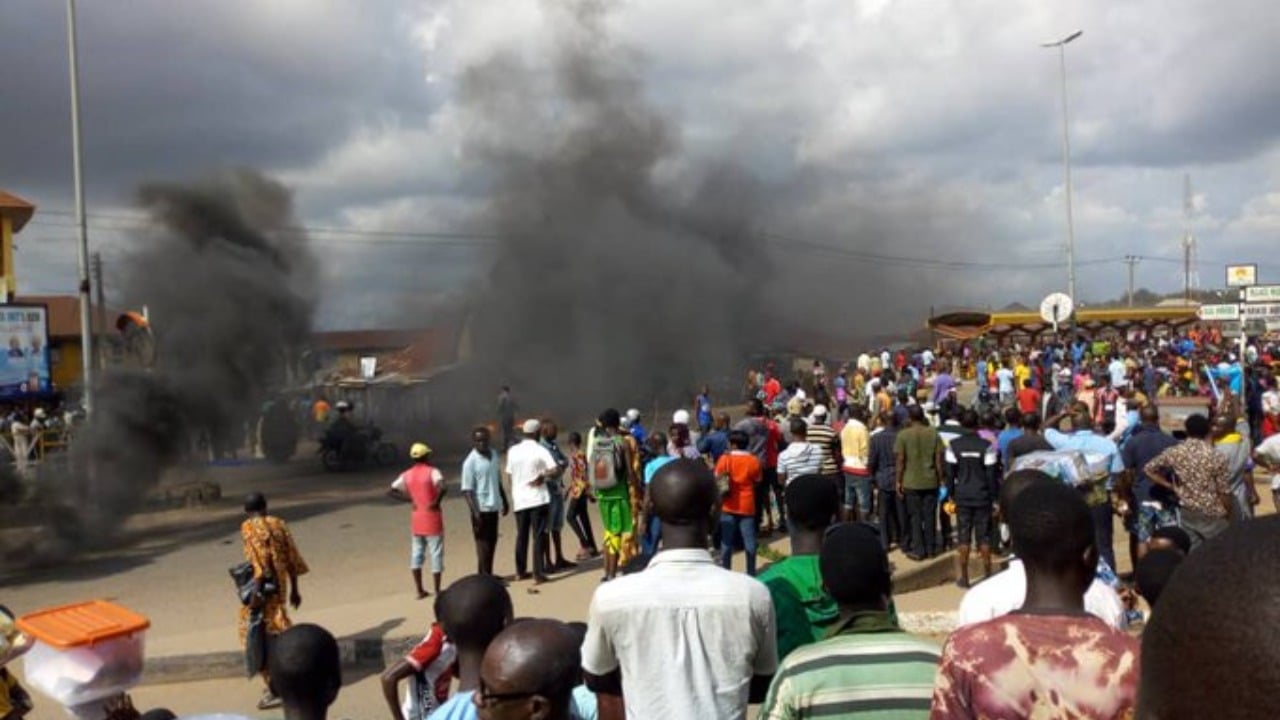
Reports reaching The Daily Reality have indicated an angry mob in Chinade town, Bauchi State’s Katagum Local Government Area, set fire to a suspected motorcycle thief.
According to a source in Chinade, the crime occurred on Sunday, and the suspect took the motorcycle from Hardawa Market in the state’s Misau LGA.
He said the suspect fled with the motorcycle but was apprehended and beaten to a pulp before being set ablaze in Chinade town.
Ahmed Wakil, a Superintendent of Police for the state police, confirmed the homicide in a statement and stated the investigation was still on.
“The Commissioner of Police, Bauchi State Command, Umar Mamman Sanda, has ordered a thorough investigation into the barbaric and dehumanising act of jungle justice meted out to the suspect by some irate youths in Chinade.
“While reacting to the ugly incident, the CP frowned on the action of the irate youths, who, instead of taking the suspect to the police for proper investigation and prosecution, mobbed him to death for allegedly stealing a motorcycle without any recourse to the law,” the statement of the police commissioner read.
Communities in Bauchi State State have for over a long time been badly affected by the activities of motorcycle thieves, who, in many cases, would gruesomely murder the owner of the bike before snatching it.
Considering what reports have indicated, the Bauchi metropolis could be the most affected place in the state with respect to such criminal acts.

SPECIAL REPORT: Arewa women and cyberbullying
By Uzair Adam Imam
Cyberbullying against women is one of the lingering issues women face across social media spaces over time.
The menacing issue, however, has now escalated to become a global problem affecting women emotionally and chasing them away from online spaces.
The Daily Reality interviewed some women about the hazard. They recounted that the kind of messages they received from men were disgusting.
The women decried that most of these disgusting messages often demand nude pictures or videos and propose love, irrespective of one’s marital status.
This issue is most common on Twitter, Facebook, Instagram and WhatsApp, among other social media platforms.
Zahra Madaki, one of the women interviewed, complained that social media is never an exciting place for women to go as cyberbullying exacerbates daily.
She stated, “Social media platforms such as Facebook and Instagram are very annoying nowadays. That’s why I decided to stop using them.
“Everyone is after love affairs. So, anyone will keep proposing for love as they see you online. It’s so annoying,” Madaki complained.
On request for sex, pornography
According to Aisha Jibril, not her real name, women are victims of all naughty things on social media platforms today.
She complained that some men request sex, and nude pictures or videos, as you begin to chat with them. The development, she said, distresses many women.
She stated, “there was a time someone on Facebook asked me if I ever watched pornography. I was shocked because, at that time, I didn’t know the meaning of the word.
“I had to ask my elder sister what the meaning of the word was. Before I could respond to his earlier message, this man sent me a porn movie.
“I shivered with fear that my phone nearly fell on the floor. I was terrified. I had never before that time had such an experience. I hardly slept that night,” Aisha said.
Another source, Khadijat Muhammad Bah, also decried the menace, blaming men for being irresponsible in their relations with girls.
Bah said, “we ladies are seeing and reading all kinds of rubbish. Some men out there send nude pictures and always request nude photos.
“Some would insult and curse because you refuse to give them your contact. Some of them just want sex.
“One day, I posted my picture on my story, and one guy said, ‘wow, those lips are for me’. And that was one reason that always stopped me from putting my picture on my story,” she lamented.
According to a source who preferred not to be named, her sister once met someone on Facebook. Their relationship started as a friendship before the guy finally asked for sex, which later led to their breakup.
She said, “the guy kept pleading with her to come to his apartment. But she refused. We were surprised at how shameless this guy was.”
Someone keeps on disturbing me – Housewife
A housewife who spoke to The Daily Reality complained that someone kept disturbing her on social media.
The woman said she told the guy to stop chatting with her because she was married, but the guy turned a blind eye.
She said, “This man started adding me to some irresponsible dating groups on WhatsApp. But, I thank God that through the help of my brother, we solved the issue and blocked the son of bitch afterwards.”
Another housewife complained that some men that chatted her up used to send her some porn photos, but she deleted them instantly.
She added, “these guys chat and comment on our posts anyhow. They tend to forget about our marital status. They forget that our spouses and relatives also see our online activity and would be sad to see such naughty and irresponsible comments under our posts.
Cyberbullying: An unfortunate reality in dear need of mitigation
Dr Rukayya Aliyu, a senior lecturer at Bayero University, Kano, urged the technology firms that build these sites to act and make online spaces safe for women.
Aliyu described the menace of cyberbullying as an “unfortunate incidence” in dire need of mitigation.
She stated, “Cyberbullying is an unfortunate incidence, but unfortunately, it is challenging to overcome because it happens on social media platforms, which are free and uncensored.
“However, it can be managed to some extent with measures from the sites themselves, which can only be minimal. The reality is regulation by the government might not be effective considering the lapses in regulating traditional media, to which the government has better control and access.
Women ought to be responsible and mindful of their online activity
Dr Rukayya also urged women to be mindful of what they post on social media platforms to avoid insults and indecent comments.
She said, “on my take as a woman, it’s displeasing, but then fellow women should understand that most abuses come as reactions to our post and engagement with the platforms. Therefore, we should be responsible in our dealings and always be conscious that whatever goes on on any internet-connected platform is no longer personal. People have a right to their opinions.
“If we don’t want to be abused or bullied, we ought to be responsible and mindful of our digital or cyber identities. However, we shouldn’t rule out that no matter how ‘decent’ or responsible our social engagements are, there are people who will still castigate, blackmail, abuse and bully us.
“So before engaging, we ought to be conscious of the implications and be ready to surmount them through confidence and steadfastness in what we do,” Dr Rukayya added.
Three pieces of advice to my dear ASUU members
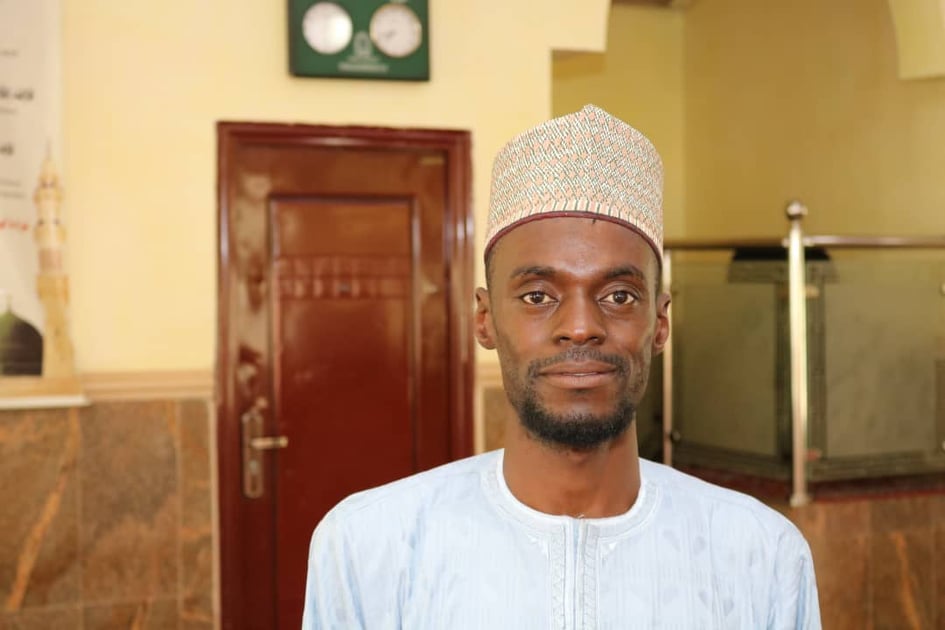
By Muhammad Sulaiman Abdullahi, PhD
Hello, my dear comrade friends! How are you and your families? I hope we are forging and managing well. I know we are well, but not very well. This is because I know that there are so many challenges in and out there. I know most of us are currently swimming and still smiling in heavy debts, ranging from debts of Maggi, Omo, Bread, Garri, etc. Even the ‘Yan garuwa (water vendors) owe many among us a considerable amount of money due to the brutal nature of our looters. This is not to talk about heavy loans accrued due to a lack of salaries for about four months.
The Maikantis (petty traders) selling raw rice, beans and other groceries no longer want to see us by their doors. Some of us have already forgotten toothpaste and have opted for chewing sticks now to remain clean. Our children have been sent out of school due to non-payment of school fees. Landlords have knocked and banged on the doors of many; we pacified them, and some of them reason with us.
Some of us now live without water and light due to heavy bills accrued. You keep counting the ordeals. I remember how during the whole of Ramadan, with the scorching sun and harsh temperature, lecturers languished with dry pockets and no salaries. Many lecturers didn’t have a chance to sew new Sallah (Eid) dresses for their kids, not even for themselves. Yet, another Sallah is approaching without any remorse or sense from this lousy government and its handlers.
Before I talk about my three solid pieces of advice to ASUU, let me digress and talk a little about and to those who don’t understand ASUU’s struggle. I don’t in any way exonerate ASUU of all blames and problems. No way! We have our defects. Only the Almighty Allah is perfect.
However, in ASUU’s struggle, ASUU is 80 per cent right. If you talk about the decay within the ranks of the university administration and duties, ASUU also fights that. And it is the sole responsibility of the government to put eyes on the universities and punish anyone found wanting and guilty of any offence. Sex for marks, not attending lectures on time, lack of coordination, dedication and supervision, extorting students, etc., to punish and stop all these and more lie in the hands of sensible governments. I know that it is said that these bad attitudes happen in Nigerian universities, but sometimes they are overblown out of proportion.
I have been in the university community for nearly 20 years, engaging with my teachers and, later, my students. Still, I don’t know a single lecturer in my university involved in such indecent acts and is also known without getting punished. In other words, universities don’t condone such wrongdoings. Also, this is not ASUU’s direct responsibility, but rather, it lies in the hands of the university management and the government.
Our government doesn’t punish anyone, which is why bad people do as they wish everywhere, in the military, the police, lawyers, carpenters, bandits and all. So lack of commitment and corruption in whichever cadre is not ASUU’s fault, but rather, the government. Our governments rarely punish, and when it does, it looks selective and sometimes biased.
The government is so powerful that, if it is sincere, ASUU or anyone cannot shut down a single university, just like that – not even to talk of all universities – for one week without the government taking drastic action and winning over anyone! But due to the government’s insincerity, this is ASUU. So here is the whole country’s population – the lecturers, their wives, children and friends, the students, their parents, children and families, Nigerians and all their well-wishers – all in trouble, but the government doesn’t care.
With all the troubles and disputes in their recent party primary elections, North/South and whatever, they managed, brainstormed, came together, and brought a solution in 2 days. But, of course, this is for their selfish agenda, huh? So anyway, below are my three candid and sincere pieces of advice for ASUU and all.
First, ASUU members are suffering, but ASUU should NOT call off its strike until it reaches a coherent, logical conclusion. Yes! We are suffering, and we need the strike to the end. But we don’t want a situation where a strike can be called off today, and it comes back in 7 months to come, or even less. Let’s push things to the end. I will even advise the government to agree that no strike can be implemented in the next ten years if anything goes as practically implemented. I don’t support any agreement again.
I never heard of NNPC, CBN or the House of Representatives going on strike! This is because all their entitlements, salaries, allowances and more are paid on time. And they receive more than all Nigerian universities receive, with a quarter of what universities do. A kind of monkey dey work, but baboons chop the money. So they have money more than they need. So, ASUU should not call off the strike until everything is settled.
Second, ASUU should change its style concerning research works. Many civilians out there don’t know that apart from class teachings, university lecturers engage in what is called research. Hence, some people feel we are not entitled to our salaries during strikes. And in reality, the impact of our collective research output is very minimal. Some people don’t even know that we do research, and some of us don’t even do any research at all.
To sustain our research line, let us allow the research activities to continue at full capacity. Here I mean, students writing their research (Undergrads, Masters and PhDs) should be allowed to consult their lecturers online or via any other medium possible. Someone may ask about data and other internet facilities. My answer to such a ridiculous question is; how do you read this write-up? Don’t you have a WhatsApp, Facebook or go online? This is all to maintain and sustain our research inputs and keep going. We shouldn’t allow our brains to rust completely. This chance should be conditional, situational and only if a lecturer has a chance to.
Third and finally, ASUU should continue the strike until things are resolved.
Thank you
Muhammad Sulaiman Abdullahi
Bayero University, Kano, Nigeria.
National electricity grid collapse puts Nigeria in darkness
By Muhammad Sabiu
National electricity grid collapse puts Nigeria in darkness Nigeria’s shaky national energy grid has crashed once more, leaving numerous towns in the dark, including the federal capital Abuja.
Late Sunday, power companies stated that the outage began shortly before 7 p.m.It’s the sixth reported collapse in 2022, while some speculate that the number could be higher.
The administration attributes the recurring breakdowns to inadequate management and a lack of gas supplies.
On Sunday, Jos Electricity Distribution Plc sent out a Facebook message to its clients informing them of the power outage.
The head of corporate communication, Friday Elijah, stated that “The Management of Jos Electricity Distribution Company Plc wishes to inform the general public that the current outage being witnessed is a result of system collapse.
“We hope to restore supply as soon as supply is restored,” he added.

Justin Bieber suffers from face paralysis
According to the US Magazine, Justin Bieber got real about his recent health issues, which have left half of his face paralyzed — and made him pause his tour. Bieber briefed his fans on the issue and informed them that they shouldn’t worry, he would be telling them more about the situation.
“I love you guys and keep me in your prayers,” the 28-year-old musician captioned an Instagram video on Friday, June 10, asking his fans to “please watch.”
The “Yummy” crooner, who has been battling Lyme disease for years, explained that he wanted to update his fans on “what’s been going on” with his body recently, pointing out that people can “probably see from [his] face” that something is not normal.
“I have this syndrome called Ramsay Hunt syndrome. It is from this virus that attacks the nerve in my ear and my facial nerves and has caused my face to have paralysis,” Bieber said, showing how one side of his face is stationary. “As you can see this eye is not blinking. I can’t smile on this side of my face. This nostril will not move.”
The Grammy winner addressed fans who may be “frustrated by my cancellations of my next shows,” telling them, “I’m just physically, not capable of doing them.”

Bieber continued: “This is pretty serious as you can see. I wish this wasn’t the case. But obviously, my body is telling me I need to slow down.”
The Canadian singer, who is currently on his Justice World Tour, noted that he will be using his time off to “rest and relax and get back to 100 per cent so I can do what I was born to do.” He added: “I gotta go get my rest on so that I can get my face back to where it’s supposed to be. I love you guys, thanks for being patient with me.”
The “Peaches” crooner insisted he’s “going to get better.” Meanwhile, Bieber has started to do facial exercises to help his recovery. “I trust God. I trust that this is all for a reason,” he concluded. “Not sure what that is right now, but in the meantime, I’m going [to] rest.”
Bieber’s health scare came three months after his wife, Hailey Bieber (née Baldwin), was sent to the hospital in March following a blood clot on her brain. The 25-year-old model was “pretty much back to normal” when she arrived at the emergency room, but at the time felt like she was having a mini-stroke, according to a YouTube video she shared in April.
Hailey was later diagnosed with a Grade 5 PFO — Patent Foramen Ovale, which is a flaplike opening in the heart per a Mayo Clinic definition. Doctors recommended closing the hole in surgery, and she agreed to the procedure.
“It went very smoothly and I’m recovering really well,” she explained in the April video. “Thank you to everyone who has reached out with well wishes and concern, and for all the support and love.”
Source: www.usmagazine.com