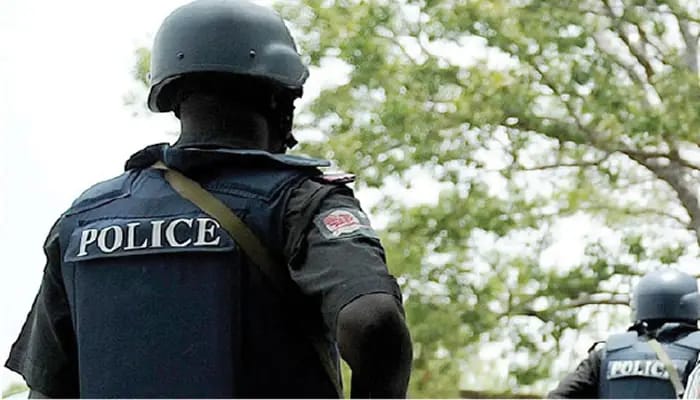
Nigeria Police Force

Kano Police Return Recovered Car, Motorcycle to Owners

By Muhammad Abubakar

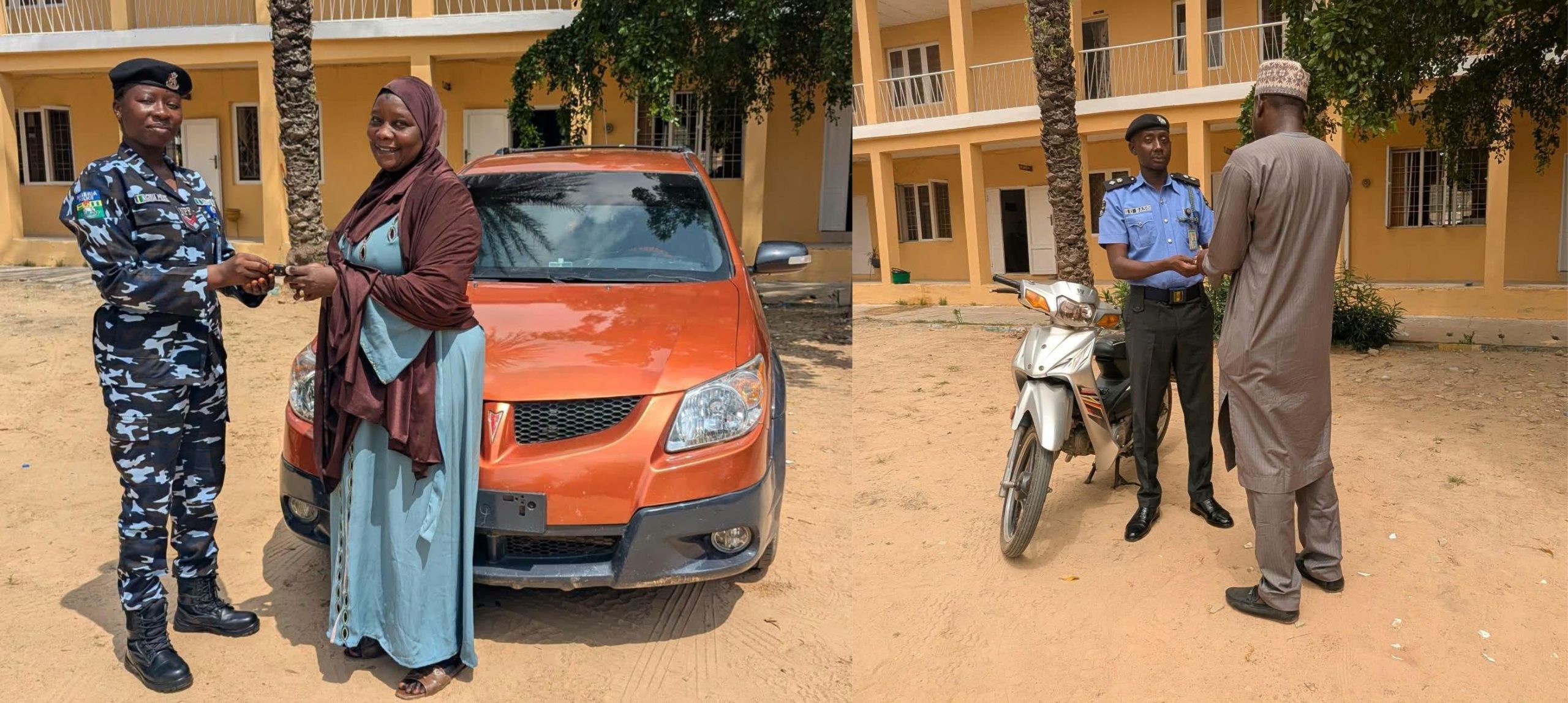
The Kano State Police Command has handed over a recovered orange Vibe motor vehicle and an ash-coloured Haojue motorcycle to their rightful owners.

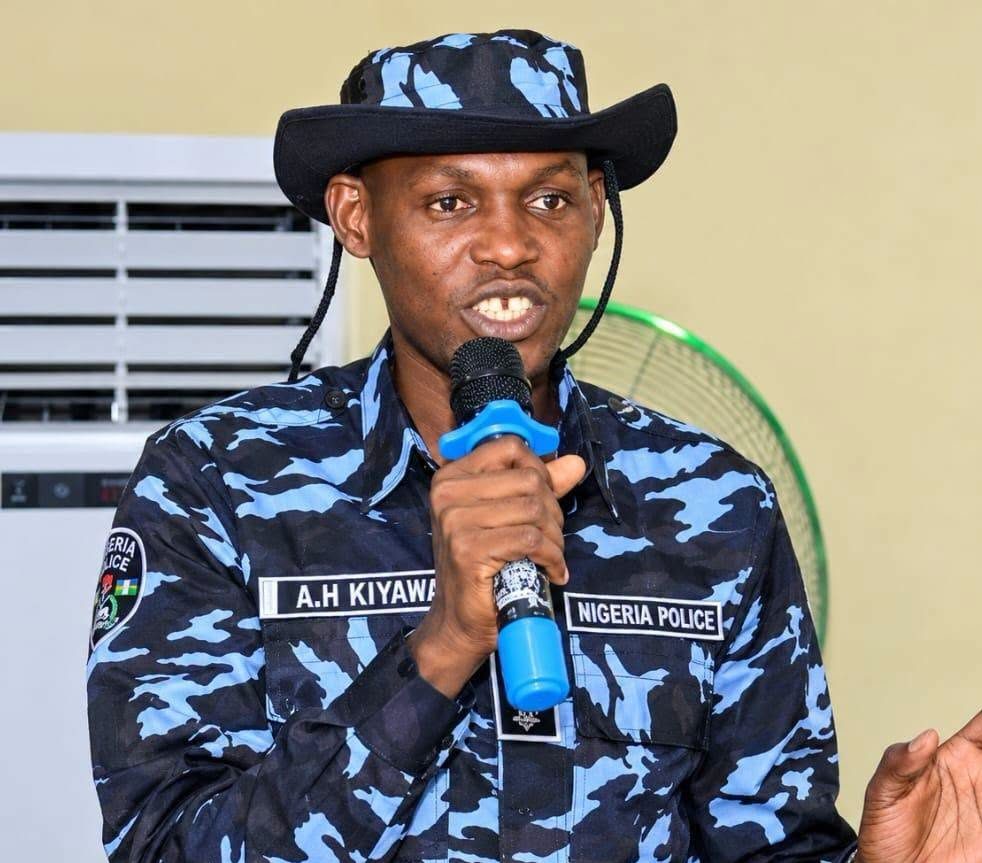
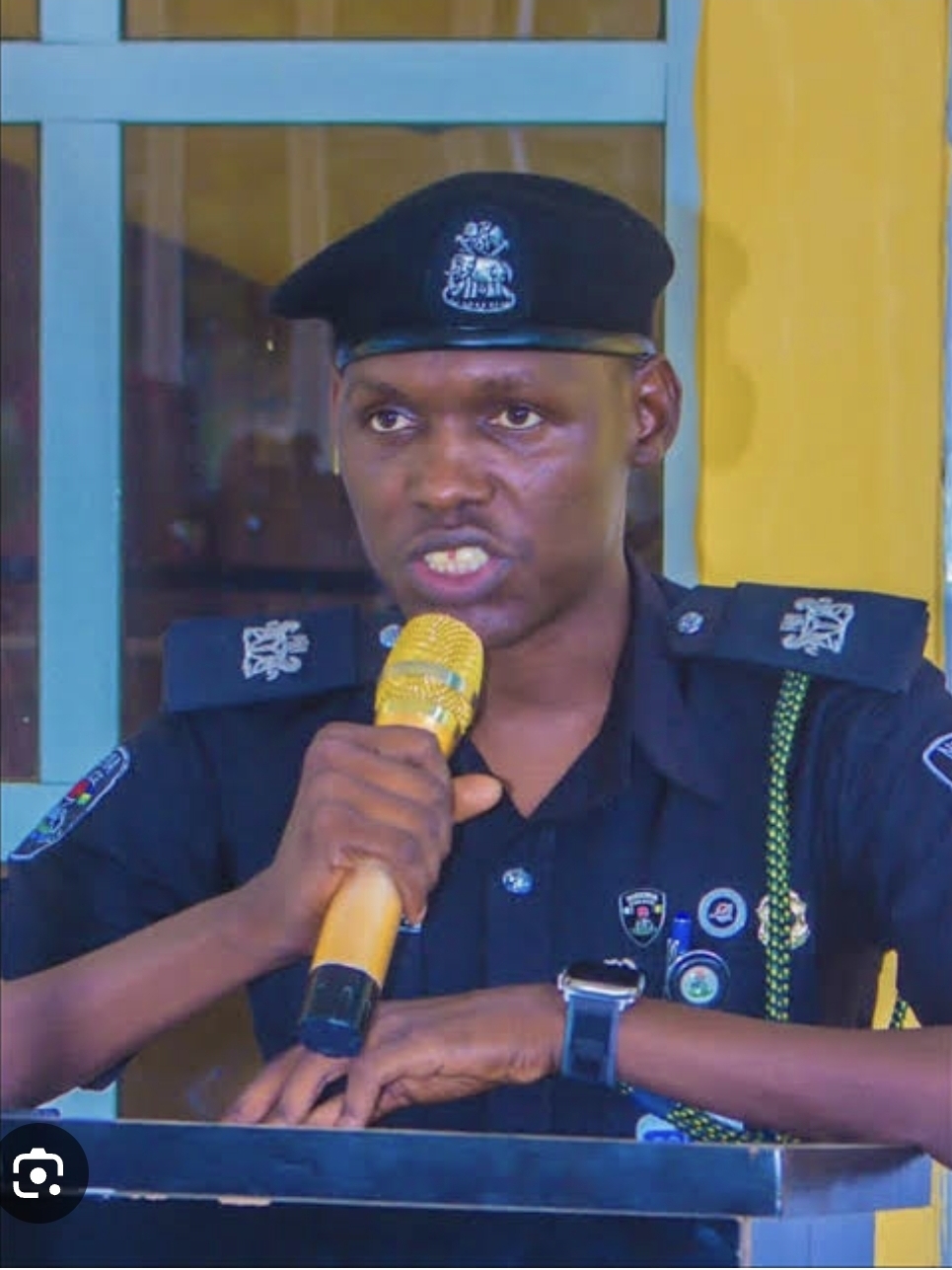
The command disclosed this in a press release issued by its Police Public Relations Officer, CSP Abdullahi Haruna Kiyawa, on Friday.

According to the statement, the two properties were recovered through intelligence-led operations and handed over to their owners at the command headquarters in Bompai, Kano, after the verification of ownership documents and completion of necessary procedures.

The beneficiaries expressed gratitude to the police for recovering their properties, praising the command for its professionalism, commitment to justice and prompt response.

The Commissioner of Police, Ibrahim Adamu Bakori, congratulated the owners and said the recoveries aligned with the policing vision of the Inspector-General of Police, Olatunji Rilwan Disu.

The vision, the statement said, emphasises the protection of lives and property, the restoration of stolen items to victims and the promotion of public trust through transparent and accountable service.

Bakori reaffirmed the command’s commitment to ensuring the safety and security of Kano State, adding that all recovered stolen properties would be returned to their legitimate owners after due verification.

The command urged members of the public seeking further information to contact the investigating police officer on 08140081608 or visit the office of the Police Public Relations Officer at the Bompai Police Headquarters.

Kano Police Reaffirm Ban on Durbar, Horse-Riding Activities

By Uzair Adam

The Kano State Police Command has reiterated its enforcement of the ban on Durbar, horse-riding, and other animal-riding activities across the state, warning individuals, institutions, and organisations against violating the directive.

The command said the Kano State Government, in consultation with relevant security agencies, kept the restriction in force as part of measures to preserve public peace and maintain security across the state.

Commissioner of Police, Kano State Command, CP Ibrahim Adamu Bakori, said this on Friday, October 2, 2026, during a joint security press briefing at the Bompai Police Headquarters in Kano.

Bakori said security agencies had received reports of possible breaches of the directive, stressing that the security concerns that led to the ban remained unresolved.

“The Kano State Police Command, in conjunction with relevant security agencies in the state, hereby reiterates that these executive security directives regarding the ban on Durbar/horse-riding activities are still in force and binding on all persons in the state, irrespective of status or position,” he said.

The latest directive comes amid renewed controversy over horse-riding activities involving supporters of Kano’s two rival emirate camps.

The state government imposed the restriction after a public procession by the 15th Emir of Kano, Aminu Ado Bayero, on September 27, citing security concerns and the risk of confrontation between supporters of rival camps.

However, on Thursday, October 1, Emir Muhammadu Sanusi II rode on horseback to the Sani Abacha Stadium in Kano to attend the Independence Anniversary celebration, despite the government’s ban on horse-riding.

Horse-riding has traditionally been associated with Kano’s Durbar culture. However, authorities have previously imposed restrictions due to concerns about indiscriminate riding in public places.

In 2020, the Kano Emirate Council announced a ban on indiscriminate horse-riding and unofficial Durbar activities within the metropolis, citing reports of injuries, deaths, property damage and alleged criminal activities involving some riders.

Speaking on the current security situation, Bakori said law enforcement and security agencies’ primary responsibility was to maintain public peace, safety, and order.

He stressed that the authorities would not allow activities capable of undermining public safety, adding that security agencies had agreed on additional measures to ensure proper coordination and coverage.

“For the avoidance of doubt, in order to strengthen security coordination and to ensure proper security coverage, this Joint Security Meeting has resolved” that any person, institution or organisation seeking to undertake any form of Durbar or horse/animal-riding activity in a public place must give at least 72 hours’ prior written notice to the Kano State Police Command.

He explained that the notice must be submitted through the Office of the Commissioner of Police to enable security agencies to conduct the necessary security assessment and make appropriate arrangements for public safety and order.

“All concerned are therefore urged to comply strictly with all lawful security directives and to cooperate with the security agencies,” Bakori said.

The Commissioner assured residents that law enforcement and security agencies remained united and committed to enforcing the law and safeguarding public peace and order across Kano State.

He added that the directive applied to everyone in the state, irrespective of status or position.

MOB JUSTICE: When Crowd Becomes Jury, Judge and Executioner  

‎By Fatih Lawal-Garu  

‎Across Nigeria today, an allegation can become a death sentence long before any investigation begins. Increasingly, crowds, not courts, decide who lives and who dies. Whether the accusation is theft, blasphemy, kidnapping, or even a perceived cultural offence, many Nigerians are willing to dispense instant “justice,” replacing the rule of law with the rule of the mob.  

‎On December 28, 2025, filmmaker Don Pedro Obaseki was abducted, beaten, stripped naked, and publicly paraded through the streets of Benin City over allegations that he had insulted the Oba of Benin while abroad. He survived the ordeal and later filed a ₦500 million fundamental rights suit, which he withdrew after receiving a public apology. Barely three months later, on March 19, 2026, during the Alue-Do Festival in Ozoro, Delta State, viral videos showed coordinated sexual assaults on women. Large groups of men chased, groped, and tore the clothes of women in broad daylight under the guise of an ancient fertility rite. In Maraban Jos, Kaduna State, an Islamiyya school teacher named Ummulkhair was lynched and burnt alive after being accused of kidnapping a child. Four years earlier, Deborah Samuel Yakubu, a student of Shehu Shagari College of Education in Sokoto, was beaten, stoned, and burnt alive by fellow students over allegations of blasphemy.  

‎These incidents reveal that mob violence is neither regional nor confined to a single grievance. It cuts across Nigeria’s geopolitical zones, religions, cultures, ethnicities, and genders. Crowds arrogate to themselves the powers of the police, the courts, and the executioner without evidence, due process, or regard for human life. Amnesty International documented 555 victims of mob violence between 2012 and 2023, averaging about 55 deaths annually.

A Daily Trust editorial reported that between June and December 2025 alone, 60 people were killed while 20 others were brutally assaulted by mobs. From January 2026 to date, another 27 people have reportedly lost their lives to jungle justice. These victims were not killed by bandits, terrorists, armed robbers, or even security agencies. They were ordinary Nigerians killed by fellow Nigerians over allegations of theft, kidnapping, blasphemy, cultural violations, ethnic prejudice, unverified suspicions, and deliberate mischief.  

‎There was a time when the cry of “thief!” prompted citizens to alert the police. Today, shouts of “Ole,” “gbomo gbomo,” or “barawo” often signal the beginning of a public execution. Within minutes, a crowd gathers, accusations replace evidence, and an alleged offender is beaten, stoned, or burnt alive. The rise of jungle justice reflects a growing loss of confidence in Nigeria’s criminal justice system. Many citizens believe suspects handed over to the police will regain their freedom through bribery, political influence, or endless judicial delays. Although these concerns are genuine, they cannot justify abandoning the law. Ironically, many Nigerians now fear jungle justice almost as much as they fear criminals or even state policing. A misunderstanding or mistaken identity can be enough to trigger a murderous crowd.  

‎Equally disturbing is the erosion of human dignity. Jungle justice has become less about punishing alleged offenders than humiliating them. Victims are stripped naked, tortured, filmed, mocked, and sometimes burnt alive while spectators cheer or record videos. The spectacle suggests that many participants are motivated not merely by anger but by an opportunity to humiliate another human being. Social media has become an accomplice to this violence. Videos of lynchings and public humiliation are often recorded, shared, and circulated within minutes, turning human suffering into entertainment. Rather than provoking outrage, such videos frequently attract applause, jokes, or calls for even harsher punishment, encouraging copycat violence and further normalising mob justice.  

‎‎The mob is also deeply hypocritical. Petty thieves often help lynch suspected thieves. Political thugs, extortionists, and habitual lawbreakers suddenly become defenders of public morality. Those whose daily lives violate the law frequently present themselves as its most passionate enforcers. Jungle justice, therefore, is often less about justice than the intoxicating feeling of exercising unchecked power. Crowds also create a dangerous sense of anonymity. Individuals who would never assault another person on their own often participate in extreme violence once responsibility is diluted among hundreds of people. Protected by numbers, ordinary people can become willing participants in acts they would otherwise condemn.  

‎This hypocrisy reflects a broader national habit of rationalising wrongdoing. Nigerians often seek excuses for actions they already wish to commit. Ask a Yahoo boy why he engages in cybercrime, and he may invoke colonial exploitation or slavery. Ask a voter why he sells his vote, and he may describe it as his chance to “eat from the national cake.” Ask a supporter of jungle justice why he approves of mob executions, and he will likely argue that the suspect would simply bribe the police and walk free. While these grievances expose genuine institutional failures, they cannot excuse criminality or justify replacing the justice system with mob rule. Corruption in public institutions should inspire reform, not lawlessness.  

‎Fear sustains this culture. Witnesses seldom identify perpetrators because they fear violent reprisals. Authorities, meanwhile, often conduct weak investigations that end without meaningful prosecutions. This silence emboldens future attacks and creates the impression that mob violence carries little or no consequence. The long-term consequences extend beyond the victims themselves. Every lynching weakens confidence in state institutions, deepens public fear, and normalises violence as a legitimate means of resolving disputes. Communities become less trusting, public spaces feel increasingly unsafe, and every stranger becomes vulnerable to suspicion.  

‎Nigeria’s Constitution guarantees the right to life, fair hearing, and protection from cruel, inhuman, or degrading treatment. No citizen or crowd possesses the legal authority to arrest, prosecute, convict, and execute another person. The criminal justice system is founded upon the presumption of innocence until guilt is proven beyond a reasonable doubt. It is better that guilty persons occasionally escape punishment than that innocent people are condemned without trial. Nigeria cannot build a just society upon instant punishment and collective vengeance. Restoring public confidence in the police and the judiciary, ensuring swift and impartial justice, prosecuting those responsible for mob violence, and rejecting vigilantism are essential to reversing this dangerous trend.  

‎Until jungle justice is condemned not only in speeches but also through consistent enforcement of the law, the cry of “thief!” will continue to signify not the pursuit of justice, but the beginning of another preventable tragedy. When a crowd becomes judge, jury, and executioner, no Nigerian is truly safe, not even those cheering from the sidelines. 

Fatih Lawal-Garu is a Mass Communication graduate from Bayero University, Kano, and writes at ibnkamilgaru1@gmail.com.
Kebbi Police Debunks ‘Sai Mallam’ Terrorist Group Claims, Arrests 13 Cybercrime Vocal Group Suspects

By Dahiru Kasimu Adamu

The Kebbi State Police Command has dismissed widespread reports about the emergence of a terrorist group known as “Sai Mallam” allegedly imposing illegal levies on communities in Argungu and Zuru Emirates, describing the claims as a gross misunderstanding of criminal activities by a cybercrime syndicate.

In a statement issued on Monday, the Command’s Public Relations Officer, SP Bashir Usman, clarified that investigations have established no such terrorist organisation exists within the state.

Instead, what residents mistook for a terrorist group’s activities was traced to a sophisticated cybercrime network locally known as “Yan Vocal,” operating within the Argungu Local Government Area and specialising in hacking and online extortion schemes targeting individuals and prominent personalities.

According to police findings, the syndicate comprises young individuals aged 19 to 24 who use advanced digital techniques to defraud unsuspecting victims.

The group’s operation involves hacking social media accounts, creating fake identities, and using sophisticated video editing tools to manipulate pre-recorded nude footage. Victims are deceived into believing they are engaged in live video calls with women, only to be blackmailed with threats of public exposure unless financial demands are met.

The victims, police said, include high-profile individuals such as politicians, traditional rulers, religious leaders, business owners, and other prominent figures.

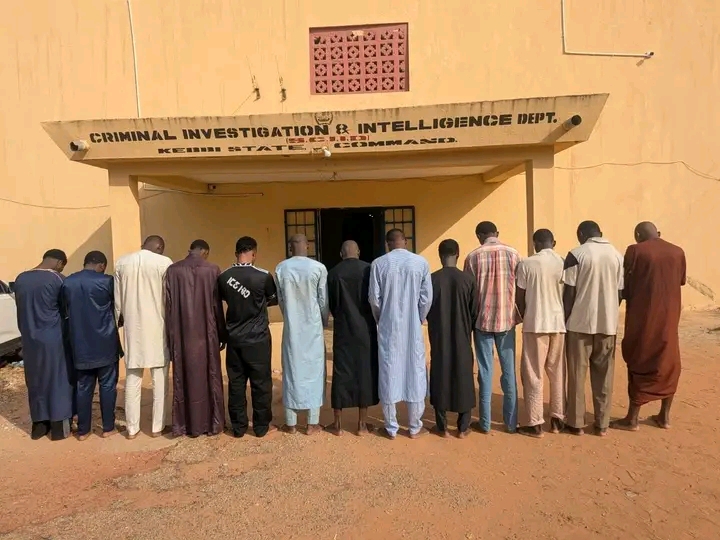
Between June 26 and June 29, 2026, the command’s coordinated operation resulted in the arrest of thirteen suspects linked to the syndicate.

Those arrested include:

Ahmed Nasir, Rabiu Sani, Sadiq Umar, and Umar Nasir, all from Argungu, who allegedly conspired to obtain nude images of a female victim and demanded ₦1,000,000 from her.

Faisal Muhammed and Abbas Baraye were arrested for online extortion using nude pictures.

Abdullahi Abubakar, Abdulhamid Mukhtar, and Al’amin Aminu were accused of defrauding a victim of ₦3,000,000 after manipulating a video to falsely portray the victim in a compromising position. Haliru Bashar, Abubakar Faruk, Almustapha Munnir, and Saifullahi Nata’ala, who allegedly obtained a nude video of a female acquaintance through a sex-related Snapchat group and threatened to expose her.

Commissioner of Police, CP Umar M. Hadejia,  issued a stern warning that cybercrime constitutes a serious offence with grave consequences.

He called on parents and guardians to closely monitor their children’s online activities and discourage involvement in fraudulent schemes.

“We urge members of the public to exercise caution on social media, protect personal information, avoid suspicious online interactions, and promptly report cases of cyber extortion to the nearest police station,” CP Hadejia stated.

The police command has provided emergency contact numbers  09039911876 and 07081074395  for reporting cyber-related crimes.

All arrested suspects will be charged in court upon the conclusion of investigations, while efforts are ongoing to apprehend other fleeing members of the syndicate.

IGP Disu Warns Police Officers Against Unauthorised Social Media Activities

By Sabiu Abdullahi

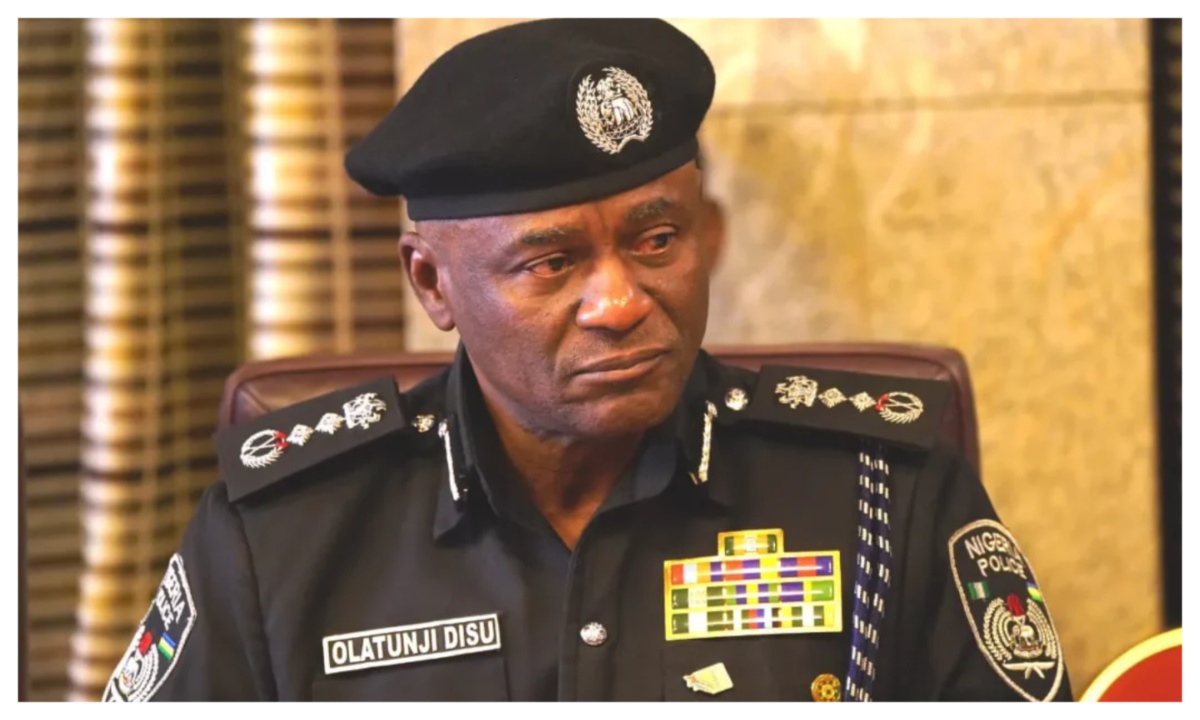
The Inspector-General of Police, Tunji Disu, has directed officers and personnel of the Nigeria Police Force to stop engaging in unauthorised social media activities while in uniform.

The directive followed concerns over the increasing number of police officers creating online videos, hosting live sessions and posting other content on social media platforms without official approval.

Force Public Relations Officer, Anietie Edem, disclosed the development in a statement issued on Tuesday.

According to the statement, officers are no longer allowed to post unauthorised content in police uniform or publicly comment on official police matters without approval.

The statement also warned personnel against revealing sensitive operational details or using their positions in the force for personal publicity, entertainment or commercial purposes.

“The Inspector-General of Police, IGP Olatunji Rilwan Disu, psc(+), NPM, has directed all officers and men of the Nigeria Police Force to desist from unauthorised social media activities capable of undermining the integrity, professionalism, and public image of the Force,” the statement reads.

Edem explained that the police chief acknowledged the importance of social media as a communication tool. He, however, stressed that officers must use such platforms in line with existing laws, regulations and the police social media policy.

Disu also ordered commissioners of police, heads of departments and other senior officers to educate personnel under their supervision and ensure compliance with the directive.

The IGP further instructed the Force Intelligence Department and the Professional Standards Department, also known as the X-Squad, to intensify monitoring of social media activities involving police personnel.

According to the statement, supervisory officers would be held responsible if they fail to act against officers who violate the directive within their commands.

Security Operatives Eliminate Suspected Kidnap Leader, Rescue Victim in Kebbi


By Uzair Adam

Security operatives in Kebbi State have killed a suspected kidnap gang leader and arrested one of his accomplices during an operation in Bagudo Local Government Area.

The operation, carried out by the Kebbi State Police Command in collaboration with other security agencies, led to the death of the suspected kingpin, identified as Jiji Mujugu.

According to the Police Public Relations Officer, SP Bashir Usman, a suspect who had earlier been arrested provided information that led operatives to the gang leader’s hideout.

Usman said the suspect attempted to flee and opened fire on security personnel during the operation, prompting the operatives to return fire and neutralise him.

He added that another gang member, Bube Tukur, was arrested at the scene.

The police spokesman disclosed that investigations revealed that Mujugu and Tukur were members of an eight-man kidnapping syndicate responsible for a series of attacks and abductions in communities across Bagudo Local Government Area.

The affected communities include Geza, Adawa, Matsinkai, Sharabi, Illela, Suru and Dakin Gari, among others.

Usman further stated that the gang was linked to the abduction of a resident, Alhaji Abu Geza, from Geza Village.

He said security operatives recovered a locally fabricated pistol and a live cartridge during the raid, while the kidnapped victim was rescued unharmed from the gang’s hideout.

The police assured residents of their commitment to sustaining efforts aimed at tackling kidnapping and other criminal activities across the state.

Bachirawa Residents Raise Alarm Over Escalating Violence

By Hadiza Abdulkadir

Residents of Bachirawa and surrounding communities in Kano State have raised concerns over a surge in violent clashes allegedly linked to rival groups identified as Habun Daidai and Tsalha Maikare.

According to a statement issued by concerned community members, the violence has intensified since the Sallah celebrations, leaving many residents displaced and several houses destroyed by fire. The affected communities include areas around Kwanar Ungogo, NRC Road, and Bayan Waya (Makera).

The residents alleged that criminal elements operate openly in parts of the area, particularly around Kwanar Ungogo Market, which they described as a hub for drug trafficking and other criminal activities. They further called on the Kano State Commissioner of Police to reorganize personnel in the Bachirawa and Ungogo police divisions to improve security.

The group also appealed to Governor Abba Kabir Yusuf to visit the affected communities or dispatch a high-powered delegation to assess the situation and address the growing insecurity.

The Daily Reality was unable to independently visit the affected areas or verify the claims contained in the statement at the time of filing this report.

For security reasons, the authors of the statement requested anonymity.

Kano Police Arrest Suspects in Coordinated Drug Raids, Recover Tramadol and Cannabis

By Ibrahim Abubakar Diso 

The Kano State Police Command has arrested several suspects in a series of intelligence-led operations targeting illicit drug distribution across the state.

In one of the operations carried out at Nasarawa GRA, operatives of the Special Intervention Squad intercepted two men allegedly in possession of a sack containing 23 rolls of Tramadol, each made up of multiple sachets. 

The suspects, identified as Abdulsalam Muhammad, 30, and Murtala Sani, 34, reportedly admitted involvement in the illegal trade, while police say efforts are ongoing to track down additional suspects linked to the supply chain.

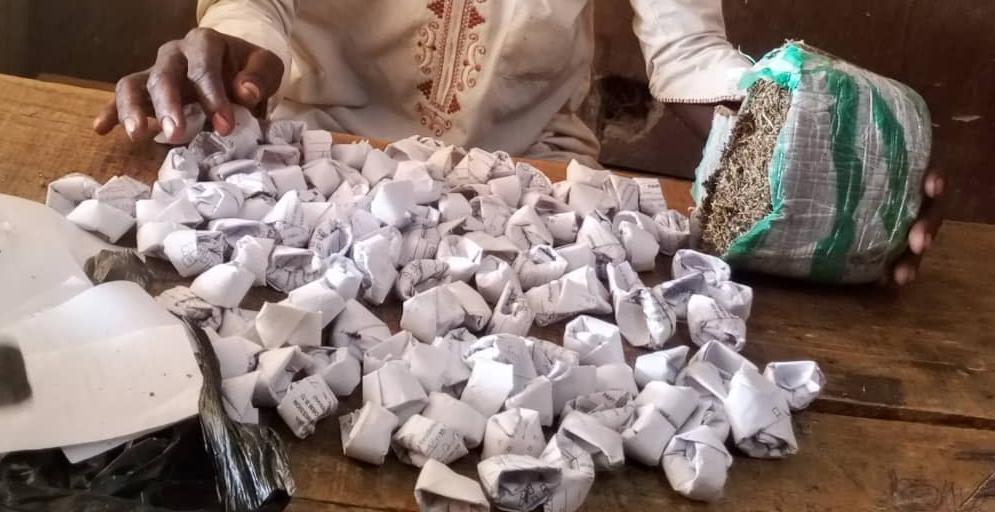
In a separate operation in Gezawa Local Government Area, officers raided a known black spot in Dangari Village, where they arrested a 40-year-old suspect allegedly selling Cannabis Sativa. 

Police recovered 130 wraps and a half-block of suspected cannabis from him. In another arrest in Gezawa Misanda, a 25-year-old suspect was found with 10 wraps of suspected cannabis and bottles of rubber solution, believed to be used as inhalants.

The Commissioner of Police, Ibrahim Adamu Bakori, commended the operatives for their professionalism and praised residents for providing timely intelligence that aided the operations. He reiterated the Command’s commitment to intensifying the crackdown on drug-related crime in the state.

The police said all suspects will be charged to court upon completion of investigations.

Police bust major car theft syndicate in Kano, recover three vehicles

By Hadiza Abdulkadir

The Kano State Police Command has successfully dismantled a notorious six-member car theft syndicate, recovering three stolen vehicles in a targeted operation led by the Special Intervention Squad (SIS).

The crackdown followed a directive from the Inspector-General of Police to intensify efforts against organized crime. According to a statement by the Command’s Public Relations Officer, CSP Abdullahi Haruna, the breakthrough began on February 13, 2026, with the arrest of the primary suspect, 35-year-old Aliyu Mamman.

Mamman, a resident of Gusau, Zamfara State, was apprehended at Hotoro Ring Road in Kano. During interrogation, he confessed to stealing several vehicles across Kano, Kaduna, and Katsina States. His testimony led detectives to five accomplices: Abdulhamid Usman, Saliha Abdulhamid, Auwal Shuaibu, Sani Bala, and Ahmad Mannir.

The recovered vehicles include a Golf Wagon, a Golf Opel, and a Hijet (commonly referred to as “Kurkura”).

The Kano State Police Command attributed the success to its transition toward intelligence-led and technology-driven operations. Commissioner of Police Ibrahim Adamu Bakori has ordered a full investigation to identify other members of the network and urged the public to stay vigilant.

The suspects are expected to be charged in court following the conclusion of the investigation.

Family of seven brutally murdered in Kano home invasion

By Abdullahi Mukhtar Algasgaini

The Kano State Police Command has launched a full-scale investigation following the gruesome murder of a woman and her six children at their home in the Dorayi Chiranchi Quarters on Friday.

According to a police press release, a distress call was received at about 12:10 pm on January 17, 2025, reporting that unknown hoodlums had broken into the residence of Haruna Bashir and attacked his household.

The victims, identified as 35-year-old Fatima Abubakar and her six children, were assaulted with dangerous weapons, sustaining fatal injuries.

Commissioner of Police, CP Ibrahim Adamu Bakori, PhD, immediately deployed a team led by the Deputy Commissioner of Police in charge of Operations, DCP Lawal Isah Mani, to the scene.

The bodies were evacuated to Murtala Mohammed Specialist Hospital, Kano, where medical personnel confirmed their deaths.

The Police Commissioner has instructed a team from the Criminal Investigation Department (CID), led by ACP Wada Jarma, to conduct a thorough investigation to apprehend the perpetrators.

The command has expressed its condolences to the bereaved family, the Dorayi Chiranchi community, and the people of Kano State.