Iran

Iranian security chief promises continued support for Lebanon

By Anwar Usman

The top security chief of Iran, Ali Larijani, vowed in Lebanon on Wednesday that his government would continue to provide support, after the Lebanese government ordered the army to devise a plan to disarm Tehran-backed militant group Hezbollah.

Ali Larijani’s trip to Lebanon comes after Iran expressed opposition to a government plan to disarm Hezbollah, which, before a war with Israel last year, was believed to be better armed than the Lebanese military.

“If the Lebanese people are suffering, we in Iran will also feel this pain and we will stand by the dear people of Lebanon in all circumstances,” Larijani, the head of the National Security Council, told reporters after landing in BeirutDozens of Hezbollah supporters gathered along the airport road to welcome Larijani.

He briefly stepped out of his car to greet them as they chanted slogans of support.

In Lebanon, the security chief is expected to meet with President Joseph Aoun, Prime Minister Nawaf Salam, and Parliament Speaker Nabih Berri, who is close to Hezbollah.

Iran has suffered a series of blows in its long-running rivalry with Israel, including during 12 days of open war between the two countries in June.

Reports show that, Hezbollah is part of Iran’s so-called “axis of resistance” — a network of armed groups in the region, including Hamas in Gaza and Yemen’s Huthi rebels, united in their opposition to Israel.

The ouster in December of Bashar al-Assad in Syria, which long served as a conduit for weapons deliveries between Iran and Hezbollah, cut off the supply route to Lebanon.

Iran has declared its firm opposition to the Lebanese government’s bid to disarm Hezbollah, while the movement itself has slammed the decision as a “grave sin”.

Trump nominated for Nobel Peace Prize over Iran-Israel ceasefire

By Muhammad Abubakar

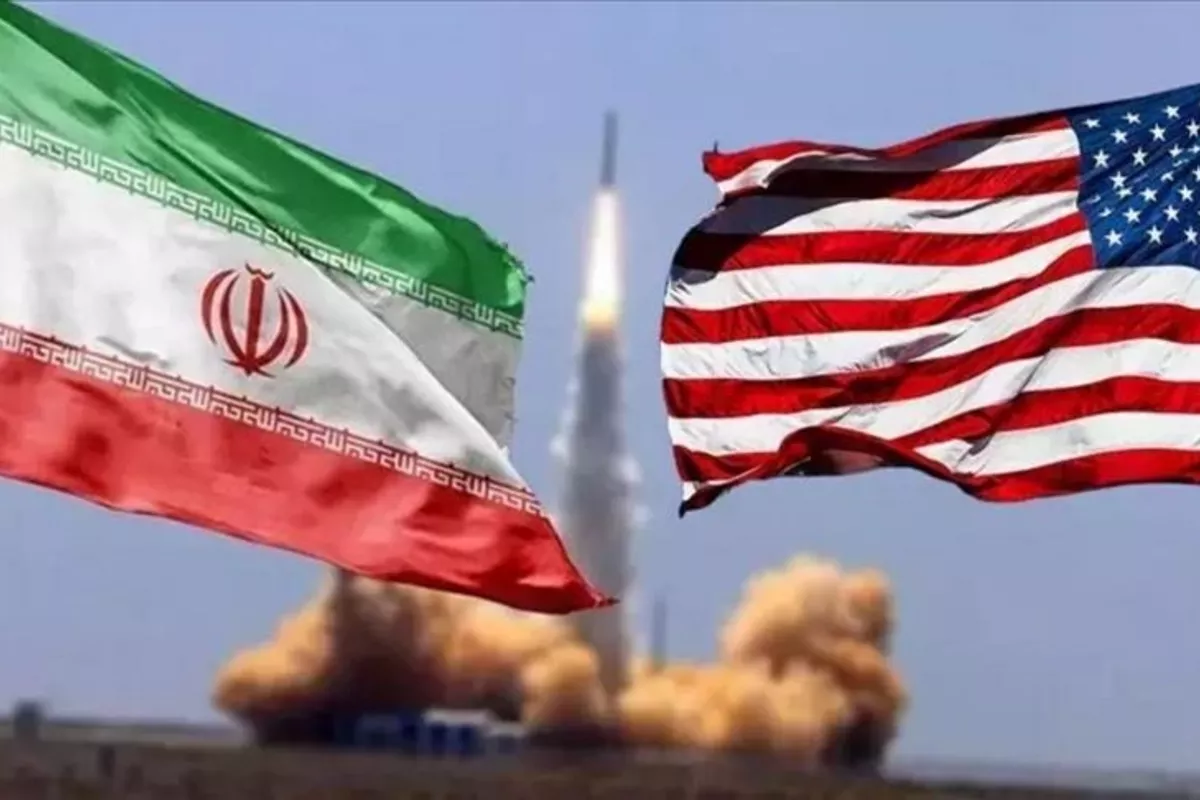
President Donald J. Trump has been nominated for the Nobel Peace Prize by Congressman Buddy Carter, following a historic ceasefire agreement between Iran and Israel.

Carter praised Trump’s role in ending the conflict and preventing Iran from obtaining nuclear weapons, calling his leadership “bold and decisive.” The congressman credited Trump with promoting peace and stability in a volatile region.

Now serving as the 47th President of the United States, Trump’s efforts, Carter said, “exemplify the very ideals that the Nobel Peace Prize seeks to recognize.”

US launches massive strike on Iran’s nuclear facility, sparking fears of regional war

By Uzair Adam

Flights across the Middle East have been disrupted, both incoming and outgoing, as regional tensions escalate and governments cite increased security concerns.

Air traffic was significantly affected as military activity intensified, following a dramatic overnight strike by the United States on Iran’s Fordow nuclear facility—a site long regarded as one of the most secure in the country.

While the U.S. Pentagon and the White House have withheld specific operational details, military leaders are expected to hold a press briefing later today.

Sources familiar with the assault, speaking anonymously, confirmed that U.S. B-2 stealth bombers deployed GBU-57 Massive Ordnance Penetrators—deep-earth bombs capable of burrowing 200 feet underground—on the Fordow enrichment site.

The bomb was used in combat for the first time in this mission.

In addition, U.S. Navy submarines reportedly launched around 30 Tomahawk cruise missiles, targeting critical infrastructure believed to support Iran’s nuclear program.

Despite its reputation as nearly impenetrable due to its mountainous location, the Fordow facility appears to have been successfully breached.

The coordinated operation came after a prolonged period of diplomatic stalemate, with President Trump citing failed negotiations as justification for the strike.

While U.S. intelligence assessments continue to assert that Iran is not currently pursuing a nuclear weapon, Trump—echoing Israeli concerns—argued that Iran retained the capability to quickly develop one, making inaction too risky.

His decision followed mounting pressure from Israeli officials and Republican lawmakers who urged a decisive military move amid reports that Israel had already damaged Iran’s air defenses, paving the way for U.S. bombers.

Israeli strikes in recent days reportedly targeted missile launchers and air-defense systems, weakening Iran’s retaliatory capabilities.

Observers note a reduction in the frequency and scale of Iran’s missile attacks, possibly due to depleted resources or strategic recalibration.

In a speech days before the American attack, Iran’s Supreme Leader Ayatollah Ali Khamenei warned that any strike on Iran would bring “irreparable damage” to the attackers.

On Saturday, reports indicated he named three potential successors in case of assassination—conspicuously omitting his son, Mojtaba Khamenei.

Iran’s Foreign Ministry had earlier warned that any American intervention would trigger a full-scale regional war.

That outcome now appears increasingly plausible.Iranian-backed Houthi rebels in Yemen have already threatened to resume attacks on American vessels in the Red Sea, ending a temporary pause agreed upon in May.

“If the U.S. joins Israel militarily, we will return to targeting American interests,” a Houthi spokesman said Friday.

U.N. Secretary-General António Guterres has voiced grave concern over the situation, warning that the conflict risks spiraling out of control, with potentially catastrophic consequences for civilians and global stability.

Trump’s direct military engagement marks a significant shift, seven years after he withdrew from the 2015 nuclear deal brokered under the Obama administration. Despite early promises to strike a new agreement, diplomatic progress remained elusive.

Now, the Trump administration has abandoned any remaining diplomatic overtures, opting instead for a strategy of force—demanding Iran dismantle its nuclear ambitions or face continued military pressure.

It is a high-stakes move that could either change the strategic landscape of the Middle East—or drag it further into chaos.

OIC summit convenes amid Middle East turmoil, with little hope of influence

By Muhammad Abubakar

Leaders and foreign ministers from the 57 member states of the Organisation of Islamic Cooperation (OIC) are gathering in Istanbul this Saturday for a high-stakes summit overshadowed by escalating tensions in the Middle East, most notably Israel’s war with Iran and the ongoing devastation in Gaza.

Iranian Foreign Minister Abbas Araghchi is set to attend, as many of his counterparts are expected to call for an immediate ceasefire. Yet the OIC, long criticised for its limited political clout, is unlikely to shift the course of either conflict.

The situation in Gaza—now in its 21st month—remains dire. Humanitarian workers report that more Palestinians are killed by the Israeli army while trying to collect food than in actual combat. 

On June 17th, at least 59 people were killed when Israeli tanks reportedly opened fire near an aid distribution centre run by the Israel-backed Gaza Humanitarian Foundation. Israel’s military has pledged to investigate the incident.

Despite repeated condemnations and emergency meetings, the OIC has remained largely powerless in stemming the violence in Gaza. With tensions now spilling into a broader regional confrontation, the summit is expected to issue a familiar call for peace that few expect to alter the course of events.

Billboard in Tel Aviv urges Trump to join Israel’s fight against Iran

By Sabiu Abdullahi

A provocative billboard has appeared in Tel Aviv, calling on United States President Donald Trump to take military action in support of Israel amid rising tensions with Iran.

The sign boldly reads, “Mr President, finish the job!”

The call comes as pressure mounts for the United States to play a more active role in the escalating conflict between Israel and Iran.

Although President Trump has reportedly approved a series of military plans — including the potential use of bunker-buster bombs — officials say he has not yet made a final decision on whether American forces will be directly involved in the conflict.

The situation remains tense as Washington weighs its options while closely monitoring developments in the Middle East.

US Army colonel suspended after calling Israel “Our worst ally”

By Muhammad Sulaiman

The U.S. Army has suspended Colonel Nathan McCormack following controversial remarks in which he described Israel as “our worst ‘ally,’” igniting a firestorm of political and military reaction.

In a statement made during a closed-door security forum that was later leaked online, Col. McCormack reportedly said: “Israel is our worst ‘ally.’ We get literally nothing out of the ‘partnership’ other than the enmity of millions of people in the Middle East, Africa and Asia.”

The Pentagon confirmed McCormack’s suspension on Tuesday, stating that the remarks are under formal review for possible violations of the Uniform Code of Military Justice and Department of Defence policies on political expression.

“While service members are entitled to personal opinions, public statements by active-duty officers that could affect diplomatic relations are taken seriously,” a Defence Department official said on condition of anonymity.

Col. McCormack, a senior officer with experience in multiple overseas deployments, has not yet commented publicly, but sources close to him say he stands by his critique and views it as a matter of strategic honesty.

His suspension has drawn sharply divided reactions. Critics called his comments inflammatory and damaging to U.S.-Israel relations, while supporters praised his candour, arguing that Washington’s unconditional support for Israel has long gone unquestioned within military circles.

The incident adds to a broader debate in Washington over the costs and consequences of U.S. foreign policy in the Middle East, especially amid ongoing international criticism of Israel’s actions in Gaza and Iran.

North Korea slams Israel over strikes on Iran, warns of escalating conflict

By Sabiu Abdullahi

North Korea has issued a forceful condemnation of Israel’s recent military operations targeting Iran, describing the actions as “a crime against humanity” and warning they could plunge the Middle East into deeper chaos.

In a statement published by the state news agency KCNA on Thursday, a spokesperson for the North Korean Foreign Ministry voiced strong concern over what was described as deliberate attacks on Iranian civilian, nuclear, and energy infrastructure.

The spokesperson said the operations by Israeli forces reflect “state-sponsored terrorism” and pose a grave threat to regional stability.

“The killing of civilians in Israeli attacks was an unpardonable crime against humanity,” the statement read.

Pyongyang also criticized Washington and its Western allies, accusing them of backing Israel’s actions and inflaming an already volatile situation.

“The present grave situation witnessed by the world clearly proves that Israel, supported and patronised by the US and the West, is a cancer-like entity for peace in the Middle East and a chief culprit of destroying global peace and security,” the Foreign Ministry spokesperson said.

The North Korean government also advised the United States and Europe against further involvement in the conflict.

It claimed that international opinion is watching closely as these powers, in its words, “fan up the flames of war” while blaming Iran for defending itself.

“The international community is strictly watching the US and Western forces fanning up the flames of war, taking issue with the legitimate sovereign right and exercise of the right to self-defence of Iran, the victim,” the spokesperson added.

The warning came as U.S. President Donald Trump declared that his administration had exhausted its patience with Iran.

His remarks followed a firm rejection by Iran’s Supreme Leader Ayatollah Ali Khamenei of U.S. calls for an unconditional surrender. Khamenei also warned Washington of “irreparable damage” if it chose to interfere.

According to The Wall Street Journal, Trump recently approved military plans targeting Iran but decided to pause implementation, reportedly in hopes that Tehran might reconsider its nuclear ambitions.

North Korea has cautioned that the ongoing escalation—fueled by Israeli aggression and Western involvement—risks pushing the region toward what it described as “an uncontrollable catastrophic phase.”

As tensions continue to rise, Pyongyang’s statement adds yet another voice to the chorus of global concern over the deepening crisis in the Middle East.

U.S. Intelligence: Iran not actively pursuing nuclear weapon, capability still years away

By Muhammad Sulaiman

U.S. intelligence assessments have concluded that Iran is not currently pursuing a nuclear weapon, despite heightened regional tensions and fears of escalation. According to officials cited by CNN, Iran would still need up to three years to produce and deliver a nuclear warhead to a target of its choosing, should it decide to take that path.

These revelations come amid a dramatic military conflict between Israel and Iran that erupted earlier this month. On June 13, Israel launched a wide-ranging preemptive military campaign—codenamed Operation Rising Lion—against Iran, targeting over 100 sites including nuclear facilities in Natanz, Isfahan, and Tehran.

The Israeli strikes killed at least 224 people and injured more than a thousand, many of them civilians. Civilian infrastructure, including hospitals and power stations, was also severely damaged.

Iran retaliated with Operation True Promise 3, unleashing a massive barrage of over 150 ballistic missiles and more than 100 drones against Israeli military bases and infrastructure. Dozens of Israelis were injured, several seriously.

Despite the intensity of the conflict, U.S. intelligence officials maintain that Iran has not made the political decision to weaponize its nuclear program. While uranium enrichment activities continue, they have not reached a threshold indicating imminent nuclear arms development.

The ongoing war has raised concerns among international observers, with legal experts warning that elements of the Israeli offensive may violate international law. As both sides continue exchanging fire, diplomatic efforts face severe obstacles, and fears grow of further escalation in an already volatile region.

Donald Trump vows to broker peace between Iran, Israel

By Abdullahi Mukhtar Algasgaini

U.S. President Donald Trump has announced his intention to mediate peace between Iran and Israel, citing his past successes in conflict resolution.

Speaking via his social media platform, Trump stated that negotiations are currently underway and expressed confidence that a resolution could be reached.

He compared the situation to his previous efforts in brokering peace between India and Pakistan, as well as between Egypt and Ethiopia, and Serbia and Kosovo.

“This is nothing new for me,” Trump said. “I’ve done it before, and I can do it again.” He reiterated his commitment to ending the conflict, though he lamented that his efforts often go unrecognized.

“People see what I’m doing, even if they don’t always acknowledge it,” he added.

Trump’s statement comes as Israel has reportedly urged the U.S. to intervene in its escalating tensions with Iran.

However, the Trump administration has maintained that it will not engage militarily.

In another claim, Trump revealed that he and Russian President Vladimir Putin have discussed the matter and agreed on the need to de-escalate hostilities between Israel and Iran.

IRGC intelligence chief killed in Israeli airstrike, confirms Fars News Agency

By Muhammad Abubakar

Iran’s state-affiliated Fars News Agency has confirmed the deaths of top Islamic Revolutionary Guard Corps (IRGC) intelligence figures in an Israeli airstrike earlier today.

Among the dead is Brigadier General Mohammad Kazemi, the head of the IRGC’s Intelligence Organisation, a key figure in Iran’s security and military apparatus. His deputy, General Hassan Mohaqiq, was also killed in the strike, alongside senior intelligence official Mohsen Bagheri.

The strike reportedly targeted what is believed to be a sensitive IRGC facility, possibly the organisation’s headquarters. While Israeli officials have not yet publicly commented on the operation, the move is expected to escalate tensions between the two regional rivals.

Kazemi was appointed in 2022, succeeding Hossein Taeb, and was known for reshaping the IRGC’s intelligence posture during a turbulent period marked by domestic unrest and growing international scrutiny.

The Iranian government has not yet released an official statement on the incident, but security sources suggest a high-level investigation is underway.

This strike marks one of the most significant Israeli operations against Iranian military leadership in recent years.