International

US Congress introduces bill to ban Miyetti Allah, MACBAN with visa, asset sanctions

By Anas Abbas

A bill introduced into the United States Congress proposes visa restrictions and asset freezes on individuals associated with the Miyetti Allah Kautal Hore and the Miyetti Allah Cattle Breeders Association of Nigeria (MACBAN).

The legislation, presented by U.S. Representative Christopher Smith, names the groups among “entities responsible for or complicit in severe violations of religious freedom,” under the framework of the International Religious Freedom Act (IRFA).

In the bill, the “Fulani-ethnic militias” operating in Nigeria’s Benue and Plateau states are explicitly designated as Entities of Particular Concern (EPCs), a classification previously applied to organisations such as Boko Haram, ISIS‑West Africa, the Taliban and the Houthis.

Under the terms of the bill, if passed, U.S. authorities would be empowered to bar visas and freeze assets of individuals linked to the listed organisations.

The move comes amid mounting concern in Washington over reported attacks on Christian communities in Nigeria. Representative Smith applauded the U.S. government’s re-designation of Nigeria as a “Country of Particular Concern” (CPC) for religious freedom violations.

The Nigerian federal government has rejected these claims, pointing to constitutional guarantees for freedom of worship.

Nevertheless, U.S. officials appear to be advancing this legislative effort following agitation from American lawmakers and evangelical groups.

This development signals an escalation of U.S. pressure on Nigeria over human rights and religious-freedom concerns, raising the stakes for Nigeria’s domestic and international stance on such issues.

Italian journalist dismissed after question on Israel at EU briefing

By Maryam Ahmad

Italian journalist Gabriele Nunziati, a Brussels-based correspondent for the Italian news agency Nova, has been dismissed after posing a question about Israel during a European Commission press briefing.

According to reports from La Stampa, Nunziati asked officials about Israel’s responsibility in the ongoing Middle East conflict — a question his employer later described as “inappropriate” and “embarrassing.” Shortly after the exchange, Nova informed him that his collaboration had been terminated.

The incident has sparked debate within journalistic circles about press freedom and the limits of editorial control. Colleagues in Brussels expressed concern that the dismissal reflects growing pressure on journalists covering sensitive international issues, particularly those related to Israel.

Neither Nova nor the European Commission has issued a detailed statement on the matter. Nunziati, for his part, has defended his question as a legitimate exercise of journalistic duty.

Trump: What should Tinubu do?

By Zayyad I. Muhammad 

1. Immediate Actions: Dispatch a high-level delegation to Washington: President Asiwaju Bola Ahmed Tinubu should immediately send a high-powered delegation composed of respected Nigerian statesmen, business leaders, and senior government officials to engage with U.S. authorities.

The team should include former President Olusegun Obasanjo, former Head of State General Abdulsalami Abubakar, Chief Bola Ajibola, business mogul Aliko Dangote, Rev. Hassan Matthew Kukah, and the President of the Christian Association of Nigeria (CAN), Most Rev. Dr Daniel Okoh, His Eminence Sultan of Sokoto, representatives of Religious groups, NGO, etc.

From the government side, the delegation should include the Minister of State for Foreign Affairs, the Secretary to the Government of the Federation, and the Governors of Benue,  Plateau, Niger, Katsina, Kaduna, Zamfara, Borno, Yobe and Adamawa States, given the security relevance of their regions.

2. Re-engage the U.S. Mission in Nigeria: The Presidency should task the Ministry of Foreign Affairs and other well-placed Nigerians with deepening communication with the U.S. Mission in Abuja and the Consulate in Lagos to strengthen diplomatic rapport, address misperceptions, and align mutual strategic interests.

3. Reach out to U.S. allies and partners: Nigeria should actively engage with other influential U.S. allies across Europe, the Middle East, and Asia to rally broader international support for Nigeria’s security and development agenda.

3. Seek U.S. assistance in defence cooperation: President Tinubu should formally request more support from the Donald J. Trump administration in providing modern weapons, intelligence-sharing technology, and counter-insurgency training to bolster Nigeria’s fight against terrorism and violent extremism.

4. Immediate appointment of ambassadors: Nigeria’s diplomatic missions have remained without substantive ambassadors for too long. Swift appointments of competent, credible, and globally respected diplomats will help restore Nigeria’s voice and visibility on the international stage.

5. The Minister Yusuf Tuggar should be reassigned to another portfolio, and a new Minister of Foreign Affairs, preferably one with strong international connections and more diplomatic weight, should be appointed. This will send a clear signal that Nigeria is repositioning its foreign policy and engagement strategy.

6. Launch a global public relations drive: Nigeria must embark on a robust, well-coordinated international PR campaign to reshape global perception. This should highlight the Tinubu administration’s economic reforms, anti-corruption measures, and counter-terrorism efforts, while showcasing Nigeria as a stable, investment-friendly democracy that protects all faiths and ethnicities

7. On the Security and Communication Front: The office of the National Security Adviser and the high military command are doing well; thus, to further boost the effort, they should further re-align the war against insurgency and banditry. The battle against bandits, terrorists, and other insurgent groups must be comprehensively restructured. This includes better coordination among the armed forces, improved intelligence gathering, community-based security initiatives, and enhanced welfare for frontline troops. A unified national security strategy will yield faster and more sustainable results.

8. Strengthen media visibility of Nigeria’s counter-terrorism efforts: Nigeria’s efforts in the fight against terror are often underreported or misrepresented internationally. There should be massive, transparent media coverage, both traditional and digital, to showcase the government’s ongoing efforts, victories, and human stories of resilience. This will help counter misinformation, boost public morale, and attract global understanding and support.

Zayyad I. Muhammad writes from Abuja via zaymohd@yahoo.com.

Former US vice president Dick Cheney dies at 84

By Muhammad Sulaiman

Former U.S. Vice President Dick Cheney passed away last night at the age of 84, his family announced in a statement this morning. The cause of death was complications arising from pneumonia as well as cardiac and vascular disease.

Cheney, who served as vice president under President George W. Bush from 2001 to 2009, was one of the most influential and controversial figures in modern American politics. Known for his staunch defence of U.S. national security policies following the September 11 attacks, Cheney played a central role in shaping the Bush administration’s foreign and defence strategies, including the wars in Afghanistan and Iraq.

Born in Lincoln, Nebraska, in 1941, Cheney held numerous key government positions throughout his career, including White House Chief of Staff under President Gerald Ford and Secretary of Defence under President George H.W. Bush.

In recent years, Cheney had battled various health challenges, including multiple heart-related issues. His family said funeral arrangements will be announced in the coming days.

“Dick Cheney was a patriot who devoted his life to serving his country,” the family’s statement said. “He will be remembered for his leadership, his resolve, and his unwavering commitment to the United States.”

When Trump strikes, no Nigerian is safe

By Malam Ibrahym El-Caleel

Foreign invaders such as the US, NATO and Russia strike capital cities first, basically to break command and control. This creates a leadership crisis in the country, and this is how armed militia from different parts of the country begin to get stronger. The country’s borders become porous, everything passes through. This effectively means you’d have a full scale war and an insurgency going on. Even after the war when the foreign invader leaves, your insurgency will be there staring into your eyes. Go and take learnings from Libya, Iraq and Afghanistan.

Well, after attacking the nation’s capital, the next thing foreign invaders do is to begin working on their supposed objectives of invading. God forbid they invade Nigeria, but after Abuja, they will be heading to the purported sites of “Christian genocide” to begin the work of “saving Christians”. It is not Kano, or Jigawa or Gombe. It is North-Central, especially states like Plateau and Benue, then perhaps Southern Kaduna. These are the areas constantly flashed in the media, with a claim of Muslims in Nigeria killing Christians, when everyone knows what’s happening there!

Now, the attackers in these locations do not have designated addresses. They are bandits, killer herdsmen, kidnappers and whatnot. They are criminals who live in the bushes and always moving from one area to another. If the US will be able to clinically target them and annihilate them, then this is a very good one. Nigeria will be extremely grateful for this act of charity done from the American taxpayers’ money. Both Nigerian Muslims and Christians will be happy and grateful that the US came and annihilated these bloodthirsty beasts with clinical precision.

However, based on clear antecedents, foreign invaders don’t do this type of job free and with clinical precision. It costs a nation so much to launch an invasion, therefore nobody goes to war “free”. Secondly, interventions like this always come with collateral damage. The undisclosed costs and the collateral damage is what every Nigerian with a functional brain thinks about and shivers. Once you have a functional brain, this uncertainty is what makes you not want US presence on Nigerian soil, whether you are Muslim or Christian.

Now, back to the North-Central. The first collateral damage in Benue and Plateau States is most likely going to have more Christian victims themselves, than Muslim victims. The simple reason is because we all know that Christian population in these states is more than the Muslim population, and this is why both the governor and deputy governor in each of these states are Christian. As a Christian who is cheering Savior Trump, if you are sure that the US will be able to isolate Christian populations from the collateral damage in a densely Christian populated state, then you are good to go with your celebration.

On the flip side, the cost of the war is what I don’t understand. The US is known for fetching available mineral resources after striking nations. I do not know how they plan to tap into Nigeria’s resources because the most liquid resources are located in the South-South (Niger-Delta) region, which is far away from the sites of the so-called “Christian genocide”.

Already, a US politician and advisor of Donald Trump, named Dr Walid Phares posted earlier today that he is advising Donald Trump to establish an emergency base in Port Harcourt, in order to “deter Boko Haram and other jihadist” (his words). He posted this through his handle @WalidPhares on X (formerly, Twitter), see screenshot below.

I am not interested in the conspiracy theories since there must be a background story to the choice of Port Harcourt as a military base. Port Harcourt is considered to be the commercial center of the Nigerian oil industry. It has vast reserves of oil and natural gas, and produces more than 50% of the Nigerian crude oil and gas. It is the chosen location for establishing the US base, and from there will Trump be launching attacks on Boko Haram and other jihadists that are killing Christians.

Trump shouldn’t have much business to do with the South West, except for access to the sea. For South East, may be with Gov Soludo’s recent remarks that Christians are killing Christians in Anambra, Trump might want to go and help out there too. Otherwise, the South East should be okay too. But I looked across the core Muslim North, and I am afraid it might not really be attractive to Trump. There’s really nothing there to take back to Washington, except swathes of farmlands which Bello Turji and his brothers in terror haven’t allowed innocent Muslim farmers access to cultivate.

Additionally, I don’t see any serious Nigerian economy structure that would interest Trump. If he’s coming to the core Muslim North, then it’d be the usual false flag operation as the US did in Iraq. It’d be a cover up to the war crimes it’d commit and the oil benefits it’d get through its Port Harcourt military base. For the gold mines in Zamfara, Sokoto, Kaduna and co, the villagers in those locations have already flew away since the bandits intensified their attacks on those villages. When Trump’s army arrives there, it’d be an engagement with the bandits, and that’s really a good one. The bandits should have a taste of their medicine.

Whenever I see a Nigerian cheering Trump’s arrival, I have to wonder if they’ve really thought it through. Muslims and Christians live side by side across our major cities; both faiths are present virtually everywhere. If a foreign intervention comes, nobody is guaranteed safety. The collateral damage will be real, and I fail to see what’s worth celebrating. And please rest assured, the political elite in Abuja would know in advance and would pack up and leave the country with their families. They would abandon you and the rest of us here with Trump. Maybe after 20 years of foreign involvement, as happened in Iraq and Afghanistan, some of us will finally get a little bit of sense.

On Donald Trump’s decision against Nigeria

By Saidu Ahmad Dukawa 

Introduction

At last, the President of the United States, Donald Trump, has made the decision he had long planned against Nigeria, following complaints by some Nigerian Christians who alleged that they were victims of religious persecution in the country.

Trump had once placed a similar sanction on Nigeria during his first term, but after he lost the election to Joe Biden, Biden reversed that “rash and unfair” decision.

This new ruling, however, requires Nigeria to take certain actions in line with America’s interests — or face a series of sanctions. For example, these “American interests” could include the following:

1. Any Nigerian state practising Sharia Law must abolish it.

2. Any law that prohibits blasphemy against the Prophet Muhammad (peace be upon him) must be repealed.

3. Any location where Christians wish to build a church must grant them permission to do so.

4. Anything that Christians claim makes them “uncomfortable” in the country — such as businesses involving halal trade — must be stopped.

5. All businesses that Christians desire, such as the alcohol trade, must be freely allowed across the nation.

These are just examples of the complaints made by some Christian groups to the United States, which may also include political and economic demands.

This action by Trump mirrors what America once did to Iraq under Saddam Hussein — accusing the country of possessing weapons of mass destruction, just to justify an invasion.

If true justice were the goal, then both sides — the accusers and the Nigerian authorities — should have been listened to, including Muslim organisations that provided counter-evidence.

Even among Christians, many reasonable voices have spoken against these exaggerated claims, yet their words are ignored. Clearly, a plan against Nigeria had already been set in motion.

So, what is left for the Nigerian government and its citizens to do? Here is my opinion:

WHAT THE NIGERIAN GOVERNMENT SHOULD DO

1. Use diplomatic channels to inform the Trump administration that the situation is being misrepresented. Even if America remains adamant, the rest of the sensible world will know that any step America takes against Nigeria on this basis is pure injustice, and that knowledge itself will have benefits.

2. Reduce dependence on the United States in key areas such as trade, education, and healthcare. Nigeria should instead strengthen its ties with other countries, such as Russia, China, and Turkey.

3. Unite Nigerians — both Muslims and Christians who do not share this divisive mindset — to resist and expose any malicious plots against the nation.

WHAT THE NIGERIAN PEOPLE SHOULD DO

1. All Nigerians — Muslims and Christians alike — should begin to reduce their personal and travel ties with the United States, especially visa applications, as it may no longer be easy to obtain them.

2. Those who hold large amounts of US dollars should consider converting their funds into other global currencies.

3. Muslims with good relationships with Christians should not let this tension destroy their friendships — and vice versa. Let unity prevail.

4. Muslims must not lose hope or courage. They should realise that they have no powerful ally. Non-Muslims are the ones with global backing. The Jews can commit atrocities against Muslims, and America will support them. In India, Muslims are being killed — America is silent. In China, Muslims face persecution — America is silent.

In Nigeria, there is no single town where Muslims have chased out Christians, but in Tafawa Balewa, Christians expelled Muslims and took over the town. Terrorists who kill indiscriminately in Nigeria have taken more Muslim lives than Christian ones — yet Trump publicly declared that only Christian lives matter.

Still, Muslims can take comfort in one fact: Islam is spreading fast in both America and Europe. Perhaps, one day, when Islam gains ground there, justice and fairness will finally return to the world — because today’s problem is rooted in the injustice that Western powers built the world upon.

5. Nigerian Christians themselves need to wake up to the truth — that the Western world does not honestly care about Christianity, only about controlling resources and power.

If they really cared about Christian lives, they wouldn’t have ignored what’s happening in Congo — a country with one of the largest Christian populations — where Christians kill one another. The same goes for Haiti, South Sudan, the Central African Republic, and Rwanda.

There are numerous examples of Christian nations facing crises. And when Nigerian Christians think of running to the US for refuge, they will realise that America will not take them in. Therefore, it’s wiser to live peacefully with their Muslim brothers and sisters here in Nigeria.

6. Finally, it is the duty of all believers to constantly pray for Nigeria — that God protects it from every form of harm and evil.

Peace and blessings of Allah be upon you all.

Dr Saidu Ahmad Dukawa wrote from Bayero University, Kano (BUK).

Maldives introduces generational ban on tobacco

By Maryam Ahmad

The Maldives has become the first country in the world to implement a generational ban on tobacco use, marking a historic step in global public health policy.

According to a statement from the Ministry of Health, anyone born after January 2007 will be permanently prohibited from purchasing, using, or being sold tobacco products within the country. The measure aims to create a tobacco-free generation and reduce the long-term health and environmental impacts of smoking.

Health officials described the policy as part of the government’s broader strategy to curb non-communicable diseases and promote healthier lifestyles among young people in the Maldives.

The Maldives joins a small but growing list of nations considering similar “smoke-free generation” initiatives, with New Zealand having previously proposed a comparable plan before it was repealed.

Authorities say enforcement guidelines and public education campaigns will accompany the new law to ensure effective implementation and community support.

Tinubu heads to United States Tuesday for talks as Trump threatens military action over alleged Christian killings

By Sabiu Abdullahi

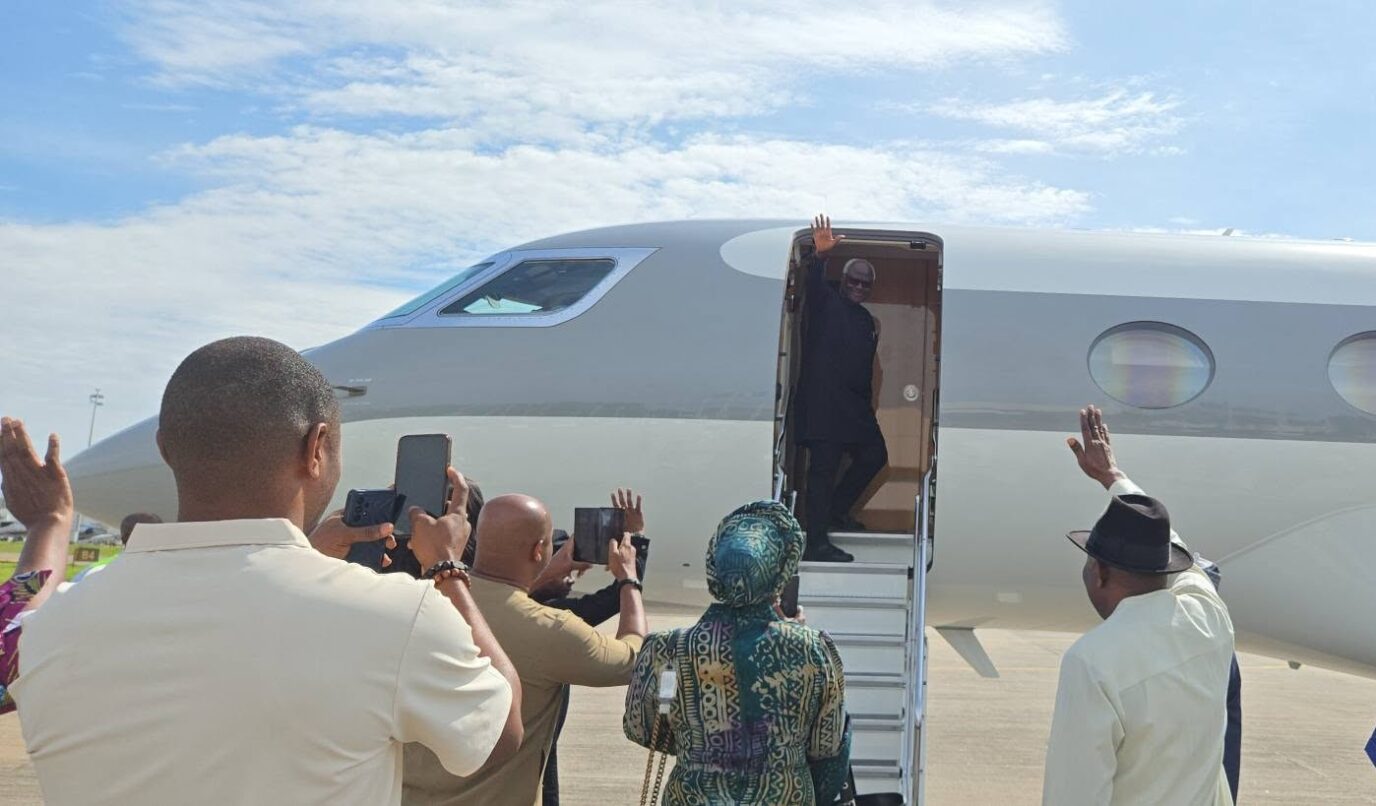
President Bola Tinubu is expected to travel to the United States on Tuesday for diplomatic discussions with top American officials amid escalating tensions following U.S. President Donald Trump’s threat to deploy military force in Nigeria over alleged attacks on Christians.

Presidential sources told newsmen that Tinubu’s trip would focus on strengthening bilateral relations and addressing recent concerns raised by the U.S. government.

The source added that Trump has “delegated his Vice, James David Vance, to meet with Tinubu during the visit,” unless there are last-minute changes.

The planned meeting comes days after Trump claimed that Christians in Nigeria were facing “genocide” and warned that the U.S. might intervene militarily if the killings did not stop.

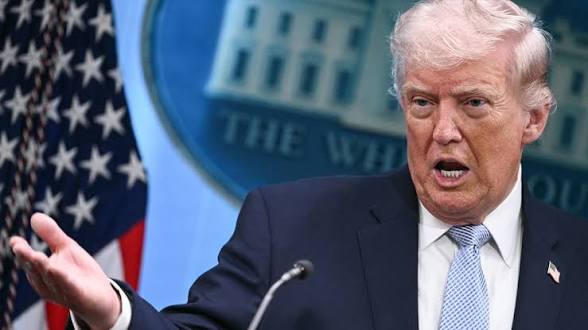
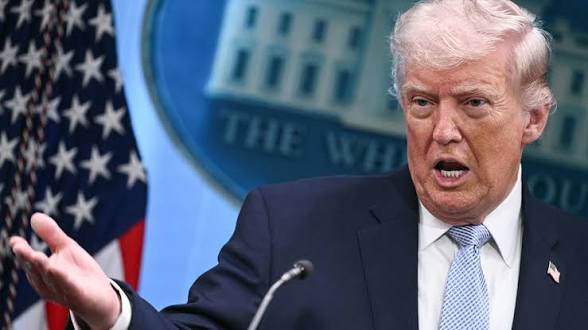
Trump stated, “If the Nigerian Government continues to allow the killing of Christians, the U.S.A. will immediately stop all aid and assistance to Nigeria, and may very well go into that now disgraced country, ‘guns-a-blazing,’ to completely wipe out the Islamic terrorists who are committing these horrible atrocities.”

“I am hereby instructing our Department of War to prepare for possible action. If we attack, it will be fast, vicious, and sweet, just like the terrorist thugs attack our cherished Christians,” he added.

In response, President Tinubu denied the allegations of religious persecution, insisting that Nigeria remains committed to protecting the rights of all faiths.

“Nigeria stands firmly as a democracy governed by constitutional guarantees of religious liberty,” Tinubu said in a statement released on Saturday.

He added that since assuming office in 2023, his administration “has maintained an open and active engagement with Christian and Muslim leaders alike and continues to address security challenges which affect citizens across faiths and regions.”

The President dismissed claims of religious intolerance as false and misleading.

“The characterisation of Nigeria as religiously intolerant does not reflect our national reality, nor does it take into consideration the consistent and sincere efforts of the government to safeguard freedom of religion and beliefs for all Nigerians,” he declared.

He reiterated that “religious freedom and tolerance have been a core tenet of our collective identity and shall always remain so. Nigeria opposes religious persecution and does not encourage it.”

Meanwhile, presidential aide Daniel Bwala said the forthcoming visit aims to strengthen cooperation between both nations on counterterrorism and regional stability.

“Both President @officialABAT and President @realDonaldTrump have shared interest in the fight against insurgency and all forms of terrorism against humanity,” Bwala said.

He noted that the Trump administration had “assisted Nigeria a lot by authorising the sale of arms,” adding that Tinubu’s government has “adequately utilised the opportunity in the fight against terrorism for which we have massive results to show for it.”

Bwala also disclosed that any differences in perception regarding the nature of terrorist activities in Nigeria “would be discussed and resolved by the two leaders when they meet in the coming days, either in State House or White House.”

Tinubu further emphasized that his administration remains committed to working with the U.S. and other international partners “to deepen understanding and cooperation on protection of communities of all faiths.”

“Nigeria is a country with constitutional guarantees to protect citizens of all faiths,” he said.

“Our administration is committed to working with the United States government and the international community to deepen understanding and cooperation on protection of communities of all faiths,” Tinubu added.

Rethinking the “Christian Genocide” narrative: Reflections from Wilton Park

By Dr Samaila Suleiman Yandaki

Nigeria is once again in the global spotlight in the wake of its redesignation as a Country of Particular Concern and the accompanying threat of U.S. military action by the Trump administration to save Nigerian Christians from “genocide”. This narrative is as dangerous as it is familiar, evoking the old imperial logic that simplifies and distorts our complex realities to justify external intervention. As a student of the politics of history and identity conflict, I find this portrayal beyond perturbing and perilous. 

I witnessed firsthand how such perilous narratives were debated in international policy circles when I joined other Nigerian and British stakeholders at a high-level summit at Wilton Park in February 2020 for a dialogue on “Fostering Social Cohesion in Nigeria”. Situated in the serene estate of Wiston House, Steyning, West Sussex, Wilton Park is an Executive Agency of the UK Foreign, Commonwealth and Development Office, widely recognised as a global space for peace dialogues and post-conflict reflection. The meeting was part of the UK government’s follow-up to the Bishop of Truro’s Independent Review on the persecution of Christians worldwide, in which Nigeria was identified as a major flashpoint of “religious violence.” The Truro Report asserted that Nigerian Christians are facing systematic persecution and called upon Western governments to do more to protect them. 

At Wilton Park, we were offered more than an interfaith forum to dialogue; we were given the opportunity to deconstruct the dangerous oversimplifications that have come to characterise Western discourses on Nigeria. Unlike the imperialist gimmicks and threats emerging from Washington today, the British government, through the Foreign and Commonwealth Office, convened diverse stakeholders from Nigeria and the UK – religious leaders, politicians, diplomats, academics, and civil society representatives – to deliberate on the multifaceted security challenges confronting Nigeria and explore ways of building social cohesion. I am not permitted by the Wilton Park Protocol to name participants or cite their specific interventions, but suffice it to say that, with few exceptions, those present were individuals who matter in Nigerian and British policy circles.

The participants spent three days discussing the farmer-herder crisis, the Boko Haram insurgency, and the persistent communal conflicts in the Middle Belt. What struck me most was the consensus among Nigerian participants — Muslims and Christians alike — that the “Christian persecution” framing was profoundly misleading. We emphasised that the reality was far more complex than the narrative of religious persecution suggests. The problem, as several participants observed, is not that Christians do not suffer violence, but that violence in Nigeria is indiscriminate, affecting all communities. To single out one group as uniquely persecuted is to misread the nature of the crisis. 

The Wilton Park approach reflected a subtle but significant shift– the need to appreciate the broader social, political, and environmental dynamics of violence in Nigeria. While the Truro Report relegated these factors to the background, we strongly highlighted them, showing that Nigeria’s crisis is a shared national tragedy rather than a targeted religious war. The goal was to nurture a more nuanced understanding, one that resists the reductive opposition between Muslim perpetrator and Christian victim. 

The meeting concluded on a high note with consensus around the “sensitivity and diversity of conflict narratives,” recognising that every victim’s voice deserves to be heard. It was agreed that shifting the narrative from “Muslims against Christians” and other binary categories must therefore be a priority if we are to avoid deepening existing divisions. The meeting recommended that the Nigerian government should “commission and fund independent, credible research on climate change, number of attacks, crime victims, cattle routes and patterns; develop strategy on how to use data to proactively educate, myth-bust and shape narratives for both sides of the argument; justice and peace training to be included in schools; Government of Nigeria to appoint a National Reconciliation Adviser; establish a Joint Religious Coalition to ensure accountability of government for insecurity and politicisation of conflict; develop religious engagement strategy; and commence dialogue to facilitate creating ‘Code of Conduct’ for religious leaders,” among other actionable recommendations. This later became the groundwork for further peacebuilding engagements between Nigerian and British stakeholders. The Wilton Park dialogue is a model of thoughtful engagement, the kind of thoughtful diplomacy the world requires in times of conflict, not the militarised moralism coming from Washington. 

The question is, what are the true intentions of Trump? Is he genuinely motivated by a humanitarian desire to protect Nigerian Christians, or is this another exercise in the US geopolitical and imperial crusade? History offers little reason for optimism. We know that humanitarian and messianic pretexts always precede Imperial interventions. In the 19th and 20th centuries, colonial logic was a “civilising mission”; today it is “defence of persecuted Christians”. The language changes, but the logic remains the same —define and rule, borrowing from Mahmood Mamdani. The Palestinian literary critic Edward Said describes this imperial habit of defining how others are perceived and how their suffering is interpreted. Therefore, classifying Nigeria—a complex, plural, and Muslim-majority nation—as a persecutor of Christians is a convenient casus belli for Trump, masquerading as a humanitarian concern. 

Meanwhile, I congratulate the proponents of the “Christian genocide” narrative in Nigeria and beyond. We are now officially a Country of Particular Concern, polarised and divided. As the advocates of the narrative await, with self-righteous anticipation, an American-led “rescue mission”, I want to remind them of the devastation that American invasion has brought to nations in the name of salvation: Libya, Iraq, Afghanistan, Syria, Vietnam, Somalia. Each intervention was couched in the language of freedom, yet each left behind broken societies and deepened resentment.

The “Christian genocide” narrative is doubly dangerous: while deepening domestic divisions, it legitimises foreign intervention. This is not to deny the suffering of Christians in parts of Nigeria. Their pain is real and deserves acknowledgement. But this is equally true of Muslims and others who have suffered the same fate. The question is not who suffers most, but how that suffering is framed. 

Ultimately, the Nigerian state bears the greatest responsibility for its failure to protect all its citizens. Endemic corruption, elite impunity, and the persistent inability to provide security for Nigerians have created fertile ground for such divisive narratives to thrive. Unfortunately, the citizens themselves have collectively failed to hold the government accountable for these failures. Instead, they are busying themselves competing for victimhood, thereby creating the conditions for external powers to intervene discursively and politically. It is this vacuum that the Trump administration is filling.  

The task before Nigerian scholars, faith leaders, and policymakers is to reclaim the narrative, not through denial, but through a more honest, inclusive, diplomatic and historically grounded understanding and framing of its own complex realities. The federal government must strengthen its security institutions and reassert the primacy of equal citizenship. All lives matter in Nigeria—Christian, Muslim, and traditionalist alike.

Dr Samaila Suleiman writes from the Department of History, Bayero University, Kano.

Guinea-Bissau honours Kano governor with highest medal

By Maryam Ahmad

President Umaro Sissoco Embaló of Guinea-Bissau has honoured Kano State Governor, Alhaji Abba Kabir Yusuf, with the Gold Medal of the Republic, his country’s highest national award, for promoting education and African unity.

The medal was presented on behalf of President Embaló by Guinea-Bissau’s Minister of Defence, Mr. Donisio Cabi, at a ceremony held at the Kano Government House.

Mr. Cabi praised Governor Yusuf for offering fifty scholarships to students from Guinea-Bissau, describing the gesture as visionary and consistent with the Kwankwasiyya ideals of empowerment and justice.

Governor Yusuf thanked President Embaló and reaffirmed his commitment to fostering education and African solidarity for peace and progress.