International

Iran rejects US Ceasefire Proposal – Report

By Anwar Usman

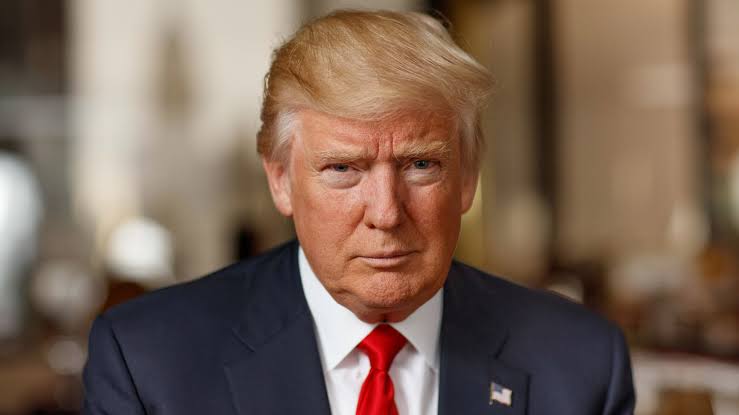
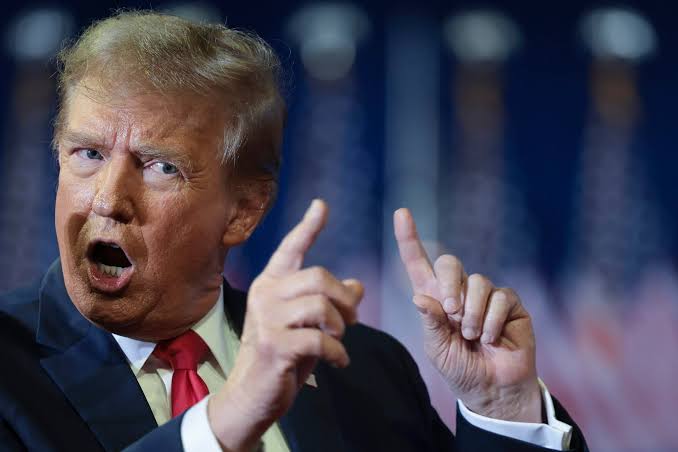
Iran has rejected a proposed truce in its war with the United States and Israel, state media reported Monday, despite a stark threat by US President Donald Trump to destroy its vital infrastructure.

“Iran has conveyed to Pakistan its response to the American proposal to end the war,” the news agency IRNA said, without revealing its source or what the US offer contained.

“In this response—set out in ten points—Iran… has rejected a ceasefire and insists on the need for a definitive end to the conflict.”

AFP reports that, several countries are trying to find a diplomatic solution to end 38 days of war sparked by Israeli and US attacks against Iran, which has responded by firing missiles at targets across the Middle East.

Recall on Sunday President Trump warned that, unless Tehran agreed by Tuesday evening to allow free passage to shipping through the Strait of Hormuz, he would order strikes on its power plants and bridges.

But IRNA said Tehran had countered with demands of its own, including “an end to conflicts in the region, a protocol for safe passage through the Strait of Hormuz, reconstruction, and the lifting of sanctions”.

Iran Allows French Vessel Through Strait Of Hormuz Amid Ongoing Conflict

By Sabiu Abdullahi

Iran has permitted a French-linked vessel to pass through the Strait of Hormuz, despite the continuing conflict in the region.

The ship, identified as Kribi, sails under the Maltese flag and is owned by French shipping company CMA CGM. It is the first Western vessel to exit the Persian Gulf since hostilities involving Iran began.

Reports indicate that ships from countries such as China, Pakistan and the Philippines have successfully navigated the strait in recent days.

However, Iran’s military has maintained that the strategic waterway will remain closed to vessels linked to the United States and Israel for the foreseeable future.

There are also claims that Iran has introduced charges for ships seeking passage through the strait, with fees said to be as high as $2 million. It remains unclear whether the Kribi paid any such fee.

Tracking data suggests the vessel travelled close to Iran’s coastline while passing through the strait.

Meanwhile, attention remains on the fate of a United States fighter jet crew after their aircraft was downed in Iran. One crew member has been rescued, while the other is still missing.

A geopolitical analyst, Mona Yacoubian, said: “It could be that the US finds whoever this is, and the Iranians don’t have control over this person, but if they do, I think that that is a further escalation of the war. That’s going to present a new challenge for President Trump.

“If there are images that are broadcast of a US fighter pilot taken hostage, captured as a prisoner, that’s going to elevate the challenges in the US domestically, because now you’re going to have this conflict brought home even more personally, into people’s living rooms, on their computer screens… I think it will then increase the pressure further on the administration to do something.”

In a separate reaction, Iran’s parliamentary speaker, Mohammad Bagher Ghalibaf, criticised the United States over the situation, stating: “After defeating Iran 37 times in a row, this brilliant no-strategy war they started has now been downgraded from ‘regime change’ to ‘Hey! Can anyone find our pilots? Please?’.

“Wow. What incredible progress. Absolute geniuses.”

The developments highlight rising tensions in the region, with the Strait of Hormuz remaining a critical route for global oil shipments and a focal point in the ongoing crisis.

Is WWE Losing Its Identity or Adapting for Gen Z?

 By Hadiza Abdulkadir

A recent viral moment featuring a popular online personality inside a WWE setting has reignited debate about the future of professional wrestling. The clip, widely shared across platforms like TikTok and Instagram, drew millions of views within hours and prompted criticism from longtime fans who questioned whether WWE is drifting away from its roots.

The discussion reflects a broader issue facing World Wrestling Entertainment (WWE): how to remain relevant in an era increasingly dominated by short-form digital content and younger audiences with changing viewing habits.

For decades, WWE built its success on long-form storytelling. Weekly television programs developed narratives over time, leading to major live events. However, audience behaviour has shifted significantly, particularly among Gen Z viewers.

Younger audiences are more likely to consume highlights rather than full broadcasts, favouring short, engaging clips over multi-hour programming. This trend has affected not only wrestling but also traditional sports and entertainment formats.

Industry observers note that this shift has forced companies like WWE to rethink how content is delivered and consumed.

In response, WWE has expanded its digital presence, focusing heavily on platforms such as YouTube, TikTok, and Instagram. The company now generates substantial engagement through clips, behind-the-scenes content, and shareable moments designed for online audiences.

Part of this strategy includes collaborations with influencers and internet personalities to attract viewers who may not traditionally follow wrestling. These appearances often generate significant online traction, helping WWE reach new demographics.

Despite the increased visibility, some fans argue that WWE’s current approach prioritises virality over storytelling. Critics suggest that certain segments appear designed for social media engagement rather than long-term narrative development.

There are also concerns about authenticity. The inclusion of non-wrestling personalities in prominent roles has led some to question whether the company is diluting its core identity.

Others, however, see the shift as part of WWE’s long history of adaptation. The company has undergone multiple transformations, from the edgier “Attitude Era” of the late 1990s to the more family-oriented programming of later years.

Media analysts point out that WWE’s current strategy reflects broader industry trends, where digital reach and online engagement are increasingly important metrics of success.

As WWE continues to expand its presence across digital platforms and explore new partnerships, the debate over its direction is likely to continue.

The central question remains: is WWE moving too far from its traditional identity, or is it successfully redefining itself for a new generation of viewers?

For now, one thing is clear: professional wrestling is no longer confined to the ring. It is part of a larger, rapidly evolving digital entertainment landscape.

Yamal Slams “Racist” Chant After Spain–Egypt Stalemate

By Muhammad Abubakar

Lamine Yamal has condemned what he described as a “racist” and “intolerable” chant heard during a 0–0 draw between Spain and Egypt, warning that discrimination remains entrenched in football culture.

The teenager took to social media shortly after the match, identifying himself as a Muslim and criticising supporters who chanted “the one who doesn’t boo is Muslim” inside the stadium. While noting the chant may have been aimed at opposing fans, Yamal said intent did not lessen its impact.

“As a Muslim, it doesn’t stop being a lack of respect and something intolerable,” he wrote, adding that using religion as a joke “makes you look ignorant and racist.”

The remarks quickly drew attention across the football world, with anti-discrimination advocates pointing to the incident as further evidence of the persistence of abuse in the game. Despite repeated campaigns led by FIFA and UEFA, discriminatory chanting—whether based on race, religion, or nationality—continues to surface in stadiums.

Analysts say religion-based taunts are often trivialised as fan rivalry but can reinforce exclusion and hostility, particularly toward minority players. Yamal’s intervention reflects a growing willingness among high-profile footballers to publicly challenge such behaviour.

He ended his message by thanking fans who supported the team and looking ahead to future competitions, including the FIFA World Cup.

The incident adds to mounting pressure on football authorities to strengthen enforcement measures and ensure stadiums are safe and respectful spaces for all players and supporters.

Customs Marks One Year Of CSR Initiative, Commissions Project In Abuja School

By Sabiu Abdullahi

The Nigeria Customs Service (NCS) has marked the first anniversary of its Corporate Social Responsibility programme, known as ‘Customs Cares’, with the commissioning of a major project at Government Secondary School, Wuse, Abuja.

The Comptroller-General of Customs, Adewale Adeniyi, performed the ceremony on Tuesday, 31 March 2026, in the presence of students, teachers and other stakeholders.

Speaking at the event, Adeniyi said the decision to adopt the school under the CSR framework has yielded positive results, especially in academic performance and the learning environment.

“What we have seen here today shows clearly that we did not make a mistake in adopting this school. The performance by the students reflects the impact of what has been done,” CGC Adeniyi said.

He explained that the intervention goes beyond physical structures. He noted that it has opened up opportunities for students to interact, discover their talents and improve academically.

“This is not just about infrastructure. It is about creating opportunities for young people to grow, interact and build confidence for the future,” he said.

The Customs boss also praised the school management for identifying key areas of need early. He said this helped the Service to focus on infrastructure and security improvements.

He stated that the Service renovated important facilities and installed solar-powered lighting to enhance safety within the school.

“This is a promise made and a promise kept. We are pleased that the project has been delivered on time and to the benefit of the students,” Adeniyi said.

Adeniyi advised students to make good use of the new facilities. He stressed the importance of building communication and public speaking skills for future success.

“You must take advantage of what has been provided here. These facilities are meant to help you discover yourselves and prepare for greater responsibilities ahead,” he added.

He also highlighted the need to maintain the facilities. He warned that many public projects fail due to poor maintenance. He called on the Federal Capital Territory Administration to consider partnerships that will support long-term upkeep.

“Our office remains open for further collaboration, but we must ensure that what has been provided is properly sustained,” he said.

Earlier, the Comptroller in charge of the Customs Cares Unit, Patience Ibrahim, said the event celebrated both the initiative’s first anniversary and the delivery of one of its key projects.

She said the programme was designed to address development needs in communities where the Service operates.

“In just one year, the initiative has grown into a recognised platform for delivering impactful projects across the country, and this intervention reflects the Service’s commitment to education as a driver of national development,” she said.

The Executive Secretary of the Federal Capital Territory Education Board, Danlami Hayyo, described the project as a strong example of institutional collaboration. He said it shows a clear commitment to the future of students.

“This intervention goes beyond infrastructure. It represents a commitment to the future of these students and to the broader goal of sustainable development,” he said.

Hayyo commended the NCS for extending its efforts to key sectors such as education, health and the environment. He added that the initiative creates room for stronger cooperation with the education sector.

The Principal of Government Secondary School, Wuse, Josephine Ugwu, said the project marks an important milestone in the school’s partnership with the Customs Service.

She listed the components of the intervention to include the renovation of the multi-purpose hall, installation of CCTV cameras, provision of solar-powered streetlights and distribution of learning materials.

“These facilities have transformed our environment. The hall will now serve as a centre for learning, cultural activities and talent development,” she said.

Ugwu said the project will have a lasting effect on students and improve the sense of community within the school.

Activities at the event included a basketball match between the Nigeria Customs Service team and students of the school.

The Customs Comptroller-General and his team also planted trees alongside officials of the Federal Capital Territory Secondary Education Board and other invited guests.

Iran Rejects Trump’s Demand, Insists Strait Of Hormuz Under Firm Control

By Sabiu Abdullahi

Tensions between Iran and the United States have deepened after Tehran dismissed recent remarks by President Donald Trump on the status of the Strait of Hormuz, a key global oil route.

Iran’s Islamic Revolutionary Guard Corps (IRGC) said the strategic waterway remains under its authority and will not be influenced by pressure from Washington. In a statement, the IRGC said the situation in the Strait of Hormuz is “firmly and dominantly” under its control and “will not be opened to the enemies of this nation by the ridiculous displays of the U.S. President”.

The reaction followed comments by Trump, who claimed that Iran had sought a ceasefire amid ongoing hostilities. He linked any possible consideration by the United States to the reopening of the strait.

“Iran’s New Regime President, much less Radicalized and far more intelligent than his predecessors, has just asked the United States of America for a CEASEFIRE! We will consider when Hormuz Strait is open, free, and clear. Until then, we are blasting Iran into oblivion or, as they say, back to the Stone Ages!!!” Trump said earlier.

The exchange has drawn attention to the Strait of Hormuz, which serves as a vital channel for global energy supplies. The IRGC’s position reflects Tehran’s refusal to уступ control or accept conditions tied to external demands.

Iran’s President Masoud Pezeshkian had earlier indicated that his country is willing to end the conflict under certain terms. “We possess the necessary will to end this conflict, provided that essential conditions are met, especially the guarantees required to prevent repetition of the aggression,” Pezeshkian said during a phone conversation with António Costa on Tuesday, according to a statement from his office.

The disagreement highlights sharp differences between both countries over how to reduce tensions and manage access to key maritime routes. Observers say developments around the strait could affect global oil supply and market stability.

In a related development, Trump criticised the North Atlantic Treaty Organisation (NATO) after member states declined to support U.S. efforts linked to the situation. He described the alliance as a “paper tiger” and said pulling the United States out of NATO is now “beyond reconsideration,” according to an interview with The Telegraph.

The remarks signal growing strain between Washington and its European allies, as the dispute over the Strait of Hormuz continues to shape international security and economic concerns.

Trump Threatens NATO Exit, Calls Alliance ‘Paper Tiger Organisation’

By Sabiu Abdullahi

United States President Donald Trump has said his administration is weighing the option of withdrawing from the North Atlantic Treaty Organisation (NATO) after the alliance declined to support the ongoing war against Iran.

In an interview with The Telegraph published on Wednesday, Trump criticised the military bloc and described it as a “paper tiger”.

“Oh yes, I would say [it’s] beyond reconsideration. I was never swayed by NATO,” the president said when asked if he would reconsider US membership of the alliance after the conflict.

“I always knew they were a paper tiger, and Putin knows that too, by the way.”

Tensions have increased following the closure of the Strait of Hormuz, a vital maritime route controlled by Iran through which about 20 percent of global oil supply passes. The development has heightened concerns about energy security worldwide.

Trump has called on allied countries to deploy warships to reopen the strategic passage, although many have resisted the move.

He also directed criticism at European allies, including the United Kingdom, and took aim at British Prime Minister Keir Starmer over the country’s refusal to support the US position.

“You don’t even have a navy. You’re too old and had aircraft carriers that didn’t work,” Trump said.

Trump has previously voiced dissatisfaction with NATO. In January, he stated that the United States had “never needed” its allies in the bloc and downplayed their contributions during the Afghanistan war that lasted two decades.

His latest remarks have attracted backlash from several European leaders, including Starmer, who have defended the alliance’s relevance and unity.

Iran Threatens To Attack U.S. Tech Firms in Middle East, Urges Staff to Evacuate

By Sabiu Abdullahi

Iran’s Islamic Revolutionary Guard Corps (IRGC) has issued a serious warning, threatening to target major American technology companies operating in the Middle East and calling on employees and nearby residents to evacuate immediately.

The statement, carried by Iran’s Tasnim news agency, identified U.S. firms involved in technology and artificial intelligence as potential targets. “Since the main element in designing and tracking terrorist targets are American and ICT and AI companies … from now on, [these] main institutions will be our legitimate targets,” it said.

The IRGC specifically named more than 15 companies that could be affected, including Boeing, Tesla, Meta, Google, and Apple. The warning noted that attacks could begin from 8 p.m. local time on Wednesday if further Iranian leaders are killed in what the statement described as “targeted assassinations.”

This announcement represents a significant escalation in regional tensions, raising concerns over the safety of multinational corporations and their staff.

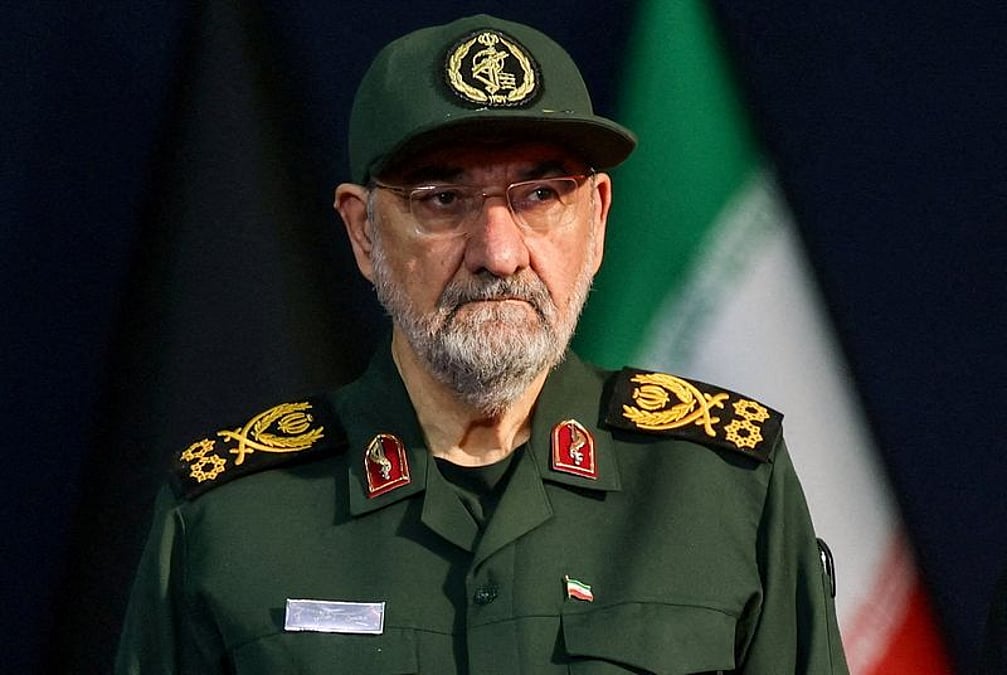
Earlier, IRGC Aerospace Commander Seyed Majid Moosavi had directed a warning at employees of industrial firms connected to the United States and Israel, urging them to leave their workplaces following a series of attacks on Iran’s production facilities.

In a post on X last Friday, Moosavi stated, “You tested us once before; the world saw again that you yourselves started playing with fire and attacking infrastructure.”

He further cautioned, “This time, the equation will no longer be an eye for an eye; wait and see! Employees of industrial companies associated with the Americans and the Zionist regime should quickly leave their workplaces to avoid endangering their lives.”

The warning comes amid reports of targeted attacks on Iranian industrial facilities in recent weeks. The IRGC has repeatedly emphasized that foreign involvement in Iran’s industrial sector could provoke serious consequences, signaling a stronger defensive posture.

Last Thursday, Israel announced the killing of the Commander of Iran’s IRGC Navy, Alireza Tangsiri, in a targeted military operation. Israeli Defence Minister Israel Katz confirmed the operation, saying Tangsiri was “directly responsible for the terrorist act of bombing and blocking the Strait of Hormuz.”

Katz added that the naval chief was “blown up” along with several other “senior Navy command officials.” Tangsiri, appointed as IRGC Navy commander in 2018, had previously served as deputy commander since 2010.

Other Iranian leaders have also been killed amid ongoing regional conflict, including the now deceased Supreme Leader, Ali Khamenei.

Iran Executes Two Alleged US-Israel-Linked Operatives Amid Rising Tensions

By Sabiu Abdullahi

Iran has executed two individuals accused of collaborating with a US–Israel-backed opposition group, according to reports from the country’s semi-official Tasnim news agency.

The agency stated that the two were charged with ties to the Mojahedin-e-Khalq (MEK), an Iranian opposition organization that authorities claim receives backing from the United States and Israel. The group has a long history of armed resistance against the Iranian government.

Iranian officials accused the executed individuals of “carrying out attacks against security forces,” although the report did not provide further details about the timing or nature of the alleged assaults.

The executions occur amid heightened tensions between Iran, the United States, and Israel, with Tehran frequently accusing both countries of supporting opposition movements aimed at destabilizing the government.

The MEK has remained controversial for decades. Iran designates the group as a terrorist organization, while the United States removed it from its terrorist list in 2012. There has been no immediate comment from US or Israeli officials regarding the executions.

Earlier in March, Iran’s intelligence ministry announced the identification and arrest of 30 individuals accused of spying for the United States and Israel. The ministry said the detainees included alleged spies, domestic operatives, and media-linked figures from several provinces.

“Over the past few days, 30 spies, domestic mercenaries and operational elements of the American-Zionist enemy were identified and arrested,” the ministry said.

Brigadier General Ahmadreza Radan, Iran’s Police Chief, told TRT that the suspects were detained on charges of “spying for the enemy and hostile media,” according to Tasnim news agency. Radan added that 250 of those arrested “provided intelligence to the London-based broadcaster Iran International, including information about targeted sites.”

He also stated that the detainees had links to armed groups and had sought to disrupt public order. Radan described them as “spies” who leaked information “to the enemy and hostile media outlets.”

The ongoing conflict between Iran and the US–Israel coalition continues to fuel global tensions, even as international organizations and nations call for diplomacy and a peaceful resolution.

Police in Israel Bar Catholic Leaders From Entering Holy Sepulchre On Palm Sunday

By Sabiu Abdullahi

Israeli police on Sunday prevented top Catholic leaders from accessing the Church of the Holy Sepulchre in Jerusalem, where they were scheduled to lead Palm Sunday Mass.

The Latin Patriarchate of Jerusalem confirmed the development in a joint statement issued with the Custody of the Holy Land. According to the statement, the Latin Patriarch of Jerusalem, His Beatitude Cardinal Pierbattista Pizzaballa, and the Custos of the Holy Land, the Most Reverend Fr. Francesco Ielpo, were stopped while heading to the church.

The statement explained that the clerics “were stopped en route, while proceeding privately and without any characteristics of a procession or ceremonial act, and were compelled to turn back.”

Church authorities said the incident marked an unprecedented disruption. “As a result, and for the first time in centuries, the Heads of the Church were prevented from celebrating the Palm Sunday Mass at the Church of the Holy Sepulchre,” the statement added.

They criticised the action of the police, describing it as “a grave precedent, and disregard[ing] the sensibilities of billions of people around the world who, during this week, look to Jerusalem.”

The Patriarchate noted that Christian leaders had adhered strictly to restrictions imposed since the outbreak of the war. It stated that public gatherings were cancelled, attendance was not allowed, and arrangements were put in place to broadcast religious activities to millions of worshippers globally.

The statement further condemned the move as “a manifestly unreasonable and grossly disproportionate measure.” It added that the decision was “hasty and fundamentally flawed decision, tainted by improper considerations” and represented “an extreme departure from basic principles of reasonableness, freedom of worship, and respect for the Status Quo.”

Expressing disappointment over the development, the Church authorities said, “We express our profound sorrow to the Christian faithful in the Holy Land and throughout the world that prayer on one of the most sacred days of the Christian calendar has thus been prevented.”