Abba Kabir Yusuf

Emir Sanusi Advises Gov Yusuf To Show More Authority

By Uzair Adam

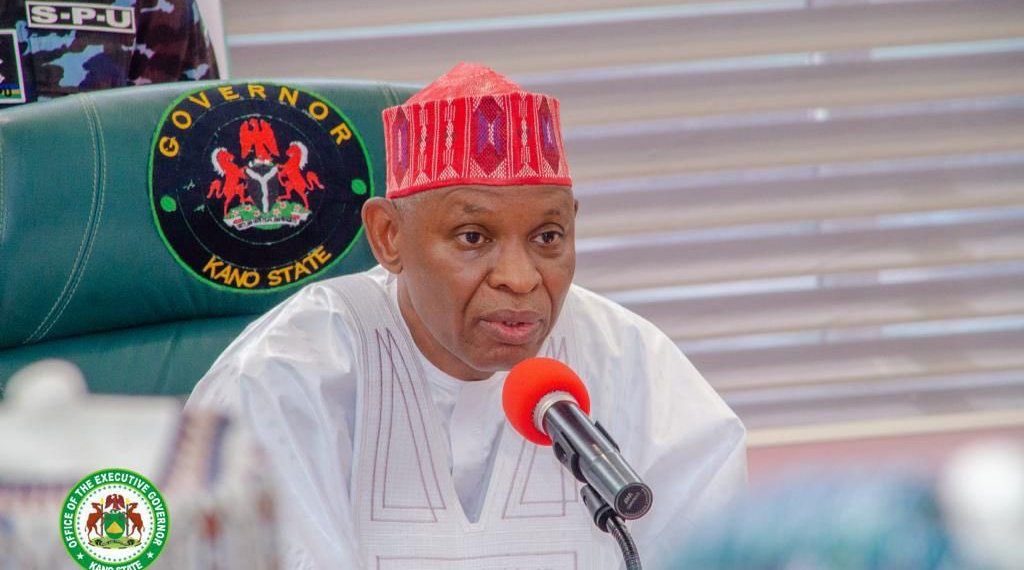
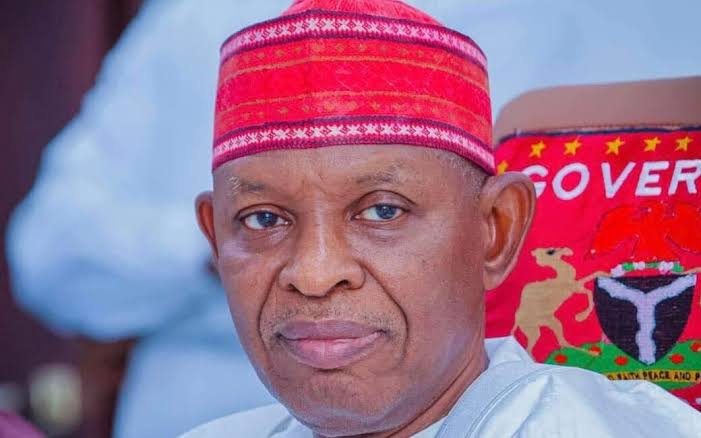
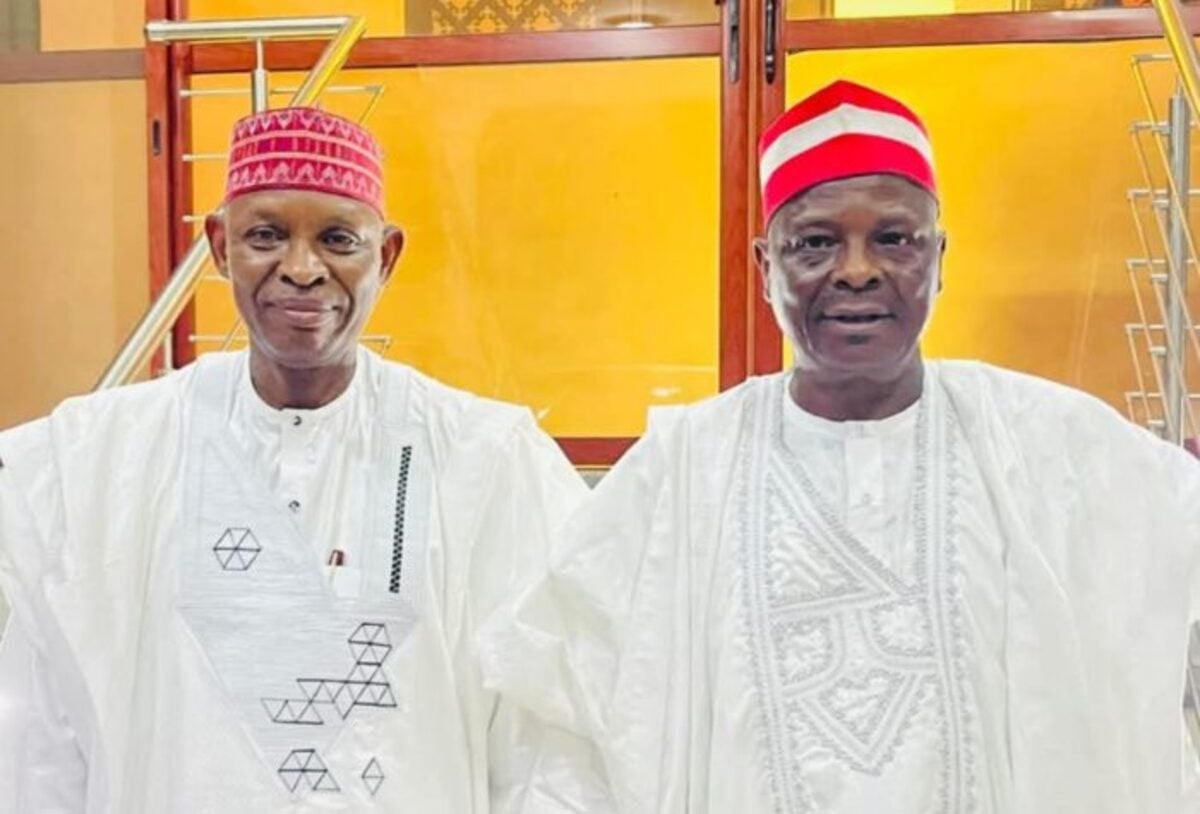
The Emir of Kano, Muhammadu Sanusi II, has urged Governor Abba Kabir Yusuf to assert stronger authority against individuals undermining his administration in the state.

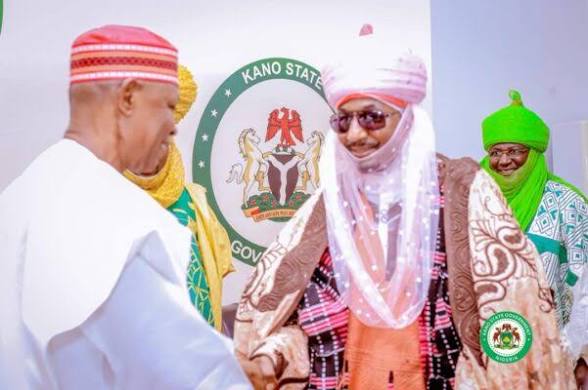
Sanusi made the remarks during the traditional post-Eid homage visit to the governor, a long-standing cultural practice observed after Sallah celebrations in Kano.

The emir said effective leadership requires a balance of justice and authority, citing the Qur’an to support his position.

According to him, Allah, after mentioning messengers and revealed books in the Holy Qur’an, also referred to iron, which scholars interpret as a symbol of strength and authority necessary for the protection of justice.

He commended Governor Yusuf for investments in education, healthcare and social welfare programmes but cautioned against showing undue respect to individuals who do not value it.

Sanusi noted that many residents now perceive the governor as excessively tolerant because of the growing disorder in parts of the state.

He advised the governor to demonstrate firmness by ensuring that law-abiding citizens continue to live peacefully while those violating the law face appropriate consequences.

The emir added that reactions from the gathering indicated public support for decisive leadership and pledged the emirate council’s support for the administration, stressing that the success of the government is tied to Kano’s collective progress.

In his response, Governor Yusuf expressed appreciation to the emir and members of the emirate council, while apologising for the cancellation of the Hawan Daushe procession during the Eid celebrations.

The governor explained that the decision was taken to prevent possible violence and maintain public safety.

Yusuf stated that he fears no one except Allah and said his restraint in handling sensitive issues was aimed at protecting lives and preserving peace in the state.

He also recalled previous incidents of violence during public outings, insisting that security considerations informed the government’s actions.

Security agencies have repeatedly suspended Sallah horse-riding activities in Kano amid tensions surrounding the ongoing emirship dispute involving Muhammadu Sanusi II and Aminu Ado Bayero, which remains before the court.

Kano Govt Begins Review of Illegal Structures, Building Approvals


By Uzair Adam

The Kano State Government has inaugurated a committee to identify illegal structures and review building approvals across Kano metropolis as part of efforts to strengthen urban planning and environmental safety.

While inaugurating the committee on behalf of Governor Abba Kabir Yusuf, the Secretary to the State Government (SSG), Alhaji Umar Farouk Ibrahim, described the assignment as critical to the physical, economic, and environmental development of the state.

He expressed concern over the growing trend of indiscriminate construction of buildings without proper approvals, saying the development poses serious challenges to public safety, environmental sustainability, and orderly urban growth.

According to him, despite existing regulations guiding physical development in the state, some individuals continue to embark on construction projects without obtaining the necessary documentation from relevant authorities.

The SSG urged members of the committee to carry out their responsibilities with diligence, integrity, and commitment in the overall interest of Kano residents.

The committee is chaired by the Director General of the Kano Geographic Information System (KANGIS), Dr. Dalhatu Aliyu Sani.

Other members include retired Permanent Secretary and former Head of the Department of Architecture at Aliko Dangote University of Science and Technology (ADUSTECH), Wudil, Dayyabu Zubairu Gani; Barrister Ahmad Sunusi of the Kano Internal Revenue Service (KIRS); Umar Musa Umar of Northwest University Kano; retired Surveyor General Abubakar Usman; Dr. Zainab Ibrahim Jibril; retired civil servant Sunusi Abdullahi K/Naisa; Freedom Radio’s Muzammil Ibrahim Yakasai; and Bello Zakari, Special Assistant on Revenue to the DG KANGIS.

Mustapha Ibrahim Fagge, Director of Administration and General Services at KANGIS, will serve as secretary of the committee, while Yusuf Yakubu Ismail from the Office of the Head of Civil Service will serve as co-secretary.

The committee has been mandated to identify illegal structures in Nasarawa, Tarauni, Kumbotso, and Fagge local government areas.

It is also expected to review all approvals granted within the last one year and determine those processed under both the immediate past and current managing directors.

In addition, the committee is tasked with recommending measures to halt illegal developments and advising the government on sustainable solutions to improve compliance with physical planning laws and urban development policies.

The committee is expected to submit its report within four weeks.

Responding on behalf of the committee members, Chairman Dr. Dalhatu Aliyu Sani thanked Governor Abba Kabir Yusuf for finding them worthy of the assignment.

He said the confidence reposed in the committee reflected the government’s trust in their professionalism and commitment to service delivery.

Dr. Sani added that reforms and achievements recorded under his leadership at KANGIS, especially in the areas of discipline and institutional development, had strengthened public confidence in the agency.

He assured the government that the committee would work tirelessly to justify the confidence reposed in it.

Kano Govt Inaugurates 13-Member Committee for Gov. Yusuf’s Third Anniversary Celebration

By Uzair Adam

The Kano State Government has constituted a 13-member committee to coordinate activities marking the third anniversary of the administration of Governor Abba Kabir Yusuf.

This was disclosed in a statement issued on Friday by the Director General of Media and Publicity, Sunusi Bature Dawakin Tofa, who said the committee was approved by the governor to organise programmes that will highlight the achievements of the “Gida Gida” administration.

According to the statement, the Secretary to the State Government, Alhaji Umar Farouk Ibrahim, will head the committee as chairman, while key members include commissioners and top government officials drawn from different ministries and agencies.

Those appointed include the Commissioner for Works, Engr. Marwan Ahmad; Commissioner for Health, Dr. Abubakar Labaran Yusuf; Commissioner for Environment and Climate Change, Dr. Dahir Muhammad Jashim; Commissioner for Agriculture and Natural Resources, Dr. Danjuma Mahmoud; and Commissioner for Education, Dr. Gwani Ali Haruna Abubakar Makoda.

Others are the Commissioner for Land and Physical Planning, Abduljabbar Umar Garko; Commissioner for Rural and Community Development, Abdulkadir Abdussalam; Special Adviser, Cabinet Office, Adda’u Lawan Kutama; Director General, Media and Publicity, Sunusi Bature Dawakin Tofa; Director General, Protocol, Abdullahi Ibrahim Rogo; and Director General, Research and Documentation, Hajiya Nana Asma’u Jibrin.

The Permanent Secretary, Research, Evaluation and Political Affairs (REPA), Alhaji Muhammad Jalo, will serve as secretary of the committee.

The statement noted that the committee has been tasked with organising a “befitting programme” to commemorate the anniversary and showcase what it described as key achievements of the current administration.

Governor Yusuf is expected to formally inaugurate the committee at 3:00 p.m. on Friday at the Cabinet Office conference hall in Kano.

Gov. Yusuf Warns Ex-Mentor Kwankwaso Against Further Attacks, Says ‘Silence Isn’t a Sign of Fear’


By Sabiu Abdullahi

Kano State Governor, Abba Kabir Yusuf, has issued a strong warning to his former political ally and mentor, Rabiu Musa Kwankwaso, over what he described as repeated attacks against him.

The governor spoke on Monday in Rano during the official affirmation of Sulaiman Kawu Sumaila as the All Progressives Congress (APC) senatorial candidate for Kano South.

Yusuf said his decision to remain silent should not be seen as weakness, adding that he could respond publicly if the situation continues.

He said, “For us, Kano peace is our priority, but if we are pushed to the wall, we will open our mouths and talk. Silence is not a sign of fear.

“To even keep quiet is an act of worship, not because we are afraid, not because we are kids. How could a 69-year-old call a 63-year-old a kid? It is just a personal respect that you are slightly elder than me.

“However, if an old man does not respect himself and keeps quiet, the younger one will have what to say. So, we are pleading with them in the name of Almighty and His Messenger to keep their mouths shut. Else, you will hear a lot of revelations.”

The remarks marked one of the governor’s strongest public responses to the leader of the Kwankwasiyya movement since both politicians fell apart earlier this year.

Yusuf’s comments followed a recent interview granted by Kwankwaso to Trust TV, where the former Kano governor criticised Yusuf’s decision to leave the Kwankwasiyya movement.

Kwankwaso, who is also a chieftain of the Nigeria Democratic Coalition (NDC), reportedly stated that the movement played a major role in Yusuf’s emergence as governor after serving as his personal assistant.

Law Week: Gov Yusuf Warns Against Court Orders Threatening Public Interest


By Uzair Adam

The Kano State Government has raised concern over what it described as the growing misuse of court orders to claim public assets, warning that the trend poses a threat to justice, social stability, and public interest.

Governor Abba Kabir Yusuf sounded the warning at the 2026 Law Week of the Nigerian Bar Association (NBA), Ungogo Branch, held in Kano, where he was represented by the State Commissioner for Justice and Attorney-General, Abdulkarim Kabiru Maude.

The governor expressed concern that individuals increasingly obtain court orders to assert ownership over properties such as schools, hospitals, graveyards, and other public facilities, often disrupting long-standing community use.

“When judicial decisions of such magnitude promote private interests at the expense of societal well-being, the true sense of justice is undermined,” he said.

He noted that in some cases, claimants secure restraining orders within a short period, preventing communities from accessing essential public assets that have served generations.

While reaffirming respect for the judiciary, the governor cautioned that such developments, if unchecked, could erode public confidence in the justice system and complicate efforts to maintain order and security.

The warning comes amid broader concerns about evolving security challenges in the state and across northern Nigeria, which he described as complex and interconnected, often driven by social and economic factors.

Speaking on the theme of the Law Week, “The Role of Law and Technology in Addressing Insecurity in Contemporary Nigeria,” the governor said modern security threats require a combination of sound legal frameworks and technological innovation.

According to him, security goes beyond the absence of crime to include justice, public trust, and the effective functioning of institutions. He added that a society may remain insecure despite the presence of security forces if citizens lack confidence in the system or experience delays in justice delivery.

He stressed that while law provides the foundation for order, technology plays a critical role in enhancing intelligence gathering, improving investigations, and strengthening coordination among security agencies.

Highlighting steps taken by his administration, the governor said Kano State has strengthened its legal and security architecture through collaboration with stakeholders and the introduction of community-based initiatives such as neighbourhood security structures aimed at boosting grassroots intelligence.

He also outlined reforms in the justice sector, including the recruitment of over 70 state counsel to address manpower shortages and improve the administration of criminal justice.

To modernise operations, the government has deployed digital tools such as high-speed internet and computer systems within the Ministry of Justice, alongside the engagement of legal consultants to reduce case backlogs.

In addition, the administration has invested in judicial infrastructure through the renovation of courts and construction of new facilities across the state, while also improving the welfare of judicial officers.

The governor further acknowledged the role of the Nigerian Bar Association in promoting the rule of law and supporting governance, describing its partnership with the state as constructive and beneficial.

He added that beyond enforcement measures, addressing insecurity requires tackling underlying issues such as poverty, unemployment, and social dislocation, which he identified as major drivers of crime.

Governor Yusuf to Inaugurate Garo as Kano Deputy Governor Tuesday


Uzair Adam

Kano State Governor, Alhaji Abba Kabir Yusuf, is set to inaugurate the state’s Deputy Governor, Murtala Sule Garo, on Tuesday.

The swearing-in ceremony will hold at the Coronation Hall, Government House, Kano, by 11:00 a.m.

A statement issued by the governor’s media aide, Ibrahim Adam, indicated that stakeholders, party loyalists, and members of the public are expected to attend the event.

The Daily Reality recalls that Garo was cleared by the Kano State House of Assembly last Monday following a successful screening conducted by a 12-member committee.

Gov Yusuf Summons Girls Over Street Underwear Display In Kano

By Sabiu Abdullahi

Governor Abba Kabir Yusuf of Kano State has reacted to a recent incident in which some young women displayed underwear in public, an act he described as inconsistent with the cultural and religious values of the state.

The governor addressed the matter at the Government House during a monthly prayer session, where the girls involved were invited following widespread reactions on social media.

“We heard what happened. We were going about our normal activities when some group of young women went to the street to display something. The governor was not aware of that at the time,” Yusuf said.

He explained that he became aware of the situation after he was briefed, adding that he does not actively follow developments on social media.

The governor criticised the act and said it does not align with the teachings of Islam or the moral expectations of Kano society.

“We must condemn this act because it is not in our teachings. It is not Islamic,” he said.

Yusuf appealed to individuals who may be encouraging such behaviour to stop, stressing the need to maintain peace and unity in the state.

“Those teaching them, I am begging them to stop. Allow Kano to be in peace and allow the people to continue to live in harmony,” he added.

He also disclosed that he directed authorities to bring the girls to him after learning about the incident, noting that they have expressed regret.

“When I heard about it, I directed that wherever the girls were, they should be brought to me. They are here now, and as you can see, they are praying,” he said.

According to the governor, the girls have been warned and advised to change their conduct, with an expectation that such behaviour will not occur again.

“We have warned them and they have shown remorse. We should not hear anything like this again,” he stated.

Yusuf further called on parents, teachers and community leaders to take responsibility for guiding young people and preventing actions that could undermine societal values.

“We want our teachers to advise those instigating young people into wrongdoing to fear God and stop such actions,” he said.

The incident has generated mixed reactions among residents, with many calling for stronger moral guidance and increased engagement with youths across the state.

Kano First? Then Deputy’s Choice Should Not Be Difficult

By Muhammad Sani Ilyasu

Over the past few days, Kano’s political atmosphere has been gripped by what should have been a routine decision — the selection of a Deputy Governor. Instead, it has dragged, stretched, and unsettled expectations. As the Hausa proverb reminds us, wankin hula yana neman kai. Sooner or later, the moment of decision arrives, and when it does, it reveals more than preference. It reveals judgment.

But truthfully, this is not a difficult decision.
Once the list of nominees from the old APC bloc surfaced, one name did not merely appear — it stood apart. Alhaji Rabiu Suleiman Bichi. Not because of sentiment, and certainly not because of noise, but because of something far more scarce in today’s politics: substance.

This is a man shaped by governance, not just politics. He has moved through the system at its highest levels — serving as Secretary to the State Government, managing policy at the governor’s office, and working across institutions where decisions are not announced for applause but executed for impact. That kind of experience does not shout. It shows. And in moments like this, it matters enormously.

Yet the weight of this decision extends well beyond qualifications. The governor did not simply make a political realignment — he justified it with a principle: putting Kano first. That declaration raised the stakes. It transformed every subsequent decision into a test of consistency. Because once Kano becomes the stated priority, convenience must give way to capacity, and politics must submit to judgment.

You cannot declare Kano first and then treat this appointment as negotiable. The office of Deputy Governor is not ceremonial. It is not a token for balancing interests or rewarding loyalty. It is a quiet but powerful engine of governance — where coordination happens, where pressure is absorbed, and where experience prevents the kind of costly mistakes that erode public trust. It is not a place for learning on the job. That is precisely why Rabiu Suleiman fits this moment.

Rabiu Sulaiman Bichi carries a rare combination that politics often separates: administrative competence and genuine political experience. As a founding figure of the Kwankwasiyya movement, a former PDP State Chairman, and later Director-General of the APC’s 2023 campaign in Kano, he has operated credibly across political lines without losing his footing. That is not inconsistency. It is relevance across eras — the mark of someone who understands how power works without being consumed by it.

More importantly, he brings reach. His network — spanning national and international circles — is not ornamental. It is functional. It is the kind of capital that attracts serious partnerships, aligns policy with opportunity, and positions Kano beyond its immediate boundaries. At a time when states compete not only internally but on a broader stage, that kind of exposure is not a luxury. It is a strategic asset.

And then there is the other side of the equation — the part many would rather avoid, but which cannot responsibly be ignored. Leadership is defined not only by what is built but by what is tolerated. To elevate a deputy whose public record is clouded by ongoing court cases involving serious allegations of corruption and financial misconduct is not merely a political risk. It is a statement — and a loud one.

Because once made, that choice will not remain local. It will travel. It will shape perception, invite institutional scrutiny, and define the governor’s seriousness in the eyes of allies, investors, and the wider Nigerian public. You cannot stand on reform and lean on controversy. That is not balance. It is contradiction. And Kano cannot afford contradiction at this level of governance.

This is not a moment for experimentation. It is a moment for clarity — a moment to demonstrate that governance here is still anchored on competence, credibility, and consequence. In Rabiu Suleiman Bichi, that clarity already exists. Which is why this decision, despite the delay, remains straightforward.

If Kano truly comes first, the answer is already known. Anything else is not a strategy. It is a misstep.

Muhammad Sani Ilyasu writes from Maryland, United States of America and can be reached via msaniiliyasu@gmail.com

Kano Scales Up TB Response, Targets Elimination

By Uzair Adam

The Kano State Government has intensified efforts to combat tuberculosis as activities marking World TB Day 2026 are held, reaffirming its commitment to controlling and eliminating the disease.

Nabilusi Abubakar K/Na’isa, the Public Relations Officer of the Ministry of Health, disclosed this in a statement on Tuesday, noting that the state is emerging as one of the leading in Nigeria’s fight against tuberculosis.

According to the statement, the government has continued to scale up interventions aimed at preventing the spread of the disease, which remains a major public health concern.

Speaking during the commemoration, the Commissioner for Health, Abubakar Labaran Yusuf, said the state is taking deliberate steps to address the burden of tuberculosis through sustained health programmes and policies.

He noted that TB is still a serious health challenge but added that the government is intensifying efforts to curb its spread across communities.

The commissioner explained that symptoms of the disease include persistent cough, excessive sweating and significant weight loss, warning that tuberculosis is airborne and can easily be transmitted if not properly managed.

“The symptoms should not be ignored, as early detection remains critical in controlling the disease,” he said.

He further stated that the government is committed to eradicating TB through various initiatives, including the renovation of Yada Kunya General Hospital to improve treatment and patient care.

Yusuf also commended the Kano State Governor, Abba Kabir Yusuf, for his continued support in strengthening the health sector.

The statement revealed that 913 people were diagnosed with tuberculosis in Kano State in the past year, with 720 successfully treated, indicating progress in managing the disease.

It added that development partners have supported the state with mobile healthcare vehicles to expand access to medical services, particularly in underserved communities.

Health officials urged residents to seek medical attention promptly if they experience symptoms, stressing that early diagnosis and treatment remain key to stopping the spread of tuberculosis.

Kano State Govt Debunks Reports of Snubbing Kano Emir After Public Uproar

By Ibrahim Yunusa


The Kano State Government has dismissed reports alleging that Governor Abba Kabir Yusuf snubbed the Emir of Kano, Muhammadu Sanusi II, during the Hawan Nasarawa celebration at Government House.

In a statement issued by the governor’s spokesperson, Sunusi Bature Dawakin Tofa, the government described the claims as false, misleading, and lacking any factual basis.

According to the statement, the report was deliberately fabricated to misinform the public and create unnecessary tension.

The government clarified that there was no breach of protocol, noting that it is a longstanding tradition for governors to pay homage to the President during the Sallah period.

The government explained that this year’s Hawan Nasarawa coincided with a strategic meeting of Nigerian governors, requiring Governor Yusuf’s presence outside Kano.

It added that the governor had duly informed the Emir and delegated the Speaker of the Kano State House of Assembly and other senior officials to receive the Emir on his behalf at the Government House.

Despite the scheduling conflict, the statement noted that Governor Yusuf participated in other Sallah activities, including attending the Eid prayer led by the Emir and making arrangements to receive other traditional rulers.

The government reaffirmed that relations between the state government and the Kano Emirate Council remain cordial, urging the public to disregard the report and rely on credible sources for information.