Abba Kabir Yusuf (Gida-Gida)

Kano’s Water Crisis: Time to Move Beyond Promises

By Engr. Kabir Bashir Shariff, PhD

For decades, residents of Kano have lived with a persistent and worsening water crisis. What should have been treated as a state emergency has instead become a normalised hardship. In a city of over 10 million people, access to clean and reliable water remains uncertain for millions.

Water is the most basic requirement for life. Yet in Kano, households, businesses and institutions struggle daily to secure it. This is not due to a lack of infrastructure alone, but a combination of systemic neglect, poor planning and weak execution.

The state’s municipal water supply depends largely on two major treatment plants—Chalawa and Tamburawa. The Tamburawa Water Treatment Plant, built during the administration of former Governor Shekarau, was designed to produce 150 million litres of water per day. However, it has never reached that capacity.

Having worked at the plant as an intern in 2013, I saw its potential. Unfortunately, that potential has remained unrealised due to multiple challenges.

One of the major problems is the inadequate supply of raw water. The Kano River, which feeds the Tamburawa plant, has been affected by both climate variability and upstream water diversion. The Tiga Hydropower facility, for instance, significantly reduces the volume of water reaching the treatment plant.

Infrastructure decay is another critical issue. Key components of the water system—from intake pumps to filtration units—are either poorly maintained or no longer functional. Clarifiers, sedimentation tanks and filter beds have deteriorated over time, while high-lift pumps are frequently out of service.

Electricity supply further complicates the situation. Water treatment and distribution require stable power, yet the plants operate under erratic electricity conditions. This limits their ability to function effectively and consistently.

Perhaps the most fundamental flaw lies in the distribution system itself. The Tamburawa plant water supply model relies heavily on direct pumping from treatment plants to households. There are few, if any, functional elevated storage reservoirs to support gravity-based distribution. As a result, water flows only when pumps are running—an inefficient system that drives up energy costs and leaves many areas without water for long periods.

Regulatory lapses have also contributed to the problem. Damaged pipelines caused by construction activities are often left unrepaired, while leakages and illegal connections go unchecked. This further weakens an already fragile system.

In response to these challenges, many residents and commercial centres have turned to boreholes. While this offers temporary relief, it poses a long-term threat. Excessive groundwater extraction is already leading to declining water tables, dried wells and environmental stress.

The Kano State Government’s recent allocation of N21 billion for water infrastructure upgrades is a step in the right direction. However, funding alone will not solve the problem unless it is backed by sound planning and accountability.

There is an urgent need to invest in elevated water storage systems across the city. By pumping treated water into strategically located reservoirs, distribution can be sustained through gravity. This will reduce energy costs, improve efficiency and ensure a more reliable supply.

Equally important is the rehabilitation of existing infrastructure and the adoption of modern technologies. Power supply to water facilities must also be prioritised, possibly through dedicated or alternative energy sources.

Looking ahead, Kano must plan for its future. As the fastest-growing urban centres in northern Nigeria, these cities will see increasing demand for water. The state should begin developing new water treatment plants using available irrigation dams and other water sources.

Kano’s water crisis is no longer just an infrastructure issue—it is a public health and economic concern. Access to clean water should not be a privilege. It is a basic right.

The time has come to move beyond promises and take decisive action.

Engr. Kabir Bashir Shariff, PhD, can be contacted via kabir-bashir.shariff@unicaen.fr.

Kano’s Red Pants Controversy and the Cost of Political Spectacle

By Abdulhamid Abdullahi Aliyu

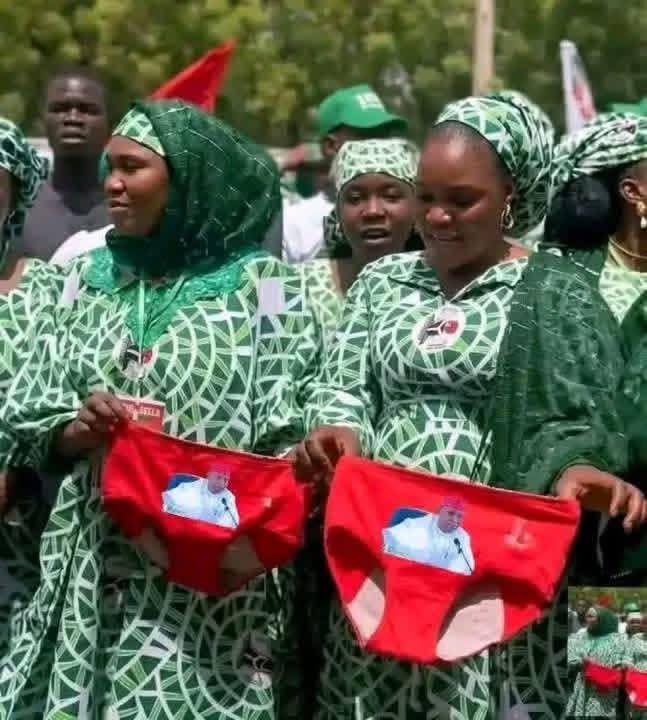
Politics often produces strange moments, but every now and then a controversy emerges that says more about a society than it first appears. The recent uproar in Kano over viral images of women displaying red underwear allegedly linked to supporters of the state government is one such moment. What began as social media comedy quickly evolved into a serious conversation about political culture, digital misinformation, public dignity and the growing danger of supporter excesses in Nigeria’s democracy.

At the centre of the controversy are competing narratives. One version claims the act was staged by enthusiastic supporters seeking to mock the red symbolism associated with Senator Rabiu Musa Kwankwaso and the Kwankwasiyya movement. Another insists no government official procured or distributed such items, and that the women involved purchased them independently as a form of protest. A third line of argument points to manipulated or AI-generated images, especially those showing Governor Abba Kabir Yusuf’s photograph printed on the underwear.

Whichever version one believes, the broader lesson lies elsewhere. In the age of instant virality, perception often outruns fact. Once provocative visuals hit the internet, they begin to live independent lives. By the time clarifications arrive, opinions are already formed, jokes already shared, and reputations already bruised. That is the brutal logic of modern information warfare.

This is why the Kano episode should not be dismissed as mere comedy. It highlights how politics in Nigeria is increasingly shifting from policy contests to symbolic warfare. Rather than debates over education, healthcare, water supply, youth unemployment or urban planning, public attention is hijacked by spectacles designed to humiliate opponents and energise online loyalists. The result is a shrinking space for serious governance discourse.

Kano is especially vulnerable to this kind of politics because of its unique political history. The state is one of Nigeria’s most politically conscious arenas, where colours, slogans, movements and personalities carry deep emotional weight. The red cap is not merely fashion; it represents a political identity. Any attempt to ridicule that identity will naturally provoke backlash. Supporters may consider such mockery clever mobilisation, but politics rooted in humiliation often boomerangs.

There is also an uncomfortable gender dimension to the saga. Across Nigeria, women are too often reduced to props in political performances—assembled for rallies, tokenised for optics, or used to dramatise partisan messages. Whether voluntary or orchestrated, any political theatre that places women at the centre of ridicule or sensationalism raises ethical questions. Political communication should elevate citizens, not use them as instruments of mockery.

For the Kano State Government, the greater challenge may not be the incident itself but how it is managed. Governments today do not only govern roads and budgets; they govern narratives. Silence can sometimes be wise, but in a digital environment, prolonged silence can also create a vacuum into which falsehood rushes. A vacuum of credible information often becomes fertile ground for stereotypes.

That is why communication experts increasingly advise a strategy of rapid clarification and narrative replacement. Rather than angrily chasing every rumour, a government can calmly provide facts, support independent fact-checking, and then redirect public attention to measurable achievements. If the public conversation is trapped on underwear for days, then governance has already lost valuable oxygen.

There is wisdom in the suggestion that the state should flood the public space with verifiable stories of schools rehabilitated, hospitals improved, roads completed, youth programmes launched, and social interventions delivered. This is not propaganda when the facts are genuine. It is simply the discipline of agenda-setting: ensuring governance performance is louder than viral nonsense.

Equally important is internal message control among supporters. Many governments underestimate the damage their unofficial defenders can cause. Overzealous loyalists often believe they are helping, while in reality, they create liabilities. Mockery, coded insults and reckless satire may thrill partisan circles, but they alienate undecided citizens and embarrass the leaders they claim to defend.

This is not a Kano problem alone. Across Nigeria, politicians increasingly face a paradox: their strongest online supporters can also become their biggest reputational risk. In a hyperconnected society, one foolish stunt can overshadow months of policy work. That reality demands more disciplined political engagement from parties and movements nationwide.

The final lesson is simple. Leadership should be measured by competence, compassion and delivery—not by who wins the latest viral skirmish. Kano deserves national attention for industrial revival, educational progress, urban reform and social development, not for underwear controversies. If this episode prompts a rethink of political conduct, media literacy and supporter behaviour, then an embarrassing moment may yet produce a useful correction.

Democracy is serious business. When politics becomes a permanent performance, everyone eventually loses.

Abdulhamid Abdullahi Aliyu is a journalist and syndicate writer based in Abuja.

Gov Yusuf Welcomes Shekarau to APC, Says Party Gaining Strength in Kano

By Uzair Adam

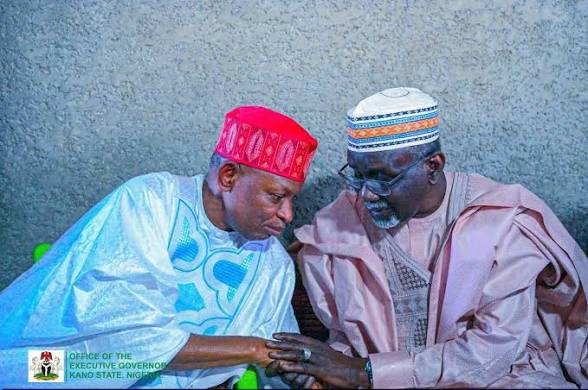
Kano State Governor, Abba Kabir Yusuf, has welcomed former governor and senator, Ibrahim Shekarau, into the All Progressives Congress (APC), describing his return as a major boost to the party’s strength in the state.

This was contained in a statement issued on Sunday by the Governor’s Chief Press Secretary, Mustapha Muhammad, who said the development reflects the party’s growing appeal and consolidation in Kano.

Governor Yusuf said a date would soon be announced, in consultation with the party’s national secretariat, for the formal reception of Shekarau into the APC.

He noted that the party “continues to witness increasing support and consolidation,” positioning it as a dominant force in the state.

According to the statement, the governor expressed confidence in the party’s readiness for future elections, stressing that unity and strategic political alignments are key to its rising strength.

He added that the APC is “battle-ready to win all elective positions” in the forthcoming polls.

Yusuf further assured members that the leadership remains committed to strengthening internal cohesion and expanding its grassroots base across Kano.

He urged party loyalists to remain steadfast and intensify mobilisation efforts.

“We call on all party faithful to remain committed and continue mobilising support as we prepare for future political contests,” the governor said.

Is it really Kano First or Politics First? 

By Dr Aminu Tukur Adam

The recent political drama in Kano State, which began as a rumour before metamorphosing into a full-blown political battle, is interesting: how loyalty is being reinterpreted, how personal interest is being transformed into the people’s mandate, and how politics gradually takes over governance. 

It’s now becoming crystal clear to everyone that the Kano State government is not only static but also backtracking. At a critical point of state emergency and national concern, our dear state is being placed on hold. 

To begin with, APC was initially viewed as a disaster by Engr. Rabiu Musa Kwankwaso, Kano State governor and all their supporters; many of the supporters sacrificed their lives to rescue the state from the APC, a party that was hated for its immense corruption, extortion and oppression. 

As big as Kano State is, with its about 20 million population and an over 1 trillion naira budget, it will surprise you to know that the state’s executive council members are currently redundant; the council held only one executive session in the span of 90 days! The previous buzzworthy council is now scheduled for the end of recess. 

That probably explains why the only visible function of this government, road construction, is also neglected; no one is there to approve new projects or supervise the ongoing ones. 

The most unfortunate event was the visit of the Turkish ambassador to Nigeria to the Kano State government house, with the aim of consolidating multimillion-dollar projects, but astonishingly, only the Chief of Staff and two commissioners received a figure like this! For anyone familiar with the Turkish Cooperation and Coordination Agency (TIKA), it must have been a nightmare. 

TIKA isn’t like the usual agencies you see; it’s an international technical assistance agency. This same agency renovated the Kano capital school without a penny from the state government. 

We’re also talking about the Turkish Trading Firm, Direkçi, which has invested over $22 million in Nigerian states, with Kano as a major beneficiary.

The visit was intended to create an opportunity to secure scholarships for Kano state indigenes, to bring the Turkish humanitarian foundation IDDEF to boost humanitarian services in the state, and to commence visa services at the Turkish consulate in the state.

Yet, when that esteemed Ambassador walked into the Government House, he was neither received by the Governor, nor his deputy, nor the SSG.

While the governor plays an absentee landlordism, some villages in the state were burning and many lives were also lost; the recent unfortunate incident in the Katai and Fauda communities in Wudil local government generated widespread reactions, a police officer lost his life and villages were set ablaze; however, no formal press release, no condemnation and no any form of assurance from the state government. 

Astoundingly, when the governor was too busy to hold a council meeting, overwhelmed to meet the Turkish ambassador to Nigeria and also overloaded with responsibilities to comment on the Wudil incident, we saw his face in the convoy of Yilwatda, the APC national chairman, courting the governor of Bauchi state, Bala Muhammad, into APC. 

To add more salt to the injury, when the governor was returning to Kano, the local government chairmen and some of the governor’s aides orchestrated a drama, where a rented crowd were paid to welcome the governor from his political excursion. You may be surprised as to why the welcoming? Was he not just coming back from Abuja? Was the journey not a political journey for the APC’s convention? Is there any significance to this journey in the life of the innocent Kano people? 

This is the Kano first agenda they’re selling. It’s not about you or the state; it’s simply an idea to sell Bola Tinubu and his party.

Kano Governor Sacks Commissioner for Investment, Shehu Wada Sagagi, Orders Immediate Handover

By Ibrahim Yunusa 

Governor Abba Kabir Yusuf has relieved Alhaji Shehu Wada Sagagi of his duties as Kano State Commissioner for Investment, Commerce and Industry with immediate effect.

 The decision was announced in a statement issued on Thursday by the governor’s spokesperson, Sunusi Bature Dawakin Tofa.

According to the statement, Sagagi has been directed to hand over the ministry’s affairs to the Director of Commerce without delay.

 The move forms part of what the government described as an ongoing strategic realignment aimed at strengthening administrative efficiency and repositioning the state for sustainable growth.

Governor Yusuf expressed appreciation for Sagagi’s contributions during his tenure, particularly in the areas of politics, religion, and support for small and medium enterprises. 

He wished the former commissioner success in his future endeavours and reaffirmed his administration’s commitment to effective service delivery and good governance in Kano State.

This development comes amid ongoing suspicions that some key figures are undermining and backbiting the governor following his split from his former political godfather, Rabi’u Musa Kwankwaso.

Reports also indicate growing confusion within the cabinet and among several appointees in government parastatals, as uncertainty persists over loyalties, specifically on who remains aligned with the governor and who is still loyal to his former mentor.

One Year After Promise, Kano Foreign Scholars Still Await Jobs

By Uzair Adam

One year after Kano State Governor Abba Kabir Yusuf announced automatic employment for 54 postgraduate students trained in India, the beneficiaries say the promise remains unfulfilled, raising concerns about accountability and policy follow-through.

The graduates, who studied at Symbiosis International University under the Kano State Government’s foreign scholarship programme, returned to the state on March 22, 2025. 

The Daily Reality recalls that during an official reception and Iftar held in their honour, the governor declared that the students would be absorbed into the state civil service.

“I was pleased to have Iftar with another set of our students who returned from India after completion of their studies,” the governor said at the time, adding that the 54 beneficiaries would be given automatic employment.

He also urged them to justify the investment made in them by contributing meaningfully to the development of the state, stressing that they should “repay the state by working assiduously.”

However, despite the governor’s public promise of automatic employment, the graduates remain without jobs one year later. 

The delay has created uncertainty and hardship for the scholars, who had planned their careers around the assurance, while no formal communication or timeline has been provided by the authorities.

Speaking on behalf of the affected graduates, a student’s representative who pledged anonymity said the commitment has not been implemented despite repeated follow-ups through appropriate channels.

“During the reception, His Excellency publicly announced automatic employment for all 54 returning scholars,” he said.

He explained that many of the graduates had structured their professional plans around the governor’s promise, but the delay has left them facing uncertainty and hardship. 

According to him, there has been no formal communication or clear timeline from the authorities regarding when the employment will take effect.

He said the situation has persisted for a year despite the group’s efforts to seek clarification.

“We believe this is a matter of public accountability and policy follow-through,” he added, calling for attention to the issue.

The Director General, Media and Publicity to the governor, Sunusi Bature Dawakin Tofa, did not respond to several calls seeking comment. 

Efforts to reach the governor’s Chief Press Secretary, Mustapha Muhammad, were also unsuccessful due to network constraints at his location.

The development comes amid ongoing state government investments in foreign education programmes to build skilled manpower, particularly in critical sectors such as health and education.

Many people believe that delays in implementing such commitments could weaken public confidence in government policies and affect future beneficiaries of similar programmes, even as the affected scholars remain hopeful that the promise will eventually be fulfilled.

Sani Danja: From performance to promotion 

In governance, performance should naturally translate into greater responsibilities. Since his appointment as Special Adviser on Youth and Sports, Hon. Sani Musa Danja has demonstrated capacity, commitment, and a people-oriented approach that has delivered visible impacts on youth development and sports advancement in Kano State.

Within his first month in office, over 3,000 youths were empowered through food-related initiatives such as Nija Food. This early intervention reflected responsiveness to the economic realities facing young people and set the tone for a tenure driven by action rather than mere rhetoric.

One of Hon. Danja’s most commendable achievements is his grassroots engagement across all 44 Local Government Areas of Kano State. Through open consultations with the youths, he listened to concerns on welfare, unemployment, insecurity, and inclusion. This initiative brought governance closer to the people and helped rebuild trust between the government and youth.

To strengthen coordination and sustainability, he worked closely with Senior Special Assistants on Youth across the 44 LGAs, fostering cohesive leadership and unified strategies for youth development across the state.

Understanding the strong link between unemployment and insecurity, Hon. Danja adopted a preventive empowerment approach. Over 300 youths previously involved in thuggery and phone snatching were redirected into productive ventures, including popcorn-gurguru production, fast-food services, shawarma preparation, and baking. This intervention not only provided livelihoods but also contributed to crime reduction and social reintegration.

His tenure also saw institutional support for voluntary youth and security organisations, including the Nigerian Boy Scouts and other community-based groups such as the Civilian JTF Kano. Through the provision of working materials and encouragement, discipline, and volunteerism, community service among young people was strengthened.

In addition, a statewide Youth Symposium Day was organised to promote dialogue, leadership, and civic engagement, involving participants from all 44 LGAs. Hon. Danja also paid visits to youth training and skills acquisition centres across the state, encouraging trainees and reassuring them that government support remains within reach (kusa da gwamnati).

Beyond programs, compassion has remained a defining feature of his leadership. Financial assistance was extended to youths facing serious health challenges, including those with spinal cord-related disabilities, demonstrating an inclusive and humane approach to governance.

In sports development, Hon. Danja contributed to the revival of neglected sports such as volleyball, encouraging youth participation and talent development. Administratively, he reorganised and strengthened his office to ensure efficiency, transparency, and effective service delivery.

Currently, his office is coordinating a large-scale youth empowerment initiative under YEIDEP, targeting over 1.2 million youth participants in skills acquisition and entrepreneurship, reflecting executive-level vision and readiness.

Given his performance, statewide reach, and ability to connect with young people, Hon. Sani Musa Danja is well-positioned to deliver even greater impact.

A passionate appeal is therefore made to His Excellency, Engr. Abba Kabir Yusuf, to consider appointing Hon. Sani Musa Danja as the Commissioner for Youth and Sports and nominate him to the Kano State Executive Council. Such a decision would ensure continuity, consolidate gains, and further strengthen Kano State’s youth and sports development agenda.

Shamsuddeen Muazu (AbuMuhd) wrote from Kano State. He can be reached via abumuhdpress@gmail.com.

Kano Govt Scraps Higher Education Ministry, Merges It with Education

By Muhammad Sulaiman

Abba Kabir Yusuf has approved the merger of the state’s Ministry of Higher Education with the Ministry of Education in a move aimed at strengthening coordination and accelerating reforms in the education sector.

The decision was announced in a statement on Sunday by the governor’s spokesperson, Sunusi Bature Dawakin Tofa.

According to the statement, the newly unified body will operate as the Ministry of Education, with a specialised Directorate of Higher Education established within the ministry to oversee tertiary education in the state. The directorate will be headed by a permanent secretary and supported by relevant personnel to ensure effective administration of higher education institutions.

The statement added that agencies previously under the Ministry of Higher Education, including the state Scholarship Board, will now be returned to the Ministry of Education. State-owned universities and other tertiary institutions will also be supervised by the Directorate of Higher Education under the restructured ministry.

The restructuring forms part of the government’s broader education sector reform agenda, which seeks to eliminate duplication of responsibilities, improve policy coordination across all levels of education, and reduce the cost of governance.

Governor Yusuf said the reform is intended to enhance efficiency, strengthen accountability, and improve the overall quality of education administration in the state.

He reiterated his administration’s commitment to implementing comprehensive reforms that will revitalise the education sector and create better opportunities for the younger generation.

The Office of the Secretary to the State Government and the Office of the Head of Service have been directed to ensure the immediate and smooth realignment of the affected ministries and their departments.

Kano gov’t approves early payment of March salaries ahead of Sallah

By Muhammad Abubakar

The Kano State Government has approved the early payment of March 2026 salaries to civil servants to enable them to prepare for the forthcoming Eid al-Fitr celebrations.

According to a statement issued by the Office of the Head of Service, Governor Abba Kabir Yusuf directed the immediate release and payment of the salaries to all workers in the state civil service.

The Acting Head of Service, Bilkisu Shehu Maimota, said the directive was intended to help workers make adequate preparations for the Sallah festivities in a convenient and dignified manner.

She explained that the early payment reflects the administration’s commitment to the welfare of civil servants and its appreciation of their dedication and contributions to the development of the state.

Maimota also urged civil servants to utilise the gesture responsibly while continuing to demonstrate commitment, discipline and efficiency in the discharge of their duties for improved service delivery.

The state government further reaffirmed its resolve to sustain policies that promote workers’ welfare and enhance productivity within the civil service.

Abba Yusuf, Kwankwaso and the politics of mandate

By Abdulhamid Abdullahi Aliyu

In Kano today, politics is no longer whispered in corridors; it is argued loudly in markets, mosques and on social media timelines. Since Governor Abba Kabir Yusuf’s reported decision to part ways with the NNPP, the city has become a theatre of competing loyalties, sharp sarcasm and deeper constitutional questions. Supporters have reduced complex political choices into street labels—Abba’s camp being teased as ’yan a ci dadi lafiya, while the Kwankwasiyya faithful wear wuya ba ta kisa as a badge of honour. Beneath the banter, however, lies a serious national issue: who truly owns a political mandate?

Governor Abba Yusuf did not emerge from a vacuum. His ascent to the Kano Government House was inseparable from the Kwankwasiyya political machinery, a movement painstakingly built by Senator Rabiu Musa Kwankwaso over two decades. From red caps to ideological messaging, the movement transcended party platforms and became a political identity. In the 2023 elections, many voters did not merely vote for a party; they voted for Kwankwasiyya as a symbol of continuity, defiance and populist appeal.

Yet, Abba Yusuf is no ceremonial beneficiary. He contested, won, survived legal battles and now governs with all the constitutional powers vested in an elected governor. His mandate, in law, is personal. Once sworn in, no political godfather—however influential—can legally issue directives from outside the Government House. This is where the tension lies: the clash between moral ownership of political capital and constitutional authority of office.

Those derisively tagged ’yan aci dadi lafiya by opponents argue that governance is about pragmatism, access to power and delivering dividends to the people. From their perspective, a sitting governor must build alliances beyond sentiment, protect his administration and ensure stability. Politics, they insist, is not a monastic vow of hardship but a strategic exercise in survival and results.

On the other side stand the wuya bata ƙi sa faithful—Kwankwasiyya loyalists who believe political struggle must be endured to preserve ideology. To them, Abba Yusuf’s move is not strategy but betrayal. They see it as an attempt to reap the fruits of a movement while discarding its architect. In their view, suffering with the movement, even outside power, is preferable to comfort without loyalty.

This divide exposes a recurring Nigerian dilemma: the uneasy relationship between political movements and the individuals they propel into office. From Awolowo’s disciples to Aregbesola’s rupture with Tinubu, Nigerian politics is littered with fallouts between founders and beneficiaries. Kano’s current drama is simply the latest chapter.

Kwankwaso’s influence in Kano politics is undeniable. Beyond elections, he represents a moral compass for millions who see him as a symbol of resistance against elite dominance. His supporters’ anger is therefore not merely partisan; it is emotional and ideological. To them, Abba Yusuf’s political identity was inseparable from Kwankwaso’s shadow.

However, governance demands autonomy. A governor who appears perpetually tethered to an external authority risks administrative paralysis and legitimacy questions. Abba Yusuf’s defenders argue that Kano cannot be governed from outside its constitutional structures. They insist that the electorate voted not just for Kwankwaso’s endorsement but for Abba Yusuf’s promise to lead.

The real casualty in this contest, unfortunately, risks being governance itself. When political energy is consumed by loyalty tests and factional supremacy, policy focus suffers. Kano’s challenges—urban congestion, youth unemployment, educational deficits, and security concerns—require a governor fully immersed in administration, not in constant political firefighting.

There is also the electoral implication. While Kwankwasiyya remains a formidable grassroots force, incumbency is a powerful weapon. State resources, visibility, and administrative control can quickly reshape political narratives. The assumption that loyalty automatically translates into electoral dominance may underestimate the pragmatism of Nigerian voters, especially when power dynamics shift.

Yet, Abba Yusuf’s path is equally fraught. Detaching from a movement that delivered his victory carries political costs. Kano’s electorate is emotionally invested, and symbols matter. If his administration fails to convincingly outperform expectations, the narrative of ingratitude could harden into electoral punishment.

Ultimately, this is not just a Kano story; it is a Nigerian one. It forces a national reflection on whether mandates belong to parties, movements, godfathers or the individuals elected by the people. The Constitution is clear, but politics rarely is.

Perhaps the wisest outcome lies not in triumph or humiliation but in recalibration. Political movements must learn to institutionalise beyond personalities, while elected officials must acknowledge the moral debts that brought them to power. Neither absolute loyalty nor total independence offers a sustainable path.

As the dust settles, the sarcasm of ’yan a ci dadi lafiya and wuya ba ta kisa may fade, but the questions will linger. In Nigeria’s democracy, mandate is both a legal instrument and a moral contract. Kano’s unfolding drama reminds us that ignoring either side of that equation comes at a cost—sometimes higher than any political suffering.

Abdulhamid Abdullahi Aliyu is a journalist and syndicate writer based in Abuja