
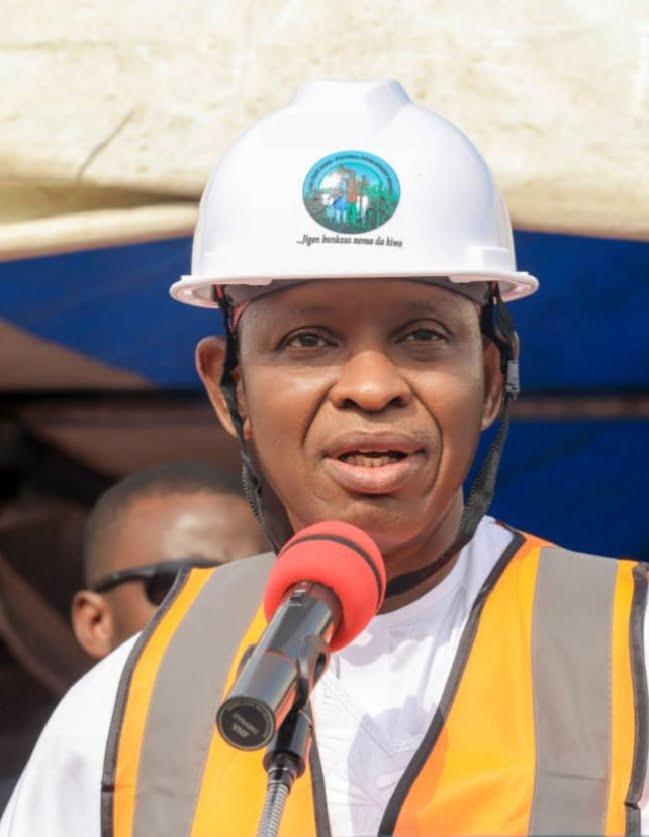
By Engr. Kabir Bashir Shariff, PhD
For decades, residents of Kano have lived with a persistent and worsening water crisis. What should have been treated as a state emergency has instead become a normalised hardship. In a city of over 10 million people, access to clean and reliable water remains uncertain for millions.
Water is the most basic requirement for life. Yet in Kano, households, businesses and institutions struggle daily to secure it. This is not due to a lack of infrastructure alone, but a combination of systemic neglect, poor planning and weak execution.
The state’s municipal water supply depends largely on two major treatment plants—Chalawa and Tamburawa. The Tamburawa Water Treatment Plant, built during the administration of former Governor Shekarau, was designed to produce 150 million litres of water per day. However, it has never reached that capacity.
Having worked at the plant as an intern in 2013, I saw its potential. Unfortunately, that potential has remained unrealised due to multiple challenges.
One of the major problems is the inadequate supply of raw water. The Kano River, which feeds the Tamburawa plant, has been affected by both climate variability and upstream water diversion. The Tiga Hydropower facility, for instance, significantly reduces the volume of water reaching the treatment plant.
Infrastructure decay is another critical issue. Key components of the water system—from intake pumps to filtration units—are either poorly maintained or no longer functional. Clarifiers, sedimentation tanks and filter beds have deteriorated over time, while high-lift pumps are frequently out of service.
Electricity supply further complicates the situation. Water treatment and distribution require stable power, yet the plants operate under erratic electricity conditions. This limits their ability to function effectively and consistently.
Perhaps the most fundamental flaw lies in the distribution system itself. The Tamburawa plant water supply model relies heavily on direct pumping from treatment plants to households. There are few, if any, functional elevated storage reservoirs to support gravity-based distribution. As a result, water flows only when pumps are running—an inefficient system that drives up energy costs and leaves many areas without water for long periods.
Regulatory lapses have also contributed to the problem. Damaged pipelines caused by construction activities are often left unrepaired, while leakages and illegal connections go unchecked. This further weakens an already fragile system.
In response to these challenges, many residents and commercial centres have turned to boreholes. While this offers temporary relief, it poses a long-term threat. Excessive groundwater extraction is already leading to declining water tables, dried wells and environmental stress.
The Kano State Government’s recent allocation of N21 billion for water infrastructure upgrades is a step in the right direction. However, funding alone will not solve the problem unless it is backed by sound planning and accountability.
There is an urgent need to invest in elevated water storage systems across the city. By pumping treated water into strategically located reservoirs, distribution can be sustained through gravity. This will reduce energy costs, improve efficiency and ensure a more reliable supply.
Equally important is the rehabilitation of existing infrastructure and the adoption of modern technologies. Power supply to water facilities must also be prioritised, possibly through dedicated or alternative energy sources.
Looking ahead, Kano must plan for its future. As the fastest-growing urban centres in northern Nigeria, these cities will see increasing demand for water. The state should begin developing new water treatment plants using available irrigation dams and other water sources.
Kano’s water crisis is no longer just an infrastructure issue—it is a public health and economic concern. Access to clean water should not be a privilege. It is a basic right.
The time has come to move beyond promises and take decisive action.
Engr. Kabir Bashir Shariff, PhD, can be contacted via kabir-bashir.shariff@unicaen.fr.