




Harry Kane, Alexia Putellas Win 2026 Ballon d’Or Awards
By Sabiu Abdullahi
England striker Harry Kane and Spanish midfielder Alexia Putellas have emerged as the winners of the men’s and women’s Ballon d’Or awards at the 2026 ceremony held at the London Palladium in England.
Kane claimed the men’s award, finishing ahead of France captain Kylian Mbappé and Spain’s teenage sensation Lamine Yamal, who placed second and third respectively.
Putellas secured the women’s honour, with Poland’s Ewa Pajor finishing second and Jamaica’s Khadija Shaw taking third place.
The ceremony, which marked the 70th edition of the prestigious football awards, also recognised outstanding performances across several categories, including young players, goalkeepers, coaches and clubs.
Other award winners
According to the published list of winners, the other major honours went to the following recipients:
– Men’s Young Talent of the Year: Lamine Yamal
– Women’s Young Talent of the Year: Vicky López
– Men’s Coach of the Year: Luis de la Fuente
– Women’s Coach of the Year: Pere Romeu
– Men’s Goalkeeper of the Year: Unai Simón
– Women’s Goalkeeper of the Year: Cata Coll
– Men’s Club of the Year: Paris Saint-Germain (PSG)
– Women’s Club of the Year: FC Barcelona Femení
– Sócrates Award: Bukayo Saka
– Men’s Gerd Müller Trophy: Harry Kane
– Women’s Gerd Müller Trophy: Charlyn Corral
Men’s Ballon d’Or top 10
The top 10 positions in the men’s rankings were:
1. Harry Kane
2. Kylian Mbappé
3. Lamine Yamal
4. Rodri
5. Lionel Messi
6. Khvicha Kvaratskhelia
7. Ousmane Dembélé
8. Erling Haaland
9. Michael Olise
10. Fabián Ruiz
Other notable names in the rankings included Jude Bellingham in 11th place, Achraf Hakimi in 13th, Declan Rice in 15th, Vinícius Júnior in 17th and Portuguese midfielder Bruno Fernandes in 27th.
Senegalese forward Sadio Mané also featured in the rankings, sharing 29th place with William Saliba.
Women’s Ballon d’Or top 10
The top 10 positions in the women’s rankings were:
1. Alexia Putellas
2. Ewa Pajor
3. Khadija Shaw
4. Melchie Dumornay
5. Patri Guijarro
6. Caroline Graham Hansen
7. Pernille Harder
8. Claudia Pina
9. Alessia Russo
10. Temwa Chawinga
Other players recognised included Zambia’s Barbra Banda, who finished 18th, and Nigeria-born Malawi international Temwa Chawinga, who placed 10th, according to the published rankings.
The results highlighted the achievements of established stars and emerging talents across men’s and women’s football, with the Ballon d’Or remaining one of the sport’s most prominent individual honours.
The Daily Reality

Bauchi Police Arrest Stepmother, 19-Year-Old Suspect Over Deaths of Two Children
By Sabiu Abdullahi
The Bauchi State Police Command has arrested two suspects in connection with the separate deaths of two children in Alkaleri and Ganjuwa Local Government Areas of the state.
The suspects are Fatima Ibrahim, 23, the stepmother of a boy who died after allegedly drinking a beverage given to him, and Sadiku Musa, 19, who was arrested in connection with the death of a five-year-old girl in Badaromo village.
The police spokesperson, Nafiu Habib, disclosed the arrests in a statement issued on Monday, October 26, 2026.
According to the statement, the first incident occurred on October 16 in Kwaimawa village, where the boy reportedly began vomiting uncontrollably shortly after consuming a drink allegedly given to him by his stepmother.
The child was initially taken to a Primary Health Care Centre in Kwaimawa before being transferred to the Federal Medical Centre, Gombe, for further treatment.
He reportedly battled for his life for eight days before a medical doctor confirmed his death on October 24.
Habib said detectives launched an investigation following a report by the village head of Kwaimawa, leading to the arrest of Fatima Ibrahim, who remains in police custody as investigations continue.
In a separate incident, a five-year-old girl was reported missing by her grandfather on the evening of October 23 in Badaromo village.
The police said residents joined the search for the child, whose body was discovered at about 7 am on October 24 in a small water pit behind the village.
Following the discovery, officers from the Soro Police Division secured the scene and arrested Sadiku Musa, 19, of the same community, in connection with the incident.
Both cases have been transferred to the State Criminal Investigation Department in Bauchi for further investigation.
The Commissioner of Police in the state, Sani-Omolori Aliyu, described the incidents as heartbreaking and inhumane, assuring the bereaved families that the command would pursue justice.
“These are innocent souls. Children who looked up to adults for protection. We will ensure that justice speaks for Habiba and Mubarak,” the commissioner said.
He also commiserated with the families of the deceased and urged parents, guardians and community leaders to pay closer attention to children’s safety.
The police have not announced the outcome of the investigations, and the suspects’ alleged involvement remains subject to the ongoing legal process.
The Daily Reality

FG, Labour Resume Talks as NLC Threatens Nationwide Action Over Fuel Prices, Wages
By Sabiu Abdullahi
The Federal Government and organised labour are scheduled to resume negotiations on Tuesday amid growing tensions over petrol prices, workers’ welfare and demands for an early review of the national minimum wage.
The Nigeria Labour Congress (NLC) and the Trade Union Congress (TUC) are expected to decide their next course of action after the meeting, with the unions warning that nationwide industrial action remains an option if the government fails to make meaningful commitments.
The talks follow an inconclusive meeting on October 22, which ended without an agreement on several outstanding issues affecting workers.
NLC Assistant Secretary-General Chris Onyeka confirmed the planned meeting, saying labour expected the government to respond to demands already submitted rather than restart discussions without concrete proposals.
“We expect them to come with answers to our demands, so that the meeting will not be prolonged,” Onyeka said.
A source within organised labour also told The PUNCH that the government had requested additional time to prepare for the discussions, adding that the unions would determine their next steps after the meeting.
The Federal Ministry of Labour also confirmed that the meeting was scheduled to hold, subject to any changes.
Labour’s demands
The unions are seeking a reduction in petrol prices to levels prevailing when the current minimum wage was signed into law in 2024. They are also demanding tax relief for workers, immediate wage awards and the commencement of negotiations for a new national minimum wage.
Other outstanding issues include the implementation of agreements affecting health-sector employees and the resolution of allowances and other welfare concerns in the public service.
In a joint statement signed by NLC Acting General Secretary Benson Upah and TUC Secretary-General Nuhu Toro, the unions criticised the government delegation at the previous meeting for arriving without the authority to negotiate substantively.
The government subsequently requested an adjournment to allow relevant ministers and heads of departments and agencies to participate in the next session.
The NLC had issued a two-week ultimatum on October 8, which expired on October 22, before extending the deadline to October 27. It warned that its affiliates and state councils should prepare for possible nationwide action if the negotiations failed to produce meaningful results.
Disagreement over minimum wage review
A major point of contention is when negotiations should begin to replace the current ₦70,000 monthly minimum wage introduced in 2024.
The Federal Government maintains that the wage is due for review on June 1, 2027, citing the three-year review cycle provided for under the National Minimum Wage Act, 2019, as amended in 2024.
In a letter dated October 12, the Minister of Labour and Employment, Dr Muhammad Dingyadi, reportedly described an early review as premature and potentially disruptive to industrial relations.
The NLC, however, insists that preparations should begin immediately. In a letter dated October 13, its president, Joe Ajaero, argued that the timetable under the original legislation remained relevant despite the 2024 amendment.
The union has called for the nomination of representatives and the inauguration of a tripartite committee comprising the government, organised labour and employers to begin the process.
The current minimum wage was signed into law by President Bola Tinubu on July 29, 2024, raising the statutory minimum from ₦30,000 to ₦70,000 following prolonged negotiations.
While the government has highlighted the increase, labour argues that rising living costs and the depreciation of the naira have significantly eroded workers’ purchasing power.
Petrol prices and other unresolved issues
Petrol prices remain central to the dispute, with labour arguing that higher fuel costs have increased transportation expenses and contributed to rising prices of food and other essential goods.
The unions are also demanding the implementation of tax relief measures agreed with the government in 2023 and immediate wage awards to cushion workers against economic hardship.
Other concerns include outstanding agreements involving the Joint Health Sector Unions and the Assembly of Healthcare Professionals, as well as demands raised by the Joint Public Service Negotiating Council over peculiar allowances, wage awards and hazard allowances.
The outcome of Tuesday’s negotiations is expected to influence whether organised labour proceeds with industrial action or continues discussions with the government.
Pensioners demand outstanding benefits
Meanwhile, the Federal Parastatals and Private Sector Pensioners Association of Nigeria has called on the Federal Government to pay eligible retirees three months of outstanding fuel-subsidy-removal palliatives, amounting to ₦75,000 per beneficiary.
The association made the demand in a communiqué issued after its National Executive Council meeting in Abuja on October 22. The document was signed by its President-General, Benjamin Maisamari Amako, and General Secretary, Franklin Erinle.
The association also urged the Pension Transitional Arrangement Directorate (PTAD) to clarify the implementation of pension harmonisation, which took effect in January 2026, and make the relevant government circular available to retirees.
It called for a stakeholders’ meeting to address complaints, improve communication and resolve outstanding pension cases.
The association further urged PTAD to ensure that the planned relaunch of its ‘I Am Alive’ verification platform would not disrupt payments to elderly, sick or physically incapacitated pensioners.
It called for clear guidelines, adequate assistance and safeguards to ensure eligible retirees were not excluded because of difficulties with verification.
On healthcare, the association appealed to PTAD and the National Health Insurance Authority to simplify enrolment in the Pensioner Health Insurance Scheme by providing assisted registration, accessible enrolment centres and support for retirees unable to travel because of age, illness or disability.
“No eligible pensioner should be denied access to the scheme because of difficulties with registration, verification or other administrative procedures,” the association said.
It also urged the government to maintain regular pension payments and ensure that retirees received their entitlements without interruption.
The association said transparent pension administration and accessible healthcare were essential to protecting retirees’ dignity and financial security amid rising living costs.
The Daily Reality
EFCC Arrests 14 Chinese Nationals, Nigerian Over Illegal Lithium Processing Plants
By Sabiu Abdullahi
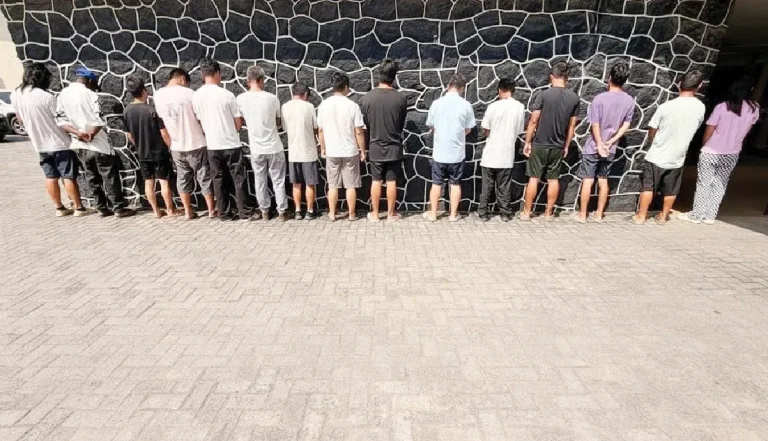
The Economic and Financial Crimes Commission (EFCC) has arrested 14 Chinese nationals and one Nigerian over alleged illegal lithium processing operations at four plants in the Ogere area of Ogun State.
The commission disclosed this in a statement published on its official X account on Monday, October 26, 2026, saying the suspects were apprehended on Friday, October 23, following intelligence gathering and surveillance.
According to the EFCC, its operatives from the Lagos Zonal Directorate 2 raided the four facilities and recovered several items believed to be connected to the operations.
The recovered items included bags of lithium rocks, 18 mobile phones and other mobile devices, four laptop computers, two decoders, a television remote control and a trailer truck.
The commission said investigations were ongoing and that the suspects would be charged in court after the conclusion of the process.
The arrests come amid growing concerns over illegal mineral extraction and processing in Nigeria, particularly involving valuable minerals such as lithium, which is used in batteries and other energy-storage technologies.
Nigeria has sought to attract investment into its solid minerals sector while tackling illegal mining and activities that deprive the government of revenue and undermine regulatory oversight.
In a related development, the EFCC recently arraigned two defendants, Marian Elia, 19, and Izuchukwu Uzoma, 21, over the alleged theft of ₦35.92 million belonging to a woman, Esther Ogbeifun, in Benin City, Edo State.
The commission alleged that the defendants faced a seven-count charge bordering on conspiracy, cybercrime and stealing. It further alleged that Elia, who grew up in the victim’s home, used access to the woman’s phones and banking information to transfer money into an account belonging to Uzoma, her boyfriend.
The allegations in that case remain subject to court proceedings.
In another case involving alleged illegal laboratory operations, authorities in May uncovered a suspected methamphetamine production facility in a forest in Ogun State, with raids also conducted in Lagos. The National Drug Law Enforcement Agency described the operation as the largest clandestine methamphetamine seizure in Nigeria’s history.
The latest arrests underline the continued efforts of law enforcement agencies to investigate suspected illegal industrial and commercial activities across the country.

Gunmen Kill Islamic Cleric Sheikh Yahaya Masussuka
By Uzair Adam
Suspected gunmen have killed prominent Islamic cleric Sheikh Yahaya Masussuka at his residence in Dutsin-Ma, Katsina State.
According to Katsina Post, the attack occurred at about 9pm at the entrance to the cleric’s residence, where the assailants reportedly opened fire on him and a friend.
The two victims were subsequently rushed to Dutsin-Ma Hospital for emergency medical attention but were later confirmed dead.
The Daily Reality gathered that details surrounding the attack remained unclear as of the time of filing this report, with no information available about the identities of the assailants or their motive.
The killing has plunged residents of the area into mourning, particularly the cleric’s followers and people who knew him.

JIBWIS Leader Calls for Probe of Viral Video Threatening Attack on Enugu
By Muhammad Ibrahim
The National Chairman of Jama’atu Izalatil Bid’ah Wa Iqamatis Sunnah (JIBWIS), Sheikh Abdullahi Bala Lau, has called on security agencies to investigate a viral video showing a man in the organisation’s First Aid Group uniform allegedly calling for weapons to attack Enugu on Sunday.
In a statement dated Monday, October 26, 2026, Bala Lau condemned the remarks and urged the Department of State Services (DSS), the Nigeria Police Force and other security agencies to identify those involved and bring anyone found culpable to justice.
He distanced JIBWIS from the statements, stressing that the organisation did not endorse violence or threats against any community. He also warned that wearing its uniform did not necessarily mean the individual was acting with its authorisation.
The cleric said the incident could be an attempt to misrepresent the organisation and damage its reputation, urging authorities to investigate the man’s identity, affiliation and motives.
Bala Lau cited JIBWIS’s recent international conference in Abuja, which brought together Muslim and Christian leaders to promote interfaith dialogue, religious tolerance and peaceful coexistence.
He maintained that the organisation, established about 48 years ago, remained committed to Islamic teachings, education, humanitarian services and peaceful coexistence among people of different religious and ethnic backgrounds.

JTF Troops Rescue Two, Foil Kidnap on Naka–Ahume Road
By Abdullahi Mukhtar Algasgaini
Troops of the Joint Task Force, Operation WHIRL STROKE, foiled a kidnapping attempt and rescued two victims during a fighting patrol along the Naka–Ahume Road in Benue State on 24 October 2026.
According to a statement by Lt Ahmad Zubairu Zubairu, Acting Media Information Officer, HQ JTF Operation WHIRL STROKE, the troops encountered suspected kidnappers armed with dangerous weapons while the suspects were attempting to abduct motorists and other road users. The troops engaged them in a firefight, forcing them to abandon their captives and flee. A pursuit followed, but no further contact was made.
One of the rescued victims, Mrs Mngunengen Ihom, 36, from Ahume, sustained machete wounds during the incident. She was evacuated to Naka General Hospital for medical attention.
The Force Commander, Joint Task Force Operation WHIRL STROKE, and General Officer Commanding, 5 Division, Nigerian Army, Major General Moses Gara, charged troops to sustain aggressive, intelligence-led operations against armed elements threatening residents in the Joint Operations Area. He also urged personnel to strengthen human intelligence gathering to improve early warning and response to security threats.
Major General Gara reassured residents of the Task Force’s continued commitment to restoring peace and security, and encouraged members of the public to provide credible, timely information to security agencies to support ongoing operations.

South African Author Defends Use of AI After Publishing 370 Books in 20 Months
By Sabiu Abdullahi
A South African author who has published more than 370 books in about 20 months using artificial intelligence (AI) has defended her writing process amid growing criticism of AI-generated literature.
Coral Hart, a pseudonym adopted to protect her real identity, said she had received tens of thousands of hostile messages and several death threats over her use of AI in producing books.
The author, who is in her 40s, has become a prominent figure in the debate over the role of artificial intelligence in the publishing industry.
Speaking in an interview with Agence France-Presse (AFP), Hart said she decided to speak publicly about her methods because she believes the technology is becoming an established part of publishing and cannot simply be dismissed.
“I chose to be the one to step up and say, these are conversations we need to start having,” she said. “This is here… They’re not going to switch it off or unplug it because a bunch of authors said so.”
Hart had worked in publishing for 14 years before she began using AI to write books around February 2025. She said she had also written several dozen works without the technology.
According to the author, she spent three months learning how to work with different AI models and developing a system capable of generating books based on detailed instructions.
Her process involves creating the story concept, defining the writing style, developing characters and preparing chapter outlines before using AI to generate the manuscript.
She said advances in AI had significantly improved the process, allowing her to move from generating individual paragraphs through repeated prompts to producing an entire book draft in one sequence.
Hart uses different AI models for different tasks, arguing that each has particular strengths and weaknesses in areas such as dialogue, prose, story structure and explicit romantic scenes.
She also acknowledged that AI-generated first drafts often require substantial editing.
Her manuscripts go through further AI-assisted reviews to address continuity problems, incomplete character development, dropped plotlines and weaknesses in the story. A human proofreader then reviews the text, corrects remaining issues and makes additional changes where necessary.
Millions of books sold
Hart said she had published 371 titles, many of them romance novels, and estimated that she had sold more than one million copies across digital, print and audio formats.
She also claimed to have earned more than US$1 million in 2026 so far. One of her novels reportedly reached Amazon’s top 100 bestsellers, although she said many of her titles were developed for specific readerships through extensive market research.
Beyond her own publishing activities, Hart said she had trained several hundred people in her approach and was preparing to launch Authorythm, software designed for authors who use AI.
Despite the controversy, she said she generally discloses her use of AI only when required by a publishing or sales platform.
Hart said she had published under more than 10 other pen names and questioned why her creative process had attracted so much attention now, after years of working in publishing.
Debate over AI-generated literature
Critics have accused Hart of contributing to what is commonly described as “AI slop” — a term used for large volumes of AI-generated content considered low-quality or lacking originality.
However, she argued that commercial performance and readers’ responses should also be considered when assessing the quality of a book.
“Books are selling,” she said, adding that readers who find books unsatisfactory can return them.
The debate has intensified as publishers and literary institutions grapple with questions about originality, authorship, disclosure and the appropriate use of artificial intelligence in creative work.
Hart also referred to the controversy surrounding a novel by Haitian-Canadian writer Thelyson Orelien, which was withdrawn from the shortlist for France’s prestigious Goncourt Prize following allegations of AI use. According to the report, the author’s publisher confirmed the use of AI on October 21, 2026.
Hart questioned whether some readers rejected works because of their actual quality or because they knew AI had been involved in producing them.
“If you need an AI label to hate something, do you hate it, or do you hate AI?” she asked.
Her case highlights a growing divide in the publishing world between those who view AI as a useful writing and editing tool and those concerned about its potential effects on literary originality, professional authors and the value of human creativity.
As AI tools become more capable, the debate is likely to centre increasingly on transparency, editorial responsibility and how readers and publishers define authorship in an industry undergoing rapid technological change.
The Daily Reality

Who Is Zion Suzuki? Japan’s Ghanaian-Rooted Goalkeeper Who Joined Aston Villa
By The Daily Reality
Zion Suzuki, Japan’s first-choice goalkeeper with Ghanaian heritage, has joined English Premier League side Aston Villa after rising through the ranks of Japanese and European football.
Zion Suzuki is a Japanese professional footballer whose career has taken him from the youth ranks of Urawa Red Diamonds in Japan to European football, earning recognition as one of the country’s promising goalkeepers.
Born on August 21, 2002, in Newark, New Jersey, United States, Suzuki has a Japanese mother and a Ghanaian father. Despite his American birthplace and mixed heritage, he represents Japan at international level.
Suzuki began his professional career with Urawa Red Diamonds, one of Japan’s established football clubs. His performances and development eventually opened the door to European football, where he continued to gain experience and improve his goalkeeping skills.
He later joined Belgian club Sint-Truiden, where he gained valuable exposure to European competition before moving to Italian side Parma. His time in Europe helped strengthen his reputation as a goalkeeper capable of competing at a higher level.
In August 2026, Suzuki completed a move to Aston Villa, marking another significant step in his career and bringing him into the English Premier League, one of the most competitive football leagues in the world.
At international level, Suzuki has represented Japan and emerged as an important figure in the national team’s goalkeeping setup. His performances have contributed to his growing profile in Asian football and increased attention on his development in Europe.
His background also makes him a notable figure in discussions about footballers with African heritage representing countries outside the continent. Through his Ghanaian roots and Japanese international career, Suzuki reflects the increasingly diverse backgrounds of players in modern football.
At 24, Suzuki’s move to Aston Villa represents an important opportunity to establish himself in English football, compete at a high level and further develop his reputation on the international stage.
As he begins this new chapter, attention will be on how quickly he adapts to the demands of the Premier League and the role he could play in Aston Villa’s plans.
A Sick Husband, a Wife in Labour and a Midnight Search for Help: One Man’s Ordeal in Bauchi
By The Daily Reality
Shehu Adamu Hanafi’s account of being turned away from three hospital units while seeking emergency care for his wife raises troubling questions about access to maternal healthcare, hospital capacity and the treatment of vulnerable patients.
At a time when most families are asleep, a husband whose wife is in labour should be preoccupied with one thing: ensuring that she and their unborn child receive the medical attention they need to survive.
But for Shehu Adamu Hanafi, the early hours of the night became a desperate search for help, marked by uncertainty, repeated referrals and the fear of what might happen to his wife before she could receive treatment.
In a Facebook post published at night, Hanafi recounted how he struggled to secure medical attention for his wife, whom he described as being in deep labour and suffering from a dislocated hip. He also disclosed that he was sick himself.
What should have been a journey towards safety, he said, turned into an exhausting experience involving multiple hospital facilities in Bauchi State, leaving him frustrated and eventually prompting him to head back towards Jos in the early hours of the morning.
“Jarabawa daga Allah, Allah ka sa mu ci!!!” he wrote in Hausa, meaning, “A trial from Allah; may Allah help us overcome it.”
The opening words captured the anguish of a man confronting a frightening medical emergency while struggling to find a facility willing and able to attend to his wife.
A referral that led to another dead end
According to Hanafi, their ordeal began at Toro General Hospital, where he said medical personnel informed him that the facility could not handle his wife’s condition.
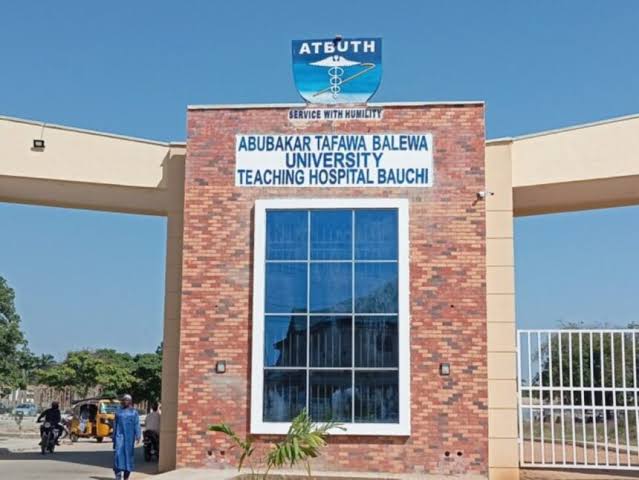
They were subsequently referred to the Abubakar Tafawa Balewa University Teaching Hospital (ATBUTH) in Bauchi.
The journey to Bauchi took them into the early hours of the morning. Hanafi said they arrived at approximately 2 a.m., hoping to receive the specialist attention his wife needed.
Instead, he claimed, they were told that there was no available bed space.
The situation became even more distressing when, according to his account, hospital attendants warned him to leave immediately, cautioning that any complications arising from their decision to remain would be at his own risk.
For a husband already worried about his wife’s condition, the reported response left him searching for another option at a time when every minute seemed important.
With little choice, Hanafi said he proceeded to the Bauchi State Specialist Hospital, hoping that the facility could provide the emergency care they had been unable to obtain elsewhere.
But that attempt, too, reportedly ended in disappointment.
Caught between hospital units
At the State Specialist Hospital, Hanafi said he was informed that the facility did not have the specialist required to manage his wife’s condition.
He was reportedly directed back to ATBUTH, this time to its emergency or trauma unit.
He returned, hoping that the new direction would finally lead to treatment.
According to his account, however, the trauma unit also declined to handle the case, telling him that his wife’s condition did not fall within its area of responsibility and directing him back to the maternity unit.
The repeated referrals left him caught between hospital departments, each directing him elsewhere while he struggled to secure care for his wife.
The account does not establish the clinical assessments made by the medical personnel involved or the precise reasons behind each decision. Nevertheless, it describes a deeply distressing experience for a patient and her husband seeking emergency maternal care in the middle of the night.
For Hanafi, the immediate concern was not navigating hospital procedures but finding somewhere his wife could be attended to.
A desperate call for advice
With the situation unresolved, Hanafi said he contacted a former commissioner of health in Bauchi State, hoping to obtain emergency guidance.
The advice he received, according to his post, was to return to the State Specialist Hospital.
The recommendation brought him back to a facility he had already visited, after he had been directed elsewhere and then sent back again.
By this point, his account reflected the frustration of someone who felt that he had exhausted the available options without finding a clear path to treatment.
He described himself as stranded and frustrated, struggling to understand how he and his wife had found themselves in such a predicament.
“This innocent soul is at it, suffering from the sweet bitter fruits of democracy, I told myself,” he wrote.
The remark conveyed his disappointment with a system he believed had failed him at a moment of exceptional vulnerability.
The decision to return to Jos
By approximately 3:15 a.m., Hanafi said he and his driver decided to return to Jos, explaining that his wife’s condition appeared to be calming down.
The decision came after hours of uncertainty and attempts to obtain medical attention.
He described setting off in the darkness, with the emotional weight of the experience accompanying them on the road.
“We moved in the dark with hearts darkened by fate, galloping on the road,” he wrote, before concluding with the Islamic expression, “HasbunAllah wa ni’imal wakil” — “Allah is sufficient for us, and He is the best disposer of affairs.”
His words conveyed the helplessness of a husband who had sought medical assistance for his wife but said he ultimately had to leave Bauchi without obtaining the care he had been seeking.
His post, however, did not establish whether they subsequently arrived safely in Jos, whether his wife received medical attention there or what the eventual outcome of the pregnancy was. Those questions remain important and require clarification.
Beyond one family’s ordeal
Hanafi’s account raises broader questions about the accessibility of emergency maternal healthcare, particularly at night, when patients may have limited alternatives and urgent medical decisions cannot be postponed indefinitely.
When a patient is referred from one facility to another, effective coordination is essential to ensure that the receiving hospital can assess the patient and determine the appropriate course of treatment.
Bed shortages, limited specialist availability and the division of responsibilities between hospital departments can complicate emergency care. However, the details of this particular case, including the medical circumstances and the reasons for the reported referrals, would need to be established before any definitive conclusions could be drawn about the conduct of the facilities involved.
The central concern remains straightforward: how can patients facing potentially serious complications obtain timely assessment and appropriate care when the first facility they approach cannot manage their condition?
For pregnant women in labour, delays in accessing appropriate medical care can have serious consequences. That is why clear referral arrangements, functioning emergency services and effective communication between healthcare facilities are important elements of a responsive health system.
Hanafi’s account also underscores the vulnerability of patients who must travel between towns in search of treatment, especially when they are already dealing with illness, physical pain and the emotional strain of a medical emergency.
Questions that deserve answers
The allegations in Hanafi’s post warrant clarification from the relevant health authorities and hospital managements.
Did the facilities have available emergency maternity services at the time? What assessments were conducted when his wife arrived? Why were the referrals made, and was there effective coordination between the hospitals involved?
Were alternative arrangements offered to ensure that the patient could obtain timely medical attention if a facility could not manage her condition?
These questions are not merely about assigning blame. They concern the practical workings of emergency healthcare and the safeguards available to patients when a medical situation becomes urgent.
The Daily Reality could not establish from Hanafi’s account alone the hospitals’ official positions, the full clinical circumstances surrounding the case or the eventual outcome for his wife. Responses from the relevant authorities, alongside further details from Hanafi, would help provide a fuller and fairer picture.
A plea behind the pain
At the heart of Hanafi’s account is a husband who says he was ill, a wife experiencing labour and a desperate search for a hospital that could attend to her.
His story is not, by itself, proof of the condition of every hospital in Bauchi State. But it is a deeply concerning account of one family’s reported experience at a moment when access to medical care mattered urgently.
For families confronted with medical emergencies, the expectation is simple: that they will be assessed promptly, informed clearly about their options and directed towards appropriate care without avoidable confusion.
Hanafi’s closing prayer — that Allah should be sufficient for them — reflected the faith with which he confronted the uncertainty of that night.
But a family facing a medical emergency should not have to rely on faith alone while searching for care.
The questions raised by his account deserve answers, and the circumstances surrounding his wife’s ordeal merit a thorough and compassionate investigation.