Christians

Anambra Court Remands Eight Pastors Over Alleged Fake Miracles

By Muhammad Sulaiman

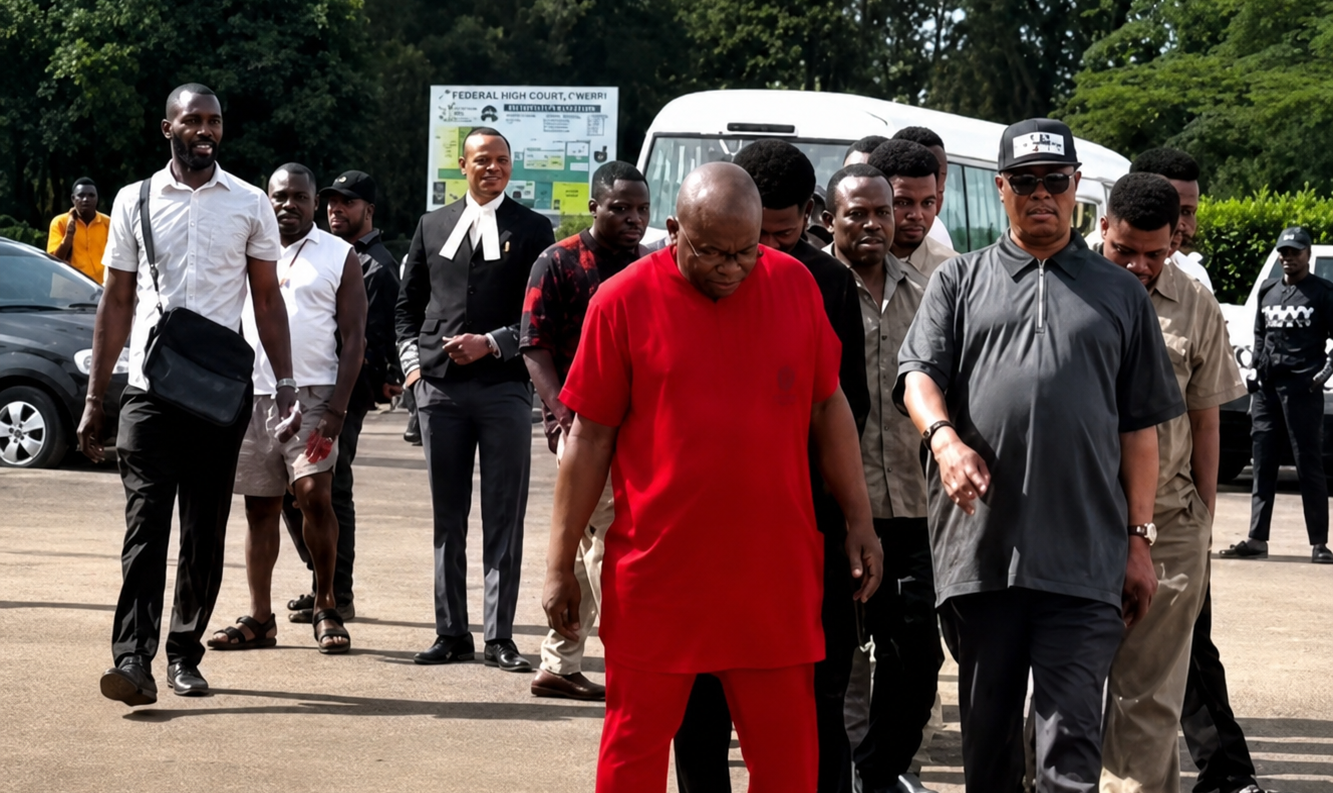
An Anambra State High Court sitting in Awka has remanded eight pastors in a correctional facility over allegations of staging fake miracles with the aid of hired actors.

The clerics were arraigned on Friday by the Anambra State Government on multiple charges bordering on spiritual deception and financial exploitation. The prosecution, led by the state’s Attorney General and Commissioner for Justice, Tobechukwu Nweke (SAN), brought the defendants before the court under the Anambra Homeland Security Law, 2025.

According to the charges, the pastors allegedly wielded fake supernatural powers, used places of worship to commit crimes, and obtained money and other benefits from members of the public under false pretences.

The prosecution told the court that the defendants operated a coordinated scheme involving external agents who allegedly recruited vulnerable individuals and paid them to pose as disabled or afflicted persons during church services. The individuals were said to have acted out sudden miraculous healings and spiritual deliverances before congregations.

State authorities further alleged that the staged events were recorded, packaged and circulated on social media platforms to attract followers, increase church membership and encourage donations from worshippers.

As part of its evidence, the prosecution submitted video-recorded confessions allegedly made by the accused, contained on a flash drive tendered before the court.

While some of the defendants pleaded not guilty to the charges, the presiding judge ordered that all eight pastors be remanded in custody pending further proceedings.

The case was adjourned until June 15, 2026, for formal hearing and consideration of bail applications. State authorities said the prosecution forms part of an ongoing crackdown on individuals accused of using religion or traditional practices to defraud and exploit members of the public.

Carlson Weighs In on Trump’s AI Jesus Image Row, Says Muslims Love Jesus

By Muhammad Abubakar

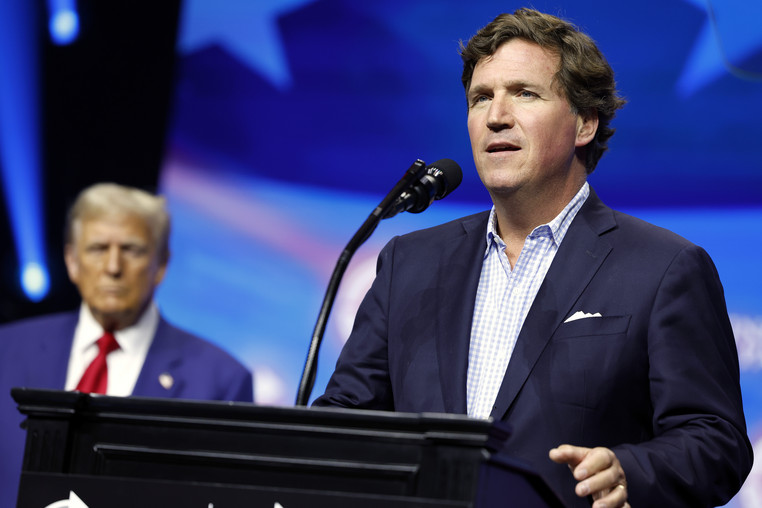
Renowned American commentator and podcaster Tucker Carlson has ignited debate after saying, “the people in charge don’t want you to know this, but Muslims love Jesus,” amid tensions involving Donald Trump and Pope Leo XIV.

The remark followed controversy over an AI-generated image shared by Trump on Truth Social, showing him in attire associated with Jesus Christ.

Carlson’s comment drew mixed reactions online, with some noting that Islam indeed reveres Jesus as a prophet, while others questioned the timing and context of his statement.

Recall that President Trump called Carlson low IQ, among other abuses, as the two former allies fall apart, especially because of the US-Israel war on Iran and US foreign policy towards Iran.

As of the time of this report, Trump has yet to respond to Carlson’s recent post on Jesus and Muslims.

Why Religious Inclusion Matters in Plateau Governance

By Malam Aminu Wase

There is something quietly noble about Plateau State, its hills, its history, and above all, its diversity. It is a state woven together by the threads of ethnicity, language, and religion. And yet, that same diversity, which should be our strength, has too often been ignored in political leadership.

For too long, the highest office in Plateau State has been shaped by one-sided considerations. The repeated emergence of Christian Christian governorship tickets, while strategically convenient to some, continues to erode the principle of inclusive governance. It sends a subtle but loud message to a large portion of the population: you are seen, but not enough to be counted.

Muslims in Plateau have consistently shown political maturity. They have supported Christian-led tickets, participated in state-building efforts, and invested their trust in shared progress. From Wase to Kanam, Jos North to Shendam, Mangu, Quanfaan, and beyond, Muslim communities have not withheld their votes, their voices, or their commitment. But politics, like any meaningful relationship, cannot survive on one-sided loyalty. Reciprocity matters.

This is not just about religion; it is about equity. About the right of every community to see itself reflected in the leadership that governs it. Muslims make up a significant segment of Plateau’s population. Their persistent absence from the governorship, or even from serious consideration for the deputyship, is more than a political oversight; it is a moral failure.

What would it cost the political class to offer a Muslim-Christian ticket or vice versa? What would it say to the next generation if Plateau finally decides to lead by example, to choose unity over uniformity, and inclusion over imbalance?

My reflections are not theoretical. I grew up in a Plateau that taught me the value of coexistence. My closest friends in school, from Pilot Central Primary School, Wase, to Government Science College, Wase, through Federal College of Education (Technical), Bichi, in Kano State, and later Ahmadu Bello University, Zaria, were Christians. We laughed together, studied together, and dreamed together. That spirit never left me. It shaped my worldview, grounded in mutual respect and shared humanity. If we could sit side by side in class, why can’t we serve side by side in leadership?

In Wase Local Government, where Christians are a minority, they have not been pushed aside. They have held positions of responsibility, including Deputy Chairman, and benefited from federal appointments, many of which came under the leadership of Rt Hon Ahmed Idris Wase. This is not charity. It is simply fairness in practice.

That example should guide the rest of the state. Leadership is not a reward for numbers alone, but a test of vision. A government that sees only one side of its people cannot fully represent them. And a society that silences its own diversity risks becoming deaf to its own future.

Plateau State belongs to all of us. Let us end the quiet exclusion. Let us begin a new chapter, one in which faith is no longer a political disadvantage and unity is no longer a slogan but a living reality.

It is not too late to do the right thing. But it is urgent.

Malam Aminu Wase is a Political Analyst and Advocate for Good Governance and Youth Inclusion.

The Evil in Peddling Pastor Ibiyeomie’s $2m Wristwatch Sans Subtext

By Ugochukwu Ugwuanyi

The agenda-setting theory of mass communication seems to have gone the way of good old traditional journalism, as its distortions and corruption are writ large in this present age.  Content creators and curators in the digital space have been busy setting the agenda without regard for the module’s original intent. In pursuit of virality, they limit shorts and reels to the salacious and outlandish, deliberately precluding elements that would contextualise and add meaning for audiences. The need to empower audiences with inspiring information is secondary. This is one evil I’ve seen under the sun!

The (mal)practice is not in keeping with the gatekeeping theory either, since they are not acting in the interest of the social fabric but opportunistically farming for views and engagements or even chasing clout. If taken to task, they will readily say, “Bad (scandalous/controversial) news always sells.” Admittedly, bloggers have been quite successful in attracting attention and sparking conversations online with abridged and abrupt content. However, the jury is still out on whether these citizen journalists’ brand of agenda setting is guided by their prejudices, the attention span of audiences, mischief, or sheer misinformation. In a milieu where users run with the caption/headline, one can imagine the impact of half-information on them, nay, what it robs them of.

A fortnight ago, the Nigerian blogosphere buzzed with reports that Pastor David Ibiyeomie bragged about being gifted a $2 million wristwatch, stressing that Nigerians on social media would faint if they saw his collection of exotic wristwatches. The sensational spin of the story on social media makes the unsuspecting assume that the man of God climbed the pulpit just to promote grifting prowess. But that couldn’t have been the preacher’s mission. What trended online was an aside or anecdote used to drive home his point. But bloggers opted to set the agenda with a clickable straw rather than the didactic core. Now that they must have got the online traction they craved, let’s bring to the surface the vital aspect of the sermon that was buried. This is because the unsung aspect of the preacher’s message can be of great benefit to whoever subscribes to it. 

After disclosing the following: “someone gave me a watch worth $2 million. I have not even worn half of my watches. The one they show on social media is just small, I have many watches. If they see all my watches, they’d just faint,” the Port Harcourt-based pastor asserted that “I’m getting watches because I’m solving problems.” This last line is the crux that would do viewers a world of good if they caught the revelation. It is a given that the one who diligently solves problems will stand before kings and shall not stand before mean men.

That was the story of Joseph. The ability to solve problems took him straight from prison to the palace. By the time he solved Pharaoh’s problem, the falsely accused felon became the prime minister of the world’s superpower at the time, despite being an immigrant. If solving problems can be this rewarding, then it shouldn’t be surprising that a problem solver like Ibiyeomie is receiving mouthwatering gifts. No one should faint upon seeing his wristwatches or come with the vanity-upon-vanity moral posturing! If you look around, you’d find that many of his peers have been stupendously rewarded by those who consult them for spiritual guidance and prayers. There are instances where people struggle to give to these men of God.

Yet, these cherished pastors are only vessels through which the actual problem solver expresses Himself. I’m talking about the Holy Spirit, who inhabits whoever believes in the resurrected Christ and confesses Jesus as their Lord and personal saviour. He is the one about whom John 16:13 says, “He will guide them into all truth, speak only what He hears from the Father, and declare things to come.” With this spiritual insight, you would be able to solve quandaries and mysteries. It is this same Spirit who enabled the mighty works of Jesus’ earthly ministry. He is all the believer needs. Nothing is too big or small for Him to provide direction.

There was a community where livestock breeding was the locals’ prime preoccupation. A stray sheep was found and taken to the king’s palace. In time, two men came forward to claim ownership of the animal. Each of them was quite assertive and unyielding in demanding that they be handed the sheep as the rightful owner. None of the palace courtiers could rightly divide the dispute. Thankfully, the king is a born-again Christian, so he opted to pray for wisdom over the situation. He gave both parties a date to hear his verdict. The night prior, the king prayed intensely, and the Lord ministered John 10:4-5 in his heart. He immediately knew that his prayer had been answered and was no longer troubled.

By the next morning, the claimant came with some members of the community. The sheep was tethered with a long rope right before everyone who gathered to witness how the contention would be resolved. The king challenged each of the contenders to do all they could to attract the sheep’s attention. The one it responds to and follows will be allowed to return home with the animal. To make the test even harder, the sheep was distracted with fodder. The first tried all the communication cues he could devise to no avail. The sheep continued feeding, barely looking up to acknowledge the stranger. When the stipulated time elapsed, the second claimant was given the floor. Soon enough, the sheep abandoned the fodder and followed him, leaving everyone convinced about the actual owner! 

That’s one way God inspires His people to solve problems. But you must know the Word. With Scripture containing solutions to every problem and need, God wells up in your heart a bespoke Word for each situation. When diligently implemented, everyone will be awed by the efficacy. As you do this for yourself, you’ll soon be able to apply the tried and tested formula to what troubles others – thereby becoming a problem solver. It takes the Word with a heart yielded to God for this to happen. Train your spiritual antenna to clearly hear God. You’ve got to do this every so often. But when you start hearing, be sure that what you hear aligns with the Word of God! 

Indeed, the sons of God are prized and given bounties because they solve problems. Romans 8:19, “For the earnest expectation of the creation eagerly waits for the revealing of the sons of God.” Although the grace is available, not many anointed ones have primed themselves to the level where they can call forth answers from Heaven. The child of God can have the unction of Moses, whom God taught His ways, so that he could manifest His acts by solving the problems of the children of Israel. 

However, the avaricious who are easily lured by lucre must be wary not to go the way of Gehazi (1 Kings 5:19-27). The Master’s charge in Matthew 10:8 is “Give as freely as you have received”. If you operate that way, God can, as in Pastor Ibiyeomi’s case, inspire you with the solution to someone’s problem and prod the same person to bless you with choicest gifts money can buy. I’m referring to cheerful givers who would insist that God sent them to be a blessing to you, even when psyched that the gifts they are bearing must be meant for God.

VIS Ugochukwu is a Sage, Storyteller and Brand Strategist who engages with readers via Twitter (now X) @sylvesugwuanyi

Christiana and Shamwil: The Love that Death Could not Kill

By Shamwil (Justice)

It all began in Sabon Gari Market, Kano, inside our small but busy pharmaceutical shop, Kuka Medicals. That afternoon was bright and dusty, filled with the usual noise of traders calling out prices and customers bargaining for goods. 

I was behind the counter, arranging boxes of medicines, when she walked in, Christiana. I never imagined that moment would change the rest of my life. She was dressed simply, yet there was something about her that captured attention instantly. Her presence was calm, graceful, and confident. 

When our manager called me to write her sales invoice, I didn’t think much of it. But as I wrote her name on the receipt and looked up, our eyes met for the first time. A strange spark passed between us, silent yet powerful, one that words could never describe.

“What’s your name?” she asked softly. “Shamwil”, I answered. Her voice was clear and warm, the kind that stays in your mind long after you’ve heard it. I told her, and she repeated it slowly, as if she wanted to remember it forever. Then I asked for hers, and she said, “Christiana.” The name itself felt like poetry when she said it.

We spoke briefly about medicines, antibiotics, syrups, and how counterfeit drugs were becoming a problem in the market. I was amazed by how much she knew. She talked with the precision of a trained pharmacist, mentioning drug names, compositions, and even the companies that produced them. Our manager watched her with admiration, nodding in respect. That day, I realised she was not only beautiful but also incredibly brilliant.

When she finished shopping, she smiled, waved at me, and left. That simple wave stayed with me for days. Her scent lingered in the air, soft, pure, and unforgettable. That night, I found myself thinking about her voice and the calm expression in her eyes. I didn’t realise then, but a new chapter of my life had just begun.

Weeks passed before I heard from her again. One evening, my phone rang with an unknown number. I picked it up, and there it was, that same gentle voice. “You didn’t expect me to call, did you?” she said, laughing softly. That first call lasted for hours. From that day on, Christiana became a part of my daily life. We talked every day, laughed together, and shared stories that slowly tied our hearts closer. What began as a friendship soon turned into real, deep, and pure love.

Christiana was unlike anyone I had ever known. She had a beauty that didn’t depend on makeup and a confidence that didn’t need pride. Her skin was smooth and glowing, her height perfect, her movements graceful like flowing water. Her voice was calm and musical, and her pointed nose gave her face an angelic glow. Everything about her was elegant and natural. She was the kind of woman who didn’t need to try to be special; she simply was.

Our love grew stronger with each passing day. We called each other every morning and night, exchanged sweet messages, and dreamed about the future. Sometimes she visited me at the shop, bringing food or simply sitting beside me while we talked about life. Time always flew whenever she was around. She made everything around me feel peaceful and alive.

But love, as beautiful as it was, came with its battles. When her parents found out about us, their reaction was harsh and painful. To them, I was not good enough. I was a poor Hausa Muslim boy, and she was their only daughter, an Igbo Christian from a wealthy family. They couldn’t accept our love. They called her names, scolded her, and forbade her from seeing me again. Yet Christiana refused to give up. She told them love has no tribe, no religion, and no boundary. Her father stopped speaking to her for months, but she remained strong, fearless, and loyal.

Christiana’s love was the purest I’d ever known. She cared for me when I was sick, worried whenever I didn’t answer her calls, and even risked sneaking out at night just to see me for a few minutes. We would stroll quietly under the streetlights of Sabon Gari, talking about our dreams, the home we’d build, the children we’d raise, and the life we’d live together. I believed we had forever. I believed nothing could come between us. But life has a way of breaking even the strongest hearts. 

I never thought Christiana could die for my love. The news came like thunder in a clear sky. Death took her suddenly, without warning, without mercy. The moment I heard it, I felt something inside me collapse. The world went silent. My hands went cold. I couldn’t breathe. The love of my life was gone, just like that.

Even now, I can still hear her laughter in my mind, smell her perfume in the air, and see her smile in my dreams. Sometimes, I wake up in the middle of the night thinking she’s still alive, that she’ll call, that she’ll visit, that I’ll see her walk through the shop door again. But every morning reminds me that she is gone, forever.

Christiana didn’t just leave me; she took a part of me with her. She left behind love, memories, and silence, the kind of silence that breaks a man from the inside. Love can be the sweetest thing on earth, but it can also be the most painful. Christiana was both my blessing and my heartbreak. She was the light that entered my life, and the darkness that refused to leave when she passed away! 

I will never stop speaking and penning about you, Christiana. History will be so kind to you!  

Shamwil (Justice) wrote via ibrahimshamawilu@gmail.com.
Is APC now a Christian party?

By Professor Abdussamad Umar Jibia

The year 2023 was a remarkable year in Nigeria’s history. Just like the year 1993, an election was held that generated a win for a Muslim candidate with another Muslim as his running mate.

In both 1993 and 2023, the presidential candidates were warned against choosing a Northern Christian as a running mate. Christians constitute not just a tiny minority in the North, but many of them have also proven to be very bad neighbours in their relations with their Muslim compatriots.

Wherever Christians constitute the majority, they display an unforgivable hate and marginalisation against their Muslim neighbours. A handy example is Plateau state, the home state of the current APC Chairman. The way Muslims are sidelined in Plateau state is enough to show what we should expect if Christians were the majority in Nigeria.

His Excellency Peter Obi was misled into believing that a combination of Igbo and Northern Christians could make him the President, and he moved from one church to another to campaign, only to end up in third place. 

The 2023 election was thus a religious census in disguise that showed the numerical superiority of Muslims over Christians in Nigeria. 

But no sooner had Bola Ahmed Tinubu won the 2023 presidential election than he began to sideline Muslims, the very group that brought him to power, in his appointments. Last year, we saw him personally going to the Vatican with what the state house described as a “bragging right of 62% Christian appointees”. 

We watched as he appointed a Northern Christian as the SGF. Of course, President Muhammadu Buhari did the same. President Umaru Musa Yar’Adua appointed a Northern Christian to lead the National Assembly. They did not deserve any of these, given their small number. However, Muslims gave them out of magnanimity. Or is it foolishness? They would never do the same if they were in our position. 

Many of us became disappointed when we saw a Northern Christian being chosen to lead the ruling party. This means two of the most important positions at the federal level have been given to Christians from the North Central, a geopolitical zone that is overwhelmingly Muslim. Worse still, our politicians in and outside the ruling party, our emirs and Islamic scholars are silent. When have we become animals who only care about eating food and sleeping with women?

As if that is not enough, speculation is that the President wants to drop his VP and choose a Northern Christian as his running mate in next year’s election. I commend the Honourable Minister of Culture, Hajiya Hannatu Musawa, for publicly telling the truth to Mr President. But it shouldn’t have reached this level. The decision of the President to appoint Northern Christians as SGF, Party Chairman and INEC Chair should have been opposed in the first place.

We are still expecting Mr President to correct the imbalance that favours the very tiny Northern Christians. North Central is predominantly Muslim. The only Christian majority states, where, of course, Muslims have been marginalised, are Plateau and Benue. Niger, Nasarawa, Kogi and Kwara are Muslim states. That Muslims in those states have been left out by Mr President in the above-mentioned strategic appointments is unfortunate.

Professor Abdussamad Umar Jibia wrote from the Department of Mechatronics EngineeringBayero University Kano, via aujibia@gmail.com.

MPAC accuses US delegation of sectarian bias during Nigeria visit

By Muhammad Abubakar

The Muslim Public Affairs Centre (MPAC) has condemned what it describes as the “sectarian and deeply troubling” conduct of a recent United States congressional delegation to Nigeria.

In a statement issued by its Executive Chairman, Disu Kamor, MPAC faulted the visit of Congressman Riley Moore, who publicly emphasised meetings with Christian and traditional leaders during the trip, including bishops in Benue State and a Tiv traditional ruler. Moore, a vocal proponent of the claim of a “Christian genocide” in Nigeria, said on his X account that he came “in the name of the Lord” and held discussions on alleged Fulani-led attacks.

MPAC argued that the delegation’s failure to engage the leadership of the Nigerian Muslim community—particularly the Nigerian Supreme Council for Islamic Affairs (NSCIA)—was a deliberate snub rather than a scheduling issue. It accused the U.S. team of avoiding Muslim victims and communities affected by violence and warned that such selective engagement risked reinforcing “extreme voices and anti-Muslim narratives” within U.S. policy circles.

The organisation said the pattern of “selective listening, selective engagement, and selective outrage” threatens Nigeria’s delicate interfaith balance. It called on international partners, especially the United States, to demonstrate neutrality and ensure that foreign policy on Nigeria is not shaped by religious lobbies or sectarian biases.

MPAC reaffirmed its commitment to justice and peaceful coexistence, urging Nigerians to question why key Muslim institutions and victims were excluded from the delegation’s itinerary.

Still on America’s grievances with Nigeria

By Lawal Dahiru Mamman

History has shown, time and again, that empires rise and fall. The Roman Empire, one of the most powerful the world has ever known, once ran its affairs through the “cursus publicus”, a state-run courier service that carried official messages, documents, and goods across vast territories. At its peak, that system was the lifeblood of Rome’s political and economic power.

It was through the “cursus publicus” that Rome sustained control over trade, tax collection, commercial regulation, and responses to economic challenges. It kept the wheels of commerce turning, ensured that official supplies — from grains and olive oil to textiles and metals — moved swiftly, and maintained the empire’s hold over its provinces.

But as Rome began to lose its grip on that system, communication faltered. Trade weakened. Taxes dwindled. Economic integration collapsed. What followed was a slow, sprawling decline that signalled the empire’s loss of power and the gradual rise of others.

Today, empires no longer look like Rome. They are defined by global influence, control of international systems, and the ability to shape the world order. The West — especially the United States — has long enjoyed that advantage. But emerging power blocs are redrawing the world map, and anyone can see the global balance is shifting.

It is against this backdrop that the recent noise around an alleged “Christian Genocide” in Nigeria must be understood. Following that allegation, US President Donald Trump redesignated Nigeria as a Country of Particular Concern (CPC). The designation carries several potential consequences: aid cuts, export license restrictions, asset freezes, limited security cooperation, and even American opposition to international loans and investments.

Not stopping there, Trump went a step further, issuing a dramatic threat of military action that would be “fast, vicious, and sweet” if the Nigerian government failed to protect its citizens. His declaration sparked reactions far beyond Nigeria’s borders, raising an important question: What truly motivates America’s sudden aggression?

To understand this, one must consider the broader geopolitical shifts unfolding beneath the surface. In January 2025, Nigeria joined BRICS — a powerful intercontinental bloc formed by Brazil, Russia, India, and China, with South Africa later joining. The BRICS exists largely to counter the dominance of Western institutions like the IMF and the World Bank and to promote a multipolar global economy in which the US dollar no longer reigns supreme. 

With a combined GDP of roughly $30 trillion, the bloc wields real economic weight. Nigeria’s entry strengthens its ties with major economies such as China and India, promising new investments in energy, agriculture, infrastructure, and industrial development. It also opens the door to greater export opportunities, especially in oil and natural gas. 

For a country long boxed into Western-controlled financial systems, BRICS offers breathing space — and alternatives. There is also the Dangote Refinery, with its single-train capacity of 650,000 barrels per day. For decades, Nigeria relied on imported fuel despite its abundant crude oil. That era is ending. Import figures are falling sharply — 24.15 million litres per day in January 2025, 19.26 million in September, and just 15.11 million in the first ten days of October. 

With Dangote planning to expand to 1.4 million barrels per day, Nigeria is on the path to fuel independence, rivalling India’s Jamnagar Refinery, the world’s largest. This development, naturally, unsettles countries that benefit from Nigeria’s dependence — America included.

Then there is Nigeria’s deepening relationship with China. In the past year alone, Nigeria has signed major deals on industrial parks, rail and port infrastructure, mineral exploration, and energy development. China’s economic footprint in Nigeria is expanding rapidly. Meanwhile, Russia’s growing presence across sub-Saharan Africa and Nigeria’s renewed ties with France add to America’s discomfort.

The mineral dimension is equally sensitive. Beyond oil, Nigeria holds rare minerals — including lithium — that power the world’s battery industry. In a world moving toward electric mobility and renewable energy, lithium is the new oil. And China, not the United States, is securing access.

US Senator Ted Cruz once captured America’s anxiety bluntly during a congressional session when he warned: “China is a global threat that must be confronted territory by territory, nation by nation… China is pouring billions into its Belt and Road Initiative… gaining control over cobalt, lithium and other rare earth minerals… refining more than 70% of the world’s cobalt and controlling vast shares of global supply chains.”

His comments speak volumes when placed beside today’s geopolitical tensions. None of this denies the fact that Nigeria still faces grave security challenges. Our leaders must rise to their responsibilities and make the country safe for all. But it is naïve to imagine that America’s sabre-rattling is purely humanitarian. 

The United States may not be threatening a “sweet” military strike out of concern for Nigerian lives. Rather, like Rome losing its “cursus publicus”, America may be reacting to a shifting world order in which its grip is slipping — and Nigeria now sits at the centre of that shift.

Lawal Dahiru Mamman writes from Abuja. He can be contacted at: dahirulawal90@gmail.com.

A letter to Nicki Minaj

Dear Nicki Minaj,

As the latest spokesperson in America speaking on Nigeria, I must clarify that the script provided to you by internal actors back home in Nigeria and their collaborators in the United States is biased and one-sided. You might not fully understand the complexities of insecurity in my country, and you have been fed false lies about fictitious claims of ongoing Christian genocidal attacks.

Here is the reality:

1. In North West Nigeria, banditry devastates the region, with Muslims frequently killing fellow Muslims.

2. In North East Nigeria, Boko Haram and ISWAP, both Muslim terrorist groups, mainly kill fellow Muslims in Borno and Yobe.

3. In North Central Nigeria—Plateau, Southern Kaduna, Taraba, Benue—farmer-herder conflicts, caused by land disputes, are often wrongly seen as religious wars. These conflicts affect both Christians (farmers) and Muslims (Hausa-Fulani herders).

4. In South East Nigeria—Anambra, Enugu, Ebonyi, Abia—IPOB terrorists, who are Igbo Christians, are killing fellow Igbo Christians in their bid for secession.

Dear Nicki, insecurity in Nigeria impacts Muslims, Christians, traditionalists, and atheists equally. The narrative you received is incomplete and misleading.

Nicki Minaj, the Muslims being killed in Nigeria, and other heinous crimes being perpetrated against them do not get to the headlines of international media for you and others to see and understand. The Muslims back home in my country bury their loved ones killed in silence, for they do not believe in using dead bodies for propaganda or to attract sympathy or donations from international organisations.

If you care about speaking for Nigerian Christians, I urge you also to speak for Black Americans facing police brutality. Just as you highlighted Nigeria’s challenges, you can bring the reality of racial injustice in the US to global attention.

Just like you are calling for global international attention on what has been tagged as ongoing Christians’ genocidal attacks in Nigeria, kindly also call global attention to the silent, ongoing police brutality against your fellow Black Americans and the racial discrimination they are facing.

If Nigerian Christians’ lives matter to you, then let the lives of your fellow Black Americans matter as well.

Thanks.

Mustapha Gembu is a Nigerian citizen and a proud advocate for peace, unity, and harmonious coexistence among my fellow Nigerians.

Uncovering Truths: Christian genocide myths and Muslim suffering in Nigeria

By Umar Sani Adamu, 

For a long time, Western media outlets, foreign politicians, and advocacy groups have repeatedly described Nigeria as the scene of an ongoing “Christian genocide” at the hands of Muslims, particularly Fulani herdsmen. The charge is serious, emotional, and widely circulated. However, a closer examination of the facts on the ground reveals a much more complex and painful truth: the primary victims of the country’s deadliest insecurity crisis, armed banditry, are overwhelmingly northern Muslims.

Multiple independent investigations have found no evidence of a systematic, religiously motivated campaign to exterminate Christians. A 2024 BBC Global Disinformation Unit report, fact-checks by AFP and Al Jazeera, and even cautious statements from Open Doors, the Christian persecution monitor frequently quoted by genocide advocates, have all warned that the term “genocide” is being misused and exaggerated in the Nigerian context.

The violence plaguing the country is real, but it is predominantly criminal, not confessional. Since 2015, armed banditry, kidnapping for ransom, cattle rustling, village raids and mass killings have turned Zamfara, Katsina, Kaduna, Sokoto and parts of Niger State into killing fields. These states are 90–98 per cent Muslim. Most bandits are ethnic Fulani Muslims who prey primarily on Hausa Muslim farming communities.

Complex numbers tell the story that western headlines rarely do:  

– Zamfara State alone recorded over 1,200 banditry-related deaths in 2023,  almost all Muslim.  

– In the first nine months of 2025, more than 2,800 people were killed by bandits across the North West, according to the Nigerian Atrocities Documentation Project. The vast majority were Muslim.  

– The U.S. Commission on International Religious Freedom stated in its 2025 report that banditry “disproportionately affects Muslim-majority areas”.

While Christians have suffered real losses in Middle Belt farmer-herder clashes and church attacks, the scale and frequency pale in comparison to the daily carnage in the Muslim North West.

 When the clergy cross the line

This month, Plateau State Police Command arrested a Catholic priest for allegedly supplying AK-47 rifles and thousands of rounds of ammunition to bandit gangs operating across Plateau, Kaduna and Bauchi. Weapons recovered from the cleric have reportedly been linked to recent deadly raids. He was paraded on November 12.

It is not an isolated case. In February 2025, another Reverend Father, a deaconess and several church members were arrested in Taraba for allegedly running arms to both Boko Haram and bandit groups. Similar arrests of Christian clergy and lay workers have occurred in Benue and Nasarawa.

Social media reaction was swift and furious: “They label every Fulani man a terrorist, yet a Reverend Father is caught red-handed arming the same killers,” wrote one widely shared post.

Why the false narrative endures

Images of burnt churches and grieving Christian widows travel fast on global networks. Footage of torched Muslim villages in remote Zurmi or Tsafe rarely does. Poor, Hausa-speaking northerners lack the lobbying machinery that amplifies Middle Belt voices in Washington and London.

As one northern governor privately admitted: “When they shout ‘Christian genocide’ abroad, the grants go to NGOs in Jos and Enugu — never to the millions of displaced Muslims rotting in camps in Gusau and Birnin Gwari.”

The way forward

Nigeria’s crisis is one of state failure, poverty, climate stress and organised crime not a holy war. Treating banditry as jihad only deepens division and delays solutions. Community policing, economic revival in the rural North, and ruthless prosecution of arms suppliers regardless of collar or turban offer the only realistic path to peace.

Until the world stops peddling a convenient myth, the people bearing the heaviest burden — ordinary Muslim farmers, women and children of the North West — will continue to bleed in silence.

There is no Christian genocide in Nigeria. There is, however, a predominantly Muslim tragedy that the world has chosen not to see.

Umar Sani Adamu can be reached via umarhashidu1994@gmail.com.