

Kaduna Polytechnic graduates lament years of NYSC mobilisation delay
By Uzair Adam
Graduates of Kaduna Polytechnic have raised concerns over what they described as prolonged delays in their mobilisation for the National Youth Service Corps (NYSC), saying the situation has left many of them stranded for years after graduation.
One of the affected graduates, Adamu Inuwa, disclosed the grievances in a Facebook post made on behalf of other aggrieved graduates, drawing public attention to what he described as years of silent suffering among Kaduna Polytechnic alumni awaiting mobilisation.
Inuwa said many graduates have waited for more than three years without being mobilised for the mandatory national service, a development he noted has gone beyond administrative delay and negatively affected lives and livelihoods.
According to him, several qualified graduates have lost employment opportunities because they could not present NYSC discharge or exemption certificates, which are often required by employers.
“Many graduates of Kaduna Polytechnic have waited over three years without NYSC mobilisation. This is not just a delay on paper; it has destroyed real lives,” he wrote.
He added that, despite successfully completing their studies, affected graduates have been left without explanations as they watch their peers from other institutions move forward.
The post further highlighted the emotional and financial toll the situation has taken on graduates and their families, noting that prolonged uncertainty has led to frustration, psychological distress and hardship.
Inuwa stressed that the delay has continued to worsen, with no clear communication to students on the cause or timeline for resolution.
Appealing to authorities, he urged the Federal Government and relevant agencies to intervene and investigate the recurring delay in mobilising Kaduna Polytechnic graduates.
He said students deserve transparency, fairness, and the opportunity to serve the country and to progress in their lives.
“Students deserve answers. Students deserve fairness. Students deserve the chance to serve their country and move on with their lives,” he stated.
As of the time of filing this report, no official statement has been issued by the management of Kaduna Polytechnic regarding the alleged complaints.
Why Nigeria needs a national heat management plan
By Isah Kamisu Madachi
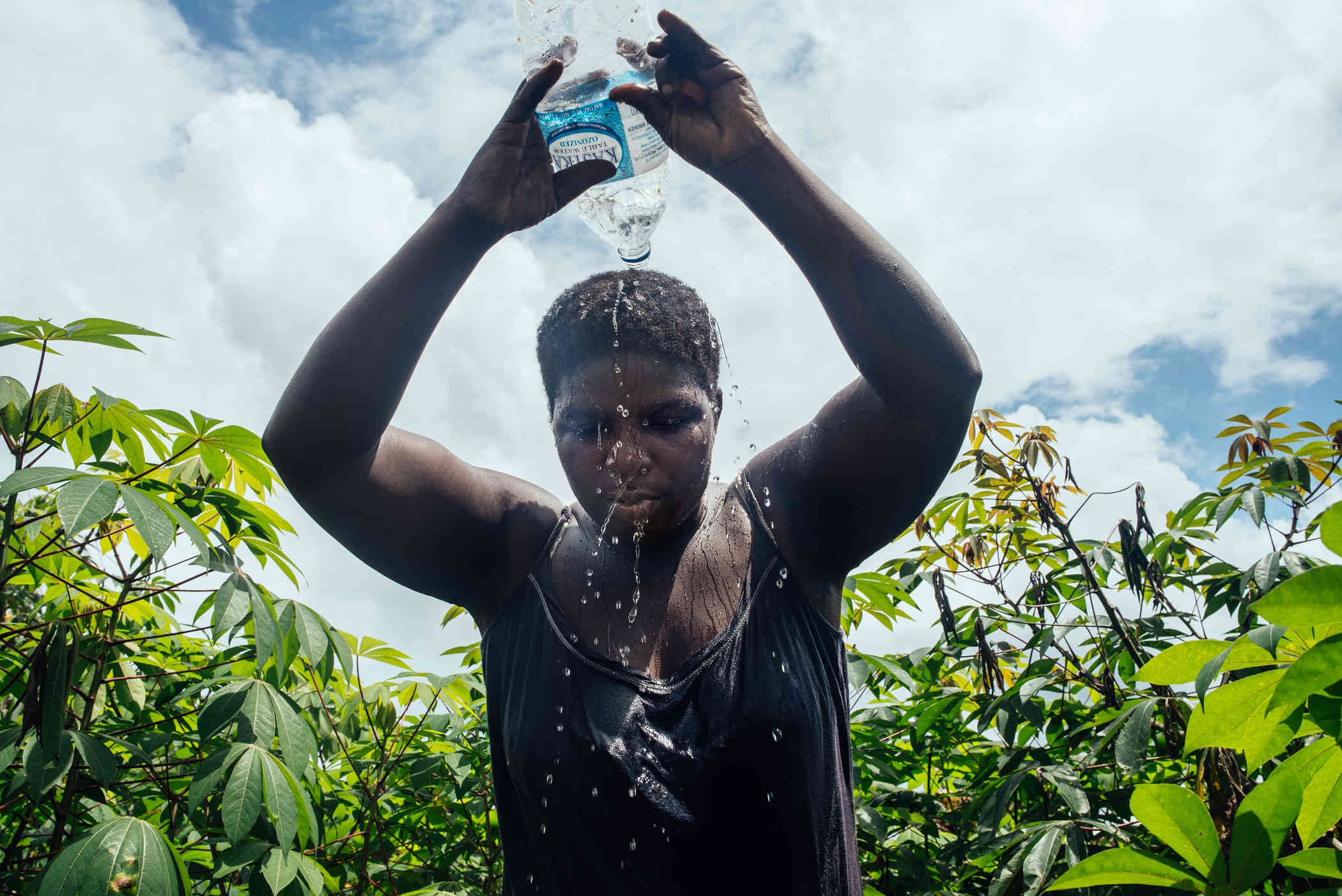
During the 2025 Ramadan fasting period, schools were shut in some states across northern Nigeria. The decision sparked public outrage, with many Nigerians questioning it. The unanimous reason given by authorities was that the heat had become unbearable in the affected states, necessitating the closure of schools. For many people, that was a reasonable excuse, but beneath it, to a keen observer, lay a policy failure that deserved more attention than it received. Northern Nigeria, particularly the North East and North West, sits within a semi-arid belt bordering the Sahara Desert. It has always been hotter than other parts of the country.
What that school closure quietly revealed was the absence of a national or state heat management policy. Nigeria, of course, has policies for floods, droughts, the energy transition, disaster response, climate and health adaptation. However, heat is largely unmanaged. There is no clear policy framework on how schools, workers, farmers, or low-income households should cope with rising temperatures. As a result, heat is not treated as a public policy emergency.
This is not an attempt to relitigate the school’s closure. Rather, it is an effort to call attention to how rising heat is silently pushing Nigerians deeper into poverty, food insecurity, and worsened health conditions. Heat stress is now not just an environmental concern but a development issue that largely affects productivity, education, health, and household income. Unlike floods, heat is not dramatic; it is as deadly as, or even worse than, floods. It creeps into everyday life, drains energy, reduces earning hours, and increases health risks.
Evidence globally has established a strong link between extreme heat and poverty, particularly in low-income societies.
For many outdoor workers, earning a livelihood has become increasingly difficult. In some places, work cannot continue after noon due to extreme heat. Those who push through do so at the expense of their health, suffering dehydration, headaches, and heat exhaustion. The result is lost income and rising healthcare costs, which also consume the little savings they manage to earn under the heat.
The education sector also tells a worrying story. Recently, during a visit to the primary school I attended in Bauchi State, I saw how teachers and pupils were struggling under the suffocating heat. The teacher was drenched in sweat. The pupils were distracted, trying to hand-fan themselves with notebooks. Learning was taking place in form, but not in substance.
If Nigeria is serious about improving educational outcomes, then heat-resilient classrooms should be available to them. Policies must begin to prioritise basic cooling solutions, such as renewable-powered fans and ventilation systems in public schools.
Another backbone of livelihoods—agriculture—is also under serious threat. Rising temperatures stress crops, exacerbate pest and disease problems, shorten growing seasons, and reduce yields. For smallholder farmers, this condition results in lower incomes and food insecurity. Strengthening climate adaptation plans for agriculture is therefore necessary, particularly in areas most vulnerable to heat and erratic rainfall.
Reducing carbon emissions is central to addressing climate change, and Nigeria has a role to play. Governments, industries, energy companies, and individuals all share responsibility. Lifestyle changes, such as reducing reliance on biomass and fossil fuels when cleaner alternatives are available, matter. Access to solar-powered equipment and off-grid electricity can also significantly reduce emissions and improve living conditions.
However, lifestyle change alone is not the solution. Without coordinated policies that expand access to affordable renewable energy, low-income households will continue to rely on unsustainable energy sources. Heat, energy poverty, and health outcomes are connected, but our existing policies often treat them in isolation.
This is where government responsibility sets in. At the federal and local levels, there must be deliberate investment in renewable energy solutions that directly improve people’s daily lives. Solar mini-grids, clean cooking technologies, and low-cost cooling appliances should be treated as public health and poverty alleviation priorities. If heat can shut down schools, reduce productivity, and worsen health outcomes, then it, by all standards, deserves a higher place in Nigeria’s policy agenda.
Nigeria cannot afford to continue reacting to climate impacts only after damage has been done. Rising heat is shaping how we work, learn, farm, and earn. Ignoring it does not make it disappear. It only deepens inequality and exposes the most vulnerable to greater harm. A country serious about development must begin to treat heat as the policy challenge that it truly is.
Isah Kamisu Madachi is a public policy enthusiast and development practitioner. He writes from Abuja and can be reached via isahkamisumadachi@gmail.com.
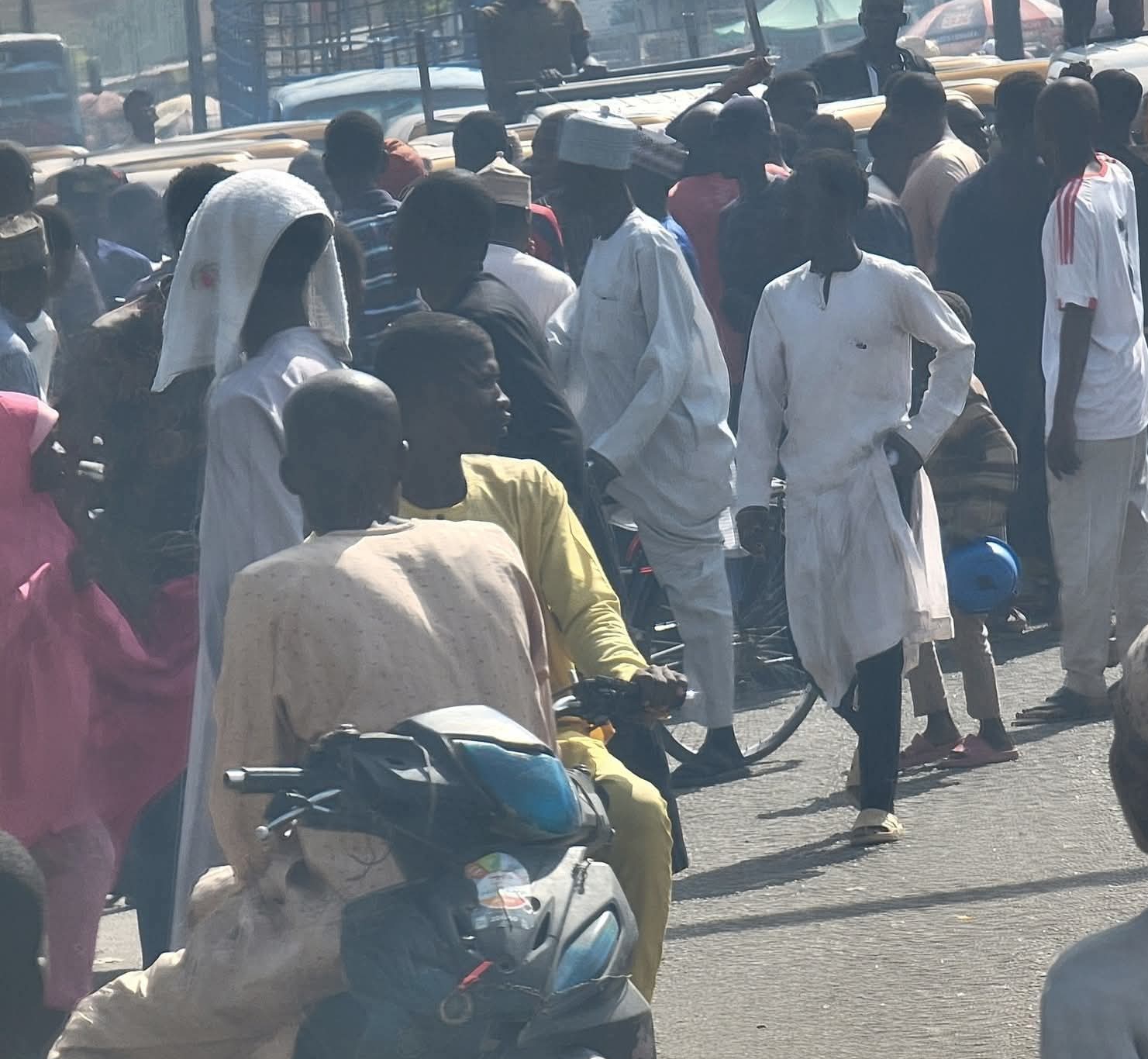
Residents set suspected phone snatcher ablaze in Kano
By Sabiu Abdullahi
A suspected phone thief sustained severe injuries after a mob attack in the Dorayi area of Kano State.
Sources said the incident occurred after the suspect was accused of attempting to steal a mobile phone belonging to a woman. The accusation led to a confrontation, which later escalated into violence.
Witnesses disclosed that the woman sustained injuries during the incident and was immediately taken to a nearby hospital for medical attention.
Residents in the area stated that the youths subdued the suspect before the arrival of security operatives. They later poured petrol on him and set him on fire.
A tricycle rider, Abba Tilda, told newsmen: “When I got to the scene, the woman was being put on a ride to get her to the hospital.
“They poured petrol on the suspect and lit the match. He was still moving when the security agents took him. The road has been completely blocked.”
The suspect was later taken into custody for further investigation.
Dorayi has recorded similar violence in recent weeks. A woman, Fatima Abubakar, and her six children were murdered in the same area a few weeks ago.
As of the time this report was filed, the Kano State Police Command had yet to issue an official statement on the incident.
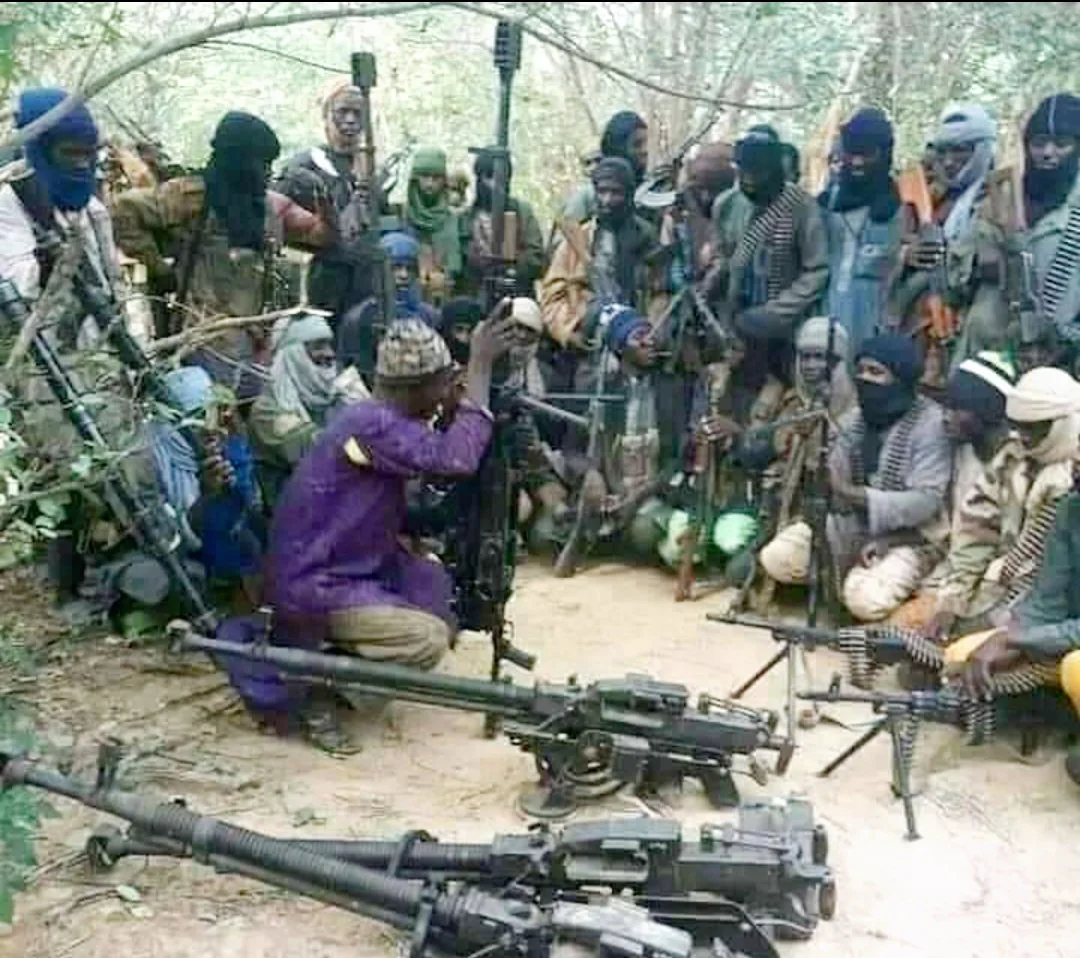
Bandits burn four residents alive in Zamfara over alleged refusal to pay levies
By Sabiu Abdullahi
At least four people lost their lives on Thursday evening after armed bandits attacked Gwargwaba village in Nahuce District of Bungudu Local Government Area, Zamfara State.
Reports said the attackers stormed the community at about 6:00 p.m. A security analyst, Bakatsine, disclosed the incident in a post shared on X on Saturday. He stated that the assailants were heavily armed and set several houses on fire during the raid.
According to the report, four residents were trapped inside their homes and died as the fire spread.
The attackers also destroyed food items, killed villagers’ livestock, and set them ablaze.
Bakatsine said the attack followed the community’s refusal to pay levies demanded by the bandits. He noted that the decision angered the attackers and led to a violent response.
He wrote, “On Thursday evening around 6pm, bandits armed with sophisticated weapons stormed Gwargwaba village in Nahuce District, Bungudu LGA of Zamfara State. Four residents were burned alive in their homes, while houses, food stores and livestock were set ablaze. The attack reportedly followed the villagers’ refusal to pay illegal levies imposed by the bandits,”.
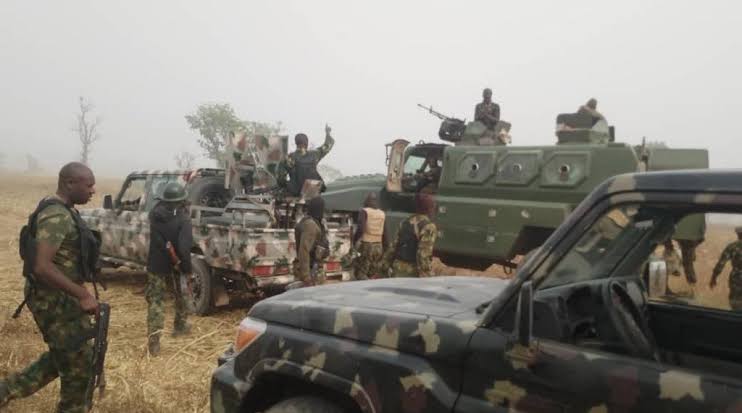
Several soldiers reportedly feared dead as ISWAP attacks army base in Borno
By Sabiu Abdullahi
Several Nigerian soldiers were reportedly killed after fighters of the Islamic State West Africa Province (ISWAP) attacked a military base in Borno State, according to military sources.
According to a report by SaharaReporters, the assault took place on Thursday at a military formation in Sabon Gari, Damboa Local Government Area. Sources said that the insurgents stormed the base and opened sporadic fire, which led to heavy casualties among soldiers and members of the Civilian Joint Task Force (CJTF).
An exact number of those killed has yet to be confirmed. One of the sources said, “There was an attack, many soldiers were killed, but I don’t have the correct figure yet.”
The source added that the attackers set armoured tanks and other military vehicles on fire and escaped with a large quantity of ammunition. ISWAP later claimed responsibility for the attack in a statement, which was accompanied by a video showing its members firing towards the military facility.
The incident occurred only days after another deadly attack in the state. Seven military personnel, including a newly promoted Lieutenant Colonel, were killed in an ambush by the terrorists earlier in the week.
A report earlier indicated that Lieutenant Colonel Mohammed was leading a convoy of soldiers from Maiduguri to Damasak in Mobbar Local Government Area of Borno State when the troops came under attack on Monday, January 26, 2026. Military sources said the insurgents deployed explosives and heavy gunfire during the ambush.
Apart from those killed, several soldiers sustained serious injuries, while the whereabouts of some personnel remain unknown.
Since the death of former Boko Haram leader Abubakar Shekau, ISWAP has strengthened its presence around the Lake Chad region. The group has also grown in number following the defection of hundreds of fighters who were previously loyal to Shekau.
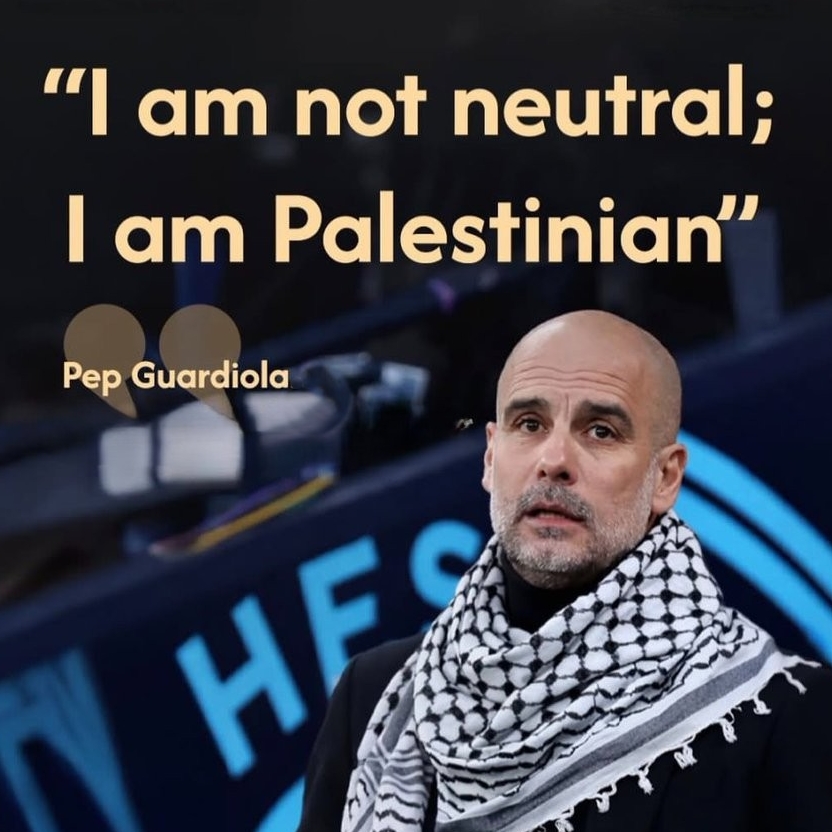
Pep Guardiola speaks out for Palestinian children at Barcelona charity event, says “I’m not neutral; I’m Palestinian”
By Sabiu Abdullahi
Manchester City manager Pep Guardiola has delivered an emotional speech in support of Palestinian children, calling on world leaders to take action over the humanitarian crisis in Gaza.
Guardiola spoke on Thursday evening at a charity concert in Barcelona, which led to his absence from Manchester City’s usual pre-weekend news conference on Friday. The club later explained that he missed the briefing for personal reasons, with assistant coach Pep Lijnders stepping in to address the media ahead of Sunday’s Premier League match against Tottenham Hotspur.
Appearing on stage wearing a keffiyeh scarf, the 55-year-old expressed deep distress over the suffering of children affected by the conflict.
“Good evening, salam alaikum, how wonderful,” Guardiola said at the event.
He went on to describe the scenes that have troubled him over the past two years. “When I see a child in these past two years with these images on social media, on television, recording himself, pleading, ‘where is my mother?’ among the rubble and he still doesn’t know it.”
Guardiola said such images often left him reflecting on the emotional state of the children involved. “And I always think: ‘What must they be thinking?’ And I think we have left them alone, abandoned.”
He added that he imagined the children calling out for help. “I always imagine them saying: ‘Where are you? Come help us.’”
The Manchester City boss criticised global leadership for failing to respond adequately. “And even now, we haven’t done it. Perhaps because those in power are cowards, because they basically send innocent young people to kill innocent people.”
Guardiola urged collective responsibility and action, calling for what he described as a “step forward,” as he said he was making “a statement for Palestine and… a statement for humanity”.
His comments came amid continued tension in Gaza. Although Hamas and Israel agreed to a ceasefire in October, Gaza’s health ministry reports that more than 400 Palestinians have been killed in the months that followed. Israeli media, citing senior military officials, also reported that Israel’s military now accepts that around 70,000 Palestinians have been killed since the war began.
Guardiola’s appearance at the Barcelona event took place during the football season, with Manchester City scheduled to return to action on Sunday.
Israeli air strikes kill 11 Palestinians in Gaza, health ministry says
By Sabiu Abdullahi
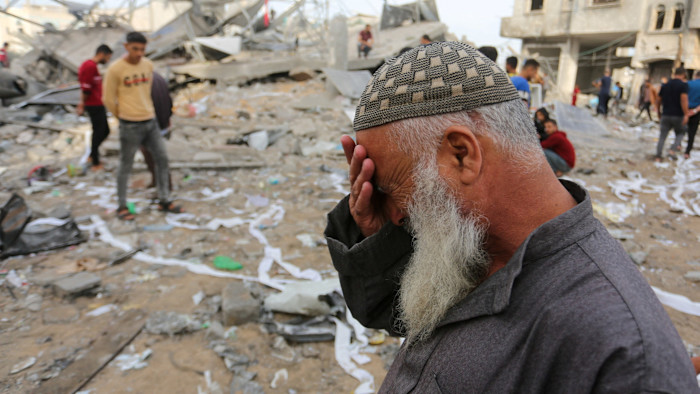
At least 11 Palestinians were killed in Israeli air strikes across the Gaza Strip on Saturday, according to the territory’s ministry of health, AFP reports.
The ministry said the victims included civilians who were taking shelter in a tent in the southern part of Gaza. Munir al-Barsh, the general director of the ministry, which operates under Hamas authority, told AFP that 11 people were killed and 20 others were injured “as a result of strikes carried out by the occupation targeting civilians in a tent and an apartment”.
Barsh said those wounded were taken to hospitals in Gaza City in the north and Khan Yunis in the south for medical treatment.
He also accused Israel of breaching the ceasefire agreement. According to him, Israel “continues its serious violations of the ceasefire agreement amid a severe shortage of medical supplies, medicines and medical equipment”.
Meanwhile, Gaza’s Hamas-run government press office said the strike on the tent in the south killed seven members of the same displaced family. The victims reportedly included a child and an elderly person.
A ceasefire brokered by the United States has been in place since October and entered its second phase in January. The phase is expected to involve Hamas’s disarmament, a gradual withdrawal of Israeli forces, and the deployment of an international stabilisation force. Despite the agreement, Israel and Hamas have repeatedly accused each other of violating the truce.
According to the Gaza health ministry, 509 people have been killed since the ceasefire took effect on October 10.
The war has displaced almost the entire population of Gaza at least once. Many residents still live in tents or makeshift shelters across the territory.
The conflict began after Hamas launched an attack on Israel on October 7, 2023, which killed 1,221 people, based on an AFP tally using official Israeli figures. Israel’s military response caused widespread destruction in Gaza, a territory that had already faced repeated rounds of fighting and an Israeli blockade imposed since 2007.
The health ministry said more than 71,769 people have been killed in Gaza since the start of the war. The United Nations considers the ministry’s figures to be reliable.
Nigerian soldiers eliminate terrorists’ commander in Borno
By Sabiu Abdullahi
Troops of the Joint Task Force, North East, under Operation HADIN KAI (OPHK), have achieved notable operational successes across the North-East, following sustained intelligence-led military actions against terrorist groups and criminal elements in the region.
This is contained in a statement signed by Sani Uba, Lieutenant Colonel, Media Information Officer, Headquarters Joint Task Force (North East), Operation HADIN KAI, on January 31, 2026.
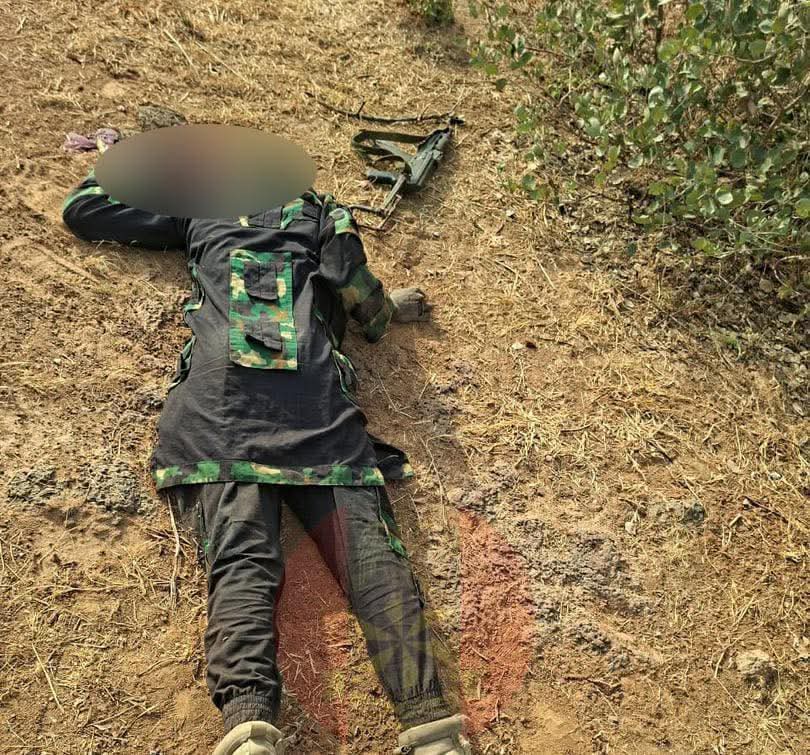
According to the statement, intelligence sources confirmed the killing of JULAIBIB, a senior ISWAP commander operating along the Gujba axis of the Timbuktu Triangle. The terrorist leader was killed during a clash with troops around Kimba in Damboa Local Government Area of Borno State on January 30, 2026.
Further intelligence reports indicated that the development threw ISWAP fighters in the area into confusion, as several of them were also eliminated during the encounter. The development dealt a significant blow to the group’s command and control structure in the area.
In another operation, OPHK troops, working alongside members of the Civilian Joint Task Force, neutralised three terrorists during a carefully planned ambush between Ngazalgana and Lamusheri communities in Borno State. The operation followed credible intelligence on the movement of insurgents within the area. Troops positioned themselves along the identified route and engaged the terrorists with effective firepower. Three insurgents were killed, while others escaped with gunshot wounds. Two AK-47 rifles were recovered from the scene. The military said the operation formed part of ongoing efforts to restrict terrorist movement and weaken their operational capacity across the theatre.
Similarly, on January 29, 2026, troops deployed on an ambush at Tsokorok in Gwoza Local Government Area of Borno State encountered Boko Haram and ISWAP elements. The troops engaged the terrorists, which forced them to retreat. One terrorist was neutralised during the encounter, while no casualty was recorded among the troops. Two motorcycles were recovered at the scene.
Troops also recorded several successes in Adamawa State. On January 29, 2026, soldiers responded to a distress call from Barama community in Mubi North Local Government Area, where they foiled an armed robbery attempt. Two suspects who attempted to attack a student of the Federal Polytechnic, Mubi, were arrested. One of the suspects sustained a gunshot wound on the thigh while attempting to confront the troops and was taken to the Federal Medical Centre, Mubi, for medical treatment. The suspects were later handed over to the Nigeria Police for further investigation. Items recovered from them included three cutlasses, two laptops, four mobile phones, and one power bank.
Earlier, on January 28, 2026, troops, in collaboration with local vigilantes, carried out a fighting patrol along the Amtasa–Washim axis in Hong Local Government Area of Adamawa State. During the patrol, the troops encountered terrorists and engaged them with heavy fire, which forced the attackers to flee in confusion. The troops also rescued a woman who had been abducted by the terrorists. Weapons recovered during the operation included one AK-47 rifle with registration number 2056792, two rounds of 7.62mm special ammunition, one SMG rifle, and 42 rounds of assorted ammunition.
According to the military, the overall security situation across the theatre remains stable. Operation HADIN KAI reaffirmed its commitment to protecting lives and property, dismantling terrorist networks, and working closely with local communities and relevant security stakeholders to restore lasting peace and economic stability across the North-East.
Nigerians in US go into hiding amid intensified ICE raids, killings
By Sabiu Abdullahi
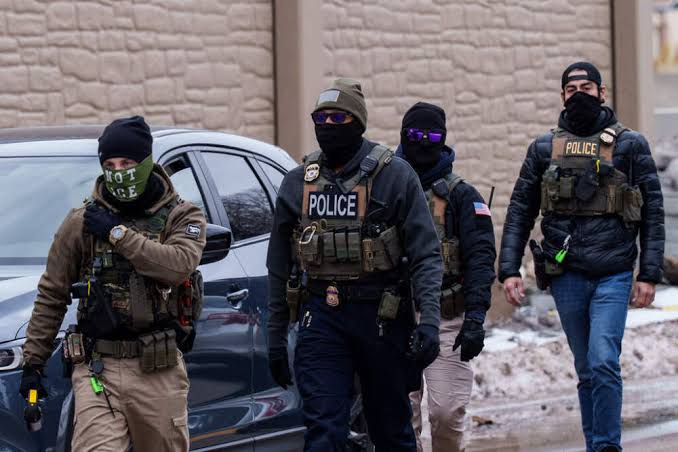
Anxiety has reportedly gripped Nigerian communities across the United States as Immigration and Customs Enforcement (ICE) ramps up its enforcement drive under President Donald Trump’s administration.
The aggressive campaign has pushed some Nigerians off the streets, caused many to lose jobs, and in some cases, prompted quiet, self-arranged returns to Nigeria. Others have gone into hiding to avoid arrest.
Heightened ICE raids, including door-to-door operations, have disrupted daily life for numerous immigrants. Reports indicate that many Nigerians are avoiding work, limiting their movement, and relying on informal or home-based businesses to make ends meet, according to PUNCH.
President Trump launched a renewed effort to arrest and deport undocumented immigrants shortly after his inauguration in January 2025. The policy, which he has consistently defended, has drawn strong criticism from civil rights groups and immigrant advocates. Critics accuse ICE of using excessive force and mistreating detainees.
The enforcement actions have led to deadly incidents. Official figures show that at least 32 people died in ICE custody in 2025, marking the deadliest year for immigration detention deaths in more than twenty years. In 2026 alone, The Guardian of the UK reported that at least eight people have died during encounters with ICE officers.
Recent shootings in Minneapolis, Minnesota, have further escalated fear. Public outrage followed the death of 37-year-old Renée Good, who was shot by an ICE agent on January 7 during an operation. A medical examiner later ruled her death a homicide caused by multiple gunshot wounds. Weeks later, 37-year-old Alex Pretti was also killed during a federal immigration operation in the same city.
Since the crackdown began, about 70,000 people have reportedly been detained by ICE, while roughly 540,000 immigrants have been deported. Sources across the U.S. indicate that the climate of fear has led some Nigerians to abandon regular jobs and make discreet plans to return home.
Social media has captured the human toll of the raids. A Nigerian woman described the panic and grief among immigrants, saying she was traumatised by Pretti’s death, an intensive care nurse at the Minneapolis VA Medical Center. She said ICE agents often ignored legal status during operations.
“It is very traumatising the way these (ICE) people are treating immigrants,” PUNCH quoted her as saying. “President Trump, if you want the immigrants to leave America, tell us. Just come out and say, ‘All immigrants, we want you out, whether you are criminal or not.’”
She added, “These (ICE) people don’t even care. There are a lot of immigrants who are treated like animals, and these people will be telling them, ‘we are citizens’, but they don’t care.”
The woman, who requested to be identified as senior Immigrant, said fear of arrest has driven many Nigerians into online trading and home-based work. She recounted a shop assistant who stopped coming to work in mid-December and a family who left factory jobs after ICE activity in their area.
“My girl, who was working with me in my shop, stopped coming in mid-December. The reason was that she was scared for her life because ICE came to my area,” she said. “The most unfortunate thing was that they came to her area in New Jersey. Since then, she has had anxiety and fear.”
She added, “People are staying indoors because of the fear of ICE. They get family support from those who work. Two weeks ago, someone called me to say that they were donating to support some families, and they requested that I contribute, which I did.”
She said some families now sell goods from home or prepare meals for online orders that customers pick up privately. “There are many people with other serious experiences,” she noted.
Mrs Chris Ademiluyi, President of the Nigerian community in Maryland, confirmed that many Nigerians have chosen to go into hiding rather than return home.
“They are in hiding instead. Nigeria is not any better,” Ademiluyi said. “Some people affected may want to talk anonymously, but they are not talking because of fear.” She added that Nigerian-Americans are largely shielded and that community organisations are providing support where possible.
The situation has also sparked online debate. The Lead Pastor of Lighthouse/Rejuvenation Church in Rosenberg, Texas, Shola Adeoye, cautioned Nigerians against fear-driven decisions in a Facebook post.
“Some Nigerians are moving back home due to fear of this administration. It’s not wise to bury yourself before death,” Adeoye wrote.
Ben Ijeh, a Facebook user, commented, “Whoever that leaves involuntarily by ICE is not psychologically likely to want to come back in the future. The trauma will be too much to bear. God will always make a way for His own.” Another user, Olukunle Durodolu, wrote, “The way ICE agents capture people could be scary; they may not have the opportunity to get themselves together. So, it is preferred to time their return home when they can control themselves.”
Policy changes have compounded the pressure. Mr Gbenga Ogunjimi, Executive Director of the Nigerian Center, a non-profit immigration and cultural organisation in Washington, DC, said the organisation has seen a surge in Nigerians seeking help.
“The problem we are facing is multi-layered. There is a visa ban,” Ogunjimi said. “Before the visa ban, Nigeria was designated as a Country of Particular Concern. That was last year.”
He explained that in December 2025, a partial ban suspended most visa categories, including non-immigrant visas. “What they did not tell those of us in America or Nigerians in America is that the ban will also stop their ability to file for citizenship, green cards, work authorisation, asylum, and things like that,” he said.
Ogunjimi said the Nigerian Center has focused on public education and guidance. “If you go to our website and social media, we put out a policy memo, educating people on the parameters of this ban. We’re just giving information to folks.”
An increasing number of immigrants are considering voluntary departure, Ogunjimi noted. “We’ve seen cases where a lot of people are self-deporting right now,” he said. “Some of them asked if they would be able to come back to the US if they leave.”
In some cases, his organisation advises immigrants not to leave hastily. “They probably came here on a visiting visa… maybe they have overstayed for a couple of days,” he said, adding that waivers may still be possible.
On exact figures, Ogunjimi said, “Do I have numbers of those who have actually gone back, and who have taken the advice? The answer is: I don’t know. I don’t have those numbers.”
As ICE enforcement continues, uncertainty remains the defining reality for many Nigerians in the U.S., caught between fear of arrest abroad and harsh economic and security conditions at home.

ICYMI: Nigeria to integrate global Islamic finance standards into financial reporting
By Sabiu Abdullahi
The Financial Reporting Council of Nigeria (FRC) has announced plans to incorporate international Islamic finance standards into the Nigerian Financial Reporting Framework (NFRF).
Executive Secretary of the FRC, Dr. Rabiu Olowo, disclosed this development in Abuja on Wednesday, explaining that the initiative seeks to strengthen regulatory clarity, protect investors, and position Nigeria as a leading hub for Islamic finance in Africa.
Dr. Olowo stated that the engagement with stakeholders follows last year’s decision to adopt the Accounting and Auditing Organisation for Islamic Financial Institutions (AAOIFI) standards for both Islamic and non-interest financial institutions operating in Nigeria.
He emphasized the differences between Islamic and conventional finance systems, particularly in areas such as interest prohibition, risk-sharing, asset-backed financing, and ethical investment. According to Olowo:
“These differences make it important for us to coordinate closely with stakeholders to effectively integrate the standards and innovations of Islamic finance institutions.”
He added that the updated framework will ensure that financial reports accurately reflect the substance of non-interest transactions, including governance and disclosure requirements. Olowo said:
“Adopting the AAOIFI standards will enhance transparency, accountability, comparability and consistency in financial reporting across Nigeria’s non-interest finance sector, while strengthening market discipline and boosting investor confidence.”
Citing the global growth of Islamic finance, Olowo noted examples such as the issuance of Sukuk and other non-interest instruments in countries like the United Kingdom, highlighting the expanding acceptance of these financial models beyond traditional markets.
He clarified that the adoption of these standards is not intended to disrupt existing financial operations, but rather to improve clarity, credibility, and regulatory certainty for institutions offering non-interest financial products.
Dr. Basheer Oshodi, representing the Non-Interest Finance Institutions of Nigeria, explained that the initiative aims to build Islamic finance deliberately and set clear guidelines. He added:
“More importantly we won’t disrupt the financial reporting framework, but we will enhance it and give it more potency so that by Q1 this year we should start implementing.”
This move is expected to strengthen Nigeria’s non-interest finance sector and provide investors with greater confidence in the country’s financial reporting standards.