
NAFDAC Uncovers Lagos Warehouse Stockpiling Empty Bottles For Suspected Fake Alcohol Production
By Sabiu Abdullahi
The National Agency for Food and Drug Administration and Control (NAFDAC) has uncovered a residential building in Lagos State allegedly used to store empty alcoholic beverage bottles suspected of being recycled for counterfeit drink production.
The discovery was made at 322B Meiran Road, Agbado, Oke Odo, following intelligence reports about suspicious activities in the area.
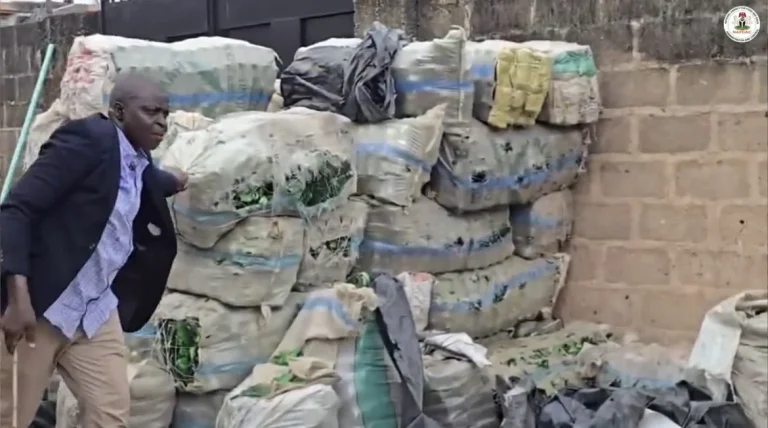
In a video shared on the agency’s official X account on Friday, Kunle Ojo, Assistant Director of NAFDAC’s Investigation and Enforcement Directorate, said operatives found more than 100 sacks of empty bottles at the location.
According to the agency, the bottles were destroyed to prevent their possible reuse in the production and distribution of fake alcoholic beverages.
Ojo explained that the building was situated in an isolated residential neighbourhood and was identified through credible intelligence.
He said, “We got credible intelligence that in this particular area, a lot of nefarious activities were taking place. This is the gate to the building; it’s a residential area, and on arriving, we saw different kinds of bottles stacked in this place.
“These are bottles covered in tarpaulins here and are ready to be supplied to people who are counterfeiting them. From the other side of the building, we also have all kinds of bottles that are being packed. They are in different sizes: 750cl and assorted drinks. We have Action Bitters, Hennessy, and they are stacked.
“This same thing is happening here. What they do here is to wash these bottles and supply them to different suspected counterfeiters to be used for another production. This is a residential area, and this is not acceptable to the government. We are here to safeguard the health of the nation.”
The agency said the bottles were reportedly washed and supplied to suspected counterfeiters for reuse, a practice that could facilitate the circulation of adulterated alcoholic drinks and pose risks to public health.
NAFDAC urged residents to report suspicious activities in their communities to the nearest agency office to help prevent the production and distribution of counterfeit products.
The latest operation comes amid a series of enforcement actions by the agency against suspected counterfeit beverage dealers in Lagos.
On October 13, NAFDAC operatives raided more than 20 makeshift stores at the Lagos International Trade Fair Complex in Ojo, where they seized suspected fake spirits, expired drinks and prohibited imported products.
The agency has continued to intensify its enforcement activities as part of efforts to protect consumers from unsafe and unregulated food, beverages and other regulated products.
Atiku Accuses Tinubu Of Dodging Responsibility For Nigeria’s Economic Hardship
By Sabiu Abdullahi
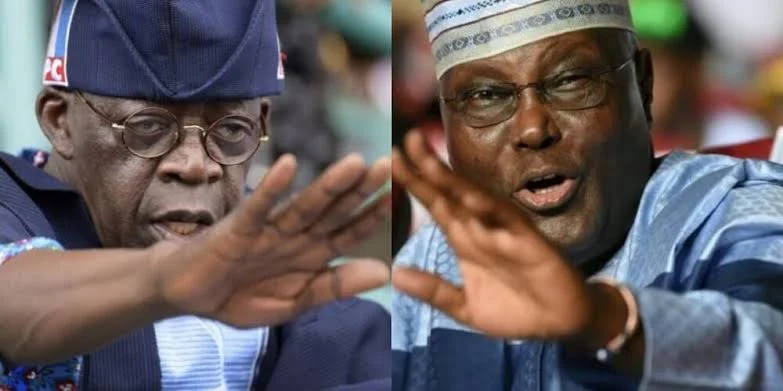
Former Vice President Atiku Abubakar has criticised President Bola Tinubu for blaming the opposition for hunger and poverty in Nigeria, describing the claim as an attempt to evade responsibility for his administration’s economic policies.
Atiku, the presidential candidate of the African Democratic Congress (ADC), reacted after Tinubu accused opposition politicians of being responsible for the country’s economic difficulties during the APC presidential campaign flag-off in Kaduna on Saturday.
“I hear my opponent talking about hunger, poverty. Who created it? They did! They created the hunger, they created the poverty. We are trying to eradicate it,” the President said.
In a statement released on Saturday by the Director of Strategic Communication of the ADC Presidential Campaign Council, Phrank Shaibu, Atiku argued that Nigerians had every right to demand accountability from the ruling party over the rising cost of living, insecurity, poverty and government spending.
He maintained that the APC had controlled the federal government for about 11 years, including the period before Tinubu assumed office.
“Mr President, blaming the opposition for hunger is either delusion or a staggering case of political amnesia. The APC governed Nigeria for eight years before you took office. You have added another three and a half years.
“Nigerians know who has been in power, and hardship did not begin when the opposition started talking about it. Stop insulting their intelligence and answer for your record,” the statement quoted him as saying.
Atiku insisted that the economic difficulties affecting Nigerian households and businesses were linked to government policies and could not be dismissed by blaming political opponents.
“The hardship your administration has brought upon Nigerians is real. You cannot deny it by blaming others,” he said.
The former vice president also criticised Tinubu’s decision to commission the Abuja-Kaduna Expressway from a stadium, arguing that the move raised questions about the actual state of the project.
“Your decision to commission the unfinished Abuja to Kaduna Expressway from inside a stadium shows how far removed you are from the daily reality of Nigerians. A road cannot be completed with a speech or a ribbon-cutting ceremony,” he said.
Atiku further challenged the President to explain the impact of his administration’s economic decisions, particularly the removal of the petrol subsidy and the depreciation of the naira.
“Which administration removed the petrol subsidy and watched the naira fall from about ₦471 to ₦1,329 to the dollar?” Atiku asked.
He also cited a World Bank estimate that 63 per cent of Nigerians would be living below the national poverty line in 2026.
Atiku Demands Explanation For Government Spending
The ADC presidential candidate raised concerns about federal budgeting and public expenditure, including the extension of the 2024 budget into 2025 and spending recorded under energy security.
He questioned the reported ₦7.13tn expenditure under “energy security” in 2024, alongside ₦11.2tn in pipeline-related spending by the Nigerian National Petroleum Company Limited (NNPCL).
“Nigerians deserve to know who received these sums and what was delivered,” he said.
Atiku also demanded clarification over what he described as a $12.4bn gap in Nigeria’s external accounts during the first half of 2026 and a payment of $22.5m listed as “other charges” under the Abu Dhabi financing facility.
Beyond economic concerns, he linked the country’s financial difficulties to the worsening security situation, asking the Federal Government to account for persistent killings, kidnappings and the displacement of residents in several communities.
“These are the questions Nigerians are asking while your government blames the opposition,” he said.
2027 Election Will Test Tinubu’s Record — Atiku
Atiku maintained that the Tinubu administration should be assessed based on its achievements and the impact of its policies on Nigerians rather than its explanations for the country’s challenges.
“You cannot govern for three years, make life harder, and then blame others for describing the hardship. You asked who created the hunger. Nigerians are asking what you have done to end it.
“The 2027 presidential election will be a referendum on your record. Nigerians have felt the cost of your leadership in their homes, markets and communities,” he added.
The exchange highlights the growing political dispute over responsibility for Nigeria’s economic challenges as parties position themselves ahead of the 2027 presidential election.
Police Rescue Kidnap Victim, Arrest Eight Suspects, Recover Firearms
By Sabiu Abdullahi
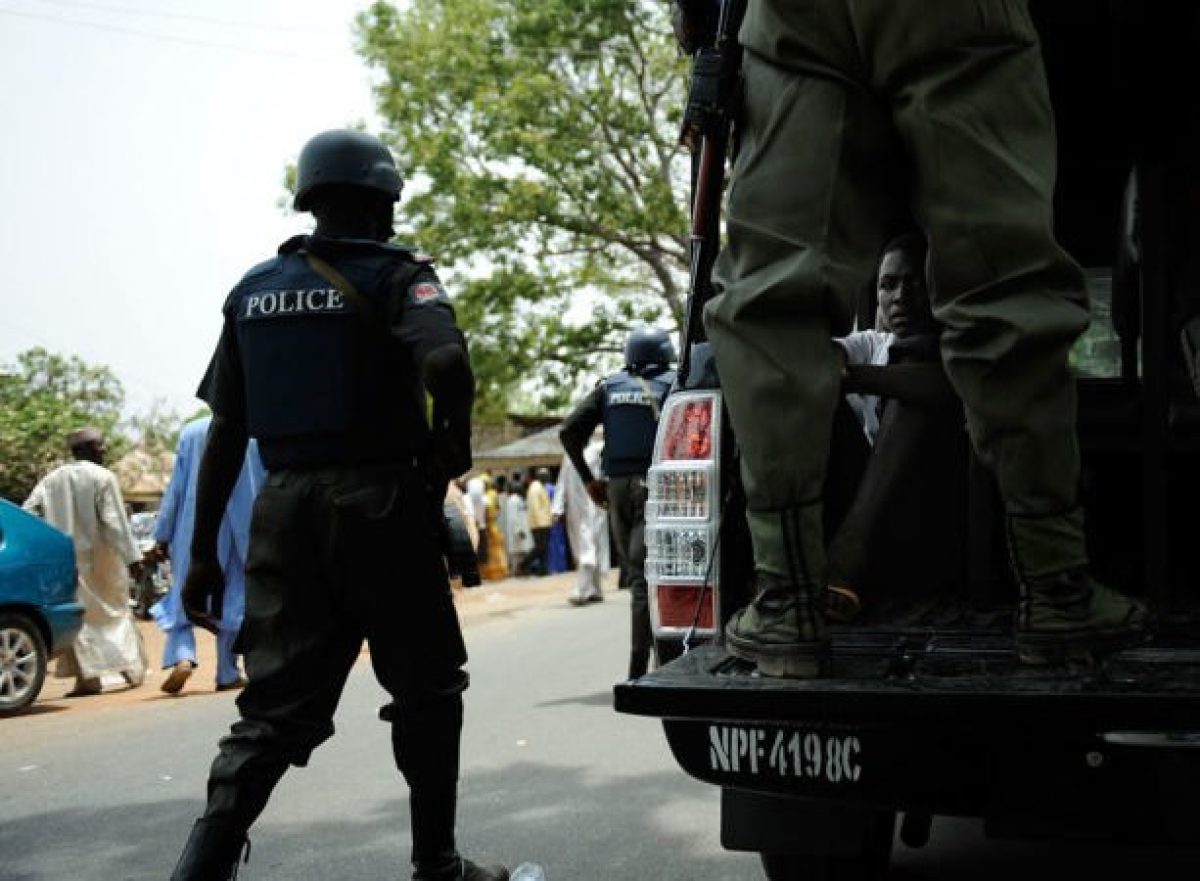
The Delta State Police Command has rescued a 23-year-old kidnapping victim and arrested eight suspects in separate operations across the state, recovering three firearms, 26 live cartridges and substances suspected to be Indian hemp.
The operations were carried out between October 20 and 23, 2026, as part of efforts to tackle kidnapping, cultism and other criminal activities.
The command’s spokesperson, SP Bright Edafe, disclosed the developments in a statement on Saturday.
According to the police, operatives of the Owa-Oyibu Division, working alongside local volunteer groups, rescued a 23-year-old man who was abducted at Owa-Alero on October 19.
“On October 20, 2026, operatives of Owa-Oyibu Division, in collaboration with local volunteer groups, successfully rescued a 23-year-old man whom two suspected kidnappers abducted on October 19, 2026 at Owa-Alero,” the statement read in part.
“The victim was reportedly seized in front of his residence and dragged into a nearby bush,” it added.
The police explained that the rescue followed a report from the victim’s brother, which prompted operatives to launch an extensive search of nearby bushes. Efforts were still ongoing to arrest the suspected abductors who escaped.
Six Suspected Cultists Arrested In Abraka
In a separate operation on October 23, operatives of the Violent Crime Response Unit raided a hotel in Abraka suspected of serving as a hideout for drug-related activities.
Six suspected cultists were arrested during the operation, while a bag containing a firearm and substances suspected to be Indian hemp was recovered. Some individuals reportedly fled when they sighted the police.
The command said investigations were ongoing to determine the ownership and source of the firearm and identify other people connected to the incident.
Police Recover More Firearms In Ekuku-Agbor
The police also reported separate raids in Ekuku-Agbor community, Ika South Local Government Area, which led to the arrest of two suspects and the recovery of additional firearms and ammunition.
On October 21, operatives of the Special Anti-Kidnapping Unit, Sector III, Ubuluku, searched the residence of a 62-year-old suspect, Richard Nmorsi, under a search warrant.
The operation led to the recovery of a locally fabricated single-barrel firearm, 24 live cartridges and substances suspected to be Indian hemp. The suspect was arrested, and the recovered items were taken into custody for investigation.
Two days later, the same unit searched the residence of a 56-year-old suspect, Amechi Osemeke, also in Ekuku-Agbor.
During the operation, officers recovered a functional double-barrel firearm and one live cartridge. Osemeke was arrested as investigations continued into his possession of the weapon.
Police Promise Sustained Crackdown
The Commissioner of Police in Delta State, CP Samuel Erale, said the command would continue intelligence-led operations to dismantle criminal networks, recover illegal weapons and protect communities.
“The command would sustain intelligence-led operations aimed at dismantling criminal networks, recovering illegally possessed firearms and safeguarding communities across the state,” he said.
Eralе urged residents to remain alert and provide credible information to security agencies to support efforts to prevent crime.
He assured the public that the command would continue working to protect lives and property across Delta State.
Nigerian Soldiers Eliminate 15 Terrorists In Borno Air Strike
By Sabiu Abdullahi
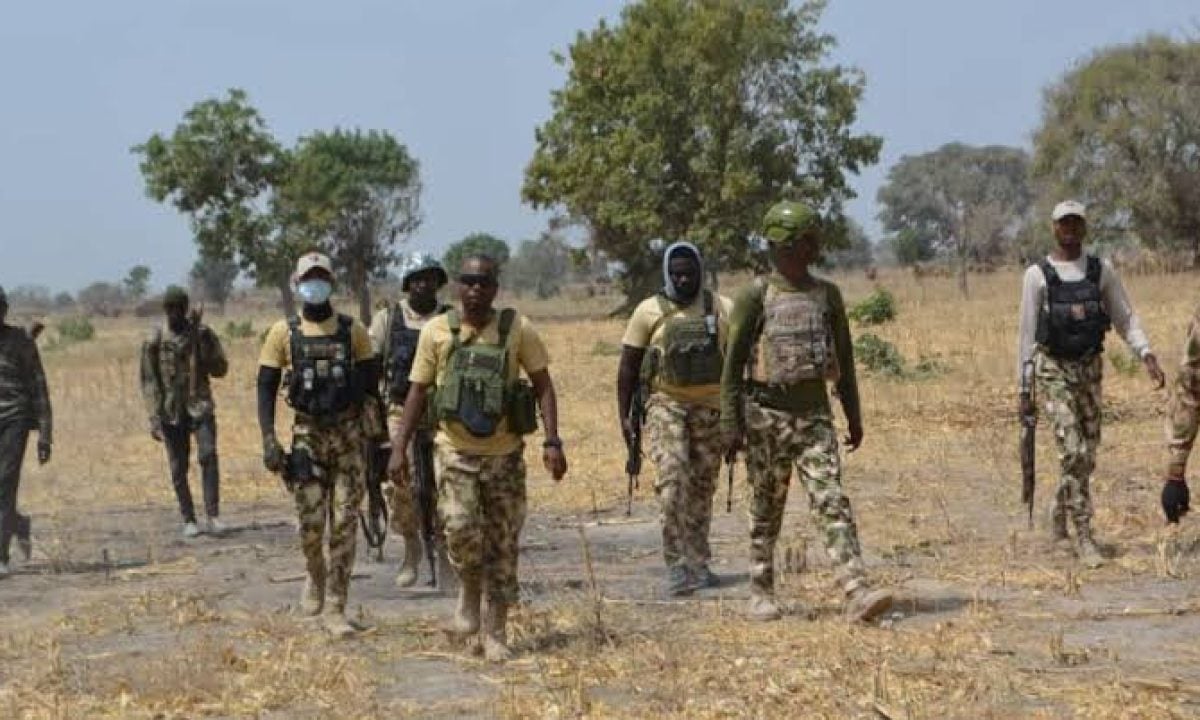
Troops of Operation Hadin Kai have reportedly killed 15 terrorists in an air strike conducted near Pulka in Gwoza Local Government Area of Borno State.
The Nigerian Army said the operation took place at about 11:50 p.m. on Friday, October 23, 2026, following intelligence reports and confirmed sightings of terrorist movements in the area.
The Acting Military Information Officer of the Northeast Joint Task Force, Operation Hadin Kai, Captain Mohammed Goni, disclosed the development in a statement issued on Saturday.
The statement read, “The Joint Task Force (North East), Operation HADIN KAI (OPHK), has recorded another operational success with the neutralisation of 15 terrorists in a precision air strike north-west of Pulka in Gwoza LGA of Borno State.
“The operation was conducted at about 11:50 p.m. on 23 October 2026, following credible intelligence and confirmed sightings of terrorist movements in the general area of Pulka.”
According to Goni, the air operation was followed by ground activities aimed at assessing the area and consolidating the gains recorded during the strike.
He said the operation demonstrated the importance of intelligence-led targeting and coordinated military action in disrupting terrorist activities and weakening their operational capabilities.
“It also reflects the unwavering commitment of Operation HADIN KAI to denying terrorist groups freedom of action and preventing them from threatening communities within the theatre,” he added.
Goni explained that the strike was part of ongoing military offensives across the North-East, supported by intelligence gathering and the coordinated use of available military resources.
“Through these efforts, the Theatre Command continues to maintain pressure on terrorist elements, disrupt their activities and strengthen the security environment across the North East,” he stated.
The military reaffirmed its commitment to combating terrorism and insurgency, protecting civilians and restoring normal economic and social activities in affected communities.
“The Theatre Command reassures the public that troops will sustain the momentum of ongoing operations with vigilance, determination and professionalism,” he said.
Goni also called on residents to support security agencies by providing timely and credible information about suspicious movements and activities.
He stressed that cooperation between the military and civilians remained crucial to sustaining operational successes and achieving lasting peace and security across the North-East.

Bauchi Police Arrest Man Over Alleged Fatal Stabbing Of Car Wash Colleague
By Sabiu Abdullahi
The Bauchi State Police Command has arrested a 40-year-old man, Sallau Inuwa, popularly known as Liman Katagum, for allegedly stabbing his 45-year-old colleague, Ibrahim, to death during a dispute over money from a car wash business.
The incident occurred on Thursday, October 22, 2026, at a car wash in Bauchi metropolis. The two men reportedly disagreed over the amount charged for washing a vehicle before the argument escalated into violence.
In a statement issued on Friday, the Police Public Relations Officer, SP Nafiu Habib, said the suspect allegedly picked up a knife and stabbed Ibrahim several times during the altercation.
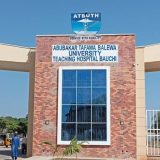
“Regrettably, despite efforts to save him, Ibrahim was confirmed dead at the Abubakar Tafawa Balewa University Teaching Hospital, ATBUTH, Bauchi,” the statement said.
According to the police, officers attached to the A Division in Bauchi launched an investigation after receiving a report of the incident.
Preliminary findings indicated that the suspect allegedly fled to his paternal home in the Liman Katagum area after the stabbing. The police subsequently contacted the Divisional Police Officer in the area, leading to a coordinated operation that resulted in Inuwa’s arrest at Mararraban Liman Katagum.
The Commissioner of Police, Sani-Omolori Aliyu, expressed concern over the incident and described it as a tragic loss of life arising from a disagreement over money.
“The CP, while condoling with the family of the deceased, urges members of the public to manage their anger and resolve disputes through dialogue and other lawful means rather than resorting to violence,” the statement added.
Aliyu also emphasised that provocation could not justify taking another person’s life.
“He reiterates that no matter the level of provocation, taking a life can never be justified,” the police spokesperson said.
The suspect is being held at the State Criminal Investigation Department (SCID) in Bauchi as investigations continue ahead of his prosecution.

31-Year-Old Graduate Seeks Financial Help For Surgery To Treat Congenital Reproductive Condition
By Sabiu Abdullahi
Alade Omowumi, a 31-year-old Guidance and Counselling graduate of Adekunle Ajasin University, has appealed to Nigerians for financial assistance to complete treatment for a congenital reproductive condition that has caused her years of pain and medical complications.
Omowumi said she first experienced recurring abdominal pain at the age of 15 but did not understand its cause until she sought medical attention three years later. Doctors subsequently discovered that she was menstruating internally because menstrual blood could not flow out of her body.
According to her account published by PUNCH on Saturday, an examination at the hospital revealed that her vaginal canal was absent, a condition that prevented doctors from carrying out the surgery they had initially planned.
She underwent surgery in 2014 to create a vaginal opening. However, the opening later narrowed, while she developed urinary incontinence following the procedure. She also continued to experience difficulties with menstrual blood drainage.
Omowumi said the pain prevented her from using a dilator recommended by doctors to help maintain the opening. Her mother eventually requested her discharge as the hospital bills continued to accumulate.
For about 14 to 15 years, she has continued to experience complications associated with the condition, including the accumulation of menstrual blood in her abdomen. She said doctors sometimes had to drain the trapped blood when she visited the hospital.
She later sought treatment at another hospital, where doctors explained that her bladder required repair and that another procedure would be necessary to create a functional vaginal opening. The treatment, she said, would be conducted in stages because of complications from her earlier surgery.
Omowumi underwent another operation in September 2026 to address her urinary problem. She was discharged about one or two weeks before the interview and is awaiting the next stage of treatment after the recently operated area heals.
She said she could not provide an exact cost for the outstanding surgery because the doctors had yet to determine the final amount, adding that treatment expenses could change before the procedure takes place.
The graduate disclosed that a foundation had previously supported her treatment. After her most recent surgery, the woman in charge of the foundation gave her the remaining N500,000 for post-operative care. However, she said she had received few additional donations and still needed financial assistance.
Beyond the medical challenges, Omowumi said the condition had affected her personal life and hopes of marriage and motherhood. She recounted an unsuccessful attempt at sexual intercourse because of severe pain and said she had kept her condition private for years because of the stigma surrounding it.
She eventually decided to speak publicly after becoming frustrated with her circumstances and realising that she needed help. However, she said some of the reactions to her story had been painful, forcing her to limit her outings.
Omowumi credited her mother with standing by her throughout the ordeal, particularly after the death of her father. She also expressed gratitude to friends who offered sympathy and encouragement after learning about her condition.
She is now appealing to Nigerians for financial support and prayers to enable her to complete treatment.
“I want Nigerians to please help me. I want to live a normal life, get married and have children of my own,” she said.
She added that her greatest hope was to receive the necessary treatment, build a family and have a better future.
Macron Postpones Planned Nigeria Visit Amid Protests In France
By Sabiu Abdullahi
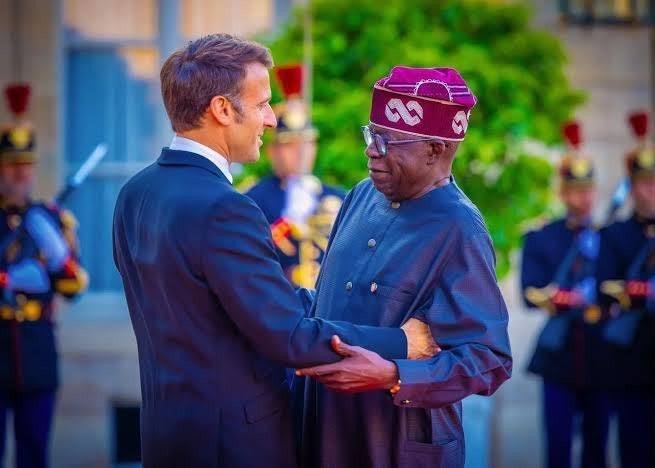
French President Emmanuel Macron has postponed his planned state visit to Nigeria, which was scheduled for October 28 and 29, amid widespread protests and unrest in France.
A French presidential source confirmed the postponement to TheCable on Friday, citing the domestic situation in France.
The country has recently experienced demonstrations over the rising cost of living, public services and school conditions. Protests on October 17 reportedly escalated into violence in several cities, with buildings set ablaze and shops looted.
French authorities are also preparing for another wave of demonstrations scheduled for Saturday.
A Nigerian official familiar with the matter told TheCable that the situation in France was a factor in the decision to postpone the visit.
“A president will not travel when his home is contending with internal combustion,” the official said.
Nigeria and France maintain diplomatic relations with cooperation across several sectors, including trade, energy, security and investment.
In November 2024, Macron hosted President Bola Tinubu for a three-day state visit to France. Discussions during the visit covered finance, energy transition, solid minerals, trade and investment, and communications, among other areas.
Macron’s proposed visit to Nigeria was expected to build on agreements reached during Tinubu’s trip to France.
The French president, whose second and final term is due to end in May 2027, has maintained close relations with Tinubu since the Nigerian leader assumed office in 2023.
Tinubu has visited France at least nine times since becoming president, for official engagements, working vacations and private trips.
Macron last visited Nigeria in July 2018, when he met with former President Muhammadu Buhari and toured the New Afrika Shrine in Lagos.
A new date for the postponed visit was not stated in the report.
ADC Challenges APC To Account For Tinubu’s N10bn Ebola Preparedness Fund
By Sabiu Abdullahi
The African Democratic Congress (ADC) presidential campaign council has challenged the All Progressives Congress (APC) to explain why the N10 billion approved by President Bola Tinubu for Ebola preparedness in June has reportedly remained unused.
In a statement issued on Friday, Phrank Shaibu, Director of Strategic Communication for the ADC presidential campaign council, accused the ruling party of avoiding questions about the release and management of the emergency fund.
The statement followed comments by Dele Alake, spokesperson for the APC presidential campaign council, who reportedly said the money had not been spent because the Nigeria Centre for Disease Control and Prevention (NCDC), the Federal Airports Authority of Nigeria (FAAN) and other agencies had relied on existing resources.
Reacting, Shaibu criticised the APC’s response and demanded documentary evidence showing whether the funds had been released and how they were being managed.
“The APC have made a remarkable discovery: ‘Bola’ sounds like ‘Ebola’. We had not noticed. They found the rhyme, wrote a lengthy press statement about it and somehow still could not tell Nigerians where the ₦10 billion ordered released for Ebola preparedness is,” the statement reads.
“Atiku Abubakar asked for the money trail and an account of the emergency response. The party in power came back with a pronunciation lesson.”
Shaibu asked the Federal Government to clarify whether the money had been disbursed and, if so, identify the account holding it, the officials responsible for managing it and the reasons it had not been spent.
“Was the money released or was it not? If it was released, where is it held, who controls it, and why has it not been used for the preparedness President Tinubu announced in June?” he stated.
“If it was never released, why was an order for its immediate release announced in June? Publish the release documents, the account records and the Task Force’s expenditure reports. Insulting Atiku Abubakar will not account for one naira.”
The ADC spokesperson also questioned the government’s response to the confirmed Ebola case in Abuja, demanding a detailed timeline showing when the infection was first suspected, when health authorities received an alert and when testing and contact tracing began.
Citing the World Health Organization’s account, Shaibu said the patient developed symptoms on October 7, sought treatment at a private health facility on October 11 and received laboratory confirmation on October 20.
“The APC says an infected person cannot transmit Ebola before symptoms appear. That is true. It does not answer what happened after symptoms appeared,” he said.
He also called on the government to identify the agency that raised the surveillance alert and explain the actions taken after the warning.
“The APC claims surveillance ‘tipped off’ the government. Then publish the timeline. Name the agency that raised the alert, give the date and explain the action taken,” he said.
Shaibu stressed the need to provide healthcare workers involved in treatment and contact tracing with adequate protection, equipment and resources.
“Health workers treating the patient and tracing contacts deserve protection, equipment and every resource needed to act quickly. Questioning the government’s preparedness is no insult to them.”
He further expressed concern that public health measures could be used to restrict political campaigns or voting during the election period. He urged the Tinubu administration to make public any proposed restrictions, the medical justification for them and the recommendations of health authorities.
“Public health guidance must protect people. It must never become a political tool,” he added.
FG Waives ₦200k Tuition As Teachers’ Six Months’ Training Begins
By Ishaka Mohammed
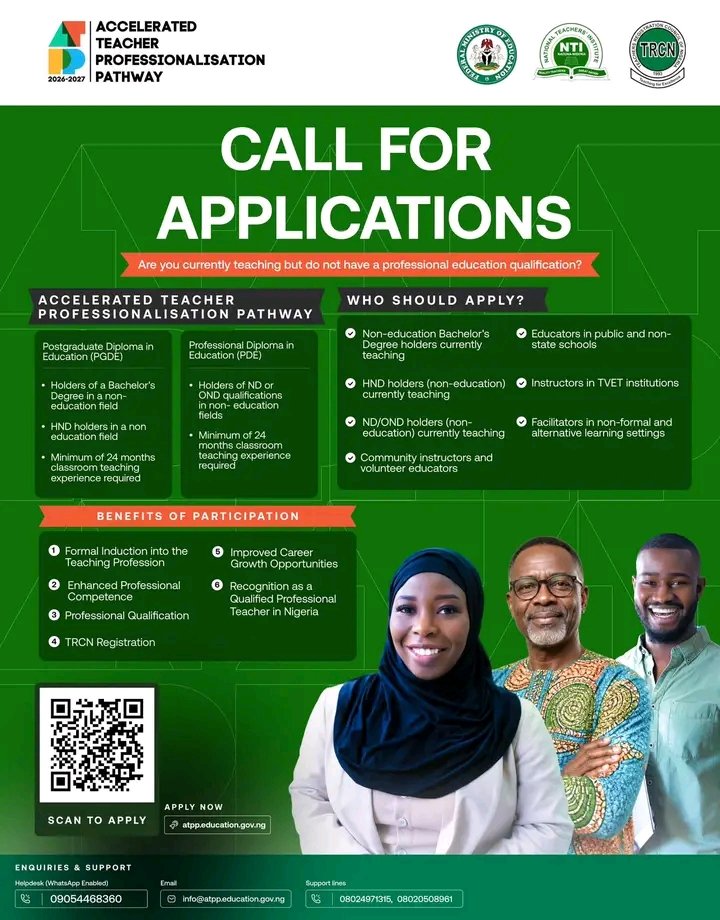
The Federal Government of Nigeria has waived the proposed tuition fees for the six-month professional teaching qualification programme launched in September 2026.
According to the National Teachers’ Institute (NTI), learning will commence in November, after the five-day orientation programme beginning on October 28.
The Daily Reality earlier reported that the Federal Ministry of Education set the cost of the Accelerated Teacher Professionalisation Pathway (ATPP) at ₦200,000.
However, according to the emails sent to admitted teachers on October 23, the tuition has been waived.
“Your programme tuition of NGN 200,000 is fully covered by the Federal Government of Nigeria. This sponsorship is part of the Renewed Hope Agenda of His Excellency, President Bola Ahmed Tinubu, GCFR, and its commitment to strengthening the teaching profession and building a skilled, future-ready education workforce for every Nigerian child,” part of message reads.
The six-month training comprises four months of online learning and two months of teaching practice at each teacher’s place of work before eligibility for the TRCN Professional Qualifying Examination (PQE).
Recall that the training is for non-professional teachers with degree or diploma certificates and at least two years of classroom teaching experience.
What If Tinubu Wins?
By Ukasha Sani
As the ruling party, the APC, launches its presidential campaign in a bid to re-elect President Bola Tinubu, the question is no longer whether Nigerians can survive the present hardship, but whether they can survive its continuation.
Based on the last three years’ trajectory, a second victory for President Tinubu will not renew hope, as we have already lost it; it will only deepen hardship. All the tragic events in the country today, from the increase in fuel prices, insecurity, kidnapping and banditry to poor economic policies, are at their worst in the last three years. He has not reformed any sector; rather, they are more like abandoned projects that have worsened under his administration.
What if Tinubu wins? Then the economic hardship we call temporary becomes permanent policy.
They [the government] have comfortably watched the naira lose its dignity, from N460/$1 as of 29th May, 2023 to N1,475/$1 today.
They have watched fuel subsidy removal turn from a textbook reform into a daily punishment, from buying petrol at N200/litre in May 2023 to N1,440/litre today.
They have watched food inflation turn the market into a place of tears, where a bag of rice sells at N65,000 today compared to N30,000 in May, 2023. We are living in an economy where a bag of rice swallows the minimum wage. This government tells us the reforms are painful but necessary. But you should ask: necessary for whom? The hardship is not shared. The political class still convoys in new SUVs, still budgets billions for renovation and entertainment.
A second term means that the model stays. No reversal, no cushion, only more lectures about patience.
And amid this suffocation, they present NELFUND as an achievement to be applauded.
Let us be clear about NELFUND. It is not a grant. It is not a scholarship. It is not free education. It is a LOAN. A debt trap dressed as help. This is the only thing this government is proudly beating its chest about, yet it exposes its entire contradiction.
You cannot deny a man the peace and means to feed his family, deny him security on his farm, deny him a stable economy to run his shop, and then call yourself a saviour because you gave his daughter a loan to pay tuition. What happens after graduation? She graduates into the same jobless economy, into the same insecurity, with a loan on her neck before her first job. This is not empowerment; it is enslaving the future to pay for the present’s failure.
A government that truly wants to educate the poor would have made education affordable, not loanable.
What if Tinubu wins? Then insecurity gets a new uniform.
Banditry is no longer an emergency; it is an industry. Kidnapping has become a multi-million-dollar enterprise.
People are being picked off the streets for ransom, picked from their homes, schools, parks and every other place, without seeing any visible effort by the government to address it. It only amplifies the PR bots that come online and tell us not to “politicise” insecurity. What it means is, if he wins, we will continue to have a government that negotiates from a position of weakness, that condemns attacks today and forgets the victims tomorrow.
Dear PR bots, the insecurity you defend today, because you are paid or promised to be paid to do so, is coming back to haunt you tomorrow. Kidnappers and bandits are not going to spare you because you are a Tinubu supporter.
What if Tinubu wins? Then partisanship becomes the constitution.
Appointments, projects, even palliatives are prioritised through ethnicity and party loyalty. Trying every possible way to conquer all 36 states, leaving no governor in the opposition. The National Assembly has become an extension of Aso Rock. A second Tinubu victory will entrench this winner-takes-all politics. It will be the final burial of independent institutions. Dissent will be called treason, and criticism will be tagged as hate speech. This is where movements like Tinubu Must Go were denied access to exercise their constitutional rights.
And what if Tinubu wins? Then corruption will be legalized by silence.
The subsidy is gone, but where did the subsidy money go? Billions saved, yet borrowing increases. Customs revenue hits record highs, yet hospitals have no drugs. Politicians with existing corruption cases are contesting elections. Under a continued Tinubu administration, accountability will remain selective. The opposition’s corrupt will be prosecuted; the ruling party’s corrupt will be given a chance to govern again.
The government has nothing to show to justify its re-election next year.
After three and a half years of serial governance disasters, it is clear this government has no clue how to tackle the challenges facing this country. They have failed, and perhaps that is why the president himself decided to send his representatives to campaign for him, because he has nothing to show to justify his re-election bid next year. That is also why his PR bots are struggling to explain his failures. This is why some Villa big boys from the North are selling him through the lens of religion and tall tales. Some of them call him “Malam, Al-Sheikh, Muhammad Bola Tinubu,” while others say he is from Kano and that even the name Tinubu is a corruption of Tanimu. It is only your favourite Sheikh who is brazen enough to tell us that the North is well secured, that all those incidents of kidnapping and banditry are mere tales and not what is actually happening. That people can travel freely in all corners of the region at night.
What if Tinubu wins? It means Nigerians must prepare for four more years of explaining to their children why they cannot afford school fees, why the lights are still off, why they must check the road before travelling, why they must take a loan to learn in their own country, and why those who stole yesterday are leading today.
After three and a half years, why do they need more time, given they’ve been the most disastrous government since amalgamation?
Sir, even a bachelor’s degree—which has technically become harder to get than winning a presidential election for some lucky individuals—only gives you a 2-year probation period to meet the required CGPA, and failure to do so will result in you being asked to leave. So why do you need more time?
Unfortunately, despite all these nerve-wracking issues, Tinubu may still win his next election, not because he deserves it, but because the opposition is too sentimental and self-centred to drop their ego for the common man.
May Nigeria prosper