
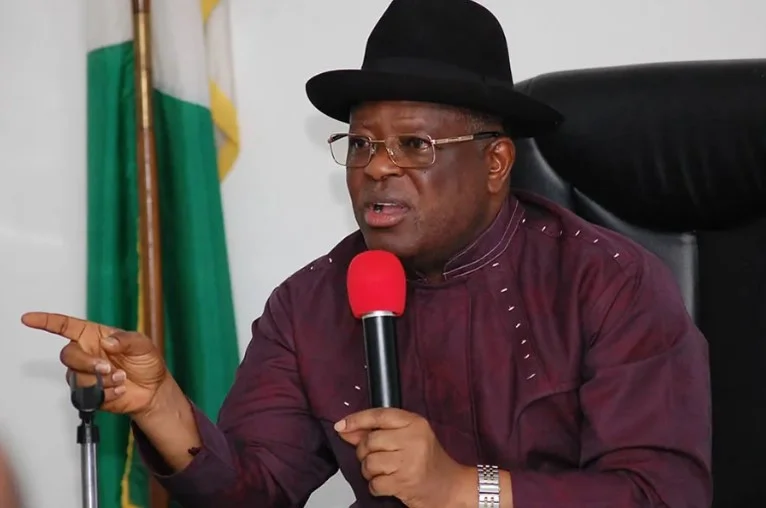
Umahi Projects Completion Of Lagos-Calabar Coastal Highway Within Three Years
By Sabiu Abdullahi
Minister of Works David Umahi has projected that the 750-kilometre Lagos-Calabar Coastal Highway will be completed within the next three years.
Umahi made the projection during an interview with Arise Television on Friday, saying the Federal Government was working towards delivering the major infrastructure project before the end of President Bola Tinubu’s current term in 2031.
Asked about the completion timeline, the minister said, “We have four years plus by God’s special grace. So we are looking at three years,” he said.
He expressed confidence in the administration’s ability to meet the target, citing his faith in Tinubu’s leadership.
“I am a child of God. Faith is the evidence of things not seen. Okay, so I’m giving you the faith I have and the president that I know, that I believe that within the next three years plus, that the president will be able to complete that project,” he added.
However, Umahi did not provide a detailed construction schedule or specific completion dates for the highway’s individual sections.
The minister also defended the procurement process for the project, acknowledging that it was awarded without public bidding but insisting that the government followed a lawful procedure.
“There was no public bidding but there was direct procurement. It’s within the law. That’s all I’ve just said,” he stated.
The Lagos-Calabar Coastal Highway is one of the Federal Government’s flagship infrastructure projects. It is designed to connect coastal communities and improve transportation along Nigeria’s southern corridor.
The project has attracted public debate over procurement procedures, construction costs, funding priorities and the allocation of public resources, particularly amid concerns about the poor condition of several existing federal roads.
Defending his ministry’s broader infrastructure programme, Umahi said approximately 17,000 kilometres of federal roads were currently under construction or reconstruction, excluding major legacy projects.
“Out of about 35,000 kilometres of our federal roads, the one that is before me in the Ministry of Works, if you remove the few legacy projects we are constructing, we are presently constructing 17,000 kilometres of roads,” he said.
He added that the ministry had completed about 1,700 kilometres of roads since the Tinubu administration assumed office, alongside more than six kilometres of flyovers, bridges and underpasses.
Umahi also cited increasing congestion along the Lagos corridor as a reason for the coastal highway, warning that traffic could worsen significantly without intervention.
“In the next five years, unless something is done in the corridor VI to Lekki, it becomes, you know, a car park because of the conjecture. And that’s why we are building the seven taxi route,” he said.
On the controversy surrounding a proposed plan to engage 4,000 social media influencers to promote the administration’s projects, the minister said he would personally finance the initiative rather than use public funds.
“I am funding 4,000 influencers to advertise what the president is doing and it’s a catalyst for campaigning for him all over Nigeria,” he said.
CBN Approves JP Morgan’s Proposed Merchant Bank In Nigeria
By Sabiu Abdullahi
The Central Bank of Nigeria (CBN) has granted global financial services firm JP Morgan approval-in-principle to establish a merchant bank in Nigeria following a reported $38 million deposit.
The apex bank disclosed this in a statement issued on Friday, noting that the proposed institution, JPMorgan Merchant Bank Nigeria Limited, must obtain a final banking licence before it can commence operations.
The approval-in-principle represents an initial regulatory step and does not authorise the bank to begin operations immediately.
The development follows an earlier report by DAILY POST that JP Morgan had deposited $38 million with the CBN as part of its application for a banking licence.
The proposed establishment of the merchant bank marks a step towards JP Morgan’s planned entry into Nigeria’s banking sector, subject to the fulfilment of the regulator’s licensing requirements.
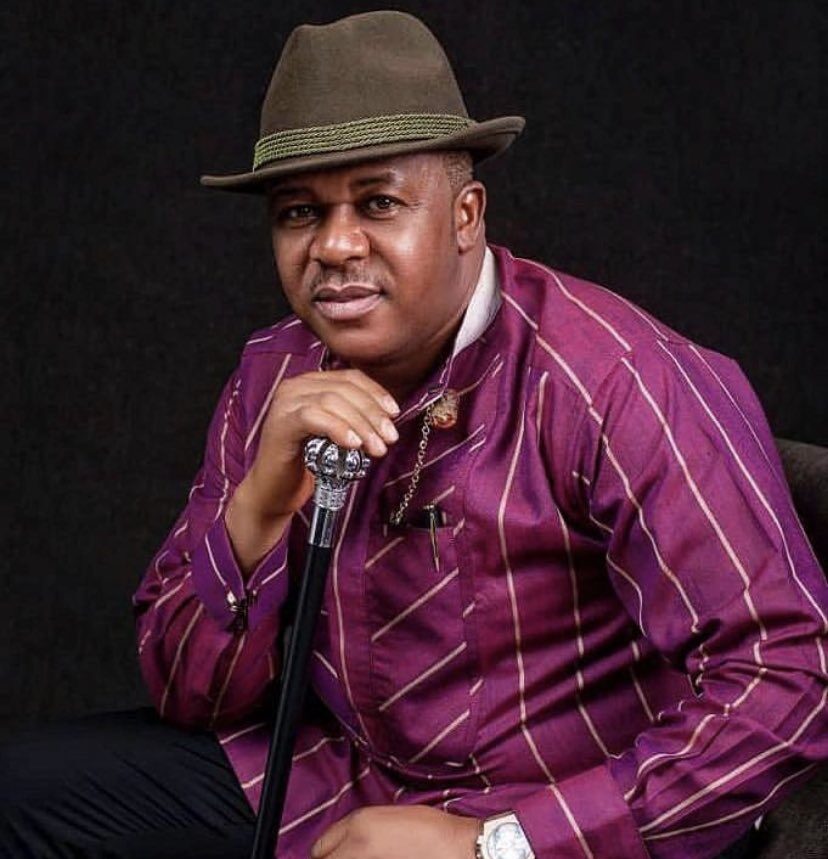
Nollywood Actor Francis Duru Dies At 57 After Brief Illness
By Sabiu Abdullahi
Veteran Nollywood actor Francis Duru has died at the age of 57 following a brief illness, his family has announced.
The family confirmed his death in a statement posted on the actor’s official Instagram page in the early hours of Friday, thanking fans and well-wishers for their prayers and support.
“We, the family of Francis Duru, regret to announce his passing following a brief illness.
“We appreciate your prayers, love, and understanding. May his soul rest in perfect peace. Amen,” the statement read.
His death comes months after he dismissed reports that he was battling a life-threatening illness. In June, a video showing him looking frail circulated on social media, raising concerns among fans and colleagues.
Duru subsequently shared a video on Instagram in which he described the footage as “fabricated and malicious”.
Born on July 27, 1969, in Cameroon to Nigerian parents from Imo State, Duru completed his primary and secondary education there before moving to Nigeria for university.
He studied Theatre Arts at the University of Port Harcourt, Rivers State, graduating with a Bachelor of Arts degree in 1996.
Duru began his acting career in 1989 in Missing Mark, a film directed by the late Ndubuisi Oko. He gained wider recognition in 1995 after playing Ahanna in Rattlesnake, an action-comedy produced by the late filmmaker Amaka Igwe.
Over the years, he received several awards and honours for his contributions to the Nigerian film industry. He was also named a United Nations ambassador of peace in recognition of his influence on young people.
In 2020, he won the Best Actor in a Leading Role (Igbo) award at the Best of Nollywood Awards for his performance in Mboputa.
Duru married his wife, Adokiye, in 2003, and they had four children together. The family suffered the loss of one of their children, Ifeanyi, in August 2024.
His death marks the loss of a veteran performer whose career spanned decades in Nigeria’s film industry.
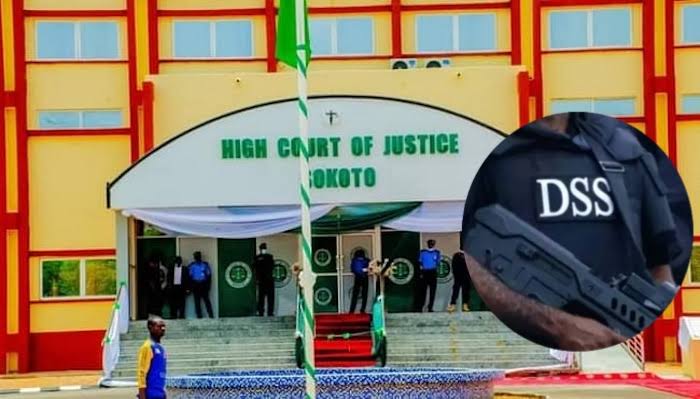
Sokoto Court Sentences Three CJTF Members To Death For Armed Robbery, Killing
By Sabiu Abdullahi
A Sokoto State High Court has sentenced three members of the Civilian Joint Task Force (CJTF) to death by hanging after convicting them of criminal conspiracy, armed robbery and culpable homicide.
The convicts, identified as Gaji Hassan, Abdullahi Goni Gudusu and Modu Bukar, were sentenced on Thursday by Justice Kabiru Muhammad.
The court’s Public Relations Officer, Nakwanta Muhammad Garba, confirmed the judgment in a statement detailing the proceedings.
The case stemmed from an incident in Kagara village, Goronyo Local Government Area, on September 19, 2024, when the defendants intercepted Babangida Nasiru and a woman while armed with rifles.
During the incident, the pair were reportedly taken into the bush, where Nasiru was dispossessed of N260,000 and detained. He was later found dead with gunshot wounds to his chest and neck.
The prosecution called two witnesses to establish its case. In his judgment, Justice Muhammad described the surviving eyewitness’s testimony as consistent and credible.
The judge rejected the defendants’ claim that they had released Nasiru, noting that they failed to provide a satisfactory explanation for his death. He relied on the legal principle of “last seen” in reaching his decision.
The court also admitted the defendants’ confessional statements after ruling that they had been made voluntarily. Their allegations of torture were not substantiated, according to the judge.
Justice Muhammad held that the eyewitness testimony provided sufficient evidence to establish the charges against the defendants.
Consequently, the court sentenced each convict to death by hanging in accordance with the Sokoto State Penal Code Law, 2019.
Abuja Court Sentences Self-Confessed IPOB Member To 20 Years In Prison
By Sabiu Abdullahi
A Federal High Court in Abuja has sentenced a 48-year-old man, Paul Okechukwu, to 20 years in prison for membership of the proscribed Indigenous People of Biafra (IPOB).
Justice Hauwa Yilwa delivered the sentence on Thursday after Okechukwu pleaded guilty to the first of two charges brought against him by the Federal Government.
The prosecution alleged that Okechukwu, a native of Nnewi South Local Government Area of Anambra State, belonged to IPOB in Imo State in 2021, in violation of Section 16 of the Terrorism (Prevention) (Amendment) Act, 2013.
He, however, pleaded not guilty to the second charge, which accused him of participating in an attack that claimed the lives of two security operatives.
Attorney-General of the Federation and Minister of Justice, Lateef Fagbemi, who led the prosecution, subsequently withdrew the second charge, prompting the court to strike it out.
Following an amendment to the charge, the prosecution called a Department of State Services (DSS) operative, identified as “ABC” to protect his identity during the trial.
The witness, who said he was part of the team that investigated Okechukwu, identified him as an IPOB member and alleged that he participated in terrorist activities, including attacks on security personnel. The court admitted the investigation report presented by the witness as Exhibit A.
Fagbemi urged the court to convict Okechukwu, arguing that the law prescribes a minimum prison term of 20 years for the offence.
“We therefore urge my lord to impose the maximum sentence, at least to serve as a deterrent to others and to also show that the nation cannot condone any act of terrorism,” the Attorney-General said.
Okechukwu reportedly broke down in tears in the dock and pleaded for leniency after the prosecution requested the sentence.
In her ruling, Justice Yilwa found him guilty of the offence and imposed a 20-year prison term. She said the court had considered the charge and “the ripple effect it has on the nation”.
The judge directed that Okechukwu be remanded in a correctional facility designated by the Comptroller-General of the Nigerian Correctional Service. His sentence is to run from the date of his arrest.
She also ordered that he undergo rehabilitation and deradicalisation after completing his prison term.
Obasanjo Accuses Tinubu’s Reforms Of Worsening Poverty In Nigeria
By Sabiu Abdullahi
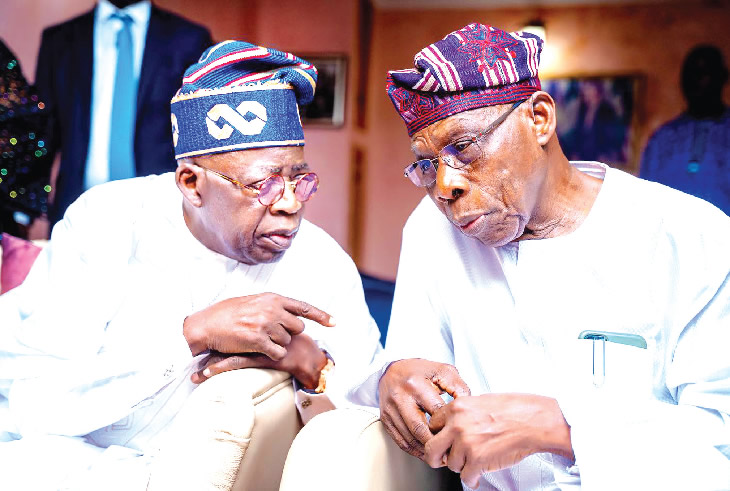
Former President Olusegun Obasanjo has criticised President Bola Tinubu’s economic reforms, arguing that the sharp depreciation of the naira has significantly reduced Nigerians’ purchasing power and worsened poverty.
Obasanjo made the remarks on Wednesday at the Financial Times Africa Summit 2026 in London, United Kingdom, where he faulted the administration’s decision to devalue the naira in 2023.
He argued that the currency’s decline had impoverished Nigerians, citing the movement of the exchange rate from about N500 to the dollar to N1,500.
The former president said, “We do not live in isolation as a country. We interact with the rest of the world. And overnight, you devalue the currency by 300 per cent. The naira went from N500 to a dollar to N1,500 to a dollar. What that meant was that every Nigerian is made poor by 300 per cent.”
Obasanjo said the situation had made Nigeria “the poverty capital of the world,” referring to the country’s large population of people living in poverty.
“You cannot say to me that that is good for Nigeria. You cannot say to me that that is good for us in any sense,” he noted.
He also questioned calls for the Tinubu administration to be given more time to implement its economic policies, saying he had yet to see meaningful improvement in the economy.
“For the economy, I don’t see anything getting better. What policies are you seeing through? You impoverish your people, and you want to see impoverishment through?” he remarked.
Obasanjo further maintained that the policies introduced by the administration were “not in the best interest of Nigerians,” adding, “Nobody can deny that.”
On petrol subsidy removal, the former president acknowledged the importance of fuel to economic activities but argued that corruption associated with the subsidy system should have been addressed first.
He said a country facing severe economic difficulties must “curb corruption, wastefulness and unnecessary luxury and produce.”
Figures cited in the report show that before the Central Bank of Nigeria unified the exchange-rate windows on June 14, 2023, the official naira-to-dollar rate stood at approximately N460.80. By October 19, the official rate had weakened to about N1,333.54, while the currency reached a low of approximately N1,607.05 in early May 2025.
Meanwhile, the National Bureau of Statistics reported that headline inflation fell to 14.63 per cent in September from 20.98 per cent a year earlier. Food inflation, however, stood at 19.59 per cent, while Nigeria’s real Gross Domestic Product grew by 4.43 per cent in the second quarter.
Finance Minister and Coordinating Minister of the Economy Taiwo Oyedele said on August 19 that the removal of the petrol subsidy saved the government N15.8 trillion between June 2023 and December 2025.
Efforts to obtain the Presidency’s response to Obasanjo’s criticism were unsuccessful, as Bayo Onanuga, the President’s Special Adviser on Information and Strategy, could not be reached.
Nigerians Criticise Proposed Fuel Tax As FG Links Implementation To Economic Recovery
By Sabiu Abdullahi
The Federal Government’s plan to introduce a tax on petroleum products has triggered criticism from Nigerians, who fear the move could increase their financial burden amid rising living costs and high fuel prices.
The Minister of Finance and Coordinating Minister of the Economy, Taiwo Oyedele, recently disclosed the plan, explaining that the tax would only take effect when the economy had stabilised and income levels had improved enough to accommodate the additional cost.
Speaking on the sidelines of the 2026 International Monetary Fund and World Bank annual meetings in Bangkok, Thailand, Oyedele said revenue from the proposed levy would support road infrastructure and the development of a fuel reserve to cushion the effects of future price shocks.
He explained that implementing the tax while petrol was subsidised would have meant the government effectively paid the charge itself. Introducing it immediately after the removal of the subsidy, he added, would have placed further pressure on Nigerians.
“The objective should be that instead of trying to suppress prices, which hasn’t worked for us or for any country in the world, not one, and instead of trying to suppress prices, we should think about how to grow income faster than prices rise.
“That’s how you bring prosperity and grow the middle class, and that is exactly what we are doing, as led by Mr President himself.
“At the appropriate time, when the economy is stabilised and income levels are able to accommodate it, those taxes will come. Not because we want to impose taxes,” Oyedele said.
The proposal has revived concerns over the financial consequences of the fuel subsidy removal, particularly among small business owners who depend on petrol-powered generators because of unreliable electricity supply.
Oyedele said the proposed fuel reserve would “help moderate prices of fuel products if anything happens.” He added that the government could temporarily waive the tax during future price shocks to reduce the burden on consumers.
He also explained that the existing legal framework requires the finance minister to issue an order published in the Official Gazette before the surcharge can take effect.
“The good thing is that the law says that tax cannot come into effect until there is a gazette. There has to be an order published in the gazette by the finance minister, which means we can’t do it in secret. Plus, we have no intention of doing stuff in secret.
“At the appropriate time, it will be clear to everyone why it needed to be done, and the benefits will be clear also to every Nigerian,” he said.
The proposed levy is linked to a five per cent surcharge on chargeable fossil fuel products provided for under Nigeria’s tax framework. The framework exempts household kerosene, cooking gas, compressed natural gas and clean or renewable energy products.
On June 16, 2026, the government had dismissed reports that it was introducing fresh taxes on petroleum products following recommendations in the International Monetary Fund’s Article IV consultation report. It said the value-added tax waiver on petroleum products remained in place and that no process to activate the fuel surcharge was then under consideration.
Oyedele noted that taxes account for between 20 and 80 per cent of pump prices in some countries, while several African nations impose between six and 10 different charges on petroleum products.
He also discussed the sequence of the petrol subsidy removal and foreign exchange reforms, explaining that the government initially removed support for petrol prices before allowing the naira to adjust gradually.
“That is the reason why there was still a bit of subsidy in 2023. It was to manage that process because you need to be mindful of the impact on the people.”
According to the minister, the petrol subsidy was completely removed in October 2023, leaving no government support for either petrol prices or foreign exchange.
However, the proposal has drawn criticism from citizens who argue that the government should prioritise measures to ease the effects of existing economic pressures rather than introduce another charge.
A tailor, Niyi Osundare, said the proposed tax could worsen the difficulties faced by small businesses already struggling with high operating costs.
“Why is this government so wicked? How can anybody be thinking of putting a tax on fuel when we are complaining that a litre of fuel is selling for N1,400?
“Do you know that businesses are folding up because their owners can no longer cope with the situation?
“For instance, there is hardly any electricity for small businesses to operate, so most of us rely on generators. And then, you ask yourself, how much fuel at N1,400 per litre are you prepared to buy every day?
“We are running at a great loss, and that’s why most businesses are closing down. And somebody is talking about a fuel tax, which will automatically push up the price of fuel again.
“What is wrong with the APC government? What sort of thing is this? How can people decide that the only thing they will do to their citizens is inflict pain and more pain on them?
“This is wickedness, and Nigerians should rise up. This cannot be like the announcement that ‘subsidy is gone’, which was what brought us to where we are today.
“We are crying that we can’t afford the price of fuel as it is currently sold, and somebody is telling us that the government wants to introduce a fuel tax when the economy stabilises and people’s incomes improve. When will that be?
“Can this government ever do that? It is not possible. Since 2023, when this government came in, it has been one promise after another, and all of them have ended up bringing agony and sorrow to Nigerians.
“So, this time around, they can tell their story to the marine because we will not accept any fuel tax; it won’t happen,” he stated.
A lawyer and public affairs analyst, Kunle Onatade, also questioned the government’s plan to channel the revenue into infrastructure and a fuel reserve.
He argued that Nigerians had previously been assured that savings from the removal of the fuel subsidy would support infrastructure development, but he disputed whether the expected benefits had materialised.
“Who is deceiving who? Where is all the money made from the fuel subsidy removal? Has this government, in three years, not borrowed more than Buhari in eight years? What are we talking about?
“This fuel tax move is just another avenue for making more money available for them to steal. They don’t care about the citizens as long as they keep amassing wealth for themselves.
“These are a bunch of heartless and corrupt politicians masquerading as political leaders; they don’t care about anybody. Nigerians should not listen to them. The fuel tax will bring about more hardship for Nigerians,” he said.
Business groups have also raised concerns about the possible effects of an additional fuel charge on production expenses, transportation costs and consumer prices.
The Association of Small Business Owners of Nigeria called on the government to prioritise relief for households and businesses, warning that another fuel-related levy could further strain their finances.
While the Federal Government maintains that the tax would only be introduced when economic conditions permit, critics insist that any additional charge on petroleum products could deepen the pressure on Nigerians.
Adamawa Jail Delivery Committee Frees 55 Inmates, Grants Bail To 51 Others
By Sabiu Abdullahi
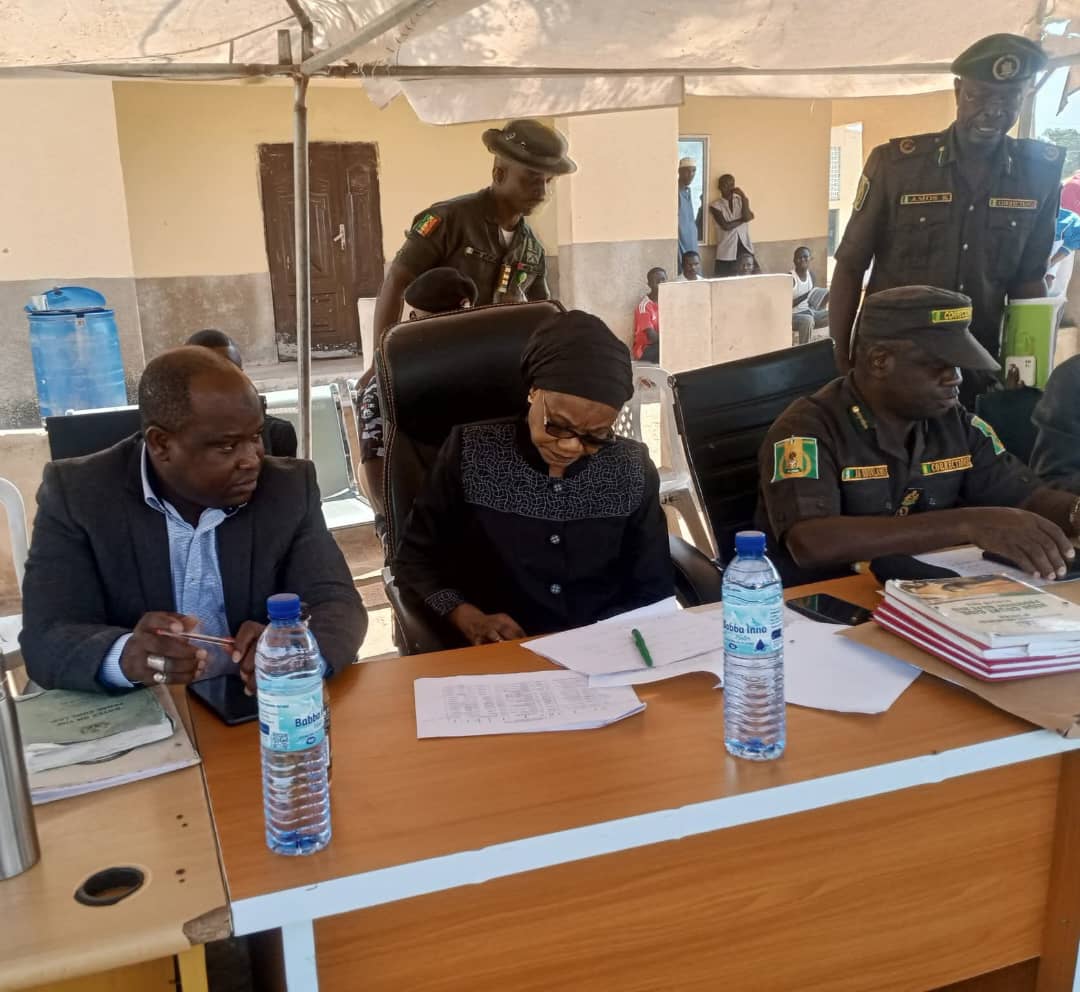
The Adamawa State Jail Delivery Committee has freed 55 inmates and granted bail to 51 others following a visit to the Yolde Pate Correctional Centre in Yola South Local Government Area.
The exercise took place on Wednesday under the leadership of the state Chief Judge, Justice Hafsat Abdulrahman, who chairs the committee.
The committee comprises representatives of the Nigerian Bar Association, the Deputy Chief Registrar of the Area Court, the Legal Department of the Adamawa State Police Command, the Director of Public Prosecutions at the Ministry of Justice, and the Controller of the Nigerian Correctional Service.
Jail delivery exercises typically focus on eligible cases involving minor civil disputes, less serious infractions and petty theft. Serious offences, including culpable homicide, rape and gang-related crimes, remain for the conventional courts to handle.
During the visit, Abdulrahman donated delivery kits to a female inmate who had given birth to a baby girl while awaiting trial. In appreciation, the family head named the child Hafsat in honour of the chief judge.
The chief judge also provided transport fares for discharged inmates travelling to Bauchi, Yobe and Gombe states.
The exercise forms part of efforts to address prison congestion and support inmates eligible for release or bail under the applicable legal procedures.
Italy Rejects 2,220 Nigerian Asylum Applications In 2025 Report
By Sabiu Abdullahi
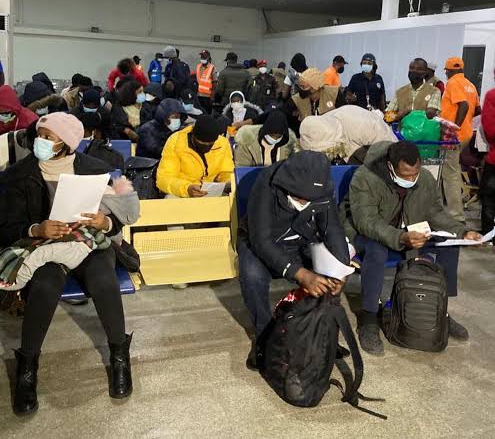
Italian authorities rejected 2,220 Nigerian asylum applications in first-instance decisions in 2025, while 1,175 Nigerians received different forms of international or national protection, according to a new report on the country’s asylum system.
The figures are contained in the 2025 Country Report on Italy by the Asylum Information Database (AIDA), a project of the European Council on Refugees and Exiles. The report was produced by the Association for Legal Studies on Immigration using data from Italy’s Asylum Service and the European Union Agency for Asylum.
According to the report, 3,385 Nigerians applied for asylum in Italy during the year, making Nigeria the only sub-Saharan African country among the top 10 nationalities seeking asylum in the European country.
Of the 3,390 decisions recorded on Nigerian cases, 660 applicants, representing 19.47 per cent, were granted full refugee status. The report identified this as the highest refugee recognition rate among the 10 leading nationalities and nearly three and a half times Italy’s national average of 5.7 per cent.
Another 55 Nigerians, representing 1.62 per cent, received subsidiary protection, which applies to people facing serious harm who do not qualify for refugee status. Meanwhile, 460 applicants, or 13.57 per cent, received Italy’s national or special protection, known as protezione speciale.
Overall, 1,175 Nigerians obtained some form of protection, representing 34.66 per cent of decisions on their cases. This was above Italy’s national protection rate of 30 per cent in 2025.
However, the report stated that 4,120 Nigerian cases were still pending before Italian authorities as of December 31, 2025.
Among other African countries, Egypt recorded the highest number of asylum applications, with 11,790. Of the 10,685 decisions made on Egyptian cases, 8,900, or 83.30 per cent, were rejected.
Morocco recorded 9,485 applications, while 5,695 of the 6,315 decisions on Moroccan cases resulted in rejection, representing 90.18 per cent. Tunisia recorded 6,290 applications, with 5,035 of the 5,895 decisions, or 85.41 per cent, rejected.
The report also documented asylum applications by unaccompanied minors from several African countries. These included 61 children from The Gambia, 44 from Mali, 42 from Guinea, 34 from Burkina Faso, 30 from Somalia, 27 from Ivory Coast, nine from Senegal and 16 from Nigeria.
Italy registered 126,635 first-time asylum applications in 2025, down from 151,120 in 2024. However, the figure remained considerably higher than the 77,200 applications recorded in 2022.
“In 2025, 126,635 first asylum requests were registered in Italy, representing a decrease compared to 2024 (when 151,120 applications were registered), but still almost double the number of applications registered in 2022 (77,200).”
Italian authorities issued 104,560 first-instance decisions during the year. The overall protection rate, including special protection, declined to 30 per cent from 35 per cent in 2024 and 47 per cent in 2022.
The report recorded 5,965 decisions granting refugee status, representing 5.7 per cent of the total. A further 11,455 decisions, or 10.96 per cent, granted subsidiary protection, while 13,945, or 13.34 per cent, resulted in national protection.
By the end of December 2025, 234,165 asylum applications remained pending in Italy.
The country processes asylum claims through 20 Territorial Commissions and 23 sub-commissions under a three-tier protection system. Applicants whose claims are rejected can appeal to civil courts and subsequently seek recourse through the Council of State.
Italy’s asylum framework has also faced legal challenges over its designation of safe countries of origin. In October 2024, the Court of Justice of the European Union struck down Italy’s mechanism for designating such countries, resulting in Nigeria’s removal from the list. The designation had subjected applications from Nigerians to accelerated procedures.
Further legal disputes emerged in 2025 over the Italy-Albania Agreement, which provides for migrants intercepted at sea to be transferred to Albanian territory for processing under Italian jurisdiction.
On accommodation, the report stated that 101,106 asylum seekers were housed in emergency reception centres as of December 31, 2025. Another 3,342 were accommodated in government centres, while 3,652 were housed in hotspots.
Sea arrivals in Italy totalled 66,296 in 2025, slightly below the 66,617 recorded in 2024 and considerably lower than the 157,651 arrivals reported in 2023.
Bangladesh accounted for the largest number of sea arrivals, with 20,164 people, followed by Egypt with 9,091, Eritrea with 7,579, Pakistan with 4,383 and Sudan with 4,183.
Matawalle Gives Vehicles To Eight Zamfara Lawmakers After APC Return
By Sabiu Abdullahi
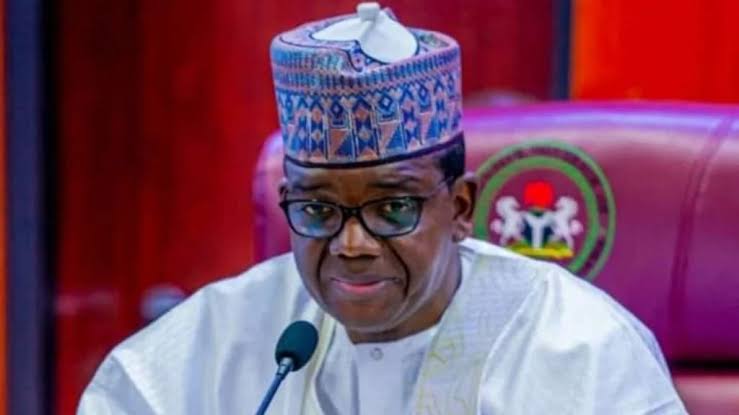
The Minister of State for Defence, Bello Matawalle, has donated vehicles to eight members of the Zamfara State House of Assembly following their return to the All Progressives Congress (APC) ahead of the 2027 general elections.
The donation is intended to ease the lawmakers’ transportation difficulties and support their political activities and engagement with constituents across the state.
The move comes amid efforts by APC leaders to reconcile aggrieved members and strengthen the party’s structure in Zamfara ahead of the next general elections.
Matawalle, a former governor of the state, reportedly ordered the immediate release of the vehicles following President Bola Tinubu’s reported directive for the lawmakers to return to Zamfara and help promote unity within the party.
The vehicles were presented in Gusau on Wednesday by the Managing Director of the Nigeria Agricultural Insurance Corporation, Yazid Danfulani.
Danfulani said the gesture demonstrated Matawalle’s commitment to reconciliation and party unity, adding that the minister had continued to engage stakeholders to encourage cooperation among APC members.
He explained that the donation was part of broader efforts to reconnect the lawmakers with their constituencies and strengthen grassroots mobilisation ahead of the 2027 elections.
Speaking on behalf of his colleagues, Aliyu Kagara expressed appreciation to Matawalle and pledged their support for Tinubu’s re-election campaign.
“We sincerely appreciate the Minister of State for Defence, Bello Mohammed Matawalle, for this gesture. We assure him of our commitment to working assiduously for the success of President Bola Tinubu in the 2027 general elections,” Kagara said.
The development followed commendation from the Northern Elders of the APC Forum, which praised Tinubu and Matawalle for their roles in facilitating the lawmakers’ return to the ruling party.
The forum’s chairman, Alhaji Yusuf Abubakar, described the development as an important step towards resolving internal disputes and rebuilding unity within the party.
“We commend President Bola Ahmed Tinubu for his fatherly role and commitment to promoting reconciliation within the party, despite his tight schedule. His leadership and willingness to encourage dialogue remain crucial to strengthening the APC ahead of the 2027 general elections,” Abubakar said.
The forum also commended Matawalle’s efforts to restore confidence among party stakeholders and prevent further divisions. It said the lawmakers agreed to return to the APC after discussions with the minister, who reportedly presented them to Tinubu after they reaffirmed their allegiance to the President and the party.
However, the elders warned that the return of the eight lawmakers should not bring reconciliation efforts to an end. They urged the party leadership to address the concerns of other aggrieved members.
“Party unity must go beyond the return of elected officials; it must involve building trust and ensuring that every stakeholder has a sense of belonging,” the forum said.
Matawalle governed Zamfara State from 2019 to 2023 before losing his re-election bid to Dauda Lawal of the Peoples Democratic Party in the 2023 governorship election. He was subsequently appointed Minister of State for Defence.
The latest development forms part of the APC’s efforts to consolidate its political base in Zamfara and mobilise support for Tinubu ahead of the 2027 presidential election. The party’s ability to sustain the reconciliation process may depend on how it addresses outstanding grievances and accommodates the interests of its various stakeholders.