


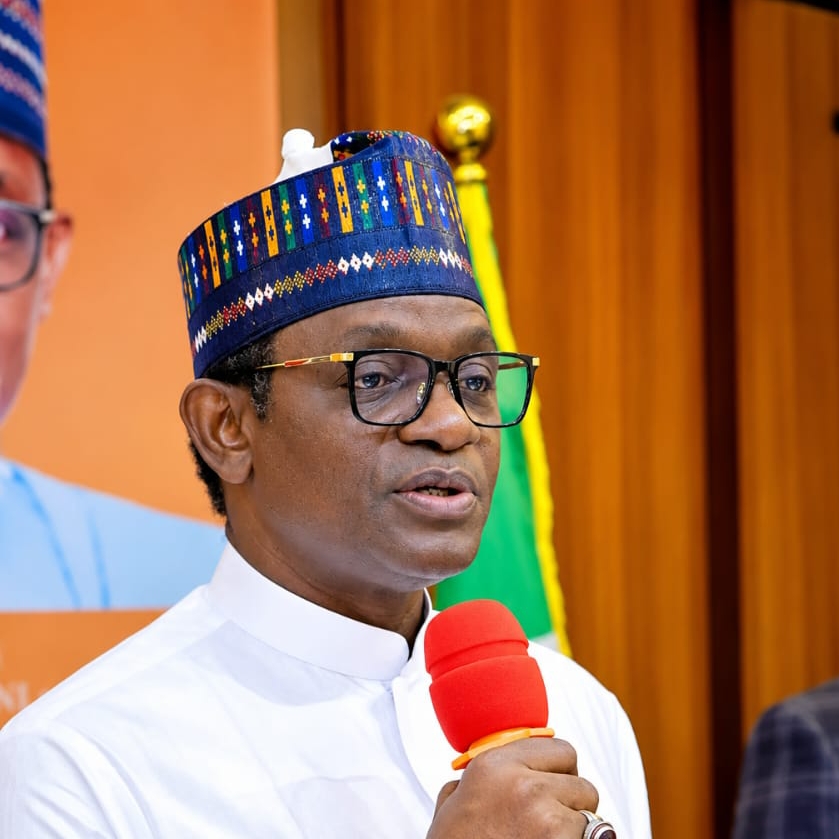
[OPINION]: Investment Comes with Responsibility: Buni’s Message to Civil Servants and Scholars
By Maji Bappa Maina
The strength of a government depends considerably on the quality of the people who serve within its institutions and the opportunities it creates for the next generation of professionals.
Policies require competent people to implement them, public institutions need experienced administrators to sustain their operations, and young graduates need opportunities to apply their knowledge.
For this reason, investment in human capital remains an important part of governance and long-term institutional development.
Two recent developments under Governor Mai Mala Buni bring this issue into focus: the upward review of salaries for permanent secretaries in Yobe State and the graduation of more than 400 government-sponsored students from universities in India.
Although the initiatives address different groups, they share a common purpose: strengthening the people whose knowledge, experience and professional commitment can contribute to the state’s future.
Their significance extends beyond the immediate benefits received by the individuals involved.
Together, they raise an important question about governance: how can investment in workers’ welfare, professional training and higher education translate into stronger institutions and better service delivery?
The recent engagement between Governor Buni and representatives of the permanent secretaries offers an important starting point.
According to the report issued by the Director-General of Press and Media Affairs to the Governor, Mamman Mohammed, the representatives visited the Governor to express appreciation following the upward review of their salaries.
During the meeting, Buni urged the senior civil servants to justify the confidence placed in them and the investment made in their professional development.
He reminded them of their responsibilities as role models to younger officers and emphasised the expectation that improved welfare should be accompanied by greater commitment to public service.
The state Head of Service, Abdullahi Musa, reportedly stated that the salary structure for permanent secretaries had remained unchanged since 2006, despite previous efforts to secure a review.
If maintained as reported, the structure had remained static for a considerable period before the recent decision.
The importance of the review goes beyond the financial adjustment itself.
Permanent secretaries occupy significant positions within the administrative system.
They help coordinate government activities, supervise departments, support policy implementation and preserve institutional continuity as officers retire and new personnel assume responsibility.
Their effectiveness can influence the quality of decisions, the speed of administrative processes and the ability of ministries to fulfil their mandates.
Recognising the responsibilities attached to these offices is therefore an important part of the wider discussion about civil-service performance.
However, improved remuneration alone cannot guarantee improved service delivery.
Its value depends on how it is matched with professional discipline, accountability, competence and measurable results.
The Governor’s message was significant in this regard: the benefit carries an expectation of stronger performance.
A well-functioning civil service requires a relationship between what government provides and what public officers are expected to deliver.
Workers’ welfare matters, but so does the responsibility to ensure that public institutions serve citizens effectively.
Another important dimension of Buni’s remarks concerned the training of civil servants to fill vacancies created by retirement.
This highlights an issue that often receives less public attention than salary adjustments: the need to prepare people before critical positions become vacant.
Every experienced officer carries institutional knowledge acquired through years of service.
This includes an understanding of administrative procedures, organisational challenges, professional relationships and the practical lessons that cannot always be captured in official documents.
When experienced officers retire without adequate preparation of their successors, institutions risk losing valuable knowledge and continuity.
Training and succession planning can help address this challenge.
They prepare younger officers for greater responsibilities, support the transfer of professional knowledge and reduce the disruption that may accompany changes in personnel.
For such an approach to succeed, training must be connected to actual institutional needs.
It should equip officers with relevant skills, strengthen their ability to manage responsibilities and encourage a culture in which knowledge is shared rather than confined to individuals.
Senior officers also have an important role to play by mentoring younger colleagues and helping them understand the demands of public service.
The graduation of more than 400 Buni Scholars from universities in India introduces another dimension to the same discussion.
According to the official report, the graduates completed studies in various health-related and engineering courses.
Their representatives visited the Governor to express appreciation for the opportunity, while Buni congratulated them and urged them to serve the state effectively and efficiently.
For the graduates, the completion of their studies marks the achievement of an important personal ambition.
For the state, it represents the development of a group of trained professionals whose knowledge could contribute to important areas of public service.
The significance of government-sponsored education lies not only in enabling individuals to obtain qualifications, but also in building professional capacity that might otherwise remain limited.
Specialised training can help develop the knowledge and expertise required to strengthen institutions, improve professional practice and address shortages in essential fields.
Health-related disciplines, for instance, are important to the availability and quality of healthcare services.
Engineering expertise can support technical operations, infrastructure management and other specialised responsibilities.
By sponsoring students in these fields, the state has created an opportunity to develop skills that may contribute to its long-term needs.
Yet graduation is only one stage of the process.
The full value of the scholarship programme will depend on how effectively the graduates can apply their knowledge after returning from their studies.
Appropriate placements, professional development, supportive working conditions and opportunities to use their qualifications will all influence the results.
This is why the Governor’s call for the graduates to give back to the state carries significance.
Their education was an opportunity provided through public investment, and their professional contributions can become part of the return on that investment.
At the same time, the responsibility does not rest on the graduates alone.
Government institutions must also create conditions in which trained professionals can contribute meaningfully.
Where skills are matched with relevant responsibilities, the benefits can extend beyond individual careers to the institutions and communities those professionals serve.
The relationship between the permanent secretaries and the Buni Scholars offers an interesting perspective on the development of human capital.
One group represents experience within the public service; the other represents a new generation entering professional life.
Both have different responsibilities, but each has a role in strengthening the state’s institutional capacity.
The permanent secretaries are expected to use their experience to improve administration, guide younger officers and maintain professional standards.
The graduates are expected to apply their newly acquired knowledge and contribute to the sectors for which they were trained.
In both cases, the wider public interest provides the basis for evaluating the value of the opportunity received.
There is also a lesson in continuity. Sustainable institutional development cannot depend entirely on the efforts of one generation.
Experienced officers must prepare their successors, while younger professionals must be given the opportunity to learn, contribute and grow.
When these processes work together, institutions become better positioned to retain knowledge and maintain performance over time.
The next important step is to assess the results of these investments.
For the civil service, this could involve examining administrative efficiency, professional competence, accountability and the quality of services delivered.
For the scholarship programme, relevant measures could include graduate employment, deployment to appropriate fields, professional retention and the practical contributions graduates make to their areas of specialisation.
Such assessments would help establish whether the opportunities created are achieving their intended objectives.
They would also provide useful information for future decisions on staff development, scholarship selection and workforce planning.
Ultimately, the salary review for permanent secretaries and the graduation of more than 400 Buni Scholars illustrate two complementary aspects of human-capital development: recognising the responsibilities of experienced public officers and preparing younger professionals for future contributions.
The Governor has made the expectation clear to both groups.
Permanent secretaries must justify the confidence placed in them, while the graduates are encouraged to use their education for the benefit of the state.
The lasting value of these initiatives will emerge through the quality of service, the competence of public institutions and the contributions of the people who have benefited from these opportunities.
Government investment in people reaches its greatest value when improved welfare, professional knowledge and individual opportunity translate into better service for the public.
Maji Bappa Maina is an agent of Voice of Development, Leadership and public Insight
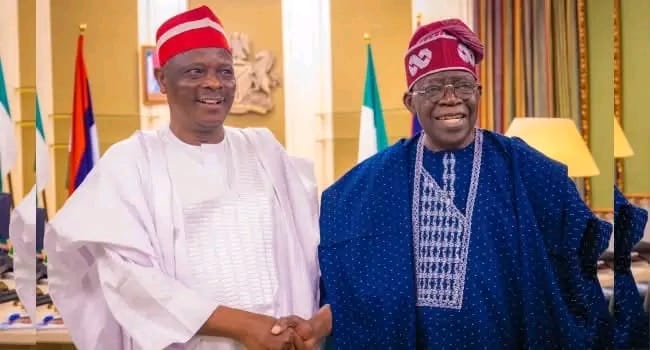
President Tinubu Hails Kwankwaso at 70
By Abdullahi Mukhtar Algasgaini
President Bola Ahmed Tinubu has congratulated former Kano State Governor, Dr Rabiu Musa Kwankwaso, on his 70th birthday, describing him as an influential and progressive politician.
In a statement issued on October 21, 2026, Tinubu said he and Kwankwaso had maintained a longstanding association dating back to their time in the National Assembly in 1992, when Kwankwaso was in the House of Representatives and Tinubu in the Senate. He noted that both later emerged as governors in 1999 and, as members of the “Class of ’99 Governors,” played pivotal roles in laying the foundation for Nigeria’s democracy.
The President recalled that although their political paths differed due to different choices, they coalesced in 2013 to form the All Progressives Congress, adding that history and service had kept them intertwined since then.
Tinubu acknowledged Kwankwaso’s contributions to Kano State and Nigeria as a two-term governor, former Minister of Defence, former Senator, former presidential candidate and now a presidential running mate.
He said that being in different political parties and competing on different platforms in the January 2027 election would not diminish his affection for Kwankwaso.
The President wished the former governor good health, personal fulfilment and many more years of engagement in the nation’s democratic process.

Fighter Jet Crashes Near Kaliningrad Cemetery as Pilots Safely Ejected
By Abdullahi Mukhtar Algasgaini
A Russian Su-30SM fighter jet crashed during a scheduled training flight in the Kaliningrad region on October 21, near the town of Chernyakhovsk, authorities said.
The aircraft went down between the settlements of Timofeyevka and Zelyony Bor, close to a local cemetery. Footage circulating online appeared to show the moment the jet crashed and burst into flames.
Both pilots ejected before impact and were rescued. Russian authorities said their lives were not in danger, while local media reported that both were injured and taken to a military hospital.
The fighter jet was reportedly flying without ammunition. The cause of the crash remains under investigation, and no official explanation has been announced.
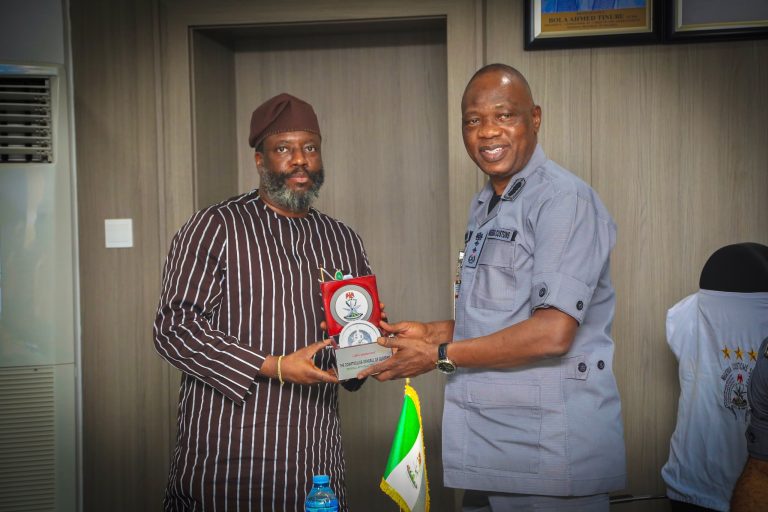
Customs, JAMB Explore Cooperation On Electronic Facilities, Operational Support
By Sabiu Abdullahi
The Nigeria Customs Service (NCS) and the Joint Admissions and Matriculation Board (JAMB) have begun discussions on areas of mutual cooperation to improve their respective operations and address institutional needs.
The Comptroller-General of Customs, Adewale Adeniyi, received JAMB Registrar, Professor Segun Aina, and his delegation at the NCS Operational Headquarters in Maitama, Abuja, on October 16, 2026.
During the meeting, Adeniyi praised JAMB’s transformation over the years, particularly its use of technology, timely release of examination results and improvements in placing candidates in tertiary institutions.
“The improvement JAMB has recorded over the years, particularly through the integration of technology into its operations, is commendable.
“The Board has continued to evolve, making its processes more efficient and improving the placement of candidates into tertiary institutions,” Adeniyi said.
He expressed confidence in Aina’s ability to sustain the Board’s progress and urged its management team to support his leadership.
Adeniyi also welcomed JAMB’s offer to make its electronic facilities available to the Customs Service. He explained that officers deployed across the country sometimes need to gather at designated centres for examinations and other official exercises, adding that access to the facilities would help facilitate such activities.
On JAMB’s request for operational vehicles, the customs chief acknowledged the importance of mobility to the Board’s nationwide responsibilities. He said the Service would explore possible assistance, subject to available resources and the applicable framework.
Earlier, Aina said the visit was intended to establish a professional relationship between the two institutions and identify opportunities for collaboration.
“We want to formally come and introduce ourselves. We recognise the important work the Nigeria Customs Service is doing and are aware of the operations you carry out,” Aina said.
The JAMB registrar disclosed that the Board serves approximately five million people annually, operates Computer-Based Test (CBT) centres across Nigeria and conducts examinations in more than 15 countries.
He added that JAMB provides electronic services to government agencies and professional bodies, while emphasising that adequate mobility was necessary for reaching communities, including local government areas, to verify candidates and maintain examination standards.
The meeting ended with both organisations expressing their commitment to exploring practical ways to support each other’s operations and make effective use of their respective resources.
[OPINION]: Understanding Buni’s Strategy for Distributing Development Across Yobe
By Maji Bappa Maina
The development of a state presents a fundamental policy question: how can government concentrate the infrastructure required by its capital while ensuring that other towns, rural communities and local economies also receive meaningful attention? The answer requires more than the construction of prominent projects.
It calls for a development approach that recognises differences in local needs, connects communities to economic opportunities and distributes public investment across the state’s geographical space.
This question is particularly relevant to Yobe State under Governor Mai Mala Buni.
While Damaturu continues to receive major infrastructure investments, projects across other parts of the state provide an opportunity to examine a broader development approach involving roads, markets, transport facilities, sports infrastructure and local-government work plans.
Viewed collectively, these interventions suggest a development agenda that extends beyond the state capital.
Their significance lies in the different functions they serve and the ways they can contribute to the economic and social life of communities across Yobe’s 17 Local Government Areas.
Damaturu and the Wider Geography of Development
A state capital naturally attracts substantial public investment. As the administrative centre, Damaturu accommodates government institutions, businesses, public services and a growing population.
Its infrastructure must respond to traffic, commercial activity, public-sector operations and the demands of urban expansion.
The flyover and underpass project reflects the need to address urban mobility and improve the movement of people and vehicles.
Investment in major urban infrastructure can support commercial activity, improve access and prepare the capital for future demands.
Damaturu’s sports infrastructure also forms part of this picture.
The stadium in the capital is an important sporting facility in Yobe and is regarded locally as one of the notable stadiums in the Northeast. Alongside the reported 5,000-square-metre stadium project in Buni Yadi, it illustrates the place of sports facilities in the state’s wider infrastructure landscape.
However, the development of the capital raises an important policy consideration: the extent to which investment in the urban centre is complemented by infrastructure in other communities.
The relevant question is not whether Damaturu should receive major projects.
It is whether the development of Damaturu can proceed alongside improvements in the towns and rural settlements whose residents also depend on government investment.
The examples emerging from other parts of Yobe suggest that this broader geographical perspective deserves attention.
Roads as Instruments of Economic Connection
Road infrastructure is often discussed in terms of kilometres constructed, project costs or the physical appearance of a completed route.
From a development-policy perspective, however, its wider importance lies in the connections it establishes between people, productive activities and markets.
In a report published on 14 January 2026, Vanguard reported that the Buni administration had constructed more than 100 roads connecting towns and villages across Yobe’s 17 LGAs over the preceding six years.
The report also identified other infrastructure projects at different stages of implementation.
Among the additional examples provided for this analysis are the 59-kilometre Kariyari–Dapchi–Bayamari road link, the 18-kilometre Bukarti–Toshia road in Yunusari and the 10-kilometre Chusbosko–Tagali road in Bade Local Government Area.
These routes illustrate why geographical connectivity matters to development outside major urban centres.
A road linking settlements can influence the cost of transporting agricultural produce, the time required to reach markets and the accessibility of healthcare and other services.
It can also strengthen commercial relationships between communities that depend on one another for goods, labour and trade.
For agricultural households, the ability to move produce to buyers is an important part of the income-generating process. Production alone does not guarantee economic benefit if transportation is expensive or access to markets is difficult.
Improved connectivity can help reduce these barriers, although the actual effect depends on road quality, maintenance, traffic and the availability of functioning markets.
The same principle applies to social services. Where roads improve access between settlements and service centres, residents may find it easier to reach hospitals, schools and administrative offices.
The scale of that benefit will vary from one community to another, but the underlying relationship between connectivity and access remains an important consideration in development planning.
The reported construction of more than 100 roads therefore offers a useful basis for examining how infrastructure investment can extend beyond Damaturu and connect communities across the state.
Markets and the Geography of Local Economic Growth
Roads become more economically useful when they connect people to places where goods and services are exchanged.
This makes market infrastructure an important complement to the development of transport networks.
The 16 modern markets reported in the wider project inventory, including those at foundation stage, provide another example of investment beyond the capital.
Their development raises a broader question about how commercial activity can be supported across different local-government areas rather than becoming increasingly concentrated in one urban centre.
Markets are not simply physical structures. They are meeting points for producers, traders, transport operators, artisans and consumers.
Their contribution to local development depends on whether they offer accessible and functional spaces for commercial activity and whether surrounding communities can reach them without excessive difficulty.
For farmers, a functioning market can provide an outlet for agricultural produce. For traders, it can create a more organised environment in which to conduct business.
For consumers, it can improve access to goods and services.
For local authorities, well-managed markets may also provide opportunities to improve the organisation of commercial activities.
The distribution of market facilities across different LGAs can therefore be understood as part of a wider effort to support economic activity in multiple locations.
The distinction between completed markets and those still at foundation stage remains important.
A project under construction has not yet delivered the same benefits as an operational facility.
The eventual contribution of the 16 markets will depend on their completion, accessibility, management, maintenance and ability to attract sustained commercial use.
Nevertheless, their inclusion in the wider development picture demonstrates the importance of examining economic infrastructure beyond the state capital.
Transport Facilities and the Movement of Goods and People
The motor park in Buni Yadi and the trailer park in Potiskum provide further examples of infrastructure serving communities outside Damaturu.
Transport facilities occupy an important position between road construction and economic activity.
Roads provide routes for movement, while motor parks and freight facilities help organise the movement of passengers, vehicles and goods.
A motor park can provide a designated location for passenger transport, vehicle operations and related commercial activities.
Its effectiveness depends on its accessibility, management, safety and integration with transport routes.
A trailer park serves a different purpose. Facilities for heavy-goods vehicles can help accommodate freight operations, including parking and loading activities, where these are properly planned and managed.
Such infrastructure can be relevant to commercial centres that receive or dispatch substantial volumes of goods.
The significance of these projects is not limited to their physical presence.
They represent different ways in which government infrastructure can support the movement that connects local production, commerce and consumption.
For Potiskum and other commercial centres, the relationship between transport infrastructure and trading activity is particularly relevant.
For Buni Yadi, a motor park can serve local mobility needs while providing a more organised setting for passenger transport.
The wider policy consideration is that development involves more than constructing roads.
It also requires attention to the facilities that make transportation and commercial activity function effectively.
Buni Yadi: Connecting Commercial, Social and Community Infrastructure
The examples from Buni Yadi offer an opportunity to examine how development can address several dimensions of community life.
The motor park, Buni Gari Mini Market and reported 5,000-square-metre stadium project represent different categories of infrastructure: transport, commerce and sports.
Each has a distinct purpose. The motor park can support passenger movement; the mini market can provide a setting for local trading; and the stadium can offer space for sporting activities, youth participation and community events.
Considering these projects together helps illustrate why local development should not be assessed through a single category of infrastructure. Communities have interconnected economic and social needs.
Transport facilities support movement, markets support exchange, and sports facilities provide opportunities for recreation and organised activities.
A stadium’s value, for example, depends not merely on its construction but also on its accessibility, maintenance, management and availability for regular use.
Where these conditions are met, sports infrastructure can contribute to youth engagement and community life.
The same principle applies to markets and transport facilities.
Their contribution to development depends on whether residents can use them effectively and whether they continue to serve their intended purposes.
Buni Yadi therefore provides one example of how the development agenda outside Damaturu encompasses different types of public infrastructure rather than focusing exclusively on roads or conventional public buildings.
Sports Infrastructure in Damaturu and Other Communities
The inclusion of sports facilities in both Damaturu and Buni Yadi also broadens the meaning of development.
The stadium in Damaturu represents the capital’s sporting infrastructure, while the proposed or reported 5,000-square-metre facility in Buni Yadi points to sports development beyond the state capital.
Together, they raise questions about access to recreation, opportunities for young people and the distribution of facilities that support community participation.
Sports infrastructure does not replace investment in healthcare, education, water or other essential services. Its contribution is different.
Properly maintained sporting facilities can provide spaces for physical activity, organised competition, talent development and social interaction.
The extent of their impact depends on the programmes and opportunities built around them.
A facility that remains accessible and actively used can serve a wider purpose than one that is constructed but poorly maintained or underutilised.
From a development-policy perspective, the presence of sports infrastructure in different locations is therefore worth considering as part of the wider distribution of public facilities across the state.
Local-Government Work Plans and Development Priorities
The geographical distribution of infrastructure is only one dimension of the development process.
Another concerns the institutional arrangements through which local needs are identified, projects are selected and public funds are allocated.
In May 2023, the News Agency of Nigeria reported that Governor Buni approved the release of approximately ₦765.9 million as the final 40 per cent payment for work-plan projects across the 17 LGAs. The projects had a reported total cost of approximately ₦1.7 billion, with 60 per cent previously paid.
The reported areas of intervention included water supply, sanitation and hygiene, agriculture and healthcare.
The report also described a process involving the scrutiny and prioritisation of projects through a local-government budget committee, alongside monitoring and supervision by the Ministry for Local Government and Chieftaincy Affairs.
This arrangement is relevant because the needs of local-government areas are not necessarily identical.
Communities differ in their infrastructure gaps, economic activities, population patterns and access to public services.
A structured work-plan process provides a mechanism through which different priorities can be considered within the public expenditure system.
However, the geographical distribution of projects should not automatically be equated with complete decentralisation.
Establishing the extent of local decision-making would require further evidence about how priorities are proposed, who approves them, how allocations are calculated and what authority local councils exercise.
Even with that distinction, the reported work-plan funding demonstrates an institutional channel for financing development interventions across the 17 LGAs. It provides a useful basis for examining how local needs are incorporated into a wider state development process.
Beyond the Number of Projects: Questions of Impact
The range of projects discussed here provides a useful picture of development across different geographical locations and sectors.
But a serious assessment must go beyond counting roads, markets, parks and stadiums.
Three considerations are particularly important.
First, geographical reach concerns which communities benefit from public investment and whether areas with different needs are being considered.
Second, functional value concerns whether projects address identifiable problems.
A road should improve connectivity; a market should support commercial activity; and a transport facility should serve movement and logistics needs.
Third, sustainability concerns whether completed projects are maintained, managed and used over time.
Public infrastructure produces lasting benefits only when it remains functional and accessible to the people for whom it was intended.
These considerations do not diminish the importance of constructing projects.
Rather, they provide a framework for understanding how public investment can translate into practical improvements in people’s lives.
They also explain why transparent project information, completion records, maintenance plans and evidence of usage are valuable to both government and citizens.
A development strategy becomes more meaningful when its achievements can be examined not only through expenditure and construction figures but also through the services and opportunities that the resulting infrastructure provides.
One State, Multiple Centres of Opportunity
The development of Yobe cannot be understood solely through the transformation taking place in Damaturu.
The wider picture includes the roads connecting towns and villages, modern markets at different stages of development, transport facilities in Buni Yadi and Potiskum, community infrastructure and local-government work-plan projects.
The flyover and underpass in Damaturu, the stadium in the capital, the road links in Yunusari and Bade, the modern markets, the Buni Yadi motor park, Buni Gari Mini Market and the trailer park in Potiskum serve different purposes.
Their common relevance lies in how they contribute to the infrastructure available across different parts of the state.
This is the central policy question raised by the administration’s geographically distributed projects: how can investment in the state capital be combined with improvements in the accessibility, commercial capacity and public facilities of other communities?
The examples discussed in this article provide a basis for exploring that question.
They suggest that development beyond Damaturu is an important part of the state’s wider infrastructure programme, although the degree of equity and the precise effects of individual projects must be assessed through project-level evidence.
Ultimately, the success of a state’s development effort depends not only on the visibility of its capital but also on the extent to which other communities are connected to public services and economic opportunities.
Damaturu can continue to develop as Yobe’s administrative and urban centre while other towns strengthen their commercial activities, improve transport connections and expand access to community facilities.
The broader objective is a state in which development is not confined to a single urban centre, but is pursued across different locations in ways that respond to local needs and support wider economic and social progress.
Maji Bappa Maina Voice of Development, Leadership and public Insight Agent.
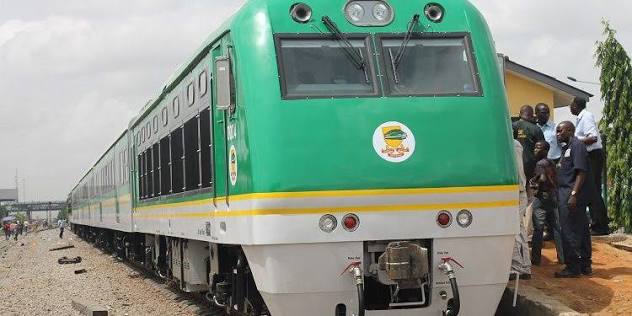
Abuja–Kaduna Train Services: My Little Rant
By Abubakar Suleiman
Before our very eyes, the Abuja–Kaduna train service is slowly dying. Its final demise is only a matter of when, not how.
If nothing drastic is done, the Rigasa, Kubwa and Idu stations may become comatose in a not-too-distant future, just as the Jere, Rijana, and Kakau stations have been left to weeds, rodents and reptiles.
Forget the rapid infrastructural development of the Kaduna–Kano rail line; without the leadership and management required to sustain it, it risks following the same trajectory as the Abuja–Kaduna train services.
This is not pessimism. It is a warning about what happens when infrastructure is built without the strong leadership, top-notch maintenance culture and institutional commitment needed to keep it functional.
The number of daily train trips between Abuja and Kaduna shrank from four in each direction to just one.
The waiting area is gradually becoming shabby. When you lift your head to look at the roof or walls, cobwebs stare back, reminding you that Nigeria is a slaughterhouse where maintenance meets its dead end.
Let’s not even talk about buying a ticket. That’s a hassle. You just can’t get one in peace. For your sanity, you need a third party to get it for you.
The barcode scanners meant to grant access to the place housing the train and rail tracks can sometimes just choose not to work. Power supply issues? I don’t know. Functionality issues? I still don’t know. You’re left with a manual screening method that generates traffic.
Simple things like this, which ought to be fixed with urgency, only become paramount when a security breach leads to something unimaginable. But then, this is not even unimaginable.
The escalator and elevator can be idle, leaving you with the must-exercise of using the staircase.
Mid-trip, the AC could just stop working, leaving the coaches stuffy. It has happened to me countless times. Pray you’re not unfortunate enough to have someone quietly fart, leaving the space momentarily filled with a rotten-egg-like fume.
To fart is human, but to do so in a fully packed coach is not only inconsiderate and irresponsible; it is ungodly.
The lavatory in the train is another eyesore. Even prisoners deserve better; talk more of dignified people who are not convicts. Some of them have no water. You need to walk into another coach to ease yourself. Some charging ports aren’t working.
Should we not talk about the inconsiderate noise makers?
You’ll find yourself on a train in another country and wonder whether it’s a national mourning day because people are so mindful not to be a nuisance to the next person. No noise. Silence rules the sojourn. They’re not dumb; they are simply being civil and considerate.
Try the Abuja–Kaduna train. It can be so disgusting. From the person at the top of his voice making phone calls with no moral scruples, to acquaintances or friends who bump into each other and then start a noise like an unsolicited ‘radio station,’ to the one who turns on music on his phone without using earphones or AirPods.
I don’t know whether our loudness is meant to prove a point. Sometimes, we carry this particularly bad behaviour into another country without reading the room. I digress.
What about some unruly guys who jump onto the moving train to help passengers carry their luggage? They sometimes drag the right of way with passengers along the walkway as the train tends towards a halt. Moving luggage can be done with decorum and in peace. But it seems we thrive in chaos.
I know the aviation sector has a dedicated Ministry of Aviation. It is much more regulated worldwide than the railway industry, so it is more important to remove it from the Ministry of Transportation.
However, in other countries, railway transportation falls outside the Ministry of Transportation’s purview. They have a dedicated Ministry of Railways. I had wanted to suggest the same for Nigeria. But is it even about having a dedicated ministry?
The key policy question is whether a separate ministry would improve accountability, funding, coordination, oversight, and efficient service delivery, or simply add another layer of bureaucracy to the current red-tapism we have? Your guess is as good as mine.
We already have the Nigerian Railway Corporation, the Railway Property Management Company Limited and the Rail Transport Services Department within the Ministry of Transportation, yet our train services are anything but reliable and efficient.
Okay, End of Rant.
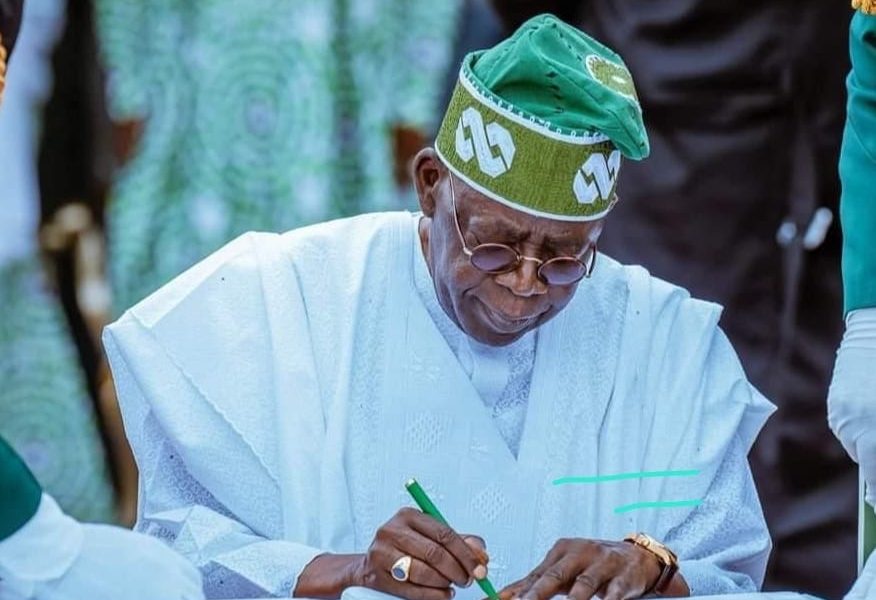
Tinubu Extends Tenures Of Immigration, Correctional Service Chiefs By 18 Months
By Sabiu Abdullahi
President Bola Tinubu has approved an 18-month extension of the tenures of the heads of the Nigeria Immigration Service (NIS) and the Nigerian Correctional Service (NCoS).
The affected officials are Kemi Nanna Nandap, Comptroller-General of the NIS, and Sylvester Ndidi Nwakuche, Controller-General of the NCoS.
The President’s Special Adviser on Information and Strategy, Bayo Onanuga, announced the decision in a statement on Monday, stating that Nwakuche would remain in office until May 26, 2028, while Nandap’s tenure would run until June 30, 2028.
According to Onanuga, the extension followed a recommendation by the Minister of Interior, Olubunmi Tunji-Ojo.
Tinubu commended both officials for the reforms recorded under their leadership and urged them to sustain and build on the progress made.
Nwakuche was appointed Controller-General of the Nigerian Correctional Service in December 2024, with his appointment confirmed by the Senate in March 2025.
Nandap was nominated as Comptroller-General of the Nigeria Immigration Service on February 21, 2024, and her appointment received Senate confirmation on March 1, 2024.
The extensions will allow both officials to remain in their respective positions beyond their previously scheduled tenure periods.

Portugal Reportedly Suspends Cristiano Ronaldo For 30 Days, Fines Him €255
By Sabiu Abdullahi
Portugal captain Cristiano Ronaldo has reportedly been handed a 30-day suspension and fined €255 by the Portuguese Football Federation following his departure from the national team’s camp in Denmark during the September international break.
Football transfer expert Fabrizio Romano disclosed the development in a post on X, attributing the decision to the federation.
“Cristiano Ronaldo has been suspended for 30 days plus fined for €255.
“The decision has been made by Portugal Federation after he left the national team’s camp in Denmark.
“Cristiano himself had suggested a punishment after apologizing for that,” Romano wrote.
Ronaldo reportedly left the camp ahead of Portugal’s UEFA Nations League fixture against Denmark on September 30, following tensions with head coach Jorge Jesus.
The forward later apologised for his actions and indicated his willingness to accept disciplinary measures.
According to the report, the suspension is expected to expire in time for Portugal’s November international fixtures, subject to his selection.
However, the supplied report does not include an official statement from the Portuguese Football Federation confirming the suspension or fine.
Bauchi NDC Governorship Candidate Ibrahim Kashim Resigns From Party
By Sabiu Abdullahi
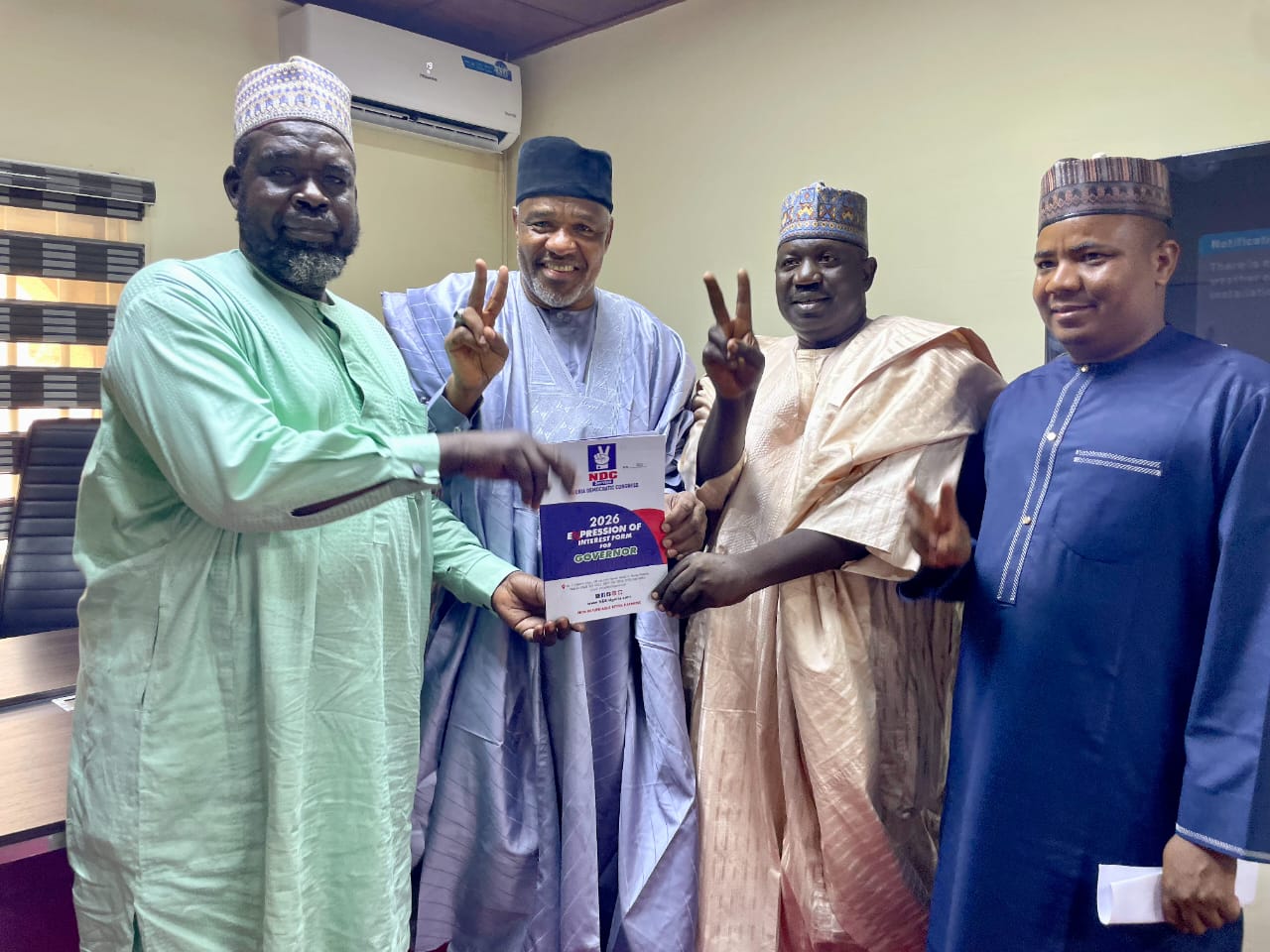
Ibrahim Muhammad Kashim, the Nigeria Democratic Congress (NDC) governorship candidate in Bauchi State for the 2027 general elections, has resigned from the party.
Kashim announced his decision in a resignation letter dated October 16, 2026, addressed to the NDC chairman in Bauchi Local Government Area.
In the letter, he described the decision as a personal choice and expressed appreciation to the party’s leadership and members for the opportunity to be associated with the organisation.
“I hereby formally tender my resignation from the Nigeria Democratic Congress (NDC), effective from the date of this letter.
“This decision has been taken after careful consideration and is a matter of personal choice. I wish to express my appreciation to the party leadership and members for the opportunity to have been associated with the NDC.
“I respectfully request that my resignation be acknowledged and that the necessary records be updated accordingly. Please accept the assurances of my highest regards,” the statement read.
Kashim’s resignation comes ahead of the 2027 general elections, although the letter did not disclose his reasons for leaving the party or indicate his next political move.
Tinubu Rules Out Return To Petrol Subsidy, Urges Youths To Get PVCs
By Sabiu Abdullahi
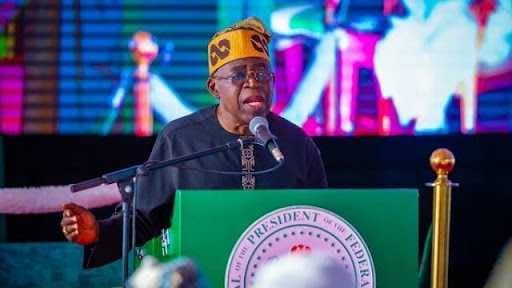
President Bola Tinubu has ruled out a return to petrol subsidy, insisting that Nigeria cannot reverse the policy introduced at the beginning of his administration in May 2023.
Tinubu made the remarks on Monday at an event organised by the City Boy Movement, a pro-Tinubu group led by his son, Seyi, which is mobilising young voters ahead of the 2027 presidential election.
Defending the subsidy removal, the President said the policy was necessary to prevent the country from facing financial collapse, arguing that the government could no longer sustain the cost of subsidising petrol.
“I came and I removed subsidy the first day. I knew Nigeria would go bankrupt. There was nothing left to pay subsidy. I could listen to my political opponents promising a return to subsidy,” he said.
Using the Biblical account of Moses leading the Israelites out of Egypt, Tinubu drew a parallel between their journey and Nigeria’s economic reforms, insisting that the country should not return to its previous position.
“I remember my scripture studies, both in the Bible and in the Holy Quran.
“When Moses and Musa left Egypt, they faced a challenge, and the Red Sea parted and gave way. You cannot ask Moses to go back to Egypt.”
The President also urged young Nigerians to obtain their Permanent Voter Cards (PVCs) and participate in the 2027 election.
“Make sure every young person you know has a PVC and uses it,” he said.
“Tell them what we have done and tell them what we will do.
“We will campaign with our ideas, original thoughts and deep thinking to move this country forward. With your energy and support, never will we go back to Egypt.”
Tinubu announced the removal of the petrol subsidy during his inauguration on May 29, 2023. The policy has remained a major point of debate, with opposition politicians proposing different approaches to reducing fuel prices.
Rabiu Musa Kwankwaso, vice-presidential candidate of the Nigeria Democratic Congress (NDC), recently said the party “will do whatever is necessary” to lower petrol prices, including potentially restoring the subsidy if elected.
The party’s presidential candidate, Peter Obi, had also said his administration would restore the subsidy after tackling corruption.
Meanwhile, Donald Duke, the Peoples Redemption Party presidential candidate, said he would reduce petrol prices to about N300 per litre if elected in 2027.
Former Vice-President Atiku Abubakar, the African Democratic Congress presidential candidate, also pledged in August to restore the subsidy if he wins the election.
The competing positions on petrol subsidy are expected to remain a key issue in the campaign ahead of the 2027 presidential poll.