By Sabiu Abdullahi
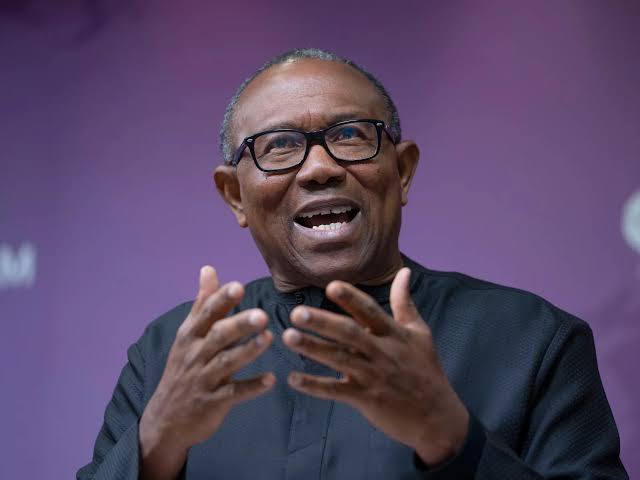
Peter Obi, former governor of Anambra State and presidential candidate of the Nigeria Democratic Congress (NDC), has pledged to raise Nigeria’s electricity generation capacity to 10,000 megawatts if elected president in the 2027 general elections.
Obi made the promise on Saturday in Abuja after emerging as the NDC’s sole presidential candidate at the party’s national convention, where his nomination was formally ratified.
In his acceptance speech, he criticised the country’s current power situation, describing it as unacceptable for a nation of over 200 million people to remain at a generation level of about 4,000 megawatts.
He said Nigeria’s electricity output falls far below what is recorded in some other major African economies.
“It is totally unacceptable. Today, Nigeria is a country with the highest number of citizens without access to electricity in the whole world. About 100 million Nigerians don’t have access to electricity,” he said.
“In today’s world, it is unacceptable. A country of over 200 million people only generates and distributes 4,000 (megawatts)
“The biggest economies in Africa— South Africa and Egypt — generate over 40,000 megawatts today.
“So we are not even producing 10% of what these two African nations are producing and distributing. Both of them are less than 50% of our population and they generate 10 times the electricity we generate. These are African countries.
“It is unacceptable. It cannot happen. And I pledge on behalf of our government that in four years, this country will generate and distribute at least 10,000 megawatts from the 4,000 they are doing today.”
Obi also faulted official unemployment figures released by the National Bureau of Statistics (NBS), particularly the 4.3 percent rate reported for the second quarter of 2024, saying it does not reflect the reality faced by Nigerians.
He said his administration would prioritise job creation through support for small businesses and targeted incentives aimed at expanding economic opportunities.
Meanwhile, data from the federal government in April 2026 showed a slight improvement in electricity generation, which rose from 3,951 megawatts on March 28 to over 4,300 megawatts by April 10.
Obi Pledges 10,000MW Power Generation If Elected President, Blasts Nigeria’s Electricity Deficit

ByAdmin
31 May 2026