Peter Obi

Beyond Political Party Affiliation 

By Mohammed Usman (Noble-pen)

Let’s talk beyond political party affiliation. Let’s tell ourselves the brutal truth.

Believing that all these people under the shade of one political party, ADC, and many more to move into it, are after the interest of the poor, the masses, instead of themselves, is the gravest mistake one will ever make. 

All these people have their own vested and individual interests, which spurred them to cross-carpet into the party, which seems to them promising, full of potential, and offering vistas for achieving those interests. And you know what? The poor, the masses, are the last thing they think of. Let alone the country’s future. 

Let me give you a practical, relatable elaboration on this by picking the few and the major points among them. Maybe, that way, you will understand what I am trying to say here.

1. Atiku Abubakar 

This person has been investing heavily and persistently in his ambition to become the country’s president. He never reneged since he started. He had been spending billions of naira on it. Therefore, do you sensibly think working for the poor, the masses, will be his top priority when he attains the power he has been so adamantly vying for, instead of looking for a return on his financial and material investment for years before? Don’t forget, he is a business-oriented person. And you should know what I mean. 

2. Nasir El-Rufai 

This person was once one of the cocks of the work of the current brutal government under the auspices of the APC. They entrenched it with their sweat and blood. And he never felt sorry for the poor suffering under the coarse, clueless policies of the government until the government, headed by Tinibu, betrayed him and denied him the opportunity he was dying for: a ministerial post and a place at the driving force of the government. That marked the genesis of his enmity towards the government and turned him into one of its most blunt and fierce foes. Hence, his decision to move to SDP, which refused him, then to ADC. His mission is purely to take vengeance on the government which made him an outcast rather than to save the poor masses from the bondage and shackles of poverty and insecurity, which they have been grappling with for donkey’s years.

3. Rabiu Musa Kwankwaso 

Just like El-Rufai, Kwankwaso is being driven by the force of spite and vendetta over the betrayal he suffered at the hands of his once political apprentice accomplice, Abba Gida Gida. His mission is driven solely by the quest to uproot the government of Abba Gida Gida, rather than by the welfare of the people of Kano State. However, he is a politician with very, very good antecedents. No one can deny that. But he is not into ADC for the masses. No. 

4. Nasiru Gawuna 

This was once an accomplice to the current merciless APC government, who fought a political battle—over his inspiration for the Kano state gubernatorial office—with Kwankwaso and his boy, Abba Gida Gida, but lost to them. He was once their worst enemy. But today, he and the Abba’s boss kwankwaso have leagued up as sweet friends in another political party (ADC) each with different and individual vested interest: kwankwaso to dislodge the assumed betraying government of Abba Gida Gida as well as to occupy an influencial office in the presidency; while Gawuna, to use it as an opportunity to become the kano state governor which he failed to in his previous opposition party APC. 

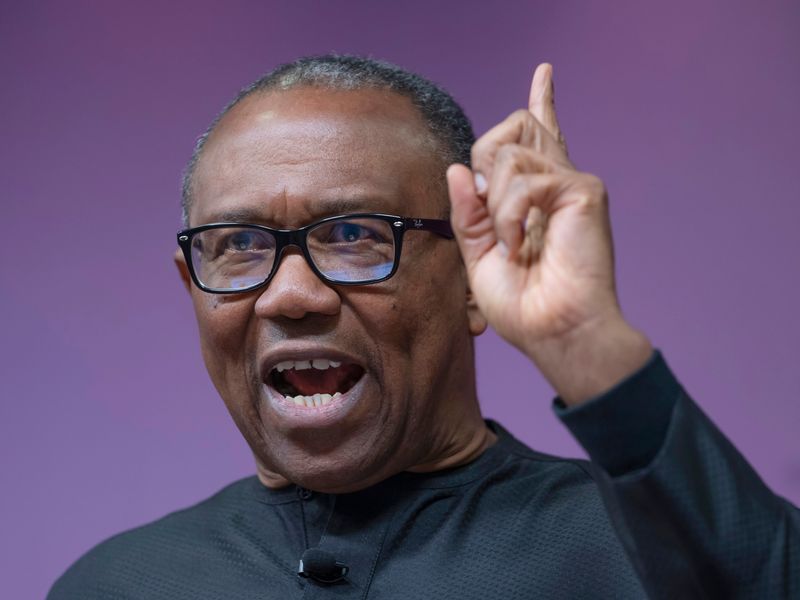
4. Peter Obi 

This person has the worst political andecedent, being the former governor of Anambra State and has—allegedly— a strong affiliation to IPOB, being the terrorist and outlawed political group in Nigeria, which had been perennially insurgent and rebellious to successive Nigerian governments with their impossible mission of dividing the country and taking their own share, which they aimed to call BIAFRA. So Peter Obi might clearly have this scheme hidden in his mind to, when he tapped the supreme power —presidency—become instrumental for the IPOB to finally make it possible to see the last light —they have been dying and killing people for—at the end of the tunnel, and reach their daydreamed-promised land. Polarising the country is the plot of his horizon. 

Likewise, if you pay very close attention to the other people who will be cross-carpeting into the party, ADC. You will notice that they were once fundamental figures in the previous governments who failed the masses and never took concrete, robust action to save their lives and property. Let alone improving their welfare and standard of living. Tell me, when did they change to be trusted with our mandates and entrusted with our lives once again, simply because they moved into another political party? The same applied to the others who are beneficiaries of the current APC government and are now quitting it for the shining party of the day, ADC.

Let me wrap up by telling you the secret of these Nigerian politicians. 

The fact is, they are always the same set of people.  They only switch color and identity by jumping from one political party to another— using the very public funds they looted while occupying the public offices they were once either elected or appointed into — with romanticized manifestations to sway the minds of the poor masses and pave a wider way for themselves to achieving their vested and selfish interest; increasingly impoverish the already poor masses, steal their future and the future of their children and grandchildren; while enriching themselves, their children and grandchildren, making their lives and future always the brighter.

And mind you, they switch political parties based on their analysis of which political party the poor masses lean their attention and hope towards. This means that it’s always the previous, unchanging enemies the masses mistake for their beloved ones and the beacon of hope, revolution, and transformation. 

Therefore, until the poor citizens of Nigeria understand these Nigerian politicians’ Machiavellian formula and devise a way to dismantle it—instead of continuing with their primitive thinking that their problems lie with one political party and that the solutions are in another—they shall continue to live in bondage, suffering, humiliation and destitution.

Mohammed Usman (Noble-pen) is the Author Of “Butterfly’s Wings.”

Atiku Pledges Support for Whoever Wins ADC Presidential Ticket

By Sabiu Abdullahi

Former Vice President Atiku Abubakar, a presidential aspirant of the African Democratic Congress (ADC), has affirmed his readiness to back whichever candidate emerges as the party’s flagbearer for the 2027 presidential election.

Speaking in an interview with DW Hausa, Atiku dismissed claims that the Independent National Electoral Commission (INEC) could undermine the ADC, noting that the party continues to grow in popularity across the country.

The INEC had announced on Wednesday that it would stop further communication with the ADC leadership and would not oversee the party’s national convention scheduled for April 14. The electoral body cited a court ruling for its decision. However, the ADC rejected INEC’s position, accusing the commission of misinterpreting the ruling, and vowed to proceed with its planned convention and other activities.

On the party’s presidential ticket, Atiku stated: “We will support and endorse whoever emerges as the flag bearer. How many are we (presidential aspirants), three or four? In the PDP, more than ten of us contested.”

Atiku also highlighted the ADC’s commitment to youth and women participation. “The youths have taken over the party. Most of those seeking elective positions, from councillor to state assembly, national assembly and House of Representatives, are young people. We have always said our party belongs to youths and women. Our role is to create the opportunity and hand it over to them,” he said.

Asked if he could support a young presidential candidate, Atiku replied: “Yes, why not. Allah has done everything for me. I have brought my sons and grandchildren home. What will be their future and that of their children?”

He expressed confidence that Nigerians are ready for change amid worsening economic and security challenges. “We are confident that Nigerians are yearning for change. They are ready for it. They are being pushed to the wall and are prepared to do even more than they did in the previous elections,” Atiku said.

The former vice president also linked rising insecurity, particularly in northern states, to youth unemployment and limited access to education. “Insecurity is more severe in the northern states, largely due to youth unemployment and lack of access to education. When you go round the region, you see that education is not receiving the attention it deserves. It has been relegated. Governments have not ensured that children enrol in school, and even when they graduate, there are no jobs or business opportunities. I have never witnessed a period like this in Nigeria,” he said.

Atiku further accused the government of tolerating corruption, saying: “There is also embezzlement on the part of government and corruption is rampant. The government has turned a blind eye because it is involved.”

This statement underscores Atiku’s positioning within the ADC as the party prepares for its national convention and the 2027 general elections.

PHOTOS: How Nigeria’s Opposition Leaders Visit Kwankwaso for Sallah Amid Political Realignments

By Uzair Adam

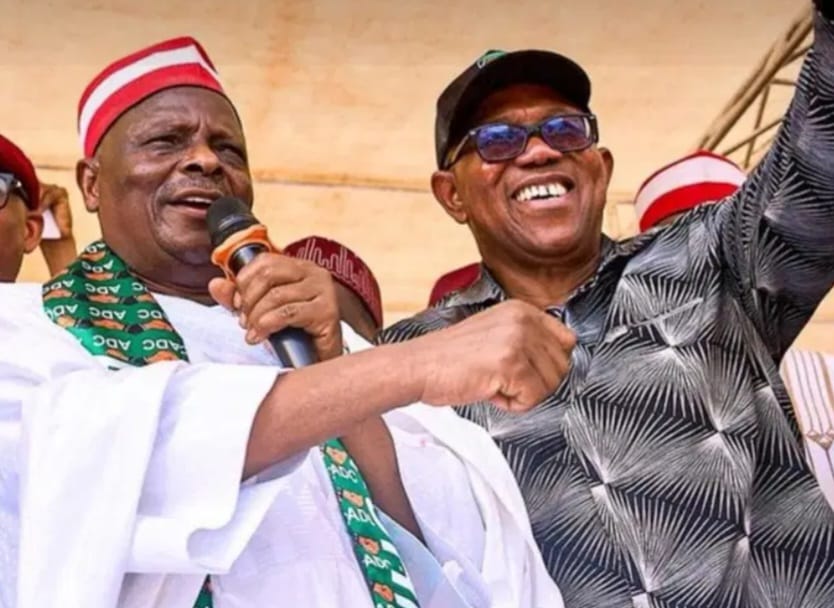
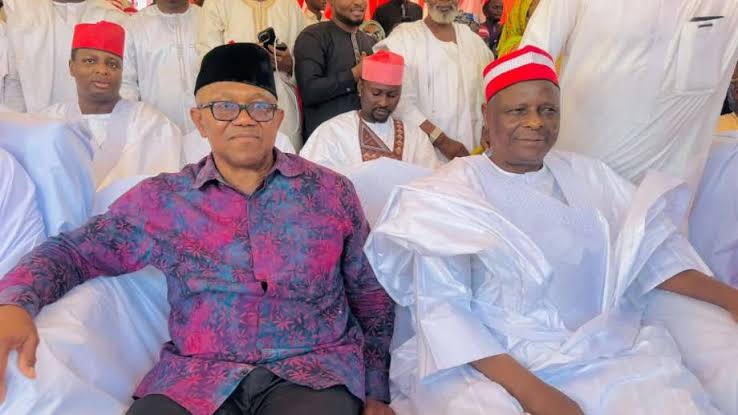
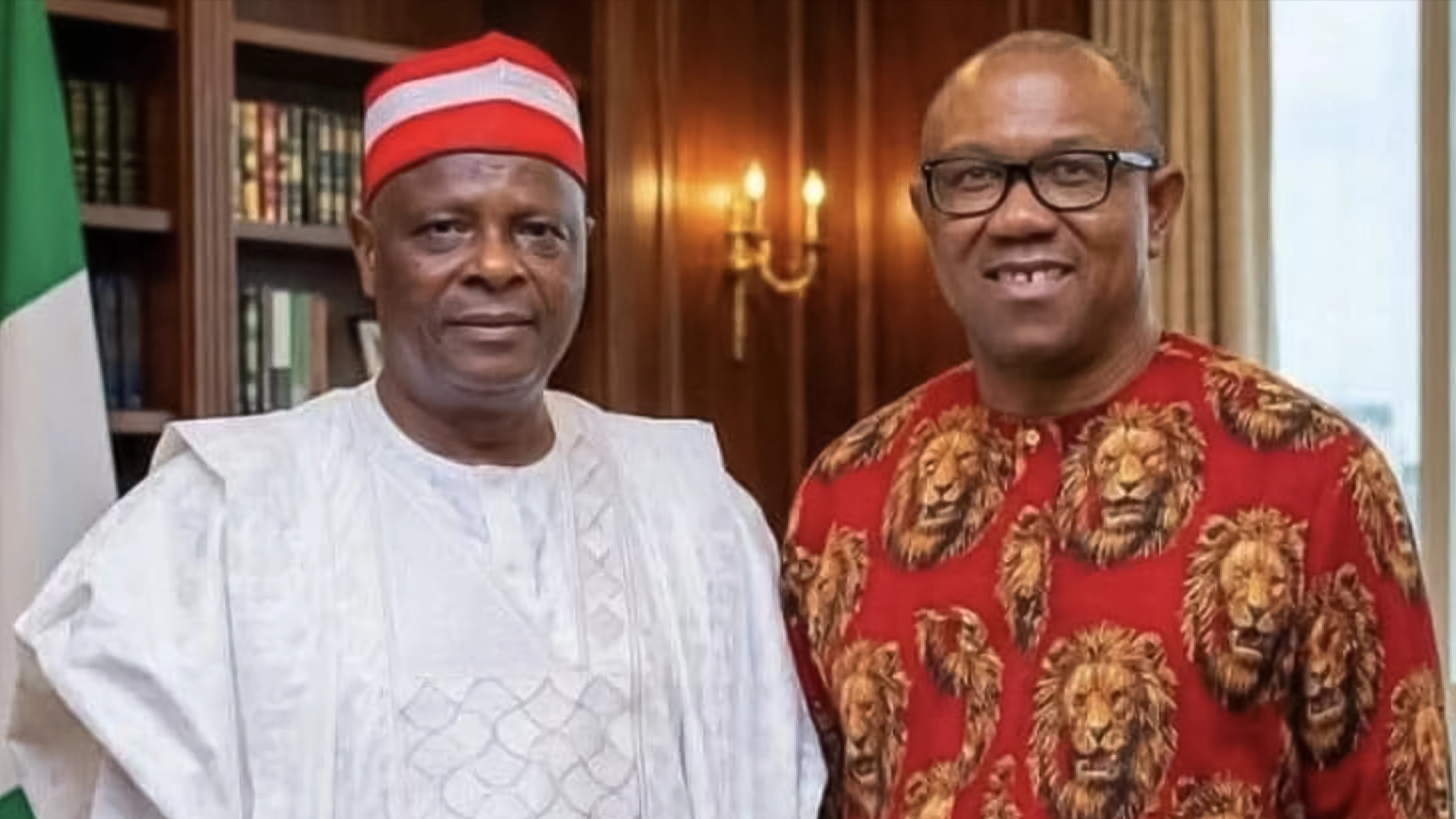
Prominent opposition figures in Nigeria have paid a visit to the residence of Kwankwasiyya leader, Rabiu Musa Kwankwaso.

Those present at the visit included former Labour Party presidential candidate Peter Obi, Oyo State Governor Seyi Makinde, and Senator Seriake Dickson, among other political stakeholders.

In a post shared on his Facebook page, Kwankwaso stated that the politicians were at his residence on a Sallah homage.

Kwankwaso, a leading figure in the opposition New Nigeria Peoples Party, is widely speculated to be considering a move to another political party.

This follows the recent defection of Kano State Governor, Abba Kabir Yusuf, from the NNPP to the ruling All Progressives Congress.

Meanwhile, Peter Obi recently confirmed his official move to the African Democratic Congress, while Governor Makinde remains one of the few governors still in the Peoples Democratic Party, alongside his Bauchi State counterpart.

Is APC now a Christian party?

By Professor Abdussamad Umar Jibia

The year 2023 was a remarkable year in Nigeria’s history. Just like the year 1993, an election was held that generated a win for a Muslim candidate with another Muslim as his running mate.

In both 1993 and 2023, the presidential candidates were warned against choosing a Northern Christian as a running mate. Christians constitute not just a tiny minority in the North, but many of them have also proven to be very bad neighbours in their relations with their Muslim compatriots.

Wherever Christians constitute the majority, they display an unforgivable hate and marginalisation against their Muslim neighbours. A handy example is Plateau state, the home state of the current APC Chairman. The way Muslims are sidelined in Plateau state is enough to show what we should expect if Christians were the majority in Nigeria.

His Excellency Peter Obi was misled into believing that a combination of Igbo and Northern Christians could make him the President, and he moved from one church to another to campaign, only to end up in third place. 

The 2023 election was thus a religious census in disguise that showed the numerical superiority of Muslims over Christians in Nigeria. 

But no sooner had Bola Ahmed Tinubu won the 2023 presidential election than he began to sideline Muslims, the very group that brought him to power, in his appointments. Last year, we saw him personally going to the Vatican with what the state house described as a “bragging right of 62% Christian appointees”. 

We watched as he appointed a Northern Christian as the SGF. Of course, President Muhammadu Buhari did the same. President Umaru Musa Yar’Adua appointed a Northern Christian to lead the National Assembly. They did not deserve any of these, given their small number. However, Muslims gave them out of magnanimity. Or is it foolishness? They would never do the same if they were in our position. 

Many of us became disappointed when we saw a Northern Christian being chosen to lead the ruling party. This means two of the most important positions at the federal level have been given to Christians from the North Central, a geopolitical zone that is overwhelmingly Muslim. Worse still, our politicians in and outside the ruling party, our emirs and Islamic scholars are silent. When have we become animals who only care about eating food and sleeping with women?

As if that is not enough, speculation is that the President wants to drop his VP and choose a Northern Christian as his running mate in next year’s election. I commend the Honourable Minister of Culture, Hajiya Hannatu Musawa, for publicly telling the truth to Mr President. But it shouldn’t have reached this level. The decision of the President to appoint Northern Christians as SGF, Party Chairman and INEC Chair should have been opposed in the first place.

We are still expecting Mr President to correct the imbalance that favours the very tiny Northern Christians. North Central is predominantly Muslim. The only Christian majority states, where, of course, Muslims have been marginalised, are Plateau and Benue. Niger, Nasarawa, Kogi and Kwara are Muslim states. That Muslims in those states have been left out by Mr President in the above-mentioned strategic appointments is unfortunate.

Professor Abdussamad Umar Jibia wrote from the Department of Mechatronics EngineeringBayero University Kano, via aujibia@gmail.com.

Obi says Kanu’s conviction could deepen unrest, calls for political solution

By Hadiza Abdulkadir

Former Labour Party presidential candidate Peter Obi has warned that the conviction of IPOB leader Mazi Nnamdi Kanu could worsen insecurity in the country. Obi issued the warning in a statement posted on his social media accounts, saying the development comes at a time when Nigerians are already struggling with economic hardship and widespread violence.

Obi said Kanu’s arrest, detention, and now conviction represent “a failure of leadership,” arguing that the concerns raised by the IPOB leader could have been addressed through dialogue and inclusive governance rather than coercion.

He cautioned that the government’s approach risks aggravating tensions in the South-East and further stretching security agencies already battling multiple crises nationwide.

According to him, nations facing similar internal tensions often adopt political solutions and negotiated settlements when legal processes alone cannot guarantee stability.

Obi urged the Presidency, the Council of State, and respected national figures to intervene and pursue reconciliation, warning that only justice, fairness, and meaningful engagement can prevent the situation from escalating into a deeper security challenge.

Obi slams $1B Lagos port spending, calls neglect of eastern ports “economic sabotage”

By Abdullahi Mukhtar Algasgaini

Peter Obi, the 2023 Labour Party presidential candidate, has strongly criticized the Federal Government’s plan to spend $1 billion (approximately ₦1.5 trillion) on modernizing the Apapa and TinCan Island Ports in Lagos, labeling the continued neglect of other major ports as “economic sabotage.”

In a statement posted on his X (formerly Twitter) handle on Friday, Obi accused the government of perpetuating a dangerous “economic imbalance” by excessively concentrating infrastructure investments in one region.

He warned that this policy sidelines critical maritime hubs in other parts of the country, specifically naming the ports in Warri, Port Harcourt, Calabar, and Onne.

The former Anambra State governor argued that equitable development of ports across the nation’s geo-political zones is essential for enhancing productivity, creating jobs, and stimulating regional economic growth that could lift millions out of poverty.

“While any effort to improve efficiency and embrace technology in our maritime sector is commendable, such an initiative must be guided by accountability, transparency, and fairness,” Obi stated.

“The Lagos modernisation project, though laudable, underscores a troubling trend of concentrating major national infrastructure in one region.”

Obi emphasized that for Nigeria to build a truly robust national blue economy, its growth must be inclusive, actively involving every region.

He also used the opportunity to call for broader reforms in the sector, including curbing corruption, streamlining bureaucracy, and implementing a paperless port system to boost global competitiveness.

Concluding his remarks, Obi urged the Tinubu administration to adopt principles of fairness and equity in its infrastructure policies.

“If prudently managed, the Lagos modernization project could serve as a model for national maritime transformation,” he conceded.

“But Nigeria must rebuild with justice, integrity, and a vision that turns us from a consuming nation into one driven by production and shared prosperity.”

Peter Obi says ‘Yahoo Boys’ are geniuses who need redirection

By Sabiu Abdulahi

Former Labour Party presidential candidate, Peter Obi, has said that many young Nigerians involved in internet fraud, commonly called Yahoo boys, are actually intelligent individuals who require proper guidance instead of outright condemnation.

Obi, who spoke in Onitsha, Anambra State on Saturday, explained that those engaged in such activities possess creative minds but have been misled due to lack of direction.

He noted that if their energy and innovation were properly channeled, they could contribute positively to the nation’s progress.

According to him, while the pursuit of money is common, real wealth should be measured by integrity, purpose, and character.

He stressed that true prosperity should empower people and uplift communities.

“Some of our so-called Yahoo boys are geniuses who need redirection, not condemnation,” Obi stated.

He added that their resourcefulness could be used to promote national development if given the right mentorship and support.

“Their creativity and courage, if properly guided, can drive innovation and national development. Real wealth uplifts both the individual and society, promotes education, reduces poverty, and creates opportunities for others to live dignified lives,” he said.

Obi maintained that redirecting the talents of such youths toward productive ventures would not only benefit the country’s economy but also help reduce crime and unemployment.

Peter Obi joins Chimamanda Adichie at Abuja book tour of Dreams Count

By Muhammad Abubakar

Abuja – Former Anambra State Governor and Labour Party presidential candidate, Mr. Peter Obi, on Wednesday joined a distinguished gathering of diplomats, literary enthusiasts, and dignitaries in Abuja for the Nigerian tour of Chimamanda Ngozi Adichie’s latest book, Dreams Count.

The event, which forms part of the global celebration of Adichie’s new release, attracted ambassadors and High Commissioners from various countries. Obi, who had earlier attended the book’s global launch on March 2 at London’s Southbank Centre’s Royal Festival Hall—an event that drew over 3,000 attendees—described Dreams Count as “deeply moving” and lauded Adichie for her continued impact on literature and cultural advocacy.

During the Abuja event, Obi praised the powerful spoken word performances by Nigerian poets, including Dike Chukwumerije, noting the impressive display of literary talent in the country. He commended Adichie for using her platform to uplift fellow Nigerian writers, giving them visibility and a voice on the global stage.

“Chimamanda remains an exemplary model for every Nigerian, old and young,” Obi said, urging continued investment in Nigeria’s creative industries. “The world is watching, and indeed, our dreams count.”

Bassa Killings: Obi calls for urgent federal action

By Muhammad Abubakar

A devastating attack has claimed the lives of over 50 people in Bassa, Plateau State, triggering national outrage and renewed calls for decisive government intervention. The latest wave of violence occurred just a day after a visit to the region by Peter Obi, the Labour Party’s presidential candidate in Nigeria’s 2023 general election.

Obi, who had praised the resilience of Plateau’s people during his visit, expressed deep sorrow over the killings, calling them “heartbreaking” and “unacceptable.” In a strongly worded statement, he condemned what he described as a “deliberate, systematic pattern of coordinated attacks,” echoing similar concerns raised by Governor Caleb Muftwang.

“This is not the time for press statements,” Obi said. “It is time for concrete, strategic action. The people of Plateau need more than sympathy—they need security.”

He urged the federal government to immediately deploy reinforced security operations and actionable intelligence to identify and dismantle the criminal networks behind the atrocities.

Obi also called for swift justice for the victims, emphasizing that peace and dignity are the rights of every Nigerian citizen.

The incident marks another grim chapter in the ongoing violence plaguing Plateau State and raises urgent questions about the effectiveness of current security measures. Obi extended his condolences to the grieving families and prayed for strength for the people of Plateau and eternal rest for the departed.

APC, PDP, and the rest: A three-way battle for 2027

By Zayyad I. Muhammad

As politicking for the 2027 elections gradually gains momentum, both new and familiar scenarios will inevitably emerge. Nigeria’s political landscape is dynamic and often shaped by geopolitical factors, and 2027 will be no exception.

The truth is, despite its internal wranglings and historical baggage, any coalition that does not have the PDP as its central pillar is unlikely to achieve the kind of national spread required to win a presidential election in Nigeria. The PDP, with its extensive grassroots network and long-standing presence across all six geopolitical zones, remains the only opposition party with a truly nationwide structure, even if its influence has somewhat waned in recent years.

Peter Obi and Rabiu Musa Kwankwaso, notable third-force figures from the 2023 elections, lack enthusiasm for any clearly defined coalition. Obi appears ready to pursue the presidency again, but the conditions that fueled his surprising 2023 performance- particularly the support from urban youth and disenchanted Christian voters— have significantly waned. This support was initially driven by fear over Tinubu’s Muslim-Muslim ticket, which caused concerns among Christians. Today, that fear has faded, and ironically, the Muslim-Muslim arrangement includes more Christian participation in government than anticipated.

Kwankwaso, on the other hand, appears to have adopted a more pragmatic, localised approach- ‘ state capture. Kwankwaso’s posture suggests a strategy of quiet autonomy: “I have Kano; let me control it. I won’t interfere with you, and don’t interfere with me.” This ‘state capture’ mentality may give him relevance at the regional level but severely limits his national appeal.

President Tinubu, meanwhile, has carelessly  or perhaps inadvertently squandered the political capital that the APC enjoyed in the North from 2015 to 2023. During that period, the APC could count on overwhelming support from northern voters , often to the extent that votes from a single state could nearly cancel out those from entire geopolitical zones elsewhere. That dominance was largely tied to a geopolitical strongholds strategy . Tinubu’s failure to maintain and galvanize this strategy will eat up the APC’s traditional votes in the North, which are very key for the APC’s return to a second term.

Furthermore, Tinubu has, whether knowingly or not, revitalised the dormant CPC bloc — a faction of the APC that once represented the ideological and political base of Buhari’s loyalists. Now, with the central leadership perceived as disconnected from northern interests, the CPC bloc sees an opportunity to reassert itself. In regions like the Northwest, particularly, this could lead to a realignment of loyalties, with Tinubu’s influence weakening in favor of those viewed as more authentically representing northern interests. 

Nepotism is nepotism. While Buhari’s nepotism was largely regional and driven by northern priorities, Tinubu’s appears more ethnic and focused on Lagos, which could prove politically costly if not urgently recalibrated. That said, Tinubu still has time and political tools to course-correct before 2027, if he chooses to use them wisely.

The current coalition promoters, however, appear to be relying on an outdated strategy. The 2015-style bandwagon movement, built around the idea of ‘change,’ is unlikely to resonate with voters in 2027. Buhari’s eight-year presidency has left a mixed legacy, with many citizens feeling disillusioned by the unmet expectations. The old formula simply won’t work again.

In 2027, two key elements will determine electoral success, not only at the center but also in the states: substantial resources, both financial and structural , and science. The days when charisma and rhetoric alone could deliver victory are over. Any political group serious about winning must adopt a data-driven strategy. This entails conducting thorough research into voter behavior, turnout patterns, demographic shifts, and regional voting strengths. 

It also requires understanding the psychology of the electorate, particularly among young voters, who now constitute a decisive segment. Apolitical political scientists, data analysts, and behavioural experts will play a more vital role than ever before. Without this approach, even the best-funded campaign could fall flat.

Finally, it is important to accept that the coalition model of 2015 and the voting behavior of 2023 are not likely to repeat themselves. Nigeria’s political terrain has evolved, so to speak . As of today , although tomorrow is uncertain, the three major blocs heading into the 2027 elections appear to be Tinubu’s APC, the PDP, and the rest . It is shaping up to be a near-zero-sum game. 

Zayyad I. Muhammad writes from Abuja via zaymohd@yahoo.com.