By Sabiu Abdullahi
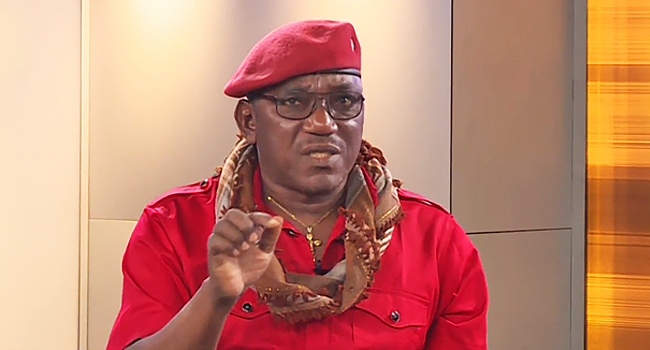
Former Minister of Youth and Sports Development, Solomon Dalung, has criticised the Federal Government over the country’s security challenges, alleging that the administration lacks the determination required to confront terrorism and kidnapping across Nigeria.
Dalung made the remarks during an appearance on Arise Television’s Morning Show on Friday, where he assessed the government’s handling of insecurity and broader national issues.
According to him, authorities appear more capable of tracking government critics than pursuing terrorists who continue to carry out attacks across the country.
“Government seems not to have the political will to deal with it. They have all the gadgets to track anybody who criticises the government — they can pick him up in the next five minutes.
“But they don’t have equipment to track terrorists who display huge phones in the forest, behead teachers, abduct schoolchildren, torture them in the forest, produce videos and send,” he said.
Dalung also dismissed a recent appeal by the Minister of Information for national unity against terrorism. He argued that the statement reflected the government’s inability to effectively address the security crisis.
“I think it’s a statement confirming that the federal government has completely and woefully failed. They don’t seem to have any idea of a solution to the ravaging insecurity that is across the country,” he said.
The former minister further claimed that security agencies were not operating in a coordinated manner. He added that armed groups had established what he described as a “parallel forest economy,” enabling them to sustain their activities outside state control.
Dalung also questioned the impact of foreign military support, particularly that of the United States.
“We were told that the Americans are here with us. If the Americans are here with us, what have they been doing? We have not felt their impact,” Dalung said.
He urged the government to move beyond assurances and empower local communities to protect themselves.
Speaking on the political outlook ahead of the 2027 general elections, Dalung said the country was gradually returning to regional political alignments similar to those of the First Republic.
“Nigeria has returned to the politics of the First Republic, where regions now have their political parties. Almost all the zones have presidential candidates. So ultimately, in 2027, we may be facing serious confusion as we advance towards election,” he said.
Dalung also expressed dissatisfaction with President Bola Tinubu’s performance after three years in office. He maintained that many Nigerians had yet to experience the benefits of the administration’s reforms.
“Three years into his tenure, it is just blame game and rhetorics of reforms — reforms that no single iota of the benefit has trickled down. Rather, Nigerians are getting impoverished daily.
“The economy is in doldrums. Insecurity remains rhetorical,” he said.
However, political scientist Obafemi George defended the administration during the same programme. He argued that the government should be given more time to implement its policies and pointed to economic indicators as evidence of progress.
George cited Standard & Poor’s recent upgrade of Nigeria’s sovereign credit rating from B- to B as a sign of improving stability. He also linked the worsening security situation in parts of the region to developments in the Sahel following the withdrawal of French troops.
“This current administration has confronted insecurity that is higher than the previous administration, spent more, and recorded more successes in combating insecurity,” he said.
He referenced security operations in Gwoza and Katsina as examples of progress.
George further argued that meaningful national development requires time and patience.
“You know, when you employ someone, you give the person KPIs… and if you look at each of those, in my opinion, I could confidently say that the president ticked the boxes,” he said.
According to him, structural reforms often take years before their full benefits become visible. He cited examples from China, Rwanda and Dubai to support his position.
“I ask people to give me one example of a country in a modern era that has transitioned from being a poor country to a prosperous country in 36 months,” he said.
“One of the things that we are going through that is causing our current pain is because some sacrifices that were meant to have been done years ago weren’t done,” he added.
George also referred to comments previously made by former Finance Minister Ngozi Okonjo-Iweala that Nigeria was “broke.” He argued that an earlier removal of fuel subsidy could have reduced the economic pressures currently facing the country, adding that the ongoing reforms are intended to secure long-term stability.
Dalung Accuses Federal Government of Failing to Tackle Insecurity, Questions Reform Impact

ByAdmin
6 June 2026