By Uzair Adam
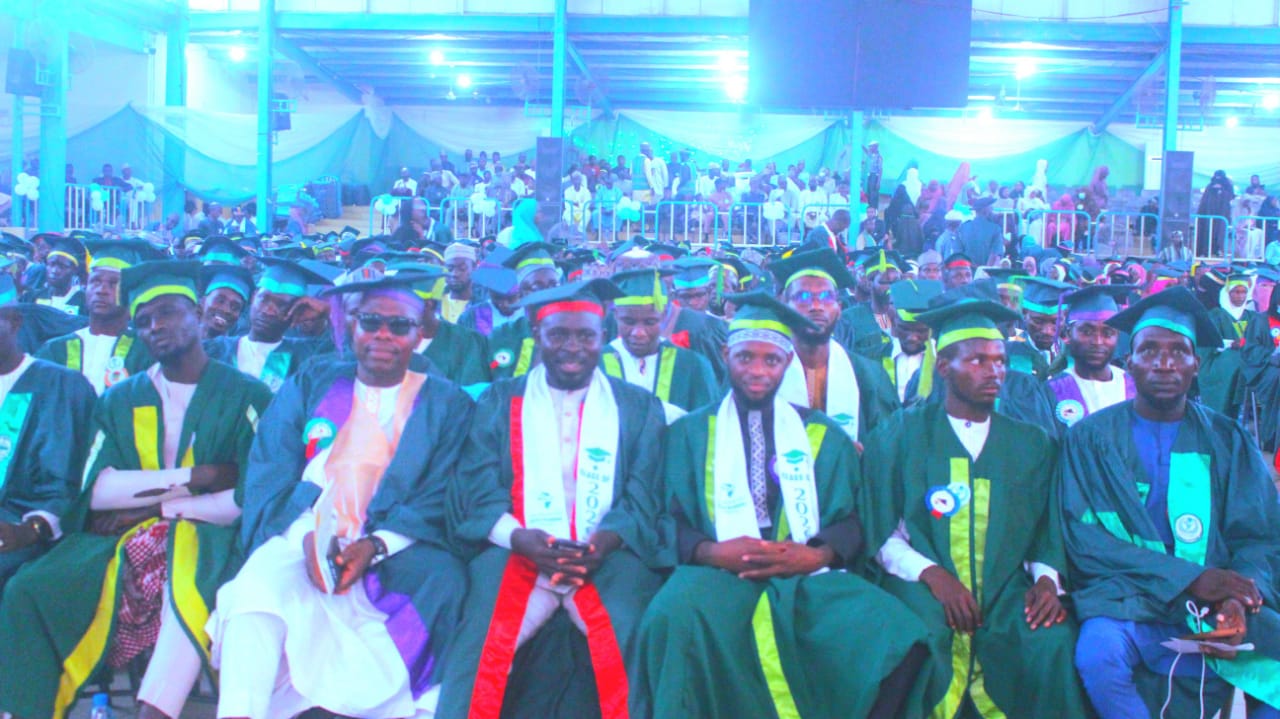
Africa Academy, an Islamic online learning platform under Africa Media Network, on Saturday graduated 3,500 students who completed its free Diploma programme in Islamic studies at a ceremony held at Bayero University Kano (BUK).
The graduation marked the academy’s second convocation, established to make Islamic education accessible to Muslims regardless of location, occupation, or level of formal education.
Speaking at the ceremony, the Managing Director of Africa Media Network, Dr Habib Tijjani Tahir, said the academy was created to give people the opportunity to acquire Islamic knowledge despite their busy schedules.
He explained that the initiative was driven by the need to help Muslims understand how to worship Allah correctly, stressing that people were created to worship Him.
According to him, the academy provides free online lessons that enable students to learn at their convenience from anywhere.
Tahir said the curriculum covers various areas of Islamic studies, including Fiqh, Seerah, Tafsir and Hadith, among others.
He said the academy also encourages academic excellence by rewarding outstanding students.
Tahir said top-performing students would receive incentives, including Umrah packages and cash rewards, while other outstanding students would also receive financial rewards.
He further announced that the academy would sponsor the marriages of four students by covering major wedding expenses, including dowry, wedding trousseau, rent and other associated costs.
“We want to encourage our students not only to acquire knowledge but also to remain committed to their studies and strive for excellence,” Tahir said.
He said the academy initially offered short one-week Islamic courses with certificates but later introduced its free Diploma programme, known as “Tsangaya,” following increasing demand from learners.
Tahir noted that 2,200 students graduated in the previous edition, while the number rose to 3,500 this year.
He said the academy was targeting between 50,000 and 60,000 graduates in subsequent years, or even more.
According to him, any Muslim who can read and write and meets the required level can enrol in the programme without presenting a previous academic certificate.
He added that the initiative therefore gives students of Qur’anic and Tsangaya schools, as well as people with conventional academic backgrounds, an opportunity to acquire further Islamic knowledge.
Representing the teachers, Prof Abdulqadir Ismail congratulated the graduates and prayed that Allah would make the knowledge they acquired beneficial to them and society.
He urged the graduates to put their knowledge into practice and use it to benefit others.
“Knowledge becomes more valuable when it is practised and used to benefit other people,” Prof Ismail said.
He also appealed to the graduates to continue praying for the academy as it works towards introducing online degree programmes similar to those offered by universities around the world.
Also speaking, Sheikh Abubakar Abdussalam Baban Gwale said opportunities to acquire Islamic knowledge through platforms such as Africa Academy were not readily available in the past.
He recalled that even people with the financial means sometimes struggled to find accessible opportunities for Islamic education.
“Today, Allah has made it easy for people to acquire this knowledge,” Baban Gwale said, urging parents to encourage their children to participate in such programmes.
He added that even people with conventional academic qualifications could benefit from the opportunity, describing access to Islamic education as a blessing.
Among the graduates, Fatima Usman, 40, emerged as the best-performing student.
A mother of nine, she said she learnt about the academy through a television announcement and continued following its activities until registration opened.
“I was determined to study despite my responsibilities as a mother of nine children,” she said, adding that she remained committed to her studies throughout the programme.
Muhammad Saminu, who came second, attributed his success to consistency and effective use of the academy’s learning materials.
He said he listened to audio lessons while travelling or working and studied the PDF materials more thoroughly whenever he had time to sit down and concentrate.
Amira Nuhu Umar, who emerged third, described her success as a source of immense joy, saying the lessons had significantly influenced her life.
“My joy cannot be described. The lessons have had a great impact on my life,” she said.
She thanked her parents and teachers for their support and dedication throughout her studies.