Kano

Kano court remands cleric over alleged land document forgery

By Sabiu Abdullahi

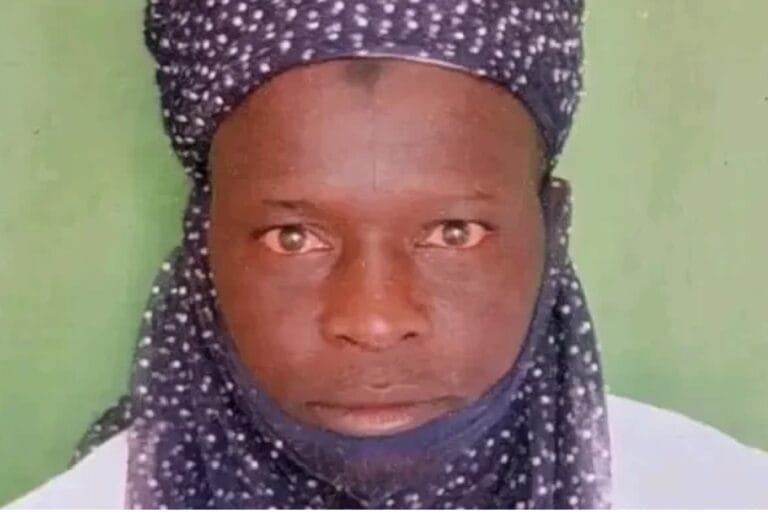
A Magistrate Court in Kano State has ordered the remand of a popular Islamic cleric, Ibrahim Makwarari, over allegations of forgery linked to land ownership documents.

Mr Makwarari appeared before Magistrate Court No. 53, sitting at Normansland, Kano, on Wednesday. He is facing charges bordering on illegal possession of land and forgery of land documents in connection with two properties located along Ahmadu Bello Way in the Kano metropolis.

The charges were filed by the police after a petition submitted by the Kano State Ministry of Land. The ministry alleged that the cleric forged title documents that were originally issued in the names of Kassim Usman Baba and Audu Yaro Fagge.

According to investigators, the disputed documents were recovered from the defendant. The police stated that Mr Makwarari failed to give a satisfactory explanation concerning the authenticity of the documents.

When the charges were read in court, the defendant pleaded not guilty.Counsel to the defendant, A. T. Shehu, applied for bail and assured the court that his client would be available for trial. The prosecution counsel, Nura Salisu, opposed the request.

Mr Salisu told the court that the defendant had previously ignored police invitations and was arrested only after a specific court order was issued.

In his ruling, the magistrate, Mustapha Datti, granted bail to the defendant in the sum of ₦20 million with two sureties. The court directed that the sureties must include a district head from any local government area in the state, supported by an official letter from the relevant Emirate Council, and a Kano-based businessman with verifiable property.

The magistrate also ordered the defendant to submit his international passport to the court. Both sureties are required to provide recent passport photographs.

Mr Datti further ruled that the defendant should be remanded in a correctional facility until all bail conditions are met.

The case was adjourned to 12 February for hearing.

When silence kills: Lessons from Kano’s daylight tragedy

By Ibrahim Aliyu Gurin

What is more terrifying than violence? It is the sound of someone calling for help, with no one responding. That cry, unanswered, is the quiet horror that haunts our communities.

Last week in Kano, a family was killed in broad daylight. Neighbours reportedly heard the screams but stayed indoors. Outrage spread on social media. How could people hear such suffering and do nothing? How could an entire community remain silent while lives were being taken right next door?

At first, the silence felt unforgivable. Then I remembered something my Media and Society lecturer, Binta Suleiman Gaya, once said: crime is rarely about criminals alone. It is often a mirror of the society that allows it. Suddenly, the tragedy began to make painful sense.

I thought of my own experience. We grew up in a different Nigeria. Then, whenever discipline crossed into anger in our house, our neighbour was always the first to intervene. Once her name was mentioned,  “Hajja Mamma Yidam! Yidam!” (Rescue me), she would rush out immediately, pleading on our behalf. Sometimes we would deliberately call her name, knowing she would come to our rescue. That was how our society functioned. Not because everyone was perfect, but because everyone was involved.

We grew up in Nigeria, where even if a neighbour was beating a child, people would rush out to ask questions. Elders would intervene. Women would shout across fences. Youths would gather instinctively. No cry was ignored. No pain was considered private. That society shaped our humanity.

Today, a person can scream until their voice disappears into death, and doors remain locked. People now live only metres apart, yet are emotionally separated by fear. In Media and Society,  this condition is described as “alienation”, which is the gradual breakdown of social connection and communal responsibility.

Modern media culture has accelerated this separation. Through phones, television and social platforms, we are exposed to violence such as daily killings, kidnappings, and accidents, which are endlessly replayed. Human suffering now competes for attention in timelines and headlines.

Over time, this constant exposure creates “desensitisation”. What once shocked us now barely interrupts our scrolling. Tragedy becomes routine. Death becomes familiar. Media and Society argues that when violence becomes normalised in the media, society unconsciously absorbs that normalisation.

Alongside this is the rise of individualism. Survival has become personal. Safety has become private. The collective spirit that once defined African communities has been replaced with the logic of “mind your business.”  So when danger appears, people retreat indoors, but not always out of wickedness, but because society has trained them to think first of self, not community.

The course also explains the bystander effect, a psychological phenomenon in which individuals fail to act in emergencies because responsibility feels shared. Everyone assumes someone else will intervene. In moments like the Kano tragedy, everyone heard, and everyone waited.

Fear worsens this silence. Media reports of mob justice, wrongful arrests and police brutality have created deep public distrust. Many citizens now fear becoming suspects more than becoming helpers. The result is a society paralysed.

Media and Society helped me understand that insecurity is not only about criminals and weapons. It is also about broken trust, weakened communal values and a media environment that has reshaped human behaviour.

Our old society relied on communal vigilance. When danger came, the community itself became the first responder. Today, citizens wait for institutions that often arrive too late. The killers in Kano did not act alone. They were aided by fear and protected by our silence. 

The government must rebuild trust between citizens and security agencies. Community policing must be strengthened. Media institutions must go beyond reporting bloodshed and begin promoting empathy, social responsibility and communal vigilance. Religious and traditional leaders must revive the values that once made indifference shameful.

Beyond policies lies humanity. Every life lost affects us all. Speak up, protect your neighbours, and restore the community we once had.

We pray for the souls of those who lost their lives in Kano. May their families find strength, and may we as a society learn to act before it is too late. Let their cries not be in vain.

Ibrahim Aliyu Gurin wrote via ibrahimaliyu5023@yahoo.com.

Father of suspected Kano family killer calls for speedy trial, execution of son

By Sabiu Abdullahi

The father of Umar Auwalu, the prime suspect in the brutal killing of a housewife and her six children in Kano State, has urged authorities to hasten the prosecution of the case and carry out the death sentence on his son if found guilty.

Mallam Auwalu made the appeal on Monday while speaking during a programme on a local radio station in Kano. He openly condemned the alleged actions of his son and distanced himself from the crime.

“The likes of Umar, my son, should not be allowed to live in society. They should be eliminated to allow for a sane environment,” he said in Hausa.

He also claimed that he had earlier suspected Umar’s involvement in the killing of the junior sister of the same family in Dorayi Hausa last month. According to him, the suspect may have taken part in several crimes before his arrest.

“I am quite sure that Umar has been committing many crimes which we are not aware of. Now that he has been arrested, he should be punished accordingly,” he added.

Mallam Auwalu warned against any delay in the legal process, expressing concern that interference could lead to the suspect regaining freedom.

“I don’t want the government or security agencies to delay his trial. If he stays in prison even for one day, some politicians may come and forgive him, and that will not go well for our society,” he said.

The victims, identified as Fatima Abubakar and her six children, were killed after assailants invaded their residence in Dorayi Chiranchi Quarters of Kano metropolis on Saturday.

The Kano State Police Command disclosed that it received a distress call at about 12:10pm concerning an attack on the home of Haruna Bashir. Police said the victims were assaulted with dangerous weapons, which resulted in fatal injuries.

In a statement issued by the Police Public Relations Officer, Abdullahi Haruna Kiyawa, the Commissioner of Police, Ibrahim Adamu Bakori, ordered the immediate deployment of a team led by the Deputy Commissioner of Police in charge of Operations, DCP Lawal Isah Mani, to the scene.

The victims’ bodies were later moved to the Murtala Mohammed Specialist Hospital, Kano, where medical personnel confirmed them dead.

Kano judiciary vows swift justice for alleged killers of seven in Dorayi

By Abdullahi Mukhtar Algasgaini

The Kano State Judiciary has pledged to expedite the trial of those accused of a gruesome massacre that claimed seven lives in Dorayi, Chiranci, Gidan Kwari.

A spokesperson for the council, Baba Jibo Ibrahim, made the declaration in an interview with Freedom Radio Nigeria, stating that there would be no delays as the incident has profoundly shaken the conscience of the community.

“The case will not be delayed because this matter has deeply disturbed every person of faith,” Ibrahim stated emphatically.

He further issued a strong appeal to the executive arm of government, urging them to ensure the prompt execution of court judgements once delivered.

This, he emphasized, is crucial for restoring lasting peace and public confidence in the justice system.

The commitment follows public outcry over the brutal killings, with authorities now under pressure to demonstrate that justice will be both swift and sure.

Police arrest three over murder of mother, six children in Kano

By Abdullahi Mukhtar Algasgaini

Kano State Police have arrested three men suspected of masterminding the brutal killing of a housewife and her six children in the Dorayi Chiranchi area of the state.

The arrest followed a sting operation conducted between 10 p.m. on January 17 and 4 a.m. on January 18, 2026, based on directives from the Inspector-General of Police, IGP Kayode Egbetokun.

Commissioner of Police, CP Ibrahim Adamu Bakori, stated that the principal suspect, Umar Auwalu, 23, who is a nephew to the deceased woman, confessed to the crime during interrogation.

Auwalu also admitted that his syndicate was responsible for several other recent violent attacks, including the killing and burning of two housewives in Tudun Yola Quarters.

Other suspects arrested are Isyaku Yakubu (aka Chebe), 40, and Yakubu Abdulaziz (aka Wawo), 21.

Police recovered several items from the suspects, including blood-stained clothes, the deceased’s two mobile phones, a cutlass, a club (Gora), an undisclosed sum of money stolen from the scene, and other dangerous weapons.

The Kano State Police Command commended the officers involved in the operation and the public for their support, assuring that investigation is ongoing and that all criminals will be brought to justice.

Family of seven brutally murdered in Kano home invasion

By Abdullahi Mukhtar Algasgaini

The Kano State Police Command has launched a full-scale investigation following the gruesome murder of a woman and her six children at their home in the Dorayi Chiranchi Quarters on Friday.

According to a police press release, a distress call was received at about 12:10 pm on January 17, 2025, reporting that unknown hoodlums had broken into the residence of Haruna Bashir and attacked his household.

The victims, identified as 35-year-old Fatima Abubakar and her six children, were assaulted with dangerous weapons, sustaining fatal injuries.

Commissioner of Police, CP Ibrahim Adamu Bakori, PhD, immediately deployed a team led by the Deputy Commissioner of Police in charge of Operations, DCP Lawal Isah Mani, to the scene.

The bodies were evacuated to Murtala Mohammed Specialist Hospital, Kano, where medical personnel confirmed their deaths.

The Police Commissioner has instructed a team from the Criminal Investigation Department (CID), led by ACP Wada Jarma, to conduct a thorough investigation to apprehend the perpetrators.

The command has expressed its condolences to the bereaved family, the Dorayi Chiranchi community, and the people of Kano State.

ABCOA provost, Prof. Wailare, hands over leadership after unveiling sci-tech journal

By Ibrahim Yunusa

The Provost of Audu Bako College of Agriculture (ABCOA), Dambatta, Professor Muhammad Abdu Wailare, has formally handed over the leadership of the institution to the Deputy Provost after unveiling the college’s Science and Technology Journal.

The handover took place during a ceremonious send-forth event organized in honour of the outgoing Provost, whose administration spanned eight years from 15 January 2018 to 15 January 2026.

Professor Wailare’s tenure was widely described as impactful, recording remarkable achievements across all sectors of the college, benefiting students as well as academic and non-academic staff.

Speaking at the event, the Chairman of the Local Organising Committee (LOC) and Deputy Provost, Dr. Hassan Ibrahim who has now assumed office as the Acting Provost highlighted the significant developments witnessed under Professor Wailare’s leadership.

“Professor Wailare is calm and focused, hardly distracted from his vision,” Dr. Ibrahim said.

“Before his administration, ABCOA had fewer than 30 academic programmes, but today the college runs about 80 different programmes.

“Social inclusiveness has also improved significantly, with young academics now serving as heads of departments. We assure him that his legacy in this college will be sustained,” the Acting Provost concluded.

Other members of the college management also took turns to testify to the leadership qualities and achievements of the outgoing Provost.In his remarks, Professor Wailare expressed gratitude to the entire ABCOA community, stating that the college would forever remain dear to his heart.

“I am overwhelmed and deeply indebted for this warm reception,” he said. “Even after my departure, I will continue to stand with you, and my doors remain open to honour your personal invitations.

“Eight years are not eight days. Today, I am bidding farewell to the college and its people. I realised that ABCOA has many intelligent and talented individuals. Identifying and engaging them was the key to our success.

“The students are also a major part of our success, especially the last dual leadership of NAKSS and the Students’ Union Government,” he added.

Professor Wailare expressed confidence in the leadership of his successor, describing the Acting Provost as capable and competent.

The event also featured the presentation of awards by various academic and non-academic unions to the outgoing Provost, as emotions ran high among staff and students marking the end of Professor Wailare’s tenure.

Kano hospitals board probes alleged negligence in death of housewife at urology centre

By Uzair Adam

The Kano State Hospitals Management Board has ordered a comprehensive investigation into the death of a Kano-based housewife, Aishatu Umar, following allegations of medical negligence linked to a surgical procedure carried out at the Abubakar Imam Urology Centre.

The Daily Reality recalls that the incident first came to public attention through a Facebook post by a family member, who alleged that Aishatu died as a result of negligence after undergoing surgery at the specialist hospital.

Aishatu Umar, a mother of five, reportedly died around 1:00 a.m. on Tuesday. In the Facebook post, her brother-in-law, Abubakar Mohammed, said she had fallen ill several months earlier and underwent surgery at the Abubakar Imam Urology Centre in September.

According to him, Aishatu began experiencing persistent and severe abdominal pain shortly after the operation.

He alleged that she returned to the hospital several times to complain about her worsening condition but was repeatedly given pain-relief medication without a clear diagnosis.

Mohammed claimed that it was only two days before her death that medical tests and scans were eventually conducted. The results, he alleged, revealed that a pair of scissors had been left inside her body during the September surgery.

“The woman you see here is Aishatu Umar. She was my sister-in-law. She passed away around 1:00 a.m. She is survived by her husband and five children,” Mohammed wrote in the post.

He added that preparations were underway for a corrective surgery on Tuesday, but Aishatu died before the procedure could be carried out.

Describing the incident as “pure negligence,” he questioned how surgical instruments could be forgotten inside a patient and called on the authorities to investigate the matter.

The family has also appealed to the Kano State Government and relevant health regulatory bodies to probe the circumstances surrounding Aishatu’s death and ensure justice for the deceased.

Reacting to the development, the Public Relations Officer of the Kano State Hospitals Management Board, Samira Suleiman, said the Board’s Executive Secretary, Dr. Mansur Mudi Nagoda, has ordered an immediate and thorough investigation into the alleged incident.

In a statement issued on Tuesday, the Board expressed sympathy with the family and assured the public that the investigation would be transparent, impartial, and professional.

“The Management of the Kano State Hospitals Management Board, under the authority of the Executive Secretary, Dr. Mansur Mudi Nagoda, has taken note of the distressing report concerning the late Aishatu Umar. We extend our deepest condolences to her family and loved ones,” the statement added.

It added that appropriate action would be taken in line with established regulations if any negligence is established, stressing that patient safety remains a top priority and that the Board is committed to upholding high standards of healthcare delivery in Kano State.

Arewa: Why do some women murder their husbands?

By Usman Usman Garba

Incidents of women killing their husbands in Northern Nigeria have become a disturbing phenomenon which puts some kind of anxiety in the hearts of youth and unmarried men. What was once rare is now appearing more frequently in headlines, police reports and public conversations. 

Everyone knows that Northern Nigeria is a region known for strong family values, deep respect for marriage, and a social structure built on religious and cultural norms. Yet, the recent rise in cases where wives take the lives of their husbands has forced many to question what is happening behind the façade of stability.

There are a lot of views and perceptions concerning why women kill their husbands in Northern Nigeria. Many are of the belief that forced marriage is one of the reasons such an inhumane act happens. Thus, others are married willingly without the intervention of anyone in a forced marriage, but still kill their spouses.

In my opinion, other factors should be taken into consideration, contrary to what many regard as the main cause of this dastardly act.

Mental health remains one of the least understood issues in Northern Nigeria. Depression, trauma from abusive relationships, postpartum challenges, and emotional exhaustion can push individuals to extremes. Unfortunately, many women have no access to counselling, families discourage speaking out; society expects women to “endure”; emotional crises are dismissed as weakness or spiritual problems, and this lack of support creates dangerous psychological pressure.

Similarly, domestic violence is one of the dangerous circles that causes women to kill their husbands. Many of the reported cases involve homes where domestic violence had been ongoing. Women in such situations sometimes endure physical and emotional abuse for years. With limited support systems, some feel trapped with no escape route.

This does not justify murder, but it highlights the reality. For instance, some wives act out of fear; some out of desperation; some out of retaliation; while others act because they believe no one will protect them.

Hence, the role of social media and exposure to new narratives has also contributed immensely to this inhumane act in Northern Nigeria.

Cases of women killing their husbands, though still few, spread quickly on social media, and sometimes, this creates copycat behaviour, unrealistic ideas about marriage, normalisation of revenge narratives and fake empowerment messages telling women to “fight back” violently.

Social media has become an amplifier, sometimes distorting reality and increasing tension in fragile homes

Nonetheless, a justice system that often fails women worsens the system. Many women who are abused find no one to intervene. At the station, police dismiss domestic complaints; families send them back home; religious or traditional leaders advise “patience”, and society blames women for failed marriages. Thus, when conflict turns deadly, the same system responds swiftly, after lives have already been destroyed. This is why prevention, not punishment, should be our priority.

The rising cases of wives killing their husbands are not simply crime stories; they are warning signs of deeper fractures inside marriages, families and social systems.

Northern Nigeria must confront these issues honestly and urgently. The goal is not to assign blame but to prevent homes from becoming battlegrounds. When families break down, society breaks down: when violence enters the home, it enters the community; and when silence becomes the norm, tragedy becomes inevitable.

The solution lies in awareness, support, justice and compassion, before the next headline appears. To stop this dangerous pattern in our communities, we must confront the root causes. The society must strengthen domestic violence reporting channels, improve community mediation and counselling structures, promote healthy marital communication, address economic pressures, educate people on mental health and teach conflict management to young couples.

Usman Garba writes from Kano via usmangarba100@gmail.com

NAF neutralises 23 bandits fleeing Kano after night attacks

By Uzair Adam

At least 23 suspected bandits were neutralised in a coordinated military operation after armed groups launched attacks on Shanono and Tsanyawa local government areas of Kano State between the night of January 1 and the early hours of January 2, 2026, according to the Nigerian Army.

The development was disclosed in a statement issued on Sunday by the Assistant Director, Army Public Relations, 3 Brigade, Nigerian Army, Major Babatunde Zubairu, who said the operation involved joint task force troops on the ground and the Air Component of Operation FANSAN YAMMA.

According to the statement, troops successfully contained the attacks in Kano. They inflicted heavy casualties on the assailants before tracking the fleeing bandits to Karaduwa village in Matazu Local Government Area of neighbouring Katsina State. 

Acting on credible intelligence, the Air Component pursued the group as they attempted to regroup after escaping Kano.

The Army said intelligence reports revealed that the bandits were in the process of burying some of their members killed during the initial clashes when they were located at Dan Marke in Matazu LGA. 

Air Component Sector 2 of Operation FANSAN YAMMA reportedly trailed their movement until several motorcycles converged after crossing a dry riverbed.

“A precision airstrike was immediately launched,” the statement said, noting that the operation was supported by aerial Intelligence, Surveillance and Reconnaissance missions. 

The strike, according to the Army, resulted in the neutralisation of at least 23 terrorists, while several others were believed to have sustained injuries. 

It also damaged the group’s weapons and other equipment.

Reacting to the operation’s outcome, the Commander of 3 Brigade, Nigerian Army, commended both the air and ground troops for their exceptional courage. 

“Their bravery and resilience in the face of adversity are commendable,” he said.

The Army added that the security situation in Kano State remains calm, with troops sustaining robust patrols and close monitoring of flashpoints. 

It stated that troop morale and operational efficiency remain “very satisfactory.”

The Nigerian Army also appealed to the public to continue supporting security agencies by providing timely and credible information.

Such cooperation, it said, would further aid efforts to disrupt banditry and other terrorist activities.

Major Zubairu stressed that troops, working alongside other security agencies, remain committed to safeguarding lives and property nationwide and will continue to take all necessary measures to ensure national security.