Iran

US Fighter Jet Knocked Down Over Iranian Territory

By Sabiu Abdullahi

A United States fighter jet has been shot down inside Iran, in what officials describe as the first confirmed loss of an American aircraft to Iranian air defences since the conflict escalated.

American officials and Iranian state media both acknowledged the incident. Several US sources also confirmed the development to CNN, backing earlier reports from Iranian outlets that the jet was intercepted and destroyed by local air defence systems.

Reports indicate that the aircraft was an F-15E Strike Eagle. It reportedly went down in or near Khuzestan Province in southwestern Iran, about 470 kilometres from Tehran.

Videos traced to the area near a bridge over the Karoon River showed military aircraft flying at low altitude. The activity is believed to be linked to rescue or support operations after the crash.

US forces have reportedly launched a combat search and rescue mission to find the crew. The aircraft is believed to have carried two pilots.

Iranian state media, including Fars News and Tasnim News Agency, said early efforts to locate any crew members who may have ejected did not produce results.

A report by Fars News also stated that a reward had been offered for information that could lead to the capture of any “enemy pilot or pilots,” which has raised fears about the safety of the missing crew.

Iranian authorities credited the incident to “advanced and newly developed” air defence systems operated by the Islamic Revolutionary Guard Corps (IRGC).

Images and videos shared by Iranian platforms appeared to show wreckage from the crash, including what looked like an ejection seat. However, independent confirmation of the materials remains limited.

Initial claims from Iranian sources suggested the aircraft was an F-35, but later assessments and US-based reports identified it as an F-15E.

As of Friday afternoon, there was no official statement from the Pentagon, the United States Central Command (CENTCOM), or the White House on the incident or the status of the crew.

Analysts say such silence is common during ongoing combat search and rescue operations in hostile environments.

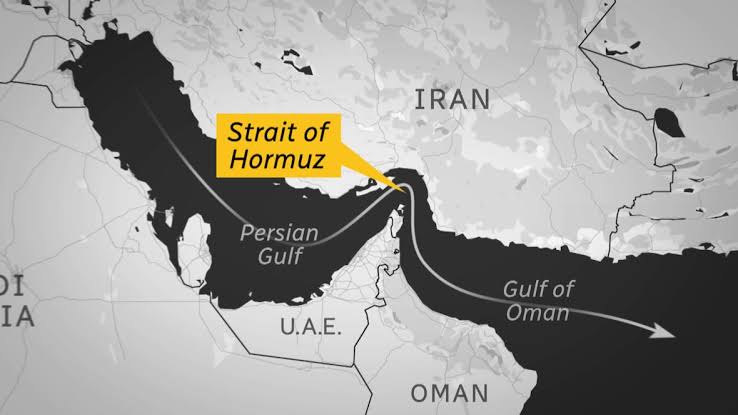
Iran Rejects Trump’s Demand, Insists Strait Of Hormuz Under Firm Control

By Sabiu Abdullahi

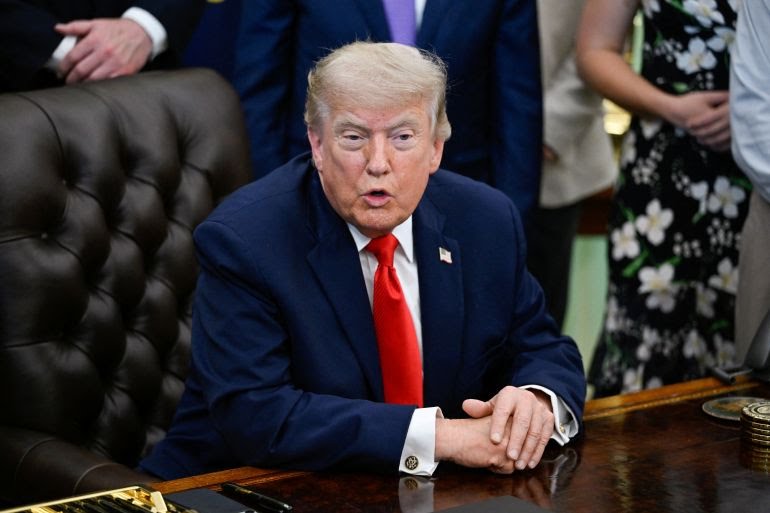
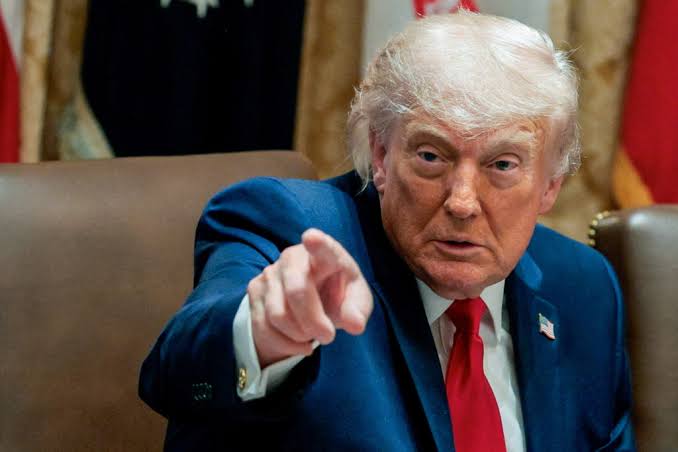
Tensions between Iran and the United States have deepened after Tehran dismissed recent remarks by President Donald Trump on the status of the Strait of Hormuz, a key global oil route.

Iran’s Islamic Revolutionary Guard Corps (IRGC) said the strategic waterway remains under its authority and will not be influenced by pressure from Washington. In a statement, the IRGC said the situation in the Strait of Hormuz is “firmly and dominantly” under its control and “will not be opened to the enemies of this nation by the ridiculous displays of the U.S. President”.

The reaction followed comments by Trump, who claimed that Iran had sought a ceasefire amid ongoing hostilities. He linked any possible consideration by the United States to the reopening of the strait.

“Iran’s New Regime President, much less Radicalized and far more intelligent than his predecessors, has just asked the United States of America for a CEASEFIRE! We will consider when Hormuz Strait is open, free, and clear. Until then, we are blasting Iran into oblivion or, as they say, back to the Stone Ages!!!” Trump said earlier.

The exchange has drawn attention to the Strait of Hormuz, which serves as a vital channel for global energy supplies. The IRGC’s position reflects Tehran’s refusal to уступ control or accept conditions tied to external demands.

Iran’s President Masoud Pezeshkian had earlier indicated that his country is willing to end the conflict under certain terms. “We possess the necessary will to end this conflict, provided that essential conditions are met, especially the guarantees required to prevent repetition of the aggression,” Pezeshkian said during a phone conversation with António Costa on Tuesday, according to a statement from his office.

The disagreement highlights sharp differences between both countries over how to reduce tensions and manage access to key maritime routes. Observers say developments around the strait could affect global oil supply and market stability.

In a related development, Trump criticised the North Atlantic Treaty Organisation (NATO) after member states declined to support U.S. efforts linked to the situation. He described the alliance as a “paper tiger” and said pulling the United States out of NATO is now “beyond reconsideration,” according to an interview with The Telegraph.

The remarks signal growing strain between Washington and its European allies, as the dispute over the Strait of Hormuz continues to shape international security and economic concerns.

Iran Threatens To Attack U.S. Tech Firms in Middle East, Urges Staff to Evacuate

By Sabiu Abdullahi

Iran’s Islamic Revolutionary Guard Corps (IRGC) has issued a serious warning, threatening to target major American technology companies operating in the Middle East and calling on employees and nearby residents to evacuate immediately.

The statement, carried by Iran’s Tasnim news agency, identified U.S. firms involved in technology and artificial intelligence as potential targets. “Since the main element in designing and tracking terrorist targets are American and ICT and AI companies … from now on, [these] main institutions will be our legitimate targets,” it said.

The IRGC specifically named more than 15 companies that could be affected, including Boeing, Tesla, Meta, Google, and Apple. The warning noted that attacks could begin from 8 p.m. local time on Wednesday if further Iranian leaders are killed in what the statement described as “targeted assassinations.”

This announcement represents a significant escalation in regional tensions, raising concerns over the safety of multinational corporations and their staff.

Earlier, IRGC Aerospace Commander Seyed Majid Moosavi had directed a warning at employees of industrial firms connected to the United States and Israel, urging them to leave their workplaces following a series of attacks on Iran’s production facilities.

In a post on X last Friday, Moosavi stated, “You tested us once before; the world saw again that you yourselves started playing with fire and attacking infrastructure.”

He further cautioned, “This time, the equation will no longer be an eye for an eye; wait and see! Employees of industrial companies associated with the Americans and the Zionist regime should quickly leave their workplaces to avoid endangering their lives.”

The warning comes amid reports of targeted attacks on Iranian industrial facilities in recent weeks. The IRGC has repeatedly emphasized that foreign involvement in Iran’s industrial sector could provoke serious consequences, signaling a stronger defensive posture.

Last Thursday, Israel announced the killing of the Commander of Iran’s IRGC Navy, Alireza Tangsiri, in a targeted military operation. Israeli Defence Minister Israel Katz confirmed the operation, saying Tangsiri was “directly responsible for the terrorist act of bombing and blocking the Strait of Hormuz.”

Katz added that the naval chief was “blown up” along with several other “senior Navy command officials.” Tangsiri, appointed as IRGC Navy commander in 2018, had previously served as deputy commander since 2010.

Other Iranian leaders have also been killed amid ongoing regional conflict, including the now deceased Supreme Leader, Ali Khamenei.

Iran Executes Two Alleged US-Israel-Linked Operatives Amid Rising Tensions

By Sabiu Abdullahi

Iran has executed two individuals accused of collaborating with a US–Israel-backed opposition group, according to reports from the country’s semi-official Tasnim news agency.

The agency stated that the two were charged with ties to the Mojahedin-e-Khalq (MEK), an Iranian opposition organization that authorities claim receives backing from the United States and Israel. The group has a long history of armed resistance against the Iranian government.

Iranian officials accused the executed individuals of “carrying out attacks against security forces,” although the report did not provide further details about the timing or nature of the alleged assaults.

The executions occur amid heightened tensions between Iran, the United States, and Israel, with Tehran frequently accusing both countries of supporting opposition movements aimed at destabilizing the government.

The MEK has remained controversial for decades. Iran designates the group as a terrorist organization, while the United States removed it from its terrorist list in 2012. There has been no immediate comment from US or Israeli officials regarding the executions.

Earlier in March, Iran’s intelligence ministry announced the identification and arrest of 30 individuals accused of spying for the United States and Israel. The ministry said the detainees included alleged spies, domestic operatives, and media-linked figures from several provinces.

“Over the past few days, 30 spies, domestic mercenaries and operational elements of the American-Zionist enemy were identified and arrested,” the ministry said.

Brigadier General Ahmadreza Radan, Iran’s Police Chief, told TRT that the suspects were detained on charges of “spying for the enemy and hostile media,” according to Tasnim news agency. Radan added that 250 of those arrested “provided intelligence to the London-based broadcaster Iran International, including information about targeted sites.”

He also stated that the detainees had links to armed groups and had sought to disrupt public order. Radan described them as “spies” who leaked information “to the enemy and hostile media outlets.”

The ongoing conflict between Iran and the US–Israel coalition continues to fuel global tensions, even as international organizations and nations call for diplomacy and a peaceful resolution.

Ukraine Accuses Russia Of Supplying Iran With Intelligence Ahead Of Attack On US Base

By Sabiu Abdullahi

Fresh reports have emerged that Russia provided intelligence support to Iran shortly before a major strike on a United States military base in Saudi Arabia, an attack that left several American personnel injured.

According to Ukrainian authorities, Russian satellite data was shared with Iran in the days leading up to the assault on Prince Sultan Air Base in Al Kharj. The strike, which involved missiles and drones, injured at least 12 US troops and caused significant damage to military assets.

Volodymyr Zelensky said Russian surveillance activity intensified prior to the attack. He revealed that Kremlin satellites captured images of the base three separate times, suggesting a deliberate pattern.

“We know that if they make images once, they are preparing. If they make images a second time, it’s like a simulation. The third time it means that in one or two days, they will attack,” he told NBC News.

The Ukrainian leader added that he was “100 per cent” certain that Russian intelligence played a role in helping Iranian forces target American troops in the region.

The strike destroyed a high-value E-3 Sentry radar aircraft, reportedly worth hundreds of millions of pounds, and also damaged refuelling planes stationed at the base. Military analysts describe the incident as one of the most serious breaches of US air defences since the conflict began last month.

Moscow has denied passing intelligence to Tehran. However, Russian officials acknowledged that they have supplied Iran with “certain types of military equipment.” European intelligence sources now believe Russia may be preparing to deliver additional military hardware, including attack drones.

The development comes amid rising tensions across the Middle East. Reports indicate that the United States is reviewing possible ground operations targeting strategic Iranian مواقع, including key oil infrastructure. At the same time, Iran has warned that its forces are ready to respond to any escalation.

The situation remains fluid, with diplomatic efforts ongoing in several countries aimed at reducing hostilities and preventing a wider regional conflict.

US Marines Arrive Middle East As Houthis Join US/Israel War With Iran

By Sabiu Abdullahi


United States naval personnel and marines aboard the amphibious assault ship USS Tripoli have reached the Middle East, according to an announcement by the Central Command on Saturday.

The vessel serves as the flagship of the Tripoli Amphibious Ready Group/31st Marine Expeditionary Unit. It carries about 3,500 troops along with transport and fighter aircraft.

The deployment is expected to strengthen the U.S. military presence in the region. Washington is reportedly weighing the possibility of launching a ground operation around Iran’s key oil export hub and the Hormuz Strait.

Reports indicate that the U.S. is considering steps to secure Iran’s nuclear materials. Other options under review include a possible seizure of Kharg Island, an invasion of Larak Island near Hormuz, and control of Abu Musa and nearby islands. Additional strikes on nuclear and energy facilities are also being considered.

At the same time, Yemen’s Houthi forces have declared their involvement in the conflict. The group said it carried out its first operation using ballistic missiles against Israeli military targets.

“Our operations will continue until the declared goals are achieved,” a spokesperson vowed on Saturday. “We will continue until the aggression stops on all fronts.”

Meanwhile, Iran continued retaliatory actions against Gulf countries over the weekend. Two drones struck Oman’s Port of Salalah. The incident left one worker injured and damaged a crane.

Authorities in Kuwait reported that multiple drones hit the country’s international airport, affecting its radar systems. Emirates Global Aluminium also confirmed that Iranian strikes impacted its Al Taweelah facility in Abu Dhabi.

Iranian President Masoud Pezeshkian criticized the situation. He said it was unfortunate that “the territories of some Muslim countries” are being used to attack Iran. He accused Israel of attempting to widen the conflict across the region.

The president also stated that Iran has been “attacked twice during negotiations,” adding that the “bombing infrastructure and assassinating Iranian figures show that the aggressors cannot be trusted.”

His remarks came after Israel launched fresh strikes on two nuclear-related facilities in Iran. The targets included a heavy-water production plant in Khondab and a yellowcake production site in Ardakan.

Russia also reacted to the developments on Saturday. Moscow accused Iran’s opponents of escalating the conflict “despite related risks, including a threat of large-scale radioactive contamination.”

The country called on the International Atomic Energy Agency (IAEA) to address what it described as a “grave threat.” It added that the attacks breached international law and should attract strong condemnation from the global community.

Iran Launches Missiles At UAE As Middle-East Tensions Deepen

By Sabiu Abdullahi


Tension has intensified in the Middle East after Iran launched a series of missiles and drones targeting the United Arab Emirates, in what signals a major escalation in the ongoing regional crisis.

Authorities in the UAE confirmed that air defence systems were deployed to intercept the incoming threats. Explosions and fires were reported in several locations across the country.

Officials disclosed that fragments from intercepted ballistic missiles landed in an industrial zone in Abu Dhabi. The incident triggered fires and left several people injured.

Security sources said the operation involved both missiles and drones. Analysts believe this reflects a more coordinated and sophisticated strategy by Tehran.

The latest strikes are linked to a broader confrontation involving Iran, the United States, and Israel. In recent weeks, Iran has stepped up retaliatory attacks after joint U.S. and Israeli operations targeted its military and nuclear facilities.

Iran has made its position known. Its foreign minister warned that Israel and the United States would pay a “heavy price” for continued strikes, signaling that attacks across the Gulf could persist or intensify.

The UAE is not the only country affected. Similar missile and drone incidents have been recorded in Saudi Arabia, Bahrain, and Kuwait. This has raised concerns about a wider regional conflict.

In response, Gulf states issued a joint statement condemning Iran and allied groups. They warned that such actions threaten regional stability and could lead to a broader war.

Officials also raised alarm over the growing use of proxy groups and cross-border strikes. They noted that both civilian and strategic locations are increasingly at risk.

Despite the scale of the attack, UAE authorities said most of the incoming threats were intercepted. This helped reduce the level of damage and casualties.

However, the crisis is already affecting the global economy. Shipping routes have been disrupted, while oil prices have surged. There are growing fears that the conflict could drag on in one of the world’s most critical energy regions.

The situation remains tense, with each new development increasing the risk of further escalation beyond current battle lines.

Iran Players Honour Schoolgirls Killed By US/Israel Airstrike Before Friendly With Nigeria

By Sabiu Abdullahi

Members of Iran’s national football team staged a solemn tribute to schoolgirls who lost their lives in an airstrike amid the country’s ongoing conflict with the United States and Israel.

The gesture took place on Friday before an international friendly match against Nigeria at the Mardan Titanic Sports Complex in Antalya. Iranian players entered the pitch carrying school bags to symbolise the children killed in the attack.

The tribute followed a deadly incident on February 28, when a US/Israel missile struck Shajareh Tayyebeh Primary School in Minab, located in Hormozgan province. Authorities in Tehran reported that more than 175 people, including pupils and teachers, died in the bombing.

The attack marked the start of a broader conflict that has since claimed over 2,000 lives. The situation also forced Iran to pull out of the upcoming FIFA World Cup, which is scheduled to be hosted by the United States, Mexico and Canada.

In the match itself, Nigeria’s Super Eagles secured a 2-1 victory over Iran. Moses Simon and Akor Adams scored the goals for Nigeria.

Nigeria is expected to face Jordan in its next game on Tuesday. Iran will take on Costa Rica in its final fixture of the international window.

Iran-Linked Hackers Breach FBI Director’s Email, Leak Personal Data

An Iran-linked hacking group has claimed responsibility for breaking into the personal email account of Kash Patel, the director of the Federal Bureau of Investigation, sparking fresh concerns about cybersecurity risks involving top United States officials.

The group, identified as Handala Hack Team, announced the breach online and released what it described as emails, documents and personal photographs obtained from Patel’s private account.

Authorities in the United States have confirmed the incident. Early assessments indicate that some of the materials circulating online are genuine.

A Justice Department official, who spoke on condition of anonymity, said, “We are aware of the incident involving the FBI director’s personal email account. Appropriate steps have been taken to secure affected systems and assess the scope of the breach.”

Security analysts monitoring the group say Handala Hack Team operates as a proxy linked to Iranian cyber interests. Such networks often function independently on the surface, but their activities tend to align with state objectives.

The hackers claimed that the breach uncovered emails spanning nearly a decade, from around 2010 to 2019. They also released images that appear to show Patel in informal personal situations.

There is no evidence at this stage that classified government systems were accessed. Experts, however, warn that personal accounts can still offer useful intelligence to attackers.

The group suggested the operation was carried out in retaliation for recent actions taken by the United States against infrastructure associated with Iranian cyber operations.

The development comes at a time of rising cyber tensions between Iran and the United States. Both countries have repeatedly accused each other of carrying out cyber attacks in recent years.

Despite the breach, officials insist there is no indication that FBI networks or classified systems have been compromised. Investigations into the incident are ongoing, while internal reviews continue within the bureau.

Cybersecurity experts say the episode highlights the growing threat posed by digital attacks, even on high-ranking officials, and the need for stronger protection of personal and official data.

UN Security Council to Hold Talks Over Iran War Friday

By Anwar Usman

The United Nation Security Council will hold closed-door consultations on Friday to discuss strikes on Iran at Moscow’s request, Russian state media reported, as the Middle East war nears its second month.

Iran has come under near-daily bombardment since US-Israeli strikes on February 28 triggered the war, which has since widened to large parts of the region.

According to state news agency TASS, spokesman for Russia’s envoy to the United Nations, Evgeny Uspensky, said “The Russian Federation has requested closed-door consultations with the UN Security Council due to the ongoing strikes on civilian infrastructure in Iran, including educational and healthcare facilities.”

A strike on the first day of the war hit a school in the southern Iranian city of Minab, killing more than 160 children, according to authorities.

Reports from the US military investigation by The New York Times indicated that a US Tomahawk cruise missile had hit the school due to a targeting mistake.

The United States, which holds the Security Council presidency this month, scheduled the meeting for 10:00 am in New York (1400 GMT), according to TASS.

The US-Israeli military campaign has targeted Iranian leadership, missile sites and military infrastructure, prompting a large-scale Iranian retaliation across the Gulf and the effective closure of the crucial Strait of Hormuz, through which a fifth of global crude and liquefied natural gas passes during peacetime.

AFP reports that, the UN Human Rights Council will hold a separate meeting on Friday in Geneva focused on the deadly school strike.