




Votes Count! Take note, Nigerian youths
Tordue Simon Targema
One of the most disturbing illusions in the Nigerian political space is the age-long notion that “votes don’t count”. This notion is mainly responsible for wide-scale political apathy among the citizens, especially the youths who constitute the majority of the voting population. A striking irony with the notion, however, is that those who peddle and promote it are active voters who always make sure they vote at each poll- from the ward to national elections! This irony, therefore, exposes the folly of those who accept the notion and, thus, disenfranchise themselves.
Of course, it is no longer news that the Nigerian electoral process is enmeshed in malpractices – from vote-buying to actual duplication of ballot figures. Yes, the enormity of malpractices in the Nigerian electoral system is weighty and serves to sustain this ugly notion that has become a great source of worry today.
Notwithstanding these malpractices, a fact that cannot be contested remains that votes are still essential and determine who wins the election. Yes, this is a reality, and even a casual observation of the Nigerian electoral process justifies it. For example, have you ever wondered why electoral evils such as vote-buying, underage voting, ballot snatching and massive thumbprinting of ballot papers by thugs all thrive during elections? The answer is simple: it is because politicians understand that the final vote-tally matters most and would stop at nothing to ensure that more individuals vote for them!
As a Presiding Officer in one of Nigeria’s most keenly contested national elections- the 2015 general elections, and as a voter at several elections, both local and national, I have sufficient grounds to attest to the fact that votes do not just count, but that politicians also realise this fact and stop at nothing to get their supporters to vote for them. The desperation they usually demonstrate during election seasons to woo voters justifies this. You can, therefore, refuse to vote at your sole expense!
I served as a Presiding Officer in one of the most strategic elections in Nigeria’s Fourth Republic. A popular candidate with a wide fan margin- Muhammadu Buhari, contested against the then-incumbent President Goodluck Jonathan. Buhari and his kingmakers had convinced the masses that they had all the solutions to Nigeria’s numerous problems- which were, at that time, overwhelming like always. This narrative was supported by the fact that realities proved Jonathan to be a clueless weakling who lacked the strategy and tact to successfully navigate the country out of its numerous woes- endemic insecurity, pervasive corruption and deteriorating living standards.
Despite his limitations, Jonathan had a pool of supporters who still believed in his leadership philosophy, sympathised with him based on his developmental strides, tribe, region and religion, and also had the potent privilege of incumbency! Never underestimate the power of incumbency in Nigerian elections. This made the election one of the most highly contested, as the margin between the two top contenders eventually indicated.
But most striking is the fact that technology was introduced for the first time in the conduct of elections – the almighty card reader! This made almost all the difference and took the political class aback during the polls. The political class, sensing that it would no longer be business as usual, embarked on massive mobilisation and canvassing for votes. Money flew in the air- as it has become the custom with elections in the country, gifts and inducements of all kinds – clothes, foodstuffs, livestock etc., exchanged between the political class and the masses to woo them to vote.
I had an experience as a Presiding Officer that made me believe that politicians believe in voting as the surest way to win elections! Stakeholders in my polling unit tried their best to get me to manipulate the outcome of the presidential election but to no avail. I would tactically tell them that I had a template, and any manipulation of the outcome would go against my template. Although I had no problem with that, the results would be rejected at the collation centre! This would quickly disarm them, and I had my way through without any rancour. That way, I finished the presidential election without a hitch from any angle.
By the second election- gubernatorial and state assembly, I had to contend with yet another challenge! The elite had studied the workings of the card reader and decided on how to manipulate the election, but that could only still be possible if they got people to vote- even if they were illegal voters. A particular stakeholder insisted he would convey me on his bike from the collation centre to the polling unit- some several kilometres away from the ward collation centre, which was equally an interior rural area, far removed from the local government headquarters. I obliged.
On our way, he intimated to me of his ambition: he had hundreds of unclaimed voters cards belonging to his polling unit, which he wanted to use. He observed during the presidential election that voters whose cards were successfully authenticated by the card reader and those that the machine could not authenticate their cards due to one reason or the other were eligible to vote.
The card reader operates at two levels: accreditation, which confirms whether a given card belongs to a polling unit or not, and authentication, which verifies that a voter’s biometric records match those of the card they are carrying. Authentication is usually successful once the card confirms a voter’s thumbprint. Where it fails to confirm, authentication is deemed unsuccessful, but the voter can still vote – provided that the card is successfully accredited. The Presiding Officer then fills an incident report form for such a voter. At the end of the voting process, the total number of successfully authenticated cards and the unsuccessful ones is expected to tally with- or at least, be more than the total votes cast, not the other way round.
The stakeholder pleaded with me to allow him to use the cards he was carrying since both those whose biometric records are successfully authenticated and those whose records fail are eligible voters. When I consulted with my team at the polling unit, I discovered that they had already mobilised and were ready to disrupt the election should we reject the bid. As a confirmation, we had early reports from the neighbouring polling unit that the electoral officers were booted out of the village! The Supervisory Officer had to call all of us and seek our tactical cooperation in the interest of peace.
Stakeholders at our unit then embarked on aggressive canvassing for voters- because I categorically told them that I would not allow one person to vote twice, whatever happened! So they had to pay willing young men with no cards to the turn of N500 per voting to use the unclaimed cards and vote for their political parties. Funny enough, all political parties cooperated and brought their supporters to use the unclaimed cards and vote. We had a peaceful voting process afterwards.
During the 2019 general elections, I had an amusing but similar experience, this time around as a voter and not an electoral staff. The stakeholders of my polling unit had hundreds of unclaimed voters cards belonging to the unit. They undertook to pay each available voter N500 to vote for their parties. My friend was into the game and had to vote as many as four times! In the fourth round, the Presiding Officer warned him to respect himself and not return.
Now tell me: if votes don’t count as purported – or say they don’t matter, why would politicians go that far to get people to vote for their parties? Have you ever observed how desperate political stakeholders are during voter registration? For example, in the first and only voter registration exercise I participated in as ad-hoc staff, I was posted to the village of a one-time Member, the House of Representatives, a very interior village that is hardly accessible.
The ex-Member solely undertook to take care of our welfare; provided our accommodation, a generator for our comfort at night, ensured that we had the best meals and all of that. Why would a man do that if he had known that votes are needless and all he needs to do is manipulate election results during elections?
By my analysis, winning an election in Nigeria today is the responsibility of two sets of individuals within a political party: the individual voters and the elite class. As a voter, your duty to your party and the preferred candidate is to vote – and get as many of your friends as possible to vote for him as well. Once you do that, you have fulfilled your responsibility as a party loyalist and patriotic citizen. Leave the rest to the elite; it does not concern you. Even if your party did not win in the end, the conviction that you played your part- as a patriotic citizen would- is enough consolation.
The greatest disservice many young men do to their favourite political parties and the country at large is to make all the noise on social media while they do not know what a voters card looks like, have never voted and have no intention to vote, after all, wallowing in the illusion that “votes don’t count in Nigeria after all”. This crop of individuals is the major problem we have in Nigeria.
A clarion call to all Nigerian youths as the 2023 election approaches is to disabuse your mindset of this counterproductive notion, register, get your voters card and vote. Votes actually count! Don’t be deceived.
Tordue Simon Targema is a doctoral student at the Department of Communication Arts, University of Uyo, and teaches in the department of Mass Communication, Taraba State University Jalingo. Email: torduesimon@gmail.com.
2023: Why Lalong won’t make a good Vice-President
By Usama Abdullahi
I’m not actually driven by religious extremism, nor do I consider politicians based on their religious leanings. One’s religion or region shouldn’t determine their politics. When we look at politics through the prism of faith, we do ourselves no justice. I understand that the APC’s presidential nominee, Bola Ahmed Tinubu, is conflicted with the idea of picking a running mate.
Because Nigeria is a multi-religious nation, people suggest that the slot of the Vice-President for the APC presidential candidate be given to a northern Christian. According to them, a Muslim-Muslim ticket is abominable in Nigerian politics. And some people are endorsing Plateau State’s Governor Simon Lalong for the VP slot.
People are unaware of something. It’s easy for people to say who should the APC pick as running mate to Tinubu. But do we deem our favourite candidates suitable for such a seat because of the blind love we have for them? Or should we only nominate a person because of his ethno-religious affiliation? These are critical questions which need not be left unanswered. However, we all know these aren’t the criteria for selecting a genuine leader.
Leaders are best chosen by how competent they are. Competence goes beyond our myopic views. Another big blunder we should avoid is choosing a leader because of his background. Now back to the equation. Is Lalong suitable for the vice-presidential seat? Well, I don’t think so.
One thing people ought to acknowledge before they consider Lalong fit is his performance so far in the state he runs. What has he done remarkably to attract public attention? His performances are all that must be examined before we leap to a conclusion. Honestly, Simon Lalong hasn’t done that much that will earn him such a high position.
I’m not trying to de-market him, but for fairness’ sake, Lalong isn’t the right man for the job. A person whose tribal bigots administer the Local Government Council (LGC) doesn’t merit the title of a Governor, let alone aim for a much higher position. If you aren’t from his tribe, you lose the chance of winning an election for credible offices in his LGC.
I come from the same LGC as him, yet I can’t risk getting a mere indigene form. This is so because I’m not from his tribe. So to even have myself appointed by the local authorities, I must renounce my pedigree.
He knows all this. As an incumbent governor entrusted with the care of people of diverse beliefs and ethnicities, he should have done something different. But, worst still, he chooses to go mum over such unfair treatment. He never talks about it. His silence isn’t golden. It either suggests his approval or his lackadaisical attitude towards that.
However, before his ascent to power, he had sworn to install a village head in Yelwa during his campaign. Yelwa is a very popular village that contributed massively to his votes which saw his ascension from a dethroned speaker to a governor. The town is thrice the size of his hamlet and is within a shouting distance from his. Unfortunately, his first tenure ended without him making everything alright in that village. So my people decided to trust him again by voting for him for the second term, thinking he would redeem their precarious state. And now, we are just a few months away from the expiration of his tenure. Yet, he remains uncommunicative and insufficiently active.
Lalong has failed the people who helped his rise to power. So, how would you wish a ruling governor who silently fuels tribal prejudices among his people to be singled out as a running mate for the party with high chances of winning?
I won’t be worried about any other person that will be cherry-picked as a running mate to Tinubu as long as he is capable and has good track records. It isn’t that I seem purely envious of Lalong. On the contrary, I fear having a VP who has been speechless for the past seven years over the growing ethno-religious bigotry in the state he governs.
Usama Abdullahi can be reached via usamagayyi@gmail.com.

Are you still the person your spouse fell in love with?
By Aisha Musa Auyo
The famous marriage counsellor, Maryam Lemu, advised couples to ask themselves often if they are still the person their spouse fell in love with. The answer would help one reflect and recognise which area to concentrate on in order to improve their marital relationship.
But, how can one achieve this if they are oblivious of the qualities that attracted their partner in the first place? Why did your partner choose to spend an entire lifetime with you despite millions of others worldwide? What are the qualities that attracted them and made them want to be with you for the rest of their lives?
You should, at least, know more than half of those qualities that attracted your person significantly, if not wholly. These qualities may range from your looks to character, smile, skill, gestures, intelligence, or even the way you laugh. I know of a man who married his wife because of her loud laughter. He said the sound of her laughter makes his worries vanish. Unfortunately, and sadly, she stopped laughing after a life-changing event that occurred in their life. They lost their two kids to gunmen, and from that day, she lost herself. (Story for another day).
Men are creatures of few words. Women should pay attention to whatever they say or indicate the slightest interest in. If you are lucky your partner is outspoken, work is easier for you.
I know life happens, and changes are inevitable, but we should always strive to bounce back or be better versions of ourselves. Laziness destroys marriage, and not improving ourselves and relationships is one of the commonest laziness in our lives. We find silly excuses, blame nature, work, kids, our significant others, and anything we can lay reasons on. But trust me, with willpower and dedication, we can improve our relationship daily with small, consistent steps.
This write-up is a wake-up call for you and myself as I have been slumbering too – I stopped writing almost entirely. I abandoned my PhD thesis completely, my relationship write-ups forgotten. In fact, I neglected even the short motivational and inspiring pieces I used to write.
And one of the qualities that attracted my husband (then boyfriend) to me was writing. He’s amazed by my ideas and intellect, my zeal and inspiration to write. He loves my wordings and spends time reading my childish drafts. So he supported and cheered me.
He even bought me a modem for browsing, research and online publishing… (At that time, when one could only access the internet in the cafe… When we used to pay 50 naira for 30min and 100naira for an hour of internet surfing time, so modem was a big deal). I embraced penning down ideas to the fullest and made sure I published at least one well-researched article daily.
Then life happened, and I changed. I was not too fond of typing anymore. I only want to read and move on. Sometimes my husband would say, “As a matter of fact, you are becoming lazy; you no longer write,” and I’d reply with excuses like school, taking care of the kids, and running a catering business ain’t a joke. They are all fables. I still get free hours to surf the internet.
Whenever I share with him a beautiful write-up by others, he would be like, “Great write-up! I just wish it were your words”. Still, I wasn’t bothered. It didn’t hit me hard till the day he invited me to listen to a radio programme where they invited writers and poets for discussion. He was so attentive and enthusiastic. Of course, the woman in me got pissed off, as the guest was a lady that day. I pretended to share his enthusiasm, but I was boiling inside. That night, I thought about myself and the lazy girl I had become.
The reflection reminded me of the many messages I received asking why I stopped writing. My blog followers become concerned, some disappointed. Finally, I made up my mind to try to be better. I know deep inside me I can do better. I need to rekindle that flame.
Tonight, ask yourself, what qualities attracted my spouse to you? Is that quality still present in you? Have you improved in that area? What should you do to rekindle that attraction?
Remember, a happy couple produces happy and healthy kids, creating a healthy family, state, nation, and the world. So this single and simple effort can go a long way in improving the world.
Aisha Musa Auyo is a Doctorate researcher in Educational Psychology. A mother of three, a Home Maker, caterer and parenting/relationship coach.
Matawalle raises concern over escalating banditry, warns against opportunism
By Uzair Adam Imam
Governor Bello Mohammed of Zamfara state has raised concerns over the rising banditry activities and criminal informants in the state.
The governor said his government has noted the rise of informants’ activities leading to many unfortunate banditry attacks on soft targets.
This was disclosed in a statement signed Wednesday, June 15th, 2022, by Zailani Bappa, Special Adviser Public Enlightenment, Media and Communications.
The governor said they should take more stringent steps in addressing the current situation, including possible communication shutdown once again.
He, however, also commiserated with the families and loved ones of the recent unfortunate abduction of promising young entrepreneurs of Bebeji Plaza.
He reiterated that his administration is not oblivious to the situation at hand and has since taken more security steps in arresting its escalation.
The statement reads, “this singular incident marks another sad moment in the fight against the security challenges we are facing in our dear state. I appeal to the families of all abducted persons to have confidence in our ability to do all that is needed to be done in rescuing their dear ones.
“I have directed all security agencies for the speedy location of the abducted persons and will, in sha Allah, be rescued”, Governor Matawalle announced.
“Of very important concern is our determination to ensure that rural areas are free to go about their activities this farming season”, Governor Matawalle added.
The Governor also warned that his administration will not tolerate any act of indiscipline from unscrupulous persons who want to manipulate the present situation to score cheap political goals.
The Government, he said, will no longer fold its arms and allow heartless people to go on manipulating the misfortune of innocent citizens for their selfish political ends.
“We are a responsible Government and we shall not relent in ensuring the safety of all our citizens at all times. However, we shall not condone calculated political sabotage or vagaries and indiscriminate abuse of privileges to jeopardize our fragile security situation in the state” Governor Matawalle warned.
Governor Matawalle further advised all stakeholders to be alert and counter the activities of informants in their midst by assisting security operatives with intelligence in order to effectively address the security challenges threatening our communities at the moment.
Kano assembly approves fresh N10 billion loan for Ganduje
By Muhammad Aminu
The Kano State House of Assembly has approved a loan request of ten billion naira (N10,000,000,000.00) by Governor Abdullahi Ganduje. The request was contained in a letter forwarded to the Assembly by Governor Ganduje and read by the Speaker, Hamisu Chidari.
According to the letter, the loan will be used for security infrastructure development in Kano. The Daily Reality gathered that part of the security infrastructure to be developed includes an installation of CCTV cameras in Kano to improve the security architecture.
In the letter, Gov. Ganduje said the development became necessary considering the recent security challenges facing the State.
In another development, the Kano State House of Assembly has appointed Magaji Zarewa as its deputy majority leader, following the resignation of Alhaji Abdullahi Iliyasu Yaryasa.
Yaryasa resigned his appointment after dumping the All Progressives Congress (APC) for the New Nigeria People’s Party (NNPP).
The speaker, Hamisu Chidari, who read Yaryasa’s resignation letter at a plenary, wished him well in his new party and thanked him for his numerous contributions to the house.
Zarewa, who represents the Rogo constituency, appreciated the house for finding him worthy of the new appointment.

Rising food prices in northern Nigeria
By Sumayyah Auwal Ishaq
Nigeria seems to be plunging into a new dimension of economic crisis as food inflation reached a new high in most of the northern region, hitherto considered the country’s food basket.
The prices of essential food items are rising astronomically, preventing many Nigerians from feeding adequately. The rising cost affects domestic and imported foods like rice, beans, tomatoes, pepper, onion, flour, egg, oils, bread, plantain, fruits, frozen foods, and yam. These staple foods that Nigerians consume daily. This coincides with a season of national economic downturn, high inflation, and depreciation of the national currency.
A random survey conducted across major markets in Kaduna and other parts of the country by The Daily Reality this week has shown that a 50 kilogram (kg) of foreign rice sold for N27, 000 earlier in the year, sells for N34000 today. The same size of local rice sold for N19, 000 between January and April now sells between N25,000 and 28,000, depending on the brand.
The cost of beans, regarded as a meal for the lower class, is anything but disheartening. Presently, a bag of 50kg beans that previously sold for N27,000 rose to N37,000 and now sells for N47,000.
In the Bakin Dogo market, the prices of tomatoes, sweet potato, Irish potato, and onions have all doubled, making it difficult for many Nigerians. In February this year, one litre (or bottle) of palm oil was N400, while five litters was N2,000. But now, 1 litre of palm oil went up to N900; 5ltrs was N2,000. And as of September, 1ltr and five litres of palm oil had gone up to N700 and N3,500. A bottle of palm oil sold for between N250 and N300 is N800. A bag of onions is N24, 000, as against N12, 500 it sold in March this year.
Items whose prices have shot up are endless. Beyond food items, groceries, transport fare, school fees, house rent, cooking gas, and everything that concerns a man’s livelihood has seen their prices skyrocket, much to the chagrin of Nigerians, particularly low- and fixed-income earners.
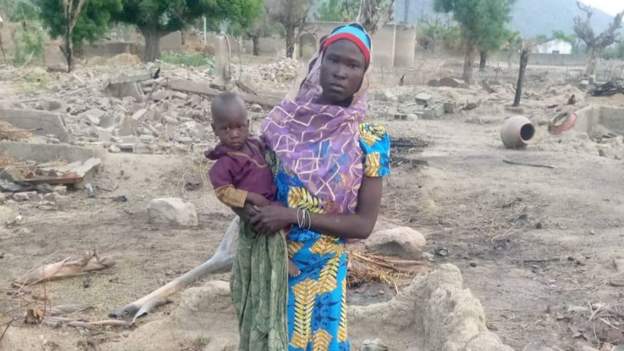
Nigerian military find another Chibok girl
By Muhammadu Sabiu
Nigerian soldiers operating in the northeastern part of Nigeria have rescued a lady believed to be one of the secondary school students abducted by Boko Haram in 2014 in Chibok, Borno State.
In a short statement posted on its Facebook page, the Army said, “Troops of 26 Task Force Brigade on patrol around Ngoshe in Borno State on 14 June 2022 intercepted one Mrs Mary Ngoshe and her son.
“She is believed to be one of the abducted girls from GGSS Chibok in 2014,” the statement added.
It also reiterated that “further exploitation [was]ongoing” as of the time of filing this report.
Though they are currently not in their heyday, the Boko Haram insurgents have wreaked havoc on the Northeast, inflicting hardship on residents, abducting travellers, and killing innocent individuals.
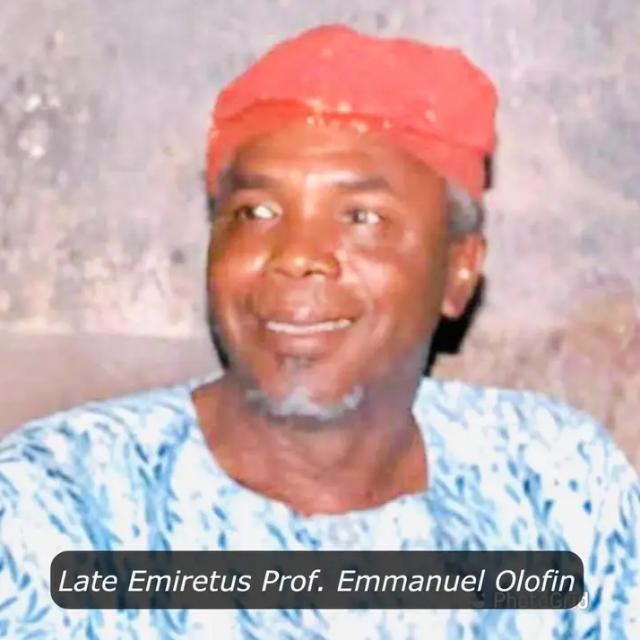
The fall of a giant: A tribute to Professor Olofin
By Murtala Uba Mohammed, PhD
“The source of concern is not in losing an erudite but getting his replacement”, Hausa adage.
It was around 1:54 pm on Tuesday 14th June 2022 that I learned about the death of the Emeritus Professor Emanuel Ajayi Olofin, popularly known as EAO among the staff of the Department of Geography, Bayero University, Kano (BUK). The sad news was first broken to us on the departmental WhatApps platform by his colleague and our respected teacher, Professor J. Afolabi Falola. Although already octogenarian, the death came to many with a shock because we were unaware our professor was sick.
Born in 1941, Olofin started his Bachelor of Geography at the University of Nigeria Nsukka, but due to the outbreak of the Nigerian Civil War in 1967, he and his coursemates were transferred to the University of Ife, where he graduated. He was also the first Nigerian to attend the Malaysian Premier University of Malaya for his master’s degree. He joined the services of Bayero University, Kano (BUK), immediately after his return to Nigeria. He later went to Ahmadu Bello University (ABU) Zaria for his PhD, specialising in Fluvial Geomorphology.
Professor Emanuel Ajayi Olofin was not only a teacher of teachers of Geography, his name was synonymous with Geography at BUK. Until his retirement from the services of Bayero University in 2015 and his subsequent demise, Olofin remained the first name to know and remember in the Department of Geography. Until he left BUK, Olofin had been one of the most respected names in the defunct Faculty of Social and Management Science (SMS) and the University at large.
While many a time, a scholar is respected for the depth of their knowledge or soundness of their character, Olofin was respected for his exquisite mastery of Geography, and those who came across him would testify to that. Here was a man who crossed the proverbial seven oceans, came to settle in a foreign land, and not only made a name but secured a good position, having been nicknamed “mutumin kirki” by the university community, which is located in a predominantly Muslim society. The Ekiti-born Professor of Geography remained the longest-serving staff in BUK, and he served the University for forty-one years (1974 to 2015).
I first heard the name Olofin in 2001 when I was still an IJMB student at the Kano State College of Arts, Science and Remedial Studies (CAS, Kano). The name was mentioned several times by one of his students and my teacher, Malam Adamu Mustapha (now a Professor of Hydrology), during Landforms classes. When I was admitted to study B.Sc. Geography at BUK in the year 2003, my hope then was only to meet this man we were told that he was a reservoir and encyclopedia of geographical knowledge. Interestingly, he was the only person described in the Departmental Handbook as a Professor of Geography (others were either Professors of Rural, Water Resource or Soil Geography).
Throughout my level 200, I always yearned to meet him, thinking that he would teach us Kano Region (GEO2201), for which he authored a book titled Some Aspect of Physical Geography of Kano Region together with Human Response, which remains, until now, the most authoritative guide for teaching the course. But, unfortunately, that very year, the course was assigned to, and taught by, another veteran geographer and his only contemporary then, the late Mr Oyeniyi.
The first course that connected me with Olofin was Introductory Geographical Hydrology (GEO3214). Honestly speaking, I never came across any person teaching hydrology in a simple and innovative way as Olofin. In addition, I also attended his lectures of 400-level courses, namely, Environment and Development (GEO4302) and System Approach to Geomorphology (GEO4325). For all his courses, Olofin did not only lecture us, as the tradition was in those days but also recommended good teaching materials in addition to the books he had authored, which he gave as guides to students to xerox.
The beauty of Olofin’s class was in its good illustration, lucid language, deployment of humour and riddles, and imparting good morals. In addition, Olofin had carved a name for himself as an embodiment of good character, whose courses one hardly fails unless they were not either attending lectures or failed to sit for exams. It is well known that Olofin informed his students as to when he would take attendance.
I recalled that in one of his classes, Professor Olofin complained, with a gloomy face, that some students would fail a course no matter how much he or any other teacher tried. When we asked for his reason, he narrated what transpired between him and one of our coursemates.
The story was that the student missed his test, which was announced weeks before it was conducted. The student did not complain to the Professor, rather, it was Olofin that came to the class and looked for the student; he asked the student to see him after the class. When the student went to his office, he queried if the student was ready to take the test, and he responded that he was not ready. Instead, an assignment was given to the student to write before the closing hours. The student submitted the assignment to the Professor in time, but when he checked the assignment, he suspected that the writing looked so good to be ascribed to that student. Therefore, he passed a paper asking the student to write his name and registration number. Unfortunately, his handwriting was conspicuously different from the one on the assignment. Olofin asked the student, “who wrote the assignment for you?” After insisting, the student informed him that his friend, a lady, wrote it for him! He counselled the student to be committed to his studies and always be honest and upright!
Professor Olofin had retired from active service and only taught as a contract staff when I joined the services of the Department in 2012. I could not recall a time when he missed his lecture, refused to attend staff meetings, or submitted his marked sheets/scripts late. In fact, Olofin always submitted his marked sheet earlier than any staff of the Department despite his age and the fact that all the staff of the Department, except late A.D. Maiwada and Prof. J.A. Falola, were his students at either their undergraduate or postgraduate levels.
Olofin can be described as jovial and accommodating in terms of interpersonal relationships. I recall his famous joke and parable on Nigeria that when the Almighty was creating nations of the earth, he gave each country a resource or two. But when it came to Nigeria, he put so many resources under its land. People, out of inquisitiveness, asked why did He do so? The Almighty replied: “Wait and see the kind of humans I will populate it with”. This parable describes the real situation of the so-called “African Giant” that is paradoxically rich and poor. Nigeria has all it takes to blossom as an Iroko but remains a low dwarf shrub due to its corrupt leadership and docile followership.
Olofin was not only an epitome of good character and knowledge, he was faithfully dedicated to his job. I can testify to this though not to the extent that his old students can do.
From the little I learned when we were neighbours (his office was next to mine), he used his office hours mainly for writing, teaching and research. He rarely engaged in frivolous discussions outside classrooms or meetings. Instead, he was constantly working with his computer, reading different genres, and reviewing students’ dissertations/theses. For this, he was not only a geographer but a consummate poet and essayist. His anthology of poetry titled Lifeless Line is eloquent testimony.
By a way of conclusion, I wish to say that the death of Olofin is one of the greatest losses to Geography as a discipline and Nigerian academia. It is not only because he was the first Professor of Geography in BUK and the first in the Faculty of Social and Management Science; it is not because he was the longest-serving member of the faculty; it is not also because he was among the first five to be awarded Emeritus Professors in BUK; but because he was an amalgam of a sound knowledge of his discipline, dedication to duty and moral uprightness.
In the realm of geographers, Olofin’s name can only be written with those of other giants such as Akin Mabogunje Nurudden Aloa and RK Udo. For these reasons, I write to extend my condolences to his family, colleagues, students, Bayero University, the Association of Nigerian Geographers and academia at large. May the Almighty Allah give his family the fortitude to bear the loss, amen!
Murtala teaches Geography at the Department of Geography, Bayero University Kano and can be reached via murtalamuhammadu@gmail.com.

Nigerian Army fixes June 28 to July 11 for recruitment screening
By MMuhammad Sabiu
The Nigerian Army has released the dates for the 83 Regular Intake 2022 screening process for non-tradesmen and women applicants.
“The state recruitment screening exercise is scheduled to commence from 28 June – 11 July 2022 in all the 36 states and Federal Capital Territory Abuja,” the Army says in a tweeted public statement on Tuesday.
“A high standard of discipline is expected from all candidates. Candidates who violate any instruction during the Recruitment Screening Exercise would be disqualified,” the tweet added.
Applicants have also been advised to visit the recruitment portal at https://recruitment.army.mil.ng for the online application form.

Mama Boko Haram to spend 5 years in jail over fraud
By Ahmad Deedat Zakari
Aisha Wakil, popularly known as Mama Boko Haram, has been convicted for fraud alongside two others.
The Economic Financial Crimes Commission, EFCC, disclosed this on their verified Facebook page on Tuesday, June 14, 2022.
According to the EFCC, Wakil and her co-defendants, Tahiru Saidu Daura and Prince Lawal Shoyode, were standing trial on a two count charge of conspiracy and obtaining by false pretense to the tune of 71, 400, 000 (Seventy-One Million, Four Hundred Thousand Naira)
The judgement, which was delivered by Justice Aisha Kumaliya of the Borno State High Court, marks the end of the trial commenced in September, 2020.
“The Maiduguri Zonal Command of the EFCC on Tuesday, June 14, 2022 secured the conviction and sentencing of Aisha Alkali Wakil, (aka Mama Boko Haram) alongside Tahiru Saidu Daura and Prince Lawal Shoyode before Justice Aisha Kumaliya of the Borno State High Court, Maiduguri. The defendants were sentenced to five years imprisonment without option of fine,” the EFCC statement reads in part.