Bandits

Ex-Army Chief Burutai Questions Security Agencies’ Ability to Locate Bandits’ Hideouts


By Abdullahi Mukhtar Algasgaini

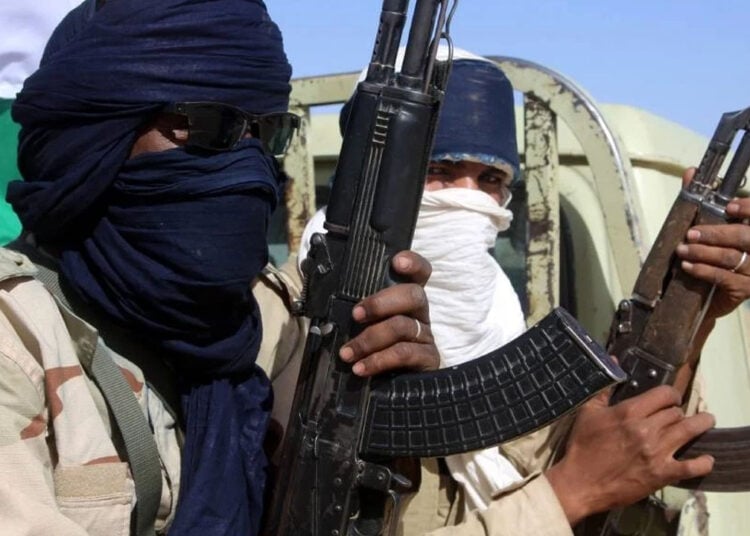
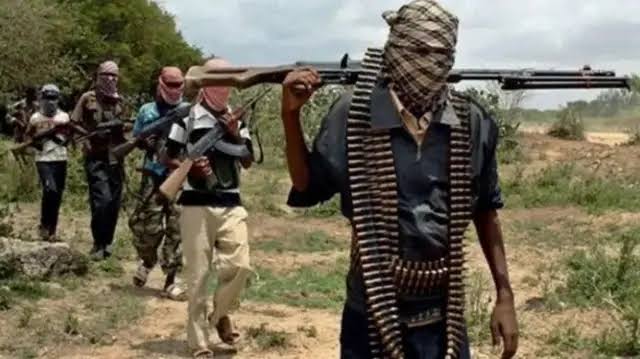
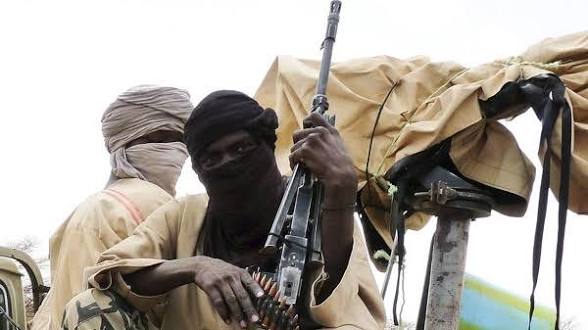
Retired Lieutenant General Tukur Burutai, a former Chief of Army Staff in Nigeria, has cast doubt on claims that security agencies are unable to locate the hideouts of bandits and kidnappers, despite the criminals regularly posting videos from their locations.

The former Nigerian ambassador to the Republic of Benin stated that security forces possess the capability to track down such offenders. Burutai made this known in response to growing concerns over how criminal groups are using social media and videos to publicize their activities.

The retired General said he does not agree that security agencies have failed to identify where the bandits are hiding, especially given how frequently the criminals display their operations in public.

Although he did not directly criticise the security agencies, Burutai suggested that there might be underlying reasons for the approach they are currently taking.

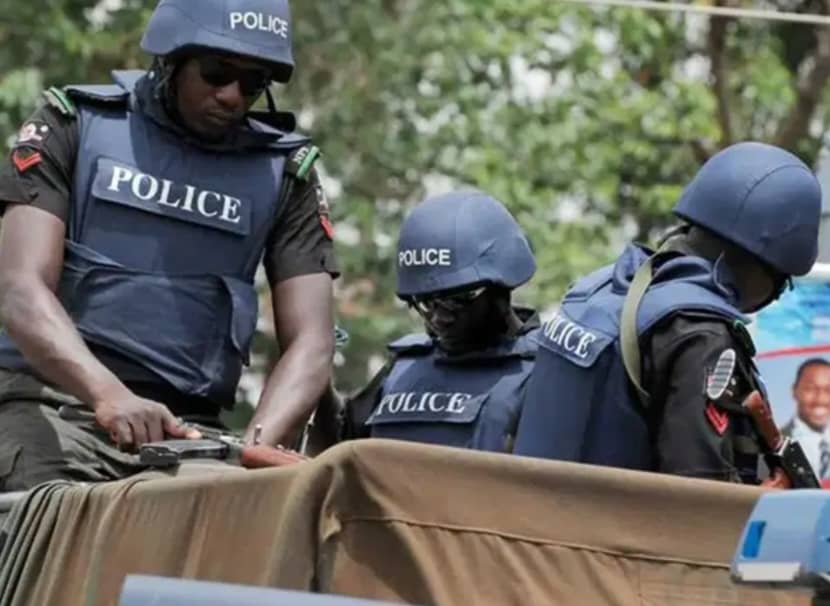
He further emphasised the need to strengthen Nigeria’s security framework through continuous training of personnel, increased manpower, and improvements in their welfare and morale.

Bandits Free Kaduna Schoolchildren, Others After 36 Days in Captivity

By Sabiu Abdullahi

Nine persons abducted by suspected bandits along the Akwando-Kachia Road in Kaduna State have regained their freedom after spending 36 days in captivity.

The victims, made up of six schoolchildren, their driver and two other adults, were kidnapped on April 26, 2026, when armed men attacked a vehicle transporting pupils from Akwando village to Kachia, the headquarters of Kachia Local Government Area.

Reports indicated that nine passengers were taken away during the attack, while a young girl lost her life in the incident.

The spokesperson of the Kuturmi Unity Development Association (KUDA), Mr. Manasseh Samuel, confirmed the release of the victims and disclosed that they returned home on Sunday.

“The victims returned home on Sunday morning after trekking for about six hours through the bush,” Samuel said.

He also appreciated individuals and groups who offered prayers and other forms of support that contributed to the victims’ release.

A former media aide to late Kaduna State Governor Patrick Ibrahim Yakowa, Mr. Reuben Buhari, also confirmed the development in a Facebook post. He stated that the victims secured their freedom on Sunday and arrived home the next morning after a lengthy journey through the bush.

Buhari wrote, “Thirty-six days after they were kidnapped while on their way to school in Kachia from Akwando village, six schoolchildren, the driver of the vehicle and two other adults regained their freedom yesterday and got home this morning after trekking for six hours in the bush.”

He added, “special gratitude to everyone for their prayers and contributions in different ways that led to their freedom.”

According to Buhari, the children went through a difficult and traumatic experience during their captivity and missed almost an entire school term. He, however, expressed gratitude to God for preserving their lives.

He also appealed for continued prayers for other kidnapped residents who remain in captivity, especially victims from Awon and Ariko villages.

Buhari noted that those abducted from Awon village have spent 42 days in the hands of their captors, while residents kidnapped from Ariko village have remained in captivity for 57 days.

How Retired Army General, Wife Were Abducted by Bandits in Katsina


By Uzair Adam

Major General Rabe Abubakar (rtd), a former Director of Defence Information, and his wife have been abducted by bandits along the Matazu axis of Katsina State.

Sources said the retired military officer was travelling to Katsina with his wife when armed men intercepted their vehicle and carried out the attack.

His driver reportedly escaped despite sustaining gunshot injuries, while the retired General and his wife were taken away by the attackers into a nearby forest.

A video circulating on social media showed the victims’ vehicle parked inside the Matazu Divisional Police Headquarters.

The red Peugeot 504 car bore at least two bullet holes, indicating the intensity of the attack.

The incident marks the second high-profile kidnapping involving a retired senior military officer in Katsina within two years.

In 2025, Brigadier General Maharazu Tsiga (rtd), a former Director-General of the National Youth Service Corps (NYSC), was abducted and spent 56 days in captivity before regaining freedom.

Despite ongoing security operations, Katsina State continues to grapple with recurring attacks by armed groups.

The latest abduction came barely a day after bandits attacked Kiliya village in Dutsinma Local Government Area, killing at least 16 residents.

The attackers reportedly stormed the community shortly after Juma’at prayers as residents gathered to celebrate the Eid-el-Kabir festivities.

A resident who witnessed the attack said panic broke out when the gunmen arrived, forcing many villagers to flee for safety.

According to him, the assailants initially ordered residents to stop running before moving towards a mechanic’s house, where they suddenly opened fire on people in the area.

The witness said he survived by hiding inside a nearby house and later emerged to find several victims lying dead.

He added that some of those killed were his relatives, including uncles and cousins.

The attack triggered a mass exodus from the village, with hundreds of residents reportedly fleeing to neighbouring Bagagadi and Radda communities.

Several people remain unaccounted for, raising concerns that the casualty figure could increase.

Residents also reported that some victims were discovered on surrounding farmlands, suggesting that farmers working in the area may have been caught in the attack.

Bandits Kill Abducted Zamfara Teacher Despite Ransom Payment

By Sabiu Abdullahi

Armed bandits have reportedly killed a teacher at Federal Government College, Anka, in Zamfara State, Mustapha Yahaya Maru, after collecting ransom from his family.

Maru was kidnapped earlier this month while travelling to Anka alongside other passengers after gunmen intercepted their vehicle on the road.

Following the abduction, the attackers reportedly contacted the victim’s relatives and demanded a large ransom. Family members later gathered the money after negotiations with the kidnappers in the hope of securing his release.

However, the teacher was reportedly killed on Tuesday despite the payment.

The incident has left residents of Maru community and members of his family in grief. It has also renewed concerns over the worsening security situation in Zamfara State and other parts of the North-West.

Cases of kidnapping and attacks by armed groups have continued across several communities in the state.

In another incident, suspected bandits reportedly attacked travellers along Tashar Lawali Road in Talata Mafara Local Government Area on Monday, May eighteen.

Security sources said the assailants blocked the road near Jangebe District at about eleven twenty in the morning before opening fire on motorists and commuters.

The attackers reportedly targeted a vehicle conveying local government officials and abducted two occupants.

The victims were identified as Jamilu Sani, Director of Planning in Talata Mafara Local Government Area, and Muslimu Habibu, a councillor representing Jangebe Ward.

Another official, Samaila Ladan, who works with the Hajj Affairs Unit of the local government council, reportedly sustained a gunshot injury to his right hand during the attack.

The driver of the vehicle, Lawali Hakimi, was reportedly killed at the scene.

He Chased the Bandits So Nigerians Could Sleep: A Tribute to Muslim Abdurrazak (1994-2026)

By Muhsin Ibrahim

Inna lillaahi wa innaa ilaihi raaji’un

There is a particular cruelty in the timing of some deaths, a cruelty that refuses to be explained away. Muslim Abdurrazak Ibrahim, 31, died on a Friday. Every Friday without fail, he would send a Jumu’at Mubarak message, a small ritual of love and faith that connected him to family and friends across the distance between a soldier’s post and the world back home. On this Friday, he sent nothing. He could not. He had already gone.

Muslim was the firstborn son of Abdurrazak, who named him after his uncle — a tribute to my older brother, Muslim. Abdurrazak, a retired soldier, had fought in battles inside and outside Nigeria and had returned home carrying the weight of friends lost in the trenches of Liberia, Sierra Leone, and beyond. His children, Muslim and his brother Bilal, would both join the Nigerian Army.

The week of his death was, without either of us knowing it, a week of farewells. On Wednesday, my busiest day, Muslim asked to speak with me, which was unusual in itself. We compromised, exchanging texts and voice notes instead. What followed was the most intimate conversation we had ever shared. 

Muslim spoke about his family, including his brother Buhari, who also wanted to join the Army. He spoke at unusual length and with unusual openness. For instance, he did not want Buhari to abandon his education to join the military. He had wanted a video or audio call for more direct contact, as he wanted to leave a wasiya, a will. We did not manage the call. But something was transmitted all the same.

On Thursday evening, he told me he was exhausted after the patrol. He and his colleagues had been chasing armed men on more than fifty motorbikes across the terrain of Kebbi State. They escaped. I prayed for better fortune next time. On Friday, there was no next time. He was killed in combat!

Just hours before his death, he had asked about obtaining a permit to travel home on the 20th of May to celebrate Eid al-Adha with his family in Kano. He had been looking forward to the feast and planning a homecoming.

He had also been planning a wedding. His betrothed, Nana, his girlfriend, his intended, was waiting. The arrangements were underway. He was thirty-one years old, at the beginning of the life he had been building, and then he was gone.

Muslim was a caring son to his parents, a devoted brother to his siblings, and a warm presence in the lives of friends, colleagues, and acquaintances alike. Those who knew him speak of his bravery on the battlefield, his attentiveness during training, his faithfulness in small gestures, such as the weekly Jumu’at message, among many other qualities. He was consistent. He was present. He was the kind of person who, even from a military post in the field, remembered to reach out.

This is the quiet tragedy within the larger one: that Nigeria loses sons and daughters like Muslim regularly, and the country has grown so accustomed to the loss that it barely flinches. The skirmishes, the patrols, the ambushes — they occur on the margins of the national conversation, and the brave men and women who fall in them are sometimes mourned only by their families, in private, without the acknowledgement their sacrifice demands. 

Muslim was not a statistic. He was a person who sent Jumu’at greetings and wanted to come home for Eid to meet family and friends. He had dreams and plans for the future. None of this would now happen.

I was, to my knowledge, the last family member to speak with him. That knowledge sits heavily. But I am also grateful that he reached out, that we spoke at length about family for the first time, and that something of what he wanted to say was said. He left, in those voice notes and texts, a presence that words can only approximate.

Against all odds, we pray for Nigeria’s prosperity. May the sacrifices of these gallant soldiers not be in vain. May Allah (SWT) forgive their shortcomings, accept their martyrdom, and grant their families and loved ones the strength to bear this loss.

May Muslim Abdurrazak Ibrahim rest in the mercy and peace of his Creator. May Nana be comforted. May his parents and siblings find strength. May his name be remembered — not only by those who loved him, but by a country that owes its soldiers more than silence, amin summa amin.

Inna lillaahi wa innaa ilaihi raaji’un — Indeed, to Allah we belong, and to Him we shall return.

Bandits Abduct 42 Schoolchildren in Borno


By Uzair Adam

Nigeria’s worsening security situation took a troubling turn over the weekend following the reported abduction of 42 schoolchildren in Borno State, even as the military announced the killing of a top Islamic State commander during a joint operation with United States forces.

The incident has heightened concerns across the country, with experts warning of possible retaliatory attacks by extremist groups and growing anxiety over the persistence of violence.

The abduction occurred in Askira-Uba Local Government Area, where suspected Boko Haram and ISWAP fighters stormed a primary school and a junior secondary school during early morning lessons.

Ali Ndume, who represents Borno South, confirmed that the attackers took dozens of pupils and students, alongside other children from nearby homes.

According to him, 28 pupils were taken from the primary school, four students from the secondary section, and an additional 10 children from surrounding residences, bringing the total number of abducted victims to 42.

He described the attack as deeply traumatic for the community and urged security agencies to intensify efforts to rescue the victims.

The latest abduction has revived painful memories of past mass kidnappings in the North-East, including the 2014 Chibok schoolgirls incident, and underscored the continued vulnerability of schools in remote areas.

While residents grappled with the attack, the military disclosed details of a separate counter-terrorism operation in the Lake Chad region.

The operation, carried out overnight, reportedly led to the killing of Abu-Bilal al-Minuki, described by US authorities as a senior ISIS figure and a key ISWAP commander.

Military sources said the mission followed months of intelligence gathering involving Nigerian forces and the United States Africa Command.

Air and ground forces were deployed simultaneously, targeting insurgent enclaves and blocking escape routes. Officials described the operation as highly coordinated and executed without casualties on the part of allied forces.

The development drew international attention, with former US President Donald Trump praising the operation and hinting at the possibility of further strikes against terrorist targets in Nigeria.

President Bola Tinubu also welcomed the development, describing it as a significant step in dismantling terrorist networks operating in the region.

However, controversy emerged over claims surrounding the killing of al-Minuki, with some reports suggesting he had previously been eliminated in an earlier operation.

Human rights lawyer Femi Falana urged the government to rely on verified military intelligence rather than external statements.

Security analysts cautioned against celebrating too soon, noting that the death of a high-ranking insurgent leader does not automatically translate into improved security.

They warned that such developments are often followed by retaliatory attacks, especially in vulnerable rural communities.

Meanwhile, former President Goodluck Jonathan expressed concern over what he described as a growing desensitisation to violence among Nigerians.

Speaking in Abuja, he lamented that killings and destruction no longer provoke the level of national outrage they once did, calling for moral renewal and responsible leadership.

Experts and civil society groups also stressed that military action alone cannot resolve the crisis.

They pointed to underlying issues such as poverty, unemployment, weak governance and lack of education as key drivers of extremism, urging the government to adopt a more comprehensive approach.

As insecurity persists across multiple regions, religious groups have also responded.

The Pentecostal Fellowship of Nigeria announced a nationwide three-day fasting and prayer programme, citing concerns over rising violence and economic hardship.

The latest developments highlight the complexity of Nigeria’s security challenges, as the country continues to battle insurgency, kidnapping and other forms of organised violence, with citizens increasingly uncertain about the future.

Who Will Save The North?

By Fatima Abdulmalik

The Northwestern part of Nigeria has been plagued by heinous crimes, including banditry, cattle rustling, kidnappings, and the rise of Lakurawa criminal gangs. These gangs claim to fight for religious reasons, but their actions only bring suffering to innocent civilians. The question on everyone’s mind is: why does the North always seem to be at the epicenter of these atrocities? This cycle of violence is rooted in power and control dynamics, where the perpetrators exert dominance over the victims through coercion and manipulation.

The North’s struggles with violence and crime have become a recurring nightmare. It’s imperative that we acknowledge the complexity of this issue and the need for collective action. We must address the root causes of this violence, including poverty, lack of education, and social inequality. By providing access to quality education and economic opportunities, we can empower the youth and reduce the appeal of criminal gangs. Effective leadership and collaboration are crucial in safeguarding the North. Leaders must put aside their differences and work towards a common goal: protecting their people.

To safeguard the North, we need to invest in education, economic empowerment, and social welfare programs. Community leaders play a vital role in promoting peace and stability. They must speak out against violence and encourage their followers to do the same. By fostering a culture of tolerance and understanding, we can break the cycle of violence and build a more harmonious society. Security forces must intensify their efforts to combat crime and protect civilians. This includes intelligence gathering, strategic operations, and community engagement.

The youth are the future of the North, and it’s essential that we empower them with education, skills, and opportunities. By doing so, we can redirect their energy towards positive change and development. We must also address the economic and social factors that drive young people to join criminal gangs. This includes providing job opportunities, vocational training, and mentorship programme.

Understanding the cycle of abuse is crucial in addressing the North’s violence. The cycle consists of tension building, acute battering incident, and reconciliation. Recognizing these stages can help individuals and communities break free from the cycle of violence. Support from healthcare providers, professional counselors, and domestic violence organizations is vital in ending the cycle of abuse.


In conclusion, the North’s cry for help requires collective action from all stakeholders to address the overwhelming problems plaguing the region. It’s imperative that leaders, community members, organizations, and individuals put aside their differences and work towards a common goal: safeguarding the North. This collaborative effort will empower the youth, promote peace and stability, and break the cycle of violence. Effective stakeholder engagement is crucial in achieving this goal. By identifying and prioritizing key stakeholders, the North can develop a comprehensive plan to address the root causes of its problems.

This includes investing in education, economic empowerment, and social welfare programs. Community leaders must speak out against violence and encourage their followers to do the same, fostering a culture of tolerance and understanding. By addressing these areas, stakeholders can create a safer, more prosperous North. The international community must also support Nigeria’s efforts to address these challenges. Simply put, we can break the cycle of violence and build a brighter future for the North.


Fatima Abdulmalik, Department of Mass Communication, University of Maiduguri.

Bandits Raid Orphanage, Abduct Pupils in Kogi

By Sabiu Abdullahi

Suspected bandits have kidnapped several pupils and a school proprietor’s wife after attacking a school that also operates as an orphanage in Kogi State.

The incident took place late Sunday night at Dahallukitab Group of School in Zariagi, a community near Kabba Junction along the Lokoja–Okene road in Adavi Local Government Area. According to reports, the attackers entered the premises and opened fire before taking their victims to an unknown location.

Residents said the attack started at about 10:30 p.m. and caused panic across the area.

“It was shocking. We started hearing gunshots from that area late in the night,” a resident of a nearby village, who spoke on condition of anonymity, said.

“This morning, we heard that the gunmen attacked the orphanage and school, abducting pupils, the proprietor’s wife, and some staff.”

Authorities confirmed that 23 pupils and the proprietor’s wife were taken during the raid. The Kogi State Government, however, said security operatives have rescued 15 of the victims.

In a statement released on Monday, the Commissioner for Information and Communications, Kingsley Fanwo, described the attack as regrettable and preventable.

“The incident occurred late on April 26, 2026, when unknown gunmen invaded the premises and abducted 23 pupils alongside the wife of the proprietor,” the statement said.

Fanwo explained that security agencies, led by the Nigeria Police Force with support from other units, responded quickly to the situation. He noted that their efforts led to the rescue of some victims, while operations continue to secure the release of those still held.

He praised the security personnel for their swift response and coordination, which he said reduced the extent of the damage.

The state government also raised concern about the growing number of unregistered schools and orphanages located in remote areas. It warned that such facilities are exposed to security risks.

“Operating orphanages and schools in remote areas without proper registration and notification to authorities poses serious risks, especially in the current security climate,” the statement added.

“Such practices not only undermine safety standards but also expose innocent children to avoidable dangers.”

The government urged operators of similar institutions to comply with regulations and work closely with authorities to improve security.

As of the time this report was filed, the Kogi State Police Command had not issued an official statement on the attack. Attempts to contact the Police Public Relations Officer, ASP Saliu Oyiza Afusat, were unsuccessful, as calls and messages were not answered.

Army Overruns Bandit Camps, Captures Families, Destroys Logistics in Bauchi Forest

By Abdullahi Mukhtar Algasgaini

The Nigerian Army has intensified its onslaught against banditry, recording major breakthroughs in clearance operations across Bauchi State, with troops overrunning key terrorist camps, capturing families of fleeing criminals, and destroying vital logistics in the Dajin Madam Forest.

In a statement issued today, the Army confirmed that troops of 33 Artillery Brigade, working in coordination with the Office of the National Security Adviser (ONSA), conducted a fierce clearance operation deep inside the forest. The operation led to the destruction of several bandit enclaves, including the notorious Azuge and Hari camps.

During the offensive, troops neutralized an unspecified number of bandits, while many others fled under heavy military pressure. In a significant development, security forces took into custody six women and thirteen children, family members of the bandits. Several motorcycles used by the criminals for mobility were destroyed, severely limiting their ability to launch further attacks.

A cache of items recovered from the camps includes one AK-47 magazine, packs of tramadol, a pair of police uniform, multiple military uniforms, and two horses, items the Army said were indicative of the group’s criminal enterprise and attempts at impersonation.

“Troops are currently maintaining a firm hold position within the Dajin Madam Forest to consolidate the gains achieved and prevent any re-infiltration by fleeing bandits,” the statement read.

In a related follow-up clearance operation to Mainamaji, conducted after recent air strikes on bandit hideouts, troops made no contact with the enemy—a further indication that sustained military pressure has significantly degraded bandit presence and movement in the area.

The Nigerian Army reaffirmed its commitment to sustaining the offensive until lasting peace and security are restored. Citizens are encouraged to continue supporting security agencies with timely and credible information.

Bandits Release Kidnapped Student Maryam After Months In Captivity

By Sabiu Abdullahi

A student identified as Maryam, who was abducted by bandits several months ago while travelling to school, has regained her freedom after spending a long period in captivity.

Maryam was on her way from Zamfara State to Sokoto State, where she intended to continue her education, when armed attackers intercepted her and took her to an undisclosed location.

News of her release emerged on Wednesday through blogger D English Alhaji, who shared the update on social media. He confirmed that she is now safe and receiving care after her ordeal.

“We have Maryam with us now. Thank you, Nigerians. Maryam is finally free,” he said.

A video posted shortly after the announcement showed Maryam inside a vehicle as she was being taken to a hospital for medical treatment.

In the footage, she appeared weak and tired. She expressed gratitude to Nigerians who supported her during the period of her captivity.

Maryam appreciated members of the public for their prayers and encouragement. She said their support gave her strength and hope throughout the difficult experience.

Her release comes at a time when insecurity remains a major concern in several parts of Nigeria. Incidents of bandit attacks and kidnappings continue to affect states such as Zamfara, Sokoto, Katsina, Kebbi and Kwara.

Residents in the affected areas have continued to voice concern over the situation, as armed groups carry out attacks on communities, highways, schools and places of worship. Travellers, students and worshippers are often among those targeted.