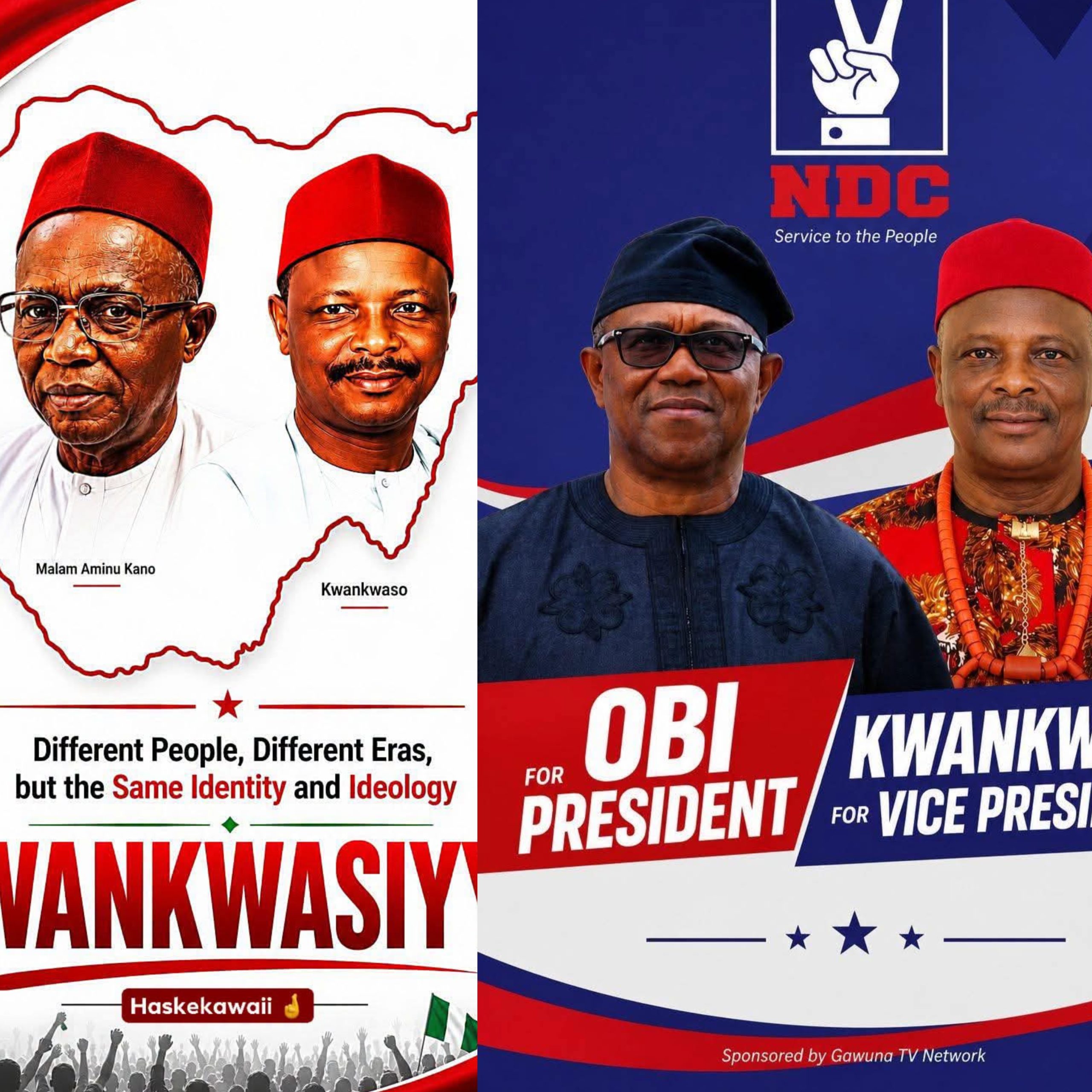
By Mansur Hassan, PhD.
Introduction
The political history of Nigeria cannot be adequately discussed without recognizing the contributions of Malam Aminu Kano, one of the greatest advocates of social justice and popular democracy in Africa. Throughout his political career, he dedicated himself to the emancipation of the Talakawa—the ordinary people whose voices were often ignored by the ruling elite.
Malam Aminu Kano believed that government should serve the masses, protect the vulnerable, and create opportunities for all citizens regardless of family background, social status, or ethnicity. His philosophy inspired generations of politicians and activists who continue to advocate for a more just and equitable society.
The Talakawa Philosophy of Malam Aminu Kano
The cornerstone of Malam Aminu Kano’s ideology was the belief that political power should be used to uplift the common people. Through the Northern Elements Progressive Union (NEPU), he challenged feudal structures and elite domination, advocating education, political participation, economic empowerment, and social justice.
His vision was revolutionary for its time. He sought a society where every citizen could maximize his or her potential and where leadership was measured by service to the people rather than privilege.
Although Malam Aminu Kano became one of the most influential political figures in Nigeria’s history, circumstances and political realities denied him the opportunity to fully implement his vision through sustained executive power. Nevertheless, he succeeded in laying the ideological foundation for future generations committed to the cause of the Talakawa.
Kwankwasiyya: Reviving the Aminu Kano Legacy
Decades after Malam Aminu Kano’s struggle, Senator emerged as one of the strongest political heirs to the Talakawa philosophy.
Through the Kwankwasiyya Movement, Kwankwaso revived and adapted many of Aminu Kano’s principles to contemporary realities. His administration placed significant emphasis on education, infrastructure development, healthcare, youth empowerment, and social inclusion.
The slogan “Making the son of nobody become somebody” became a practical expression of the Talakawa philosophy. Thousands of young Nigerians from disadvantaged backgrounds benefited from educational opportunities, scholarships, skills acquisition programmes, and public service opportunities.
For many observers and supporters, Kwankwaso transformed what was once an ideological aspiration into a practical governance model, demonstrating that political power can be used as a tool for mass empowerment.
Historical Alliance Between the Core North and the South-East
One of the most important but often overlooked aspects of Nigeria’s political history is the strategic alliance between the Core North and the South-East. Long before contemporary politics, leaders from both regions recognized that national unity and political stability could only be achieved through cooperation and mutual respect.
During the struggle for independence, the partnership between and Northern political leaders helped shape the emerging Nigerian state. Despite differences in geography, culture, and religion, they shared a common vision of a united and prosperous Nigeria.
The First Republic witnessed significant collaboration between political forces from Northern Nigeria and the Eastern Region, demonstrating that national leadership could transcend ethnic and regional boundaries. These alliances contributed to nation-building efforts and reinforced the principle that Nigeria’s strength lies in its diversity.
The Second Republic and subsequent democratic transitions also witnessed important bridges between Northern and South-Eastern political actors. One of the most remarkable examples was the statesmanship of , whose commitment to national unity earned him respect across all regions of the country, particularly in Northern Nigeria.
Throughout Nigeria’s democratic evolution, many respected leaders from both regions continued to advocate collaboration rather than division. They understood that neither the North nor the South-East could achieve its aspirations in isolation. Progress was most attainable when both regions worked together in pursuit of common national objectives.
This tradition of cooperation demonstrates a historical reality: whenever the Core North and the South-East found common political ground, they contributed significantly to national development, political stability, and democratic advancement.
The Rise of Two Organic Political Movements
In contemporary Nigerian politics, two grassroots movements have emerged as powerful expressions of popular political participation.
The first is the Kwankwasiyya Movement, rooted in the ideals of social justice, education, empowerment, and the upliftment of ordinary citizens.
The second is the Obidient Movement, inspired by the leadership and political message of , emphasizing accountability, transparency, productivity, and national renewal.
Both movements derive their strength largely from ordinary citizens, especially young people who desire a more inclusive and responsive political system.
The Emergence of the OK Movement
In recent years, discussions surrounding cooperation between supporters of Peter Obi and Senator Rabiu Musa Kwankwaso have generated considerable interest across Nigeria.
Many supporters view such cooperation as a natural continuation of the historic partnership that has often existed between the Core North and the South-East. They argue that combining the organizational strength of the Kwankwasiyya Movement with the grassroots enthusiasm of the Obidient Movement could create a formidable force for democratic transformation.
This aspiration has inspired the concept of the “OK Movement” (Obi-Kwankwaso Movement), symbolizing unity, inclusion, social justice, youth empowerment, and national development.
Supporters believe that such a movement could revive the spirit of historical North-East political cooperation while providing a platform capable of addressing contemporary national challenges.
Conclusion
The ideological struggle initiated by Malam Aminu Kano remains one of the most significant contributions to Nigeria’s democratic development. His commitment to the emancipation of the Talakawa established a political philosophy centered on justice, equality, and opportunity.
Although he was unable to fully implement his vision during his lifetime, many believe that Senator Rabiu Musa Kwankwaso has carried forward that legacy through the Kwankwasiyya Movement, transforming many of Aminu Kano’s ideals into practical programmes that empower ordinary citizens.
At the same time, Nigeria’s political history demonstrates the enduring importance of cooperation between the Core North and the South-East. From the era of Nnamdi Azikiwe to the statesmanship of Alex Ekwueme and beyond, such partnerships have repeatedly strengthened national unity and democratic progress.
For supporters of contemporary political realignments, the idea of an Obi-Kwankwaso partnership represents not merely an electoral arrangement but the continuation of a historic tradition of cooperation between two regions whose collaboration has often helped shape the destiny of Nigeria.
The ultimate lesson of Malam Aminu Kano’s philosophy remains timeless: political power achieves its noblest purpose when it empowers the ordinary citizen, protects the vulnerable, and creates opportunities for every Nigerian—regardless of origin—to become somebody in society.
Mansur Hassan, PhD is the President of KSA.
05/06/2026.
Aminu Kano’s Ideology and Emancipation of Talakawa: From Theory to Reality Through Kwankwasiyya and Emergence of OK Movement

ByAdmin
5 June 2026