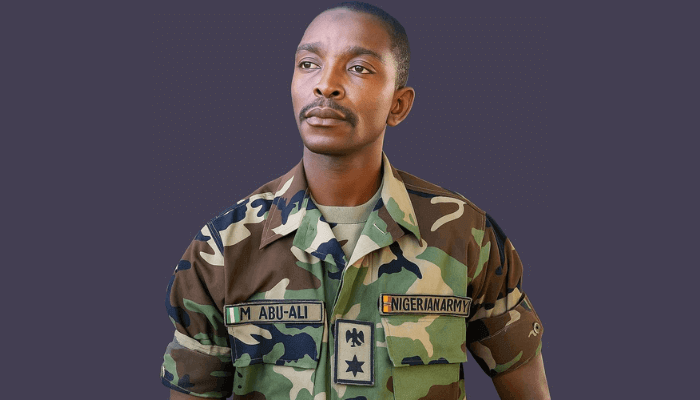
(A tribute to Lt. Col. Abu Ali and the brave military and police officers who fell in Sambisa and anti-kidnapping operations)
By Nura Jibo
By now, everybody in Nigeria is in a state of serious confusion about insecurity. Everyone, including the poor and the rich, cries out because of the problems of Boko Haram and kidnappings, which are exacerbated by killings and the collection of huge ransoms. Nigerian citizens are deeply disturbed by the insecurity in the land, and no one is yet sure about a solution or who the people are that are sponsoring or backing it.
Fellow Nigerians, it is not the CIA that is destroying your country. It is not external or foreign influence that paves the way for the wanton Boko Haram and kidnapping killings from the beginning. It is not America, France, Germany, the World Bank, or the IMF that is destroying Nigeria. It is not Donald Trump, or Benjamin that are interested in breaking Nigeria apart.
There is no evidence or credible intelligence whatsoever that CIA agents shield or support Nigerian insurgents or kidnappers. Boko Haram and kidnappings are entirely fueled by internal corruption, institutional weaknesses, illicit financial flows within Nigeria, and deep-seated political rivalries.
Indeed, it is Nigerians who are living and dining among us that are causing the insurgency in Nigeria. The majority of them are influential and high-placed. They know themselves! Deep inside, they know that they are the ones mortgaging their future, the future of their children, parents, and grandparents for a token.
Unfortunately, whatever money they gain or make from Nigeria in dubious ways, they will ultimately end up not enjoying any part of it when the country becomes uninhabitable for everyone.
Fellow Nigerians, without mincing words, Nigeria’s insecurity, Boko Haram, killings, kidnappings, and other grotesque absurdities are generally caused by the following people:
Corrupt Politicians
Corrupt Military
Corrupt Police
Corrupt Customs
Corrupt Immigration
Corrupt Judiciary
Corrupt Traditional Rulers
Corrupt Religious Clerics (both Christian and Muslim moral police/preachers)
These are the people developing thick skins regarding the insecurity situation in Nigeria. They are, one way or another, profiting from Boko Haram, kidnapping, and mineral looting.
Dear Nigerians, do not look far for the people destroying our country. Those listed above are trading their sovereignty for selfish gain.
If anyone among these feels that he or she is corrupt militarily, politically, religiously, traditionally, or as a police officer, know that this exposition is directed toward you. However, if anyone feels the contrary, know that you are fully exonerated, because you are not corrupt and are considered someone serving your people for God and country.
Indeed, Nigerians should never forget their incorruptible military and police heroes of the past, such as the late Lt. Colonel Abu Ali and his comrades, who were fearless heroes of Sambisa and Nigeria’s bravest military officers. These rare military personalities commanded the 272 Task Force Tank Battalion and played a massive role in clearing out the Sambisa Forest and liberating major towns like Baga and Monguno from Boko Haram insurgents.
The Political Dimension of Boko Haram Violence
To support this analysis, it is beneficial to infer that the previous and even current crop of corrupt political and security forces is an accomplice in the business of destroying the country.
Former President Goodluck Ebele Jonathan once said during a church service at a Christian centre in Abuja that Boko Haram had infiltrated his government and that they were everywhere. He openly admitted that his administration, security agencies, and branches of government had been deeply infiltrated by Boko Haram and insecurity.
Hear him: “Some of them are in the executive arm of government, some of them are in the parliamentary/legislative arm of government, while some of them are even in the judiciary. Some are also in the armed forces, the police, and other security agencies. During the civil war, we knew and could even predict where the enemy was coming from… But the situation we have on our hands today is even more complicated.”
Mr. Goodluck’s statement about Boko Haram was candidly affirmed by his national security adviser, Gen. Andrew Owoye Azazi, who corroborated the president’s position in April 2012 as follows:
“The issue of violence did not increase in Nigeria until there was a declaration by the current president that he was going to contest. The PDP got it wrong from the beginning. The party started by saying Mr. A can rule, and Mr. B cannot rule, according to PDP conventions, rules, and regulations and not according to the constitution. That created the climate for what is happening or manifesting itself in the country.”
With this kind of eyewitness account from a former Nigerian president, it shouldn’t take the current Nigerian president, Bola Ahmed Tinubu, any time to candidly identify and deal with the people at the federal and state government levels and make them face the wrath of the law.
But one cardinal question here is: If Jonathan knew, inter alia, the people who were aiding all these insecurities during his time as Nigeria’s president, what stopped him from naming them, whether they were in the House of Assembly, the Senate, or the presidency? Are they senators, ministers, governors, representatives, judges, kings, emirs, or obas? Why was he afraid to name them as a sitting president?
And when he lost the presidency, why didn’t he advise his successor, for example, the late President Buhari, to deal with them without hesitation?
Now, President Bola Ahmed Tinubu is aware of this Jonathan exposure; what is he waiting for to reveal who they are, and why are they hiding their names?
Are the presidents afraid of losing their political seats?
Mr. President,
Nigerians have no other country to live in if you allow Boko Haram and kidnapping sponsors to destroy the only country we have. The only country that we can call home.
Mr President, politics aside, are you okay and comfortable with seeing, under your watch, a Nigeria that was obtained by Zik, Awo, and Balewa by the hardest means from Britain being destroyed by a selfish, politically microscopic few individuals in our midst?
Who then is unpatriotic? Who then is unrealistic?
The Kidnapping Economy
It is no longer news that certain governors, particularly from the north, feel concerned about the issue of incessant banditry and have bared their minds on the massive killings and abductions in their states.
One of them, Governor Dikko Radda of Katsina, once said out of frustration that the fight against insecurity is systematically undermined from within. He often expressed his frustration on social media and in live interviews that whenever the state government plans to launch offensive strikes against bandit camps, the information is often leaked to the bandits within minutes.
Dikko strongly asserted this position by overtly accusing high-ranking government officials and security personnel of actively supporting and profiting from banditry. What stops the current National Security Adviser, Mr Nuhu Ribadu, and the current Minister of Defence, who was Chief of Army Staff, from pursuing those high-ranking officials and dealing with them willy-nilly? One hasn’t the vaguest idea!
Indeed, Governor Dikko Radda never hides his stance; immediately after he assumed the role of Katsina governor, he said thus: “Banditry is aided and abetted” by rogue elements within the government, military, and law enforcement agencies who act as moles and saboteurs.
Hear Radda: “Bandits know our plans in minutes.”
He cited an example with a well-known notorious bandit kingpin named Mohammed, whose whereabouts were exactly known by the Nigerian security authorities.
Indeed, kidnapping for a huge ransom is now the order of the day in Northern Nigeria and, by extension, everywhere in the country. Courtesy of corrupt political leaders, corrupt military, corrupt police, corrupt religious leaders, and corrupt media houses that make their reporting on the matter a subject of mockery. This corrupt attitude in these elements has promoted and projected kidnapping as an extremely lucrative, multi-million-dollar criminal economy. Who then is unrealistic about blaming external forces for Nigerian insecurity woes when we have fantastically corrupt security agencies in our midst that a former National Security Adviser once exposed, and whose exposure cost him his job?
The reality is that kidnapping and ransom payment have now become a lucrative enterprise facilitated by syndicates that include corrupt security personnel, corrupt traditional leaders, and local informants who provide ‘intelligence’ information on high-value targets, while also allowing kidnappers to take away whole schoolchildren, as we witnessed in Chibok, Zamfara and Sokoto states and ad infinitum.
The Matawalle versus Lawal Feud
The current governor of Zamfara State, Nigeria, Dauda Lawal, openly accused his predecessor (former governor and current Minister of State for Defence, Bello Matawalle) of having a cosy tie and colluding with regional bandit -terrorists.
Governor Dauda’s sheer frustration with banditry made the Vanguard Newspaper in Nigeria sell its news headline on 11 June 2024 by quoting him as saying: “Police and military’s attitude to banditry is frustrating”. Not only this, the young governor stated thus:
“At a point, I had to really come and say it clearly because when we are trying to take care of the situation, somebody somewhere is negotiating with the bandits without my knowledge.”
He promised to end the banditry in his state within two months if given the political will to do so.
Hear Dauda: “I swear to Almighty Allah, wherever a bandit leader is in Zamfara, I know. And if he goes out, I know. With my mobile phone, I can show you where these bandits are today. But we cannot do anything beyond our powers.”
One cardinal question here is: Who is protecting the bandits at the Federal Government level? Who is protecting them from Abuja-the corridors of power? What is the duty of the National Security Adviser, Nuhu Ribadu, and all his defence ministers? What are they waiting for to swing into action and deal with the corrupt military, corrupt police, and corrupt politicians in their midst?
When they allow these protectors to live and destroy Nigeria, would the National Security Adviser and all his security apparatchiks have a brand-new country to relocate to and live in?
These kinds of questions beg for answers from the National Security Adviser because Nigerians are seeing clearly and watching from not far away what is happening to its very promising citizens who are now left stranded without any hope.
The Sule Lamido “Rogue Governor” Double-Decker Challenge
It is this kind of double-decker challenge that former governor Sule Lamido once challenged the three governors of Zamfara, Sokoto, and Katsina by ridiculing their efforts against insecurity.
Hear Sule Lamido: “You are a governor in Katsina, Sokoto, or Zamfara, yet criminals have taken over your people… The rogue simply becomes the governor. “
That was Sule Lamido using Zamfara, Sokoto, and Katsina to make his point by portraying these states as primary examples of how the elite in the North have failed their people by allowing bandits and terrorists to invade homes, abduct citizens, and rule territories unchallenged.
Now let’s make it abundantly and categorically clear to these corrupt politicians (governors); corrupt military (former service chiefs who are retired and those who are serving); corrupt police (former inspectors general and those who are serving, including their states’ commissioners); corrupt traditional rulers (former emirs and obas and the ones who are on their thrones); and corrupt religious clerics (Muslim and Christian moral police) etc., that their actions and inactions, or rather karmic retribution, are threatening the unity and survival of the Nigerian state. This is a double-edged sword that will apparently consume everyone if they fail to heed the late-not early-warnings about the state of affairs in our dear country.
No one will be spared by this spate of insecurity.
The Paradox of Mineral Exploitation
According to Punch Newspaper, illegal mining-particularly for gold, lithium, and gemstones-has completely transformed states such as Zamfara into a highly lucrative war economy. This position is supported by Al-Jazeera investigative reports, where the entire gold-for-guns barter becomes the norm not only in Zamfara but across certain African states. It reveals a vicious cycle where bandits control the minefields, and in turn, barter raw gold for sophisticated firearms.
The Muslim-Christian Moral Police
The corruptible preaching of godliness by religious clerics has derailed many Muslims and Christians in Nigeria. For example, certain original Boko Haram leaders such as the late Mohammed Yusuf and late Shekau have misled many of their adherents because of their misconstrued version of Islam. Since the early 2000s, Northern Nigeria has been bleeding from Boko Haram, courtesy of the failure of its 19 northern governors to provide basic needs: food, education, healthcare, and genuine infrastructure to the people of the North. They deliberately harmed the region by refusing to eradicate the abject poverty that has become endemic and cancerous among their people.
Ditto for their southern counterparts!
In Southern Nigeria, the governors contributed to banditry and armed robbery, especially in the Niger Delta oil-endowed regions and in almost all South-South and South-Western states. This is because the money they receive from oil revenues is not judiciously used to provide succour to the people of the South.
Indeed, all these exacerbate a chain effect of insecurity everywhere in Nigeria.
Therefore, what each and every corrupt individual destroying Nigeria should ponder and reflect upon as they ruin the one and only country we have by mortgaging its future for a fee is a bitter lesson that has befallen certain African countries that are careless, resulting in their citizens being forced into exile and seeking asylum abroad.
The following examples suffice:
(A). The case of the current Malian military ruler, General Assimi Goïta, whose defence minister, General Sadio Camara, was assassinated in a suicide truck bombing at his residence via a coordinated attack by the Al-Qaeda in the Maghreb (AQIM)-linked jihadist group JNIM and the separatist Azawad Liberation Front (FLA). Assimi ousted three Malian political leaders: President Ibrahim Boubacar Keïta (August 2020); Interim President Bah N’daw (May 2021); and Prime Minister Choguel Kokalla Maïga (November 2024). Now the Malian military ruler is facing the steepest opposition in Mali’s political and military history.
(B). The case of financial empires in Sudan and the gold looting between Mohamed Hamdan Dagalo (Hemedti), leader of the Rapid Support Forces (RSF), and General Abdel Fattah al-Burhan, the chief of the regular Sudanese Armed Forces (SAF), is deeply rooted in a battle for control over Sudan’s economy and national assets. The Hemedti empire controls huge private wealth in Darfur’s gold mines in Jebel Amir, while Al-Burhan’s army elites control vast agricultural lands, fuels, and manufacturing, all to the detriment of Sudanese citizens, who are now in mass exodus to neighbouring countries, including Qatar, Libya, Chad, Niger Republic, and Nigeria.
(C). The case of the Democratic Republic of Congo, which faces a critical survival crisis over mineral wealth, perfectly intersects with Nigeria’s Zamfara-Sokoto and Borno, building domestic political unrest. Indeed, the Nigerian military’s case of territorial and boundary loss to Boko Haram and its blood minerals completely parallels a similar security architecture in eastern DRC, which has unfortunately entered its most volatile state in decades, marked by heavy territory losses and a massive humanitarian collapse.
One can go on and on, but the corrupt Nigerian political elites, corrupt military and police forces, corrupt traditional rulers, and religious clerics must know and bear in mind that they have no other country than Nigeria, which they are driving to destruction under the so-called political, military, and religious tyranny and dictatorship. This is fueled by the failure of state governors to use the states’ resources and provide basic infrastructure, education, food, and above all, security. Instead, they resort to a blame game, promoting inequality and unequal opportunities, lacking consultation and relying on people loyal to them while discharging those with experience.
Their major interest lies in attempting to suppress, eliminate, or disregard the plight of others and violate basic human rights.
All these corrupt individuals excel in stealing public funds, engaging in policy partiality, and using security solely to manage and protect corrupt political leaders.
The Security Budget and the War Economy
Indeed, the multi-billion-naira federal government defence budget and the security votes allocated to state governors have exacerbated the issue of insecurity in Nigeria rather than curtailing it. This is because governors and federal security agencies receive large, un-audited cash allocations in the name of security votes, which lack legislative oversight and breed systemic diversion. The protracted warfare paves the way for emergency contracts within the military and police, creating a closed loop of enrichment for defence contractors and corrupt officials.
A cursory look at the consequential repercussions of Nigeria’s corrupt system and its systemic decay is tabulated below:
OPERATIONAL LEVEL INSTITUTIONAL ACTION AND CONSEQUENCES
Stage 1: Federal Funding: Defence budget allocations: Funds flow downward.
Stage 2: Institutional Bottleneck: Corrupt military & police top brass: Funds are actively diverted to private luxury, systematically starving junior officers of funds and war equipment to fight insurgencies.
Stage 3: Frontline Deprivation: Ground soldiers and police officers face destructive field realities.
Stage 4: Systemic Failure: Low morale & desertion: Frontlines are abandoned. Equipment Deficit: Critical lack of ammunition and body armour. Internal sabotage: Tactical intelligence is leaked to terrorist networks.
The Political Architects of Chaos
The destruction of Nigeria does not begin in the forest hideouts of bandits or the remote camps of Boko Haram. It begins in the air-conditioned government offices of Abuja and the state capitals, particularly across the 19 northern governorships.
For decades, political elites have used insecurity as a lucrative business model and a tool for political survival.
It is, therefore, high time for President Bola Ahmed Tinubu to do away with all the political gladiators surrounding him (if he can) and champion a realistic cause to salvage the sovereignty of the one and only country that we can call home-Nigeria.
It is no longer news to every Nigerian that governors receive hundreds of millions of naira monthly in unaccounted “security votes.” This money is legally meant to fight crime but is routinely pocketed or used to fund political thuggery and private militias. The case of Goodluck Ebele Jonathan’s exposition, as asserted elsewhere, points to the serious calamity that infiltrated Nigeria’s political class, corrupt judiciary, corrupt military, corrupt police, and corrupt traditional rulers. By keeping their states unstable, these politicians create a permanent justification to demand more security funding from the federal purse, keeping the cycle of violence highly profitable for the ruling class. The recent Channels interview by one Samai’ila Kaigama on this kidnapping political business alluded to this fact.
Kaigama, in his attempt to unravel the truth about his village people’s kidnapping, indicted a sitting senator, Ndume, over their village’s recent kidnapping debacle.
Now it is left for the National Security Adviser and the Minister of Defence, Christopher Musa Gwabin, and the Presidency to dig deep into the issue and inform Nigerians about the reality of the two accusatory factions. Kaigama accused the lawmaker of acting as an intermediary for terrorists and diverting a multi-billion-naira ransom payment. The high-profile back-and-forth escalated during separate interviews broadcast on Channels and Arise Television stations.
Indeed, the political patronage of bandits and terrorists during election cycles leads politicians to arm local youths to intimidate rivals and rig votes. Once elections end, these armed actors are abandoned, morphing directly into the violent kidnap-for-ransom syndicates terrorising the highways.
Furthermore, instead of arresting known terrorist leaders, certain politicians actively negotiate with them, paying out massive “peace settlements” that are directly used by criminals to purchase heavier weaponry.
The Security Forces and Judiciary – Institutionalised Failures
Nigeria’s military and police leadership and the judiciary are no longer just failing to stop the crisis-they have become active stakeholders in its continuation. The Nigerian courts ‘ superiority complex and the operational failures of the security forces are a direct result of deliberate corruption at the top.
The Weaponisation of the Defence Budget
Billions of dollars allocated for state-of-the-art military hardware, drones, and tactical gear are not easily obtainable, as aired live and direct on Al-Jazeera in Qatar by the current Minister of Defence, who asserted this while he was the Chief of Army Staff.
This issue is indeed part of the problem, where frontline soldiers are left facing heavily armed insurgents with outdated weapons, inadequate ammunition, and zero body armour. This deliberately manufactured operational inferiority forces them into tactical retreats and leaves vast swathes of Nigerian territory completely ungoverned.
Tactical Leaks and Checkpoint Extortion
The operational integrity of the military and police is compromised from within. Highly classified military intelligence regarding troop movements is repeatedly leaked to Boko Haram and bandit networks by corrupt insiders, leading to deadly ambushes on Nigerian forces.
On the highways, instead of tracking down kidnap syndicates, the police force is heavily deployed to civilian checkpoints solely to extort ordinary citizens, leaving the surrounding forests entirely at the mercy and control of kidnappers.
The Economic Motive – Mineral and Resource Looting
The terror inflicted by Boko Haram and kidnapping networks acts as a violent smokescreen designed to mask a massive, elite-driven illegal mining and resource looting syndicate in Zamfara, Sokoto, and, by extension, Nasarawa.
Indeed, Nigeria’s deep insecurity is structurally tied in parts to the illicit extraction of its massive mineral wealth. This can be illustrated as follows:
Corrupt elites protect Boko Haram, bandits, and kidnapping networks (terror).
The kidnappers displace local populations from illegal mining sites (rare earth, gold, lithium, etc.), which eventually clears land for illegal mining.
Clearing the Land via Terror
Vast rural communities in Northern and Central Nigeria sit directly on top of massive deposits of gold, lithium, tantalite, and other valuable rare earth minerals.
By allowing Boko Haram and bandits to unleash mass killings and kidnappings in these specific regions, local populations are completely displaced. The terror effectively clears the land of its rightful owners, transforming sovereign Nigerian communities into unregulated, lawless extraction zones.
The Elite-Traditional Ruler Cartel
Once the civilian populations are ethnically cleansed or driven into IDP camps, illegal mining cartels step in. These cartels operate with the direct protection of corrupt politicians and complicit traditional rulers.
While the nation bleeds from massacres, a criminal network of political elites and their corrupt collaborators is quietly carting away billions of dollars in untaxed mineral wealth and oil.
Hence, kidnapping in Nigeria is no longer an opportunistic crime; it is a highly sophisticated, institutionalised financial market designed to extort wealth from the middle class, the rich and poor alike.
The Banking System and Mobile Tracking Failures
Despite federal mandates forcing every Nigerian to link their National Identity Number (NIN) to their SIM cards, kidnappers still use mobile phones openly to negotiate multi-million-naira ransoms.
The police and regulatory agencies, most of the time and dubiously, fail to track these calls or freeze the bank accounts where ransom money is deposited. This indicates a deep-seated institutional complicity, where corrupt political and security actors take a direct cut of the ransom payouts in exchange for operational blindness, as asserted by Samai’ila Ibrahim Kaigama and others.
The Destruction of National Infrastructure
The deliberate failure to secure major highways, rail lines, and transit corridors forces citizens into a state of permanent vulnerability. The ransom economy has become so deeply embedded within the political and security architecture that wiping it out would mean cutting off a massive stream of illicit revenue that flows directly from the forests into the pockets of urban elites
The Policy Blueprint for Systemic Survival
To save Nigeria from total state collapse, the international community, domestic policymakers, and the Nigerian citizenry must move very fast by treating insecurity as not a purely military and police problem and/or business venture and attacking its financial roots and political drivers.
The Solutions
Mr. President should very quickly engage UAE authorities, especially in Dubai or Abu Dhabi, to send him the names of the Boko Haram sponsors that they claim to have. The same goes for the United States of America. President Donald John Trump should publish the names of the terror sponsors in Nigeria, as the US claims to have their names and is under its watch.
This will go a long way in exposing the vagaries, verbosity, and waffle that surround the protracted problem of Boko Haram and kidnapping in Nigeria.
Mr. President, it is quite unfortunate that Nigeria has to rely on foreign countries to release the names of certain criminals that sponsor insurgencies in the country.
This writer proposes a strategic counter- crisis matrix that could enable everyone in Nigeria to live peacefully, cheaply, and as satisfactorily as possible. This strategic counter-crisis matrix has the following target audience:
International policymakers, academic researchers, and Nigerian citizens. The immediate policy action required to ameliorate the protracted insurgencies in Nigeria is to impose targeted global sanctions on governors and audit supply chains for blood minerals such as lithium and coltan (columbite and tantalite), etc. There is also a need to map out resource-conflict correlations to enable the government to track illegal capital flight to and from Nigeria. The Nigerian citizens, on the other hand, should try as much as possible to vote out complicit northern governors by mobilising community-led political security accountability groups and refrain from supporting corrupt politicians who seek mandates and hide in Abuja until the next election.
The Nigerian president must find a way to sanction the political class by collaborating with international allies such as the US, UK, France, UAE, and Saudi Arabia, etc., to immediately freeze the foreign assets and impose strict travel bans on corrupt Nigerian governors, corrupt legislators (senators), corrupt military and police top brass, prominent, but morally bankrupt religious clerics, and traditional rulers linked to regions with unchecked illegal mining and persistent security failures.
The Nigerian president, whether old or new, should audit the mineral supply chain. The international technology and manufacturing industries must treat Nigeria’s rare earth minerals such as lithium, iron ore, coltan, and gold with the maximum level of scrutiny. Any mineral sourced from conflict-heavy zones in Nigeria must be blacklisted globally until legal transparency is restored.
Indeed, independent military, police, and judiciary accountability must be entrenched in Nigeria to flush out and sanitise the entire national system.
The administration of defence spending must be completely stripped from internal military control and placed under a rigorous, special, but emergency and independent military audit tribunal -not under the EFCC or ICPC.
Commanders whose units repeatedly leak intelligence or fail to protect citizens despite heavy funding must face immediate special national emergency court-martial and asset forfeiture.
If at all we are serious in nation building, Mr President should quickly call for an emergency constitutional committee and give them only one (1) month to include an immunity clause in the Nigerian constitution. Because the 1960 Nigerian Independence Constitution did not contain a domestic executive immunity clause for political leaders and executives. Indeed, the current Nigerian constitution protects them from attending civil or criminal court processes. Hence, all corrupt governors, deputy-governors, corrupt senators, and corrupt presidents and vice-presidents, etc., should have no immunity. They should appear before the national emergency corruption courts and defend themselves.
Ditto corrupt customs and immigration officers!
The Nigerian customs and immigration agencies must eliminate corrupt officers and submit them to the proposed national emergency corruption courts for prosecution. Nigerian borders will then be free and secure from illegal arms, ammunition, and drug importation.
This is the only way to ensure sanity in the Nigerian system.
Bandits and kidnappers that kidnap and kill ordinary Nigerians shall be immediately executed by a special kidnapping and banditry tribunal, not by the current courts that are operating in the country. The bandits and kidnappers that are summarily executed should be made known to the citizenry by printing their names in national dailies.
The Supreme Court of Nigeria should be structured to have a domestic judges’ trial segment for trying corrupt judges who pass biased legal judgments that are inimical to Nigerians and the Nigerian system.
No one is above the national law!
Religious clerics’ propagation methods must be controlled by the government in order to protect the Nigerian Christian and Muslim leaders from assuming informal powers that make them behave macho and feel as if they are also another government of their own. They should be controlled the way religion is controlled and monitored in Saudi Arabia, the UAE, Oman, Bahrain, etc.
Otherwise, if all the above explanations are not of interest to Mr. President, his entire cabinet, and Nigerian citizens; if all that has been exposed by all and sundry on Nigeria’s insecurity is not of deep concern or is seen as useless; and if the corrupt among us feel that this issue should be set aside or thrown into the dustbin of Nigeria’s “usual” insecurity history, then we should all forget about Nigeria and continue pontificating over what the honorable Chinua Achebe once described in his two books, “Things Fall Apart” and “There Was a Country “!
Nura Jibo is a senior research fellow and lifetime member of the West African Research Association (WARA), African Studies Centre, Boston University, United States. He can be contacted via jibonura@yahoo.com.