Opinion

Eid al-Adha: Beyond the Celebration, Lessons from Prophet Abraham (A.S)

By Nasir Yusuf Jibril, Ibrahim Aliyu Gurin and Bilyaminu Gambo Abubakar

Eid al-Adha, also known as the Eid of Sacrifice, is the second festival celebrated each year by Muslims worldwide after Eid al-Fitr. The festival is being celebrated on the 10th of Zhul Hajj, the last month of the Islamic calendar. Muslims on this day are expected to sacrifice a sheep, a goat, a cow or a camel. The meat of the sacrificial animal is expected to be divided into three portions. The first portion is for the family, the second for friends and relatives, and the last for the needy.

The festival is celebrated to commemorate the spirit of obedience and the sincerity of Prophet Abraham (A.S). It was reported that Prophet Abraham (A.S) had repeatedly dreamt that Allah (SWT) ordered him to slaughter his only beloved son, named Ishmael, as a sacrifice. He informed his wife and, later, his son as well of the development, and they all agreed to obey the order from their Creator.

“And when he reached with him [the age of] exertion, he said, ‘O my son, indeed I have seen in a dream that I must sacrifice you, so see what you think.’ He said, ‘O my father, do as you are commanded. You will find me, if Allah wills, of the steadfast.’” (Qur’an 37:102).

While trying to slaughter his son, Iblis (The Devil) appeared and asked him, how dare he slaughter his son? Abraham (A.S) pelted the devil seven times and then moved to another place to slaughter the son. Here, too, Iblis followed him; he again pelted him with seven stones and moved to the third place. As he was about to put a knife to the neck of his beloved son, Allah (SWT) sent a sheep to replace Ishmael.

“And We ransomed him with a great sacrifice.” (Qur’an 37:107).

What transpired above was one of the numerous tests and challenges Prophet Abraham (A.S) underwent during his lifetime. Recall that Prophet Abraham (A.S) was the son of Aazar, the idol worshipper and seller. At about seven years old, little Abraham started questioning idol worship. He was once reported to have asked his father, “How could you worship what could not help or harm you?”

“O my father, why do you worship that which neither hears nor sees and will not benefit you at all?” (Qur’an 19:42).

He then advised Aazar, in a respectful way, to stop worshipping Iblis and to follow him, and that he would show him guidance.

“O my father, indeed there has come to me of knowledge that which has not come to you, so follow me; I will guide you to an even path.” (Qur’an 19:43).

The father, Aazar, got angry at one point and threatened to stone his little son, Abraham, if he continued asking silly questions.

“He said, ‘If you do not desist, I will surely stone you, so leave me for a long time.’” (Qur’an 19:46)

Furthermore, his community too decided to burn him to ashes as a punishment for destroying their deaf and dumb gods – idols. After setting one of the hottest fires on Earth, the idol-worshippers catapulted Prophet Abraham (A.S) from a far distance into the fire. His prayer was ” HasbunAllahu Wa Ni’imal Wakeel meaning “Allah is enough for me.”

“And whoever relies upon Allah – then He is sufficient for him.” (Qur’an 65:3)

Allah then asked the fire to become cold and peaceful to Abraham (A.S).

“We said, ‘O fire, be coolness and safety upon Abraham.’” (Qur’an 21:69)

The fire had answered the order from its Creator and untied him from the ropes and made him feel comfortable in it. Abraham (A.S) later walked out of the fire majestically without being hurt. The idol-worshippers were shocked and realised that the real Lord was with him, but unfortunately, none of them agreed to follow Abraham (A.S.), only his little nephew, Lot (A.S.). They (Abraham and Lot) decided to migrate (the first migration in the world for freedom of worship) from Iraq, where they were born, to another part of the Middle East.

“Indeed, I will go to my Lord; He will guide me.” (Qur’an 37:99).

When Prophet Abraham (A.S) married his beautiful wife, Sarah and left for Egypt, the King of Egypt, Nimrod, attempted to sleep with Prophet Abraham’s wife, but with supplication and absolute trust in Allah, Sarah was protected, and the arrogant King was paralysed. Allah then gave Prophet Abraham (A.S) Hagar, and then revealed the whole set of laws when Prophet Abraham (A.S) was 80. In the laws, he was ordered by Allah to circumcise himself, which he did without questioning. Prophet Abraham (A.S) prayed to his Lord to grant him a child, and his prayer was answered; he had his first son, Ishmael, through Hagar.

“My Lord, grant me [a child] from among the righteous. So We gave him good tidings of a forbearing boy.” (Qur’an 37:100–101)

They were happy and joyous, but his wife, Sarah, was jealous and wanted Hagar and her child to leave. Allah then ordered Prophet Abraham (A.S) to go and abandon the duo in a desert, the present-day Mecca, when Ishmael was barely a year old.

“Our Lord, indeed I have settled some of my descendants in an uncultivated valley near Your Sacred House, our Lord, that they may establish prayer.” (Qur’an 14:37)

Hagar asked Abraham (A.S) if he was commanded by Allah (SWT) to keep them there? Then Prophet Abraham answered Yes and had his way. Hagar and her son exhausted the bottle of water that Abraham (A.S) gave them. She, therefore, moved back and forth seven times between the mountains of Safa and Marwa to search for help. She later returned to her son, who was starving and dehydrated, to give him shelter. Allah SWT sent angel Gabriel to dig a well known as Zam-Zam at the exact place where little Ishmael was kicking his legs.

The aforementioned were some of the tests and challenges Prophet Abraham (A.S) went through, and he successfully passed them. What are the lessons to be learnt from this Man of Honour? Prophet Abraham (A.S) was a symbol of bravery, as he challenged his father, his community, and the most powerful King of his time – King Nimrod- to abandon their idols and worship Allah, the Creator. Prophet Abraham (A.S) also symbolised sacrifice, patience, perseverance, patriotism, respect, determination, commitment, dedication, trust, truth, justice, sincerity and obedience to Allah at the expense of his happiness.

“Indeed, Abraham was a nation [in himself], devoutly obedient to Allah, inclining toward truth, and he was not of those who associated others with Allah.” (Qur’an 16:120)

The question is: what, then, did he get in return for demonstrating these unique qualities? Allah has declared in the Holy Qur’an, the book in which Prophet Abraham’s name was mentioned 73 times in 25 different chapters, one of which was named after him, that “I shall make you the leader amongst men.”

“Indeed, I will make you a leader for the people.” (Qur’an 2:124)

Thereafter, all the prophets who came after him were from his two sons, Isaac and Ishmael. All the children of Israel, the Jews, Christians and Muslims look up to their father, Prophet Abraham (A.S). He was the only Prophet that Allah (SWT) asked Prophet Muhammad (SAW) to emulate his exemplary lifestyle.

“Then We revealed to you, [O Muhammad], to follow the religion of Abraham, inclining toward truth.” (Qur’an 16:123).

Moreover, the desert Abraham (A.S) abandoned his beloved wife, and his son became the city in which the last and final messenger, Muhammad (SAW), was born. The Masjid built by Abraham (A.S.) and his son, Ishmael, continues to be the direction that millions of Muslims face when performing their prayers. The well of Zam-Zam, dug for his abandoned family, still pumps water which is being drunk by millions of people. The seven-times movement between the mountains of Safa and Marwa, performed by Hagar, is part of the Hajj rites. 

Additionally, the three different places he relocated while trying to slaughter his only son, then, Ismael became a place of Ibada known as Jamrats, where every Pilgrim goes and stones the devil seven times as Prophet Abraham (A.S) did thousands of years ago.

Indeed, Prophet Abraham (A.S) was a true leader who, despite the tests, challenges, and calamities that befell him, never turned away from his Lord but rather became more committed and dedicated to his religion, leading by example for us to follow. 

The writers can be reached via Ibrahim Aliyu Gurin (ibrahimaliyu5023@gmail.com), Nasir Yusuf Jibril (nasirjibril2018@gmail.com), and Bilyaminu Gambo Abubakar bilyaminugambokonkol01@gmail.com).

Hybrid Intelligence: Protecting Human Thought Amidst an AI-Driven Future

By Ismail Bello Darazo 

The technological landscape is rapidly evolving, changing how we live and work. The advent of artificial intelligence (AI) presents numerous opportunities, particularly when it is fully explored and effectively utilised. 

AI can simplify complex concepts and deliver more concise, efficient solutions. Its growing application across various aspects of life continues to enhance convenience and productivity in everyday activities.

However, the core objective of AI development is to support and simplify human efforts, not to replace human intelligence. In practice, the way AI is used is gradually shifting from collaboration to dependence.

AI is now deeply embedded in our daily routines, often substituting rather than complementing our cognitive abilities. It is increasingly common to observe individuals who struggle to articulate even simple communications, such as WhatsApp group messages, without relying on AI tools. Likewise, some managers no longer trust their own analytical capabilities for basic business decision-making, preferring instead to depend on AI-generated outputs.

One of the most significant consequences of this overreliance is the gradual erosion of human cognitive capacity. When individuals consistently delegate thinking and decision-making to AI systems, they risk weakening their natural abilities to reason, analyse, and make sound judgments. Over time, this dependency can reduce confidence in independent thinking and limit the development of critical problem-solving skills.

Hybrid intelligence systems, which integrate human expertise with artificial intelligence, are increasingly recognized as essential for addressing complex and multifaceted challenges. By combining human intuition, ethical reasoning, and contextual awareness with the computational strength of AI, more balanced and effective outcomes can be achieved.

However, placing AI at the forefront without adequate human oversight may lead to inhuman or ethically flawed decisions, as AI systems remain limited in their ability to fully replicate human judgment, values, and nuanced understanding.

In conclusion, AI, as a defining technology of the Fourth Industrial Revolution, is here to stay. The responsibility lies with us to utilise and fully explore its potential without undermining our natural cognitive abilities. 

Rather than allowing AI to dominate human processes, it should be positioned as a centre of collaboration where human intelligence and machine capabilities complement each other to produce more balanced and effective outcomes. In this context, AI is not a replacement for human thinking, but a strategic partner that enhances our capacity to reason, make informed decisions, and drive innovation.

Ismail Bello Darazo wrote from Bauchi State via Ismailbello054@gmail.com.

Why Electricity Will Define Nigeria’s Future

By Muhammad Masud Yerima


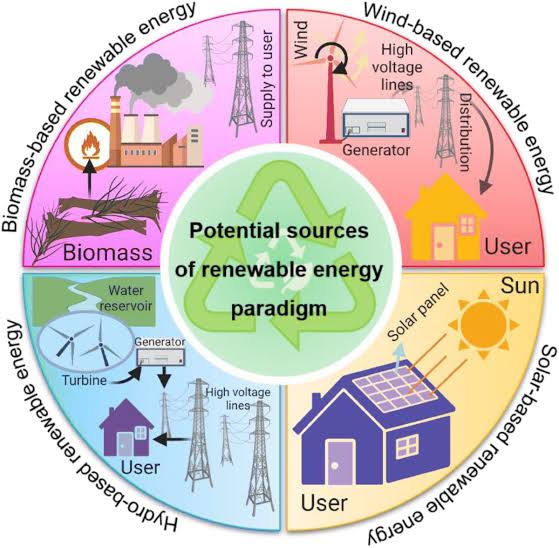
From 2005 to 2025, the global electricity access story changed dramatically. Countries like India and Bangladesh moved from being among the countries with the highest populations without electricity access to largely exiting the list. Meanwhile, Nigeria moved in the opposite direction from third place in 2005 to leading the world in the number of people without access to electricity by 2025.

That should concern every policymaker, investor, planner, and citizen.

In 2005, India had over 360 million people without electricity access. Today, India is no longer on the list. Nigeria, on the other hand, increased from roughly 77 million people without access in 2005 to over 88 million in 2025. This is despite Nigeria being one of Africa’s largest economies and one of the world’s biggest oil and gas producers.

The question is simple:
What did India do right, and what is Nigeria still getting wrong?

India treated electricity not just as infrastructure, but as a national development priority. The country invested aggressively in grid expansion, rural electrification, generation capacity, transmission infrastructure, and policy reforms. Programs like village electrification schemes, renewable energy deployment, and public-private sector collaboration accelerated access across both urban and rural communities. More importantly, India planned long-term and executed at scale.

Nigeria’s challenge is more complex than simply “not enough power generation.” The issue is systemic.

First, population growth has outpaced infrastructure development. Nigeria’s population has expanded rapidly, but transmission networks, distribution systems, and generation capacity have not grown at the same pace. Even where generation exists, the grid often cannot evacuate or distribute the power efficiently.

Second, infrastructure investment has been inconsistent. Transmission bottlenecks, aging equipment, weak distribution networks, vandalism, and underinvestment continue to limit reliability and access. In many parts of the country, being connected to the grid does not even guarantee stable electricity.

Third, planning and execution remain fragmented. Energy policy changes frequently, projects are abandoned, and long-term continuity is weak. Electrification requires coordinated planning across generation, transmission, distribution, regulation, financing, and industrial development not isolated projects.

What makes this more worrying is the timing.

The world is entering a new economic era driven by artificial intelligence, cloud computing, automation, robotics, and digital infrastructure. Data centers are becoming the factories of the digital economy, and none of them can function without reliable electricity.

From the Agricultural Revolution to the Industrial Revolution, then the Information Age, and now the AI-driven digital economy, every major leap in civilization has been powered by energy.

Without reliable electricity:

* industries cannot scale,
* manufacturing becomes expensive,
* innovation slows,
* startups struggle,
* and Nigeria risks falling behind in the global digital economy.

The next global race will not only be about oil or population size. It will be about computational power, digital infrastructure, and energy resilience.

Beyond politics, this is a conversation Nigerian youths and every citizen must begin to take seriously. The future of Nigeria cannot depend only on election cycles and political debates. We need long-term systemic thinking about infrastructure, industrialization, energy security, education, and technology.

Nigeria is our country.

And if we truly want to compete globally in the modern economy, then stable and accessible electricity can no longer be treated as a secondary issue. It is the foundation upon which modern nations are built.

Muhammad Masud Yerima Mohayerima@gmail.com

Beyond the Myth of Women’s Silence

By Rabi Ummi Umar

Lately, I have found myself unlearning and relearning everything about being a woman. Having been groomed to be nice, kind, and responsive to all situations with a smile, tolerant, and to “be the bigger person”, new knowledge suggests there is more to being a woman, especially for young ones like myself.

While I am utterly grateful for the virtues of kindness learned over the course of my life, I have realised there is a thin line between character-building and the restrictive way women are often conditioned.

There is a persistent narrative, a “myth of silence”, that suggests a woman who is quiet, who tolerates everything, and who refuses to stand up for herself or others is the “good” woman. Conversely, the woman who knows her worth, identifies wrongs, and refuses to stay silent is labelled “bad” or “difficult.”

Many cultures across the globe have deemed it normal for women to be silent spectators: unproblematic, quiet, and devoid of independent values. But what does “unproblematic” actually mean in this context? Too often, it refers to a woman who remains silent in the face of injustice, one who endures whatever is thrown at her without a word of complaint.

On the flip side, a “problematic” woman is simply one who refuses to tolerate disrespect. She is the woman who sees a wrong and calls it out; the woman who speaks the truth regardless of who she might offend. We must confront the fact that this pressure to stay silent stems from societal expectations rather than religious teachings.

As a Muslim woman from Northern Nigeria, a region that prides itself on religiosity, I have seen this play out more times than fingers could count. A woman is expected to undergo so much and wear a mask of contentment just to be loved by everyone else, even if it means she stops loving herself.

If a husband is abusive, she is told to endure. And we must ask: who taught these men that abuse is acceptable? If her in-laws treat her poorly, she is expected to stay calm and patient until they “magically” change. If she shares her opinions or strives for self-improvement, she is suddenly seen as having “gone wild” or having too much knowledge.

Taking a microscopic look reveals why a plethora of women struggle to find themselves. They have spent so long pretending to blend in, trying to be “chosen,” and performing to fit a mould that they have forgotten who they actually are.

The truth is, there is beauty in simply being yourself. As long as you respect your boundaries and act within the framework of your faith and the law, it is okay to exist as a whole person. Since society demands “perfection” or silence, many women have perfected the art of pretence just to maintain the appearance of being “good.”

However, I recently watched a video where someone said, “The world doesn’t profit from women who are at peace; it profits from women who are constantly trying to be something else.” That resonated deeply with me. There is so much pressure on women to be more successful, prettier, or bolder. This pressure has turned life into a competition for visibility; women want to be seen, liked, and admired so badly that they lose their way.

Most women are no longer just living; they are performing. They are developing confidence, independence, and identity because the world rewards the show. A woman who is still searching for herself is easier to influence, sell to, and control. So, the societal noise gets louder, fueling more comparisons and more pressure.

In this scramble to be “seen,” many are quietly losing their spirituality. Again, this is not what Islam teaches. Women, like all human beings, should be allowed to live, to be included, and to breathe. Throughout Islamic history, women have actively participated in social, political, and economic life. They were never meant to be silent followers; multiple examples abound. 

A Muslim woman’s voice, when guided by faith, wisdom, and character, is not a threat to anyone. It is a strength, and when tapped in, the world could be a better place.

Rabi Ummi Umar is a corps member in Abuja. She can be reached via rabiumar058@gmail.com.

Kannywood at a Crossroads: Moral Anxiety, Tradition, and Society in Northern Nigeria

By Ibrahim Aliyu

Over the past few decades, Kannywood has grown into one of the most influential cultural industries in Northern Nigeria. Rooted in the Hausa language, Islamic values, and local traditions, it has shaped entertainment, storytelling, and public discourse across millions of homes. For many families, Kannywood was never merely cinema; it became a reflection of identity, morality, family structure, and social values.

Yet despite its cultural importance, Kannywood continues to attract criticism from various sections of society. Some believe the industry has drifted from the moral and religious principles it once claimed to uphold. Others argue that society itself has become increasingly harsh, suspicious, and contradictory in its judgments of public morality.

Perhaps the deeper issue is not merely “bad behaviour” in the industry, but the growing tension among public morality, private intentions, and shifting social perceptions.

In Islam, unnecessary physical intimacy between non-Mahram men and women is generally discouraged, and Hausa society has historically taken such boundaries seriously and with respect. However, there was also a period in Northern Nigeria when families could sit together and watch classic Kannywood comedy scenes featuring actors such as Ibro and Tsigai without automatically interpreting every interaction through a sexual lens.

Parents watched alongside their children. Grandparents watched with their grandchildren. Communities laughed together. At the time, many viewers saw those scenes primarily as comedy, storytelling, and harmless entertainment within a familiar cultural context.

This raises an important question: What changed?

Part of the answer may lie in how modern society increasingly interprets many human interactions through suspicion and moral anxiety. The rapid expansion of social media, unrestricted internet access, celebrity culture, and exposure to explicit online content have reshaped how people perceive entertainment, gender interactions, and morality itself.

As a result, public discussions about morality sometimes become less about intentions, discipline, and character, and more about appearances and public performance. In such an environment, accusations of immorality can spread quickly, even when the cultural context or the intention is more complex.

Hausa society contains longstanding cultural traditions that show how social interaction has historically been understood within context and boundaries. Practices such as “wasan kanin miji” and “wasan kaka da jika” reflect playful social interactions that coexisted with strong family values and respect for marriage institutions. These interactions were not automatically deemed immoral because society recognised the importance of trust, intention, and communal understanding.

This does not mean boundaries should disappear, nor does it suggest that moral principles are unimportant. Rather, it highlights the need for balance, sincerity, and self-awareness when discussing morality in public life.

The danger arises when society becomes more concerned with appearing morally superior than with cultivating genuine ethical discipline. Excessive suspicion, constant public outrage, and the tendency to sexualise ordinary human behaviour can deepen social tension rather than achieve genuine moral reform.

In this sense, Kannywood is more than a film industry. It has become a mirror reflecting the wider struggles within Northern society — the struggle between tradition and modernity, religious values and entertainment culture, public expectations and private realities.

The debate surrounding Kannywood is therefore not only about actors, actresses, or films. It is also about how society defines morality, how communities respond to cultural change, and whether public conversations about ethics are guided by wisdom, balance, and sincerity rather than by fear, projection, or moral performance.

As Northern Nigeria continues to evolve socially and culturally, perhaps the challenge is not to destroy cultural institutions out of anxiety, but to engage them thoughtfully, critically, and honestly — while preserving the values that truly strengthen society.

Ibrahim Aliyu wrote via khalilnuradeen@gmail.com.

The Strait of Hormuz and Nigeria’s Energy Paradox

By Inusa Rabiu Isah

As tensions continue to rise around the Strait of Hormuz, global oil prices are climbing again, shipping risks are increasing, and analysts are warning that any prolonged disruption in the Gulf region could trigger another major energy shock. For many Nigerians, the immediate reaction is predictable: “Nigeria will benefit because we are an oil-producing country.” Yet every major oil shock continues to expose the same uncomfortable reality: despite its enormous crude oil reserves, Nigeria remains dangerously vulnerable to global energy instability.

The Strait of Hormuz, located between Iran and Oman, is one of the world’s most strategic energy transit routes. According to the International Energy Agency (IEA), about 20 million barrels per day of crude oil and petroleum products passed through the Strait in 2025, representing roughly one-fifth of global oil consumption and nearly 25% of global seaborne oil trade. In addition, the United States Energy Information Administration (EIA) reports that around 20% of global LNG trade moves through the same corridor.

This explains why instability around Hormuz immediately affects global energy markets. The concern extends beyond crude supply to tanker movements, shipping insurance, freight costs, refinery feedstock availability, refined product pricing, and market speculation.

Similarly, past disruptions such as the 1973 oil embargo, the Gulf Wars, and the 2022 Russia–Ukraine conflict demonstrated how geopolitical instability can rapidly trigger inflation across import-dependent economies through higher fuel, transport, and food costs.

Nigeria is no exception.

Although Nigeria is one of Africa’s largest crude oil producers, the country still operates an economy heavily dependent on imported energy-linked systems. Millions of households and businesses rely on petrol and diesel generators due to an unstable electricity supply, while transport and logistics remain overwhelmingly road-dependent. Consequently, rising diesel and petrol prices quickly spread across the economy.

The first major mistake in many public discussions is the assumption that higher crude prices automatically benefit Nigeria. Oil revenue depends not only on price, but also on production volume.

According to Nigerian Upstream Petroleum Regulatory Commission (NUPRC) data released in April 2026, Nigeria’s combined crude oil and condensate production rose to about 1.546 million barrels per day in March 2026. However, crude oil production excluding condensates stood around 1.382 million barrels per day, still below Nigeria’s OPEC quota of approximately 1.5 million barrels per day.

Therefore, higher crude prices alone cannot guarantee stronger economic benefits unless production remains stable, oil theft is reduced, and export infrastructure functions efficiently.

The second mistake is confusing crude oil price with petrol price. Nigerians do not buy crude oil at filling stations; they buy refined petroleum products. Petrol and diesel prices are influenced not only by crude benchmarks but also by refining margins, freight charges, foreign exchange rates, logistics, taxes, insurance, and marketer margins.

This is where Nigeria’s foreign exchange challenge becomes critical. A weaker naira significantly increases the cost of refined products and energy-related imports. Since the removal of fuel subsidies, domestic fuel prices now respond more directly to global market volatility. Consequently, international oil shocks now transmit faster into local petrol and diesel prices.

Although the Dangote Refinery represents a major improvement in Nigeria’s downstream petroleum sector, local refining alone cannot completely shield the country from global oil-price volatility. Crude feedstock pricing remains internationally linked, and refined product prices still respond to international market conditions. Nonetheless, the refinery remains a critical step toward improving Nigeria’s long-term energy security and reducing import dependence.

Recent domestic fuel data already show how exposed Nigeria’s economy remains. National Bureau of Statistics (NBS) data indicated that the average retail petrol price rose to about ₦1,288.54 per litre in March 2026, while diesel prices recorded an estimated 16.05% month-on-month increase during the same period.

These are not just economic statistics. They affect transport fares, food prices, manufacturers, small businesses powering generators, and millions of Nigerians already struggling with inflation.

Meanwhile, Nigeria’s deeper challenge remains structural energy vulnerability. Electricity supply is weak, gas infrastructure is underdeveloped, rail freight systems are limited, and strategic fuel reserves are inadequate. Under these conditions, every major disruption in global energy markets quickly evolves into domestic inflation and economic hardship.

The policy lesson is therefore clear: Nigeria must stop celebrating rising oil prices without asking whether the country is structurally prepared to benefit from them. Nigeria must raise and sustain crude oil production, strengthen domestic refining, expand gas infrastructure, develop strategic fuel reserves, and treat energy security as an economic-security issue rather than merely a petroleum-sector issue.

Conclusively, the Strait of Hormuz may be geographically distant from Nigeria, but its economic consequences can reach Nigerian households within days. That is the reality of today’s interconnected global oil market. Until Nigeria builds real energy resilience, global oil shocks will continue producing the same painful irony: a country rich in crude oil, yet perpetually vulnerable to energy insecurity and affordability.

Engr. Inusa Rabiu Isah, GMNSE, MIAENG, is a petroleum engineer and energy analyst with interests in petroleum economics, energy security, and sustainable industrial development. He writes from Abuja and can be reached via inusarabiuisah@gmail.com.

Beyond Autonomy: Should We Be Concerned?

By Oladoja M.O

More often than not, in my commentaries and advocacy, I have argued, sometimes gently, often forcefully, that Nigeria’s development dilemma is not merely a question of resources but of structure. And by structure, I mean governance structure. Specifically, the chronic underdevelopment of the local government system, a tier that should be the nerve centre of citizen reality, but has instead been reduced to a ceremonial appendage.

Local government, in its truest form, should not be an administrative afterthought but the frontline of governance, the first point of contact between policy and people, where statistics acquire faces, and where development either becomes tangible or remains theoretical. Health outcomes, food systems, primary security, sanitation, grassroots education, these are not abstractions.

They are all local. Deeply, stubbornly local.

Yet, in Nigeria, the local government has long operated like what I once described as “an employed man with no office”, burdened with responsibilities, stripped of authority, and perpetually dependent. A facility structurally present but functionally absent.

This is why the agitation for local government autonomy has not just been valid, but urgent. However, we must be careful not to mistake noise for nuance. The autonomy worth pursuing is not the shallow, politically convenient version, one that merely shifts financial pipelines or creates the illusion of independence while leaving structural weaknesses intact. No! 

What Nigeria requires is a deeply constitutional, deliberately engineered autonomy, one that recognises local government as a true tier of governance, not a subordinate convenience.

Anything less is cosmetic.

But here lies the uncomfortable pivot, the part we are not speaking loudly enough about.

What happens after autonomy?

Because autonomy, by itself, is not redemption. It is merely an opportunity.

And opportunities, in the wrong hands, are dangerous.

There is a growing unease, one I cannot ignore. Having observed, listened, and engaged within spaces where prospective local government leadership is being shaped, I would be dishonest if I claimed confidence. The dominant political culture that has hollowed out higher levels of governance is not magically absent at the grassroots. But present, alive and waiting.

And that is the real threat.

If autonomy is handed over to the same cadre of actors, those driven not by systems thinking but by transactional politics, not by development logic but by opportunistic instincts, then what we are building is not a solution. We are constructing a more efficient failure.

A freshly liberated arena, quickly captured.

A new playground, governed by old habits.

A structure with potential, turned once again into a cemetery of governance.

This is why the conversation must evolve. We cannot afford to celebrate autonomy as an end. It must be treated as a beginning, a fragile, high-stakes transition that demands vigilance, design intelligence, and, most importantly, a redefinition of who gets to lead at that level.

Local government leadership cannot remain the fallback position for political recycling. It is too important for that. In fact, if anything, it should attract the most competent administrators, the most systems-oriented thinkers, the most innovation-driven leaders. Individuals who understand that governance at that level is not about occupying office, but about engineering outcomes.

Because if properly structured and competently led, local government has the capacity to recalibrate Nigeria’s development trajectory faster than any centralised intervention ever could. It is the closest lever to the people, and therefore the most powerful.

But power without accountability is a familiar Nigerian tragedy.

So, beyond autonomy, what should we focus?

First, a non-negotiable radical transparency. Financial flows, project allocations, and procurement processes must not exist in bureaucratic shadows. They must be visible, traceable, and open to public scrutiny in real time. Autonomy cannot become a shield for opacity.

Second, citizen participation must move from rhetoric to architecture. Governance at the local level must be deliberately designed to include the people, not as passive recipients, but as active stakeholders in decision-making. Budgeting, planning, and monitoring must have structured entry points for citizen engagement. Not symbolic inclusion, but functional involvement.

Third, accountability frameworks must be ruthless in their clarity. No immunity structures that protect incompetence. No procedural loopholes that enable mismanagement. Consequences must be immediate, visible, and enforceable.

And finally, there must be a cultural shift in how we perceive local governance. It is not inferior governance. It is foundational governance. Until we treat it with the seriousness it deserves, we will continue to recycle failure at scale.

Nigeria stands at a delicate threshold. The body language of decentralisation is becoming more pronounced, and within it lies a rare window of opportunity. But history has taught us that structural reforms, when poorly executed, can entrench the very problems they were meant to solve.

So yes, we should pursue autonomy.

But we must do so with our eyes wide open.

Because beyond autonomy lies a more difficult question, one that demands honesty, courage, and intentional design:

Are we truly ready to govern differently?

If the answer is no, then autonomy will not save us.

It will simply expose us.

Oladoja M.O writes from Abuja and can be reached at: mayokunmark@gmail.com.

Why Governor Bala Mohammed’s Records Qualify Him to Become a Senator

A response to Barr Ahmed Umar Farouk.

My dear learned brother, Barr Ahmed Umar Farouk, as I pledged to respond to your post, let me briefly add a few lines, as my learned friend, Barr Hassan Saraki, has already engaged you on the other issues you raised, which I think makes my work easier. 

According to the Nigerian Constitution, any Nigerian aged 35 years and above can contest the senatorial seat. This legal provision makes Governor Bala Abdulkadir Mohammed fully qualified to run for the Bauchi South Senatorial District seat in the 2027 general elections. 

As a retired director from the federal service, a senator for about 3 years, a minister for more than 5 years, and currently a sitting governor serving a 2nd 4-year term, these alone are exceptional qualities that make Senator Bala Abdulkadir the best choice for the Bauchi South senatorial district. Could this ring a bell for you?

His contributions to the Senate gave him an edge over all the contestants across all political parties. His brief sojourn in the red chamber was notable for his active legislative role and key administrative positions within the Senate. His contributions during this period primarily focused on committee leadership, advocacy for reform, and a landmark constitutional motion. 

Key among his legislative contributions was the Doctrine of Necessity Motion during the political uncertainty of late 2009. He courageously moved the motion that empowered then-Vice President Goodluck Jonathan as acting president during President Umar Musa Yar’Adua’s illness, effectively resolving a looming constitutional crisis. 

Senator Bala Mohammed was recognised as one of the most outspoken and vibrant legislators during plenary sessions. He championed bills focused on public service reform and anti-corruption, advocating for greater transparency in governance. During his two years in the Senate, Senator Bala Mohammed tackled essential social issues by providing water and sanitation infrastructure, improving health facilities, and addressing youth unemployment and other social challenges, among other initiatives. 

Senator Mohammed served as a member of several committees and held strategic leadership positions, including Vice Chairman of the Senate Committee on Aviation, Secretary of the Northern Senators Forum, and member of the Committees on Communication, Finance and Public Accounts, Rules and Business, Environment, Labour and Productivity, and Senate Ad-hoc Committee on the Jos Crisis. 

As Governor for seven years, Bala Mohammed has implemented a series of reforms and projects aimed at transforming Bauchi State. His administration focuses on a blueprint designed to revitalise critical sectors of the economy. His achievements in health, education, and infrastructural development are clear examples of a representative and responsible government. 

This piece has done justice to the four items you presented as the reasons why Governor Bala Mohammed is the least suited to represent the Bauchi South senatorial district in the red chamber. 

Governor Bala Mohammed is contesting the Senate position not as a retirement home but to continue with the good works he started between 2007 and 2010. Don’t forget that His Excellency defeated a sitting governor, Dr Ahmad Adamu Mu’azu, with a landslide victory to win the Bauchi South senatorial seat in 2007. 

With these few paragraphs, I hope my learned brother can see the differences between His Excellency Governor Bala Abdulkadir Mohammed and the other contestants, which are far below his pedigree, given his educational qualifications and requisite experience in governance and national assignments.

Isyaka Laminu Badamasi is of No 555, Ajiya Adamu Road, Bauchi, Bauchi State.

[OPINION]: Nigerian Army Deserves Commendation for Its Sacrifices and Victories Against Terrorism

By Muazu Muhammad Adam

In recent times, public conversations surrounding insecurity in Nigeria have increasingly focused more on negative narratives, criticisms, and misinformation, while the tremendous sacrifices and operational victories being recorded daily by the Nigerian Army often go unnoticed or deliberately ignored.


At a time when troops continue to risk their lives across forests, deserts, rivers, and dangerous frontline locations to defend the country, many Nigerians unfortunately pay little attention to the countless successful operations being carried out against terrorists, bandits, kidnappers, oil thieves, and other criminal elements threatening national peace and stability.

Under the leadership of Lieutenant General Waidi Shuaibu as Chief of Army Staff, the Nigerian Army has intensified nationwide operations with visible and undeniable results across several theatres of operation. From the North-East to the North-West, North-Central, South-East, and South-South regions, troops have continued to demonstrate resilience, professionalism, courage, and operational superiority against criminal elements.

One of the major realities many Nigerians fail to acknowledge is that while citizens sleep peacefully in their homes, thousands of soldiers remain deployed in hostile environments under extremely difficult conditions, constantly confronting terrorists and armed groups on behalf of the nation. These sacrifices deserve appreciation, encouragement, and national support rather than constant condemnation and politically motivated narratives aimed at discouraging the morale of troops.

Recent operations carried out under Operation HADIN KAI clearly demonstrate the renewed operational strength and combat effectiveness of the Nigerian Army under the current military leadership.

On 8 May 2026, troops of Operation HADIN KAI decisively crushed a large-scale coordinated assault launched by ISWAP terrorists on Headquarters 27 Brigade at Buni Gari. The terrorists attacked from multiple directions under the cover of darkness in what appeared to be a desperate attempt to overwhelm troops and breach the location. However, Nigerian troops stood their ground with remarkable courage, tactical discipline, and overwhelming firepower.

The terrorists suffered catastrophic losses during the encounter as no fewer than 50 terrorists were neutralised while several others fled with gunshot wounds. The operation also led to the recovery of a large cache of arms and ammunition including AK-47 rifles, General Purpose Machine Guns, RPG launchers, RPG bombs, ammunition belts, magazines, and Improvised Explosive Device canisters. Despite the scale of the attack, troops successfully defended the camp and prevented any breach of the location.

The Air Component of Operation HADIN KAI also played a decisive role by conducting precision air interdictions against fleeing terrorists, further decimating insurgent elements attempting to escape through various withdrawal routes. Human intelligence reports later confirmed additional terrorist casualties scattered across surrounding bushes and escape corridors.

Again, on 9 and 10 May 2026, troops of Operation HADIN KAI successfully defeated another attempted ISWAP attack on the 120 Task Force Battalion in Gonori under Sector 2. The terrorists advancing from the Mandunari axis were detected early by vigilant troops, leading to a devastating ambush and coordinated spoiling attack that completely disrupted the terrorists’ operation before they could penetrate the camp.

Through effective coordination between ground troops, the Air Component of Operation HADIN KAI, and the Nigerian Army Aviation, retreating terrorists were subjected to intense air-land offensives which inflicted heavy casualties on the insurgents. Several weapons including General Purpose Machine Guns, PKTs, AK-47 rifles, assorted ammunition, and other combat materials were recovered after the failed attack.

These successful operations are only a few examples among numerous daily victories being recorded by troops across the country. Unfortunately, many of these achievements receive little public attention compared to negative stories and unverified social media narratives designed to portray the Nigerian Army unfairly.

No military institution anywhere in the world operates without challenges. However, fairness demands that Nigerians should also recognize and appreciate the extraordinary sacrifices, courage, and achievements of the men and women of the Nigerian Army who continue to confront terrorism and insecurity daily under life-threatening conditions.

The leadership of President Bola Ahmed Tinubu in appointing Lieutenant General Waidi Shuaibu is increasingly yielding visible operational results as troops continue to sustain pressure against terrorists and criminal networks across the country. The current military leadership has demonstrated commitment toward operational efficiency, troop welfare, inter-agency cooperation, and aggressive offensives against enemies of the state.

Nigerians must understand that constant demoralisation of security personnel through fake news, propaganda, and one-sided narratives only benefits terrorists and criminal groups whose primary objective is to weaken national unity and public confidence. Patriotism requires citizens to support security institutions, encourage troops, and acknowledge genuine progress where necessary.

Constructive criticism remains important in every democracy, but deliberate campaigns aimed at discrediting the efforts of soldiers risking their lives for national security should be discouraged. The Nigerian Army deserves commendation for its resilience, bravery, and continued sacrifices in defence of the nation.

As insecurity continues to evolve, national unity and public support for security forces have become more important than ever. Nigerians must stand behind the Armed Forces and appreciate the efforts of gallant troops who continue to pay the ultimate price so millions can live peacefully.

The courage displayed by troops during the Buni Gari and Gonori operations once again proves that the Nigerian Army remains battle-ready, determined, and fully committed to defeating terrorism and restoring lasting peace across the country.

He Chased the Bandits So Nigerians Could Sleep: A Tribute to Muslim Abdurrazak (1994-2026)

By Muhsin Ibrahim

Inna lillaahi wa innaa ilaihi raaji’un

There is a particular cruelty in the timing of some deaths, a cruelty that refuses to be explained away. Muslim Abdurrazak Ibrahim, 31, died on a Friday. Every Friday without fail, he would send a Jumu’at Mubarak message, a small ritual of love and faith that connected him to family and friends across the distance between a soldier’s post and the world back home. On this Friday, he sent nothing. He could not. He had already gone.

Muslim was the firstborn son of Abdurrazak, who named him after his uncle — a tribute to my older brother, Muslim. Abdurrazak, a retired soldier, had fought in battles inside and outside Nigeria and had returned home carrying the weight of friends lost in the trenches of Liberia, Sierra Leone, and beyond. His children, Muslim and his brother Bilal, would both join the Nigerian Army.

The week of his death was, without either of us knowing it, a week of farewells. On Wednesday, my busiest day, Muslim asked to speak with me, which was unusual in itself. We compromised, exchanging texts and voice notes instead. What followed was the most intimate conversation we had ever shared. 

Muslim spoke about his family, including his brother Buhari, who also wanted to join the Army. He spoke at unusual length and with unusual openness. For instance, he did not want Buhari to abandon his education to join the military. He had wanted a video or audio call for more direct contact, as he wanted to leave a wasiya, a will. We did not manage the call. But something was transmitted all the same.

On Thursday evening, he told me he was exhausted after the patrol. He and his colleagues had been chasing armed men on more than fifty motorbikes across the terrain of Kebbi State. They escaped. I prayed for better fortune next time. On Friday, there was no next time. He was killed in combat!

Just hours before his death, he had asked about obtaining a permit to travel home on the 20th of May to celebrate Eid al-Adha with his family in Kano. He had been looking forward to the feast and planning a homecoming.

He had also been planning a wedding. His betrothed, Nana, his girlfriend, his intended, was waiting. The arrangements were underway. He was thirty-one years old, at the beginning of the life he had been building, and then he was gone.

Muslim was a caring son to his parents, a devoted brother to his siblings, and a warm presence in the lives of friends, colleagues, and acquaintances alike. Those who knew him speak of his bravery on the battlefield, his attentiveness during training, his faithfulness in small gestures, such as the weekly Jumu’at message, among many other qualities. He was consistent. He was present. He was the kind of person who, even from a military post in the field, remembered to reach out.

This is the quiet tragedy within the larger one: that Nigeria loses sons and daughters like Muslim regularly, and the country has grown so accustomed to the loss that it barely flinches. The skirmishes, the patrols, the ambushes — they occur on the margins of the national conversation, and the brave men and women who fall in them are sometimes mourned only by their families, in private, without the acknowledgement their sacrifice demands. 

Muslim was not a statistic. He was a person who sent Jumu’at greetings and wanted to come home for Eid to meet family and friends. He had dreams and plans for the future. None of this would now happen.

I was, to my knowledge, the last family member to speak with him. That knowledge sits heavily. But I am also grateful that he reached out, that we spoke at length about family for the first time, and that something of what he wanted to say was said. He left, in those voice notes and texts, a presence that words can only approximate.

Against all odds, we pray for Nigeria’s prosperity. May the sacrifices of these gallant soldiers not be in vain. May Allah (SWT) forgive their shortcomings, accept their martyrdom, and grant their families and loved ones the strength to bear this loss.

May Muslim Abdurrazak Ibrahim rest in the mercy and peace of his Creator. May Nana be comforted. May his parents and siblings find strength. May his name be remembered — not only by those who loved him, but by a country that owes its soldiers more than silence, amin summa amin.

Inna lillaahi wa innaa ilaihi raaji’un — Indeed, to Allah we belong, and to Him we shall return.