Opinion

Why Religious Inclusion Matters in Plateau Governance

By Malam Aminu Wase

There is something quietly noble about Plateau State, its hills, its history, and above all, its diversity. It is a state woven together by the threads of ethnicity, language, and religion. And yet, that same diversity, which should be our strength, has too often been ignored in political leadership.

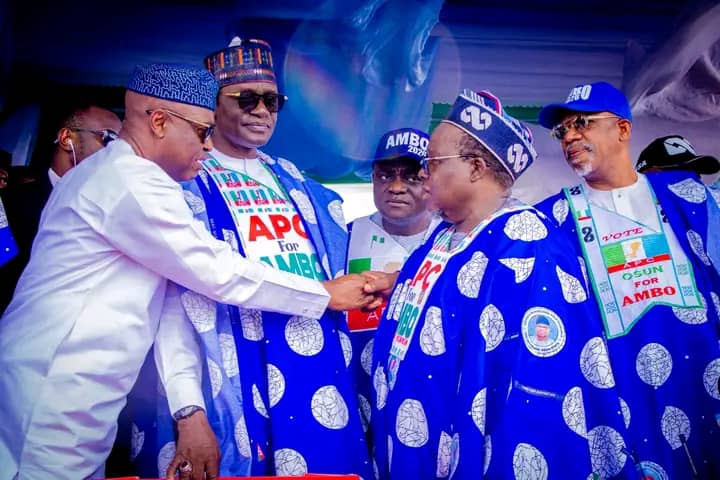
For too long, the highest office in Plateau State has been shaped by one-sided considerations. The repeated emergence of Christian Christian governorship tickets, while strategically convenient to some, continues to erode the principle of inclusive governance. It sends a subtle but loud message to a large portion of the population: you are seen, but not enough to be counted.

Muslims in Plateau have consistently shown political maturity. They have supported Christian-led tickets, participated in state-building efforts, and invested their trust in shared progress. From Wase to Kanam, Jos North to Shendam, Mangu, Quanfaan, and beyond, Muslim communities have not withheld their votes, their voices, or their commitment. But politics, like any meaningful relationship, cannot survive on one-sided loyalty. Reciprocity matters.

This is not just about religion; it is about equity. About the right of every community to see itself reflected in the leadership that governs it. Muslims make up a significant segment of Plateau’s population. Their persistent absence from the governorship, or even from serious consideration for the deputyship, is more than a political oversight; it is a moral failure.

What would it cost the political class to offer a Muslim-Christian ticket or vice versa? What would it say to the next generation if Plateau finally decides to lead by example, to choose unity over uniformity, and inclusion over imbalance?

My reflections are not theoretical. I grew up in a Plateau that taught me the value of coexistence. My closest friends in school, from Pilot Central Primary School, Wase, to Government Science College, Wase, through Federal College of Education (Technical), Bichi, in Kano State, and later Ahmadu Bello University, Zaria, were Christians. We laughed together, studied together, and dreamed together. That spirit never left me. It shaped my worldview, grounded in mutual respect and shared humanity. If we could sit side by side in class, why can’t we serve side by side in leadership?

In Wase Local Government, where Christians are a minority, they have not been pushed aside. They have held positions of responsibility, including Deputy Chairman, and benefited from federal appointments, many of which came under the leadership of Rt Hon Ahmed Idris Wase. This is not charity. It is simply fairness in practice.

That example should guide the rest of the state. Leadership is not a reward for numbers alone, but a test of vision. A government that sees only one side of its people cannot fully represent them. And a society that silences its own diversity risks becoming deaf to its own future.

Plateau State belongs to all of us. Let us end the quiet exclusion. Let us begin a new chapter, one in which faith is no longer a political disadvantage and unity is no longer a slogan but a living reality.

It is not too late to do the right thing. But it is urgent.

Malam Aminu Wase is a Political Analyst and Advocate for Good Governance and Youth Inclusion.

Beyond the Grand Finale: The Chronicles of the 61st Argungu Fishing Festival

By Dahiru Kasimu Adamu

The Argungu International Fishing and Cultural Festival is renowned as one of the most colourful spectacles on the global calendar. But beyond the crowning of the champion fisherman, the 61st edition, which concluded on February 14, 2026, was a profound chronicle of peace, cultural pride, economic promise, and even human drama.

Dating back to 1934  from the historic visit of Sultan Hassan Dan Ma’azu, which marked a handshake between the Sokoto Caliphate and the Kebbi Kingdom, the festival has evolved from a symbol of peace into a globally recognised cultural phenomenon. This year, after rigorous planning, the event delivered a programme richer than ever, blending tradition with advancement and culminating in a grand finale that drew thousands of fishermen and spectators to the ancient city of Argungu.

A Festival Forged in Culture and Commerce

The 61st edition was not merely a competition; it was a multifaceted event strategically designed to showcase Kebbi State. Activities kicked off in the state capital, Birnin Kebbi, with an Investor Forum that highlighted the region’s vast economic potential. This was complemented by an intellectual youth engagement, a Quiz and Debate competition at the Presidential Banquet Hall. 

Also, a colourful motor rally, flagged off in Abuja and involving over 30 vehicles, was part of the activities heralding the globally celebrated festival.

On Wednesday, February 11, the festival burst into life with a vibrant display of traditional sports. Archery, catapulting, camel and donkey racing, local wrestling, and a polo competition drew captivated audiences from within Nigeria and beyond. Participants displayed remarkable skill, with winners earning trophies, cash prizes, and gifts, setting an energetic tone for the days ahead.

Day two shifted gears with exciting cycling and boxing competitions unfolding at the festival venue.

The cycling race from Birnin Kebbi to Argungu saw Bello Muhammad clinch victory after one hour and 30 minutes of intense effort, taking home a trophy, a motorcycle, and N300,000. The boxing ring was equally electrifying, with Sha’aban from Kano State defeating Kebbi’s Yahayan Tarasa in a fiercely contested match that kept spectators on the edge of their seats.

The Heartbeat of Tradition: Kabanci and its Human Cost

Thursday was dedicated to celebrating the region’s lifeblood agriculture. An impressive Agricultural Show in Argungu featured giant rice pyramids, a powerful visual testament to the state’s rich endowments and achievements.

But the spiritual core of the festival, the legendary Kabanci water sports, unfolded on its third day.

 The Mala  River side became a theatre of ancestral skill as thousands thronged the banks. The scene was a breathtaking display of cultural heritage: men and boys fishing with bare hands, two-man canoe races slicing through the water, and the gruelling swimming contests with clay pots.

Participants demonstrated remarkable agility, passing down techniques across myriad generations. The Water Relay Race, a true test of endurance, was among the most cheered. However, the celebration was tinged with tragedy. Despite the presence of emergency services, reports emerged of the death of two participants in the water relay competition after Red Cross officials gave emergency assistance.

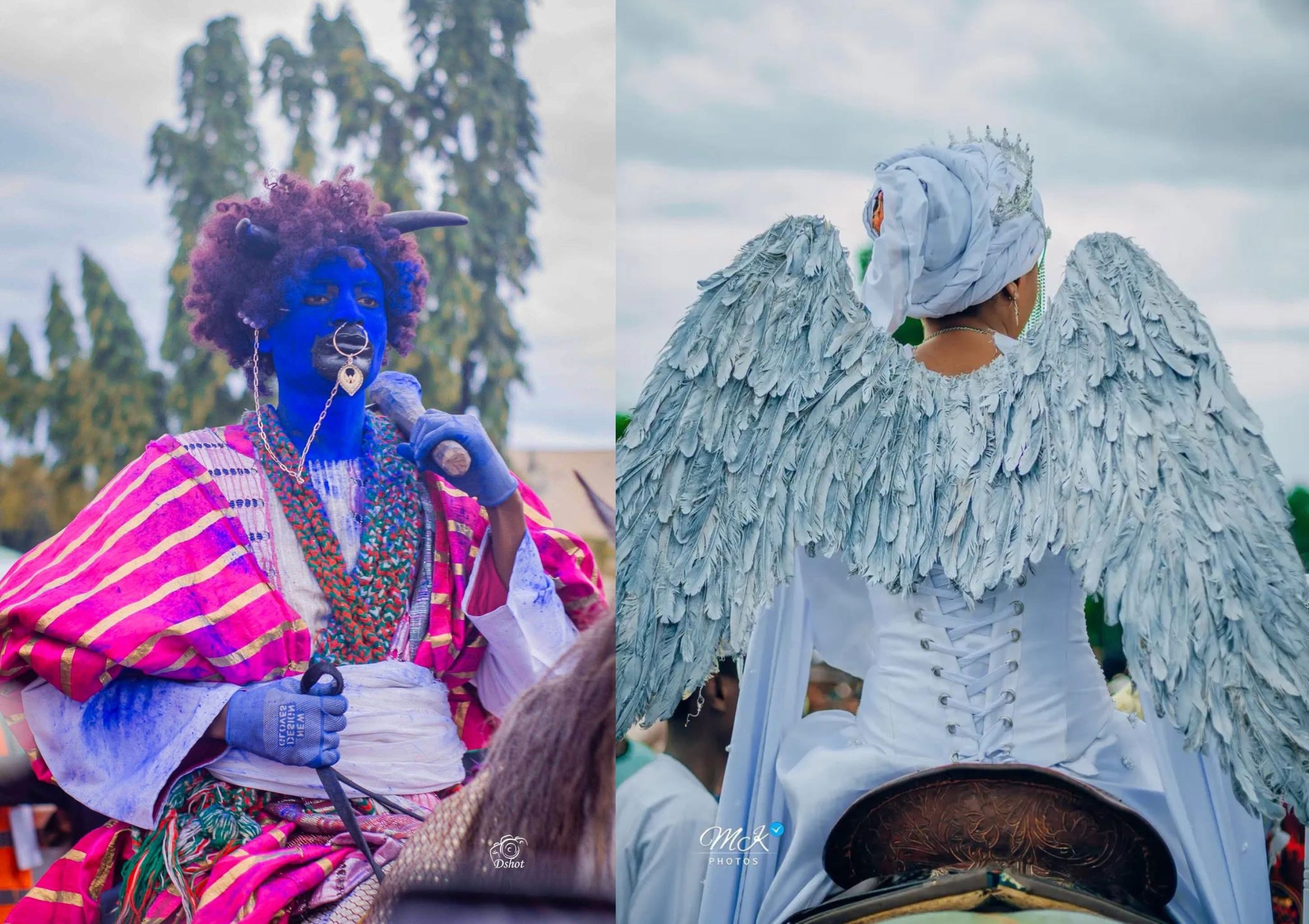
As dusk fell, the majestic Kabi Durbar transformed the atmosphere. A magnificent procession of decorated horses and riders, reflecting the Emirate’s martial history and equestrian excellence, offered a spectacle of regal splendour.

The Grand Finale: A 59kg Triumph

The week-long celebration culminated in the main event on Saturday, February 14. Over 40,000 fishermen entered the Matan Fada River, a river of humanity awaiting the starter’s signal. The formal commencement was timed with the arrival of the Special Guest of Honour, President Bola Ahmed Tinubu, who was joined by a host of dignitaries from within and outside the country.

The result was historic. Abubakar Usman from Maiyama Local Government Area of Kebbi State emerged as the champion, landing the festival’s biggest fish, weighing 59 kilogrammes. His feat earned him two brand-new Toyota vehicles, generously donated by the Sokoto State Government, along with a N1 million cash prize.

Abdullahi Garba from Argungu secured second place with a 40kg fish, receiving a Toyota saloon car from WACOTT Rice Miles Limited and N1 million. The third position was jointly claimed by Danlansu Dankani from Jega and another contestant, who each caught fish weighing 34kg, going home with N1 million and a motorcycle apiece.

President Tinubu, in his address, encapsulated the festival’s essence, describing it as “a historic event and a powerful symbol of unity and resilience and peaceful coexistence amongst Nigerians. It reflects the richness of our culture, the strength of our tradition and the opportunities that lie in harnessing our natural resources for national development.”

Echoes from Argungu: A Look to the Future

The festival’s impact resonated deeply with local residents. For Shamsu Usman and Ishaka Kabir,  among others, the event is more than a cultural showcase. They believe it is a vital economic driver, with income generated poised to be channelled into other productive activities, reinforcing the festival’s role in grassroots development.

The success of the 61st edition was also significantly amplified by the vital role of legacy media, news platforms, social media influencers, and content creators, whose coverage projected the images of Argungu to a global audience.

As the festival continues to attract tourists from every corner of the world, its position as a premier cultural tourism destination in Nigeria is firmly cemented. The collective vision now is for the Argungu Emirate Council, the Kebbi State Government, and the Federal Government to work in concert. By investing in modern strategies, infrastructure, and sustainable practices, they can further enhance the festival, ensuring it remains a powerful engine for socio-economic development in Argungu, Kebbi State, and the nation at large for generations to come.

Umar Ascon: A friend, A Brother, A Dreamer Gone Too Soon

By Shamwil Ibrahim (Justice)

The news of Umar Ascon’s death arrived with a weight that words can barely carry. For many who knew him, it felt unreal, like a story told in error, a rumour that would soon be corrected. But it was true. Umar Ascon was gone. For those of us who shared a classroom with him, the loss feels even more personal.

I first met Umar Ascon in 2015 at Kano State Polytechnic. We were both admitted to study English and Applied Linguistics. Like many students starting a new academic journey, we were strangers brought together by the same course and the same campus. Yet it did not take long for Umar to become someone impossible to overlook.

He was one of the funniest people in our class and, arguably, in the entire department. Wherever Umar was, laughter followed. His humour was natural and effortless. He had a way of turning ordinary conversations into moments of joy. In lecture halls, corridors, or casual gatherings around campus, Umar had the rare ability to make people forget their worries, even if only for a moment.

Although he was older than me, Umar never allowed age to create distance between us. He treated everyone with openness and warmth. Over time, what began as a simple acquaintance developed into friendship. Across Kano State Polytechnic, Umar was already known by many students. Whenever he walked across campus, people would often point him out and whisper a familiar word: celebrity.

The reason was simple. Even during his years as a student, Umar Ascon was already appearing in Kannywood films. He was gradually building his presence in the Hausa film industry while still pursuing his education. For many students, seeing someone from their own classroom on television screens was both surprising and inspiring.

Yet what made Umar remarkable was not just his growing recognition in the film industry. It was his humility.

Despite the attention he received, Umar remained approachable and friendly. He never carried himself with arrogance. Instead, he used his position to encourage and uplift others.

For me, Umar did something that would shape my life. He introduced me to the Kannywood film industry. Through him, I found my own path into filmmaking, a voyage that continues to define my creative life today. Opportunities like that often come through people who believe in you before the world does. Umar was that person.

Even in recent times, Umar continued to think about the future of the industry he loved. The last conversation I had with him was about a film project he was planning. Umar spoke passionately about creating a production that could reach global standards, a film capable of standing proudly alongside international productions on platforms such as Netflix. He believed strongly that the Hausa film industry had the talent and stories needed to reach the world.

His dream was not only to entertain audiences but to elevate the industry. That dream now remains unfinished.

When the news of his death reached me, disbelief overwhelmed me. I felt compelled to confirm it myself. I called his phone. His wife answered. My voice shook as I asked, almost hoping the answer would dismiss the rumour. “Where is Umar?”

There was silence for a moment. Then, through tears, she spoke words that will remain with me forever. “Umar is no more.” She explained that he had passed away following complications related to liver illness. In that moment, reality settled with painful clarity.

Inna lillahi wa inna ilaihi raji’un.

Umar Ascon’s death represents a profound loss not only to his family and friends but also to the Kannywood film community. He was talented, vibrant, and deeply passionate about his craft. His presence brought laughter to classrooms, energy to film sets, and encouragement to those around him.

Some people leave behind fame. Others leave behind fortune. Umar left behind something far more enduring: memories, laughter, and inspiration.

For those who knew him, the echoes of his humour and kindness will remain long after this moment of grief passes.

May Allah forgive his shortcomings, grant him Aljannatul Firdaus, and give strength to all those mourning his loss.

Umar Ascon may be gone, but the stories, laughter, and dreams he shared will continue to live on. History will be so kind to you, Umar Ascon (Chairman).

Shamwil Ibrahim (Justice) wrote via ibrahimshamawilu@gmail.com.

OPINION: Tinubu’s Policies Are Systematically Destroying Northern Agriculture While Boosting Southern Businesses

By Dr. Umar Musa Kallah

Nigeria’s food import bill has more than doubled under President Bola Ahmed Tinubu, rising from ₦3.83 trillion in 2023 to ₦7.65 trillion in 2025, according to the National Bureau of Statistics data.

This surge is not the result of global shocks or natural disasters alone. It stems directly from a deliberate policy of granting liberal import waivers on maize, rice, soybeans and other staples. Announced repeatedly as a measure to crash food prices, these waivers have instead achieved a far more targeted outcome: the collapse of Northern farms and agro-processing industries while delivering clear economic advantages to Southern importers, poultry conglomerates and port-based processors.

The contrast with the Buhari administration is striking. Between 2015 and 2023, agriculture was positioned as a cornerstone of national development. The Anchor Borrowers’ Programme channelled over ₦800 billion to more than four million smallholder farmers, enabling cultivation on more than five million hectares.

Rice production rose sharply from between 2.5 million and 3.7 million metric tonnes to peaks of 8.5 million to nine million metric tonnes, positioning Nigeria as Africa’s largest producer and, for a time, a net exporter in the region. The 2019 land border closure protected local value chains and revived rice milling, soybean crushing, groundnut and cotton-seed processing across the North.

More than 150 modern rice mills emerged nationwide, with over 100 located in Northern states. Oil mills in Kano, Kaduna, Gombe and Jigawa thrived on locally sourced raw materials, generating tens of thousands of direct and indirect jobs and triggering a strong post-harvest multiplier effect that spread prosperity through transport, packaging, marketing and local services.

That progress has been reversed under the current administration. Milled rice production has fallen to a projected 5.5 million metric tonnes in the 2025/26 season, down from Buhari-era peaks. According to the Rice Processors Association of Nigeria, nearly 90 of the country’s 150 rice mills have shut down since 2023, with many surviving mills operating at 30 per cent capacity.

Northern facilities have suffered the heaviest losses. Soybean, groundnut and cotton-seed crushing plants that once benefited from protected local supplies now run at below 20 per cent capacity or have been forced to liquidate assets. Fertiliser prices have escalated dramatically, with a bag of urea selling for  ₦58,000 and NPK for ₦120,000 in many markets.

Diesel and pms costs have tripled following the removal of fuel subsidies. At the same time, farm-gate prices for staples such as maize have collapsed to as low as ₦38,000 per 100kg bag, often falling below the cost of production, which exceeds ₦1 million per hectare in many areas. Farmers are abandoning their fields, selling at a loss or leaving the sector entirely.

These outcomes are not accidental. The import waiver regime, which offers zero-duty and VAT exemptions on key commodities and was first announced in 2024 before being effectively extended, has operated without any parallel measures to reduce input costs or protect local processors.

Maize waivers have primarily benefited major poultry conglomerates concentrated in the South, where the feed industry is dominated by Southern operators. Soybean imports allow Southern processors to bypass local crushing altogether. Rice milling is visibly shifting southward, with imported paddy now processed in expanded Southern facilities and the finished product shipped back to Northern markets.

Northern oil millers, who lack direct access to seaports, are placed at a severe disadvantage. They cannot import raw soybeans competitively and are instead forced to purchase already-crushed crude soybean oil from Southern refiners who enjoy the logistical advantages of Lagos and Port Harcourt ports. As a result, capital that once circulated within Northern communities now flows southward to port operators, importers, logistics firms and Southern feed mills.

The regional imbalance extends far beyond farming. Unemployment has risen sharply in the North, where agriculture remains the primary source of livelihood for the majority of the population. Each closed rice mill has eliminated hundreds of direct jobs and thousands of indirect positions in farming, transport and allied services.

With nearly 90 mills out of operation, tens of thousands of Northern livelihoods have disappeared. Rural underemployment has increased as the traditional post-harvest economic surge has vanished. Northern states, already facing challenges of insecurity and weak infrastructure, are experiencing accelerated rural-urban migration, higher youth joblessness and deepening poverty. In contrast, Southern urban centres have gained from expanded import-related activities, including more jobs in ports, poultry processing, logistics and distribution services tied to cheap foreign inputs.

Other factors compound the North’s disadvantage while strengthening the South. Billions of naira invested in Northern agro-industries during the Buhari years are now stranded or liquidated, while Southern processors with direct sea access and waiver-backed imports continue to attract fresh capital and expand operations.

The classic multiplier effect that once spread prosperity from Northern harvests across the national economy has been reversed, with money draining out of the North and concentrating in Southern hands. Food security has been undermined for the entire country.

A population exceeding 230 million now depends increasingly on volatile imports for basic staples, exposing Nigeria to global price shocks, foreign exchange crises and potential supply disruptions. The South, as the hub of processing and distribution, benefits from short-term consumer price relief and sustained industrial activity.

No policy under the Tinubu administration prioritises the strengthening of local farms and industries over importation. Instead, the waiver regime actively discourages domestic production by making imported raw materials artificially cheaper than locally grown equivalents, without corresponding support for Northern farmers or processors.

Government statements continue to celebrate minor drops in consumer prices while ignoring the collapse of local capacity. The pattern is consistent and unmistakable: repeated public commitments to crash farm-gate prices, unchecked waivers and complete neglect of Northern processing infrastructure.

Nigeria cannot achieve sustainable development by weakening its primary food-producing region. The deliberate marginalisation of the North’s agricultural economy risks mass unemployment, rural depopulation, social instability and long-term national food insecurity. Northern governors, traditional rulers, farmers’ associations, rice processors and business leaders must now break their silence. The evidence shows a clear agenda to render the North economically redundant so that Southern interests can dominate value chains and resource flows.

The mills cannot remain silent and the fields cannot be left fallow indefinitely. A nation of this size, increasingly dependent on foreign food while one of its most productive regions is systematically impoverished, faces grave danger. The people of the North must act to defend their economic future before it is lost forever. This is not development. It is calculated dispossession, and it must be confronted without delay.

Dr. Umar Musa Kallah wrote in from Kano, Nigeria.

A Wake-up Call to Our Youth

By K.H.M Haladu Muhammad 

As I wrote this article from my point of view on leadership, or what leadership is all about, we already know that leadership is a collective responsibility, not a one-person business. Some may think leadership is only one person’s business or responsibility, that’s the one people elected or chosen to be in the mantle of leadership.

A leader is a servant of the people, meaning that leaders serve the interests and affairs of the state, not their personal interests. Some people think that if a leader is done with some developmental projects or programmes, my fellow youth and citizens think that the government or the leader is privileged; they forget that anything the government has done is our right, not a privilege.

In these points, I would like to call our attention to what values and self-leadership are. Let us take a look at what values are: beliefs and principles that guide someone on how they think, how they act, how they treat others, and how they make decisions.

Values enable leaders to earn respect and trust, make the right decisions, stay consistent under pressure, and lead without fear.

My question is whether there are some core values that we all have, these are: Accountability, commitment, discipline, fearlessness, integrity, respect for others, tolerance, hardworking and timeless.

Please, are you accountable, committed, disciplined, hardworking, and respectful of others? I just selected five of the nine to see whether any of us are practising the core values.

Let us take a look at self-leadership, a process of intentional self-influence that fosters motivation, direction, and continuous personal growth. It’s taking ownership of your thoughts, actions, and development without waiting for external directions. Why I say self-leadership matters as a young person: it allows you to build confidence, enhances autonomy, increases adaptability, and sharpens decision-making.

Are we all practising self-leadership? Please, if we are not, let us start not tomorrow or later, the time is ticking, we should start now.

We should start taking care of our little problems, because leadership starts from our home, school, office, and even up to where you think the so-called leaders are based. Because change starts with you, not others, if we do not change ourselves, we can’t have the leaders we aspire to.

And lastly, who are those leaders? Their people, like me, you, and us, are from the society and community; they’re like you, so if we don’t change our values and practice self-leadership. We should start making nonsense all over social media or at gatherings because we’re the ones producing the leaders we have.

Please let us look at these core values and reflect on some of them. Thank you  

K.H.M Haladu Muhammad wrote from Maru LG, Zamfara State.

Cheap Drones, Costly Consequences

By Zayyad I. Muhammad

Low-budget drones are reshaping the architecture of modern warfare in ways that were unimaginable just a decade ago. They allow combatants to engage targets with minimal human contact, reduced battlefield exposure, and significantly fewer casualties. Unlike traditional air power that requires expensive fighter jets, trained pilots, and sophisticated logistics, drones can be produced at low cost, deployed quickly, and operated remotely with high precision. This shift is lowering the barrier to entry for military capability and redefining how wars are fought.

More importantly, this transformation is changing the balance of power between strong and less-powerful nations. Previously, military dominance depended heavily on air superiority, armoured divisions, and naval strength, all of which were controlled by a handful of major powers. Today, relatively smaller or less-equipped countries can use swarms of low-cost drones to challenge technologically advanced militaries. This has made conflicts more prolonged, unpredictable, and difficult to decisively win. Even well-funded armies now face persistent threats from inexpensive systems that are hard to detect and cheap to replace.

The Ukraine-Russia war is a clear example of this shift. A country with fewer conventional military resources has been able to slow down and at times stall a larger, more powerful opponent by using drones for surveillance, artillery guidance, and direct strikes. Commercial-style drones modified for military use have destroyed tanks, disrupted supply lines, and targeted command positions. This has contributed to battlefield stalemates and reduced the effectiveness of traditional heavy military advantage.

Similarly, the United States-Israel-Iran war has demonstrated how drone technology is changing deterrence dynamics. Iran, with its Shahed drones, was able to withstand the US and Israel at the same time, including being able to attack other countries. Iran was able to attack military bases, infrastructure, or naval assets across the Gulf and Israel using its relatively cheap drones; these have altered strategic calculations of the entire war. Furthermore, this suggests that even nations without overwhelming conventional strength can project power and create credible resistance.

However, while low-cost drones provide tactical advantages, they also introduce serious risks. The biggest concern is that non-state actors, militias, insurgent groups, and even criminal organisations can now access and deploy drone technology. Unlike fighter jets or missiles, drones are easier to acquire, modify, and operate. This increases the likelihood of asymmetric attacks against states, critical infrastructure, and civilian targets. What was once the exclusive domain of national militaries is now accessible to smaller groups with limited funding.

In essence, low-cost drones have ‘democratised’ air power. They have changed the face of war, reshaped military strategy, and reduced the dominance of traditional superpowers. But at the same time, they have introduced a new era of insecurity where conflicts may become more frequent, more decentralised, and harder to control. The same technology that reduces casualties on one side also increases the risk of widespread, unpredictable confrontations, especially when used by non-state actors beyond conventional rules of engagement.

This trend is no longer limited to state actors alone. Multiple credible reports and security analysts confirm that Boko Haram and ISWAP (Islamic State West Africa Province) have increasingly deployed low-budget, commercially available (COTS) drones, often modified quadcopters, in attacks on Nigerian military positions in the Northeast. These drones are reportedly used for surveillance, reconnaissance, and in some cases, direct strikes against troop locations and defensive positions.

Beyond Nigeria, other non-state actors in different parts of the world have also been reported to use low-budget, commercially available drones, typically inexpensive quadcopters or FPV models, modified with improvised explosives, grenades, mortar rounds, or IEDs. These systems are deployed for intelligence gathering, target acquisition, and direct attacks. The accessibility of these platforms makes them attractive tools for irregular forces seeking to offset conventional military disadvantages.

 Zayyad I. Muhammad writes from Abuja via zaymohd@yahoo.com.

Kwankwaso, America, and the Risks of External Political Labelling

By Abdulhamid Abdullahi Aliyu

Recent signals from Washington suggest a growing impatience with Nigeria’s internal complexities, especially as they relate to religion, security, and political leadership. At the centre of this emerging posture is a troubling tendency to compress Nigeria’s layered crises into externally convenient labels—labels that risk doing more harm than good.

One of the clearest flashpoints in this evolving narrative is the renewed attention to former Kano State governor Rabiu Musa Kwankwaso. His name, along with those of Fulani-affiliated organisations and, by implication, Nigeria’s Muslim political class, has begun to feature in American policy conversations framed around religious freedom and accountability. What appears, at first glance, as principled concern deserves closer scrutiny.

Nigeria’s security breakdown is undeniable. Insurgency, banditry, farmer–herder violence, and organised criminal networks have torn through communities across the country. But these tragedies have never respected religious boundaries. Muslims and Christians, northerners and southerners, rural farmers and urban traders have all paid the price. To reframe this national trauma primarily as a story of religious persecution is to flatten reality into something politically useful but analytically false.

This framing did not emerge organically. It has been cultivated through persistent lobbying, selective reporting, and advocacy-driven briefs circulated within Western policy and faith-based circles. Many of these narratives rely on contested data sets and ideologically motivated interpretations that have been challenged by journalists and security analysts familiar with Nigeria’s terrain. Yet repetition has given them traction.

Under Donald Trump, the United States has shown a greater willingness to convert these narratives into policy instruments. Nigeria’s earlier designation as a “Country of Particular Concern” over alleged religious persecution, and the signals accompanying its reconsideration, reinforced the impression that Washington had settled on a moral script that leaves little room for nuance.

What is especially alarming is how this posture now intersects with Nigeria’s domestic political timeline. The proposal of punitive measures against figures like Kwankwaso—who has no public record of religious extremism—raises uncomfortable questions about motive and timing. Sanctions, visa restrictions, or terror designations do not occur in a vacuum; they shape reputations, constrain political options, and influence electoral perceptions.

Even more dangerous is the elastic use of terms such as “Fulani militia.” The Fulani are not a monolith, nor are they a security organisation. They are a vast, diverse population spread across West and Central Africa, encompassing professionals, farmers, scholars, politicians, and pastoralists. To collapse this diversity into a security label is not accountability—it is ethnic profiling with far-reaching consequences.

Those who defend this approach often argue that allowing clerics or religiously identified politicians into democratic space risks sanctifying power. That concern is not without merit. In plural societies, when political authority borrows the language of divine legitimacy, dissent can be recast as moral deviance. But that argument cuts both ways. External actors who cloak geopolitical interests in moral absolutism risk exporting the very instability they claim to oppose.

Nigeria’s democracy, imperfect as it is, rests on pluralism, negotiation, and the acceptance of politics as a human—rather than sacred—enterprise. When foreign policy instruments treat Nigerian political actors as symbols in a global religious drama, they undermine this fragile equilibrium. Worse still, they embolden local extremists who thrive on polarisation and grievance.

None of this is to argue against international engagement or concern for human rights. On the contrary, Nigeria benefits from cooperation with partners such as the United States in intelligence sharing, capacity building, and counterterrorism. But partnership must be grounded in evidence, context, and restraint—not in sweeping classifications shaped by advocacy pressure or domestic American politics.

If Washington’s objective is stability in West Africa, then the path forward lies in engagement rather than labelling, dialogue rather than designation. Nigeria’s challenges are internal, complex, and deeply rooted. They cannot be solved by reducing political figures to caricatures or entire communities to security threats.

Kwankwaso’s politics, like that of any public figure, should be judged by Nigerians through debate, scrutiny, and the ballot. External political labelling, however well-intentioned, risks distorting that process and deepening divisions within an already strained federation.

In the end, what Nigeria requires from its partners is not moral theatre but sober cooperation. Fairness, evidence, and respect for internal democratic processes remain the only sustainable foundations for international engagement.


Abdulhamid Abdullahi Aliyu is a journalist and syndicate writer based in Abuja.

Reflections on Prof. Pate’s Tenure as Third Vice-Chancellor of FUK

By Muhammad Nasiru Yaya

Leadership in academia is often measured not only by policies and projects, but by stability, service, and the enduring footprints left behind. For Prof. Umaru A. Pate, the outgoing 3rd Vice-Chancellor of the Federal University of Kashere (FUK), the end of his tenure marks not just a transition but the close of a chapter defined by commitment, resilience, and purposeful leadership. As he bows out with the words, “I have served, I am happy to leave”, he does so as a fulfilled and happy man—having delivered on the responsibilities entrusted to him.

On the 18th December, 2020, Professor Pate was appointed the 3rd substantive Vice Chancellor of the University of Kashere by the Governing Council of the institution, under the leadership of Barrister Yakubu A.H Buba (SAN), in a seamless and transparent exercise. On Wednesday, 10th February, 2021, he took over the mantle of the Federal University of Kashere as the 3rd Vice Chancellor, with a solemn pledge to transform the University into one of the great fortresses of learning not only in Nigeria but also in Africa. 

In his first impression as VC he fully praises the Almighty Allah for choosing him to occupy the exalted seat- promised to make his dream of transforming the University a reality by adoption of six-points agenda which involves, physical and academic development, maintenance of standards and quality assurance in the system, provision of an excellent town and grown relationship, improved staff and students warfare as well as making investment on Information and Communication Technology. He believed these are essential for any serious institution yearning for academic excellence and development, to ensure global visibility and to reach out within and beyond for resource mobilisation. He promised to work with relevant stakeholders to ensure the institution has sufficient resources to execute and achieve its goals.

On the day of his arrival, he declared that he would do his utmost best to ensure that he didn’t disappoint the confidence reposed in him. He said, and I quote, “Mine will be to consolidate and further build on what the first and second Vice Chancellors were able to lay. This is the system that will outlive us. It never occurred to me that one day, I would also be part of the process. And today I am here, in Sha Allah, we shall do our best to make Federal University of Kashere a great institution.” 

He further added that “what you sow today may germinate in many, many years to come. If you sow evil, you will harvest evil. If you sow good, you will never tell the extent of the fruit you are going to benefit from; therefore, we are going to sow a seed that will be counting in us long after we must have left this place.” However, these are not just statements; they are a declaration of commitment, resilience, and purposeful leadership. 

Within just a year, the institution started to see changes across various faculties and research centres, as well as academic and non-academic standards.  Within a short time, he visually transformed the institution for the better in all aspects. Two years down the line, the Federal University of Kashere had become a hub of academic excellence. He also sponsored more than 45 people for International workshops, and proposal writing on Grand Menard and Management, and promoted multiple stand academic staff to professorial careers. 

In 2024, more than three years into his stewardship, the University had maintained its standards through innovative research and a conducive learning environment, which had garnered national recognition. Under his leadership, in the 2024 National University rankings in Nigeria, the institution secured the 29th spot among the country’s best universities, alongside Covenant University, the University of Ibadan, and the Federal University of Technology, Akure. In 2025, the University was placed as 28th overall in the country.

In the same way, during his tenure, Pate upgraded the SIWES and General Studies Unit to a Directorate and its own, and he also granted approval for the commencement of part-time undergraduate degree programmes at the university. In the same vein, he also established the IJMB programme at the University. He also established a college of Medical Sciences. He is fully accredited for about ten undergraduate programs from the National University Commission (NUC), including Mass Communication. He also established three academic centres of excellence for Sugar Research and Development, Peace and Security Studies, and Environmental and Climate Studies.

In addition, the Federal University of Kashere has consistently recorded commendable achievements and projects under the leadership of Prof. U.A. Pate. The University, in collaboration with the United Nations International Children’s Emergency Fund (UNICEF), signed a Memorandum of Understanding (MoU) to promote the study of communication for social and behavioural change. 

However, Under the administration of Prof. Pate, Federal University, Kashere has become a beehive of construction activities, notable among these projects are, completion of Lectures Theater 3, 350 Capacity, completion of 30 number of professorial offices, completion of Lecture Room C, completion of the Other wing of the 250 Twin Lecture Theater, LT2, as well as completion of Prof. Jibrin Aminu College of Medical Sciences, he also secured multi-million FUK Guest house in Asokoro Abuja, the groundbreaking of FUK Christian Chapel, the ongoing new University Senate building and new 500 capacity Lecture Theater. 

On 12 December, 2022, Prof. Pate established the Broadcasting Complex, which contains both TV and Radio Studios, with the aim of supporting student learning. Within the last five years, Prof. Pate has signed a number of MoUs and collaborated with notable organisations and institutions, both locally, nationally, and globally, to reach out to prominent personalities in the state and beyond and attract funds to execute more projects on Campus.

Throughout his tenure as Vice Chancellor, Prof. Pate has maintained a cordial relationship with staff and students of the University; to say that, Prof. Pate has more than justified his appointment as leader of this great fortress of learning. Now that he leaves, FUK has been further repositioned as a great institution for higher learning.

As Prof. Umaru A. Pate steps away from office, he leaves behind more than records and reports—he leaves a university steadier than he met it, a community shaped by service, and a legacy anchored in duty fulfilled. His tenure as the 3rd Vice-Chancellor of the Federal University of Kashere will be remembered not for noise, but for substance; not for length, but for impact. Indeed, he came, he served, he delivered—and he left a happy man.

Muhammad Nasiru Yaya, a graduate of Mass Communication, writes from home.

Mohammadnasiryaya@gmail.com.

Examining the Sanity of Saner Climes

By Amir Abdulazeez

Several decades into the global modern era, Africans, Asians and Latin Americans continue to be held hostage by their colonially indoctrinated inferior mindsets engineered by the blackmail and mythology of Western moral supremacy. This error is not in observing Western virtues, many of which are real. The error is in the uncritical veneration that renders their vices invisible and their judgements unchallengeable. It is evident from the events of the last three decades alone that the so-called saner climes of Europe and North America are the primary architects of global chaos and instability of nations, all in the name of injecting sanity into ‘less sane’ societies.

The ongoing US-Israel war on Iran, launched in the midst of Ramadan, is a typical doctrine of the saner climes, exhibited in its most naked form. Iran’s Foreign Minister had said three days before the war was declared that a nuclear agreement was ‘within reach’ after a third round of indirect talks in Geneva. 

The IAEA itself confirmed there was no evidence of a structured Iranian nuclear weapons programme at the time of the attack. Yet, the surprise assault assassinated Supreme Leader Ali Khamenei, killed his family members and damaged schools, hospitals and even UNESCO-recognised cultural heritage sites. This is a typical catalogue of barbaric war crimes for which the West has condemned others across generations. 

The Donald Trump administration, whose seemingly rude, dishonest and arrogant officials, has offered a menu of rationalisations and a handful of conflicting justifications for the war. However, when Amnesty International confirmed that the United States was responsible for a strike that killed at least 160 primary school girls, the US officials chose arrogance through denials instead of remorse. 

In fact, the Head of the Federal Communications Commission simultaneously intimidated his own press, threatening the withdrawal of broadcast licenses of American news outlets whose war coverage he deemed unfavourable. Another trademark saner-climes mythology, muzzled in a way only a few non-saner climes can imagine. 

Meanwhile, in all these, it is the ‘lunatic’ Iran that is supposed to apologise and do nothing while it is attacked. The Iranian Regime, branded as autocratic on the premise that it compels women to cover their hair in public, is being lectured by leaders of societies whose women go out naked in the name of civilisation and whose governments topple, kill and abduct Heads of state of other countries for recklessly greedy reasons. 

Now imagine if the erratically behaving Donald Trump were the leader of any African Country, the West would have since declared him incoherent and unstable to deal with or labelled his citizens stupid for voting for him. Worse still, imagine if the Epstein scandal happened in Asia or Latin America. All these contradictions reveal with crystal clarity that Western principles are instruments of convenience. 

To understand the foundations of all these, let us revisit some history. Britain’s Industrial Revolution was fertilised by the profits of the transatlantic slave trade and the systematic plunder of India, a country whose share of global GDP fell from about 25% at the onset of colonial rule to barely 4% at independence. 

France financed much of its republican grandeur on the forced labour of West Africa and the Caribbean. Belgium’s King Leopold II transformed the Congo into a private abattoir, severing the hands of Africans who failed to meet rubber quotas, leaving behind a traumatised country that still bleeds today. 

To speak of the sanity of those climes without acknowledging that they were partly built from organised insanity inflicted elsewhere is to ignore the background to what we are witnessing today.

In the last fifty years alone, the so-called saner climes have unleashed a level of violence and destabilisation that would shame any regime they have ever deemed fit to condemn. The United States, the self-acclaimed sentinel of the free world, has engineered irrational regime changes in Chile (1973), Iran (1953 and subsequently), Guatemala (1954), Nicaragua, Panama, Libya, Iraq, Afghanistan and Syria, among others. The 1973 CIA-backed coup against a democratically elected socialist president of Chile, Salvador Allende, installed Augusto Pinochet, under whose reign thousands were tortured, disappeared, or executed. Henry Kissinger, the American architect of that atrocity, received the Nobel Peace Prize from his fellow saner clime comrades. 

The French Government, through its notorious Françafrique policy, maintained a neocolonial empire across West and Central Africa long after the 1960s, propping up murderous dictators and conducting military interventions to protect economic interests, with a consistency that made a mockery of every democratic principle France professed to uphold.

The invasion of Iraq in 2003 by Western Governments is perhaps the most consequential act of manufactured catastrophe of the modern era. The war resulted in the deaths of an estimated 200,000 to one million Iraqi civilians, the obliteration of the country’s infrastructure, the rise of ISIS from the ashes of a disbanded Iraqi army and the triggering of a refugee crisis that continues to destabilise the Middle East. No one was held accountable. George W. Bush and Tony Blair are living happy lives in their saner countries. The International Criminal Court, which has indicted multiple African heads of state on much lesser crimes with considerable alacrity, found no jurisdiction to examine any of them. Meanwhile, the people of Iraq, Syria and Libya who were dismantled in the name of liberation still live in the ruins and pains of what the saner climes call democracy.

While the West was busy bombing the Middle East, Africa, the so-called backward continent, was largely attending to its own affairs of conflict resolution with a remarkable degree of maturity. The African Union mediated crises in Burundi, the Gambia and Lesotho without firing a single bullet. ECOWAS brokered peace agreements in Sierra Leone and Liberia and deployed peacekeeping forces with genuine multilateral mandates, without the casual trigger-happiness of Western powers. 

Western attitude towards violence is shamelessly selective. When Russia invaded Ukraine in 2022, the Saner Clime’s response was swift, comprehensive and morally unambiguous: sanctions, weapons, diplomatic isolation and a media chorus of civilizational solidarity. This response was appropriate anyway. But the problem is its stark contrast with the Western posture toward other invasions. When Saudi Arabia launched its war on Yemen in 2015, the United States and the United Kingdom did not merely decline to intervene; they allegedly supplied the bombs, refuelled the warplanes and provided intelligence for strikes that killed thousands of Yemeni civilians and engineered one of the worst humanitarian crises on earth. 

Many argue that the actions of Western governments do not accurately reflect what their citizens stand for. This is debatable, especially when one examines certain incidents. During the Obama presidency, Edward Snowden revealed that the US National Security Agency was conducting mass, warrantless surveillance of American citizens and foreign governments, including the personal telephone of former German Chancellor Angela Merkel, in flagrant violation of constitutional protections and international diplomatic norms. The response was not accountability but exile for Snowden and a classification of his revelations as treason. 

The United States has the largest prison population on earth, both in absolute numbers and per capita, administered under a system in which Black Americans are incarcerated at five times the rate of their white counterparts, in conditions that the United Nations has described as cruel. Since 1968, gun violence has claimed more American lives than all of America’s foreign wars combined. One might be inclined to believe that these controversies are ones ordinary Western citizens may not approve of.

Climate change is another damning indictment of Western moral authority in the twenty-first century. The Industrial activities enriching Europe and North America still depend on burning carbon at a scale the planet has never experienced. The United States, historically the world’s largest cumulative emitter of greenhouse gases, withdrew from the Paris Climate Agreement under Donald Trump. 

Australia, another clime reputed to be considerably saner than most, has built its prosperity on coal exports and resisted meaningful emissions reduction. Some Pacific Island nations face sea submersions within this century as a consequence of decisions made in saner capitals. When these nations’ leaders speak at the United Nations with tears in their voices, the saner climes offer symbolic but empty sympathy before later returning to preserving their industrial prerogatives. 

The Western Media’s tactical twisting of narratives regarding other climes is another issue. For example, CNN may not run primetime documentaries on the Swiss banking system’s complicity in laundering the proceeds of African kleptocracy, but will rather concentrate on the primary kleptocrats. The BBC does not lead with investigations into the role of British arms dealers in sustaining African conflicts. The New York Times does not dedicate its front page to the tax avoidance schemes through which Western corporations drain billions of dollars annually from African economies (more than the continent receives in foreign aid).

In addition to all this, there is something more worrisome. The bulk of support received by these saner climes comes from their victims in the third world. In Nigeria, for instance, the blind sympathy for religious affiliations drives people to support the brazen oppression and cruel injustices perpetrated by the West. Our solidarity should be among ourselves, not with those who see and treat us as worthless humans and more like animals because of their superior moral hypocrisy. 

Additionally, our bootlicking governments, which are considered close to valueless in the International arena or even insane just like us, must stop intimidating their own citizens who decide to speak up against Western double standards. Let’s remember, the phrase “saner climes” is a moral verdict and a devastating condemnation of everywhere else except Europe and North America. Africans and all peoples of the marginalised world are owed the intellectual inheritance of critical discernment.

The world does not need more or fewer saner climes; it needs a more honest accounting of what sanity actually requires. It requires consistency: the same rules applied to the powerful and the powerless alike. It requires humility: the acknowledgement that no civilisation holds a monopoly on wisdom. 

And it requires accountability: not the selective justice of indicting the weak and glorifying the mighty, but the universal application of standards that do not bend before a Security Council veto or the impulse of a self-serving superpower. Until that accounting arrives, the presumption of Western moral authority deserves not deference, but fearless interrogation; the kind that the so-called saner climes have always claimed to celebrate and so rarely been prepared to receive.

Pantami, Power and the Burden of Moral Clarity

By Abdulhamid Abdullahi Aliyu

A Hausa proverb warns that you cannot run at full speed while scratching an itch. The saying captures, with striking simplicity, the dilemma now surrounding Sheikh Isa Ali Pantami as conversations about his political ambitions gain momentum.

Public life demands clarity of role and consistency of purpose. When an individual seeks to occupy two morally and structurally conflicting spaces simultaneously, momentum is lost, and credibility is strained. This is the core tension in Pantami’s current trajectory: the attempt to remain a preacher with clerical authority while simultaneously stepping into partisan politics.

The problem is not ambition itself. It is role conflict. Clerical authority depends on moral certainty and spiritual distance from power, while politics thrives on negotiation, compromise, and moral ambiguity. Attempting to inhabit both worlds simultaneously risks weakening the integrity of each.

This tension becomes even more consequential in a plural society like Nigeria, where religion carries deep emotional authority and political power must remain anchored in constitutional legitimacy. Once religious influence is injected into partisan competition, power risks acquiring a sacred character. Political disagreement can then be reframed, subtly or overtly, as moral failure or spiritual deviation rather than a contest of ideas and interests.

Some have argued, including respected commentators like Jaafar Jaafar, that religious clerics should avoid politics altogether because political space is inherently compromised by bargaining, corruption and ethical trade-offs. Others counter with a seemingly reasonable question: if the aim is to sanitise politics, why not allow upright clerics like Pantami to participate?

That question, however, misunderstands the core concern. The issue is not whether a cleric is personally virtuous. It is about the separation of religion and the state. Democracy relies on pluralism, persuasion and accountability. When religious authority enters partisan politics, votes may be influenced not by policy debate, but by guilt, fear, or claims of divine sanction. That is a dangerous precedent in any diverse society.

The concern deepens when the individual seeking political office has, in the past, described politics itself as immoral or ungodly. Such a record invites legitimate questions of coherence. Has politics suddenly become virtuous, or has it merely become useful? Citizens are entitled to ask not out of prejudice, but out of democratic caution.

More troubling still are historical associations with ideological currents that have openly viewed democratic participation not as a means of strengthening institutions, but as a strategy to hollow them out from within — the well-known shiga daga ciki a gyara argument. In societies that have suffered from extremism and institutional fragility, such histories cannot be brushed aside or dismissed as irrelevant.

None of this is about excluding religion from public life. Faith has always shaped values, ethics and social responsibility in Nigeria. But there is a difference between moral inspiration and political authority. When religion becomes a substitute for constitutional legitimacy, the democratic project itself is weakened.

Politics, by its nature, is a flawed human enterprise. It requires compromise, negotiation and accountability to citizens, not to spiritual hierarchies. Clerical authority, on the other hand, rests on moral clarity and trust. Mixing the two without a clear break risks eroding both.

If Professor Pantami intends to pursue politics, the burden before him is not merely electoral. It is moral and institutional. He must offer clarity, openly reckon with past positions, and demonstrate consistency over time. Nigerians are not asking for perfection. They are asking for coherence.

In the end, democracy survives not on sacred claims, but on transparent choices, accountable leadership and the acceptance that political authority derives from citizens, not sanctity. That distinction must remain clear — for the sake of both faith and the republic.

Abdulhamid Abdullahi Aliyu is a journalist and syndicate writer based in Abuja.