Nigeria

NGO Empowers Girls with Reusable Pad Skills to Tackle Period Poverty in Kano

By Uzair Adam

A non-governmental organisation, Frontier for Gender Advocacy, Accountability and Empowerment Initiative, has trained adolescent girls in Kano on how to produce reusable sanitary pads in a move aimed at improving school attendance.

The Daily Reality reports that the training, conducted under its EmpowerHer Cycle Project, seeks to address period poverty while equipping girls with practical skills, safety and dignity.

Speaking at the programme on Thursday, the organisation’s Executive Director, Barr. Amina Sulaiman, explained that the intervention targets absenteeism among adolescent girls caused by lack of access to menstrual hygiene products.

She said many girls are forced to miss school during their menstrual cycle because they cannot afford sanitary pads, describing the situation as a significant barrier to girls’ education.

“We identified that most girls stay away from school during their period due to inability to afford hygiene products,” she said, adding that the organisation introduced a sustainable solution by training them to produce reusable sanitary pads using accessible materials.

Sulaiman noted that the initiative would ease the financial burden on families, improve school retention and empower the girls with income-generating skills.

She added that beneficiaries could also turn the knowledge into a source of livelihood by producing and selling the pads or teaching others.

According to her, the programme also includes menstrual health education and sensitisation on Gender-Based Violence (GBV), covering identification, prevention and response mechanisms.

She called on parents to prioritise the education of the girl child, stressing that educating girls has far-reaching benefits for both individuals and society.

Sulaiman also commended government support through relevant gender-focused agencies and expressed optimism that continued collaboration would expand the reach of such interventions across Kano State.

In her remarks, the Principal of Government Girls Junior Secondary School, Rijiyar Zaki, Maryam Haruna-Suleiman, described the initiative as timely and impactful, noting that many girls in public schools lack access to sanitary pads, which affects their attendance and participation in class.

“This programme will help our girls learn how to make and use reusable pads, and also pass the knowledge to others,” she said, adding that it would boost their confidence and encourage consistent school attendance even during menstruation.

She urged the organisers to sustain and expand the initiative to reach more schools.

The also gathered that the programme featured hands-on training on reusable pad production, menstrual hygiene management, and the distribution of dignity kits to participants.

The kits contained items such as underwear, soap and detergents to support proper hygiene during menstruation.

Beneficiaries Laud L-PRES Interventions as Mid-Term Review Flags Progress in Kano

By Uzair Adam

Stakeholders of the Livestock Productivity and Resilience Support Project (L-PRES) on Thursday conducted field visits to key project sites in Kano State, inspecting a range of interventions aimed at boosting livestock productivity, improving processing, and strengthening the entire value chain.

The Daily Reality reports that the tour featured facilities and community-level projects including a livestock service centre under construction, a milk collection hub linking pastoral clusters to markets, and grassroots interventions such as feed processing machines, solar-powered yoghurt processing units, boreholes, and pasture development support.

The inspection, part of the project’s ongoing mid-term review, took participants to the Livestock Service Centre in Bagauda, Bebeji Local Government Area, as well as Dan Tuben Fulani and Gamu Community in Dawakin Kudu, where beneficiaries are already experiencing the impact of the interventions.

Speaking during the visit, the National Project Coordinator of L-PRES, Sanusi Abubakar, said the exercise was aimed at assessing progress on the ground and identifying ways to strengthen implementation in the remaining phase of the project.

He explained that the mid-term review goes beyond meetings and documentation, noting that physical inspection of project sites provides a clearer picture of ongoing activities and their impact.

“We are in Kano for our mid-term review, and part of the agenda is to visit project sites and see what is happening firsthand,” he said, adding that the team was also at a milk collection centre serving clusters in the area to evaluate operations and offer guidance.

Abubakar disclosed that the livestock service centre visited in Bagauda is designed as a hub for multiple livestock-related activities, bringing together services and facilities in one location.

According to him, construction work at the centre is about 30 per cent completed and is expected to be delivered before the end of the year.

He further revealed that the project is working in collaboration with the Kano State Investment Promotion Agency to attract investors who will drive activities at the centre and ensure that livestock farmers benefit from improved infrastructure and services.

The national coordinator noted that beyond infrastructure, L-PRES is supporting clusters with equipment and basic amenities.

He said communities visited are benefiting from interventions such as feed crushing machines, water supply, pasture development and boreholes to enhance livestock productivity.

On sustainability, Abubakar dismissed concerns about possible abandonment of projects, stressing that community ownership remains central to the initiative.

“This facility will not be abandoned. Our goal is to ensure that the cooperatives managing these centres take full responsibility for their maintenance because it is in their own interest,” he said.

He added that government’s role is to provide enabling infrastructure such as roads, administrative buildings, security posts and veterinary clinics, while private investors are expected to drive commercial activities.

Abubakar also highlighted the strategic location of the livestock service centre, noting its proximity to a special agro-processing zone, which he said creates an opportunity for synergy and economic growth.

While responding to questions on export prospects, he said the project is currently focused on strengthening local production and meeting domestic demand, noting that decisions on export would be left to investors once the system is fully operational.

Also speaking, the Kano State Project Coordinator of L-PRES, Salisu Muhammad Inuwa, described the mid-term review as an important milestone for evaluating performance after three years of implementation.

He explained that the six-year project has reached its halfway point, making it necessary to assess achievements and determine whether adjustments are needed.

Inuwa expressed satisfaction with the level of progress recorded in the state, noting that although Kano joined the project later than some states, it has made significant strides.

According to him, Kano has spent about one and a half years on the project and has achieved between 35 and 40 per cent progress within that period.

“We are on the right course based on what we have seen on the field,” he said.

Beneficiaries who spoke during the visit also attested to the impact of the interventions on their livelihoods.

At Dan Tuben Fulani in Dawakin Kudu, a beneficiary, Gambo Abubakar, said the provision of a feed crushing machine—used for grinding animal feed—has transformed livestock management practices in the community.

He explained that the intervention has improved how they feed their animals and addressed several challenges previously faced by herders.

“We are truly excited about the intervention and the enlightenment we received. Some of the support we got was beyond our expectations, and we are very grateful,” he said.

Similarly, Aisha Abubakar Muhammad from Gamu Community in Dawakin Kudu said the support received through the Kano Dairy Cooperative Union has significantly improved their standard of living.

She disclosed that the intervention included the installation of solar power at their yoghurt processing centre, as well as the provision of a borehole and a vehicle to support their operations.

According to her, the improvements have boosted their income and enhanced their productivity, enabling members to meet basic needs and invest in their families.

“Our lives have changed. We can now afford things we could not before, and even our children have returned to school,” she said.

The field visit formed part of broader efforts under the mid-term review to evaluate progress, strengthen implementation strategies and ensure that the project delivers lasting impact across participating communities.

JAMB Disowns Hijab Incident at Ibadan CBT Centre

By Muhammad Abubakar

The Joint Admissions and Matriculation Board (JAMB) has distanced itself from an incident involving the alleged discrimination against a hijab-wearing candidate at the Esther Oshikoya CBT Centre in Ibadan.

In a statement shared on his verified social media account, JAMB’s Public Communication Advisor, Fabian Benjamin, said the Board became aware of the incident during its routine monitoring of the Unified Tertiary Matriculation Examination (UTME) screening process on Thursday.

According to him, the situation occurred during the first session of the examination day and was traced to an “overzealous” ad hoc staff member who acted in violation of established guidelines. He stressed that the action was neither authorised by JAMB nor part of the official procedures at the centre.

Benjamin noted that the Board immediately intervened, directing that no candidate wearing a hijab should be asked to remove or alter it under any circumstances. He added that the staff member involved had been cautioned accordingly.

“JAMB respects the religious beliefs and customs of all Nigerians,” he said, assuring candidates that their rights to religious expression, including mode of dressing, remain protected.

The Board further disclosed that all ad hoc personnel across examination centres have been re-briefed on proper screening procedures to prevent a recurrence of such incidents.

UMTH Faces Investigation Demand After Lawyer Alleges Negligence Led to Father’s Death

By Abdullahi Mukhtar Algasgaini

A legal practitioner and human rights activist, Hamza N. Dantani, Esq., has filed a formal petition against the University of Maiduguri Teaching Hospital (UMTH), accusing the facility of gross medical negligence, unprofessional conduct, and systemic failure that allegedly led to the avoidable death of his father, Alhaji Nuhu Dantani, on March 31, 2026.

The deceased, identified by hospital number 760494, was initially admitted at the Kidney Center, New VIP Extension of UMTH, where he underwent a prostate-related surgery and was discharged with a catheter. He was scheduled for a review on March 16, 2026.

However, following a rapid deterioration in his condition, Alhaji Dantani was rushed back to the hospital on March 13, 2026, and admitted to the Emergency Unit. According to the petition, he spent two days without any definitive diagnosis or meaningful clinical intervention despite being in severe distress.

The petitioner, who is also the biological son of the deceased, detailed a harrowing sequence of alleged failures:

1· After transfer to the Male VIP Medical Ward (Room 6), nursing staff reportedly administered only intravenous fluids without a coherent treatment plan, and attending physicians were conspicuously absent.

2· Following external intervention, the patient was moved to Amenity Ward “B”, Room 8, under Dr. Hassan Dogo. The Gastroenterology (GIT) Unit was invited but allegedly failed to respond for over 48 hours, with one member reportedly admitting they “forgot” to attend.

3· When the Head of the GIT Unit eventually intervened, several alarming issues emerged, including:

4· Mismanagement of a nasogastric tube: Nursing staff allegedly administered about one liter of pap through a tube intended strictly for gastric decompression, worsening the patient’s condition.

5· Failure to conduct timely diagnostic tests, including abdominal X-ray or ultrasound.

6· Absence of oxygen supply in the Amenity Ward while the patient was in respiratory distress.

7· Delayed detection of fluid accumulation in the chest, identified only through late-stage ultrasound.

8· Lack of a functional mobile X-ray facility, causing critical diagnostic delays until oxygen saturation dropped below 60% just hours before death.

Beyond the immediate case, Dantani’s petition highlights systemic deficiencies at UMTH, including:

a· Pervasive lack of professionalism and poor patient care ethics

b· Breakdown in communication between medical teams

c· Absenteeism and irregular presence of doctors

d· Inadequate supervision of junior medical staff

e· Poor hygiene standards exposing patients to infections

f· Lack of empathy and compassion in patient management

The petitioner argues that these failures violate Section 33 of the 1999 Nigerian Constitution (right to life) and breach established medical ethics standards for a tertiary healthcare institution.

Dantani has demanded the following:

1. An immediate, independent, and transparent investigation into his father’s death

2. Identification, sanction, and prosecution of all culpable individuals

3. A comprehensive audit of hospital protocols

4. Measures to address staff negligence and absenteeism

5. Provision and maintenance of essential medical equipment, including oxygen systems and mobile diagnostic tools

6. A formal written report with concrete corrective steps

The petitioner warned that failure to act promptly would result in escalation to the Federal Ministry of Health and the Medical and Dental Council of Nigeria (MDCN), as well as all available legal remedies.

As of press time, UMTH authorities have not issued an official response to the petition.

Traditional Rulers Key to Nigeria’s Stability, Kaduna Govt Tells National Forum

By Abdullahi Mukhtar Algasgaini

Days after the NIPR Week, Kaduna State has again stepped into the spotlight as the host of the Kaduna State Traditional Rulers Strategic Forum, a high-level gathering focused on peace, leadership, and national cohesion.

Held under the theme, “Kaduna State Peace Model: Traditional Leadership and National Stability,” the forum underscored the vital role of traditional institutions in fostering sustainable peace across communities.

Speaking at the event, the Honourable Commissioner for Information and Culture, Ahmed Maiyaki, highlighted the far-reaching impact of the Kaduna State Peace Model. He noted that deeper collaboration between the government and traditional rulers has strengthened conflict resolution mechanisms, restored public trust, and reinforced social harmony across the state.

“Kaduna is not just hosting conversations—it is offering a model,” Maiyaki said. “A model where tradition meets governance to build lasting peace and national stability.”

The forum reaffirmed the state’s commitment to leveraging indigenous leadership structures as a cornerstone of security and national unity.

FG Says Jilli Airstrike Targeted Terrorist Hideouts

By Abdullahi Mukhtar Algasgaini

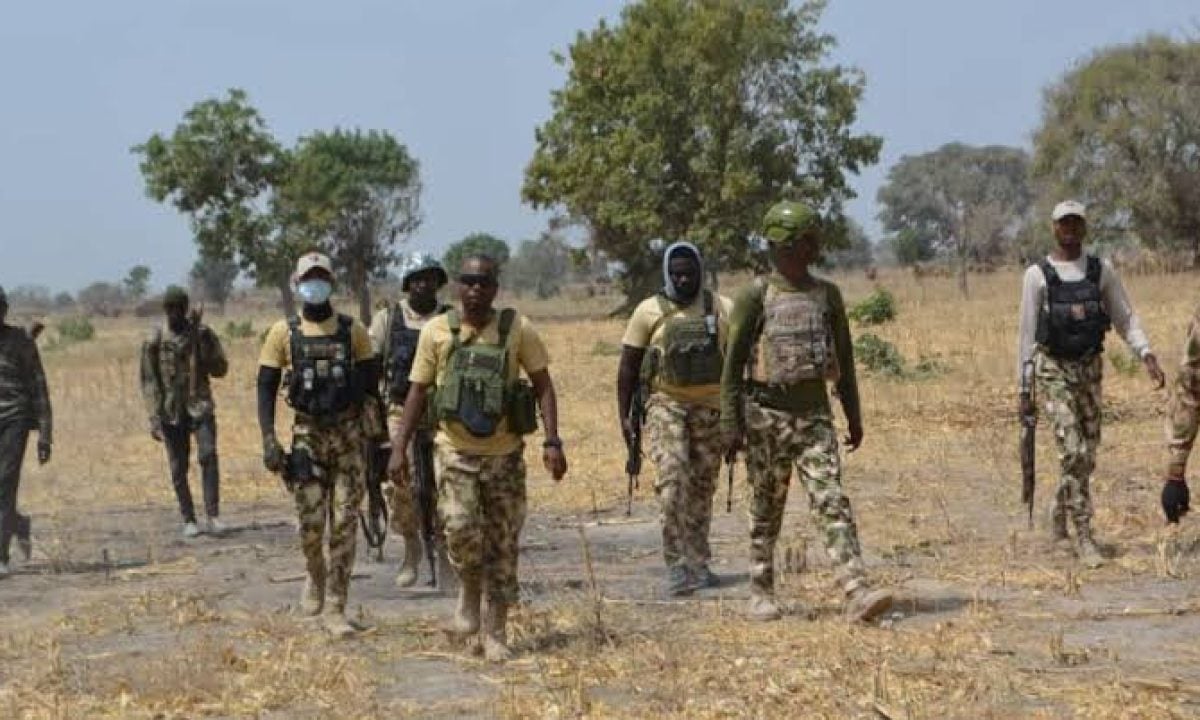
The Federal Government has provided further clarification on the airstrike carried out by the Nigerian Air Force (NAF) in the Jilli area of Gubio Local Government Area, Borno State, on April 11, 2026.

The government stated that the strike was not a random or careless attack; rather, it was deliberately aimed at terrorist hideouts.

In a statement issued by the Minister of Information and National Orientation, Mohammed Idris, he emphasized that the operation was part of Operation HADIN KAI and was conducted based on credible intelligence.

The Jilli area, commonly known as “Daulaye Market” (a terrorists’ market), has long been under the control of Boko Haram and ISWAP fighters. It is where they collect illegal taxes from residents, purchase supplies, and plan their attacks.

The statement further revealed that on April 12, 2026, troops arrested a 15-year-old boy named Tijjani in the Ngamdu area. Tijjani confessed to ferrying money and other supplies for ISWAP terrorists between Jilli and other locations, demonstrating how terrorist leaders exploit underage children to carry out harmful activities.

Similarly, Borno State Governor, Professor Babagana Umara Zulum, confirmed that the Jilli and Gazabure markets had been shut down five years ago due to terrorist occupation.

Although the government defended the military action, it extended condolences to the families of those affected. The Minister stated:
“The life of every Nigerian is important, and we deeply regret the loss of civilian lives that may have occurred.”

To ensure transparency and justice, the Federal Government has ordered an independent investigation into the planning and execution of the airstrike to identify any errors.

Currently, the government is collaborating with emergency management agencies—NEMA and SEMA—to provide relief to the families and injured persons in Borno and Yobe states.

The government also urged civilians to avoid restricted areas and continue to cooperate with security forces to bring an end to the insurgency.

Nigerian Medical Doctor Dies After Delivering Triplets

By Sabiu Abdullahi

A female medical doctor, Ere Siana Sintei Ogbachi, has passed away after developing complications shortly after she gave birth to triplets at the Niger Delta University Teaching Hospital (NDUTH) in Okolobiri, Yenagoa Local Government Area of Bayelsa State.

Sources within the family said she initially showed signs of recovery after the delivery. Her condition later worsened unexpectedly.

She was then transferred to the Intensive Care Unit (ICU) of the Federal Medical Centre (FMC) in Yenagoa for advanced treatment.

Despite efforts by medical personnel, she was confirmed dead in the early hours of April 14, 2026.

In a statement issued by Meshack N. Sintei, the family described the loss as devastating. They noted that all attempts to save her life did not succeed.

The statement added that doctors at FMC Yenagoa worked continuously to stabilise her condition as it declined, but she did not survive. It also explained that her vital signs kept dropping despite close monitoring.

The late doctor was described as a dedicated health professional, a wife, and a mother to her newborn triplets. She was a member of the Nigerian Medical Association and a graduate of the Niger Delta University.

Her death has drawn reactions from colleagues and members of the medical community, many of whom described the incident as deeply tragic.

The family also thanked friends, colleagues, and supporters for their sympathy and solidarity during the difficult period.

Customs Launches AI Training To Boost Revenue, Transparency

By Sabiu Abdullahi

The Nigeria Customs Service (NCS) has begun a training programme focused on the use of Artificial Intelligence to improve revenue generation, remittances and reconciliation processes.

The exercise took place on Monday, April 13, 2026, at the Ladi Kwali Hall of the Abuja Continental Hotel. It attracted senior Customs officers, technology specialists and members of legislative oversight committees.

The presence of lawmakers alongside Customs officials highlights ongoing cooperation between the Service and the National Assembly. Both sides aim to improve accountability and introduce modern technology into public administration.

Speaking at the event, the Comptroller-General of Customs, Adewale Adeniyi, reaffirmed the agency’s commitment to transparency in financial management through innovation.

“We are united in our resolve to ensure transparency in public accounting. Technology continues to evolve and plays an important role in strengthening our operations. It has also helped us better understand patterns in international trade,” he said.

He expressed confidence in the benefits of Artificial Intelligence for Customs operations. He also noted that the Service operates within a wider global trade system.

“We want to reap the benefits of Artificial Intelligence collectively. I encourage participants to actively engage the facilitators, ask questions and take full advantage of the training,” he added.

In her remarks, the Deputy Comptroller-General in charge of Finance, Administration and Technical Services, Kikelomo Adeola, described the initiative as timely and strategic.

“This training reflects our commitment to national development. Artificial Intelligence is no longer a concept of the future; it is a technology we must embrace to strengthen our systems,” she said.

She explained that the programme aims to close gaps in revenue management and equip officers with the skills to use AI tools to protect public funds.

Adeola also acknowledged the attendance of lawmakers. She described it as a sign of shared responsibility in promoting transparency and accountability.

“This synergy is important. I encourage participants to ask relevant questions and exchange ideas that will enhance the effectiveness of this initiative,” she added.

The Chairman of the House of Representatives Public Accounts Committee, Bamidele Salam, praised the Customs Service for its reform efforts and focus on innovation.

“Customs is a global institution and plays a critical role in shaping Nigeria’s economic image. I commend the Comptroller-General for the progress made so far,” he said.

He described the training as necessary and noted that the use of Artificial Intelligence in Nigerian public institutions is still limited.

“We must continue to build capacity because the effectiveness of any system ultimately depends on the people who operate it,” he added.

Also speaking, the Chairman of the Senate Public Accounts Committee, Senator Ahmed Aliyu, called for stronger collaboration to build durable systems for the future.

“All hands must be on deck. We must build systems that will endure and continue to serve the nation for years to come,” he said.

The programme featured a presentation by technology expert Bamidele Oyedeji. He highlighted how Artificial Intelligence can improve trade processes and operational efficiency within Customs administrations.

The initiative reflects the determination of the Nigeria Customs Service to adopt emerging technologies to strengthen revenue management, improve transparency and enhance overall performance.

K-SAFE Seeks Strategic Collaboration to Boost Literacy in Kano

By Uzair Adam

The Kano State Accountability Forum on Education (K-SAFE) has intensified efforts to strengthen collaboration with key education stakeholders following an advocacy visit to Community Aid Connect.

The Daily Reality reports that the move, according to the group, is part of ongoing engagements aimed at improving access to inclusive and quality education across Kano State.

In a statement issued on Monday, and signed by its Public Relations Officer, Nasiru Yusuf Ibrahim, the organisation said the visit formed part of its broader strategy to partner with development actors.

It noted that such collaborations are essential to addressing challenges affecting education delivery, particularly among vulnerable and underserved populations.

The delegation, led by K-SAFE Co-Chair (CSOs), Auwalu Halilu, was received by the Kano State Team Lead of Community Aid Connect, Surajo Mahe Alkali.

The meeting, held on Monday, provided an opportunity for both organisations to explore areas of mutual interest and strengthen existing relationships.

During the engagement, Halilu commended Community Aid Connect for its role in promoting literacy and numeracy through innovative programmes.

He specifically referenced initiatives such as the DARASI programme and the Community Radio Literacy and Numeracy Programme, describing them as impactful interventions in the education sector.

The K-SAFE Co-Chair noted that the programmes provide flexible learning opportunities for learners with limited access to formal education.

According to him, such initiatives are particularly beneficial to vulnerable groups, helping to bridge gaps in access and improve foundational learning outcomes.

In his remarks, Alkali highlighted the impact of the DARASI Programme in supporting basic education, especially at the foundational level.

He also emphasised the effectiveness of radio-based learning in reaching remote and hard-to-access communities, noting that such approaches have expanded educational access in underserved areas.

Both parties stressed the importance of community participation, stakeholder coordination, and sustained advocacy in addressing learning gaps.

They noted that improving educational outcomes requires a collective effort involving government, development partners, and local communities.

They also identified key areas of collaboration, including joint advocacy campaigns to promote enrolment and retention in schools.

Other areas include partnerships on radio-based awareness initiatives, strengthening monitoring and accountability mechanisms, and capacity building for community-based education structures.

The organisations further agreed on the need to document programme outcomes to support policy dialogue and education sector planning in Kano State.

They said such evidence-based approaches would enhance decision-making and contribute to long-term improvements in the education system.

The Daily Reality also gathered that the engagement reaffirmed the shared commitment of both organisations to enhancing access, equity, and quality of education.

It also underscored their resolve to promote innovative solutions aimed at improving literacy and numeracy across the state.

Journalists Barred as El-Rufai’s Son Confirms Bail

By Anas Abbas


Journalists were denied access to proceedings at the Federal High Court in Kaduna, where a ruling on the bail application of former Kaduna State Governor, Nasir El-Rufai, was expected.

This, created tension around the court premises, as media personnel were prevented from covering the proceedings despite heightened public interest in the case. Amid the restricted access, Muhammed Bello El-Rufai, the son of the Mallam Nasiru Elrufai, confirmed that the court had granted bail to his father.

Although details of the bail conditions were not immediately disclosed, the confirmation fueled reactions among supporters and observers who had gathered at the venue.

The situation underscored the sensitivity surrounding the ongoing legal proceedings involving the former governor, who has been facing multiple charges in recent weeks.

Yet,there was no official statement from court authorities explaining why journalists were barred from the courtroom.
Further details on the bail terms and subsequent proceedings are expected to emerge as the case continues.