Nigeria

Athena Centre Launches Governance Institute, Appoints 4 Senior Officials

By The Daily Reality


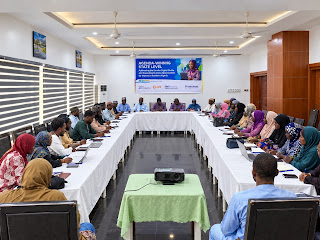
The Athena Centre for Policy and Leadership has inaugurated the Alhaji Gidado Idris Institute of Governance and Public Policy as part of efforts to strengthen governance research, public policy development and institutional capacity across Africa.


This was contained in a statement signed by Paul Liam, Media and Communications Officer of the Athena Centre for Policy and Leadership.

The organisation also announced the appointments of 4 senior officials. They include 3 institute directors and a new Head of the Athena Election Observatory.

The new institute is named after the late Alhaji Gidado Idris, who served as Secretary to the Government of the Federation and Permanent Secretary under several civilian and military administrations.

According to the Centre, the institute will serve as its flagship platform for governance research, public policy innovation and institutional performance.

Speaking on the development, the Chancellor of the Athena Centre for Policy and Leadership, Osita Chidoka, OFR, said the initiative reflects the organisation’s belief that Africa’s development depends largely on strong institutions.

“Nations do not transform because they have more policies; they transform because they build stronger institutions capable of implementing those policies with integrity, competence and public accountability. The Alhaji Gidado Idris Institute is our contribution to that institutional future. It is a future in which government works more effectively for citizens, public trust is strengthened, and evidence consistently informs decision-making,” Chidoka said.

The Centre appointed Professor Temitayo Shenkoya as Director of the Arthur Nwankwo Institute for Education and Intellectual Freedom. Shenkoya is a scholar in public policy, governance and innovation with more than 20 years of experience in academia, government and development practice. He currently serves as Professorial Researcher and Regional Director for Africa at Chungnam National University in South Korea. He has also worked with the Abuja Technology Village Foundation, UNICEF Nigeria and the Daejeon Metropolitan Government. He will coordinate the institute’s 2026 programme titled Fixing Nigeria’s Schools: Accountability and Digital Transformation.

Dr Danjuma Iyaji was named Director of the Olikoye Ransome-Kuti Institute for Health and Social Equity.

He is a health economist and monitoring, evaluation, research and learning specialist with nearly 20 years of experience. He has held technical and research positions at the Society for Family Health, the Aig-Imoukhuede Foundation and the Lagos Chamber of Commerce and Industry.

He has also taught at the Nigerian Army University Biu, Kogi State University and Salem University. He will lead the 2026 programme, Expanding Access to Affordable Healthcare and Nutrition in Nigeria.

The Athena Centre also appointed Dr Christiantus I. Anyanwu as Director of the Alhaji Gidado Idris Institute of Governance and Public Policy. Anyanwu is a political scientist, governance specialist and public policy scholar.

He previously served as a Senior Lecturer at Veritas University, Abuja, and as a Senior Research Fellow at the Athena Centre. His first assignment will focus on the institute’s programme, Making Government Work for Citizens at Every Level.

Sarah Eke was appointed Head of the Athena Election Observatory. A member of the Centre’s founding team, she has more than 6 years of experience in programme management, election audits, governance and public policy analysis.

She previously worked as a Senior Adviser and Coordinator on a presidential campaign. At the Athena Centre, she has led election analysis and post-election assessments in Bayelsa, Imo, Kogi, Edo, Ondo and Anambra states. She will oversee election audits, electoral data analytics and evidence-based electoral reform.

Chidoka said the appointments demonstrate the Centre’s commitment to combining academic excellence with practical policy expertise.

“Our ambition is not simply to produce research,” he said. “It is to produce ideas that influence policy, institutions that strengthen governance, and leaders who transform society. These appointments represent an investment in that mission.”

The Athena Centre for Policy and Leadership describes itself as an independent, non-partisan think tank that promotes good governance, evidence-based public policy and ethical leadership across Africa through research, executive education and strategic dialogue.

World Bank Says 79% of Nigerians Remain Poor or Vulnerable Despite Tinubu’s Claim of Reforms

By Sabiu Abdullahi

The World Bank has stated that about 79% of Nigerians are either living in poverty or remain at risk of falling into poverty despite the economic reforms introduced by President Bola Tinubu’s administration over the past three years.

The assessment appears in the World Bank’s newly approved Country Partnership Framework for Nigeria (2026–2032) and the accompanying Streamlined Country Diagnostic, which examined the country’s economic performance and development challenges.

According to the report, 61% of Nigerians currently live below the poverty line, while 33% are classified as ultra-poor and unable to meet their minimum food needs.

The World Bank acknowledged that the Federal Government’s reforms have improved several macroeconomic indicators. It said economic growth rose from 3.5% in the first half of 2024 to 3.9% during the same period in 2025. It also noted that foreign reserves have exceeded $42 billion, fiscal deficits have declined, and investor confidence has improved.

Despite those gains, the institution said the benefits have not yet translated into better living conditions for many Nigerians because major structural challenges remain.

The report stated: “Thirty-three per cent of its population is ultra-poor (food insecure by age-weighted caloric intake), 61 per cent is below the poverty line, and 79 per cent is near poor (below the poverty line or vulnerable to falling back into poverty).

“Despite recent bold reforms stabilising the economy and laying the groundwork for the Renewed Hope Agenda, significant structural challenges remain,” it said.

Police Arrest 7 Over Violent Attack on Bauchi Varsity Students

By Sabiu Abdullahi

The Bauchi State Police Command has arrested 7 suspects over an alleged armed robbery attack on students of Sa’adu Zungur University, Itas-Gadau Campus, at an off-campus hostel in Gadau.

According to the police, the suspects allegedly attacked Rahama House, an off-campus hostel, at about 3:30 a.m. on Wednesday. The assailants reportedly injured 2 students with machetes before making away with 2 Android phones.

The command’s spokesperson, SP Nafiu Habib, said the suspects allegedly planned the attack before carrying it out.

Police operatives from the Gadau Division responded after receiving a distress call through the Safe Schools Initiative. Officers moved to the scene immediately, while the injured students were taken to the General Hospital in Azare for treatment.

The command said detectives later carried out a coordinated operation that resulted in the arrest of all 7 suspects. Officers also recovered the 2 stolen Android phones.

Following preliminary investigations, the suspects were transferred to the State Criminal Investigation Department (SCID), where further investigation and prosecution will continue.

The Commissioner of Police, Sani-Omolori Aliyu, condemned the attack and pledged that everyone connected to the incident would face justice.

He also assured residents, especially students, that the command remains committed to protecting lives and property. The police further advised members of the public, particularly students living off campus, to stay vigilant and report suspicious activities promptly to the nearest police station.

Gunmen Abduct Kogi School Principal, Students During NECO Examination

By Sabiu Abdullahi

Gunmen have abducted the principal of Government Secondary School (GSS), Olowa, in Dekina Local Government Area of Kogi State, four students, and a National Examinations Council (NECO) ad hoc staff member during the ongoing NECO examination.

According to security sources, the attack happened at about 5:25 p.m. on Tuesday while candidates were sitting for their examination.

The sources, quoted by counter-insurgency publication Zagazola Makama, said the armed men invaded the school, seized the victims, and escaped to an unknown destination before security operatives arrived at the scene.

A joint security team has since commenced a search-and-rescue operation. The team has deployed intelligence resources and carried out “bush-combing exercises” across the area to locate the kidnappers and rescue the victims.

Security sources disclosed that one of the abducted students has already regained freedom, while efforts continue to rescue the remaining victims.

The sources added that security agencies have stepped up surveillance and intelligence gathering as investigations continue. They also said efforts to track down and arrest those responsible for the attack have intensified.

Akpabio Threatens Legal Action Over Faulty Microphones in National Assembly

By Sabiu Abdullahi

Senate President Godswill Akpabio has warned that legal action may be taken against the contractor responsible for renovating the National Assembly complex over persistent technical faults in the chambers.

Akpabio issued the warning on Wednesday after senators experienced repeated disruptions during plenary because of malfunctioning microphones.

The recurring problems have persisted despite the renovation of the National Assembly complex, which reportedly cost billions of naira. Since lawmakers returned to the refurbished chambers in April 2024, they have continued to encounter poor audio quality, faulty microphones and a non-functional electronic voting system.

The technical challenges have forced both the Senate and the House of Representatives to rely on manual voting during deliberations on major constitutional amendment bills, including the proposal on state police.

Speaking during plenary, Akpabio recalled that he was embarrassed by the condition of the facilities during the opening of the 2026 National Assembly Open Week at the House of Representatives on Tuesday.

“Distinguished colleagues, I hope you are taking note of the fact that our microphones are not working well, because we are going to take action,” Akpabio said.

“I was at the house of representatives yesterday to represent you on the opening of their National Assembly Week, and in the course of it, myself and the speaker were thoroughly embarrassed.

“The same contractor that handled the renovation of the house of representatives handled this one.

“If this continues, we have steps we can take, legally, to ensure that a good job is done because this is an embarrassment to our nation.”

The Senate President also disclosed that the leadership of the upper legislative chamber is documenting the repeated technical failures as part of preparations for possible action against the contractor.

“I hope you are taking note of it, so that when they go to social media to start complaining after we have taken action, you will know why we took the actions. We are all witnessing what is going on now,” he added.

Trachoma: The Ancient Illness Still Haunting Modern Nigeria 

By Maimuna Katuka Aliyu

Trachoma is more than an eye infection. It is a quiet destroyer of sight and dignity, affecting millions of vulnerable people around the world—especially in places where clean water is scarce, healthcare is distant, and poverty runs deep.

Caused by the bacterium “Chlamydia trachomatis”, trachoma spreads through direct contact with infected eye or nose secretions, as well as indirectly through contaminated items. In overcrowded communities where basic sanitation is poor, the disease thrives.

But this is not a new threat. Trachoma has haunted humanity for centuries. As far back as 1500 BC, ancient Egyptian scrolls described eye diseases that closely resemble it. In the 19th century, outbreaks became widespread in densely populated areas.

By the 20th century, global efforts to fight it began taking shape, especially with the intervention of the World Health Organization (WHO) and other health bodies. Today, trachoma remains one of the world’s leading causes of preventable blindness.

And the burden it places on affected communities is staggering. For individuals, the disease often begins with repeated infections. Over time, the eyelids turn inward in a condition called trichiasis, causing the lashes to scrape against the cornea.

The result is chronic pain and, eventually, blindness. For families, the impact is just as devastating. When a parent loses their vision, their ability to work and care for their children suffers. When a child goes blind, their education is interrupted, and their future becomes uncertain.

Across entire communities, this loss of productivity and well-being adds up to high economic and social costs. The stigma can be equally painful. In many places, those affected by trachoma are isolated or ridiculed—stripped of confidence and dignity.

But there is hope. Trachoma is preventable. It is also treatable, especially when detected early. And that is why the role of government is so vital.

National and local authorities must lead the fight with robust public health campaigns—promoting hygiene, encouraging regular eye checkups, and ensuring that children grow up with clean faces and clean water.

Clinics must be established in underserved areas, and healthcare workers must be trained to identify and treat the disease effectively. Collaboration is also key. By partnering with international organizations such as the WHO and the Carter Center, governments can access resources, share knowledge, and scale up proven interventions.

Yet governments alone cannot eliminate trachoma. Communities must also rise to the task. We need individuals who speak up—advocating for improved sanitation, better access to care, and education for all.

We need families and neighbours who support those affected instead of shaming them. And we need young people who take the lead in hygiene campaigns, who believe that blindness from trachoma is one injustice we can—and must—end.

The fight against trachoma is a shared responsibility. It is not just about medicine. It is about dignity. It is about giving people the chance to see their children grow, to live and work with pride, and to be seen—not for their illness—but for their worth.

The path to eliminating trachoma is clear. What is needed now is the will to walk it together—governments, communities, and every one of us who believes in a future where no one loses their sight to a disease that should already be history.

EFCC Wins Landmark Court Victory, Forfeits 48 Properties Worth Billions Linked to Ex-AGF Malami

By Abdullahi Mukhtar Algasgaini

The Economic and Financial Crimes Commission (EFCC) has secured a major legal triumph with the final forfeiture of 48 properties linked to former Attorney-General of the Federation and Minister of Justice, Abubakar Malami, SAN.

Justice Joyce Abdulmalik of the Federal High Court, Abuja, delivered the landmark judgment on Wednesday, July 15, 2026, ruling that the anti-graft agency had conclusively proven that the assets were reasonably suspected to be proceeds of unlawful activities.

In her ruling, Justice Abdulmalik held that the Commission successfully demonstrated that the properties were not acquired through legitimate sources of income, paving the way for their permanent forfeiture to the Federal Government.

The court’s decision marks a significant milestone in the EFCC’s ongoing crackdown on high-profile corruption cases involving public officials.

While the exact value of the forfeited properties has not been disclosed, sources close to the investigation indicate they are spread across prime locations in Abuja and other major cities.

Malami, who served as Nigeria’s chief law officer from 2015 to 2023 under former President Muhammadu Buhari, has yet to publicly respond to the court ruling.

EFCC spokesperson, in a brief statement, described the judgment as a “vindication of the Commission’s diligent investigative efforts” and reaffirmed the agency’s commitment to recovering all assets illegally acquired through public office.

Nigeria, Ghana, Others Form Alliance To Stop Raw Cocoa Exports

By Sabiu Abdullahi


Nigeria, Ghana, Côte d’Ivoire, and Cameroon have agreed to work together to reduce the export of raw cocoa beans after signing the Abuja Declaration at the 2026 Cocoa Value Addition Summit in Abuja.

The agreement seeks to unite the four countries as a single negotiating bloc in discussions with international cocoa buyers. Together, the countries account for about 75 percent of global cocoa production.

The declaration also reflects a broader commitment to promote local processing and branding of cocoa products instead of exporting raw beans.

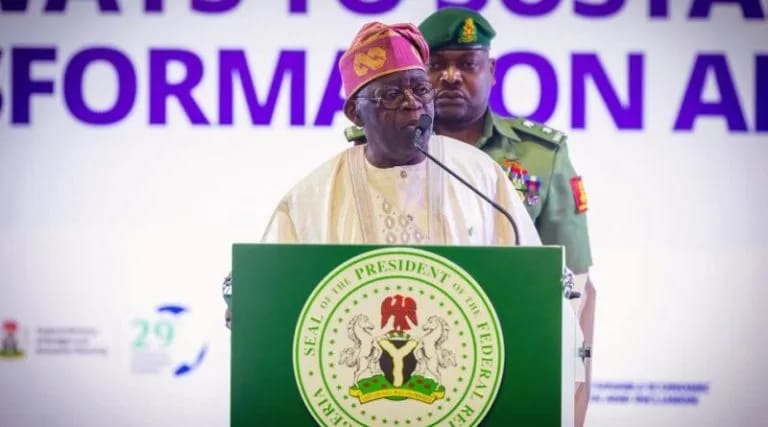
President Bola Tinubu, who was represented by the Minister of Agriculture and Food Security, Abubakar Kyari, said Nigeria would end the practice of exporting raw cocoa while importing finished chocolate products.

“Nigeria will no longer export raw beans while importing finished value.

“We will grind our beans at home, we will press our butter at home, we will make our chocolate at home, brand it at home and sell it to the world on our own terms.”

Tinubu disclosed that investors are constructing a 70,000-tonne cocoa processing facility in Sagamu, Ogun State, which he described as the largest in Nigeria’s history. He also said the country’s installed cocoa grinding capacity now exceeds 120,000 tonnes annually.

The president added that the Bank of Industry (BOI), one of the summit’s co-conveners, has funding available for viable cocoa projects.

Speaking at the event, BOI Managing Director Olasupo Olusi said Nigeria produces more than 300,000 tonnes of cocoa every year, but only about 50,000 tonnes of its installed processing capacity is currently in use.

Olusi said the bank disbursed more than N164 billion to over 3,500 agro-processing businesses in 2025. He added that BOI also secured a €60 million credit facility from the European Investment Bank to support cocoa value addition.

According to him, the bank will introduce dedicated financing for cocoa processing, ingredient manufacturing, packaging, and chocolate production.

“We are not approaching cocoa as a lending programme; we are building an industrial ecosystem,” Olusi said.

Minister of State for Industry John Owan Enoh said the alliance would help African cocoa-producing countries secure a larger share of the global chocolate market, which is valued at more than $130 billion.

“We are not interested in exporting anonymous sacks anymore. We are interested in exporting value,” he said.

Enoh also said the four countries would adopt a common position on the European Union’s Deforestation Regulation, which is scheduled to take effect for large and medium-sized cocoa operators on December 30, 2026. He said the bloc would seek recognition of its national traceability systems and oppose any move to transfer compliance costs to smallholder farmers.

He added that Nigeria had adopted a Cocoa Value Addition Accord to improve cocoa processing and farmers’ incomes. A delivery council will oversee implementation and publish annual progress reports.

Also speaking, Chief Executive of the Ghana Cocoa Board, Ransford Abbey, said Africa produces between 75 and 77 percent of the world’s cocoa but earns less than 10 percent of the value generated by the global chocolate industry.

“We do not need charity. We deserve equity. The time has come for Africa to process its own wealth, protect its farmers and negotiate with one voice in the global cocoa market,” Abbey said.

He also noted that global cocoa prices had dropped sharply after rising above $11,000 per tonne in late 2024, a development that forced Ghana and Côte d’Ivoire to reduce producer prices.

The summit ended with the adoption of both the Abuja Declaration and the Cocoa Value Addition Accord.

Troops Storm Edo Forest, Free 3 Kidnap Victims and Kill 2 Gunmen

By Abdullahi Mukhtar Algasgaini

A joint security team has rescued three kidnapped victims and killed two suspected terrorists in a fierce gun battle in Edo State, dealing a major blow to a criminal gang that had been terrorising the Ambrose Alli University community.

The operation, launched on Monday following a distress call about a kidnapping on the university campus, saw soldiers from the Nigerian Army working alongside police officers and local vigilantes in a high-speed chase that led them deep into a forest hideout in Esan Local Government Area.

According to military sources, the security forces cornered the abductors at their camp, triggering an intense exchange of gunfire. The troops’ overwhelming firepower neutralised two of the gunmen and sent the rest of the gang scattering in panic, forcing them to flee without their captives. All three victims were found unharmed and have since been reunited with their families.

Recovered from the scene were three AK-47 rifles, thirty-nine rounds of 7.62mm special ammunition, three mobile phones, and two power banks. Authorities have taken custody of the items while tracking teams pursue the fleeing suspects.

The Nigerian Army has reiterated its resolve to sustain pressure on criminal networks, calling on residents to volunteer intelligence on suspicious movements and hideouts. “We will not relent until every part of Edo State is rid of these elements,” a military spokesman assured, urging citizens to go about their daily activities without fear.

House of Representative Shifts Gears on State Police, Backs Tinubu’s Bill


By Abdullahi Mukhtar Algasgaini

The House of Representatives has withdrawn its own constitutional amendment bill seeking to establish state police, opting instead to consider a similar proposal transmitted by President Bola Tinubu’s administration.

The decision came during Tuesday’s plenary session, where lawmakers swiftly gave the Executive-sponsored bill its first and second readings before referring it to the House Committee on Constitutional Review for further legislative action.

The move effectively suspends the House’s earlier initiative as legislators pivot to the Executive-backed amendment, which is expected to undergo detailed scrutiny at the committee stage before returning to the floor for final consideration.

The development marks a significant shift in the ongoing debate over state policing, which has gained renewed momentum amid growing concerns about rising insecurity across the country. While the House had previously pursued its own constitutional amendment on the matter, the adoption of the Executive’s proposal signals a unified approach between both arms of government.

Lawmakers are expected to examine the bill’s key provisions thoroughly, including funding mechanisms, operational frameworks, and safeguards against potential abuse, before the amendment can proceed to the Senate for concurrence.

The passage of the state police bill would require amending the 1999 Constitution to remove policing from the Exclusive Legislative List, allowing states to establish their own law enforcement agencies.