Nigeria

Protégé Democracy: Continuity Dividend or Competitive Decay?

By Oladoja M.O

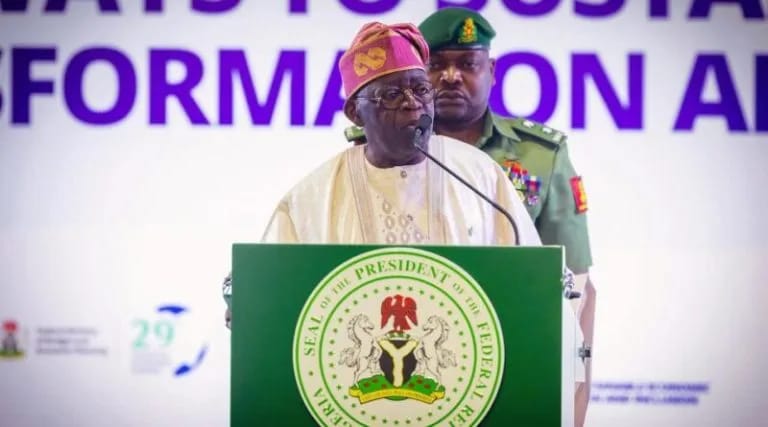
For some time now, the conversation has been quietly shifting from elections to succession. Not a clear constitutional succession. We are talking about political succession as design. The deliberate grooming of a successor within an existing power architecture so that leadership rotates but direction and influence remain within a defined circle.

In Lagos, many say it has worked since 1999. In Rivers, we saw what happens when the choreography fractures. Now, as 2031 sits faintly on the horizon, there are whispers again of names being mentioned, alignments being speculated, shadows being interpreted.

Let us remove names. Let us remove rumours. Let us interrogate structure.

The serious question is this: in a democracy built on four-year mandates and an eight-year ceiling, is protégé succession a stabilising mechanism for development, or is it a refined method of elite entrenchment?

To answer that, we must first admit something uncomfortable: Nigeria’s institutions are not yet strong enough to guarantee policy continuity through institutional design alone. Parties are weakly ideological. Bureaucratic insulation is thin. Policy reversals are common. In that environment, continuity through personal alignment can look attractive. It reduces disruption. It keeps long-term projects alive. It reassures investors. It avoids destructive resets every four or eight years.

This is the strongest argument in favour of succession politics and it is not foolish.

Lagos provides the most cited example. Over two decades, fiscal reforms were not dismantled. Internally generated revenue grew consistently. Infrastructure planning maintained coherence across administrations. Successors did not come in to burn down the previous house simply to prove independence. That continuity mattered. It produced an administrative rhythm.

But here is where analytical discipline must intervene.

Was Lagos successful because of succession politics or because it possessed economic density, commercial capital concentration, and revenue capacity that most Nigerian states do not? If succession were the decisive factor, then every state practising elite continuity would display similar outcomes. That is not what we observe.

Kogi has seen continuity patterns without transformative development. Cross River experimented with political coherence without fiscal stability. Rivers demonstrated how quickly elite alignment can dissolve into institutional paralysis when patron–successor relationships rupture. This tells us something critical: succession is not a development formula. It may coexist with development under certain structural conditions, but it does not produce development on its own.

Now let us go deeper.

Democracy is not defined merely by the holding of elections. It is defined by uncertainty. Adam Przeworski’s core insight remains powerful: democracy is a system where incumbents can lose. The possibility of loss disciplines power. When succession becomes predictable within a narrow elite network, that uncertainty diminishes. Elections may still occur, but the competitive field tightens.

Elite theory reinforces this concern. Political systems remain dynamic when elite circulation is open. When elite reproduction becomes concentrated within a single patronage chain, innovation slows, and access narrows. It does not immediately collapse democracy, but it gradually converts it into a managed rotation.

And this is where I lean.

Succession politics in Nigeria is a second-best adaptation to institutional weakness. It compensates for fragile parties and inconsistent policy frameworks. It can produce short- to medium-term stability in exceptional contexts. But it does not deepen democracy. It does not institutionalise continuity. It personalises it.

If continuity depends on one individual’s blessing, then institutions remain dependent. And dependency is not consolidation. It is controlled stability.

Supporters argue that Nigeria’s diversity requires careful continuity, that radical alternation could destabilise fragile coalitions. That concern is real. But if the only way to preserve stability is through personalised grooming, then we are admitting that institutions are too weak to survive open competition. And if institutions never learn to survive open competition, they never mature.

Development that relies on personal choreography is fragile. It works as long as the central figure remains politically dominant. Once that dominance weakens through age, miscalculation, factional drift, or simple political fatigue, the structure can wobble because it was never fully institutionalised.

This is why I do not romanticise succession politics, even when I understand its logic.

Endorsement is not anti-democratic. Every leader is entitled to support a preferred successor. That is politics. The danger arises when endorsement becomes determinative rather than persuasive when the system makes alternative emergence structurally improbable.

Nigeria does not need constant disruption. But it needs genuine contestation. It needs parties strong enough that continuity does not depend on lineage. It needs primaries that are competitive in substance, not ritual. It needs bureaucracies that can survive alternation without policy vandalism.

Succession politics may stabilise a weak system. But it does not strengthen it.

And a country of Nigeria’s scale cannot permanently depend on second-best solutions.

So, the issue is not whether someone is being groomed for 2031. The issue is whether our institutions are growing strong enough for grooming to become politically irrelevant. If they are not, then what looks like continuity today may become stagnation tomorrow.

That is where I stand.

Continuity is valuable. But continuity must be institutional not personal if it is to endure beyond the shadow of any one man.

Oladoja M.O writes from Abuja and can be reached at: mayokunmark@gmail.com.

Senate Confirms Darma as Minister

By Muhammad Abubakar

The Nigerian Senate has confirmed the appointment of Muttaqha Rabe Darma as a minister in the federal government following his screening by lawmakers.

Darma was nominated earlier this week by President Bola Ahmed Tinubu to replace Ahmed Musa Dangiwa as Minister of Housing and Urban Development.

During the screening, Darma addressed questions on Nigeria’s housing deficit and urban renewal strategies, pledging to collaborate with relevant stakeholders to meet government targets in the sector.

A seasoned administrator, Darma holds two doctoral degrees and previously served as Secretary and Chief Executive Officer of the Petroleum Technology Development Fund (PTDF).

ASUP ABCOAD Chapter Elects New Executives, Pledges Stronger Unionism

By Ibrahim Yunusa

The Academic Staff Union of Polytechnics (ASUP), Audu Bako College of Agriculture, Dambatta (ABCOAD) Chapter, has successfully conducted its chapter elections, ushering in a new set of executives to pilot the affairs of the union.

In a statement issued by the chapter’s PRO II, Abdu Sa’idu, the outcome of the exercise saw Dr. Mustapha Mukhtar emerge as Chairman, while Musa Garba was elected Vice Chairman. Nuraddeen Abbas secured the position of Secretary General, with Mustapha Abubakar Barkindo emerging as Assistant Secretary General.


Other elected officers include Aminu Yusha’u Kunya as Financial Secretary, Rabilu Abdulkadir Barau as Treasurer, and Salim Koguna as Public Relations Officer (PRO). Aminuddeen Yusuf Jibrin was elected Internal Auditor, while Umar Muhammad emerged as Welfare Officer.


The election was conducted and supervised by the Chairman of the Electoral Committee (ELCOM), Malam Sani Alhassan Dawaki, who formally announced the results at the end of the voting process.


Speaking after the exercise, the ASUP Zonal Coordinator, Zone A, Comrade Muhammad Muhammad, described the election as a significant milestone in strengthening internal democracy within the union. He reaffirmed his commitment, alongside the National Executive Council (NEC) and the National Delegates Conference (NDC), to enhancing union activities and fostering institutional harmony.


Also, the Provost of ABCOAD, Dr. Hassan Ibrahim, congratulated the newly elected executives and wished them a successful tenure. He expressed confidence in their capacity to advance the union’s objectives both within and outside the institution.


The newly elected executives are expected to build on existing achievements by prioritizing members’ welfare, promoting academic excellence, and strengthening the union’s engagement with relevant authorities.

Cross River Govt Dismisses Report of 10 New COVID-19 Cases

By Ibrahim Yunusa 

The Cross River State Government has refuted reports alleging 10 new COVID-19 cases in the state, describing the claim as false and misleading.

In an official statement, the State Commissioner for Health, Henry Ayuk, clarified that as of April 23, 2026, the state has only one confirmed case of COVID-19. He explained that the individuals mentioned in the report were merely contacts identified through contact tracing linked to the existing case, not newly confirmed infections.

Ayuk emphasised that contact tracing remains a standard public health response aimed at preventing further spread of the virus and should not be misconstrued as confirmation of additional cases.

The government urged residents to disregard unverified information and rely on updates from credible and official sources. It also reassured the public that the situation is under control and there is no cause for alarm.

Decadence and Downfall: The Story of the Ultimate Party

By Saifullahi Attahir

History has repeatedly shown us that when rulers or elites indulge in throwing ultimate parties, they are usually sealing their fate. This universal rule is applied not only to dictators but also to empires, organisations, business leaders, athletes, celebrities, and even individuals who reach a climax in their trajectories without the ever-useful self-restraint.

Examples of these parables can be found even in the holy scriptures. Qarun is a brother of Prophet Moses, whom God blessed with so much worldly endowment that people living around him watch in awe. It was reported that many of his kinsmen were openly praying to be blessed as Qarun was. To them, Qarun was a role model, a success, and someone to emulate. 

Qarun’s story was a typical grass-to-grace story we often hear. At the beginning, a humble soul, spendthrift, calculative, hungry and ambitious for success. He left no stone unturned, had no time to even count his fortune, and was always on the lookout for more until he later ‘made it’.

He later started throwing lavish parties, erecting large buildings with so many rooms that he wouldn’t occupy, and amassing fleets of beautiful horses not for war, domestic use or trade. It was reported that the keys alone to Qarun’s treasury were so many that people couldn’t even carry them!

And what of the things inside those stores, of gold, ornaments, and precious metals? Qarun was admonished by his people to express gratitude for the benevolence through giving alms to the less privileged. He famously stated that it was his handiwork, his tactics, and his spendthrift ways (in today’s world, his financial intelligence) that helped him become wealthy. Qarun sealed his fatal fate with those words; he drowned!

Founders of any kingdom or empire usually begin as brave warriors or loyal servants who earn the respect and love of their masters, then become part of the empire and, within a few centuries, become kings themselves. Throughout these transformative years, you would find them humble, hardworking, disciplined, and considerate, until the hard-worn ancestors passed away and the bounty passed to their progeny, who were neither aware of nor shared in the initial struggles, thinking they deserved it. It was those later kings who would build extravagant palaces with magnificent walls, not as protection but for the sake of beauty and elegance.

The early pharaohs of Egypt were not as haughty and arrogant as the pharaoh whom the prophet Moses fought. The last pharaoh feels so high of himself that he declared himself the sovereign being worthy of worship in the land. The magnificent pyramids built in Egypt alone could signify the level of cruelty slaves were subjected to and the grand mania behind erecting them. That was their ultimate party.

The sixteenth-century Brits (Englishmen) were so brave, energetic, curious, prodigious, and ambitious that they set out to conquer almost half of the world, from Asia to Africa to India to the Americas. They spread their influence, civilisation, and language to every nook and cranny of the world. Astonishingly, several decades of the British Empire were led by women like Queen Elizabeth I and Queen Victoria. It was during the reign of Her Majesty Queen Victoria that Britain reached its peak.

At the beginning of their campaigns, they were just merchants, explorers, and missionaries. They were later partners before transforming into cruel colonial rulers, subjugating human beings into serfdom and slavery. It was during the early 19th century that Queen Victoria decided to host a lavish party in India, inviting delegates from every colony: Asians, Africans, Arabs, Indians, and Caucasians. The Durbar was so magnificent that only watching the video (on YouTube) could give you a sense of the congregation. Every culture was represented, and performances were made. 

What was wasted during these festivities was enough to ruin the economy of a continent. Those extravaganzas, the subjugation of people into labour, and unnecessary wars were later to seal the fate of the British Empire. The colonists were dismantled into sovereign nations, and finally, the sun set for Britain.

Before the 1979 Islamic revolution, Iran was under a monarchy led by Shah Reza Pahlavi, who inherited the throne from his father in the 1920s. Between those years, thanks to the discovery of oil and his alliance with Western countries, the Shah transformed himself into a world-class political figure and a strong voice in the Middle East. Although a Muslim, he became so delusional that he dreamt of converting Iran into its former Persian Empire with all its anti-Islamic elegance. 

This automatically put him in constant conflict with the religious establishment of Iran, especially the Islamic clerics led by the pious, ascetic, and reserved Ayatollah Ruhollah Khomeini.

The level of enmity was so high that neither side was willing to give way until, finally, Khomeini fled to France as an exile. Despite Khomeini’s absence, he continued to preach to the Iranians, especially the youth, university students, and the less privileged masses who became his adherents.

In the 1970s, the Shah decided to throw a grand party in Iran to commemorate not only his anniversary but also the 2000-year anniversary of the Persian Pagan Empire. He coronated himself as ‘Shah of Shahs’ (King of Kings). The party was attended by thousands, including kings, prime ministers, presidents, heads of state, mistresses, business moguls and technocrats. Later analysis shows how that singular event almost threw Iran into debt despite its oil endowment.

That sealed the fate of Shah Reza Pahlavi, for a few months later, Iranian youths staged an uprising, culminating in the Islamic Revolution that brought Ayatollah Khomeini (the very person Pahlavi had sent into exile) to power.

 Similar stories can be narrated of Adolf Hitler’s rise to power and his expansionist, megalomaniac agenda, seeing himself as the Führer and Saviour of the German Reich, until he sealed his fate by mistakenly invading Russia and Poland and at the same time fighting several forces of France and the United Kingdom. The allied forces were rescued by the rising superpower of that time, the United States of America.

General Yakubu Gowon was in power from 1966 to 1975, the longest-serving military head of state. His period witnessed a surge in oil income never seen before in Nigeria, and even the government doesn’t know what to do with the sweet oil money. The Federal Government undertakes unnecessary construction and white-elephant projects just to get rid of the irritating money. 

Workers get unnecessary pay rises (Udoji salary award) without additional productivity. The General Yakubu Gowon government decided to sponsor a FESTAC celebration event in 1975, which cost a huge sum of money, throwing Nigeria into debt despite oil income. We didn’t wisely invest and save for the rainy days.

That sealed the fate of innocent and peace-loving General Yakubu Gowon. He was overthrown in a palace coup led by young officers, introducing the no-nonsense, disciplinarian Murtala Ramat. The rest was history….So watch out when you are sealing your fate by throwing the ultimate party!

Saifullahi Attahir is the President of the National Association of Jigawa State Medical Students (NAJIMS) National Body. He wrote this piece from the Rasheed Shekoni Federal University Teaching Hospital, Dutse, via saifullahiattahir93@gmail.com.

Court Sentences Kano Man To Death For Murder

By Sabiu Abdullahi

A Kano State High Court has handed down a death sentence to a 21-year-old man, Umar Idris, for the killing of a shop owner, Sabiu Umar.

The court found Idris, who lives in Farawa Quarters in Kumbotso Local Government Area, guilty of culpable homicide after proceedings showed that he stabbed the 28-year-old victim to death.

During the trial, prosecution counsel Lamido Abba-Sorondinki told the court that the incident took place on September 2, 2021, at Tsamiya Mariri Quarters in Kano. He said the defendant entered the victim’s shop at about 10:30 p.m. without permission. The shop also served as the victim’s residence. The prosecutor added that Idris took wedding garments meant for the deceased’s bride.

The prosecution explained that the victim raised an alarm after he discovered the act. This led to a confrontation between both men. In the course of the struggle, Idris allegedly attacked him with a knife and inflicted injuries on his neck, shoulder and other parts of his body. The injuries later caused his death.

The prosecution called three witnesses and presented a confessional statement as part of its evidence. Idris, however, denied the allegation.

In his defence, counsel to the accused, Muftau Bello, presented two witnesses and urged the court to show leniency.

While delivering judgment, Justice Sunusi Ado-Ma’aji ruled that the prosecution had established its case beyond reasonable doubt.

“I hereby sentence Idris to death by hanging for stabbing the victim on his neck, shoulder and other parts of his body, which resulted in his death. May the Lord have mercy on his soul,” the judge ruled.

Nigerian Soldiers Destroy ISWAP Waterway, Kill Scores In Lake Chad

By Sabiu Abdullahi

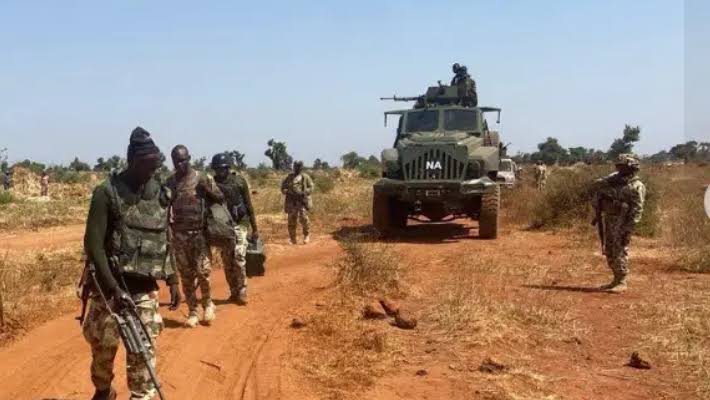
Troops of the Joint Task Force (North East), Operation HADIN KAI (OPHK), have carried out a series of airstrikes that targeted ISWAP logistics networks along the Lake Chad waterways near Kaniram Island in northern Borno State.

The operation followed intelligence reports which indicated the presence of more than 30 terrorist boats and fighters coordinating movements in the area.

Lieutenant Colonel Sani Uba, the Media Information Officer of the Joint Task Force, confirmed the development in a statement. He explained that the military verified the targets in line with established Rules of Engagement before launching the strikes.

According to the statement, the air operations successfully destroyed several boats and disrupted the group’s supply structure in the area. The strikes also affected the group’s movement and operational capacity, as more than 30 fighters were neutralised.

“Surviving elements were observed escaping in disarray, reflecting a breakdown in their cohesion and command structure,” the statement claimed.

In another operation within the Sambisa Forest axis at Sowolwolo, troops carried out additional precision strikes. The exercise led to the destruction of three terrorist gun trucks and the elimination of more fighters in the vicinity.

Further assessment of the operation, supported by intelligence after the strikes, indicated heavy losses on the side of the insurgents. Reports also pointed to evidence of mass burials, especially among ISWAP elements around the Mallam Fatori axis.

The Military High Command praised the troops for their performance and urged them to maintain the momentum in ongoing operations across the region.

Firefighters Arrive At Kaduna Fire Scene Without Water As Residents Rush To Refill Truck


By Sabiu Abdullahi

There was widespread panic on Tuesday along Jos Road near a primary health care centre in Kaduna State after a fire outbreak exposed a critical lapse in emergency response, as firefighters reportedly arrived at the scene without water in their truck.

An eyewitness who spoke to The Daily Reality said the incident occurred on 22nd April 2026 and quickly escalated into chaos as residents watched flames threaten nearby structures while awaiting an effective firefighting response.

According to the eyewitness, the most alarming aspect of the situation was that the fire service vehicle deployed to the scene had no water, a development that significantly delayed efforts to contain the blaze. The absence of water in the truck left responders momentarily unable to act decisively as the fire continued to spread.

In a desperate response, residents intervened, fetching water from various sources and pouring it into the fire service truck to enable firefighting efforts to commence.

The scene drew large crowds, with confusion and concern growing as locals worked alongside emergency personnel in a bid to prevent further destruction.

The cause of the fire and the extent of damage had not been confirmed at the time of filing this report.

Kano Gov Picks Ganduje’s Ally, Sule Garo, as Deputy Governor

By Uzair Adam

Governor Abba Kabir Yusuf has nominated Murtala Sule Garo as Deputy Governor of Kano State, forwarding his name to the Kano State House of Assembly for screening and confirmation.

The development was disclosed in a statement issued early Wednesday by the governor’s Chief Press Secretary, Mustapha Muhammad.

The statement explained that the nomination aligns with Section 191(3) of the 1999 Constitution (as amended), which empowers a governor to appoint a deputy in the event of a vacancy.

It noted that the position became vacant following the resignation of former Deputy Governor, Abdussalam Gwarzo, on March 27, 2026.

According to the statement, the governor’s decision followed extensive consultations with key political stakeholders, after which he urged the Assembly to grant prompt approval for the nomination.

Garo, 48, is described as an experienced political administrator with over two decades of service across elective and appointed roles.

His career includes stints as State Organising Secretary of his party, Special Adviser to the governor, and Chairman of Kabo Local Government.

He also previously served as Chairman of ALGON in Kano, Commissioner for Local Government and Chieftaincy Affairs, and was the deputy governorship candidate of the All Progressives Congress in the 2023 general elections.

The nomination, the statement added, is part of efforts to strengthen governance and maintain effective service delivery in the state.

The deputy governorship seat had, in recent weeks, attracted intense lobbying from political actors seeking the position.

Troops Arrest Wanted IPOB Commander ‘Calamity’ Over Killing of Policeman in Delta

By Abdullahi Mukhtar Algasgaini

Security forces have arrested a notorious commander of the Indigenous People of Biafra (IPOB) and its armed wing, the Eastern Security Network (ESN), over his alleged role in the fatal attack on a police officer in Delta State two months ago.

Troops of Sector 2, Operation UDO KA, acting under the broader military offensive code-named Operation EASTERN SANITY, raided a terrorist hideout in Nwofe, Izzi Local Government Area of Ebonyi State, in the early hours of Tuesday, 21 April 2026.

The prime suspect, widely known by his alias “Calamity,” was arrested alongside four other key members of the outlawed group.

According to a statement issued by Lieutenant Colonel Olabisi Olalekan Ayeni, Acting Deputy Director of Army Public Relations for the 82 Division, the operation was triggered by credible intelligence linking “Calamity” and his cell to a brazen attack at Okuku-Igbo in Oshimili North LGA, Delta State, on 26 February 2026.

During that assault, the assailants shot dead a police officer and wounded another before escaping with two AK-47 rifles.

Following intensified security sweeps in Delta State, “Calamity” and his men reportedly fled to Ebonyi State, where they set up a new camp to evade capture and continue their violent activities.

Authorities say actionable intelligence led troops directly to the hideout, where the five suspects were apprehended without immediate casualties. At the time of his arrest, “Calamity” was found carrying a black handbag containing five mobile phones and numerous keys. A black Kcsanya motorcycle was also recovered.

The suspects are currently in custody, and investigations are ongoing to dismantle their wider network and recover additional weapons.

“This successful operation underscores the determination of the Nigerian Armed Forces, in collaboration with other security agencies, to neutralize terrorist threats, restore peace, and protect law-abiding citizens across the region,” the statement read.

The military reiterated its call for public support, urging citizens to provide timely information to aid ongoing security operations.