Nigeria

Towards achieving unity in Nigeria

By Lawi Auwal Yusuf

The amalgamation of the protectorates in 1914 predetermined a united state for multiple precolonial chiefdoms. Highly diverse Nigeria featured by a rainbow of cultures is deeply fractioned along ethnic and religious lines.

Imperial misrule left a bad legacy for national unity. Regional devolution caused intense tussles among regional forces over the powerful central authority, which was the basis for post-independence sectarian disputes.

Thus, six-year-old Nigeria witnessed a catastrophic separatist war that took the lives of many heroes. Since the aftermath of the bloodletting, the country has been bedevilled with lingering ethno-nationalisms coupled with regular fatal brawls between the tribes. This was due to extreme polarization and segregation of the heterogeneous groups with no sense of togetherness, community cohesion and dovishness. 

Deeply ingrained tensions have been the order of the day. Igbos accuse Northerners of their grief and impeding their chances of realising the apex power. The Northerners equally see the Igbos as power maniacs. Yorubas feel discontented with the status quo, while minorities have the impression of a roughshod ride over them.

Tribal and religious absolutism are awful threats as multiculturalism has failed, and communities have become ever more fragmented. Patriotism has eroded, and Nigerians are less tied by the bond of nationality. They are no longer one united people and do not regard themselves as national brothers with a sense of shared identity. Hence, there is an absence of the desired unity in diversity, tolerance and integration.

Politicians must develop the impulse and genuine commitment to national unity. They must believe that this is a dire task that transcends beyond cultural exhibitions, festivities or even wearing traditional attires of host communities during political rallies. Instead, it requires solid whims, sacrifice and effective policies.

Technocrats are required to accomplish this task efficiently. They must design policies that ensure equitable treatment of the ethnocultural groups alongside the creation of space for all the divergent voices to be heard. Everybody must have a say in society. Moreover, they must devise ways to live together harmoniously, without prejudice or malice.

Integration is so effective in ensuring peaceful coexistence between fractious groups. Therefore, increased contact across the nation should be emphasised, and Nigerians should increasingly intermingle with one another. This will allow people to live closer to one another, work amicably, and ensure that relations remain peaceful. Therefore, disputes will vanish obstinately.

This can only be realised if there is an honour for individual cultural preferences in public life. All institutions must make special provisions for all Nigerians’ choices and cultural needs. So, everybody will develop a worthy stake in the social order. Policies must be put in place to accommodate the values, diet, dressing, spiritual convictions, and practices respectably.

We need to facilitate multilingualism by encouraging people to learn several native languages. Speaking one another’s languages diminishes suspicion, tensions and conflict. This will also build trust, honour and understanding across all cultures.

Social exclusion creates deficient opportunities for disadvantaged/minority groups suggesting that they don’t have equal rights. As a result, they are treated as second class citizens, hindering cohesion and egalitarianism featured by social inclusion and pluralism. Moreover, it leads to distress to the abandoned groups, which poses a persistent threat of disharmony. However, institutions must make efforts to meet the needs of all communities and not tilt towards the needs of a particular section.

Regrettably, the tribes have distorted perceptions of each other. Malevolence aggravates because of misleading histories and myths falsifying the reality and typically portraying others as diabolic. They hold malicious convictions and stereotype each other based on their previously treated beliefs. Any trivial provocation warrants the impression and becomes a basis for vengeance. The exasperation of hostilities by IPOB, ESN, Afenifere and others are clear examples.

It is needful to enact a statute outlawing attitudes of these tribes calling one another with derogatory or slur names that denigrate or demonise others. Ethnicities hardly unite if they are abusing one another.

The present mass idleness must be evaded alongside the creation of decent jobs. Graduates happen to be jobless long after they have left school. Similarly, numerous unknowledgeable youths remain redundant. Ethnic and religious skirmishes intensify every day due to hardships encountered by youths in their efforts to have a lawful means of subsistence. Many of them have the requisite skills and qualifications but found them not helpful in securing employment. They have fallen victim to anxieties, delays, and disparagement and developed a strong feeling of despair, oppression, and unfairness. Hence, they engage in crimes or sectional clashes to counter the injustice and avoid the distress of poverty.

With such dissimilarities in all parts of society, tolerance is indispensable if Nigerians want to live in peace. The capacity to live in a plural society will secure a harmonious future for multiethnic Nigeria. However, Martin Luther King Jr. once said to Americans at the peak of racial segregation that “we must learn to live together as brothers or perish together as fools.”

Lawi Auwal Yusuf wrote from Kano, Nigeria. He can be reached via laymaikanawa@gmail.com.

Road to 2023: A race to inherit a weak system

By Nusaiba Ibrahim Na’abba

As Northern Nigeria continues to be engulfed by violent activities of terrorists by the day, the thoughts of dreadful terror acts of the famous Sunni Ali of Songhai who conquered the old, widely acknowledged historic city of Timbuktu keeps reappearing on my mind. The likes of late Muhammad Yusuf, late Abubakar Shekau and most recently Bello Turji and Dogo Gide, including some of the ‘unknown’ alleged sponsors of these activities, are no different than Sunni Ali – ‘tyrannical, cruel and merciless’.

The only probable difference is that the miniature Sunni Ali’s of our time live under the protection of a democratically elected government that vowed to protect our lives. This system we all thought would salvage us from the brink of destruction. With all the high hopes for this salvation purposely adopted to elect President Buhari into office, it is under his watch that in 2018, the Nigerian army gave an order to halt the near-arrest of late Abubakar Shekau in the depths of Sambisa Forest.

While at secondary school, it used to be quite fascinating to read and learn about the legends of some of the most powerful kings in Africa. Timbuktu’s Mensah Musa, Usmanu Bin Fodio of Sokoto, the rulers of Ghana’s Asante Kingdom and their powers on their followers, especially their strength, have always remained interesting references for their followers, especially history scholars and political leaders around the world. From leadership structure, means of sustenance, warfare and particularly military strength devoid of politicking have remained exemplary and worthy of emulation as legends have primarily documented.

Inherent in today’s Nigeria, a ravaging systemic corruption, unambitious leadership, lack of education prospects contributing to a staggering number of unemployed youths (some even throwing their hats in the ring and retiring from the state of being called youths), poor security apparatuses and myopic economic vision that continues to increase our foreign debt figures without pans of paying back. Not even the vibrancy of our historic leadership structure is being inculcated in the ‘democratic system’ we (African countries) borrowed from our colonial bosses.

Nigerians are already hopeless as the nation races towards the 2023 general elections. About two months back, I went shopping in Abubakar Rimi market (alias Sabon Gari market). All I could hear filling up the sky were words of hopelessness about the state of our dear Nigeria. “I would rather lose my voter’s card than to elect anyone in 2023”, “Our leaders will not make heaven, I tell you,” and “I’m just hoping to make it to next year alive; we are not celebrating anything” among many unending agonies. 

It is no coincidence that the President himself vindicated these agonies in an interview NTA aired on January 8, 2022. He warned his political party that “the opposition Peoples Democratic Party (PDP) could win the 2023 presidential election and return to power, if the All Progressives Congress (APC), does not settle crises that have stymied the party”. Of course, a speech of such nature and coming from the President is subject to multiple interpretations from analysts, experts, particularly politicians and lay-Nigerians. However, the President has undoubtedly depicted a lack of confidence in his party to exacerbate an already hopeless situation. His first thought is PDP winning elections to continue from where they stopped – over a decade of misrule.

Indeed, it is pretty late that Nigerians realize that both APC and PDP are birds of a feather that flock together. During an interview with Talk to Aljazeera on February 15 2015, then-presidential candidate General Buhari highlighted the weakness of PDP’s 16-year-misrule. He, specifically, lamented on the rising insecurity and the deteriorating economy as oil prices dropped significantly. A year later, when he had a similar discussion with the same Aljazeera on his visit to Qatar in early 2016, he tried to admit that he hasn’t failed Nigerians – as Boko Haram held some strategic places in the outskirts of Maiduguri. Over the years of his administration, we now fully understand who has failed Nigerians the most.

Like every race to a general election in Nigeria, we all scale through hurdles and hitches. However, what is particular about the 2023 general elections is that it showcases the real wielders of the entire Nigerian system – the elites. Indeed aspiring candidates are fully aware of problems they will undoubtedly inherit from their predecessors. They also know that they may worsen existing situations in most cases. Thus, they shall race through rising insecurity than ever before, calls for secession from the Eastern part of the country, deteriorating economy, a staggering number of unemployed youths and out of school children, dilapidated schools, bloodshed, brain drain of medical personnel, weak security apparatuses, widely acknowledged electoral violence and, to cap it all, systemic corruption.

Since Nigeria’s return to democracy in 1999, every political aspirant has been fully aware of the problems ahead of them, but they always divert followers’ attention by being optimistic. This is why it was pretty easy for most Nigerians to succumb to President Buhari’s change agenda.

Be it as it may and with almost nothing to redeem ourselves, expectations are meagre as the race to 2023 heats up. It’s no longer news that the country’s entire political economy continues to suffer in the hands of the few ‘powerful’. The masses do not wield enormous influence in the system that steers the affairs of Nigeria. So, we absolutely cannot change the country’s political structure without owning the system. Therefore, there is no confidence or trust in the election processes with ‘inconclusive elections’ that have come to stay with us since they favour the wielders of the system. 

Nonetheless, we will remain optimistic that Nigeria will prosper as a united and incorruptible country no matter what it takes. This storm shall pass. Borrowing from the words of South Africa’s Apartheid icon Nelson Mandela, “I am fundamentally an optimist. Whether that comes from nature or nurture, I cannot say. Part of being optimistic is keeping one’s head pointed towards the sun, one’s feet moving forward. There were many dark moments when my faith in humanity was sorely tested, but I could not give myself up to despair. That way lays defeat and death”.

Nusaiba Ibrahim Na’abba is a master’s student from the Department of Mass Communication, BUK. She is a freelance writer and researcher. She can be reached via nusaibaibrahim66@gmail.com.                                     

AFCON: The gigantic tournament

By Abdulrazak Iliyasu Sansani 


I had initially not titled this article “AFCON: The gigantic tournament” not because I had less respect for it hitherto. “I’ve heard that so often, that there’s no international break until March,” Jurgen Klopp said. “In January, there’s a little tournament in Africa, I just want to say, and I think Asia is playing games, too – South America as well. Great, can’t wait!” But I have done so now primarily to respond to the purported disregard, misinformation, or rather outright disrespect directed at the most prestigious football tournament in Africa, which Jurgen Klopp’s comment on the African Cup of Nations seems to convey, as less relevant.  I have tremendous respect for Klopp, one of the finest tacticians in football. I can’t certainly say he meant to disrespect the AFCON, though, this doesn’t stop me from tackling what is gradually gaining credence in Europe whether glaringly or subtly: the scanty regard for AFCON. 

I had once written an article titled the Pinnacle of African football and the quest for glory. It would have been published ahead of the last edition of AFCON in Egypt. However, it was never published. The said title aptly captured how I view African football. I believe this is how the vast majority of African football fanatics regard it. And no amount of disrespect, misunderstanding, red herrings, or disinformation could alter that. 

The biggest event in African football commences on 9th January,  with five times Champions Cameroon taking on Burkina Faso in Olembe Stadium in Yaounde. It is the curtain-raiser for the most important tournament in African football. The 2021 Africa Cup of Nations, known as the Total 2021 Africa Cup of Nations, is the 33rd edition of the Africa Cup of Nations, the tournament will be hosted by Cameroon, the Champions of the 31st edition. The competition was held in June/July in the previous edition, which Algeria won. 

But this edition has been moved back to January/February. Cameroon were to host the last edition, only for them to be stripped of the hosting right in  November 2018 mainly for three reasons: Anglophone crisis, delays in the delivery of critical infrastructure, and the Boko Haram crisis. This edition of the AFCON has come with numerous challenges even before it starts. Strong opposition has come from many angles centred on the timing of the AFCON. Confederation of African Football (CAF) has reverted back to AFCON’s traditional calendar, as against the normal Summer calendar used in major international competitions like the World Cup and European Football competition, though the former is set to be played in November this year, unlike the prior editions. 

The bulk of the opposition to the timing of the AFCON has understandably come from European clubs, who have a lot to lose by having some of their key players miss some features for the duration of the AFCON. These have made many clubs to devise means to keep their players against the wishes of the players or in collaboration with the players. This has allegedly seen some of the clubs going out of their ways to engage in unethical practices in order to keep their players from playing for their countries. We heard former Super Eagles player, John Ogu made startling revelations about his manager asking him to fake injuries in order to prevent him from playing for the Nigerian national team, ‘not even surprised at the situation of the foreign managers or clubs not wanting their players to go represent their country in tournaments,’ Ogu tweeted.

‘One certain manager in Portugal asked [that] I tell the coach of Eagles then that I was injured so as not to go for a friendly game.

‘After I left, went back to the club, he stopped playing me, and this was prior to the World Cup coming that year. I made mentioned it here and many out here said I was lying and so on. Una don see how them be now?’

Ogu, who eventually missed out on the 2014 tournament, has been without a club in 2020, as reported by Goal.com Africa.

‘I missed out on that World Cup list,’ he continued. “The evil part of it was when the list came out and he found out I wasn’t invited, man, walk up to me and asked I call the manager to list me and that if he wants, he can start me in the last game in the league.” ‘I was shocked how evil one can be.’  You could see the length some of these clubs could go. It is absurd, gratuitous, unacceptable, and a blatant disregard for African football and Africa in general. 

European Club Association wrote FIFA, stating why they might not release players for AFCON: health, the welfare of players, and the timing of the AFCON. The ECA further accused African football affiliated associations of failing to “properly implement protocols with worrying degrees of negligence.” The ECA said they would release African players for the forthcoming 2021 African Cup of Nations only when national football associations in Africa meet certain stringent conditions. At its meeting of December 2, 2021, the ECA in an official letter to FIFA Deputy Secretary-General Matthias Grafstrom and the Confederation of African Football (CAF), made their position known, especially with the raging Omicron variant of Covid_19. The ECA mandated FIFA and CAF to ensure necessary precautions are in place to protect players and club interests ahead of the tournament.

I have to concede that there are vital issues to iron out in the timing of the AFCON and the ECA are entitled to protect their interests. So also are CAF and its member associations. CAF will be unfair to its affiliated associations if it remains adamant on the current calendar merely to prove a point that it has sufficient grounds. However, all these don’t give the ECA the impetus let alone the justification to insult African football. Going forward there should be a clearly defined means, concessions, and major decisions must be made by all stakeholders for a mutually beneficial solution.

I know certainly that if it were the other way round: The backlash from the European press, clubs, and fans would have been deafening. A Series of sanctions would have been in place on those clubs from FIFA. CAF, FIFA, and all stakeholders should treat this matter thoroughly with a view to finding a lasting solution that has the players, the fans, and everyone in mind. Above all, a workable remedy that upholds the dignity of Africans and aids the development of the beautiful game should be rigorously pursued. 


Abdulrazak Iliyasu Sansani Writes from Turaki B, Jalingo, Taraba State and can be contacted via abdulrazaksansani93@gmail.com.

Of Kano and the need for change

By Abdullahi Aminu Mudi

The intriguing question is, what makes Kano State what it is today? Coming from Kadawa on Zaria Road, into Unguwa Uku, and on Eastern By-Pass, going up to Mariri, and getting to Wudil, back to Hadejia Road, going up to Dawanau and Bichi, and finally, moving to Janguza on Gwarzo road, is a sprawling and a densely populated city. Its growth in number matches its enterprising exuberance. Kano is a commerce city with a large market covering northern, extending to many parts of central and southern Nigeria, and linking up to the Central African Republic, Niger, Cameroun, and Chad.

As business and entrepreneurial opportunities abound in Kano, due to a large population, it represents a sordid state with a grubbily degenerating condition. Its growth depicts chaotic organization, unplanned settlements, lack of, in many aspects, the absence of sanity in the society and the public system. This is the intriguing question that points to a paradox and a binary of opposites; from one angle, one sees the positive outlook of Kano, and another perspective provides insight into the deplorable and annoying situation that has engulfed the state.

The impetus for this write-up emanates from the disorganization that has become of Kano. Given its status and development, the state has metamorphosed over the years into what it is today. Therefore, setting a clear path, and for us to understand and appreciate the status of Kano, its historical and evolutionary development must be looked into. This will shed light on its present condition and the challenge of managing a cosmopolitan state. Building on this, having understood its current situation, an attempt will be made in the second part of this article to suggest pathways towards addressing such challenges and rebuilding Kano to claim its rightful position.

Like many other cities, towns and states, Kano’s evolutionary and historical development to what it has become cannot be linked to or reduced to a single factor. Cumulative actions by different actors and events, not what some historical accounts say, of the decline of Katsina as a city of commerce, or the trans-Saharan trade, have influenced and shaped Kano’s growth and ascendency. Ruled through a combination of efforts and collaboration between traditional authority, merchants, and religious leaders, over the years, from pre-colonial, through colonial and post-colonial times, Kano has transformed and developed. During the colonial era, the traditional leadership took active steps by changing key institutions and making the Native Administration a functional system in a way that key social and economic sectors were made to be responsive. Thus, industrialization and economic reinvigoration were made to match statecraft. Under Alhaji Abdullahi and Alhaji Muhammadu Sunusi (I) as emirs of Kano, the Challawa and Bompai Industrial layouts were established. These were made and established to industrialize the state. Their impacts, so enormous were they, relative self-sufficiency was achieved, jobs were created, and set Kano in an envious position.

This collaboration and the state’s central role in development and planning continued in post-colonial Kano, principally with Audu Bako’s government prioritizing agriculture and its value chain. Based on the prevailing macro-economic, social and political climates, subsequent military and civilian regimes enhanced Kano’s industrial atmosphere and production base. The state, capable of competing and compared with any other important state in Africa, became significant. As a consequence of the phenomenal economic activities, an aviation hub and centre emerged, serving the domestic market, and connecting regional and international routes.

Amid the oil boom in the early 1970s, shortly after Nigeria’s civil war, the federal government’s indigenization and nationalization policies led to the emergence of industries in many states. Manufacturing and assembly plants became catalysts for economic activities. In Kano, Bompai and Challawa became beehives of activities. With the progress made and subsequent expansion, Sharada Phase I and II came on stream serving Nigeria and many other African countries. These developments were made possible through the active interplay between various institutions, political actors, and the merchant class.

The collaboration, as stated earlier, over the years, to what prevailed in the 80s, made Kano a centre to be reckoned with, then, even with the subsequent economic decline and collapse of industries in the following years. This collapse signals the frightening condition that was to become of Kano from the 80s to the present. In the last three decades, the aftermath of this collapse from the 1980s has seen a persistent increase in unemployment, rise in social vices, failure in social and political institutions and general discontentment, coupled with excessive population growth. Kano’s position has continued to degenerate and placed it on a gargantuan precipice. Kano’s enduring decay represents a classical negation of positive and functional development. It is not the case here; it is neither growth without development but a community geared towards self-destruction and eventual destruction.   

Coming into Kano’s airspace from Lagos or Abuja, pleasing as it is, as one nears home, descending into the town, one’s happiness changes into a burning gloom, as one comes into a full glimpse of Kano as a poorly planned city or an unplanned one. From 1999, with the coming of new civilian administration, Kano witnessed drastic changes and massive development in socio-economic and commercial activities. It also heralds crystallization, from the rise of industrialization in the 60s up to the early 80s, of a downturn and further decline and collapse of manufacturing. As political leadership collaborated with the merchant class in bringing about industrialization in Kano state, their cumulative efforts and inactions derailed the state’s progress in this dispensation even against their enlightened self-interest.

It would seem, looking at the myriads of challenges, nagging and unmanageable as they have been, institutional bottlenecks might have hampered development. Indeed, institutional failure, especially in the public sector, dramatically contributes to escalating the challenges facing the state. Against itself, the public sector operates in a complete variance of its mandates, sowing discord and seeds of its destruction and weakening its sustainability. The civil service cannot be relied upon to carry out government business or regulate life in civil society. One cannot understand this failure in isolation and a vacuum.

Since 1999, Kano has been managed by four regimes belonging to different political parties. Successful implementation of policies of each administration relies on an efficient and effective civil service. However, and to our dismay, none of these regimes ever contemplated reforming the civil service so that contemporary challenges are tackled, visions translated into policies, and their implementation carried out. Expediency, which is a hallmark of utility, necessitates a system of succession that is vital and critical to the survivability of the public system. There is a need to do a lot to fix these and other problems, especially in recruitments and promotions in the civil service.

Mr Mudi sent this article via aamudi28@gmail.com.

The Wise Souls

By Habeeb Abdullah Musa Kiru

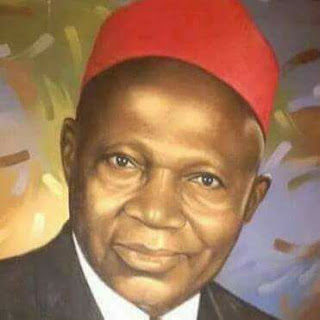
Tofa the last of the black-maned lions is no more!
May you walk amongst the saints,
As God enriched your life in this world may he grant you a Billion folds in the hereafter.

You didn’t neglect your portion of this world!
Opportunities unwasted nor a life of regrets,
A life at its best!
If I want to be Tofa Oh! From where do I start?

Is it Tofa of the beautiful palace and the most elegant of Mosques !?
Whom the good Lord granted a life of wealth, piety, fame and prestige !?
Whom he honoured above most men,
Bestowed him with talent and he utilized it all?

A former presidential aspirant,
Whom had a passion for Nigeria
Makes us wonder what could have been!
The travails you’ve foreseen
The security of the Nation of which you were so keen! 

The father to all, a mentor to many,
A connoisseur of the arts; A keen student of religion, the sciences include!
The historian whom tried his best to preserve an Emirate of which he was immensely proud.
“Advocates for a united Kano” we recall!

Tofa the Philanthropist who contracted tailors whose work was to sow for the destitute by night and day.
An Author of great works that would suffice a life of peace in this chaotic world.

An Ambassador of Islam,
A prince of the North,
A Poet, Reformer and Astronomer.
His collection of telescopes till date are unmatched!

A statesman, an icon of democracy, a colossal Pillar;
His Philosophy is not what can the North do for me but what can I do for its people!
You tried to secure our lives and future, generations will forever be grateful.

Men sat to mourn you,
A madwoman came!
Thus she spoke:
“From home, you’ve had your fill;
Now you have buried the one, who gives us feed.
Now I’m hungry
Have you no feelings?”

Such was the generosity of Tofa,
A saintly character,
With his absence now you will see!

So what will be the fate of the Nation when the Lions keep ascending and the reigns falls to the Jackals?
Who will steer the cubs away from fracas?

We always believe such men immortal,
Constantly putting it off, that we’ll find time and meet them.
Forgetting that as we grow so their time draws nigh!
When a great man dies, a whole library burns…
All the ideas they envisioned for Arewa unless in print, flees and with it comes our doom!

We didn’t tap into the wisdom of Sardauna nor of Balewa to study the art of statecraft!
So we procrastinated in meeting Dan Masani to learn diplomacy and eloquence.
We believed Bayero would forever be here to shield us!
And Sheikh Jaafar left; Ahmad Bamba same, Albany is at faraway Zaria we can’t take the bus;
Deluding ourselves that Dantata is inaccessible to us,
His Highness Sanusi just too busy for us!
Nor would I go to Alfurqan to rid my heart of its rust.
No wonder we are lost!

We’d rather disparage the Tofas amongst us;
Ridicule their reverence,
Tell them they are useless, toothless and clueless!
Our utterances reckless;
And manners thoughtless.
You friend,
Without them, rudderless!

And so they keep going,
And morals are ebbing,
Our heritage dissecting,
Standards are falling,
Culture’s corrupting,
The Nation is ailing,
‘Cos the wise souls keep leaving!

Pantami: ‘FG spends N152bn on ICT projects’

By Uzair Adam Imam

The Minister of Communications and Digital Economy, Isa Ali Pantami, said that the federal government had spent N152bn on digitization projects in 2021 across the country.

Pantami disclosed this in Abuja Tuesday at the closing of the 2021 Service Wide capacity building programme on e-Government at the e-Government Training Centre.

He said the amount constituted the total sum approved by the NITDA for the CBN, the NNPC, the CAC, the Immigration Service and Customs, among other agencies.

Meanwhile, the Minister also assured Nigerians that the government would migrate to a paperless government by 2030.

He said they have put in place all the necessary measures to achieve the objective through the National Policy on Digital Nigeria.

Finally, the Super Eagles joined the party

By Aliyu Yakubu Yusuf

Compared to its more illustrious continental equivalents, the African Cup of Nations (AFCON) receives far little media fanfare. With its scheduling in the winter when European football is well underway, the AFCON has been a pain in the ass for many a European club. And the actions on the pitch so far have elicited little excitement among watching fans. Goals have been at a premium, with just nine goals scored in the opening eight games in the tournament, making it a ratio of just over a goal a game.

The Super Eagles of Nigeria took on the Pharaohs of Egypt in a much-anticipated clash of African football titans. With Mohamed Salah at his mesmerizing best for his club, Liverpool and Nigeria having to play without two of its most in-form forwards, Victor Osimhen and Emmanuel Dennis, who are unavailable for various reasons, many pundits and bookmakers earmarked Egypt as the favourite. However, the Eagles didn’t read the script. As soon as the match kicked off, the Nigerians asserted themselves and dominated the early exchanges. However, they were made to wait until the 30th minute of the game before they got the deserved breakthrough.

Moses Simon, who was a menace for the Egyptian defence all first-half long, left the Egyptian full-back, Tawfik, for dead before putting in a teasing cross that Hegazy partly cleared. The ball fell nicely to Joe Aribo, who directed the ball to Kelechi Iheanacho, who fired an unstoppable missile into the Egyptian net to send thousand Nigerians who crossed the border to Garoua to watch the game into rapture. That was to prove the game’s only goal that turned into a topsy-turvy affair in the second half.

If the Super Eagles were great in the first half, they were effective in the second. The Pharaohs improved massively in the second half. However, the Nigerians fashioned many gilt-edged chances on the break. With a little more composure in front of the goal, the Super Eagles would have won by at least three clear goals. But, assisted by the evergreen Wilfred Ndidi and the silky Joe Aribo at the middle of the park, the Nigerian defence line comprised Ola Aina, Troos-Ekong, Kenneth Omeruo and Zaidu Sunusi successfully managed the unenviable task of keeping Mohamed Salah at bay.

Credit must go to the coach Agustin Eguavon who made his debut today. The Super Eagles had been a shamble for long stretches at the end of Gernot Rohr’s tenure. If this match is anything to go by, the future looks promising for the Super Eagles. Of course, as a traditional footballing powerhouse in the continent, Nigeria goes to any AFCON tournament as one of the favourites. However, it is still early days, and there are better teams in this tournament than the Pharaohs. So, I think Nigeria has an outside chance to go over the finish line.  

Aliyu is a lecturer at the Department of English and Literary Studies, Bayero University, Kano. He can be reached via aliyuyy@gmail.com.

Buhari mourns former Head of Interim Government, national flag flown at half-mast

The former head of Nigeria’s Interim National Government, Chief Ernest Shonekan passes on today. The president of Nigeria, Muhammadu Buhari mourns his death through a condolence message posted on his Facebook page. The post reads: “I received with profound sadness the news of the death of a great statesman and former Head of the Interim National Government, Chief Ernest Shonekan.

On behalf of the Federal Government, I extend my deepest condolences to Chief Shonekan’s wife, Margaret, his loved ones, and the government and people of Ogun State.

With courageous wisdom, Chief Shonekan left his flourishing business career to become the Head of Government, at a delicate time when the country needed someone of his calm mien and pedigree to save the ship of state from sinking.

He demonstrated to all that the love for country and commitment to her development, peace and unity transcend the trappings of office and the transient nature of political power.

Nigeria owes a great debt to Chief Shonekan, the peacemaker, who even at the twilight of his lifetime never stopped believing and working for a prosperous and democratic country.

I pray that his memory will remain a blessing to Nigeria even as he finds perfect peace with Almighty God.”

How I started my own business with zero naira

By Zainab Ahmad Dantsoho

Most people believe that one cannot start a business without huge capital, but that is absolutely wrong. So let me first define what capital means according to economics.

Capital is anything that increases one’s ability to generate value. It can be used to increase value across a wide range of categories, such as financial, social, physical, intellectual, etc. In business and economics, the two most common types of capital are financial and human.

But I will like to give my definition because the most neglected is the Human Intellectual faculty.

In the 21st century, capital is the ability of an individual to think using the intellectual capacity to make money in the absence of little or no resources.

I want to stick to my definition because based on analysis, our economic index can be weighed by the standard of living and income expenditures, but I come from the North where according to the average statistics of people living in poverty as of 2020 holds 87% of Nigeria’s poverty rate – World Bank

So, are there resources in the North? Of course, YES! But the problem is intellectual capital.

In a community where people can’t even feed properly and begging seems to be a way out, how do we end poverty in families and our communities? I have asked this question to myself a lot of times.

Our northern community would be great if only our brains can think about starting a business with zero naira or little or no capital. And this makes me think that in the absence of money and basic resources, the only value any society could have is thinking skill because that’s the best way to beat poverty!

Let me take you through my journey of 1 kobo.

At a point in my life, I just decided to start my own business, make money in a halal way, take care of myself, and help the people close to me and my community at large. So I asked myself, “Zainabu, what about the capital? Where will you get the required amount to start the business?” Of course, this immediately came to mind, but then I remembered capital doesn’t necessarily have to be money.

Thus, I started going to some perfume shops, taking pictures and samples of the perfumes, showing friends, advertising on my social media platforms. Then, when someone asks for it, I’ll quickly go back to the shop and get what they wanted while adding a little profit for myself. This continued for months, and I was able to save some money!

So, I realised that the only capital I have in the absence of resources is my intellect, the ability to think and make money. So, these are a few basic things I had my eyes out for when starting my one kobo business.

  • Location – Where can I sell this product?
  • Demands – Is the product highly consumables, highly used in my environment?
  • Standard of living – this is where I have to think critically. Can they afford it? If they can, at what cost, and what’s my profit because nobody wants to start a business losing. It’s a win-win goal.

Then when it comes to branding – since I have no resources and capital of my own, whenever I want to make more profits, I usually meet the producers and negotiate with them. They make it, but then it carries my business name and agrees on percentage without losing anything but gaining. Most traders into cosmetic products typically agree with this since it offers mutual benefits.

Now, let’s talk about mind poverty, also known as mentality poverty. Mentality poverty is not the absence of cash and resources. It’s simply our way of thinking and behavioural pattern.

And I also think our average mentality is poor, and that’s why poverty in African societies seems to be inherited. We have resources, yet we are poor. It’s time to shift from the cash flow method of capital and currency to its intellectual flow because, that way, our community will grow.

If we were to cut down the amount we spend on our phones, clothing, accessories, cosmetics, etc., we would be surprised at how much we will save.

One may wish to know the advantages of this type of business. Don’t stress yourself. I will help you with some basic information.

1.  It empowers you

2. It eradicates poverty

3. It`s easy to access

4. You earn without deposit

5. You can advertise from your home using your social media handles.

If you aren’t on social media, you can do Door to Door, attend events or places where you can meet many people, and take advantage of friends to friends marketing strategies.  Especially for those that don’t go out.

But here are some of the challenges you will face with this type of business:

1. People may want to take credit from you, and you can’t give it out since the items don’t particularly belong to you; for me, it’s even risky giving and selling items on credit.

2. You may need more time and patience to get customers.

3. Sometimes such items may be out of stock, so that means you need to know or keep contact with the store, to what’s available and what’s not available

4. You may need one or more stores to patronise, if you want quick profits and if it’s worth the energy!

My advice to our young entrepreneurs is that we should always avoid perishable goods, except if the areas we live in have a high demand for those particular items.

Lastly, with the way our economic system is currently running, it is still possible to start a business with zero or little income. So don’t wait for significant capital. You can save and think, spend wisely, and Allah will certainly help you.

I hope you will find this article very helpful and join our one kobo community to start your business and get substantial information from us.

Why not make a move and be your boss with zero naira today?

Zainab Ahmad Dantsoho is a graduate of the Federal University, Gusau and an entrepreneur. She writes from Kaura-Namoda Town of Zamfara State. She can be reached at zainabahmaddantsoho@gmail.com.

Drop that certificate, go after your passion

By Aminu Mohammed

I must confess that I wrote this article due to a post made by a Facebook friend who just completed the NYSC scheme in Jigawa state. In the post made last week, he mentioned his readiness to fall back on his skill as an iron bender to fend for himself, pending when something better comes up.

I was impressed by his sense of reasoning and his zeal to drop his certificate and embrace a vocation to escape idleness and poverty. This has become apt given the current realities in Nigeria, where jobs are pretty limited and difficult to come by.

I know many people, especially recent graduates, will sneer at me for commending this young man for the courage to take responsibility for his own life. They may even wonder why I praised him for choosing to do a “menial job” below his status as a graduate.

But the reality today, coupled with the dwindling economy and limited opportunities for the teeming youths in the country, warranted me to write this article. The era of youths waiting for white-collar jobs is over. Many graduates are roaming the streets looking for elusive jobs. Typically, the few jobs available will be taken by the best candidates and those with a connection at the high places. Thus, most applicants are left with the option of either staying idle at home or embracing any vocation or skill to earn a living.

Let me clarify that I am not a motivational speaker, and neither do I claim to have a magic wand to turn silver to gold. But I believe in pragmatism, and the ability one has to achieve his goal if he has passion and works towards it. Passion is the only thing that can keep a man steadfast in his pursuit of success irrespective of the difficulties on his path. Your certificate will amount to nothing if you cannot shun pride and seek a means to earn a living.

I still recall my NYSC days nostalgically in the Numan, Adamawa state, 19 years ago. I did my primary assignment at Government Secondary School Pare, Numan, which gave me ample opportunity to engage in external activities. I kept myself busy outside school hours by selling clothes and shoes to augment the N7500 NYSC monthly allowance. I didn’t spend much out of my monthly stipend throughout the service year because my side business could cover my living expenses. I completed my NYSC in 2003 and engaged in various activities to earn a living for three years before I got my first job in August 2006.

During the service year in Adamawa state, I observed a stark difference in the mindset between some southern corps members that I interacted with and their northern counterparts. While some southern corps members engaged in all sorts of activities to earn income, some of their northern colleagues see those activities as demeaning to their status as graduates. Some of the southern corps members then decided to stay in Adamawa after the service year to continue their hustle, and many have prospered.

I still remember a friend we served in the same local government area, Mr Ifeanyi, a pharmacist from Anambra state. He did his primary assignment at the General Hospital, Numan and subsequently moved to Yola to set up a pharmacy after the service year. He was able to prosper a few years after the NYSC scheme due to his doggedness and zeal.

I decided to narrate this story to encourage our youth to shun pride and find a means or trade to improve their wellbeing. Acquiring education is just a means to enable you to unlock your potential. That you have a degree should not make you despise other vocations. Instead, find a work you are interested in and try to acquire the requisite skills to support yourself. Life after NYSC is tough, and the labour market is almost saturated due to many unemployed people seeking jobs.

I am not saying that our youth should focus only on entrepreneurship alone and abandon their certificate by not seeking jobs. Of course, not everybody has an inclination towards business and entrepreneurship. But for those that have no interest in entrepreneurship could learn other skills via the internet. Skills such as digital marketing, affiliate marketing, and web development are there for people interested in learning to earn an income.

In Germany, young people acquire skills in various fields through the vocational system popularly called “Ausbildung”. I admire the German Ausbildung system because a student attends school and works simultaneously. The student acquires theoretical and practical knowledge during the duration of the apprenticeship, which usually lasts three years. The training focuses on practical skills for actual work and includes several skills such as plumbing, software development, landscaping, mason, baking, painting, salesperson, nursing, care for the elderly, and electrician.

Those who completed the training earn very well just like their counterparts who obtained a degree in Germany. Ausbildung is highly valued in Germany, and the need for craftsmen is always on the rise here. German society has been structured so that virtually all jobs are accorded due respect. Nobody looks down on a painter, electrician, carpenter or mason in Germany, unlike what we do in Nigeria. Most of our youths, especially graduates from the North, shy away from doing those jobs as they see them as not befitting their status. Some prefer to remain idle at home while hoping to get a job. There is dignity in labour, and it is quite normal to see a female painter, mason or female plumber in cities across Germany.

Therefore, the onus is on the youth to follow their passion and strive to achieve their personal goals. Efforts should be placed on personal development through reading and skills acquisition. For instance, if you have an interest in baking, do not hesitate to go and learn it to support yourself, likewise any other skill. Life favours the meek and those who shun societal pressures and go after their passion and dream.

I will also urge our young men, especially new graduates, to leave their comfort zone. If you think that opportunities are very limited in your locality, there is no harm in moving to another city to take advantage of better opportunities there.

Do not hesitate to read good books, as it opens your mind to great possibilities. Scholarships are also available for those who are interested in studying abroad. You can use Google to search for scholarships in various universities across Europe, Asia, Canada and the United States. There are multiple scholarships worldwide for you to apply for, and there is no harm in trying. You could be lucky to get one if you meet the requirements and expectations even though it is highly competitive. Do not be discouraged if your application is rejected but continue to persevere and reapply to other scholarships. I also faced many rejections while seeking admission in Germany.

Take a look within your locality and find something to do. You can volunteer your time and energy to learn something new or even work on a farm. Don’t bother about what people will say; so far, you have a target and a dream of where you want to go. Try to get busy with something no matter how small it is, pending when you get the desired job. Remember that many big organisations and establishments that you see today started small several years ago. May Allah bless our hustle and efforts as we strive to achieve our goals this year.

Aminu Mohammed is at the school of Sustainability, Christian- Albrechts- Universität zu Kiel, Schleswig Holstein, Germany. He can be reached via gravity23n@gmail.com.