Nigeria

Girei: The First Wakilin Fulani Adamawa

By Ahmadu Shehu, PhD.

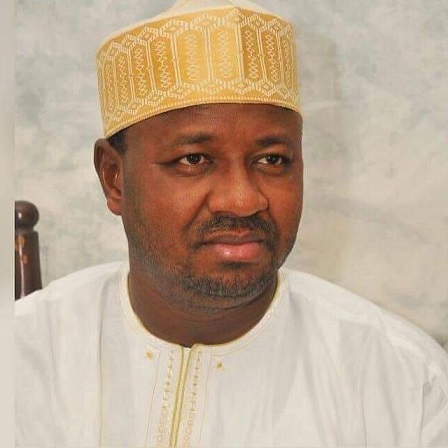
On Friday, December 17, 2021, HRH Laamiiɗo Fombina, Alh. Muhammadu Barkindo Aliyu Mustapha, PhD, the International Grand Patron of Tabital Pulaaku International, appointed Dr Abubakar Umar Girei as the first Wakilin Fulani Adamawa. 

This appointment would have passed the waves without noise, just as other traditional appointments go unnoticed, had it not been put on the very head that fits it in all ramifications. The title itself is rare in a place like Adamawa, where the traditional council and the emirate are based on the Fulɓe culture and traditions.

The Lamiɗo of Adamawa is regarded as the global custodian of the Fulani race, Fulɓe cultural, linguistic, historical, economic and religious identity. Although the Fulani hold most of the major Islamic emirates in West Africa, and indeed within Nigeria, none of these traditional councils upholds the sanctity of the Fulani culture than Adamawa.

It was, therefore, highly unlikely that anyone could ever merit this office, nor could anyone be trusted with this critical responsibility by the Lamiɗo, who himself, is the first custodian of this special role. The traditional office of Wakili refers to “custodian”. In this case, Girei has become an ambassador between the Lamiɗo and all Fulɓe, the overseer of issues concerning Fulɓe and Pulaaku in the Emirate.

The new Wakili Fulani was born on May 25 1962, in Girei, a semi-urban town some ten kilometres away from Yola, the Adamawa State capital. He holds a PhD, M.A. and B.A. in Linguistics and Fulfulde studies from the University of Maiduguri, where he taught for fifteen years at the Department of Languages and Linguistics. His basic education started in Girei I Primary School, after which he proceeded to Arabic Teachers College, Gombe, where he completed his secondary education.

Having earned a First Class degree, Girei took off well and maintained an excellent academic career, rising through the ranks as a prolific writer, linguist and poet. His publications cut across the linguistic circle, publishing in competitive local and international journals on sociolinguistics, morphology, semantics and other fields of applied linguistics.   

It is safe to state Girei is the most prominent modern Fulfulde poet with numerous titles that address diverse fields, uniquely analysing all aspects of human endeavours. His books on poetry, such as Duuniya e Fiiji maaru, are the most recent modern Fulfulde poetry that have become reference points for scholars and the general public. 

The hope of an academic is to push back the horizon of ignorance on a global stage. In Fulfulde linguistics, where he specialises, Girei has become an undisputed authority, with scholarly and teaching experience in numerous European universities, including London, Bayreuth, Hamburg, and Vienna.   

His sojourn into the humanitarian services of the Fulani people began early in his life when he joined the crusade to enlighten the nomadic Fulani to settle down for education. His passion for the education of the Fulɓe led him to pick an appointment as a nomadic teacher, for which he travelled far and wide with nomads to teach their children. For instance, despite being a headmaster in his hometown, Girei moved to Labbare nomadic primary school in Wukari over eight hundred kilometres from his home to teach nomadic kids. 

His dedication to the service of the Fulɓe became more apparent when he rejected the admission to study Law and instead applied and studied Fulfulde in the university. His academic career revolved around teaching and researching Fulfulde, Fulɓe Literature and Culture, not only in the university but also in colleges of education where Fulfulde is taught. Those years have seen him produce and mentor future scholars and students of Fulfulde (including yours sincerely) who have become teachers in various prestigious universities worldwide.

Beyond the classroom, Dr Girei has led global projects on Fulfulde. For instance, he was the secretary of Lamido Aliyu’s committee on the translation of the glorious Qur’an into Fulfulde. He was my lead as the editor of the final version commissioned by Lamido Barkido Aliyu Mustapha in 2011. In addition, he serves on various linguistics and translation boards of organisations such as UNESCO, in which Fulfulde has been his primary language of interest.

Girei has served Fulɓe and Fulfulde in more capacities beyond academia. He was a founding member and the pioneer national secretary of Tabital Pulaaku International and is the founding and trustee member of other various Fulani socio-cultural organisations. The entire Fulani leadership understands his wit and dedication to the course, so the Sultan once appointed him to harmonise the Fulani socio-cultural groups.        

By and large, in the almost 60 years of his life, Girei had one goal, one career and one success. These are the well-being of the Fulani people and their cultural heritage. Thus, if anyone deserves to be the ambassador and overseer of the Fulani people, Girei is the one. Therefore, it is highly commendable that the royal father, the grand custodian of our culture, has made the right choice when it is most needed. 

Given the current socio-economic and political problems facing the Fulani people across the continent, this office couldn’t have been created at a better time, and Girei is the head that fits the cap. We ask Allah to guide him to success. Aameen.

Dr Ahmadu Shehu is Dr Girei’s academic son and can be reached at ahmadsheehu@gmail.com.

Reading Culture: A dying treasure in Nigeria.

By Musa Ummihani Onize

Nothing pushes the human mind faster into obscurity than hatred to reading. A society that’s losing hold on good reading culture can be on a fast-track to ruins for reading is an essential soft tool that helps the mind work at its best. To be fully aware of oneself, one’s surroundings, and the world at large, there’s a need for one to be passionate about acquiring knowledge through mindful reading.

There will be no better time than now that calls for the redevelopment of reading culture in the minds of Nigerians because the lack of information, understanding, and enlightenment on vital issues is a big threat to national development and security. And, in Nigeria, critical observations of many academicians have it that good reading habits are on a decline, especially from young adults.

Nigeria faces devastating social problems rooted in tribalism, religious intolerance, opposing political views, extremism on different grounds, etc. But, aside from these social problems that destabilize the public good, some underlying toxic behavioural traits are foundational and contribute to social problems. These behavioural traits vary in one person from another.

So, to curb and manage man’s excesses and toxic traits -the ones known and unknown to him, there’s a need for equipping his mind with beneficial information through reading so to enable him to have a sense of understanding and tolerance towards people from different tribes, religion and nationality, and also to have the mental ability to differentiate the good from the bad in his personal activities and choices.

A study has it that people who have decent habits towards reading are less likely abusive and violent.

The revival of the dying reading culture in Nigeria can only be possible when concerned citizens put in collective efforts to educate and enlighten their loved ones and close associates on the importance of reading. It’s said that a journey of a thousand miles begins with a step. Therefore, it will be helpful and productive to educate our circles about the peace-enabling effects of good reading habits.

To ensure their growth, encourage them to read books.

Musa Ummihani Onize writes from Okene, Kogi, State via musauumiize@gmail.com.

Poverty reduction as an economic agenda in Nigeria

By Maryam Abdullahi Jibrin

Undoubtedly, the Nigerian economy has taken a more definite path that leads to progress and prosperity for the vast majority of our people. However, our national aspirations — equity, justice, integrity etc. must leap off the pages of cold print and become realizable objectives. Foremost, poverty must be addressed and reduced to a minimal level. 

The Millennium Development Goals (MDGs) first agenda is poverty reduction. UN viewed poverty as one of the greatest enemies of humanity. 

One of the surest ways to fight poverty is to build a strong economy that emphasizes job creation, an ever-increasing private sector and a problem–solving public service.

Nigeria is blessed with potentials. Now almost a century after independence, those potentials have turned into vast opportunities for all. 

The reality of our multicultural economy is no longer a point to mourn but one to turn to maximum advantage with which to build all the other sectors. Therefore, there is a need to formulate institutional, financial policy and macroeconomic support strategies to heal the economy.

Nigeria’s policy on poverty eradication must be unassailable if we are to get out of the economic predicament that stifles our initiatives. It means that our policy and decision-making processes must touch the heart of the problem. Only then can we have an effective solution — one that focuses on the needs of the most vulnerable segment of the polity and balances them with the growth imperatives of the economy. 

Against the background of both the local and global requirements, it became necessary to review the structural, operational and regulatory frameworks of the nation’s Poverty Reduction Plan. Since 1999, a set of policy directions and reforms have been implemented under a national development policy.

According to the National Bureau of Statistics (2012) report, 112.519 million out of an estimated 163 million of Nigeria’s population live in relative poverty. Relative poverty is the comparison of the living standard of people living in a given society within a specified period. Apart from the relative poverty index, Nigeria failed all poverty tests using all poverty measurement standards.

The poverty measure puts the country’s poverty profile at 60.9 per cent, the dollar per day measure puts the poverty profile at 61.2 per cent, and the subjective measure puts the poverty profile at 93.9 per cent (NBS 2012). The Human Development Index (HDI) of 0.423 also ranks Nigeria 142 out of 169 countries in 2010 with an estimated GNI per capita of $2156, life expectancy at birth of 48.4 years, Multidimensional Poverty Index (MPI) of 0.368 (UNDP, 2010).

The average Nigerian is a poor man. Nigeria is a nation of riches and poverty, wealth in the hands of few and extreme/abject poverty at the doorsteps of many. The divergence between Nigeria’s economic indicators, macroeconomic variables and reality is a source of concern. The reality is that people die because they cannot afford three square meals a day and access primary public healthcare. These problems are traceable to the weak governance that the nation has experienced over the years due to a combination of inefficient service delivery and inconsistent policy settings.

As strange as this may sound, this goes on side-by-side with an ostentatious display of wealth by the privileged few. 

In an attempt to proffer a solution to the foregoing problems, it is therefore imperative to determine the role of economic growth, agriculture and quality of governance in explaining the vast differences in poverty in Nigeria. Thus, the government should introduce initiatives to revamp education, infrastructure, fight corruption, end insecurity and ensure political instability nationwide. 

Maryam Abdullahi Jibrin writes from Bauchi. She can be reached via jibrinabdullahimaryam5@gmail.com.

The voice of moderation and reason is lost: Tribute to Dr Ahmad Muhammad Ibrahim, 1940-2022


By Kabiru Haruna Isa


“The death of a scholar is the departure of knowledge”.~Yahya b. Ja’far


In the afternoon of Friday, January 7, 2022, Dr Ahmad Muhammad Ibrahim, who was popularly and variedly known as Dr Ahmad Bamba; Dr Ahmad BUK; and Кala Haddasana, succumbed to the cold hands of death. Whoever attended the Muslim traditional funeral prayer did not need to specialize in Thanatology or the assistance of any thanatologist to decipher that his passing on has shocked not only the northern Nigerian Muslims but perhaps the entire Muslim world.

Hundreds and thousands of mourners from different nooks and crannies of northern Nigeria trooped to his mosque, Darul Hadith Masjid, at Tudun Yola quarters in Kano Metropolis to observe his Salat al-Janazah (funeral prayer). Based on my personal observation, the congregants comprised adherents of different doctrinal and ideological groups who were deeply touched by his death.

Dr Ahmad was one of the elder statesmen of the Muslim North who chose to be independent-minded, honest, forthright, focused and overtly apolitical. Those who grew up in Kano can vividly remember his educational sessions in the 1990s when he read a series of hadiths (narrative records of the sayings and customs of the Prophet Muhammad), which were aired on CTV (now Abubakar Rimi Television, ARTV), Radio Kano and other broadcast media.

What distinguished his educational sessions from those of other Islamic scholars were his sonorous voice, interactive dialogue, active learning process, and the constant prodding of his audience to debate jurisprudential issues. He created a convivial and liberal atmosphere for his students to either agree or disagree with his interpretations of holy texts without necessarily derailing from the subject matter, which demonstrated his deep knowledge of theological hermeneutics. 

Even though a Salafi, Dr Ahmad was a bridge-builder between Sufis and Salafis in northern Nigeria ostensibly due to his old age, maturity, accommodation and toleration. He always tried as much as possible to avoid deployment of insulting and libellous language to either demonize or hereticize those whose doctrines differed from his.

To err is human. As a human being, he might have wronged others, especially during his formative years, but he personified moderation and toleration as a fully accomplished and elder-scholar. Muslims will surely miss his fatherly voice of moderation, reason, truth and honesty. 

Despite his erratic temperament, Dr Ahmad was a forgiving person who never intended to hold animosity beyond the grave. I remember my personal interaction with him when Malam Babangida Namadi introduced me to him sometime in 2020. I pleaded with him to document his life narrative as some scholars did, such as Shaykh Abubakar Mahmoud Gumi in his autobiography, Where I Stand.

Dr Ahmad responded that he had a lot of stories to pass on to the younger generations based on varied phases of his life, bitter and positive experiences, social networks, scholarly itineraries and odysseys, family life, marriage counselling, pedagogy, university and national politics, truce and reconciliations and intra-faith relations. He further said that he would never write an autobiography because many people offended him and had already forgiven them; therefore did not want anything that would trigger his emotions.

The death of Dr Ahmad has created a vacuum that will take time to be filled because of his dedication and contributions to scholarship and the study of hadith in the Muslim world. To produce a scholar of his calibre is not an easy task, especially in the 21st century when young people exhibit hedonistic tendencies and many societies experience a systemic educational decline.

I will conclude with a famous quote of Umar “the death of a thousand worshipers is easier to bear than the death of a scholar who has knowledge of what Allah has permitted and forbidden”.

It will take us a long time to come to terms with the departure of Dr Ahmad. May Allah admit him into Jannatul Firdaus, amin.

Gmail: khisa.his@buk.edu.ng Department of History Bayero University, Kano.

Beyond Pantami’s tears

By Ahmad Deedat Zakari

I am not unmindful that weeping public officials and politicians are viewed with the lens of suspicion. However, the ineptitude of politicians and activists who cried their way to public offices is the main reason critics dismiss their weeping as mere optics and grand hypocrisy. In the case of the Minister of Communication, Isah Alih Pantami, I think most of his critics are only disappointed, having held him to a higher standard of character. Most of them think he should not be silent amidst our many challenges, particularly in the North. Therefore, they view his outburst of tears as giving attention to a lesser evil.

Pantami wept for what he deemed moral decadence while passing a message in a religious gathering. The sincerity of his tears was questioned and debated, but the concerns raised with those tears remains incontrovertible. As unpleasant as it sounds, a nation whose youths and citizens stole from a mall consumed by fire has lost its moral compass. Pantami acknowledged this sad reality with those controversial tears. We should all cry for our collective woes. 

Like it is common with almost all societal problems, finding solutions starts from the sober admittance of the anomaly’s existence and recognizing the need for deliberate actions. In this situation, orientation is the way to go; it is necessary to teach the youths with model examples from leaders that life should not solely revolve around the craze for illegal acquisition of material things. And that there are nobler causes that make the world a better place. To be fair to Pantami, his message in that gathering was not less of an orientation. However, there is a need for a larger and more diverse platform for a more significant impact. 

There are many issues worth our tears and palpable concerns in today’s Nigeria. For instance, we are riddled with devastating security situations up North and secessionist threats down South. Moreover, young people who should be under the warm protection of their parents and in classrooms roam the streets freely, demonstrating what extreme poverty is. All these amidst a biting economy, and governments at various levels appear to be in slumber. 

It is undeniable that nations worldwide have challenges and problems peculiar to ours. The only difference lies in the actions of the governments and citizens of these nations. Sadly, we dwell more on trivialities than issues that uplift our country from the abyss of wreckage done to us all, especially our leaders. As thought-provoking as Pantami’s tears became, the genuineness or otherwise should not elicit serious attention; because we have more problematic issues that bother our survival as a nation. 

It undoubtedly remains our right to express our misgivings and hold our leaders accountable for all their actions. However, building a dream country is far beyond talking too much and minor actions. Simply put, we are yet to captain our ship and take our nation’s destiny into our own hands, at least by my honest measure. Just like Pantami wept over what he considered offensive, we express our dismay regarding every issue we believe our country’s problem all the time.

But like JF Kennedy poignantly postulated, “Ask not what your country can do for you, ask what you can do for your country” He used this historic sentence to call on Americans to civic actions and responsibilities. I believe the mindset of patriotism and owing one’s country civic obligation, plus deliberate actions like registering to vote and encouraging others to do the same, is the catalyst that will propel Nigeria to greatness.

Ahmad is a 5th-year Law student at the Faculty of Law, Ahmadu Bello University Zaria and can be reached via ahmadzakari@gmail.com.

Addressing the menace of insecurity for a better Nigeria

By Yaseera Muhammad Bello 

Given the indisputable fact that Nigeria is currently trekking on the part of degeneration due to the menace of insecurity that grows daily, some questions have been scalding my tongue, seeking honest answers. What perpetuates insecurity in Nigeria? What machinery drives the brutal car of insecurity that has been killing innocent people in my fatherland? Who is to blame?

An undeniable, albeit unfortunate, fact about Nigeria today is that we read news of devastation on our national dailies for over seven years. The reports we hear on our radio stations and televisions revolve around the menace of terrorism. And it’s an inevitable fact that until we unearth the indices that hamper insecurity in Nigeria, we cannot live a life full of happiness and serenity. That being said, what are the factors that ignited the flame of insecurity in Nigeria?

Despite our portions of blame, our leaders are to be counted as the bedrock of igniting insecurity in the country. This is because we have long been electing incompetent leaders who cannot render their services effectively for the nation’s good. And this is because of the affinity we share with them when they are put into the offices. And at the end, when things fall apart, we’ll be barking like dogs seeking a peaceful society.

On the other hand, unemployment is another worrisome factor that vigorously plays a role in watering Nigeria’s black tree of insecurity. Most of our youths today in Nigeria have nothing to do but join groups that commit despicable acts. And this is mainly due to their state of unemployment perpetuated by the virulent animosity among our tribes. This is strictly said, having seen how tribalism has been hindering youths from getting job opportunities in the count. And at the end of the day, the youths have no choice but to join the horrific menace of insecurity that bedevilled our nation.

Furthermore, corruption in Nigeria, like all the other potent factors dittoed responsible for Nigeria’s insecurity, has its portions of blame. It’s now becoming rampant and our daily meal in the country. Corruption ignites numerous perplexities impeding us, including the threatening menace of insecurity. When leaders become corrupt, they fail to give security personnel adequate arms and support to fight terrorist groups and other factors that might threaten the safety of the citizens. 

Undoubtedly, until we put competent leaders into the offices irrespective of one’s tribe, religion or any affiliation, alleviate unemployment and stamp out corruption in the country, we will still wallow in the muddy water of insecurity. 

Yaseera Muhammad Bello writes from Gombe state is a student of Science Laboratory Technology (SLT), Gombe State University (GSU). She can be reached via misseerahbello@gmail.com.

Buhari appoints Salami as Chief Economic Adviser

By Ahmad Deedat Zakari

President Muhammadu Buhari has appointed Dr Doyin Salami as Chief Economic Adviser (CEAP).

An official statement released by Special Adviser to the President on Media and Publicity, Mr Femi Adesina on Facebook on Tuesday, January 4, confirms this development.

Mr Femi Adesina wrote that Dr Doyin Salami was educated in London, where he bagged his doctorate degree in Economics, Queen Mary College, University of London in 1989. He added that Dr Doyin Salami is a member of the Adjuct Faculty of the Lagos Business School (LBS), Pan Atlantic University, where he recently attained the rank of Associate Professor.

Femi Adesina noted that the Chief Economic Adviser to the President is to address all issues on domestic economy and present them to the President.

Agony of underpaid workers and suggested reactions

By Ishaka Mohammed

Illusion. Yes, that’s what I see in many fellows who consider themselves optimists. Denying the existence of a sad situation doesn’t portray optimism; rather, it depicts a glaring loss of control in an ocean of illusion. However, believing that the situation will change for the better is optimism.

There’s no gainsaying that poor remuneration is an undeniable feature of a typical Nigeria’s workplace. Considering the conditions of service and state of the nation, one can irrevocably say that many employees are grossly underpaid in almost every organisation in Nigeria.


From media houses to fuel stations, schools and other organisations, you find journalists, pump attendants and teachers who work for no fewer than eight hours per day but go home at the end of the month with a paltry sum of N15,000 or something lower than that. In fact, I heard from a lecturer of mine who used to be a practising journalist (now a communication lecturer) that a certain publisher of a national newspaper told some of his employees that their identity cards were their meal tickets; he had nothing to pay them. This is one of the reasons why some journalists not only expect but also demand brown envelopes from organisers of events.


This underpayment issue is like asking a man to walk fast on an alley filled with banana rind. Considering the slippery nature of the rind, it’ll be a great achievement for such a person to avoid staggering, that’s if he doesn’t fall outright. As an employee, I feel your pains, but you need that achievement; you must stand tall. Avoid waiting for others to change things for you.


Many underpaid workers are forced into recording unsatisfactory performances. That’s one thing you must resist. Once you’re sure that your remuneration is poor, look for where you may attract more value to yourself; otherwise, consider upscaling your competence.


Martin Luther King’s speeches often inspire me. He insisted that we must be the best of whatever we are. As a classroom teacher, I become more critical of myself each time I read the following lines. 


“If a man is called to be a street sweeper, he should sweep streets even as Michelangelo painted, or Beethoven composed music, or Shakespeare wrote poetry. He should sweep streets so well that all the hosts of heaven and earth will pause to say, ‘Here lived a great street sweeper that did his job well.'”


So, dear teachers, being underpaid must never turn you into cheats. Instead, research, teach and evaluate your students appropriately. Those kids under your tutelage don’t belong to your employer; they’re future leaders. Even if they don’t end up in public offices, they’ll at least lead their families. And, as we all know, it’s difficult for banditry and terrorism to thrive in a society where a significant percentage of members possess quality education.


Beware, o you health workers. In your dealings with your patients, avoid being influenced by the unfair treatment you receive from your employers or the government. If you fail to control yourself, you may murder innocent people or cause them lasting deformities.


My dear journalists, we’re aware of the meagre sums you take home as salaries. But such should never be your justification to feed your society with false stories. A mass communication lecturer at Ahmadu Bello University, Zaria, Dr Muhammad Hashim Suleiman, once said, “The deliberate mistakes of journalists…lead to mangled human bodies, orphaned children, burnt cities, poverty…and general societal retrogression.” I’m sure you wouldn’t want to be responsible for chaos in your society.


O fellow Nigerians, here’s a passionate appeal to you. Aim for excellence in whatever you do. Regardless of your workplace or salary value, make diligence and fulfilment your hallmarks and watchwords. If a thing is worth doing, it’s worth doing well. Be mindful of posterity; do your level best today so that the people of tomorrow will mention you for good.


And in case it becomes necessary to resign your position in an organisation, remember to quit honourably. Even after submitting your resignation, make your presence noticeable by offering your very best until your last day there; such might make your employer feel your absence. Due to the unpredictability of life, avoid burning your bridges.


On a final note, dear Nigerian workers, bear in mind that your actions and inactions have earthly and heavenly consequences. Being guided by professionalism will do you a great deal of goodness. So, strive always to be the best version of yourself. On the above premise, therefore, as an underpaid worker, you’re expected to solve your problem. You’re the best person to change your situation for the better.

Ishaka Mohammed wrote from Kaduna State. He can be reached via ishakamohammed39@gmail.com.

Person of the year? Definitely more than that

By Abdulrazak Iliyasu Sansani

I begin this piece with what may strike the readers as a puzzling title. Perhaps it is. But I write this is in respect of the festive period and a matter closely associated with it. It is that time of the year where organisations, newspapers, magazines, groups, and even individuals sit to award, eulogise their heroes and heroines, or write about their persons of the year. A tradition that commenced in 1927 in the United States, Time magazine. 

According to a Wikipedia entry, ‘The tradition of selecting a “Man of the Year” began in 1927, with Time editors contemplating the newsmakers of the year. The idea was also an attempt to remedy the editorial embarrassment earlier that year of not having aviator Charles Lindbergh on its cover following his historic trans-Atlantic flight. By the end of the year, it was decided that a cover story featuring Lindbergh as the Man of the Year would serve both purposes.

Since then, this has continued with different labels, such as Man of the Year, Woman of the year, until the current and apt denomination: Person of the Year. I write today in the euphoria of the moment. But not so engrossed with it, as I had never subscribed nor joined those who partake in awarding their persons of the year, which has become prominent on social media recently by this time of the year. I relish seeing people excel in life. Although, I had never felt the urge to engage in the voguish celebration by an avalanche of people who issue this award chiefly on social media. 

But experts say to every rule; there is an exception. Although, I am not joining the trendy giving of awards or rather announcement of one’s person of the year. I have to acknowledge one of the most disciplined, rational, affable, and respectful Nigerians I have ever met. At this distressing hour of our history as a nation, I believe it is only fitting that patriotic people who have exhibited unique understanding in a multi-ethnic, multi-religious, sharply divided country like ours are honoured, encouraged, or at least merely mentioned as a mark of appreciation for their selfless contributions to our nation. Through the prism they behold our country, this country stands any chance of overcoming its insurmountable challenges. I am in awe of whoever has proven beyond any iota of doubt to be of a commendable grasp of the intricacies of our diverse society. Hence, I am writing this to recognise a man who has served this country meritoriously and honourably retired. 

While I applaud all these, it is in the basics that hold our communities today that this distinguished Nigerian has been more actively involved and has magnetised me to him. The simplest things build our society. They hold the fibre of our communities closely knit. Even though this is lost on many, I comprehend the importance of nation-building, starting from the communities. 

Nigeria as a whole has been sitting on a powder keg. This makes it extremely easy for disgruntled elements or even criminals to make capital out of it. So, whoever stops those from exploiting this deserves every reverence they can get. However, my person of the year, a man of impeccable character, has mastered the art of living in peace with others in a diverse country like Nigeria, especially the state he comes from: I am glad to hail from the same state as him. Yes, he comes from my state. He is Baba Augustine, commonly called Baban Ella in our neighbourhood, while we both refer to each other as Kawu, Baban Ella being a Jenjo man. 

I will, for this reason, address him as we usually call each other. Kawu lives in our Sabon Gari neighbourhood in Jalingo. More people don’t profess the same faith with him in our street. Muslims mainly own houses. Kawu is a Christian. It is now a time Muslims and Christians find themselves jostling to relocate to neighbourhoods predominantly occupied by those who worship God the way they do in fulfilment of the polarised realities of our country majorly resided by adherents of the two faiths. But as I was reliably informed, Kawu has resisted countless times the pleas to transpose by those who have accepted the new order of doing things. They believe it is safer to live in places inhabited only by members of their faiths. However, there is only a semblance of security in some instances, even in these types of neighbourhoods. 

The nitty-gritty of the matter is not that he has flagrantly refused to move into another place. But he has continued to relate with people from all social strata with unmatchable grace, sincerity, dignity, and esteem. Moreover, the way he attends to society’s problems is refreshing, laudable, and gratifying. Wedding ceremonies, naming ceremonies, burial ceremonies, community meetings; name them, he is there and participates fully with the families of those involved in any of these regardless of their faith.

While I don’t necessarily fancy awards, I get excited seeing worthy awardees being awarded or even merely celebrating people who have distinguished themselves by living exemplary lives irrespective of their pockets, which draws many awards to personalities rather than refined manners that help nation-building. 

Nigerians must celebrate worthy people like Kawu. But, Nigerians should not only stop at that. They should go further to borrow a leaf from them and apply it in the arduous task of nation-building, which must begin with one being a better person before influencing the next person, the family, the next-door neighbour, friends, colleagues, and the country as a whole. 

Abdulrazak Iliyasu Sansani wrote from Turaki B, Jalingo, Taraba State. He can be reached via abdulrazaksansani93@gmail.com.

Expect more job opportunities in 2022, Buhari tells Nigerians

By Uzair Adam Imam


President Muhammadu Buhari has confirmed that new jobs are on the way for Nigerians in the new year, 2022.


The president made this public in his new year message to Nigerians, adding that his administration would deploy ICT (Information and Communications Technology) platforms.


According to Buhari, the purpose of job creation is to ensure the diversification of the economy to support other emerging sectors.


Senate President Ahmad Lawan also asked Nigerians to continue having faith in the country and its democratic institutions.


The National Leader of the All Progressives Congress (APC), Asiwaju Bola Tinubu, said that given the way Nigerians fought to contain the COVID-19 pandemic, there is no doubt that they can equally “stand up to problems that seek to shackle us.”


Speaking about security challenges in the country, Buhari promised that government would not relent in tackling the problem citing the “number of insurgents and bandits who have willingly surrendered to our security forces and continue to do so through various channels and the Safe Corridor created for that purpose.”


“The persistent insecurity in certain parts of the country may have threatened to unravel the incremental gains achieved in the real sectors of the economy and in the administration’s overall objective to position the nation on the irreversible trajectory of sustainable growth and progress, but I assure you that we will remain resolute in our commitments and shall continue to press ahead with our programmes and plans,” he added.