Nigeria

ADC Sues INEC Over Alleged Removal of Party Leaders

By Anas Abbas

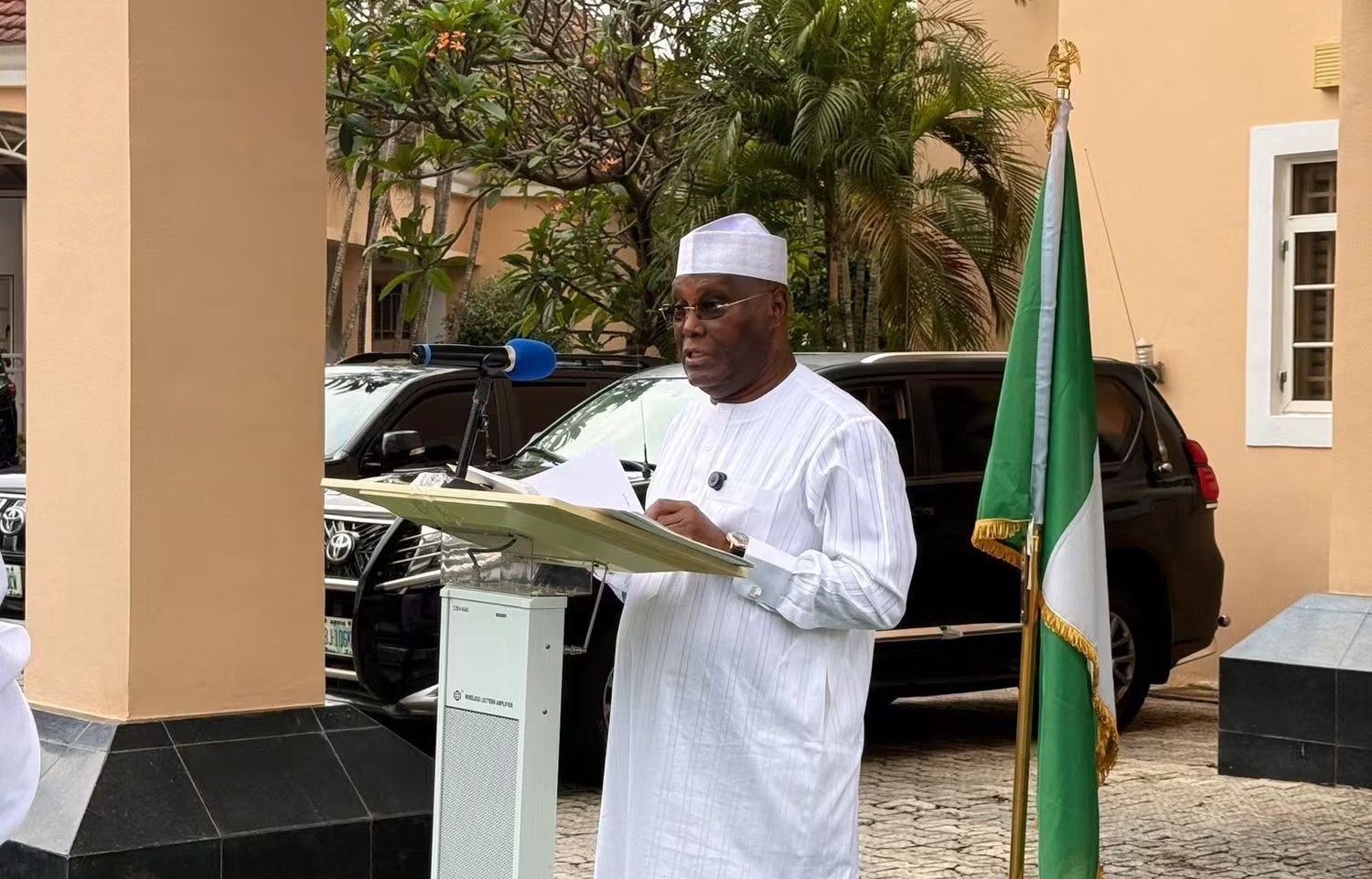
The African Democratic Congress has taken legal action against the Independent National Electoral Commission, challenging the removal of some of its leaders from the commission’s official records.

The party, under the leadership of David Mark, filed the suit at the Federal High Court in Abuja, seeking judicial intervention over what it described as an unlawful decision by the electoral body.

According to the ADC, INEC’s action in altering its leadership records is inconsistent with due process and threatens the internal structure of the party. The party insists that the changes were made without proper consultation or adherence to established legal procedures.

The suit is asking the court to determine the legality of INEC’s move and to compel the commission to restore the affected leaders to its official records.

The development comes amid an ongoing leadership dispute within the party, which has drawn public attention in recent days. The ADC maintains that the matter is an internal affair and should not warrant interference from the electoral umpire.

As of the time of filing this report, INEC has not publicly responded to the lawsuit.The case is expected to test the extent of the electoral body’s powers in regulating party leadership structures, particularly as political activities begin to gather momentum ahead of future elections.

US Cancels Visa Appointments in Abuja, Authorises Staff Departure Over Security Concerns

By Uzair Adam

The United States Embassy in Abuja has cancelled all visa appointments in the Nigerian capital, asking applicants to check their emails for information about rescheduled dates.

In a notice issued on Thursday, the embassy said visa services would continue at the United States Consulate General Lagos.

The embassy also stated that services for American citizens would remain available through scheduled appointments or emergency requests.

The development followed a decision by the United States Department of State to authorise non-emergency U.S. government employees and their family members to depart from Abuja due to what it described as a worsening security situation across Nigeria.

In an updated travel advisory, the department urged American citizens to reconsider travelling to Nigeria, citing concerns including crime, terrorism, kidnapping and civil unrest.

The advisory placed Nigeria under “Level 3: Reconsider Travel,” while some parts of the country were categorised under “Level 4: Do Not Travel.”

According to the notice, the decision followed a security assessment conducted on April 8.

“On April 8, 2026, the Department of State authorised non-emergency U.S. government employees and U.S. government employee family members to leave U.S. Embassy Abuja due to the deteriorating security situation,” the advisory stated.

The department also warned that travellers should reconsider visits to Nigeria because of crime, terrorism, unrest, kidnapping and inconsistent access to healthcare services.

Several states were listed under the highest risk category, including Borno State, Yobe State, Jigawa State, Niger State, Plateau State, Taraba State and parts of Adamawa State.

Other states mentioned in the advisory included Kaduna State, Kano State, Katsina State, Sokoto State, Zamfara State, Bauchi State and Gombe State, where the department cited risks related to unrest, crime and kidnapping.

The advisory noted that some areas in the country face higher security threats, urging U.S. citizens to remain cautious and monitor official updates before planning travel.

Robbers Sever Teacher’s Hand In Kano

By Sabiu Abdullahi

Suspected motorcycle robbers have cut off the hand of a school teacher, Isah Sallama, during an attack in Bunkure Local Government Area of Kano State, The Daily Reality reports.

The incident happened on Wednesday night along the Funkuyi Road in Buran District. This was contained in a statement issued by the Secretary for Public Enlightenment of the Rano Emirate Council, Nasiru Habu Faragai.

Faragai said Sallama, who lives in Sarkin Bakar Rano, came under attack when he tried to assist another victim, Malam Sauwanu Hadi. The assailants were attempting to snatch Hadi’s motorcycle and mobile phone at the time.

He added that the attackers first attempted to shoot Sallama, but their weapon failed to discharge, according to a report by the Daily Trust newspaper.

“When the gun failed, they resorted to using a machete and chopped off his hand, leaving him in a critical condition,” the statement said.

The District Head of Bunkure, Alhaji Aminu Isa Umaru, reported the case to the Emir of Rano, Muhammad Isa Umaru.

The emir condemned the incident and described it as troubling. He ordered that security agencies be notified for a detailed investigation.

He also approved the sum of N100,000 to assist with the victim’s medical treatment.

The traditional ruler urged community leaders and security operatives to step up efforts to address robbery and other criminal activities in the area.

Bandits Release Kidnapped Student Maryam After Months In Captivity

By Sabiu Abdullahi

A student identified as Maryam, who was abducted by bandits several months ago while travelling to school, has regained her freedom after spending a long period in captivity.

Maryam was on her way from Zamfara State to Sokoto State, where she intended to continue her education, when armed attackers intercepted her and took her to an undisclosed location.

News of her release emerged on Wednesday through blogger D English Alhaji, who shared the update on social media. He confirmed that she is now safe and receiving care after her ordeal.

“We have Maryam with us now. Thank you, Nigerians. Maryam is finally free,” he said.

A video posted shortly after the announcement showed Maryam inside a vehicle as she was being taken to a hospital for medical treatment.

In the footage, she appeared weak and tired. She expressed gratitude to Nigerians who supported her during the period of her captivity.

Maryam appreciated members of the public for their prayers and encouragement. She said their support gave her strength and hope throughout the difficult experience.

Her release comes at a time when insecurity remains a major concern in several parts of Nigeria. Incidents of bandit attacks and kidnappings continue to affect states such as Zamfara, Sokoto, Katsina, Kebbi and Kwara.

Residents in the affected areas have continued to voice concern over the situation, as armed groups carry out attacks on communities, highways, schools and places of worship. Travellers, students and worshippers are often among those targeted.

University Of Jos Lecturers Begin Indefinite Strike Over Unpaid Salaries, Allowances

By Sabiu Abdullahi

Academic activities at the University of Jos have been halted after the Academic Staff Union of Universities (ASUU), Jos branch, announced an indefinite strike over unpaid March 2026 salaries and concerns about missing Earned Academic Allowances (EAA).

The union issued a notice to its members on Tuesday. It instructed lecturers to withdraw from lectures, examinations, statutory meetings, and all related academic duties with immediate effect.

The statement, which was signed by the branch chairperson, Jurbe Joseph Molwus, explained that the action followed internal consultations and resolutions reached by the union’s National Executive Council (NEC) and congress.

“After following due process, we hereby request all members to abstain from lectures, conduct of exams and statutory meetings as our salary for the month of March 2026 is yet to be paid despite our patience,” the statement read.

ASUU said the strike commenced on Wednesday, April 8, 2026, and will remain in place until the outstanding salaries are settled.

The union linked the delay in payment to the Office of the Accountant General of the Federation. It noted that the university’s bursary department had already completed its role in processing the salaries.

“From our consultation, the delay is occasioned by the Office of the Accountant General of the Federation as the bursary of the University has done its part in the process of salary payment,” the statement added.

The lecturers also accused relevant authorities of ignoring their concerns and undermining industrial harmony within the institution.

“It seems our patience is being taken for granted by those who are determined to frustrate industrial harmony,” it said.

ASUU further disclosed that it has set up a monitoring team to ensure that members fully comply with the strike directive.

The development reflects wider dissatisfaction across Nigeria’s university system, where lecturers in several institutions have raised complaints about delays in salary payments under the current administration.

Reports indicate that staff members at universities such as Ahmadu Bello University, Usmanu Danfodiyo University, and Federal University Birnin Kebbi have also expressed frustration over the non-payment of March salaries, especially as it coincided with the Easter period.

“This has become a pattern, but this particular delay shows a lack of consideration. People have families to cater for, especially during festive periods like this,” one lecturer told SaharaReporters.

Dangote Refinery Cuts Petrol Price To N1,200 After Crude Oil Decline

By Sabiu Abdullahi

The Dangote Petroleum Refinery & Petrochemicals has reduced the ex-gantry price of Premium Motor Spirit (petrol) to N1,200 per litre. This marks a reversal of its earlier price increase after a drop in global crude oil prices linked to geopolitical developments.

The new price reflects a reduction of N75 from the previous rate of about N1,275 per litre. The refinery had earlier raised prices due to rising international oil costs and concerns over supply.

A senior official of the refinery confirmed the adjustment on Tuesday night. He explained that the decision followed changes in global crude oil benchmarks and market conditions.

“The adjustment is in line with global market trends. You are aware of the ongoing tensions in the Middle East and their impact on crude oil prices. These are external factors that directly influence refined product pricing,” the official, who spoke in confidence due to the lack of authorisation to speak on the matter, stated.

He also said, “Petrol has been reviewed upward by N75 to N1,275 per litre, which is about a five per cent increase, while diesel has increased more significantly by N200 to N1,950 per litre. These changes reflect the realities of the international market.”

By Wednesday morning, the same official confirmed that the refinery had reversed the earlier increase. He said the latest decision followed a sharp drop in crude oil prices after former United States President Donald Trump announced a conditional two-week ceasefire arrangement with Iran. The development reduced concerns about possible supply disruptions in the Middle East.

Data showed that Brent crude fell by 13.28 per cent to $94.76 per barrel on Wednesday. US West Texas Intermediate also declined by 14.72 per cent to $96.31 per barrel.

The drop in prices followed signs of easing tensions after Trump said the United States would suspend planned military action against Iran for two weeks. The move depends on restoring safe passage through the Strait of Hormuz.

“Yes, the price has been reversed. This follows the current price of crude oil,” the official added during a telephone interview.

The refinery also issued a statement to address speculation about further price increases. It clarified that no additional hike had been introduced and that prices were instead adjusted downward.

“A source at the company confirmed that its pricing structure remains intact, with the gantry price at N1,200 per litre and the coastal price at N1,153 per litre.

“We are maintaining our existing price and have not implemented any new pricing for our customers,” the statement read.

The company added that it remains focused on ensuring consistent fuel supply within Nigeria and across the region.

The development comes at a time when Nigeria’s downstream petroleum sector faces continued uncertainty due to fluctuations in global oil prices, exchange rates, and supply chain challenges.

Since it began operations in September 2024, the Dangote refinery has played a major role in shaping fuel supply and pricing in the country. Its latest move highlights the growing link between domestic fuel prices and global market trends following the deregulation of the sector.

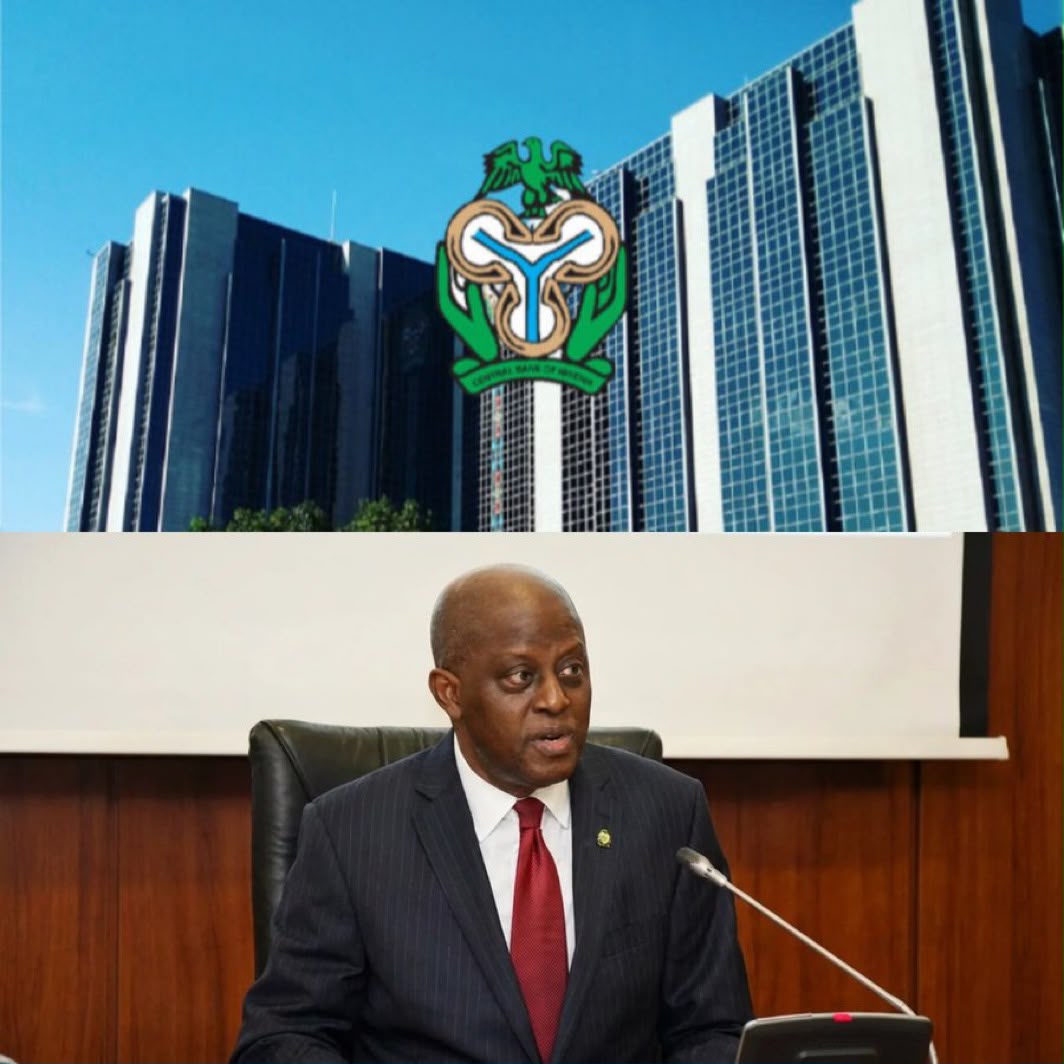
CBN Leads Historic Banking Overhaul as Recapitalisation Hits ₦4.65 Trillion

By Salmanu Isa Darazo


Nigeria’s banking sector has entered a new phase of strength and global relevance following the successful completion of a sweeping recapitalisation exercise spearheaded by the Central Bank of Nigeria (CBN).

The exercise, which mandated banks to meet new capital thresholds by March 31, 2026, is widely regarded as the most significant reform since the 2005 consolidation era—signalling a bold regulatory shift aimed at repositioning the financial system for long-term economic transformation.


A Strategic Reform Anchored by the CBN

At the heart of the exercise is the CBN’s vision to build a resilient, well-capitalised banking system capable of supporting Nigeria’s ambition of a $1 trillion economy. By enforcing higher capital requirements, ranging from ₦10 billion for regional non-interest banks to ₦500 billion for international commercial banks—the apex bank has effectively reset the industry’s financial architecture.

The results are striking: Nigerian banks collectively raised ₦4.65 trillion, with 33 institutions meeting the new thresholds. Notably, the recapitalisation attracted both local (72.55%) and international (27.45%) investments, underscoring renewed investor confidence in Nigeria’s financial system and regulatory credibility.


Strengthening Stability and Global Competitiveness

Analysts note that the recapitalisation significantly enhances banks’ ability to absorb economic shocks while aligning Nigeria’s financial system with global standards such as Basel III.

Beyond compliance, the reform signals a transition to stronger corporate governance, improved risk management, and enhanced regulatory oversight—all driven by the CBN’s supervisory framework.

This positions Nigerian banks not just as domestic financial intermediaries, but as competitive players in the global financial ecosystem.


Unlocking Financing for National Development

A key outcome of the CBN-led reform is the expansion of banks’ lending capacity. With stronger balance sheets, financial institutions are now better equipped to fund large-scale projects across critical sectors, including infrastructure, energy, manufacturing, and technology.

This increased capacity is expected to accelerate Nigeria’s industrialisation drive and support export diversification—key pillars of the Federal Government’s economic agenda.


CBN’s Role in Policy Coordination and Economic Stability

The recapitalisation also reflects growing synergy between monetary and fiscal authorities. By aligning its policies with government growth objectives, the Central Bank of Nigeria is strengthening policy transmission mechanisms, improving liquidity management, and reinforcing inflation control measures.

This coordinated approach enhances macroeconomic stability while ensuring that financial sector reforms translate into real economic outcomes.


A Foundation for Inclusive Growth

Beyond macroeconomic gains, the reform carries significant implications for financial inclusion. A stronger banking system is better positioned to expand credit access to small and medium enterprises (SMEs), support grassroots economic activities, and deepen financial penetration across underserved communities.

The CBN’s broader objective, analysts say, is to build a financial system that is not only robust but inclusive—capable of delivering growth that is both sustainable and widely shared.


The Road Ahead

While most banks have met the new requirements, those yet to fully recapitalise remain operational and are progressing toward compliance under CBN supervision.

Industry observers agree that the recapitalisation marks a turning point—laying the groundwork for a stronger, more transparent, and globally competitive banking sector.

Conclusion

The recapitalisation exercise is more than a regulatory adjustment—it is a strategic economic intervention led by the Central Bank of Nigeria. By strengthening financial institutions, boosting investor confidence, and aligning with national development goals, the CBN has set the stage for sustained economic growth and stability.

For Nigeria, the message is clear: a resilient banking system is not just desirable—it is essential for the future.

Salmanu Isah Darazo is an analyst and publisher, he can be reached via Salmanudrz@gmail.com
What Edo Taught Me About Nigeria

By Rabi Ummi Umar

On the cool evening of Thursday, April 2nd, 2026, I returned home after an exhausting day of accomplishing my mission in Edo State, popularly known as the “Heartbeat of the Nation” for its rich cultural heritage. 

As I took a moment to unwind and pack my bags for my return journey to the Federal Capital Territory, Abuja, a thought struck me, echoing a conversation from earlier that would not easily be shaken off.

It circled back to a personal reflection titled “When We Focus on What Truly Matters.” After that heartfelt conversation with a friend, one can’t help but wonder whether we’ve truly been living out the “sermon,” especially in our own lives. 

Yet, those moments of self-doubt reveal something profound: the beauty of life lies in its openness. As long as we remain receptive, each day presents a renewed chance for self-examination and an invitation to learn and grow.

This friend, who is deeply involved in politics, spoke passionately about his thing. While I don’t typically report on government affairs, my discipline as a communicator gives me more than enough to follow along. 

Nonetheless, that specific dialogue shifted my perspective entirely. It made me realise how many others might change their minds if they were privy to the same insights. That realisation is exactly why putting those to paper became an inspiration.

The weeks in Edo allowed me to embrace a spirit of exploration, stepping outside my comfort zone to truly thrive even in spaces I never thought possible or even imagined visiting. It was the unpredictable beauty of life, perhaps why travelling is said to be a form of gaining from the vast body of knowledge.

During Ramadan, there was an event for the “City Boy Movement.” Initially, I assumed it was strictly “for the boys,” and, to be honest, the concept caught my fancy, but I kept an open mind. 

Surprisingly, it was organic and inclusive, spanning 36 states and involving men, women, the elderly, and, interestingly, the physically challenged. While “rice sharing” politics was never something to admire, I walked away that day with a much deeper understanding of the grassroots and its place in politics.

A few weeks later, a conference organised by the Senior Special Assistant (SSA) to the Governor on Student Welfare and Development, a dear friend, took place. Some attendees like myself were there simply “to see,” but the event was blown away. As someone who values authenticity and integrity over political optics, I found the turnout genuinely impressive. 

Despite being born and raised in Edo and being the daughter of a former SSA to the State Government (2023), I had never witnessed an event of this calibre in the state before. It stood out as a beacon of what is possible if everyone played their part, if and when youths are involved in the scheme of things. 

These encounters brought a realisation that while the state, like many in Nigeria, still faces significant lapses, the progress is undeniable. From new flyovers and school construction to massive infrastructural shifts, the developments in education and youth empowerment are particularly striking. 

This experience made me wonder, if so much is happening here beneath the surface, how many “small wins” are we overlooking in other states? Nigeria, as a whole, is currently weathering a storm that cannot be ignored. 

We are battling banditry, kidnapping, insecurity, and a staggering cost of living. To many, it feels as though things are only getting worse. Yet if you look more closely, there is incremental progress.

Take the education sector, for example. The era of constant Academic Staff Union of Nigeria (ASUU) strikes has finally lost its steam compared to years past. The Nigerian Education Loan Fund (NELFUND) is also there, providing loans and stipends to students; it is systematically reducing the number of students who would otherwise miss tertiary education across the country.

Of course, the heartbreak of insecurity remains. It is illogical and devastating when groups attack villages without demands, leaving only grief behind. In these moments of unrest, it is easy to point fingers solely at President Tinubu. But some of our issues start much closer to home, with us, the citizens.

I remember a friend whose father was assassinated at his doorstep; despite the proximity, every neighbour claimed they “saw nothing.” Another friend was robbed during our university days; when she screamed for help, neighbours simply locked their doors tighter. 

The bitter reality is that we rarely look out for one another. How can we expect a transformation at the top when we refuse to show humanity to those beside us?

We have become a nation of finger-pointers. Many have traded accountability for ignorance, blaming leadership for even the smallest personal failings. Too many youths today avoid research and critical thinking, choosing instead to sit back and complain, a habit that only digs our collective hole deeper.

Yes, there is a mountain of work left to do. But we must acknowledge the work already being done. Our government is trying. From my vantage point, the President is a solution-oriented leader doing his best under immense pressure.

Consider this: when inflation hits, marketers and drivers are the first to hike prices. We understand why. But when the economy stabilises, and costs drop, those prices stay sky-high under the guise of “old stock.” Is that the President’s fault, or are we our own worst enemies?

As Nigerians, we need to have these uncomfortable conversations. The popular saying “change begins with me” is not just a poetic catchphrase; it is a practical necessity. We must be the change we seek if we ever hope to experience the Nigeria we want.

As I head back to Abuja, I am carrying the lessons from Edo with me. We are making progress, but there is still a lot more to do. We all just need to pitch in to get to the utopia we deserve.

Rabi Ummi Umar is a corps member in Abuja. She can be reached via rabiumar058@gmail.com.

Kebbi Assembly Speaker Muhammad Zuru Dies While Receiving Treatment in Egypt

By Sabiu Abdullahi

The Speaker of the Kebbi State House of Assembly, Muhammad Usman Zuru, has passed away.

Zuru died on Monday night in an Egyptian hospital, where he was receiving treatment for an undisclosed illness. Sources close to the Kebbi State Government confirmed his death, but details of his condition were not released.

Until his passing, Zuru represented Zuru Constituency in the state assembly and was considered a key figure in the legislature.

Confirming the development, an aide to the governor on Communication and Strategy, Idris Zuru, described the news as shocking.

“The death of the Speaker, Rt. Hon. Muhammad Usman Zuru, came to us as a rude shock. It is a painful loss not only to Kebbi State but to the entire nation,” he said.

He added that further information would be shared by the government.

“We are still gathering full details surrounding his passing. The government will make an official statement and announce burial arrangements in consultation with the family,” Idris Zuru stated.

Additional announcements regarding funeral arrangements are expected from both the state government and the family.

IBAN Threatens to Boycott Wike’s Press Briefings Over Threat to Journalist

By Abdullahi Mukhtar Algasgaini

The Independent Broadcasters Association of Nigeria (IBAN) has demanded that the Minister of the Federal Capital Territory, Nyesom Wike, retract his comments against journalist Seun Okinbaloye and issue a public apology, according to a report by TheCable.

IBAN also threatened to boycott all press briefings organised by Wike if he fails to meet the demand.

The threat follows Wike’s statement that he could “shoot” Okinbaloye while criticising the journalist’s opinion on a television programme. Wike later clarified that he did not mean the remark literally.

The association said that despite the subsequent clarification, such language is unbecoming of a public official, as it could intimidate journalists and further worsen the already challenging environment in which they operate.

IBAN urged the minister to retract his statement, tender an apology, and demonstrate support for press freedom, warning that failure to do so would lead them to suspend coverage of all his official activities.