Nigeria

Aisha Yesufu Demands Removal Of INEC Chairman, Says ADC Is Not For Play

By Sabiu Abdullahi

Activist Aisha Yesufu has added her voice to calls for the removal of the Chairman of the Independent National Electoral Commission (INEC), Joash Amupitan.

She argued that Amupitan should step down from his position, citing what she described as partisan conduct.

Yesufu, a member of the African Democratic Congress (ADC), made her position known in a post shared on X. She stressed that the opposition party is serious about its mission and should not be taken lightly.

In her post, she wrote: “I love how active Nigerians have become! #ActiveCitizens

“I always focus on the little wins. They snowball into the big wins.

“Some years ago, Amupitan would have gotten away with what he tried to do.

“At this stage it becomes mandatory that #AmupitanMustGo. My party is not here to play!

“The most painful part of all of this for me is that I will not be in the country for my FIRST party convention.

“I have accepted months ago to be at a workshop in Brazil. ADC Arise.

Her comments come amid growing criticism from different quarters over the leadership of the electoral body.

The development reflects increasing political tension as opposition figures continue to question the neutrality of the commission ahead of future elections.

Bauchi Governor Raises Concern Over Removal Of Rail Infrastructure In State

By Sabiu Abdullahi

Bauchi State Governor, Bala Mohammed, has raised alarm over the dismantling of railway sleepers along the Alkaleri–Tafawa Balewa rail line, warning that the development could harm the state’s economic prospects.

The governor encountered the activity on Saturday during a trip to Alkaleri Local Government Area, where he had gone on a condolence visit. He reportedly saw contractors removing parts of the rail infrastructure.

Disturbed by the situation, Mohammed called on security agencies and relevant authorities to step in and provide a clear explanation.

He questioned the justification for removing such vital infrastructure. He said assets of this nature should not be altered without proper engagement with the state government.

The governor directed his Chief of Staff to formally contact the Federal Ministry of Transport to seek clarification. He expressed worry that important facilities within the state were being taken apart without the knowledge of local authorities.

Security operatives present at the site reportedly told the governor that the contractors were acting on instructions from the Federal Government.

Mohammed, however, said the explanation did not adequately address the concerns, given the role of the rail corridor in transporting agricultural produce across the area.

He cautioned that the removal of the sleepers could deepen transport difficulties and disrupt economic activities in communities that depend on the railway for moving goods.

The governor also called for better coordination between federal and state governments. He stressed that decisions on critical infrastructure should reflect their impact on livelihoods and local economies.

Further findings suggested that the contractors were operating with a letter said to have been issued by the Federal Government, which approved the removal of the rail tracks. No reason was stated for the action.

Speaking to residents, Mohammed assured them that he would take up the issue in Abuja. He reiterated that rail transport remains one of the most reliable and affordable options for moving goods and services.

He also raised concerns about whether there are still plans to rehabilitate railway systems across the country, especially in the North-East, which he said continues to face infrastructure deficits.

DSS Frees Kano Officials Questioned Over Kwankwaso Petition

By Sabiu Abdullahi

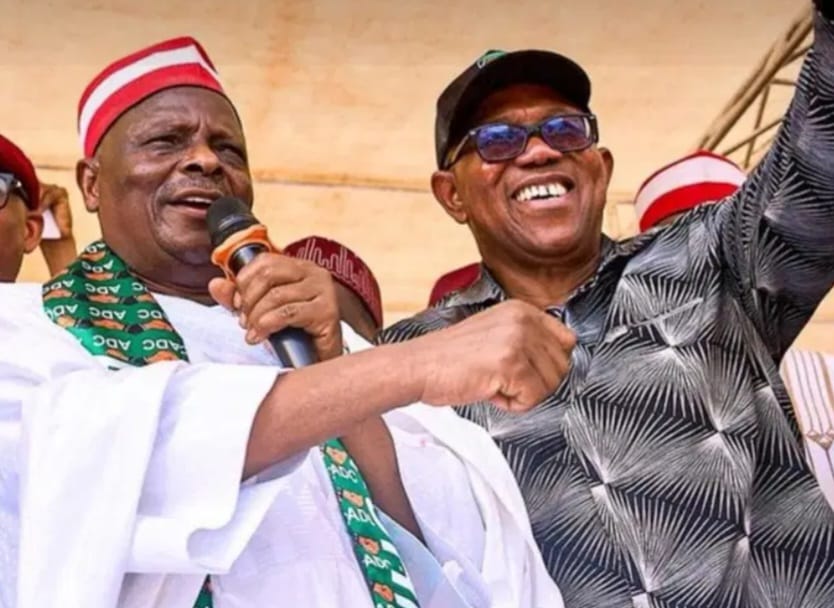
The Department of State Services (DSS) has freed a number of Kano State Government officials who were earlier invited for questioning over a petition submitted by former governor Rabiu Musa Kwankwaso.

The officials spent about four hours in custody after honouring the DSS invitation. They were later granted bail on self-recognition.

Among those affected are Sunusi Bature Dawakin Tofa, Director General of Media and Publicity at the Kano Government House; Ibrahim Adam, Special Adviser on Information; Salisu Yahaya Hotoro, APC Youth Leader in Kano; and Nuhu Dambazau, a senior reporter at the Government House.

Kwankwaso lodged the complaint under the Kwankwasiyya Movement. He accused the officials of engaging in cyberbullying and making defamatory statements against him and some of his loyalists on social media platforms.

In the petition dated April 10, 2026, he alleged that the individuals carried out coordinated online attacks aimed at tarnishing his image.

Their release soon after interrogation indicates that the matter is still under investigation, with no final decision announced.

The incident comes at a time of heightened online political exchanges between supporters of the Kwankwasiyya Movement and those aligned with the Kano State Government.

As of the time this report was filed, there has been no official response from either the DSS or the Kano State Government regarding the development.

FG Publishes List Of 48 Individuals, Groups Linked To Terrorism Financing

By Sabiu Abdullahi

The federal government has released a list of 48 individuals and organisations alleged to have connections with terrorism financing across Nigeria.

The disclosure came on Saturday through the Nigeria Sanctions Committee (NIGSAC). The list contains names of persons and entities suspected to be involved in activities tied to extremist and banned groups. These groups include the Indigenous People of Biafra (IPOB), Ansarul Sudan (Ansaru), and the Islamic State West Africa Province (ISWAP).

Among those identified is Simon Ekpa, a separatist figure based in Finland who is linked to a faction of IPOB. On September 1, 2025, the Päijät-Häme district court in Finland sentenced him to six years imprisonment over terrorism-related offences. The court held him liable for inciting terrorism and for taking part in the operations of a terrorist group.

Tukur Mamu, a publisher from Kaduna, also appears on the list. He is currently standing trial in Nigeria over allegations tied to terrorism financing. Mamu was arrested in 2022 and later charged by the federal government. The charges include claims that he supported terrorist groups through financial and logistical means. He has denied the allegations.

Other individuals named include Abdulsamat Ohida, Mohammed Sani, Abdurrahaman Abdurrahaman, Fatima Ishaq, Yusuf Ghazali, Abubakar Muhammad, Sallamudeen Hassan, Adamu Ishak, Hassana Isah, Abdulkareem Musa, Umar Abdullahi, Bashir Yusuf, Ibrahim Alhassan, Salihu Adamu, Surajo Mohammad, Fannami Bukar, Muhammed Musa, Sahabi Ismail, Mohammed Buba, Adamu Hassan, Hassan Mohammed, Usman Abubakar, Kubara Salawu, and Rabiu Suleiman.

The list also contains several names from the south-east. They include Simon Njoku, Godstime Iyare, Francis Mmadubuchi, John Onwumere, Chikwuka Eze, Edwin Chukwuedo, Chiwendu Owoh, Ginika Orji, Awo Uchechukwu, Mercy Ali, Ohagwu Juliana, Eze Okpoto, Nwaobi Chimezie, and Ogumu Kewe.

Entities listed by the committee include Jama’atu Wal-Jihad, Ansarul Sudan (Ansaru), Islamic State West Africa Province (ISWAP), Indigenous People of Biafra (IPOB), Yan Group, and Yan Group NLBDG.

The development comes at a time when authorities have increased scrutiny of financial channels believed to support armed groups and separatist movements. The government has continued efforts aimed at cutting off funding sources linked to insecurity in different parts of the country.

ADC Spokesperson Calls For INEC Chairman’s Resignation Over Alleged Partisan Post

By Sabiu Abdullahi

Bolaji Abdullahi, spokesperson of the African Democratic Congress (ADC), has asked Joash Amupitan, chairman of the Independent National Electoral Commission (INEC), to step down over allegations of partisan conduct.

The controversy follows claims circulated online that Amupitan operated a personal account on X and used it to engage with politically biased content.

However, the INEC chairman has denied the allegation. Through his chief press secretary, Adedayo Oketola, Amupitan described the claim as “entirely baseless, a total fabrication, and a figment of the imagination of its purveyors”. He also stated that he has not taken part in political commentary and urged the public to disregard what he called misinformation.

In a statement shared on X on Saturday, Abdullahi said the credibility of the INEC chairman must remain beyond question. He argued that the alleged post undermines trust in the country’s electoral system.

“In a democracy, the umpire must be above suspicion. He must not only be independent, but he must also be seen, beyond any reasonable doubt, to be independent. That is the minimum standard required of anyone entrusted with the sacred duty of conducting free and fair elections,” the statement reads.

“However, more troubling is the desperate attempt to tamper with digital records, to erase evidence of his previous partisanship. This is not a trivial matter. It is a calculated assault on truth and accountability.”

Abdullahi said the comments linked to Amupitan suggest he has not met the expectations required of an electoral umpire.

“The referee cannot be running around in the shirt of one of the teams he’s supposed to officiate in a match. This is why Professor Amupitan must resign. Now,” Abdullahi said.

“Anything less is an insult to the Nigerian people and a dangerous precedent for our democracy.”

He added that the ADC plans to petition relevant bodies, including foreign governments and the Nigerian Bar Association (NBA), over the allegation.

“We will also renew and escalate our civil disobedience action until the INEC Chairman leaves office,” he added.

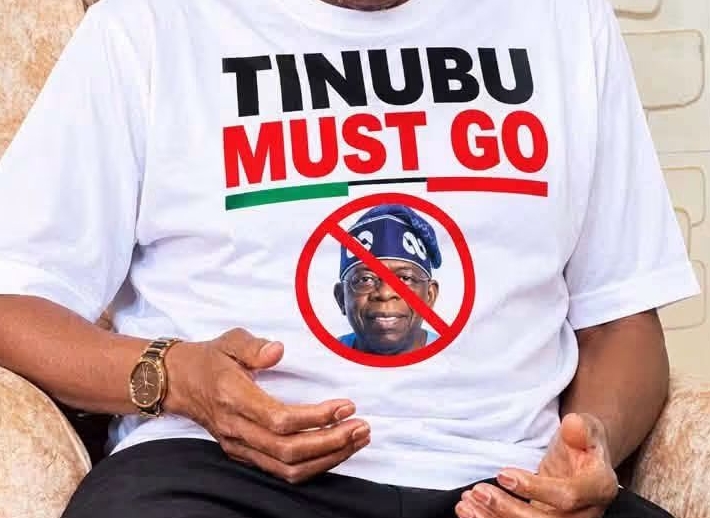
Banditry Hurting Economy, We’ll Crush It, Says Tinubu

By Sabiu Abdullahi

President Bola Tinubu has described banditry and terrorism as serious threats to Nigeria’s economy and security, stating that urgent action is required to end the menace.

He said his administration would reinforce the country’s security architecture to tackle the challenge and restore stability.

Tinubu spoke on Monday at the opening session of the two-day National Economic Council conference held at the State House Conference Centre in Abuja. He assured Nigerians that decisive steps would be taken against criminal groups responsible for violence across parts of the country.

“To further find means to strengthen our security forces to defeat terrorism and combat banditry.

“That, I promise you…is what has kept all of us sleepless at night, but I assure you that we will win with determination and resilience,” Tinubu said.

He stressed that such acts of violence are not in line with Nigerian values and must be eliminated.

“This banditry and terrorism are unacceptable. It is not part of our culture. It is foreign to us.

“So it is an economic hindrance if we do not find an immediate solution to it.”

His remarks follow a series of deadly attacks in different states. One of the most severe incidents occurred on February 3 in Woro and Nuku communities in Kaiama Local Government Area of Kwara State, where at least 162 residents lost their lives in an ആക്രമ by suspected extremists.

Reports indicated that the attackers struck after residents rejected demands to adopt a strict version of Sharia law. The violence led to several deaths and injuries, while dozens of people, mostly women and children, were abducted.

Kwara State Governor, Abdulrahman Abdulrazaq, had earlier described the incident as a “brutal and deliberate massacre” and genocide.

On the same day, another attack in Doma communities of Faskari Local Government Area in Katsina State left at least 20 people dead after a local peace arrangement broke down.

At the NEC meeting, Tinubu acknowledged the efforts of some state governors in tackling insecurity, particularly those from Borno and Katsina states.

“I commend many of you, particularly the governor of Borno State, Katsina, many of you who have done so much to defend our freedom, liberty and our commonwealth,” he said.

The President also linked the security crisis to ongoing livestock reforms. He noted that the conference should come up with clear decisions on ranching and investment in livestock as part of efforts to address clashes between farmers and herders.

“I’m confident that the resolution of this conference will include dairy farming, livestock investment, ranches and diversification of our agricultural produce.

“I promise you here, I will play my part. I promise Nigeria that this will be delivered,” Tinubu said.

He recalled that he had earlier directed Vice President Kashim Shettima and the NEC to prepare a roadmap for transforming the livestock sector through ranching.

“We must eliminate these areas of conflict and make the livestock reform economically viable,” the President had said at a previous Federal Executive Council meeting.

Following that directive, the NEC inaugurated a Livestock Development Committee chaired by Kebbi State Governor Nasir Idris to accelerate the implementation of ranching reforms nationwide.

The ongoing conference, presided over by Vice President Shettima, was convened by the Minister of Budget and Economic Planning, Atiku Bagudu. It is themed ‘Delivering Inclusive Growth and Sustainable Development: The Renewed Hope National Development Plan.’

Participants include state governors, senior government officials, development partners, and private sector representatives. Discussions are expected to focus on key economic priorities such as fiscal coordination, investment drive, and joint development strategies between federal and state governments.

Kano Lawmaker Passes Away After Brief Illness

By Anwar Usman

A member of the House of Representatives representing Dawakin-Kudu/Warawa Federal Constituency, Mohamed Hassan, is dead.

His death was announced in a statement issued on Friday by his special assistant on media, Muazzam Dawakin-Kudu,  who said Hassan died after a brief illness.

The statement read, “Inna lillahi wa inna ilayhi raji’un. It is with deep sorrow that we announce the passing of Hon. Barr. M.D. Hassan.”

According to the statement, the late lawmaker will be buried on Saturday, April 11, 2026, following a funeral prayer scheduled to take place at about 1:30 p.m. at the National Mosque, Abuja.

The statement offered prayers for the forgiveness of the deceased’s shortcomings and for Allah to admit him into Aljannatul Firdaus.

Until his passing, Hassan served as the representative of Dawakin-Kudu/Warawa Federal Constituency and was widely recognized as an active contributor to legislative proceedings at the National Assembly.

Meanwhile, tributes have continued to pour in from associates, constituents, and political stakeholders, who described his death as a significant loss to the nation.

DSS Arrests Ex-Lawmaker Aliyu Gebi Over Alleged False Intelligence To Foreign Missions

By Sabiu Abdullahi

Operatives of the Department of State Services (DSS) have detained a former member of the House of Representatives, Aliyu Gebi, over claims that he distributed misleading intelligence reports to foreign embassies in Nigeria.

Security sources disclosed that Gebi, who served in the 7th National Assembly and works as a security consultant, was arrested on Friday, April 3. He has since been released on bail, although investigations are still ongoing. Sources said he must report regularly to the DSS headquarters.

The case was first reported by Premium Times, which stated that the former lawmaker allegedly provided intelligence to foreign missions that authorities later found to be inaccurate.

A source told the newspaper that the reports caused concern among international stakeholders, especially in the aviation sector. “Lufthansa cancelled flights scheduled to take off to Nigeria,” the source said, adding that “British Airways nearly did the same.”

Another source indicated that the same intelligence contributed to a recent advisory issued by the United States government, which warned its citizens about security risks in parts of Nigeria.

The advisory, issued by the US Department of State, cited a “deteriorating security situation.” It urged non-essential personnel to leave Nigeria and advised Americans to reconsider travelling to the country. The warning listed crimes such as armed robbery, kidnapping, assault and roadside banditry. It also identified high-risk states, including Borno, Yobe, Adamawa, Kogi, Kaduna, Katsina, Zamfara and Rivers.

The Nigerian government rejected the advisory and asked foreign partners to ensure their security assessments are “balanced and up-to-date” and reflect “the progress being made” to improve safety across the country.

Sources also revealed that several embassies initially considered acting on the intelligence allegedly linked to Gebi. However, Nigerian authorities intervened through diplomatic engagement, which led to a suspension of planned actions.

“Many embassies received the report and wanted to act on it, but the Nigerian government dialogued with them and they shelved their plans,” another source said. “But the United States went ahead to issue that advisory.”

The incident comes at a time of existing diplomatic strain between Nigeria and the United States. Tensions increased after Washington redesignated Nigeria in 2025 as a “Country of Particular Concern” over allegations of religious persecution, an accusation the Nigerian government has repeatedly denied.

While acknowledging security challenges, the Nigerian government maintains that violence in the country affects different regions and groups, not a single religious bloc.

Gebi has held several roles within Nigeria’s security sector. He served as a member of the House of Representatives between 2011 and 2015, representing a constituency in Bauchi State. During that period, he chaired the House Committee on Internal Security and also participated in the ECOWAS Parliament.

He later worked at the Ministry of Interior as a Senior Special Adviser from 2015 to 2023. He also served as Special Adviser on Non-Kinetic Security Strategies at the Defence Headquarters. In addition, he was the National Coordinator of the Security Governance Initiative, a programme launched during the Obama administration to strengthen security sector governance in Nigeria and other African countries.

B’Haram Releases Video Of 416 Abducted Women And Children In Borno, Victims Beg For Government Intervention

By Sabiu Abdullahi


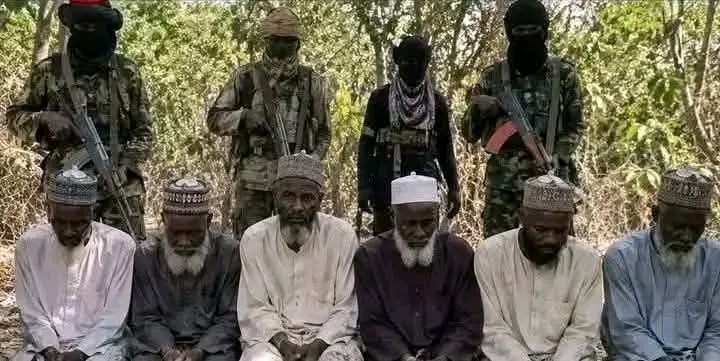
Terrorists believed to be members of Boko Haram faction Jama’atu Ahlis-Sunna Lidda’Awati Wal-Jihad (JAS) have released a video showing 416 abducted women and children from Ngoshe community in Gwoza Local Government Area of Borno State.

The footage shows the captives seated on the ground in an open area while armed insurgents stand guard around them. Some of the gunmen wore face coverings, while others had their identities exposed.

The video was reportedly produced after a request by a group known as the Borno South Youths Alliance, which had demanded proof that the abducted persons were still alive amid ongoing efforts to secure their release.

In the recording, one of the insurgents spoke in Hausa through a loudspeaker, presenting the group and addressing Nigerian authorities.

“All praise is due to Allah, and may peace and blessings be upon the Messenger of Allah and his family. Peace, mercy, and blessings of Allah be upon you,” he began.

“We are members of Jama’atu Ahlis-Sunna Lidda’Awati Wal-Jihad, under the leadership of Imam Abu Umaymatul.

“We have gathered here today to present a few important matters. God willing, we intend to deliver a message to the Government of Nigeria, based on requests made by members of the Borno South East Alliance and others who asked for clarification about the condition of the women from Ngoshe.

“The women of Ngoshe wanted to be seen, and here they are. They are alive and in good condition. We have not harmed them in any way, nor have we mistreated them. We have kept them according to what we believe is our duty before Allah. This is because our religion instructs us to act in this manner.

“Without wasting time, since members of the Borno South East Alliance requested a video so they could see them with their own eyes, we will now allow the women to speak directly. You will hear from them and see them yourselves.”

After the statement, the captives were questioned by the insurgents and asked to confirm their identities and status. A spokesperson among the abducted persons, speaking in Hausa, confirmed they were from Ngoshe and said they were alive.

“First of all, we thank Allah (Subhanahu wa Ta’ala) who brought us to this place. Alhamdulillah, we are grateful.

“We are people from Ngoshe town. This trial and destiny befell us there. By the grace of Allah, we are alive and in good condition, together with our children, women, and elders. All of us are safe.

“Those who were injured or unwell have received treatment and care. Some of our children arrived without clothes, no shirts, no trousers, but they have now been given clothing. We have been provided with shelter and food. Alhamdulillah, we are being taken care of.”

She also expressed emotional distress over the situation and appealed for intervention from the Nigerian government and local leaders.

“Our stay here has not been difficult in terms of basic needs; we have no immediate complaints about our treatment. However, we are deeply worried and distressed because of what has happened to our relatives.

“Some people were killed when an aircraft struck, and others suffered different tragedies. Because of this, we are in emotional distress and constant worry. Our families back home are also anxious; some of them do not even know whether we are alive or dead. But now, with this video, they will at least know that we are alive.

“We are sending this message to the world so that people know we are alive and in good condition.”

She further appealed directly to top officials, including President Bola Tinubu, Vice President Kashim Shettima, Borno State Governor Babagana Zulum, Senator Mohammed Ali Ndume, and other leaders from Gwoza and Southern Borno, urging urgent action to secure their release.

“We are calling on all of them for help, assistance, and intervention.

“We sincerely wish to return to our homes because we are not used to living like this. The lifestyle here is very different from what we are accustomed to. Our children are distressed, we women are distressed, and our families back home are also suffering emotionally.

“Living in a place that is unfamiliar to you is very difficult. We are appealing for intervention so that we can be helped and returned to our homes, reunited with our children, parents, and loved ones.

“War is not good, it only brings suffering.”

Another woman, speaking in a different local language, repeated similar concerns, praising their survival while calling for urgent rescue efforts. The captives also repeatedly thanked their captors and appealed for help.

The video highlights the continuing humanitarian crisis in Nigeria’s North-East, where prolonged insurgency has displaced communities and left many civilians in captivity.

In a related background, earlier reports had indicated repeated attacks on Ngoshe and surrounding areas, including assaults on military bases and civilian settlements, which have led to deaths, destruction of property, and displacement of residents.

Insecurity: we Need To Trace The Root Cause

By Ismail Bello Darazo 

Nigeria is a country known for its diverse ethnic groups, rich cultures, and traditions. There is also a strong history of peaceful coexistence among these groups. This harmony was more evident when traditional leaders were in control of societal affairs. All these things have faded away. Why?

Everything is better than before the marginalisation of the traditional leadership system, despite the democratic rule in various aspects of the sphere, but this particular issue of insecurity, especially the one between ethnicities, is not well addressed by the system. We still have time to make things better and manage.

The truth that we don’t want to say out has to be told in the sense that we would keep our eyes off the sad event masterminded by those we share the same tribe or religion with. This is what happens, and it is what fuels the escalating insecurity in the whole country. Political leadership was largely in the hands of traditional institutions, which formed a vital part of Nigeria’s governance structure before being marginalised by the modern democratic system.

The democratic system is centred on the separation of powers among the three arms of government—the Executive, the Legislature, and the Judiciary. This has become the dominant mode of governance today. However, decision-making and policy implementation under this system have largely replaced traditional methods, which once ensured a high level of compliance because people trusted their leaders.

The marginalisation of traditional leadership by the democratic system is one factor contributing to the escalation of insecurity. Traditional institutions have deeper access to the grassroots and better knowledge of the local environment than the current system. 

It is rare to find any group of people without a leadership structure in which leaders report to higher authorities when decisions exceed their authority. This applies to groups such as herders grazing livestock and farmers producing food for trade and national food security. The relationships between these groups were previously managed by traditional leadership, which ensured harmony and stability despite differences.

However, the alienation and undermining of traditional institutions have weakened this long-standing unity. The sense of shared humanity has diminished. Despite intermarriages and shared values, conflicts of interest have damaged relationships, turning once-peaceful communities into hostile groups.

Despite these challenges, it is not too late to act. The government can revitalise the traditional ruling system by integrating it into policy-making and implementation processes. Traditional leaders should be given a sense of belonging and held accountable for their responsibilities. Thomas Fuller once said, “A stitch in time saves nine.”

The effectiveness of this structure can often change the narrative, due to its deep grassroots penetration, significantly improving the current situation. 

By taking this step, insecurity can be drastically reduced, if not completely eliminated.

Ismail Bello Darazo writes from Bauchi wrote via Ismailbello054@gmail.com.