

Two children dead, couple injured in Kano building collapse
By Uzair Adam
Two children have been confirmed dead, and a couple sustained injuries after a two-storey building collapsed at Noman’s Land in the Fagge Local Government Area of Kano.
The incident, which occurred early Thursday morning, was confirmed by Dr. Nuraddeen Abdullahi, the Coordinator of the National Emergency Management Agency (NEMA) in Kano.
According to Abdullahi, NEMA received a distress call at around 2:00 a.m. from a concerned citizen reporting the collapse. A rescue team was immediately dispatched to the site.
“Four individuals were rescued from the rubble, including a husband, wife, and their two children. Unfortunately, the two children were pronounced dead, while the parents were taken to the Armed Forces Specialist Hospital for medical treatment,” Abdullahi said.
Search and rescue operations are still ongoing, with teams from the Kano State Fire Service, Police, Red Cross, NSCDC, and SEMA working to find any remaining victims.

Senator Ndume calls for increased military efforts against insurgents in Sambisa
By Uzair Adam
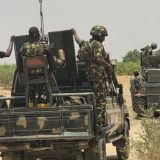
Senator Mohammed Ali Ndume (APC, Borno South) has called on the military under the Theatre Command, North East ‘Operation Hadin Kai,’ to step up operations to eliminate Boko Haram remnants hiding in the Sambisa Forest, Mandara Mountains, and border areas between Gwoza and the Republic of Cameroon.
Speaking in Abuja on Thursday, Ndume expressed concern over recent terrorist attacks, which have negatively impacted farmers resettled in liberated communities such as Ngoshe, Kirawa, Warabe, Wala, Pulka, and Gwoza town.
The insurgents have been looting unmatured crops, further hindering the economic recovery of these areas.
Ndume urged the military and other security agencies to intensify efforts to clear the terrorists still present in the Sambisa Forest and other hideouts near the Cameroon-Nigeria border.
He also praised Borno State Governor Babagana Zulum for his significant contributions to the reconstruction of 10 Gwoza communities destroyed by the insurgents.
Additionally, the senator lauded the military for deploying a medical doctor to Ngoshe, providing free medical services to over 10,000 people in the area.
During a visit to his senatorial district, Ndume distributed agricultural inputs, including fertilizers, insecticides, and cash, to farmers.
He also provided solar streetlights and inspected land designated for the construction of 500 housing units to resettle displaced persons in Warabe, part of Governor Zulum’s rebuilding initiative.
Ndume expressed his gratitude to the community and urged for continued development, while acknowledging that Zulum’s efforts have surpassed expectations.

AMG supports Kano humanitarian ministry, strengthen partnerships to aid vulnerable populations
By Aisar Fagge
“I will facilitate connections between the State Ministry of Humanitarian Affairs and the Federal Ministries, as well as international donors like the United Nations,” said Aminu Magashi Garba during a courtesy visit to the ministry on Tuesday, as part of his commitment to support vulnerable populations, including the less privileged and disabled in the state.
Magashi, founder and CEO of the Aminu Magashi Foundation (AMG), also announced technical support for the ministry, a gesture commended by Hajiya Amina Abdullahi Sani, who is the commissioner of the ministry.
Hajiya Amina assured the foundation of her commitment to collaboration, aiming to enhance the ministry’s impact on the people of Kano State, especially the vulnerable and disabled.
During the visit, Magashi pledged to support the ministry in several key initiatives, including convening a one-day stakeholders’ forum on the proposed Kano State Humanitarian Agenda, organizing a two-day working visit to Abuja to explore partnerships with the Federal Ministry of Humanitarian Affairs and Poverty Alleviation, and the United Nations Office of the Resident and Humanitarian Coordinator.
He also committed to assisting with the development of the 2025 Annual Operational Plan and a five-year strategic plan for Humanitarian Affairs and Poverty Alleviation.
Other support initiatives from the foundation include assistance with establishing the Kano State Humanitarian Investment Trust Fund and the Kano State Inter-Ministerial Coordination Committee on Humanitarian Response.
In her remarks, the commissioner highlighted the present administration’s commitment to supporting vulnerable populations, which led to the establishment of the ministry, reiterating her dedication to working with the foundation to further this mission.
Dr. Magashi praised her leadership and urged the commissioner to engage stakeholders for further interventions. He also encouraged the ministry’s directors to develop annual operational and strategic plans for the future.

Bandit leader Bello Turji makes surprise call for peace
By Sabiu Abdullahi
Notorious bandit leader Bello Turji has released a video message urging an end to the violence between Fulani and Hausa communities.
Turji, who has been linked to various criminal activities, including kidnapping and armed robbery, appealed to his fellow Fulani and Hausa people to lay down their arms and work towards peace.
The video message, obtained and translated by PRNigeria, reveals Turji’s concerns about the ongoing conflict, which he believes is unwinnable and will only lead to further bloodshed.
He claims that the violence has resulted in the loss of many lives, including those of his own relatives, and that his group had taken up arms in self-defence.
Turji also criticised the government and security forces for failing to protect Fulani people, alleging that they have been targeted and killed.
He warned that his group would continue to fight if the killing of Fulani people does not stop.
Turji also called on community and religious leaders to facilitate peace talks, stating, “We need peace, and we need it now.”
This unexpected plea for peace comes amidst ongoing violence and insecurity in the region, with many calling for an end to the bloodshed and a peaceful resolution to the conflict.

Gombe SEC approves over ₦3bn to revitilise health sector
By Abdullahi Mukhtar Algasgaini
The Gombe State Executive Council has approved the revitalization of 82 primary healthcare facilities across the state’s 11 local government areas to ensure affordable and quality healthcare for all citizens.
The Commissioner for Information, Culture, and Ethical Orientation, Mijinyawa Ardo Tilde, announced this after the 41st Executive Council Meeting presided over by Governor Muhammadu Inuwa Yahaya.
The Commissioner for Health, Dr. Babu Habu Dahiru, explained that the approval was aimed at providing at least two primary healthcare facilities in each of the state’s 114 political wards.
This initiative, according to the Commissioner, will complement the 64 facilities revitalized under the World Health Organization’s Impact Project and the additional 10 facilities supported by UNICEF.
The revitalization efforts will include equipping facilities, drilling boreholes, installing solar power, and renovating infrastructure, including staff quarters.The Executive Council also approved N1.1 billion for the transportation and logistics of medical equipment donated by the World Medical Relief in the USA to Gombe State.
Furthermore, the Council ratified the 2025-2027 Medium Term Expenditure Framework (MTEF), encompassing the Economic and Fiscal Update, Fiscal Strategy Paper, and Budget Policy Statement.
The Commissioner of Finance, Mohammed Gambo Magaji, explained that the MTEF would serve as the basis for preparing the 2025 appropriation bill.Additionally, the Council approved a Monitoring and Evaluation framework to measure and assess performance across government agencies, staff members, and the Executive Council.
The Council authorized the payment of N265 million as promotion arrears to staff of Gombe State University (GSU).The Executive Council also approved N394 million for the completion of projects at the Muhammadu Buhari Industrial Park, including fencing, gully erosion control, and consultant payments.
Also, the Commissioner of Energy and Mineral Resources, Sanusi Ahmad, announced the approval of N575 million as counterpart funding to construct a mini-hydroelectric power station at Balanga Dam. This station, according to him, will generate 320 kilowatts of electricity for irrigation and rural electrification, to be implemented in collaboration with the European Union.
The Commissioner of Works, Housing, and Transport, Engr Maijama’a Kallamu, said the Executive Council approved N2.23 billion for the construction of a 7.5-hectare mechanic village near the recently commissioned Ibrahim Dankwambo Mega Motor Park. This project includes land procurement, infrastructure development, and other essential facilities.
The Commissioner also announced Council’s approval of N779 million for the installation of additional solar-powered streetlights in the state capital.

Water resources ministers visit Gombe
By Abdullahi Mukhtar Algasgaini
The Minister of Water Resources and Sanitation, Engr. Joseph T. Utsev, alongside his Minister of State, Bello Muhammad Goronyo, led a team from the ministry to conduct an inspection of the Dadin Kowa Dam in Gombe state where they confirmed that the dam is fully operational contrary to recent reports in some sections of the media suggesting that the facility had collapsed due to flooding.
During the visit on Wednesday, the Minister expressed disappointment at the misinformation being spread about the plant’s status, reassuring the public that the facility remains intact and continues to provide uninterrupted power as well as water for irrigation and other purposes.
“We are here today to assess the status of the dam, and I want to tell Nigerians that the dam is stable. Those who reported the collapse merely observed the water flowing from the spillway. We want to assure Nigerians that the dam’s reservoir is functioning normally.
“There is no cause for alarm. All measures are in place to ensure the continued safety and stability of this dam. It is in a normal state and will continue to generate power and provide water for irrigation as usual”, Minister Utsev stated.
The Minister noted the critical role of the media in shaping public opinion and urged journalists to exercise greater diligence in their reporting, stressing the importance of verifying all information before it is disseminated to the public.
The ministers and other members of the delegation were later led by the Gombe State Commissioner for Trade and Investment, Alh. Nasiru Mohammed, to the Muhammadu Buhari Industrial Park which is located a short distance to the Dadin Kowa Hydro Power Plant.
The park, which is set to become a major hub for manufacturing and industrial activities in the North-East, has seen significant progress, with several companies already beginning to establish their operations.
Impressed by the remarkable developments at the Industrial Park, the Ministers commended Governor Inuwa Yahaya for his visionary leadership and foresight in establishing this legacy project, recognizing its vast potential to attract multibillion-naira investments, generate substantial employment opportunities, and significantly boost the economic prosperity of the state.
The Ministers stated that such initiatives are crucial in driving sustainable development and positioning the state as a key hub for industrial growth especially in the North-east sub region.
The Commissioner of Environment, Water, and Forest Resources, Sa’idu Mohammed Fawu, who led the Federal Government’s team to the Dadin Kowa Dam, reaffirmed Gombe State’s commitment to collaborating closely with the Federal Ministry of Water Resources and Sanitation in ensuring the safety, stability, and functionality of all water infrastructure across the state.

Borno govt forms committee to implement N70,000 minimum wage
By Uzair Adam
The Borno State Government, under the leadership of Governor Babagana Zulum, has established a 12-member committee to oversee the implementation of the new N70,000 minimum wage.
This development was announced in a statement issued by the Secretary to the State Government, Mr. Bukar Tijani, on Wednesday in Maiduguri.
According to the statement, the committee will be chaired by the State Commissioner for Budget and Planning, Mr. Babagana Mallumbe, with the Head of Service, Mallam Fannami, serving as Co-chairman.
The Permanent Secretary of the Ministry of Establishment, Mr. Sadiq Mohammed, has been appointed as the committee’s Secretary.
The committee is tasked with analyzing the federal-level consequential salary adjustments to determine how they can be applied, either fully or partially, in Borno State.
It will also work on devising a sustainable salary adjustment plan that considers the unique circumstances of the state.
Other members of the committee include the state Attorney-General and Commissioner for Justice, the Accountant-General, the Auditor-General, and the chairmen of both the Nigeria Labour Congress (NLC) and the Trade Union Congress (TUC).
It was also gathered that the committee’s efforts will be crucial in ensuring a fair and realistic wage structure for civil servants in the state.

Kano tricycle operators protest as fuel price soars to N1,200
By Uzair Adam
Hundreds of tricycle operators in Kano State took to the streets yesterday, protesting the sharp increase in the pump price of petrol, which has now reached N1,200 per liter at several filling stations.
The Daily Reality reported Tuesday that the Nigerian National Petroleum Company Limited (NNPCL) sells petrol at N904 per liter within the state.
The protest, which began around the Dangi Bridge area, disrupted traffic for hours, leaving commuters and motorists stranded.
Many tricycle operators deserted their vehicles to join long queues at fuel stations, while passengers struggled with the sudden hike in transport fares.
A tricycle operator, Abdulazeez Ibrahim, reflected on the escalating fuel prices, recalling when petrol once sold for N95 per liter during the late President Shehu Musa Yar’adua’s administration.
“When prices go up in Nigeria, they never come down. This situation is very unfortunate, and it leaves us wondering how we will survive,” he lamented.
Similarly, a passenger, Ramatu Aminu, expressed frustration after being charged N300 for a trip that previously cost between N150 and N200.
“Many passengers were left stranded as there were few tricycles on the road, all due to the fuel price hike,” she added.
The situation is equally dire in neighboring Jigawa State, where petrol prices have soared to N1,350 per liter in the state capital, Dutse.
A motorist, Aliyu Katsina, recounted how he bought fuel at N1,150 in the morning, only for the price to spike to N1,350 later that afternoon.
The rapid increase in fuel prices across Northern Nigeria has left both operators and passengers grappling with the economic impact, as the cost of living continues to rise.

President Tinubu condoles with Yobe over killings, promises to bring perpetrators to justice
By Abdullahi Mukhtar Algasgaini
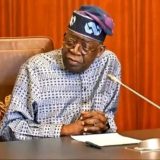
President Bola Ahmed Tinubu commiserates with the government and the people of Yobe over the tragic loss of lives at Mafa in Tarmuwa Local Government Area of the state.
President Tinubu also extends his condolences to bereaved families, and condemns the killings as an atrocious and cowardly act of terror by a degraded group of criminals.
He prays for the repose of the souls of the deceased, speedy recovery for the wounded, and assures the people of Yobe State that the perpetrators of this sinister act will have an inevitable encounter with justice.

Fuel price hike: NANS to commence nationwide protest, Sept. 15
By Abdullahi Mukhtar Algasgaini
The National Association of Nigerian Students, (NANS) has announced a nationwide protest, slated for September 15, across major cities in Nigeria to express displeasure over the new pump price announced by the Nigerian National Petroleum Company Limited, (NNPCL).
This announcement was made yesterday, in an issued statement signed by NANS National Senate President, Comrade Henry Okunomo, in Kano.
According to the association, “The protest, tagged: ‘Fuel Price Hike: A Threat to Our Future,’ will take place on September 15, 2024, across major cities in Nigeria”.
He stated that NANS is “appalled and disheartened by the recent announcement of yet another hike in fuel prices by the NNPC.”Furthermore, the statement issued a clarion call for a nationwide protest against what it described as an ‘egregious act’.
“We demand an immediate reversal of the fuel price hike and a more compassionate approach to governance.
“We urge all Nigerian students, civil society organizations, and the masses to join us in this peaceful demonstration as we demand an immediate reversal of the fuel price hike and a more compassionate approach to governance”, Okunomo said.
According to him, “We shall not be silenced, and we shall not be intimidated. We shall rise in unison to demand a better deal for Nigerian students and the masses.
He further disclosed that, “This latest development is the proverbial straw that breaks the camel’s back, as it has become patently clear that the NNPC, under the leadership of its Director-General, Mele Kyari, has failed woefully in its primary responsibility of ensuring a stable and affordable fuel supply.
“Since his appointment, Kyari has presided over a regime of unrelenting fuel price increases, with each hike further exacerbating the suffering of the masses. This, Okunomo argued, is a clear indication of Kyari’s “gross incompetence and inability to deliver on his mandate.
“The NNPC, under his watch, has become a behemoth of inefficiency, perpetuating a cycle of hardship and despair for the Nigerian people,” he added.NANS, therefore, demands the immediate removal of Mele Kyari as the NNPCK Group Chief Executive Officer.
“His continued stay in office is an affront to the sensibilities of the Nigerian people and a stark reminder of the government’s insensitivity to their plight”, the statement concluded.