
![[OPINION]: The Confidence to Stand, By Maji Bappa Maina](https://dailyrealityng.com/wp-content/uploads/2026/08/IMG-20260827-WA0000-160x160.jpg)


Lessons to learn from the lives of cuckoos
By Garba Sidi
Various research studies have confirmed that there are 10,721 bird species in the world (Wikipedia, 2022; IUCN Red List of Threatened Species, 2022; IOC World Bird List, 2022). Although some species have become extinct due to various factors, new species continue to emerge.
As an avid reader, bird enthusiast, and forest lover, I am amazed by the beautiful colours of different bird species as they fly around their territory and eat nectar, insects, and small mammals in the forest. Observing them in their habitats allows us to appreciate the beauty of nature.
Among the 10,721 bird species, the Cuckoo comprises 140 species, all living in different habitats in various regions. The fascinating behaviour of Cuckoos, which captures the attention of bird enthusiasts and researchers, is their unique reproductive process.
Unlike other birds, which lay and hatch their eggs in their nests, Cuckoos lay their eggs in other birds’ nests after careful observation and selection. They sometimes remove other birds’ eggs from the nest and replace them with their own. The host bird will then hatch the egg and feed the chick until it grows.
This remarkable strategy teaches us about the importance of community members. If not for other birds, the Cuckoo species would not survive. This highlights that people in our society have advantages we may not know will help us someday. For instance, just as Cuckoos rely on host birds for survival, we may find unexpected support from others in our community during challenging times.
Secondly, Cuckoos use the break time of other birds during hatching as an opportunity to exchange their eggs. They watch and observe bird movement, nest structure, and surroundings for many hours. Although their efforts may sometimes go in vain when host birds recognise and remove their eggs, Cuckoos continue their strategic process due to their belief in opportunism. This teaches us to seize opportunities and persevere, just like Cuckoos continue to evolve their species.
Furthermore, Cuckoos’ adaptability is remarkable. They have been observed laying eggs in the nests of over 100 different host species, from tiny warblers to large gulls. This adaptability is crucial to their survival, enabling them to thrive in diverse environments.
Thirdly, Cuckoos have adapted to various environments, from extreme heat to cold, by forcing themselves to adjust. Their ability to live in diverse habitats, such as grasslands, wetlands, forests, and urban areas, teaches us to cope with different situations through patience. For example, just as Cuckoos can thrive in scorching deserts and freezing tundras, we can learn to overcome challenges through resilience and determination.
Moreover, the Cuckoo’s unique reproductive strategy highlights the importance of cooperation and mutualism in nature. Different species can thrive and survive in a challenging world by working together and relying on each other. This is evident in how Cuckoos rely on host birds for survival and how they have developed unique strategies to ensure the survival of their species.
The Cuckoo’s adaptability and resilience offer valuable lessons for our own lives. As we face the challenges of climate change, economic uncertainty, and social upheaval, we can learn from the Cuckoo’s ability to adapt and thrive in diverse environments.
Furthermore, Cuckoo’s unique behaviour and strategies offer insights into the importance of creativity and innovation. We can overcome obstacles and achieve our goals by thinking outside the box and developing new solutions to challenges.
The Cuckoo’s remarkable ability to adapt to different environments and hosts is a testament to their resilience and ability to evolve. This ability to grow is crucial in today’s fast-changing world, where adaptability is critical to survival.
We can also learn valuable lessons about cooperation, mutualism, creativity, and innovation. By embracing the spirit of collaboration and mutualism, we can build more resilient and supportive communities.
As we face the challenges of our lives and our world, we can draw inspiration from the remarkable lives of Cuckoos. By embracing their spirit of adaptability, resilience, and creativity, we can build a more sustainable, compassionate, and vibrant world.
In conclusion, the life of Cuckoo offers valuable lessons about the importance of community, adaptability, and opportunism. Their unique reproductive strategies, adaptability to diverse environments, and persistence in the face of challenges provide insights we can apply to our lives.
By studying the behaviour of Cuckoos, we can gain a deeper appreciation for the natural world and our place within it. Their unique characteristics and behaviours inspire us to be more adaptable, resourceful, and compassionate.
The lessons from Cuckoos’ lives become even more relevant as we face the challenges of climate change, habitat destruction, and species extinction. By embracing their spirit of adaptability and resilience, we can work towards a more sustainable future for all.
In the end, the life of Cuckoo teaches us valuable lessons about the importance of community, adaptability, and opportunism. Their unique behaviour and strategies offer insights we can apply to our lives, from the importance of creativity and innovation to the value of resilience and determination.
Garba Sidi wrote via sidihadejia@gmail.com.

Usman Adamu Sufi: The last hope
By Abubakar Ibrahim Bako
The Bauchi State political permutation has just started growing, leaving the electorate with futile calculations that would re-jeopardize the state to another version of where it is now. However, since the 2023 general elections, many politicians of substance have gone away from their political allies. But Hon. Usman Adamu Sufi, despite not aspiring for an elective post during the past elections, remains a single person committed to touching the lives of the good people of Bauchi State.
On the plus side, Sufi has garnered goodwill from all sides of the state for the past many years, making the state’s products eagerly await the day they will pay him back for the contributions he has been offering to the state. People’s sympathy is what every politician dreaming of becoming successful needs.
Mr. Adamu’s political dexterity makes him stronger than those who went away from their people until the eve of another election. Notwithstanding, electorates want someone to visit them in the form of condolences, wedding ceremonies, and other things that will make people feel a sense of concern for the commoners.
In addition, Hon. Usman Adamu Sufi appears to be the only person who will play the card for the position of governor without much ado or political stress. This is because he is very clean and healthy, which could pave the way for him to be sold to the electorate, making it difficult for others to win against him.
The way people troop to his camp in the state alerts one to start thinking by saying, “What is this gentle dashing out to them?” Okay, as he is fondly called, Sufi becomes a household name for the humane action he always displays. One can hardly wake up in the morning without hearing about the gesture he extends. He is always making headlines in the state.
Being the last hope for the electorate, I would like to encourage Hon. Usman Adamu Sufi to keep doing what he has been doing to make the lives of commoners manageable. Equally, I would like to urge the people of Bauchi State to be hell-bent on canvassing their massive support for him in any elective post to which he might aspire.
Abubakar Ibrahim Bako writes from Fanfon Shanu, Azare, Bauchi State via Abubakaribrahimbako@gmail.com.

#EdoDecides2024: Police arrest political thugs, recover firearms in overnight raids
By Abdullahi Mukhtar Algasgaini
The Nigeria Police Force has made a significant breakthrough in its efforts to curb electoral violence in Edo State with the arrest of two political thugs, Edwin Obanor, 43-year-old and Audu Tajudeen, a 41-year-old PDP, member from Ugbogbo quarters, Igara Akoko, Edo State.
Acting on a tip-off that some individuals had been armed to cause mayhem and distability during the election on Saturday, the police operatives swooped into action and apprehended Obanor, a leader of an armed group, at Oredo Ward 4 at about 9pm and Audu Tajudeen at Igara Akoko, Edo, on the eve of the election.
Upon searching the bags in their possession, three cut-to-size locally fabricated pistols were discovered on Obanor, while one locally made gun was recovered from Tajudeen.
These arrests are a testament to the Nigeria Police Force’s commitment to maintaining law and order and ensuring a peaceful electoral process.
The police and other supporting security agencies will not tolerate any form of violence or disorderliness during the election in Edo State.
The suspects are currently in custody and will face the full weight of the law.
The Police reassures the public of its dedication to protecting lives and property and, therefore, urges citizens to report any suspicious activities to the nearest police station or via our published help lines.

Labour decries FG’s decision to backdate minimum wage implementation
By Uzair Adam
The Committee on Consequential Adjustments in Salaries for Civil Servants met on Friday to discuss the new minimum wage template and concluded that the effective date for implementation would be July 29, 2024.
This decision was outlined in a Memorandum of Understanding (MOU) issued after the meeting in Abuja, which was seen by our correspondent.
The Committee, led by the Head of Civil Service of the Federation, Didi Walson-Jack, also recommended that the wage award, which had been discontinued by the government, should be paid up to July 28, 2024.
In explaining the decision, the Committee noted that the government considered the country’s economic situation before finalizing these recommendations.
The MOU stated the need for the National Salaries, Incomes, and Wages Commission (NSIWC) to create appropriate salary templates for other salary structures.
It further stated that the Federal Government should take measures to alleviate the challenges faced by workers due to the recent increase in Premium Motor Spirit (PMS), including considering tax waivers and other incentives.
However, the Nigerian Labour Congress (NLC) and Trade Union Congress (TUC) have criticized the decision to backdate the implementation of the new minimum wage. Benson Upah, Head of Information for the NLC, described the move as unfair and unacceptable.
Timmy Etim, the National Vice President of the TUC, expressed disappointment.
He recalled that the Minister of State for Labour, Nkiruka Onyejeocha, had promised workers on May Day that the new minimum wage would take effect from May 1, 2024, and said it was unfair for the government to change that commitment.
“The government should have stayed true to its word. Deviating from May is already questionable, but backdating it to July is particularly unfair given the economic challenges,” Etim stated.
Governor Inuwa to collaborate with US varsity on modern farming practices
By Abdullahi Mukhtar Algasgaini
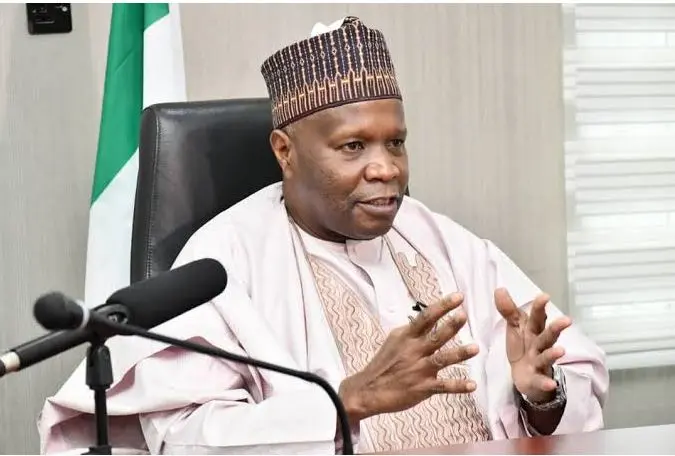
Governor Muhammadu Inuwa Yahaya, CON, yesterday, visited the Department of Biosystems and Agricultural Engineering at the Michigan State University (MSU) in the United States of America.
During the visit, the Governor met with the university’s authority and agricultural experts, with discussions focused on exploring avenues for collaboration that could enhance the agricultural value chain in Gombe State.
One of the key areas of focus is the introduction of appropriate mechanization technologies that are tailored to the specific needs of smallholder farmers who form the backbone of the state’s agricultural economy.
Governor Inuwa Yahaya expressed optimism that this partnership would lead to the adoption of cost-effective and sustainable solutions that can enhance food security and promote rural economic growth in the state.
In addition to mechanization, smart agricultural practices—such as precision farming and water-efficient irrigation systems were also discussed.

I didn’t come to look for money, I came to work—President Tinubu
By Abdullahi Mukhtar Algasgaini
President Bola Tinubu has assured Nigerians that his administration is focused on delivering tangible results and making a positive difference in the nation’s infrastructure, food and energy security, education and long-term economic stability.
At a meeting with the Forum of Former Presiding Officers of the National Assembly, led by former Senate President Ken Nnamani, the President emphasised that he is not in office for personal gain but to serve the country.
”I didn’t come to look for money and exploit the situation; I came to work. I asked for the votes, and Nigerians gave them to me,” the President, who was a former senator, told the meeting after a session of banters and handshakes with former parliamentary colleagues.
The meeting was attended by 16 former presiding officers, including former senate presidents, former speakers of the House of Representatives, former deputy senate presidents, and former deputy speakers of the House of Representatives.

Staff Training: Gombe IRS to enhance staff efficiency
By Abdullahi Mukhtar Algasgaini
The Gombe State Internal Revenue Service’s weekly training, with the aim of strengthening staff members for service delivery, is taken to heart.
The training, which is a weekly activity in the service, is well-received by the staff members. Their dedication and submissiveness during the training are quite commendable.
The Gombe State Internal Revenue Service, focusing on improving staff efficiency through consistent training, is indeed second to none.
These sessions, led by the Human Resources and Intelligence Department, seem to be making a significant impact on the staff’s commitment and performance. The continuous dedication to training will probably enhance the overall service delivery in the state.

Paradox of Maiduguri flood and threat of the Thwaites to Nigeria’s drylands
By Nura Jibo
In March 2020, Thwaites, the world’s biggest and riskiest glacier (moving ice) in Antarctica—bigger than Borno, Jigawa, Bauchi, and Gombe combined—broke away due to climate change warming the water beneath it.
The impact of the meltdown of this moving ice, which raised the sea level by 0.05% in March 2020, caused a catastrophic flood disaster globally that brutally affected towns and villages such as Magarya, Hadejia, Ringim, Dabi, Auyo, Kafin Hausa, Miga, etc.
The Thwaites (moving ice) is already on the verge of total collapse because its outflow speed has doubled in the past 30 years. Every year, it loses 50 billion tons of its body mass into the oceans and eventually inside the rivers and dams (NERC, 2021).
Within ten years (2009 to 2019), the Thwaites’ melting accelerated, making it change direction at a speed greater than 10 kilometres per annum. Its tongue, or rather ice tip, had already lost its integrity via melting, which made it weaker due to the effect of climate change.
In 5-10 years, the rapid melting of the Thwaites would swamp vast areas of troughs and low-lying coastal and drylands around the world, including Borno, Jigawa, Gombe, Yobe, Adamawa, Bauchi, and Benue, within a few decades (Jibo et al., 2020; Fred, 2024).
On December 13, 2021, and February 15, 2023, a group of American Geophysical Union and British scientists met at a global conference to discuss this catastrophic climate change disaster in Antarctica that affected the world’s oceans, rivers, and seas very terribly. They concluded that the Thwaites would most likely collapse within the next five years. Their reason is that this glacier “sheds billions of tons of ice into the ocean, contributing about 4% to the annual sea level rise.”.
Indeed, the total collapse of the Thwaites in the next five to ten years is a recipe for a global, unprecedented disaster that could wipe away several cities, towns, and villages, including the Vanuatu Islands and Pacific and African dryland states such as Borno, Jigawa, Yobe, Bauchi, Gombe, Adamawa, and Benue, to mention a few.
If the Thwaites collapse and melt completely, the sea level will rise by two feet. This would wipe out several regions and damage several countries worldwide.
Certain islands across the globe, such as the Marshall Islands, Kiribati, and the Maldives, would be completely wiped off of the map (Henry, 2023).
Nonetheless, this isn’t the only thing that would happen if Thwaites collapsed. Changes in ice-shelf flooding would increase an unprecedented flow rate of 120 kilometres of underwater mountains.
As of today, climatologists and meteorologists have envisaged that the melting of this glacier would also likely destabilise the structure of the entire earth’s crust, not only its surrounding glaciers and ice shelves but also causing the global sea level to rise by an additional ten feet.
Indeed, scientists at the AGU, Yale School of the Environment, and NERC that are conducting a study on Thwaites said that the glacier “is hanging on by its fingernails” and humanity needs to prepare themselves for the coming years (Henry et al., 2023).
Therefore, as humanity commiserates with the entire people of Maiduguri over the early warning signs of the Thwaites along Nigeria’s drylands, it is very likely that it has already passed a point of no return unless there is drastic intervention. As Fred (2024) asserted elsewhere, “It is too late to prevent its collapse, but others say we could have 200 years. But it certainly could be beyond its tipping point, and we have to be prepared.”
The Thwaites climate change paradox:
It is a scientific fact that a polluted cloud doesn’t rain itself. It tends to grow bigger, and in the end, it bounces sunlight out to space. The effects of fossil fuels and terrible human activities in industries have caused global air pollution and depleted the ozone layer very badly. This singular man-made negative contribution to the planet has caused mankind to make a huge mistake in driving home environmental pax Africana and global environmental regeneration (Jibo, 2024).
Indeed, Borno, Jigawa, Yobe, Gombe, Bauchi, Adamawa, and Benue will struggle to cope with the torrential rainfall runoff that will engulf the entire River Gongola through the River Benue via Opalo and Imburu, passing through Kiri, Mada, and up to Jigawa along the Bare and Sabara tributaries.
A map obtained from the Google Earth platform has shown some “promise” over this interesting water body mass run-off.
The other three paradoxical impressions given by the Thwaites are as follows:
The shattering of the ice.
Ocean melting.
Losing grip on seamount.
According to Pettit et al. (2021), there are already signs of fractures propagating along weak zones of the Thwaites. This is aggravated by the melting down of the seabed due to warming, and the entire ice could be gone by 2030 or even before that time.
Nura Jibo MRICS has been a United Nations Framework Convention on Climate Change (UNFCCC) Designated Contact Point (UN-DCP) on Climate Change for 14 years.

CBN refutes claims of reintroducing cybersecurity levy
By Uzair Adam
The Central Bank of Nigeria (CBN) has dismissed reports that it has reinstated the previously suspended cybersecurity levy on banks.
The levy, which mandated Nigerian banks to collect and remit a 0.5 percent charge to the National Security Adviser’s office, was suspended earlier this year following a directive from the Federal Executive Council (FEC).
Despite the suspension, rumors surfaced suggesting that the CBN had reintroduced the levy. In response, the apex bank clarified the situation in its recent Monetary, Credit, Foreign Trade, and Exchange Policy Guidelines for the 2024-2025 fiscal years.
The circular, published on September 17, emphasized that the cybersecurity levy, suspended in May 2024, remains inactive.
The CBN also addressed other misrepresentations of its policy document, noting that some media reports incorrectly linked past policy positions to current circumstances.
The bank reiterated that the guidelines should be seen as a compilation of previous policies up to December 31, 2023, and not as new directives.
The CBN reassured the public that it would continue to offer clear policy guidance for the benefit of Nigeria’s economy and urged media outlets to verify information before publication.

President Tinubu urges peace, civility in Edo State governoship election
By Abdullahi Mukhtar Algasgaini
President Bola Ahmed Tinubu has called on all stakeholders in the upcoming Edo State governorship elections to conduct themselves peacefully and sportingly.
The election is scheduled for Saturday, September 21, 2024. The President implores the governorship candidates, political parties, and supporters to respect the democratic process and the people’s will.
He believes in the voters’ ability to make informed decisions about their future leaders. President Tinubu emphasises that democracy thrives on civility, tolerance, patience, and respect for the rules of the game.
He noted that the Independent National Electoral Commission (INEC) has committed to conducting a free and fair election and urges all stakeholders to work together to ensure a successful and peaceful process.
The President commends the governorship candidates and political parties for their campaigns, which have focused on issues that matter most to the people of Edo State, including improving livelihoods, promoting economic growth, and contributing to national development.
He urges all citizens in the state to remain peaceful and respectful throughout the voting process. He encourages them to resolve any disagreements amicably through the constituted authorities.
In addition, President Tinubu expresses unwavering confidence in the professionalism and integrity of security agencies and INEC officials.
He urges them to remain impartial and avoid any actions that could compromise the integrity of the electoral process.