

![[OPINION]: The Confidence to Stand, By Maji Bappa Maina](https://dailyrealityng.com/wp-content/uploads/2026/08/IMG-20260827-WA0000-160x160.jpg)

Bauchi correctional service officer killed in dispute over food
By Sabiu Abdullahi
There was a terrible incident at the Burra Correctional Centre in Bauchi State, when a correctional officer was reportedly killed by a colleague following a disagreement over food.
Hon. Nasiru Zakari, Chairman of Ningi Local Government Council, confirmed the incident on Thursday.
“I received reports about this unfortunate event at the Burra Correctional Centre, where one officer was allegedly killed by another over a lunch dispute,” he said.
Ahmad Usman Tata, Public Relations Officer for the Bauchi State Correctional Service, noted that the altercation took place outside the facility.
The victim, Aliyu Abubakar Chiroma, was from Giade Local Government Area, while the suspect, Kabiru Abubakar, hails from Dass LGA.
According to reports, the conflict arose when Chiroma brought his lunch and Kabiru insisted on eating it, leading to a heated argument.
The body of the deceased has been released to his family for burial, while the suspect remains in police custody as investigations continue.

Kano judiciary suspends two court registrars over alleged land fraud
By Uzair Adam
Following allegations of fraudulent activities, the Kano State Judicial Service Commission has suspended two Sharia Court registrars, Jamilu Ibrahim and Zubairu Sulaiman.
This was disclosed in a statement released by the Spokesman of the Kano Judiciary, Baba Jibo Ibrahim, on Friday.
The commission took disciplinary action during its 75th meeting held on September 12, 2024.
According to the statement, the investigation revealed that Jamilu Ibrahim was involved in a fraudulent transaction linked to the illegal sale of two plots of land through a writ of possession.
The investigative committee recommended his dismissal, but the commission opted for an indefinite suspension without pay, pending the outcome of his trial at a Magistrate Court.
Additionally, the investigation found that Zubairu Sulaiman, Registrar of the Upper Sharia Court, received one million naira into his personal account as a commission from the sale of the land.
Consequently, the Judicial Service Commission has suspended him for four months without pay.
The statement reiterated the commission’s commitment to enforcing disciplinary measures against staff involved in misconduct, particularly those in judicial roles, to protect the integrity and accountability of the judiciary while maintaining public confidence.
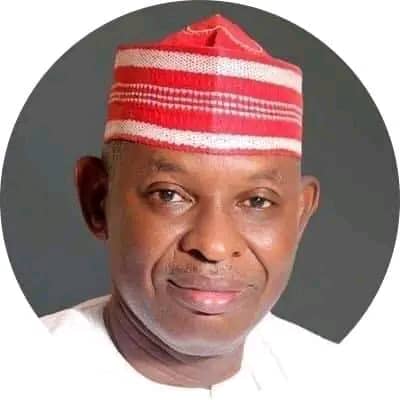
An appeal to Governor Abba Kabir Yusuf
By Bilal Muhammad Bello
Sir, as a concerned indigenous person of the Kumbotso Local Government Area, I am writing this letter to remind you of a project that your administration has abandoned.
Your Excellency, I want to commend you for the unparalleled projects you have bequeathed in Kano State, especially in road construction in urban and rural areas. Not to mention other roads that are still under construction. The public, inhabitants of Kano State and visitors to the state can testify to your good work.
Today, the Kano metropolis has roads built with green verges, pedestrian walkways, drainage systems, street lights, and an underpass, all thanks to the development of your orientation.
Sir, the people of Zawachiki Diga, Yankusa, Rinjin Wanzamai, Gadama, and Kumbotso Township in Kumbotso Local Government Area want to draw your attention to the reconstruction of Kumbotso Road from Zawachiki Diga—Kumbotso Township to Zaria Road.
As we all know, the road network contributes immensely to Kano state taxation because of the Challawa Industrial area and the socio-economic development of the area.
It is also important to draw the governor’s attention to the silent neglect of the construction of Sabuwar Gandu—Danmaliki to Kumbotso Township Road, which has stopped.
Therefore, I wish to appeal to the governor to do something about these roads so as to bring succour to our people whose economic activities, livelihoods, and related developmental issues have been hampered by their deplorable state.
I respectfully appeal to your administration to revive these projects and alleviate the hardships faced by our people.
Bilal Muhammad Bello (BMB) is a student of Mass Communication department, Bayero University Kano.

Jaiz Bank named 2024 Global Most Promising Islamic Bank
By Uzair Adam
Jaiz Bank, Nigeria’s first Non-Interest Bank, has been recognized as the 2024 Global Most Promising Islamic Bank by the Global Islamic Finance Awards (GIFA).
During the Global Islamic Finance Summit and awards ceremony held in the Republic of Maldives, Jaiz Bank outshined two other nominees in the same category to win the prestigious award.
Professor Humayon Dar, Chairman of GIFA, stated that Jaiz Bank was chosen after a thorough evaluation based on multiple criteria set by the GIFA Awards Committee.
The bank was recognized for its exceptional growth potential, innovation, and financial performance, which helped reinforce its leadership in the industry.
Haruna Musa, Managing Director/CEO of Jaiz Bank, expressed his appreciation upon receiving the award.
He noted that the recognition in accordance with the bank’s strategic vision to become one of Africa’s top non-interest financial institutions in the next five years.
He also revealed that Jaiz Bank had previously won GIFA’s Most Improved Islamic Bank Award in 2020 and 2021.
The Global Islamic Finance Awards, known for celebrating excellence and innovation in the Islamic finance sector worldwide, remains one of the most prestigious honors in the industry.

Governor Yusuf dissolves 44 LG caretaker chairmen amidst restructuring
By Uzair Adam
Kano State Governor, Abba Kabir Yusuf, has dissolved the caretaker committee chairmen of all 44 local government areas, effective immediately.
This was disclosed in a statement issued by the governor’s spokesperson, Sanusi Bature.
The decision comes just a week after the state House of Assembly extended the caretaker chairmen’s tenure by two months, having been set to expire on September 8.
Lawmakers said the extension was meant to ensure continuity in local governance ahead of the upcoming local government elections scheduled for October 26.
Governor Yusuf instructed the caretaker chairmen to hand over leadership responsibilities to their respective Directors of Personnel Management, stating that the dissolution also affects vice chairmen, secretaries, and councillors.
In his remarks, the governor expressed gratitude for the caretaker chairmen’s contributions and hinted at possible future collaborations.

Shettima, Ribadu, et al., and Tinubu’s eroding goodwill in Northern Nigeria
By Zayyad I. Muhammad
The aftermath of the ten-day “End Bad Governance” protests has conveyed three clear messages: two to President Asiwaju Bola Ahmed Tinubu, and one to the senior members of his administration from the North—notably Vice President Kashim Shettima, National Security Adviser Mallam Nuhu Ribadu, Secretary to the Government of the Federation George Akume, Deputy Senate President Barau Jibrin, Speaker of the House of Representatives Tajudden Abbas, and others.
Firstly, despite the protests in the North escalating into widespread looting, arson, underage participation, and political exploitation and hijacking, they have sent a clear message to President Tinubu. His two key policies—the removal of fuel subsidies and the floating of the naira—are deeply unpopular and have sent many people into prison poverty.
Secondly, the Tinubu administration has squandered crucial political goodwill in the North. Beyond the economic hardships, this loss of political support in the region is significant, as it could impact Tinubu’s prospects for a second term. The Tinubu/Shettima ticket was built on this very foundation. Furthermore, the protests took place nationwide on three unique political faces: they were a form of revolt in the upper North, and the Southeast remained silent. At the same time, the Southwest found itself in a catch-22 situation.
The third message from the aftermath of the protests is directed at the senior members of the Tinubu administration who hail from the North. They now face the Herculean task of restoring the Tinubu government’s lost goodwill in the North. To do so, they must address two critical issues. A deep and unbiased look at the “End Bad Governance” protests in the North reveals not only a message to Abuja but a kind of internal revolt—an uprising against ‘oneself,’ so to speak.
Furthermore, Yobe, Bauchi, Borno, Jigawa, Katsina, Kano, and Kaduna states experienced the worst violence during the protests. Interestingly, a 2024 report shows that these states are among the top northern states with the highest rates of out-of-school children: Yobe (62.9%), Bauchi (55.7%), Borno (54.2%), Jigawa (51.1%), Katsina (45.9%), Kano (41.6%), and Kaduna (40.6%).
Northerners who are senior members of the Tinubu government must find a way, before 2027, to not only convince but also help Tinubu implement policies that will lift people out of poverty. A quick approach is to leverage the Dangote Refinery and other private and state-owned refineries. Given that Nigeria’s daily fuel consumption hovers around 45–50 million litres, the government should step up its programme to boost crude production specifically for local refineries, allocating it to them in naira and at a lower cost. This would lead to more affordable fuel prices, eliminate the need for imports, and save foreign exchange.
Furthermore, to be fair to the Tinubu government, it inherited Nigeria’s finances in the ‘red’. Tinubu has two options to get the books into the blue—the hard and the simple options. Tinubu chose the simple option: remove the fuel subsidy and float the naira. The hard way, which is the more sustainable one, involves fixing all the state-owned refineries, increasing crude production to at least 2 million litres per day, supplying local refineries with cheap crude to translate to affordable pump prices, and boosting food production by helping genuine farmers with farm implements, soft financing, and extension services.
The northern elites, both in government and outside, must read between the lines and comprehend them well. For example, the northern members of Tinubu’s government must understand that the government’s public relations (PR) efforts for Northern consumption are currently communicated in a ‘language’ that the masses do not understand. This approach requires not just a revitalisation of strategies but a complete overhaul of its managers and a redesign of its medium.
Zayyad I. Muhammad writes from Abuja via zaymohd@yahoo.com.

Gunfire heard during EFCC’s attempted arrest of Yahaya Bello at Asokoro lodge
By Uzair Adam
The media office of former Kogi State Governor Yahaya Bello has accused operatives of the Economic and Financial Crimes Commission (EFCC) of launching a raid at the Kogi Government Lodge in Asokoro on Wednesday night in an attempt to arrest the ex-governor.
According to a statement released by the Media Director of Bello’s team, Ohiare Michael, the EFCC officers allegedly fired gunshots into the air in their effort to apprehend the former governor.
“It has come to our attention that operatives suspected to be from the Economic and Financial Crimes Commission are currently surrounding the Kogi Government Lodge in Asokoro in an attempt to forcibly arrest former Governor Yahaya Bello,” the statement read.
The statement also added that, “They have been shooting sporadically.”
Michael also noted that Yahaya Bello had earlier visited the EFCC office voluntarily but was asked to return at a later time.
He claimed that despite this, the anti-graft agency resorted to mounting a siege at the government lodge.
“We want to make it clear that if anything happens to the former governor, the EFCC should be held responsible. This attack was unnecessary, as Governor Bello had already made himself available to the commission for interrogation earlier in the day,” Michael said.
The statement further criticized the EFCC’s actions, labeling them as politically motivated and not aligned with their mandate to fight corruption.
It was reported that the EFCC had filed a 19-count charge of money laundering against Bello before Justice Emeka Nwite of the Federal High Court in Abuja.
As of now, the EFCC has not issued an official response to the allegations.

Diarrhoea outbreak claims lives, hundreds hospitalised in Adamawa
By Uzair Adam
At least ten people, primarily women, children, and the elderly, have died due to a diarrhoea outbreak in Yola North and Yola South Local Government Areas of Adamawa State.
The death toll is feared to rise as several hospitalised victims remain in critical condition.
The Adamawa State Commissioner for Health, Mr Felix Tangwami, confirmed the incident to reporters in Yola and provided updates on the situation that began earlier in the week.
He noted that around 300 individuals have been admitted to Yola Specialist Hospital, with some patients still in critical condition.
“Those with severe cases have been isolated at the hospital’s Infectious Disease Center to receive specialised care,” Tangwami said, adding that efforts are underway to manage the outbreak.
Tangwami emphasised that the government is doing everything possible to control the spread and is following due process in addressing the crisis.
He mentioned that sample results from the National Centre for Disease Control (NCDC) are expected within 24 hours to confirm whether the outbreak is linked to cholera, as some suspect.
The Commissioner urged the public to refrain from speculation and assured that necessary measures are being taken to protect public health.

Nigerian predicament: In search for the headway
By Bilyamin Abdulmumin, PhD
Nigerians appeared to have tried several options without a glimmer, so the option to try the youth is now gathering momentum. This call comes at the heels of the ten days of the recent controversial protest. Two other options were weighed during this protest: military takeover and alliance with Russia.
Nigeria’s (or even African) history didn’t support the clamour for a military takeover. In the 64 years since Nigerian independence, military rule (according to my arithmetic) lasted 31 years, but at best, the military—once seeming the panacea—didn’t proffer any solution.
In another desperation to find the nexus, some protesters fly Russian flags. One interpretation of this antics is that they want Nigeria to cut any ties with the U.S. and most of Europe by proposing a shift of alliance to Russia. According to this argument, Western economic policies haven’t benefited Nigeria, so perhaps a different geopolitical alignment will.
However, aligning with Russia, an equally extreme approach, is not guaranteed to yield better outcomes. Has this group of protesters heard about the Scandinavian Economic Model? This model seeks to strike a balance between the capitalist extremes of the U.S. and the state-centred economies of Russia, offering a suitable middle ground for us. Instead of Russian flags, these protestants might have flown those of Sweden, Finland, or Denmark.
The search for a better headway began in 2015 when Nigerians, for the first time, voted for a leader based on integrity and record antecedent, putting aside money, politics, and tribal loyalties to some extent. However, by the end of President Buhari’s first term, the public began to have second thoughts. After his two terms, something unthinkable happened: many staunch supporters turned critics, and now, a year into Tinubu’s presidency, the failure of seasonal veterans is sealed, hence fueling the growing clamour for young leaders.
This urge for youth takeover is a more realistic option. The youths have become tired of being used and “dumped.” given that most of those who vote are youths, they now want to take a leading role by floating a political party exclusive to the youth.
The youth proponents argue that the youth have energy, time, and health. To boot, youth leadership is characterized by pressing the button; their hands are always close to the button, just waiting for a slight opportunity to press it.
This argument came to the forefront during f-PMB leadership, when he appeared to be going too slow, hence nicknamed Baba go slow; one of my friends opined that Nigeria then was in dear need of young leaders’ vitality, speed, and urge to get us out of the mud. According to my friends, a young leader would have made several decisions faster in tune with the situation and public yearning.
However, there is a crack in the foundation; one problem with youth is unity and cooperation; we always find that we want to help fellow youths whenever the need arises. Several youths aspire to different positions in this country, but the first people to boycott them are fellow youths; it will be their fellow youths who begin to mock them. This is a similar dilemma the women face. Women worldwide decry exclusion, but when a fellow woman tries to compete with men, it would be the fellow women that bring them down. This internal counterproductivity must be addressed for the current movement to get hold.
In addition, those who side with veterans criticize youth leadership with haste, which often leads to regret; this category argues that sound decision-making comes from experience—something older leaders have in abundance. They believe leadership is a process, not an event, and that wisdom is forged through trial and error.
By and large, if the current movement sees the light of day, to slow down the haste and reduce mistakes, please let the old guards deputize the new crops.
Mr President, adjust your economic policies
By Tajuddeen Ahmad Tijjani
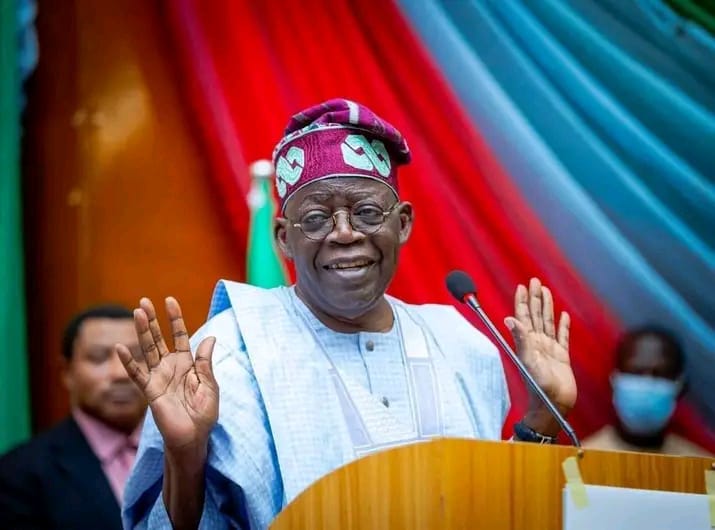
On Tuesday, August 13, 2024, President Bola Ahmad Tinubu presided over a significant Council of State meeting. Former Presidents, Vice Presidents, a former Chief Justice of the Federation, and several key ministers were in attendance. The highlight of the meeting was the President’s stance that Nigeria’s democracy must not be undermined. “Any change of government must be through the ballot box, not through violence, insurrection, or any other unconstitutional means,” he asserted. This is a position I, along with all patriots, fully support.
However, while the President’s commitment to democracy is commendable, his economic policies must reflect the urgency and needs of the people. The excuse of “fixing the economy” cannot be used to justify slow progress. Nigerians expect the leadership to hit the ground running from day one. The Council of State must convey the truth to the President: the nation is in a precarious state, and decisive, people-centred action is required.
Today, wealth in Nigeria is increasingly concentrated in the hands of a select few. At the same time, the majority struggle without access to necessities like quality education, healthcare, housing, and employment. It’s not that Nigerians envy the success of the rich; instead, they want access to the essentials for a decent life.
Unfortunately, greedy leaders deliberately subject many ordinary citizens to hardship. Endemic corruption has become the norm, and the promise of equal opportunities seems like a distant dream despite the blessings of natural resources across the six geopolitical zones.
Poverty remains a pervasive issue. Nigeria is rich with potential—oil and gas in the South, commerce in the Southeast, and fertile land in the North. There is no excuse for hunger or deprivation. The government should prioritize modern farming systems, where a single machine can achieve in an hour what once took a thousand hands.
State governors must fully support federal initiatives, but these efforts must go beyond the token gestures like distributing rice, which too often ends up siphoned off by officials or recycled into the market. Nigerians are not beggars; we have the talent and drive to achieve greatness, but we need an enabling environment, affordable fertilizers, and access to reliable electricity.
The time for excuses is over. The government must adjust to the realities on the ground. Removing fuel subsidies and floating the naira has brought unbearable hardship to ordinary people. These policies need to be revisited. We elected this government to make Nigeria work for everyone, not just the privileged few. A stitch in time saves nine: adjust the policies before it’s too late.
Tajuddeen Ahmad Tijjani wrote from Galadima Mahmoud Street, Kasuwar Kaji Azare, Bauchi State.