
By Dahiru Kasimu Adamu
Since President Bola Ahmed Tinubu removed the petroleum subsidy in 2023, almost every sector in Nigeria has been forced to look for a way out. Farming is no exception.
Before then, rice farmers largely relied on petrol-powered pumps to irrigate their farms. But when the price of petrol skyrocketed, many farmers were pushed to the edge. For some, farming became almost impossible.
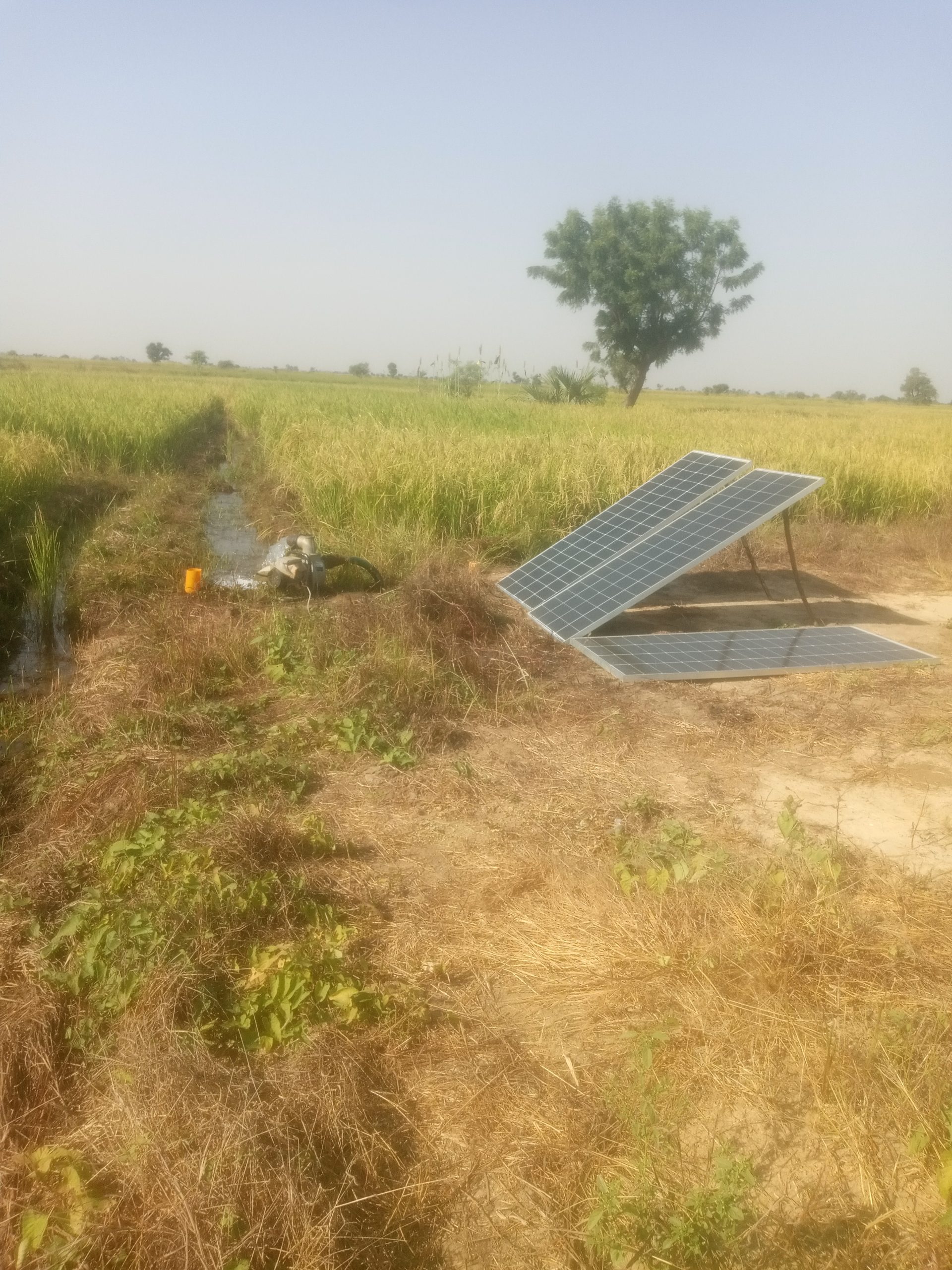
Today, the story in Argungu has changed, as rice farmers in Argungu, Kebbi State, have largely moved to solar energy for their agricultural activities. From Farfajiya to Kuyar Masaama, from Janduma to Kwalaga and Dankwali, solar panels now glitter under the sun where fuel cans once dominated.
In this system, farmers place solar panels facing the sun. The energy generated powers a solar pumping machine that pumps water from a tube well or directly from the river to the farm. No fuel. No daily queue. No smoke.
“Without It, I Cannot Farm”
A young farmer at the Kwalaga rice cluster, Ibrahim Usman, expressed his satisfaction with the solar system and acknowledged its contribution to his farming activities.
“I bought it at the rate of N450,000 at the beginning of the rainy season. Without it, I cannot proceed with rice farming because I cannot buy petrol every day to pump water and irrigate my farm,” he said.
For Ismail Usman, solar is not just an alternative it is survival.
“The inflation of farm inputs and the removal of subsidy have crippled farming. Moreover, the price of rice has decreased, which endangers farmers. If we continue using fuel to water our farms, we can hardly make a profit. We thank God for the gift of solar. Currently, most of those who cannot afford it find it difficult to continue farming,” he said.
Sani Danladi, another young farmer, said he thanks Almighty Allah for the renewable energy alternative.
“Now I can produce ten bags, but without solar I cannot even produce five bags due to hardship, a hike in fertiliser prices and subsidy removal. Therefore, I urge the government at all levels and stakeholders to distribute solar pumping machines free to local farmers without considering political affiliation, to boost agriculture and food security,” he said.
Despite the success, the farmers still face challenges. The solar system is inefficient in the early morning hours and during sunset when sunlight is low, slowing down irrigation.
Yet, as of the time of filing this report, despite the limited flooding recorded in the 2026 rainy season, farmers in Argungu continue to harvest their produce and are partially preparing for the forthcoming dry-season farming.