
![[OPINION]: The Confidence to Stand, By Maji Bappa Maina](https://dailyrealityng.com/wp-content/uploads/2026/08/IMG-20260827-WA0000-160x160.jpg)
Regret is a product of negligence
By Abdurrazak Muktar Makarfi
Regret is a universal human emotion, a lingering shadow often following negligence or poor decision-making. It can be personal, like not putting in enough effort to achieve a desired goal, or it can be monumental, affecting entire nations or history. From personal experiences to the grand scale of global events, regret reminds us of the consequences of our actions—or inactions.
I, too, am a living witness to this. I aimed for a higher degree classification during my undergraduate studies, hoping to graduate with a Second Class Upper or even a First Class. However, due to a lack of focus and dedication, I had a second-class lower. I realise now that my negligence led to this outcome, which reminds us that what we fail to do today can haunt us tomorrow. In this case, regret is the product of what I did not do rather than what I did.
However, personal regrets are not unique to every person. Even the most powerful, successful, and celebrated figures in history have experienced regret for their actions or oversights. These moments of reflection often come too late, after the damage has been done, and serve as cautionary tales for the rest of us.
Napoleon Bonaparte and the Russian Campaign
One of history’s most infamous military campaigns is Napoleon Bonaparte’s invasion of Russia in 1812. His quest for dominance over Europe led him to undertake an ill-fated military venture that ended in disaster. Over 400,000 of his troops perished due to a combination of Russian scorched-earth tactics and the brutal winter. While Napoleon was not one to publicly admit fault, accounts suggest he acknowledged the enormity of his mistake. His ambition, unchecked by the realities of war, led to the unravelling of his empire and his eventual exile. In this case, the regret came too late to save his soldiers or his reign.
Robert McNamara and the Vietnam War
In modern history, Robert McNamara’s role in the Vietnam War stands as a significant example of deep, public regret. As U.S. Secretary of Defense, McNamara was a key architect of the war, which led to the loss of tens of thousands of American lives and countless Vietnamese. Years later, in his memoir *In Retrospect* and in interviews, McNamara admitted that the war was a mistake, reflecting on the misguided policies and assumptions that drove U.S. involvement. His regret was genuine, a stark acknowledgement that decisions made without fully considering their consequences can lead to tragedy on an unimaginable scale.
Oskar Schindler: The Regret of Not Doing More
Oskar Schindler is remembered as a hero for saving more than 1,200 Jews during the Holocaust. However, Schindler sincerely regrets not saving more lives despite his extraordinary efforts. He famously broke down in tears after the war, lamenting that he could have sold more of his possessions to rescue more people from the horrors of the Nazi regime. His regret was both real and deeply personal, showing that even those who do good can be haunted by the thought that they could have done more.
Thomas Jefferson and the Paradox of Slavery
Thomas Jefferson, one of the Founding Fathers of the United States, is a figure whose legacy is intertwined with regret and contradiction. Although he wrote eloquently about the moral wrongs of slavery, he continued to own slaves throughout his life. In his later years, Jefferson expressed regret for the institution of slavery, calling it a “moral depravity” and a “hideous blot” on the American experiment. Yet, he never entirely acted on his convictions, and his words often rang hollow in light of his continued participation in the system he condemned. His regret was intellectual but lacked the moral courage to manifest in his actions.
J. Robert Oppenheimer and the Atomic Bomb
Few regrets in history are as profound as J. Robert Oppenheimer’s remorse over the creation of the atomic bomb. As the lead scientist of the Manhattan Project, Oppenheimer’s work led to the development of the most destructive weapon ever used in warfare. After witnessing the devastation of Hiroshima and Nagasaki, Oppenheimer famously quoted the Bhagavad Gita: “Now I become Death, the destroyer of worlds.” His regret was not just for the immediate destruction caused by the bomb but also for the moral implications of unleashing such power on humanity. He spent much of his later life advocating against further development of nuclear weapons, but the legacy of his creation haunted him until his death.
The Lessons of Regret
What can we learn from these stories? Whether in personal or historical contexts, regret often arises when we fail to align with our values or ignore the consequences of our decisions. Napoleon’s ambition, McNamara’s overconfidence, Schindler’s sense of responsibility, Jefferson’s moral paradox, and Oppenheimer’s scientific pursuit—all illustrate the different forms that regret can take.
In my own case, I can see that my negligence in my studies was not just a matter of missed marks but of missed opportunities to reach my full potential. The grades I received reflected not just academic performance but also personal responsibility. Regret teaches us to confront the results of our choices and, perhaps more importantly, to make better decisions going forward.
In the end, regret is not just about what we did but about what we failed to do when it mattered most. While it’s a heavy burden to carry, it also offers a powerful lesson: that attention, dedication, and foresight can often prevent us from looking back in sorrow.
Abdurrazak Muktar Makarfi wrote via prof4true1@gmail.com.

Iran warns of stronger retaliation if Israel responds to missile attack
By Uzair Adam
Iran’s President Masoud Pezeshkian affirmed on Wednesday that while Iran is not seeking war, it will deliver a stronger response if Israel retaliates for the recent missile attack.
Speaking alongside Qatar’s Emir, Sheikh Tamim bin Hamad Al-Thani, in Doha, Pezeshkian emphasized that Israel is pushing the region into conflict.
“We are not looking for war, but if Israel reacts, we will respond even more forcefully,” Pezeshkian stated, holding Israel accountable for escalating tensions.
The remarks follow Iran’s launch of about 200 missiles, including hypersonic weapons, towards Israel.
Although Israel intercepted most of the missiles, some damage was reported, including a school building, and two civilians sustained minor injuries from shrapnel.
Israeli military sources confirmed that some missiles landed near air force bases without causing significant damage.
Pezeshkian criticized Israel’s intentions, accusing it of creating instability in the region and called on the US and European nations to pressure Israel to halt its actions.
Meanwhile, Qatar’s Emir also condemned Israeli strikes on Lebanon and Gaza, warning that the region was being pushed to the brink of disaster.
Qatar remains committed to brokering a ceasefire between Israel and Hamas.

Police arrest four kidnapping suspects, recover arms in Abuja raid
By Uzair Adam
The Anti-Kidnapping Unit of the Federal Capital Territory (FCT) Police Command has apprehended four notorious kidnappers in Abuja, acting on credible intelligence.
The suspects, identified as Yau Sani, also known as Baba (an ex-convict), Nuhu, alias Giwa, Kabiru Mohammed, and Yusuf Hassan, were arrested at their hideout in Sauka, Abuja.
According to the Command’s spokesperson, SP Josephine Adeh, the suspects had been living among the general population and confessed to being involved in a series of kidnappings in the FCT and neighboring areas.
The Daily Reality gathered that the gang’s activities had resulted in the deaths of seven victims.
The suspects also led the police to another hideout in Gauraka Forest, Suleja, Niger State, where officers recovered a significant cache of arms, including four AK-47 rifles, thirteen magazines, and 162 rounds of live ammunition.
The group had previously attacked areas such as Dakwa, Dawaki, Aco Estate, and villages in Niger and Kaduna States.
They also admitted to planning future attacks on government institutions and estates in Abuja, which were successfully foiled by the police.
The FCT Police Command reaffirmed its commitment to tackling crime in the region and urged residents to report any suspicious activities through provided emergency numbers.

Stop making noise, wait for investigation, PDP chieftain tells El-Rufai
By Abdullahi Mukhtar Algasgaini
A chieftain of the Peoples Democratic Party (PDP) in Kaduna State, Isa Rabiu, has asked former governor Nasir El-Rufai to be patient and allow a proper investigation to be conducted into his eight years administration in the state.
The PDP chieftain was reacting to El-Rufai’s claim that he did not steal public money during his time as Kaduna governor.El-Rufai had said he is ready to swear with the Holy Quran to prove his innocence.
Reacting to El-Rufai’s assertion, Rabiu said, “Former governor El-Rufai should wait patiently for the final investigation before uttering anything against his predecessors or swearing with the Quran on what transpired during the eight years of his administration in Kaduna State.”
Rabiu observed that the same El-Rufai ‘arranged’ a petition against former governor of Kaduna State, Senator Ahmed Makarfi, following which the Makarfi administration was investigated.
He added, “To be honest, from all indications, El-Rufai lacks discipline, self control and focus to do the right thing than swearing with holy Quran. The same El-Rufai ran away to a foreign country during the regime of late President Yar’Adua and only came back when the President died in 2010 and started making unnecessary utterances against the late President Yar’Adua.”
He called on the Kaduna State government, the Economic and Financial Crimes Commission, EFCC, and the Independent Corrupt Practices and related offences Commission, ICPC, to investigate the former governor with a view to recovering what was stolen from the state during his tenure.
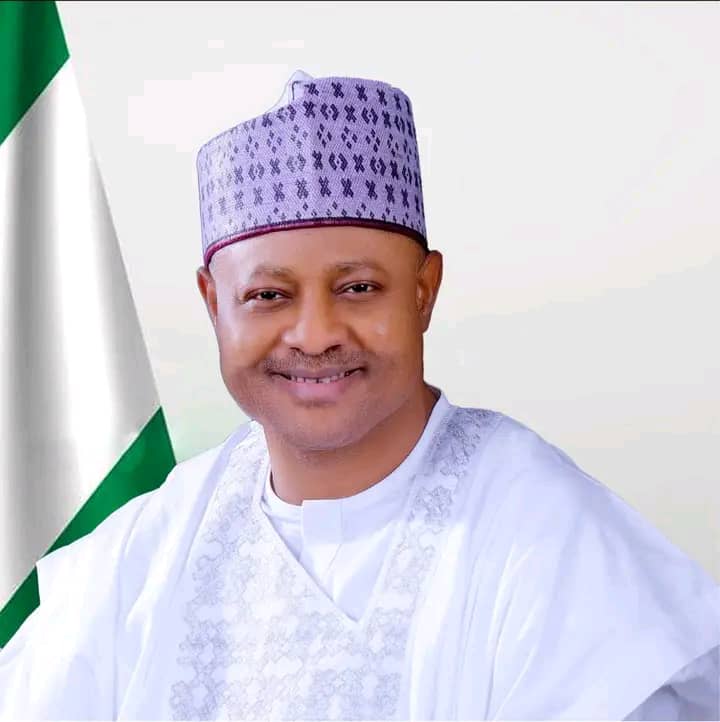
Kaduna pays N4.7 billion in debt monthly—Governor Uba Sani
By Abdullahi Mukhtar Algasgaini
Governor Uba Sani of Kaduna State has revealed that N4.7 billion is being deducted from the state government’s federal allocation each month to pay off debts he inherited.
He said, “In Kaduna, we are paying N4.7 billion in debt every month; go and check and see our allocation. You will agree with me that we started paying this debt in June 2023. Currently, what we are receiving is about N8 billion, while we should be receiving around N12 billion compared to what other states are getting within Northern Nigeria.
“We are trying our best to manage what we have. Yes, I agree with you that governance is about reducing costs. Since I became governor, I have maintained that we have not purchased a single vehicle for anyone—whether myself, the Deputy Governor, or my commissioners. We have also reduced the performance bonuses and salaries of our commissioners and the Deputy Governor. Today, I am only receiving half of my salary because we have to make sacrifices, considering the challenges we face.
“People may ask about our IGR (Internally Generated Revenue). Our IGR account is with Zenith Bank; you can check it. Every month, Zenith Bank deducts about N800 million at source because I inherited that debt.”

Kano nurses, midwives threaten strike over unmet demands
By Uzair Adam
The National Association of Nigeria Nurses and Midwives (NANNM) has issued a 15-day ultimatum to the Kano State Government, demanding that their grievances be addressed or face an imminent strike.
This decision was reached during a meeting of the State Administrative Council, following the government’s failure to resolve issues previously raised in multiple correspondences.
In a letter signed by NANNM’s acting State Secretary and Public Relations Officer, Comrade Ahmad Hamzat Sharada, and addressed to the Kano State Head of Civil Service, the association warned that nurses and midwives across clinical facilities and training institutions in the state would withdraw their services after the notice expires on October 16, 2024.
The letter outlined key demands, including the payment of a revised hazard allowance for nurses, harmonization of their service scheme, and the payment of a 259% upward review of the CONHESS salary structure.
This development follows a similar ultimatum by the National Association of Government General and Medical Dental Practitioners, which began an indefinite strike on October 1, 2024, due to the government’s failure to meet its previous agreements.

Troops dismantle terrorist bombs, neutralize fighters
By Uzair Adam
The Nigerian Army reported yesterday that its troops have successfully carried out a series of impactful operations, significantly weakening terrorist groups and neutralizing several high-profile fighters.
These actions led to the recovery of dangerous weapons, including rocket bombs and a large stockpile of ammunition.
According to a statement from the Army headquarters, “These operations have further restricted the enemies’ ability to move freely across the country.”
On September 29, 2024, a major raid was launched on Boko Haram/ISWAP hideouts in Ajiri and Mastari villages, located in Bama Local Government Area of Borno State.
The troops, using superior firepower, eliminated four notorious fighters. A thorough search of the area uncovered two Rocket Propelled Grenade (RPG) bombs, two AK-47 magazines, 28 rounds of 7.62mm (special) ammunition, 25 rounds of 7.62x54mm light machine gun ammunition, and a light machine gun barrel.
Additionally, at Banki Junction in Bama Local Government, troops neutralized another terrorist.
In Plateau State, acting on accurate intelligence, troops raided a location in the forested mountains of Panyam and captured two notorious kidnappers, Isah Abdullahi (24) and Mujahid Musa (23), who had been involved in several violent attacks on villages in Mangu Local Government Area.
Items recovered during the operation included two motorcycles, three mobile phones, and other items of interest.
In a related mission, troops arrested a notorious arms dealer, Kabiru Zaki, in Bukuru town of Jos South Local Government Area, along with a suspect linked to a recent murder in Brazongo village, Bassa Local Government Area.
Meanwhile, in southeastern Nigeria, troops clashed with IPOB/ESN militants in a fierce gunfight in Lilu, Ihiala Local Government Area, Anambra State, after the militants attempted an ambush using an Improvised Explosive Device (IED).
Overwhelmed by the Army’s superior firepower, the militants fled into nearby forests, leaving behind a Closed Circuit Camera and IED components.

President Tinubu embarks on two-week working vacation in UK
By Uzair Adam
President Bola Tinubu is set to leave Abuja on Wednesday, October 2, for the United Kingdom (UK), where he will begin a two-week working vacation, which forms part of his annual leave.
According to a statement from Bayo Onanuga, the Special Adviser to the President on Information and Strategy, the vacation will also serve as a retreat for the President to reflect on his administration’s ongoing economic reforms.
The statement added that President Tinubu will return to Nigeria at the conclusion of the two-week leave.

Faith and reflection: My visit to Hassan II Mosque and the decline of religious observance, by Dr. Muhsin Ibrahim
Admin
I was en route to Casablanca during Ḍuhr prayer. I attempted to do it on the train, but as a traveler, I told myself that I could combine it with ʿAṣr at the famous mosque I was going to visit, Hassan II Mosque.

Completed in 1993 and named after the King of the day, Hassan Mosque is said to be the second-largest mosque in Africa and the 14th-largest in the world.
Unfortunately, it was closed to worshippers when I reached there; only tourists were allowed in. To enter, a visitor has to pay 150 Moroccan dirhams, which is about ₦26,000. I hesitated to do that. The security man told me to wait until 4:30 p.m., the time for ʿAṣr, to enter free of charge.
I left the mosque’s vicinity. After all, I am in a vastly Muslim-majority country. I said I would find another mosque nearby. To my shock, I couldn’t. Even gas stations nearby don’t have any—something strange by northern Nigerian standards.
I returned to Hassan II Mosque. Pressed to pee, I prayed for the opening time. Luckily, they gave us access before 4:30 p.m. I relieved myself, performed ablution, and walked into the beautiful, massive edifice. I was awestruck.
Unfortunately, there were only a few of us in the mosque. We did not fill the first two rows. It felt like I was in Cologne Cathedral, another large and beautiful place of worship with few or no worshippers.
What is happening to us? What are human beings becoming? Frankly, Morocco is far less religious than I thought. This wave is becoming more powerful, perhaps more threatening, than one can imagine. I will say more on this another time.
May we be guided, amin.
Muhsin Ibrahim, who teaches at the University of Cologne, Germany, wrote from Casablanca, Morocco during his short stay in the Northern African country. He can be reached via muhsin2008@gmail.com.

An Open Letter to the Federal Government of Nigeria
“There’s no smoke without fire” . . . A decisive, immediate action must be taken.
Assalamu Alaikum, Peace and Blessings of Allah be unto you.
To President Tinubu, Hon. Minister of Health, Stakeholders and all Health Practitioners of Nigeria.
I am bitterly compelled to write to you today regarding a disturbing incident that transpired at Best Choice Specialist Hospital in Kano city. The Federal Inland Revenue Service (FIRS) actions at this private hospital have demonstrated a blatant disregard for human life.
Patients and parents have reported to Alfijir Newspaper that operatives of FIRS with officials, armed with guns, stormed the hospital, threatening and forcing them to vacate the premises.
The general plebeians already vulnerable due to illness, were left to wander the streets of Kano in search of alternative healthcare, only to find that many medical facilities were unavailable due to an ongoing doctors’ strike.
It is unacceptable that the FIRS dispute with the hospital should infringe upon citizens’ right to healthcare. This conflict affects not only the hospital but the the people who seek medical attention.
Best Choice Specialist Hospital is known for its philanthropic efforts and commitment to providing quality healthcare to the most vulnerable members of our society.
The hospital’s management has consistently demonstrated compassion and empathy, offering free medical services to those who cannot afford them. Their selflessness has saved countless lives and alleviated suffering.
The hospital’s community outreach programs have provided vital healthcare services to rural areas, addressing pressing health concerns such as maternal and child mortality. Their collaboration with local organizations has facilitated health education, disease prevention, and awareness campaigns.
Moreover, Best Choice Specialist Hospital has been at the forefront of disaster response, providing emergency medical care during times of crisis. Their staff’s dedication and expertise have been instrumental in saving lives and mitigating the impact of devastating events.
We urge the leaders of our great nation and the Human Rights Commission to take immediate action against this abuse of power.
Furthermore, we also implore the FIRS to reconsider their approach, recognizing that their rights do not supersede those of others.
“If your own children were in need of medical care, would you not prioritize their well-being above all else?”
Solemnly we request all the stakeholders to intervene to prevent future incidents and ensure the hospital can continue its lifesaving work.
We await your prompt response and resolution on to this critical matter.
Sincerely,
Editor-in-Chief, Alfijir Online Newspaper.