Nigeria

Nigeria’s ₦159 Trillion Debt Burden: Equivalent to ₦724,000 Per Citizen Compared to a ₦70,000 Minimum Wage

By Daniel Nduka Okonkwo

Nigeria’s debt clock has surged to ₦159.28 trillion, a figure that translates to roughly ₦724,000 per citizen when spread across a population of more than 220 million. This arithmetic alone underscores the scale of the nation’s obligations. While official voices emphasise that the debt-to-GDP ratio remains within accepted thresholds, the underlying reality is sobering: the country’s current account is being financed through persistent domestic borrowing and mounting external debt. Each statistic is a reminder that today’s fiscal gaps are tomorrow’s responsibilities, with the burden of development increasingly shifted onto generations yet unborn.

Is there a way out for Nigerians? The path forward demands more than borrowed billions. It requires a fundamental reassessment of how resources are managed, how revenue is diversified, and how structural weaknesses are addressed. While the figures may suggest sustainability on paper, the lived reality reflects rising costs, shrinking opportunities, and a future increasingly tied to creditor obligations. Breaking this cycle will require bold reforms, transparent governance, and a commitment to building an economy driven by productivity rather than dependence on borrowing.

When distributed across the population, the debt translates to roughly ₦700,000 to ₦725,000 per citizen. This figure is only a statistical illustration and not a legal obligation on individuals. Public debt remains a sovereign responsibility shared by the Federal Government, state governments, and the Federal Capital Territory, and it is serviced through public revenue rather than direct payments by citizens.

As of late 2025, Nigeria’s total public debt stood at approximately ₦159.28 trillion, equivalent to about $103 billion to $111 billion depending on the exchange rate applied. This represents an increase from about ₦144.7 trillion in 2024, reflecting continued reliance on borrowing to finance fiscal deficits.

Nigeria’s debt stock consists of both domestic and external borrowing. Domestic debt is estimated at ₦84-₦85 trillion, while external debt stands at ₦74 trillion. Persistent budget deficits have driven the growth in total debt, increased domestic borrowing through treasury bills and government bonds, and led to exchange rate depreciation, raising the value of the naira against external obligations. By mid-2025, total debt had reached about ₦152.39 trillion before rising further to ₦159.28 trillion by year-end.

Debt servicing remains a more pressing concern than the size of the debt itself. In 2025, debt servicing costs rose to approximately ₦15.8 trillion, up from about ₦12.8 trillion in 2024. Higher interest rates on domestic debt instruments largely drove this increase. Servicing costs for domestic debt rose sharply due to increased yields on treasury bills and Federal Government bonds. At certain points in 2025, the debt service-to-revenue ratio exceeded 80 per cent, meaning that a substantial portion of government revenue was used to service existing debt.

Looking ahead, Nigeria’s 2026 fiscal outlook reflects continued pressure on public finances. The proposed budget projects total expenditure of about ₦58.5 trillion against expected revenue of approximately ₦33.2 trillion, leaving a fiscal deficit of about ₦25 trillion. This gap is expected to be financed largely through additional borrowing, which could push total public debt beyond ₦160 trillion.

Planned borrowing includes external loans estimated at $6 billion, along with an additional $516 million under consideration. However, claims suggesting approvals equivalent to ₦68 trillion appear inconsistent and are likely the result of conversion or reporting errors rather than actual borrowing approvals.

The comparison between Nigeria’s per capita debt of roughly ₦724,000 and the national minimum wage of ₦70,000 is largely symbolic but highlights deeper economic realities. It reflects low-income levels, rising cost of living, and mounting pressure on public finances. It does not imply that citizens are personally responsible for repaying the debt.

Nigeria’s debt-to-GDP ratio, estimated at 35 per cent to 37 per cent, remains below the commonly referenced 60 per cent threshold. However, experts consistently stress that revenue constraints, rather than debt size alone, represent the country’s most significant fiscal risk.

Key concerns include the high share of revenue devoted to debt servicing, limited fiscal space for critical sectors such as infrastructure, health, and education, and potential inflationary risks if deficit financing continues to expand. Exchange rate volatility also affects the dollar value of external debt, adding further complexity to fiscal management.

Nigeria’s public debt, now approaching ₦160 trillion, is not excessive relative to GDP. However, the cost of servicing that debt and the country’s limited revenue base present a growing fiscal challenge. The per capita framing helps illustrate the scale of the burden, but the central issue remains how effectively borrowed funds translate into economic growth and improved living conditions.

As borrowing continues, the sustainability of Nigeria’s fiscal path will depend less on the amount owed and more on how effectively the economy generates the revenue required to support those obligations.

Daniel Nduka Okonkwo is a Nigerian investigative journalist, publisher of Profiles International Human Rights Advocate with Daniels Entertainment, a policy analyst, and human rights activist. He writes from Nigeria and can be reached at dan.okonkwo.73@gmail.com.

2027: Our Silence Is Not a Strategy, Our Vote Is

By Malam Aminu Wase 

As 2027 approaches in Nigeria, a troubling sentiment is spreading among many citizens. There is no point in voting. Frustration is understandable. Economic hardship is real. Insecurity is real. Public disappointment is real. But choosing silence at the ballot box is not a solution;  it is surrender.

Democracy does not collapse in a single dramatic moment. It weakens gradually as citizens withdraw, participation declines, and people convince themselves that their voices do not matter. The most dangerous political decision is not voting for the wrong candidate; it is refusing to vote at all.

If we are dissatisfied with leadership, the answer is not apathy. It is participation. If we desire better governance, accountability, and reform, we must use the one instrument that gives power to ordinary citizens, the ballot.

Complaints on social media do not change governments. Private anger does not change governments. Boycotts by the disillusioned do not change governments. Votes change governments.

When citizens stay home on election day, they do not protest the system; they strengthen the influence of those who show up. Every empty polling unit is not a statement of resistance; it is an opportunity handed to someone else to decide the future.

The power to shape 2027 does not lie solely with politicians. It lies with citizens who choose to participate. Leadership is not imposed in a democracy; it is permitted. And permission is granted through votes.

This is not about blind loyalty to any party or personality. It is about responsibility. It is about understanding that disengagement guarantees continuity of whatever we claim to oppose. If we want reform, we must vote for it. If we want accountability, we must demand it through participation.

Nigeria’s future will not be written by observers. It will be written by participants. In 2027, the real question will not only be who wins. The real question will be, did we show up?

Silence is not a strategy. Withdrawal is not resistance. Our vote is our voice, and 2027 is the time to use it.

Malam Aminu Wase writes from Kaduna. He can be reached at aminusaniusman3@gmail.com.

FG Launches ‘Renewed Hope’ Programme to Lift 10 Million Out of Poverty


By Abdullahi Mukhtar Algasgaini

The Federal Government has announced that approximately 10 million Nigerians are set to benefit from its newly unveiled Renewed Hope Ward Development Programme, a poverty-reduction initiative targeting all 8,809 wards across the country.

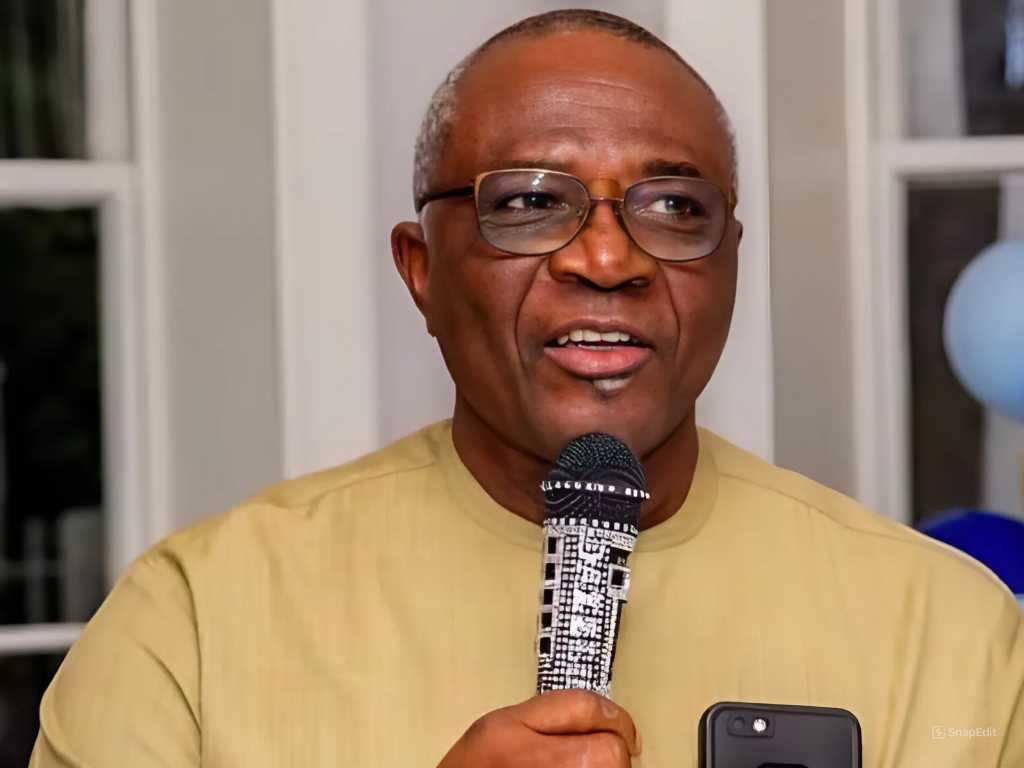
Minister of Budget and Economic Planning, Senator Abubakar Bagudu, disclosed this while accepting his appointment as the Grand Patron of the National Councillors’ Forum of Nigeria.

Speaking after the honour, Bagudu said the recognition would inspire him to intensify efforts aimed at revitalising grassroots economies for the benefit of the majority. He reaffirmed President Bola Tinubu’s commitment to improving living standards through extensive local governance reforms embedded in the programme.

The initiative, he explained, will map dominant commercial activities in each ward to identify beneficiaries eligible for government support. This strategy, according to the minister, is expected to give a significant boost to the Tinubu administration’s poverty-reduction objectives.

Bagudu thanked the Forum for their continued support, noting that the councillors’ endorsement of the President’s second term reflects a broad appreciation of ongoing reforms that are steadily improving the nation’s economy.

The Forum, which comprises all 8,809 serving councillors, stated that the appointment recognises Bagudu’s remarkable contributions to national development. “Your dedication to public service and to the development of our country makes you a perfect fit for this prestigious position,” the appointment letter dated April 23, 2026 read.

During a weekend visit, Forum President Hon. AbdulRazak Sama’ila presented the letter to Bagudu, expressing hope that the minister would play a crucial role in promoting good governance, transparency, and accountability at the grassroots level. “We hope to work with him and benefit from his insights and expertise,” Sama’ila added.

NERDC Announces 2026 Textbook Ranking Exercise to Improve Learning Standards


By Uzair Adam

The Nigerian Educational Research and Development Council (NERDC) has announced plans to commence its 2026 book ranking and selection exercise as part of efforts to improve the quality of learning materials used in schools across the country.

In a statement signed on Monday, the Executive Secretary of NERDC, Prof. Salisu Shehu, said the initiative is aimed at ensuring that only relevant, accurate, affordable and accessible textbooks are approved for use by learners nationwide.

The statement explained that the exercise is being coordinated by the Federal Ministry of Education under the leadership of the Minister of Education, Dr. Tunji Maruf Alausa, and the Minister of State for Education, Professor Suwaiba Said Ahmad.

According to the statement, the ministry has constituted a standing committee to streamline the book approval process, standardise selection procedures and regulate the textbook market. The move, it noted, is expected to enhance learning outcomes by ensuring that only the best instructional materials are adopted in schools.

The council emphasised that the ranking and selection of books would play a critical role in shaping the quality of education, noting that the additional layer in the assessment process would guarantee that approved books meet required standards.

“The ranking and selection of books will play a pivotal role in shaping the quality of education in Nigeria,” the statement said, adding that the process would ensure that only the most suitable materials are made available to students.

NERDC clarified that while the committee would handle the ranking and selection of textbooks, its responsibilities would not override the council’s statutory mandate of regulating the book industry. It added that the committee would operate under a structured framework designed to ensure transparency, consistency and objectivity.

The statement further disclosed that the committee would receive already assessed and approved books from NERDC before conducting its ranking exercise at a designated venue to avoid external interference.

It added that the process would follow a strict template to ensure fairness and credibility.

After completing the exercise, the committee is expected to submit a comprehensive report, including clear recommendations and justifications for each ranking decision, to the Minister of Education for approval.

NERDC also stated that the final list of ranked books would be formally communicated to state governments, while textbook selection and ranking exercises would be conducted at least every three years or whenever a new curriculum is introduced.

The council noted that a detailed workflow plan has been developed for the 2026 exercise, outlining activities, timelines and responsibilities, with further information on submission procedures to be communicated to stakeholders in due course.

NERDC Announces 2026 Textbook Ranking Exercise to Improve Learning Standards


By Uzair Adam

The Nigerian Educational Research and Development Council (NERDC) has announced plans to commence its 2026 book ranking and selection exercise as part of efforts to improve the quality of learning materials used in schools across the country.

In a statement signed on Monday, the Executive Secretary of NERDC, Prof. Salisu Shehu, said the initiative is aimed at ensuring that only relevant, accurate, affordable and accessible textbooks are approved for use by learners nationwide.

The statement explained that the exercise is being coordinated by the Federal Ministry of Education under the leadership of the Minister of Education, Dr. Tunji Maruf Alausa, and the Minister of State for Education, Professor Suwaiba Said Ahmad.

According to the statement, the ministry has constituted a standing committee to streamline the book approval process, standardise selection procedures and regulate the textbook market. The move, it noted, is expected to enhance learning outcomes by ensuring that only the best instructional materials are adopted in schools.

The council emphasised that the ranking and selection of books would play a critical role in shaping the quality of education, noting that the additional layer in the assessment process would guarantee that approved books meet required standards.

“The ranking and selection of books will play a pivotal role in shaping the quality of education in Nigeria,” the statement said, adding that the process would ensure that only the most suitable materials are made available to students.

NERDC clarified that while the committee would handle the ranking and selection of textbooks, its responsibilities would not override the council’s statutory mandate of regulating the book industry. It added that the committee would operate under a structured framework designed to ensure transparency, consistency and objectivity.

The statement further disclosed that the committee would receive already assessed and approved books from NERDC before conducting its ranking exercise at a designated venue to avoid external interference.

It added that the process would follow a strict template to ensure fairness and credibility.

After completing the exercise, the committee is expected to submit a comprehensive report, including clear recommendations and justifications for each ranking decision, to the Minister of Education for approval.

NERDC also stated that the final list of ranked books would be formally communicated to state governments, while textbook selection and ranking exercises would be conducted at least every three years or whenever a new curriculum is introduced.

The council noted that a detailed workflow plan has been developed for the 2026 exercise, outlining activities, timelines and responsibilities, with further information on submission procedures to be communicated to stakeholders in due course.

APC Releases Revised Timetable for 2027 General Elections, Sets N100 Million Presidential Nomination Fee


By Abdullahi Mukhtar Algasgaini

The All Progressives Congress (APC) has unveiled its revised schedule of activities for the 2027 general elections, with presidential aspirants required to pay N100 million for nomination and expression of interest forms.

The timetable, released by the party’s National Secretariat at Buhari House in Abuja, outlines key dates for primaries and other critical activities leading up to the elections.

According to the schedule, the sale of forms will take place from April 25 to May 2, 2026, at the APC National Secretariat. Aspirants have until May 4, 2026, to submit completed forms and accompanying documents.

Screening of aspirants for various positions is slated for May 6–8, 2026, with results published on May 11, 2026. Appeals on screening outcomes will be heard between May 12 and May 13, 2026.

The party’s primary elections are scheduled as follows:

a· House of Representatives: May 15, 2026

b· Senate: May 18, 2026

c· State House of Assembly: May 20, 2026

d· Governorship: May 21, 2026

e· Presidential: May 23, 2026

Election appeals will follow immediately after each primary, with the last appeal for the presidential primary scheduled for May 25, 2026.

The APC also released the cost of forms for various positions, with a 50% discount for female aspirants, youth, and physically challenged persons. However, this discount applies only to the nomination fees, not the expression of interest.

1· House of Assembly: N6 million (Expression of Interest: N1m, Nomination: N5m)

2· House of Representatives: N10 million (Expression of Interest: N1m, Nomination: N9m)

3· Senate: N20 million (Expression of Interest: N3m, Nomination: N17m)

4· Governorship: N50 million (Expression of Interest: N10m, Nomination: N40m)

5· Presidential: N100 million (Expression of Interest: N30m, Nomination: N70m)

All payments are to be made directly into designated accounts with Union Bank, UBA, or Zenith Bank.

The timetable was signed by the National Organizing Secretary, His Excellency, Sulaiman Muhammad Argunu, OFR. The party has directed all inquiries to its Directorate of Organisation.

NERDC Reaffirms Commitment to Strengthening Education Sector Amid Funding Challenges

By Uzair Adam

The Nigerian Educational Research and Development Council (NERDC) has reaffirmed its commitment to strengthening Nigeria’s education sector, even as it continues to grapple with persistent funding challenges affecting key programmes and initiatives.

This position was expressed during the Council’s sixth inaugural Governing Board meeting held at its headquarters in Sheda, Abuja, from April 22 to 23, 2026, where members deliberated on its activities, achievements, and future direction.

According to a statement issued by the Council on Monday, the meeting brought together Board members, management staff, and other stakeholders to review NERDC’s operations and chart a path forward.

In his welcome address, the Executive Secretary, Professor Salisu Shehu, was quoted in the statement as expressing optimism that the Board’s collective efforts would “usher in meaningful change, growth and sustainable development” for the Council and its staff.

The statement noted that a documentary titled NERDC at a Glance was presented during the meeting, providing an in-depth overview of the Council’s operations, including the activities of its six academic centres, service departments, and field offices.

According to the statement, Professor Shehu also highlighted the Council’s achievements, particularly its collaborations with agencies within Nigeria, across Africa, and globally.

However, he drew attention to the challenge of inadequate funding, which has slowed the implementation of several key projects and initiatives.

Despite this, the Executive Secretary as reaffirming his commitment to driving reforms and repositioning the Council on the global stage.

In his opening remarks, the Chairman of the Governing Board, Jamilu Wada Aliyu, assured the management team of the Board’s support.

The statement quoted him as saying the Board remains committed to “strengthening NERDC as a critical pillar of Nigeria’s education sector,” while commending the Executive Secretary for his efforts.

Furthermore, the statement noted that the Executive Secretary and members of the management team led the Chairman and other Board members on a tour of the Council’s facilities, including the Administrative Block, Library and Informatics Centre, Conference Centre, Academic Centres, Warehouse, and the National Model School.

It added that the tour provided firsthand insight into the Council’s current state and highlighted areas requiring urgent attention.

The statement also listed members of the Governing Board as including Gideon Sunday Omachonu, Aliyu Muhammad Madaki, Mahmoud Muhammad Lawan, Obianuju Anigbogu of the Federal Ministry of Education, Amos Josiah Dangut, Nura Sani Usman, and Abdulmumili Umar Kwami.

Other members are Raula Said Ahmad, Peter Maktu, Omoduwa Francis Folorunso, Dean Robert Okorie, Abdulkadir Yunusa, Denja Abdullahi, and the Executive Secretary, who serves as Secretary to the Board.

When They Claim the North Never Criticised Buhari While in Office, is it Ignorance or Hypocrisy? Let the Facts Speak

By Mohammed Bello Doka 

History is a stubborn thing. It does not bend to the whims of revisionists, nor does it dissolve under the weight of repeated falsehoods. For some time now, a particular narrative has been carefully cultivated and spread across social media platforms and traditional dinner tables. This narrative suggests that during the eight years of Muhammadu Buhari’s presidency, the North maintained a conspiratorial silence, shielding itself while the country drifted. It paints an entire region as a monolith of blind loyalty. But as the saying goes, a lie can travel halfway around the world while the truth is still putting on its shoes. Today, the truth is fully dressed and ready to walk.

If the people making these claims are truly ignorant of the facts, this record will serve as a much-needed education. If they are speaking from a place of hypocrisy, then this record will serve as a mirror to their own intellectual dishonesty. To suggest the North was silent is to erase some of the most daring, scathing, and consequential political and intellectual battles fought against the Buhari administration from within its own base.

Let us begin with the most intimate of critics. On October 14, 2016, through the BBC Hausa Service, the First Lady of Nigeria, Aisha Buhari, stunned the world. She did not just offer a mild critique; she declared that her husband’s government had been hijacked by a few people who did not even know the party’s vision. She stated plainly that out of fifty people the President had appointed, he probably didn’t know forty-five of them. 

This was not a Southern critic or an opposition politician speaking; this was the President’s own wife. She followed up on December 4, 2018, as reported by Punch and Premium Times, during a leadership summit in Abuja, where she challenged Nigerian men to stand up to two or three people dominating the government. On May 25, 2019, as reported by Channels TV and Daily Trust, she attacked the administration’s Social Investment Programme, labelling it a failure in the North and questioning the procurement of mosquito nets. If the North was silent, was the First Lady’s voice not Northern enough?

The intellectual and traditional pushback was equally fierce. As the Emir of Kano, Sanusi Lamido Sanusi used his platform to deliver economic lectures that the presidency found deeply uncomfortable. On August 24, 2016, during the 15th meeting of the Joint Planning Board in Kano, as reported by Punch Newspapers, he warned that the Buhari administration was on the path of the Jonathan government if it did not end its flawed foreign exchange policies. Years later, as reported by Vanguard on August 20, 2023, he provided a post-mortem, stating that the administration had decimated the economy and left a thirty trillion naira debt through illegal central bank borrowing.

Then there is the Northern Elders Forum. For years, this group acted as a stern watchdog. On June 14, 2020, as reported by The Guardian and The Cable, the Chairman of the forum, Professor Ango Abdullahi, issued a statement titled Life has lost its value under Buhari. He described the administration as a total failure in the face of escalating banditry and insurgency. He noted that the North was completely at the mercy of armed gangs. 

This sentiment was echoed repeatedly by the forum’s spokesperson, Doctor Hakeem Baba Ahmed. In April 2022, following the Zabarmari massacre, Baba Ahmed appeared on Channels TV and was quoted in Daily Trust stating that in any civilised nation, a leader who failed so spectacularly to provide security would have resigned. He was one of the most consistent voices debunking the myth that the North was satisfied with the status quo.

Even the clergy did not stay silent. Sheikh Ahmad Gumi, once considered a supporter of the President’s integrity, became a vocal opponent. In an interview with Punch on July 7, 2018, Gumi stated that he knew Buhari would make Nigeria worse than it was when Jonathan left. He accused the administration of being worse than its predecessor and criticised what he called the deification of the President.

When we turn to the political theatre, the evidence of Northern opposition is even more undeniable. Consider Buba Galadima, one of the original signatories to the formation of the APC. On July 4, 2018, as reported by Punch and Premium Times, Galadima led a faction to form the Reformed APC. He held a press conference in Abuja where he described the party’s leadership as a charade and the government as a disappointment. In an exclusive interview with Premium Times on July 22, 2018, he accused Buhari of betraying the loyalists who built his political career to empower a clannish inner circle.

Rabiu Musa Kwankwaso, the former Governor of Kano, also broke ranks early. On July 24, 2018, he was among the senators whose defection was reported by Punch and Premium Times as part of a mass exodus from the APC to the PDP. Throughout 2018 and into the 2023 election cycle, Kwankwaso was a relentless critic. 

On August 27, 2018, as reported by Punch, he stated in Owerri that Buhari lacked the capacity to improve the economy. Later, on April 15, 2022, as reported by Channels TV, he expressed deep worry that a retired General could allow insecurity to reach such levels, calling the administration’s second term a missed opportunity.

The most dramatic phase of Northern criticism occurred in the build-up to the 2023 general elections. 

This was not just rhetoric; it was a legal and constitutional war. Nasir El-Rufai, the then Governor of Kaduna State, became the face of internal resistance. Long before the currency crisis, El-Rufai’s critical stance was documented in a 30-page memo dated September 22, 2016, which was eventually leaked by Sahara Reporters on March 16, 2017. In that memo, he warned the President that the APC was losing its supporters’ trust and that the government was adrift. 

By 2023, the tension culminated in a Supreme Court lawsuit. On February 3, 2023, as reported by Channels TV and The Punch, El-Rufai, along with Governors Yahaya Bello and Bello Matawalle, sued the Federal Government over the naira redesign policy. On February 16, 2023, after Buhari’s national broadcast, El-Rufai issued a counter-broadcast in Kaduna, which was transcribed by Vanguard and The Cable, where he told his citizens to continue using the old notes, effectively challenging the President’s authority in a way no Southern governor dared at the time.

Abdullahi Umar Ganduje, the then Governor of Kano, was equally confrontational. On January 28, 2023, as reported by The Niche and Daily Post, Ganduje officially asked the President to postpone a visit to Kano because the people were too angry over the currency policy to guarantee a peaceful reception. 

In early February 2023, a viral video reported by Daily Trust and Sahara Reporters showed Ganduje mocking the President’s political history, noting that Buhari only won after a merger was formed for him and was now trying to destroy the party on his way out. On February 14, 2023, as reported by The Cable, Ganduje threatened to demolish any bank in Kano that refused to accept the old notes, promising to replace such banks with schools.

How then can any honest person say the North was silent? We have the names, the dates, and the publications. From the First Lady’s BBC interview in 2016 to the Supreme Court case in 2023, from the intellectual rebukes of Sanusi Lamido Sanusi to the scathing memos of Nasir El-Rufai, and the open defiance of Abdullahi Ganduje, the North was a hotbed of criticism. Those who claim otherwise are either victims of a deep ignorance or are intentionally peddling a hypocritical double standard.

The North is not a monolithic political entity that blindly follows a leader. It is a region with a rich tradition of debate, dissent, and internal correction. When the Buhari administration faltered, it was the Northern elders who first called for his resignation. When the economy drifted, it was Northern intellectuals who provided the most data-driven critiques. When the currency policy threatened to trigger a social crisis, it was Northern governors who took the President to the Supreme Court.

To repeat the lie that the North never criticised Buhari is an insult to the courage of those who risked their political standing to speak truth to power. It is an attempt to rewrite history to fuel division and promote a false narrative of regional complicity. But the records are in the archives of Daily Trust, Punch, Vanguard, Premium Times, and Sahara Reporters. 

The records are in the transcripts of the BBC and Channels TV.

Let this be a final answer to those who peddle this falsehood. The facts do not just speak; they shout. The North did not just criticise Buhari; it provided some of the most formidable and effective opposition his administration ever faced. Whether it was on the pages of newspapers, in the chambers of the Supreme Court, or from the pulpits and palaces of its traditional leaders, the North spoke up. To ignore this is to choose a lie over the truth, and to repeat it after reading these facts is to move from the camp of the ignorant to the camp of the hypocritical. The truth has been told, the evidence has been presented, and the myth of Northern silence is hereby destroyed.

Mohammed Bello Doka can be reached via bellodoka82@gmail.com.

Flights Disrupted As Jet Fuel Shortage Worsens Across Nigeria

By Sabiu Abdullahi

Air travel in Nigeria is facing serious disruption as the shortage of aviation fuel, known as Jet A1, continues to affect flight operations nationwide. Passengers across major airports are experiencing delays, rescheduling, and, in some cases, last-minute cancellations.

Airlines say the persistent scarcity of fuel has made it difficult to keep to planned schedules. The situation has intensified in recent days, leaving many travellers stranded and forcing others to change their travel arrangements.

Industry operators revealed that the cost of Jet A1 has risen sharply by more than 300 per cent since the onset of the US-Israel conflict involving Iran and the closure of the Strait of Hormuz, a key global fuel supply route.

The Airline Operators of Nigeria (AON) had earlier planned to suspend operations over the crisis. However, the federal government intervened and urged them to hold off while discussions with stakeholders took place. Meetings were held with aviation authorities and oil marketers last week, but no immediate solution has been reached.

One outcome from the talks was a 30 per cent discount on debts owed by airlines to service providers. Airlines, however, are pushing for a full waiver of their debts to agencies such as the Federal Airports Authority of Nigeria (FAAN), the Nigeria Civil Aviation Authority (NCAA), and the Nigerian Airspace Management Agency (NAMA).

Despite these efforts, the rising cost and scarcity of fuel continue to strain airline operations. At airports in Lagos, Abuja, and other major routes, passengers now face long waiting hours with little information about departure times. Some travellers report that their flights were rescheduled multiple times within a single day.

There are also claims on social media that at least one airline issued boarding passes despite being aware of fuel shortages. Meanwhile, some carriers have begun reducing the number of flights on certain routes to manage limited resources. Air Peace, for example, has cut its London-Heathrow service to three weekly flights.

Concerns are growing that the aviation sector may face deeper challenges if urgent steps are not taken to stabilise fuel supply.

In a related development, flight operations by local airlines may face further disruption as ground handling companies threaten to withdraw their services over unpaid debts exceeding N9 billion.

The Aviation Ground Handlers Association of Nigeria (AGHAN) issued a seven-day ultimatum to airlines. The group warned that its members could suspend operations from Tuesday, April 28, 2026, if the debts remain unsettled.

Ground handling firms provide essential services such as passenger check-in, baggage handling, and ramp operations. Key companies include Skyway Handling Company (SAHCO) Plc, Nigerian Aviation Handling Company (NAHCO) Plc, and others.

In a letter dated April 21, 2026, and addressed to the AON, AGHAN stated: “This situation has continued to exert significant pressure on the operational capacity of our members, adversely affecting their ability to deliver sustainable, efficient and safe services. It has also created considerable financial strain on the management and workforce of the affected organizations.

“Despite repeated engagements and efforts made in good faith by our members to secure settlement of these obligations, the responses received thus far have not yielded the desired outcomes, with payment commitments largely unmet.

“In light of the foregoing, and to safeguard the continued viability of our members’ operations, we wish to respectfully notify you that our members may be constrained to withdraw services should these outstanding debts remain unresolved within seven days from the date of this letter.”

The association also apologised to passengers for any inconvenience and expressed hope for an amicable resolution.

Troops Crack Down On Oil Theft, Seize ₦250m Worth Of Stolen Products In Niger Delta


By Abdullahi Mukhtar Algasgaini

Military operations in the Niger Delta have dealt a major blow to economic saboteurs, with troops arresting nine suspected oil thieves and confiscating products worth over ₦250 million between April 1 and 26, 2026.

The crackdown, led by the 6 Division of the Nigerian Army in coordination with other security agencies, resulted in the deactivation of ten illegal refining sites. Security forces seized more than 130,000 litres of stolen crude oil and over 26,000 litres of Automotive Gas Oil (AGO) across the region.

In Rivers State, troops acting on intelligence intercepted an abandoned truck loaded with 45,000 litres of stolen products at Ukpeye Community along the East-West Road. At Orashi National Forest, a massive reservoir containing over 35,000 litres of stolen crude was uncovered, while another reservoir yielded 26,000 litres of illegally refined AGO.

Additional discoveries in Rivers included 266 sacks with 17,760 litres of stolen products at Ebocha, Omoku, and four drum ovens with 50 sacks holding over 3,000 litres of crude at Abessa Forest.

In Delta State, troops found a tapping point with a dugout storage pit containing over 2,700 litres of stolen products near Obazogbe Community. In Akwa Ibom State, 45 bags holding 1,350 litres of illegally refined AGO were uncovered at Ikot Ekpene LGA, though suspects fled the scene.

Major General Emmanuel Eric Emekah, General Officer Commanding the 6 Division, praised troops for their resilience and urged them to maintain the operational tempo against economic saboteurs across the Niger Delta Region.