Nigeria

CRAG Trains Kano Health Workers on Managing Climate-Related Diseases

By Uzair Adam

The Climate Resilience Action Group (CRAG), with support from the Kano Independent Research Centre Trust (KIRCT), has trained frontline health workers in Dawakin Kudu Local Government Area of Kano State on the prevention, detection and management of climate-related diseases.

The Daily Reality reports that the training, held at Tsakuwa Primary Health Care Centre on Tuesday, formed part of the group’s ongoing climate and health pilot project aimed at strengthening the capacity of health workers and communities to respond to the growing health impacts of climate change.

Speaking during the programme, the team lead of CRAG, Dr. Bashir Isa Waziri, said the initiative was designed to sensitise primary healthcare workers on climate-health risks, particularly climate-sensitive diseases associated with extreme heat and flooding.

He explained that the training focused on conditions such as heat stress, heat exhaustion and heat stroke, as well as infectious diseases including cholera and malaria, which are often linked to climate-related events.

“Today we conducted climate and health awareness and training for frontline health workers. The aim is to sensitise primary healthcare workers on climate-health risks, especially climate-sensitive diseases that are common during extreme heat exposure and the rainy season,” he said.

Dr. Waziri noted that climate change continues to pose significant threats to public health and stressed the need for healthcare workers to educate communities on preventive measures and effective responses when such illnesses occur.

As part of the programme, CRAG also conducted a climate and health awareness session for students of Yusuf Bayero Government Secondary School, where participants were educated on the effects of climate change on human health, particularly the dangers associated with extreme heat and flooding.

The organisation further launched a tree-planting campaign at the school, planting 20 trees and appointing student climate-health ambassadors who will be responsible for nurturing them.

According to Dr. Waziri, the ambassadors will be monitored and rewarded based on their commitment to maintaining the trees as part of efforts to promote environmental sustainability and climate resilience.

A specialist physician with KIRCT and member of CRAG, Dr. Maryam Ahmad Sa’id, said flooding remains a major public health concern because of its potential to trigger outbreaks of infectious diseases.

She explained that floodwaters often contaminate water sources through the mixing of sewage and waste materials, increasing the risk of diseases such as cholera, typhoid fever and malaria.

“Flooding is associated with many health risks, especially the spread of infectious diseases. When sewage and refuse contaminate water sources, diseases such as cholera and typhoid fever can spread rapidly within communities,” she said.

Dr. Sa’id urged residents to pay greater attention to water hygiene, advising them to ensure drinking water comes from safe sources, keep water storage containers clean and covered, and practise regular handwashing with soap and water.

She also identified pregnant women, children, elderly persons and individuals living with chronic illnesses such as hypertension, diabetes, chronic kidney disease and sickle cell disease as among those most vulnerable to the effects of extreme heat.

The physician called for sustained public awareness and early detection of climate-related illnesses to reduce complications and improve health outcomes.

The officer in charge of Tsakuwa Primary Health Care Centre, Ibrahim Yusuf Kura, described the training as enlightening, saying it exposed health workers to important information that would improve healthcare delivery in the community.

“There are many things we did not know before this training. The knowledge we gained will help us provide better healthcare services to members of our community,” he said.

Kura urged participants to make effective use of the knowledge acquired and apply it in their daily duties.

Similarly, the second officer in charge of the facility, Amina Hamisu Abdullahi, said the programme broadened her understanding of climate-related health challenges and would help her perform her responsibilities more effectively.

She added that the lessons learned would be shared with colleagues who were unable to attend the training.

How Nigerian Man Allegedly Created Fake Government Agency, Operated Undetected for Months

By Abdullahi Mukhtar Algasgaini

A Nigerian man by the name of Prince Adeniyi Mathew is currently under investigation over allegations that he fraudulently established a phantom federal agency which he named the Presidential Foreign Intervention Promotion Council (PFIPC), falsely claiming it was an official body of the Federal Government of Nigeria.

According to sources, Mathew went a step further by appointing himself as the council’s director-general, securing a physical office for the agency within the Federal Secretariat complex in Abuja, and even opening a dedicated account for it at the Central Bank of Nigeria (CBN). Most shockingly, he is accused of successfully inserting a budgetary provision of approximately ₦1.3 billion for the agency into Nigeria’s 2026 fiscal proposal.

Insiders reveal that, emboldened by the apparent success of his deception, Mathew allegedly convened high-level meetings with serving ministers and Nigerian ambassadors, issuing directives to them on the execution of government programmes. He is also said to have represented Nigeria at several international summits on multiple occasions, all under the guise of his bogus office.

However, the elaborate ruse has now collapsed. Security agencies have been alerted and are said to have commenced appropriate legal and administrative actions against the suspect, as investigations into the full extent of the fraud continue.

Atiku Asks FG To Reveal Beneficiaries Of N501bn GenCos Bond

By Sabiu Abdullahi

Former Vice-President Atiku Abubakar has asked the federal government to make public the identities of beneficiaries of the N501 billion bond issued to offset debts owed to electricity generation companies, also known as GenCos.

Atiku, who was the presidential candidate of the Nigeria Democratic Congress (NDC), made the demand after the Association of Power Generation Companies claimed that the funds had not been fully released despite several assurances from the government.

Earlier in the year, the federal government announced the successful issuance of the N501 billion inaugural bond under the Presidential Power Sector Debt Reduction Programme.

In February, the Chief Executive Officer of the Association of Power Generation Companies, Joy Ogaji, disclosed that the federal government owed GenCos about N6.5 trillion.

President Bola Tinubu later approved a payment arrangement in April to clear debts in the sector through the Presidential Power Sector Financial Reform Programme.

Reacting in a statement released on Wednesday through his Senior Special Assistant on Public Communication, Phrank Shaibu, Atiku said the comments made by Ogaji had raised questions about how the government was handling debts in the power sector.

He said the call by the APGC chief for details of the disbursement to be made public had exposed concerns about accountability and transparency.

“Dr. Ogaji’s vivid description of the government’s token payment as ‘like rubbing oil on a crying child’s mouth to imply that he had eaten’ perfectly captures the Tinubu administration’s approach to governance: grand announcements, impressive figures, glossy headlines, and very little substance,” the statement reads.

The former vice-president said repeated announcements by the government on settling electricity sector debts had failed to end the crisis.

“This is no longer a policy failure. It is a crisis of credibility,” he said.

“The question is no longer whether the government is borrowing. The question is why Nigerians are repeatedly being asked to applaud fresh borrowing to solve a problem that government insists it solved only yesterday.”

Atiku also challenged the federal government to publish the names of the power generation companies that benefited from the bond, the amounts paid to each company, the dates the payments were made and the balances yet to be settled.

“Public money cannot disappear into official press statements. Every naira borrowed in the name of Nigerians must be traceable to its destination,” he said.

He accused the Tinubu administration of depending on fresh borrowing instead of tackling the root causes of the problems in the electricity sector.

“Every challenge is met with another ceremony. Every crisis is greeted with another headline. Every unresolved debt is answered with another borrowing plan,” he said.

“Yet electricity generation remains constrained, investors remain uncertain, businesses continue to spend fortunes powering themselves, and ordinary Nigerians still pay exorbitantly for darkness.”

Atiku further called on the National Assembly, the Auditor-General of the Federation and other oversight agencies to conduct a public audit of intervention funds released to the power sector under the current administration.

“Nigerians deserve to know precisely how much has been borrowed, how much has been disbursed, who received the money, and why the debts continue to rise despite repeated claims of settlement,” he said.

The former vice-president added that “darkness has become one of the most expensive commodities in Nigeria” and urged the government to explain how previous loans were spent before seeking additional borrowing.

CBN Shuts Down 46 Microfinance Banks Over Regulatory Violations

By Abdullahi Mukhtar Algasgaini

The Central Bank of Nigeria (CBN) has withdrawn the operating licences of 46 microfinance banks with immediate effect, citing serious regulatory breaches that threatened depositors’ funds and financial stability.

In a sweeping enforcement action approved by CBN Governor Mr. Olayemi Cardoso, the apex bank wielded its powers under Sections 12 and 13 of the Banks and Other Financial Institutions Act (BOFIA), 2020, to shut down the affected institutions from July 1, 2026.

According to a statement by the bank’s Acting Director of Corporate Communications, Mrs. Hakama Sidi Ali, the revocation followed the failure of the microfinance banks to meet one or more statutory requirements, including insufficient assets to cover liabilities, unauthorised closure of operations, prolonged inactivity, failure to commence business within 12 months of licence approval, and inability to maintain minimum capital funds unimpaired by losses.

The CBN described the mass revocation as a necessary step to protect the integrity of the financial system, safeguard depositors, and ensure that all licensed institutions operate within the bounds of the law. “The Central Bank of Nigeria remains committed to promoting a safe, sound and resilient financial system,” the statement said, adding that further regulatory actions would be taken where necessary to sustain public confidence.

In a rare move, the CBN also released the full list of affected banks, naming them as:

1. Minji-Se Churchill MFB

2. Merchant MFB

3. Janmaa MFB

4. Busu MFB

5. Gold MFB

6. Zain MFB (formerly Dawakin Tofa MFB)

7. Bompai MFB

8. Ajwa MFB (formerly Gezawa MFB)

9. NOW NOW DIGITAL MFB

10. Crystabel Microfinance Bank

11. Chanelle MFB

12. Abia SME MFB

13. Kamba MFB

14. Iwade MFB

15. Winview MFB

16. Zuru MFB

17. Minjibir MFB

18. Shanono MFB

19. Sumaila MFB

20. Rimin Gado MFB

21. Mwaghavul MFB

22. Sycamore MFB

23. TOFA MFB

24. Safegate MFB

25. Creekline MFB

26. Bestar MFB

27. Livingspring MFB

28. Apple MFB

29. Stanford MFB

30. Frontline MFB

31. Zafec MFB

32. Supreme MFB

33. Bejin-Doko MFB

34. Kanopoly MFB

35. Bellbank MFB (formerly Tsanyawa MFB)

36. Yeneng MFB

37. Creditville MFB

38. MBAG MFB

39. STRAIGHT SAHARA MFB

40. OURPASS MFB

41. VERDANT MFB

42. BASAWA MFB

43. CASHA MFB

44. ESTEEM MFB

45. ENTREPRENEUR MFB

46. AVANTUS MFB

Financial analysts view the unprecedented publication of the defaulter list as a signal of the CBN’s tougher posture under Governor Cardoso, particularly in the microfinance subsector, where weak governance and capital erosion have been persistent concerns. The affected banks are now expected to commence winding-down procedures and settle outstanding obligations to depositors in line with existing resolution frameworks.

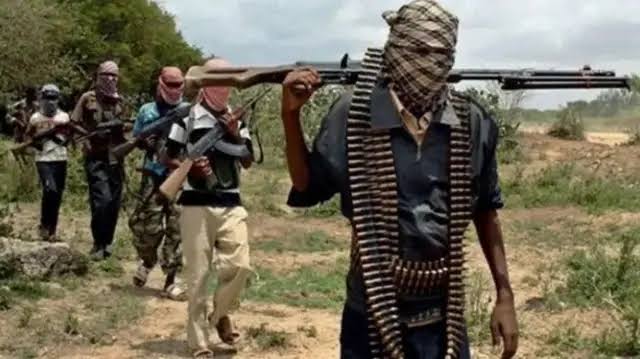
Bandits Demand Fresh N300m for Abducted Niger Electoral Commissioner

By Uzair Adam

The Permanent Commissioner of the Niger State Independent Electoral Commission (NSIEC), Barrister Ahmed Mohammed, is still being held by bandits nine months after his abduction, despite reports that his family paid N40 million ransom in an effort to secure his freedom.

Barrister Ahmed was kidnapped on September 29, 2025, along the Mokwa–Ibbi Road in Borgu Local Government Area while travelling to Minna on an official assignment.

His abduction occurred about a month before the state’s local government elections held on November 1, 2025.

A member of his family, who requested anonymity, disclosed that the kidnappers have now demanded an additional N300 million for his release.

The source said the abductors contacted the family again on Monday to inquire whether they were prepared to meet the latest demand.

However, the family informed them that it could not raise such an amount.

“The bandits call almost every day. It was only on Tuesday that they did not call. We are appealing to the Niger State Government to intervene and help secure his release.

“He was abducted while carrying out an official assignment for the state government,” the source said.

Speaking on the development, a close friend of the victim, Ayuba Abubakar, said the family had exhausted all available options in its efforts to regain his freedom.

He expressed concern over reports indicating that Barrister Ahmed’s health condition has worsened during captivity.

“On behalf of his family, colleagues and well-wishers, I appeal to the Niger State Government and relevant security agencies to urgently step in and ensure his safe and unconditional release,” Abubakar said.

The continued captivity of the electoral commissioner has heightened concerns among his family members, friends and associates, who are calling for swift action to secure his freedom.

That Obama Presidential Centre

By Nura Jibo MRICS

The man, President Barack Hussein Obama, will never cease to amaze me. In 2008, when Obama was campaigning for his presidential bid against John McCain, I was in the Sudan Savanna region of Northern Nigeria, managing a N6 billion redevelopment of the Yankari Animal Game Reserve Holiday Resort and Safari Project in Bauchi State.

At that time, the 2i/c in my office, Dr Aminu Bashir, was scheduled to visit the United States. He asked me if there was anything that I needed him to buy in America. I humbly requested two (2) books: The Audacity of Hope and Dreams from My Father, both written by Barack Obama.

Indeed, it was a joyous moment for me the very day I laid my hands on the two of Obama’s international bestseller books. 

For those who are not aware of what qualifies a book to be labelled a bestseller, any book that its publishers sell an average of more than 10,000 copies within a week is automatically considered a bestseller under US standards. Obama’s “Audacity of Hope” immediately qualified for the New York Times bestseller list because of its profundity.

Today marks exactly 18 years since Barack Obama made history in the United States of America. And today, which marks the day of another victory with the launch of the Obama Presidential Centre on Juneteenth 2026, is not only a win for the US Democrats and democracy, but also a day when consistency meets sincerity and the ability to reemerge.

Chicago has been home to Obama, his wife Michelle, and their children, Sasha and Malia.

The lessons I learned from the Obamas are not only about courage and conviction but also about inspiring me to rise and do more with my life.

1. Personally, Obama’s personality (behaviours and appearance), as defined in simple psychology, inspired me to write my first book that debuted in 2010, which I sent to him and his wife, Michelle, one copy each-in 2010, via the US Embassy in Nigeria. At that time, my aim was not really to practice quantity surveying as a meal ticket. My dream was to immerse myself in the study of global literature and novels by renowned authors, such as the Russian Fyodor Mikhailovich Dostoevsky and the Chinese Sun Tzu’s The Art of War. I sincerely cared less about studying physics and chemistry books because I believed they offered less to humanity, as they contributed more to inflicting havoc on the scientific world via bombs, drones, and missiles. 

I deeply thought that science was never favourable for me. I was quite surprised when I see myself today practicing a segment of it and excelling in quantity surveying at an appreciable speed and awe, because my thinking was to one day appear in a global debate with world leaders such as Barack Obama to discuss the West and Africa and seek an explanation from my Kanoonline super writer friend, Dave McEwan Hill’s candid observation, who averred that: “If we want to keep our best people at home we have to provide a better country for them to operate in. If Nigerian leaders were honest, progressive, and ambitious, they would have rewarded high achievers rather than multibillion-dollar thieves.” McEwan Hill believes that many of our best brains would have stayed at home to build the nation.

However, most of them have gone overseas to be in more satisfying and more remunerative employment in better-run communities.

While I can’t agree with Dave as little as he does, his double-decker challenge was just like the way the Obamas challenged the late McCain and Trump, with his trumpeting of our cosmopolitan world in a George Galloway manner. Indeed, Dave McEwan Hill acknowledged what he described as my impressive contributions that nonetheless read like special pleading to ignite curiosity that the “blacks” are any less intelligent than the “whites. ” To which the question is more complex than that, as he asserted elsewhere that all members of all races function just as well as each other when placed equally in advanced environments. The key question is why some environments get so far ahead of others. 

So far, I have repeatedly featured and succeeded in debating the world at the United Nations Conference of the Parties level for umpteenth times.

2. Hence, anytime I listen to Obama, I come away with something new and extraordinary, not in my professional field, but outside my constituency. For example, before the birth of Obama’s Presidential Centre, I established a 3-hectare tree shelterbelt and two high-powered solar boreholes as a community organiser and climate change advocate in Nigeria. In my shelterbelt, biodiversity has already been restored for the people of Asayaya village across a comprehensive 3-hectare area, with a grant of no less than £70,000 from the BCDA.

3. After succeeding in biodiversity restoration, I looked up to the United States of America to leverage the establishment and registration of a segment of my NGO: the African Climate Change Research Centre (ACCREC), which I affiliated with the UNFCCC Secretariat in Bonn, Germany, as its climate observer organisation for well over sixteen years now. Prof. Bello Makama–an African American Chemist of all time, painstakingly registered ACCREC in New York and became its first US Country Director at SUNY-ERIE, courtesy of following the Obama legacy.

4. Now that Obama has launched his Presidential Centre in Chicago, with Presidents George Bush Jr., Biden, and Clinton in attendance, only God knows what is going on in my mind regarding what I will come up with in a couple of months. I will not digress, but I take a huge lesson from the veracity of Obama’s amazing construction, which cost well over $850 million, with Tod Williams Billie Tsien Architects and Michael Van Valkenburgh Associates as its landscape architects; the centre is designed to receive an average of 1,666 visitors every week. They will enjoy learning, sports, entertainment and music to the zenith.

5. Indeed, anytime I read and watch the Obamas, rest assured I will come up with something new, especially when I reflect on their times as a husband and wife in perfect harmony.

6. The time they spent in Chicago, with Michelle as an Associate Dean and Obama as a professor of law, often reminds me of the days I traversed and visited nearly fifty countries for my international career. I lived in Europe, North Africa, South America, West Africa and the Arabian Peninsula, sharing ideas and presenting my case studies to the international community, my immediate community and African neighbourhoods.

7. Anyone who wants to know more about what I am up to in a couple of days can watch this space for my open letter to President Obama. This letter is certainly going to be different and very unique from the one I wrote and sent to President Donald John Trump at his house in Mar-a-Lago!

Sowore Vows To Continue Struggle After Release From Kuje Prison

By Sabiu Abdullahi

Human rights activist and African Action Congress (AAC) presidential candidate, Omoyele Sowore, has declared that his detention will not weaken his determination to continue advocating for justice in Nigeria.

Sowore made the statement on Tuesday shortly after regaining freedom from the Kuje Correctional Centre in Abuja.

In a post shared on his X account, the activist insisted that imprisonment would not force him to abandon his cause.

“Prison has never broken the resolve of those who fight for justice. If anything, it only strengthens our determination,” he said.

“The struggle continues. We will never surrender. #RevolutionNow #Sowore2027.”

Earlier on Tuesday, a Federal High Court in Abuja granted Sowore bail in the sum of N200 million.

The court directed him to provide two sureties as part of the bail requirements. One of the sureties must be a traditional ruler from his community, while the second must possess landed property within the Federal Capital Territory.

The judge also instructed the activist to surrender his international passport to the court registrar pending the conclusion of the case.

Following the ruling, the court ordered that Sowore be released to his legal team while the bail conditions are being fulfilled.

The Department of State Services (DSS) is prosecuting the activist over a two-count charge linked to a social media post in which he allegedly referred to President Bola Ahmed Tinubu as “a criminal” on his X and Facebook accounts.

Sowore had pleaded not guilty to the charges.

The court had earlier granted him bail on self-recognition before the arrangement was later revoked.

On June 16, the presiding judge issued a warrant for Sowore’s arrest after he failed to appear in court for proceedings. The court held that the letter submitted to explain his absence did not provide sufficient reasons.

On June 22, the judge ordered that the activist be remanded at the Kuje Correctional Centre pending the hearing of his application challenging the withdrawal of his bail.

The court also dismissed an application in which Sowore requested that the judge withdraw from the case over alleged bias.

APC Lawmaker Says Tinubu’s Efforts Against Insecurity Should Be Acknowledged

By Sabiu Abdullahi

A member of the House of Representatives, Yusuf Gagdi, has said President Bola Ahmed Tinubu’s administration deserves recognition for the steps it has taken to address insecurity across the country, even though the problem has not been completely resolved.

Gagdi, who represents the Pankshin/Kanam/Kanke Federal Constituency of Plateau State, spoke on Tuesday during an appearance on Channels Television’s Politics Today.

The lawmaker argued that it would be inaccurate to claim that the federal government has failed to make efforts to tackle security challenges.

“If the truth be told, I will say the truth irrespective of your understanding about the truth that I am saying,” he said.

“I will not refuse to tell you here that the government of President Bola Ahmed Tinubu did not make any effort towards solving the security problem.

“Promising to fix the security problem and putting effort towards fixing the security problem should both be recognised.”

Gagdi stated that although insecurity remains a major concern in the country, the government has continued to demonstrate commitment towards confronting the challenge.

He also disclosed that he had openly criticised certain security policies of the current administration during proceedings at the House of Representatives.

The APC lawmaker, however, accused some opposition politicians of taking advantage of the country’s security difficulties for political gain instead of presenting practical solutions.

According to him, some political actors appear more interested in drawing attention to the suffering of Nigerians than suggesting ways to improve the situation.

Gagdi added that national discussions should centre on finding solutions to insecurity rather than using the issue for partisan interests.

FG to Abolish JSS-SSS Separation Policy Following 20 Million Student Dropout Crisis


By Abdullahi Mukhtar Algasgaini

The Federal Government has announced plans to scrap the policy separating Junior Secondary Schools (JSS) from Senior Secondary Schools (SSS), following alarming data revealing that over 20 million pupils dropped out before reaching senior secondary level.

Minister of Education Dr Tunji Alausa made the announcement on Tuesday during the inauguration of the UBEC Ministerial Implementation and Monitoring Committee in Abuja. He declared that the “disarticulation policy,” which mandated separate operations, principals, and facilities for JSS and SSS, had failed to achieve its intended objectives.

“We have 20 million dropouts from primary school to JSS. Where are those students? We also found we have 80,000 public primary schools and only about 15,000 junior secondary schools. That’s a one-to-eight ratio,” Alausa stated.

The minister explained that this imbalance has created severe overcrowding in JSS facilities while leaving many senior secondary schools underutilised. He cited Kaduna and other northern states as prime examples of where the policy has proven counterproductive.

“This disarticulation policy has failed. We will phase it out. We can’t be creating positions because we want to create a director level for people while we harm our education system. It’s about doing what is best for every Nigerian child,” he added.

The proposal to abolish the policy will be presented at the next meeting of the National Council on Education for formal approval.

Alausa acknowledged previous failures in addressing student transition rates but assured Nigerians of the government’s commitment to fixing the educational system. “This government will not fail. We are fixing it,” he declared.

At the same event, the minister inaugurated a committee chaired by Professor Rashid Aderinoye to oversee UBEC-funded Smart Schools, Bilingual Schools and Alternative Schools across the country. The committee has been tasked with ensuring these projects are completed, handed over to states, and opened for learning.

The minister expressed concern that many of these institutions remain unfinished or have not admitted learners, describing the situation as a waste of public resources.

Nigeria continues to grapple with one of the world’s largest populations of out-of-school children, with millions of school-age children particularly in rural and conflict-affected communities still lacking access to formal education.

Education experts have consistently argued that addressing the crisis requires not only constructing new schools but ensuring that completed facilities are fully operational, adequately staffed and accessible to learners.

Hausa Zallah Zealots Fight the Wrong Battle

By Muhsin Ibrahim

The interview with Professor Tijjani Naniya on Arise News that I shared on Facebook yesterday continues to generate more (wild) reactions. At the time of posting this, more than 1100 comments had been made. This is far more than my previous posts or, generally, above-average social media posts.

Of those comments, many are expletives. I deleted a few, but I chose to leave almost all the subsequent ones, including those containing abuse and insults. Why?

I want people, especially the thoughtful among us, to see who the faces behind the Hausa Zallah agitation are and what many of them represent.

Those comments contradict several core Hausa socio-cultural ideologies codified by scholars such as Kirk-Green (1974), Alhassan et al. (1982), and Adamu (2001). I wonder where those so-called Hausa Zalla folks got them. If they were genuinely “Hausa Zallah”, they should demonstrate the cherished Hausa values.

Equally, go see how erstwhile Hausa “enemies” are defending the Hausa Zallah ideology. Naniya did not blame southeasterners for our growing insecurity or disunity. Rather, he traced the etymology of the term “Hausa-Fulani” to them. This is debatable, but it should be based on knowledge rather than insults.

When the Hausa Zallah staged a protest in Berlin, they displayed pictures of Nnamdi Kanu and called for his release. Why? So, even if Naniya associated the agitation with the Southeast, he might not be wrong. We should dig deeper to find the connection because it exists.

Folks asked for my opinion on all this. I have no problem with people identifying as Hausa, Fulani, or both. Actually, it’s bag governance that is fuelling all this hogwash. Identity politics is not a case in places where people live in peace and property.

In my neighbourhood in Cologne, there is a mosque, a church, and a mandir (a Hindu temple) within shouting distance. I have lived here for five years. I have never witnessed ANY problems between followers of these religions.

For me, we should unite against bandits, terrorists and corrupt politicians. They do not fight for or represent any particular ethnicity, religion or region. They are our real enemies, not your friend, colleague or neighbour who did not choose to be born Hausa, Fulani, Igbo, Yoruba, you name it.

When bandits or terrorists strike, they often do not distinguish between victims. They kidnap or kill them all. When a politician steals our money, it affects our roads, schools, hospitals, and more.

Wake up. Think and do the right thing.

Muhsin Ibrahim can be reached via muhsin2008@gmail.com.