Nigeria

Tinubu Invites Plateau Governor Over Killings In Jos

By Anwar Usman

President Bola Tinubu has summoned the Governor of Plateau State, Caleb Mutfwang, to Abuja for  talks following the recent attack in Angwan Rukuba, Jos North.

The Minister of Information and National Orientation, Mohammed Idris, made this known at a press briefing held on Tuesday in Abuja.

The munister conveyed condolences on behalf of the President and the Federal Government to the victims and their families stressing that swift and decisive actions are being taken to address the attack.

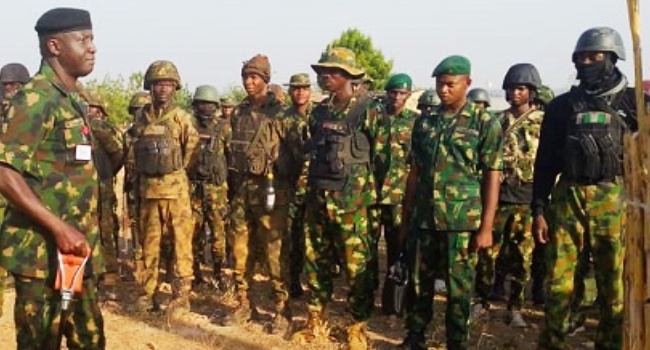
The address in part reads “Let me assure Nigerians that security agencies responded immediately to the incident. Troops under Operation Enduring Peace were rapidly mobilised to the scene following distress calls.

“The military and other security agencies cordoned off the affected area, secured key access routes, and launched targeted search-and-clearance operations to track down the perpetrators.

“These swift actions ensured that the situation was quickly contained and prevented further escalation,” Idris said.

The minister further explained that these actions form part of a broader federal strategy to maintain stability across Plateau State and the North-Central region.

“The Nigerian Armed Forces have continued to carry out clearance operations and intelligence-led missions across vulnerable communities following attacks recorded in recent months.

“Reinforced surveillance and troop deployments have also been implemented in high-risk areas, supported by joint military-police patrols and strengthened rapid response mechanisms.

Highlighting the President’s proactive engagement, the Minister revealed that President Tinubu had a meeting with top security intelligence officials to assess the situation.

“A few hours ago, President Bola Tinubu held a high-level meeting with the nation’s top security and intelligence chiefs to review the situation and take further decisive steps towards arriving at a lasting solution.

“Following this meeting, the Governor of Plateau State, Caleb Manasseh Mutfwang, has been invited by President Tinubu to further deliberate and chart a coordinated path towards lasting peace and security.

“The outcome of the meeting between President Tinubu and Governor Mutfwang will be made public in due course,” the minister stated.

The minister also called on citizens to remain calm and cooperate with security authorities, while avoiding the spread of unverified information that could escalate tensions.

Jos Attack: Kwankwaso Laments ‘Barbaric’ Killing of 27 Nigerians

By Uzair Adam

A former Kano State governor and national leader of the Kwankwasiyya Movement, Rabiu Musa Kwankwaso, has condemned the killing of no fewer than 27 people in Gari Ya Waye community of Angwan Rukuba in Jos, Plateau State, describing the attack as barbaric and another tragic chapter in Nigeria’s history.

Kwankwaso, in a statement he personally signed on Tuesday, expressed deep concern over the incident, saying the senseless bloodshed underscores the persistent failure of leadership and the growing culture of impunity that has turned parts of the country into what he called “killing fields.”

The former governor said the recurring violence in Plateau State and other parts of Nigeria should no longer be treated as routine incidents, stressing that the situation demands urgent attention as a national emergency.

“The barbaric attack on the Gari Ya Waye community in Angwan Rukuba, Jos, which claimed the lives of no fewer than 27 Nigerians and left many others injured, is yet another tragic and shameful chapter in our nation’s history,” he said.

Kwankwaso added that the continued attacks on communities highlight the urgent need for decisive leadership and stronger measures to protect lives and property across the country.

According to him, Nigerians deserve to live in peace, security and dignity regardless of their ethnic or religious backgrounds.

The former minister of defence also extended his condolences to the families of the victims, the injured and residents of the affected community.

“My heartfelt condolences and prayers go to the families of the victims, the injured, and the entire Gari Ya Waye community in this moment of profound grief,” he said.

Former Kano APC Governorship Candidate Gawuna Resigns from Party

By Uzair Adam

A former governorship candidate of the All Progressives Congress (APC) in the 2023 general elections in Kano State, Nasiru Yusuf Gawuna, has formally resigned from the party.

In a resignation letter dated March 29, 2026, addressed to the APC chairman in Gawuna Ward of Nassarawa Local Government Area, the former deputy governor said his decision to leave the ruling party was voluntary and personal.

“I hereby formally resign my membership from the All Progressives Congress (APC), effective March 29, 2026,” the letter partly read.

Gawuna expressed gratitude to the party for the opportunities he had during his time as a member, noting that he appreciated the support and platform provided to him throughout his political career.

The former deputy governor, however, did not reveal his next political move.

His resignation comes amid ongoing political realignments in Kano, where several key political actors are reportedly reviewing their alliances ahead of future electoral contests.

Sources close to the former deputy governor said he is expected to meet with former Kano governor, Rabiu Musa Kwankwaso, on Monday night at the latter’s residence on Miller Road in Kano.

Kwankwaso Formally Defects to ADC, Seeks Credible Leadership for Nigeria

By Uzair Adam

Former Kano State Governor, Rabiu Musa Kwankwaso, on Monday formally aligned with the African Democratic Congress (ADC), a development observers describe as a significant moment for opposition politics in Nigeria.

The Daily Reality reports that the party’s National Chairman, David Mark, received Kwankwaso and his supporters at his residence on Monday.

Mark said Kwankwaso’s decision to join the party represented more than a political realignment, noting that it reflected growing calls by Nigerians for a united and formidable opposition capable of safeguarding democratic values.

He explained that the ADC was emerging as a rallying platform for a broad-based national movement founded on inclusion, integrity, competence and progress.

According to him, the coalition aims to offer Nigerians credible alternatives and rebuild public confidence in democratic governance.

Mark also expressed concern over what he described as a gradual shrinking of opposition space in the country, warning that actions capable of limiting political participation could threaten democracy.

“The future of Nigeria cannot be built on domination but on participation. Leadership must be earned through trust rather than sustained by control,” he said.

The ADC chairman noted that Kwankwaso commands a large grassroots following, particularly in Northern Nigeria, through the Kwankwasiyya movement.

He called on Nigerians across ethnic, religious and regional lines to join the movement and play active roles in building a more inclusive and accountable system of governance.

Mark also invited other political parties, civil society organisations and youth groups to work towards a united coalition, stressing that strengthening democracy requires collective effort and sacrifice.

He expressed optimism that the emerging alliance could mark a turning point in Nigeria’s democratic journey, urging citizens to embrace unity, participation and hope in shaping the country’s future.

Earlier, Kwankwaso urged ADC supporters to register massively as members of the party.

He also encouraged them to promote the party’s ideals and prepare to elect credible leaders for good governance through registration with the Independent National Electoral Commission (INEC).

PHOTOS: ADC Leaders Storm Kano as Kwankwaso Set to Join Party

By Uzair Adam

Several top figures of the African Democratic Congress (ADC) have arrived at Miller Road in Kano, the residence of former Kano State governor, Rabiu Musa Kwankwaso, ahead of his expected official defection to the party today.

Those present include the former Senate President and ADC National Chairman, David Mark; the party’s National Secretary and former Minister of Interior, Rauf Aregbesola; former Sokoto State governor, Aminu Waziri Tambuwal; former Minister of Transportation, Rotimi Amaechi; Senator Dino Melaye; former APC National Chairman, John Odigie-Oyegun; and former Imo State governor, Emeka Ihedioha.

The delegation arrived in Kano through Malam Aminu Kano International Airport (MAKIA), where they were received by the immediate past deputy governor of Kano State, Aminu Abdussalam Gwarzo.

Plateau Government Imposes 48-Hour Curfew in Jos North Over Recent Killings

By Abdullahi Mukhtar Algasgaini

The Plateau State Government has declared a 48-hour curfew in Jos North Local Government Area following an attack that claimed lives in Angwan Rukuba on Sunday.

A statement issued by the Commissioner for Information, Joyce Lohya Ramnap, said the curfew would take effect from midnight until April 1.

Governor Caleb Manasseh Mutfwang condemned the attack and assured that measures were being taken to apprehend those responsible for the incident.

The government called on residents to remain calm, stay alert, and cooperate with security agencies to facilitate investigations.

It further emphasized that the curfew was aimed at restoring peace and protecting lives and property in the area.

Dangoteʼs Son-in-law, Others Raise Millions of Naira For Arewa Entrepreneurs

By Ishaka Mohammed

A son-in-law of Aliko Dangote, Captain Jamil Abubakar, has raised multimillion naira to support entrepreneurs in northern Nigeria. Captain Jamil, a pilot, is the son of former Inspector-General of Police Mohammed Dikko Abubakar.

On March 21, 2026, Captain Jamil tweeted his wish to attract investors to Arewa businesses, and by the end of the following day (March 22), he had already raised 100 million naira. He disclosed that he had asked other willing donors to wait until after the pilot phase of the initiative, the Arewa Business Support Fund. 

He revealed that beneficiaries would receive interest-free business loans, which, when repaid, would be used to support more businesses. Beneficiaries would also enjoy free mentorship and consultancy. 

Responding to concerns that fluency in English could be a barrier, the captain assured the public that local languages would feature prominently in the Fund’s activities, stressing that businesses domiciled in the North, regardless of ownership and owners’ language proficiency, would be considered. 

He mentioned names of other stakeholders, including the acting financial secretary of the Fund, Mohammed Jammal (aka White Nigerian), Khalil Nur Khalil (economic adviser to Katsina State Government), and Mohammed Bello El-Rufai (a member of the House of Representatives), among others.

During a discussion among the stakeholders on X, it was revealed that Saleem Abubakar Musa (simply called Saleem) had been like a personal assistant to Captain Jamil.

On March 27, Saleem (@AM_Saleeeem) tweeted the summary of the subsequent activities of the Fund as follows:

“Next Steps:

– The website will be launched to the public soon, featuring comprehensive details, business templates, and practical guides (how to, when to, and what to do).

– Formal registration of the Arewa Business Support Fund as a legal entity, including banking and all required documentation.

– Nomination of Board of Trustees.

– Rollout of the pilot phase.”

However, the Fund will consider only existing businesses in the pilot phase; business ideas alone would be rejected.

OPINION: Tinubu’s Policies Are Systematically Destroying Northern Agriculture While Boosting Southern Businesses

By Dr. Umar Musa Kallah

Nigeria’s food import bill has more than doubled under President Bola Ahmed Tinubu, rising from ₦3.83 trillion in 2023 to ₦7.65 trillion in 2025, according to the National Bureau of Statistics data.

This surge is not the result of global shocks or natural disasters alone. It stems directly from a deliberate policy of granting liberal import waivers on maize, rice, soybeans and other staples. Announced repeatedly as a measure to crash food prices, these waivers have instead achieved a far more targeted outcome: the collapse of Northern farms and agro-processing industries while delivering clear economic advantages to Southern importers, poultry conglomerates and port-based processors.

The contrast with the Buhari administration is striking. Between 2015 and 2023, agriculture was positioned as a cornerstone of national development. The Anchor Borrowers’ Programme channelled over ₦800 billion to more than four million smallholder farmers, enabling cultivation on more than five million hectares.

Rice production rose sharply from between 2.5 million and 3.7 million metric tonnes to peaks of 8.5 million to nine million metric tonnes, positioning Nigeria as Africa’s largest producer and, for a time, a net exporter in the region. The 2019 land border closure protected local value chains and revived rice milling, soybean crushing, groundnut and cotton-seed processing across the North.

More than 150 modern rice mills emerged nationwide, with over 100 located in Northern states. Oil mills in Kano, Kaduna, Gombe and Jigawa thrived on locally sourced raw materials, generating tens of thousands of direct and indirect jobs and triggering a strong post-harvest multiplier effect that spread prosperity through transport, packaging, marketing and local services.

That progress has been reversed under the current administration. Milled rice production has fallen to a projected 5.5 million metric tonnes in the 2025/26 season, down from Buhari-era peaks. According to the Rice Processors Association of Nigeria, nearly 90 of the country’s 150 rice mills have shut down since 2023, with many surviving mills operating at 30 per cent capacity.

Northern facilities have suffered the heaviest losses. Soybean, groundnut and cotton-seed crushing plants that once benefited from protected local supplies now run at below 20 per cent capacity or have been forced to liquidate assets. Fertiliser prices have escalated dramatically, with a bag of urea selling for  ₦58,000 and NPK for ₦120,000 in many markets.

Diesel and pms costs have tripled following the removal of fuel subsidies. At the same time, farm-gate prices for staples such as maize have collapsed to as low as ₦38,000 per 100kg bag, often falling below the cost of production, which exceeds ₦1 million per hectare in many areas. Farmers are abandoning their fields, selling at a loss or leaving the sector entirely.

These outcomes are not accidental. The import waiver regime, which offers zero-duty and VAT exemptions on key commodities and was first announced in 2024 before being effectively extended, has operated without any parallel measures to reduce input costs or protect local processors.

Maize waivers have primarily benefited major poultry conglomerates concentrated in the South, where the feed industry is dominated by Southern operators. Soybean imports allow Southern processors to bypass local crushing altogether. Rice milling is visibly shifting southward, with imported paddy now processed in expanded Southern facilities and the finished product shipped back to Northern markets.

Northern oil millers, who lack direct access to seaports, are placed at a severe disadvantage. They cannot import raw soybeans competitively and are instead forced to purchase already-crushed crude soybean oil from Southern refiners who enjoy the logistical advantages of Lagos and Port Harcourt ports. As a result, capital that once circulated within Northern communities now flows southward to port operators, importers, logistics firms and Southern feed mills.

The regional imbalance extends far beyond farming. Unemployment has risen sharply in the North, where agriculture remains the primary source of livelihood for the majority of the population. Each closed rice mill has eliminated hundreds of direct jobs and thousands of indirect positions in farming, transport and allied services.

With nearly 90 mills out of operation, tens of thousands of Northern livelihoods have disappeared. Rural underemployment has increased as the traditional post-harvest economic surge has vanished. Northern states, already facing challenges of insecurity and weak infrastructure, are experiencing accelerated rural-urban migration, higher youth joblessness and deepening poverty. In contrast, Southern urban centres have gained from expanded import-related activities, including more jobs in ports, poultry processing, logistics and distribution services tied to cheap foreign inputs.

Other factors compound the North’s disadvantage while strengthening the South. Billions of naira invested in Northern agro-industries during the Buhari years are now stranded or liquidated, while Southern processors with direct sea access and waiver-backed imports continue to attract fresh capital and expand operations.

The classic multiplier effect that once spread prosperity from Northern harvests across the national economy has been reversed, with money draining out of the North and concentrating in Southern hands. Food security has been undermined for the entire country.

A population exceeding 230 million now depends increasingly on volatile imports for basic staples, exposing Nigeria to global price shocks, foreign exchange crises and potential supply disruptions. The South, as the hub of processing and distribution, benefits from short-term consumer price relief and sustained industrial activity.

No policy under the Tinubu administration prioritises the strengthening of local farms and industries over importation. Instead, the waiver regime actively discourages domestic production by making imported raw materials artificially cheaper than locally grown equivalents, without corresponding support for Northern farmers or processors.

Government statements continue to celebrate minor drops in consumer prices while ignoring the collapse of local capacity. The pattern is consistent and unmistakable: repeated public commitments to crash farm-gate prices, unchecked waivers and complete neglect of Northern processing infrastructure.

Nigeria cannot achieve sustainable development by weakening its primary food-producing region. The deliberate marginalisation of the North’s agricultural economy risks mass unemployment, rural depopulation, social instability and long-term national food insecurity. Northern governors, traditional rulers, farmers’ associations, rice processors and business leaders must now break their silence. The evidence shows a clear agenda to render the North economically redundant so that Southern interests can dominate value chains and resource flows.

The mills cannot remain silent and the fields cannot be left fallow indefinitely. A nation of this size, increasingly dependent on foreign food while one of its most productive regions is systematically impoverished, faces grave danger. The people of the North must act to defend their economic future before it is lost forever. This is not development. It is calculated dispossession, and it must be confronted without delay.

Dr. Umar Musa Kallah wrote in from Kano, Nigeria.

El-Rufai Family Announces Janazah for Hajiya Umma El-Rufai

By Abdullahi Mukhtar Algasgaini

The family of former Kaduna State Governor, Mallam Nasir El-Rufai, has announced the passing of their matriarch, Hajiya Umma El-Rufai, who died on Friday, March 27, 2026.

In a statement released on Saturday, Hon. Mohammed Bello El-Rufai, representing Kaduna North Federal Constituency, confirmed that the funeral (Janazah) prayer will be held today at the National Mosque in Central Area, Abuja, commencing at 1:00 pm. The burial is scheduled to follow immediately at Gudu Cemetery in Apo.

The announcement described the deceased as a beloved grandmother, requesting prayers from the public. The family expressed gratitude for the visits, well-wishes, and condolences received during their time of grief.

Hon. Bello El-Rufai, who also serves as the Chairman of the House Committee on Banking Regulations, signed the statement on behalf of the family elders, praying for Allah’s mercy upon the departed.

“May Allah SWT bless her soul and grant her the highest level of Aljannatul Firdausi,” the statement read.

Report Shows How Hundreds Of Pupils Study In ‘Death Trap School’ In Jigawa Amid Prolonged Neglect

By Sabiu Abdullahi

More than 300 pupils at Community Primary School in Ayama, located in Auyo Local Government Area of Jigawa State, are reportedly learning under hazardous conditions due to years of neglect.

The situation came to light after a recent inspection by Tracka, a civic accountability organisation, which described the state of the school as alarming and unsafe for both pupils and teachers.

The report highlighted the poor condition of the school facilities. It blamed the situation on prolonged neglect and what it described as a failure of the education system under the administration of Governor Umar Namadi, despite repeated appeals from the host community.

“During a recent field visit by the Tracka team to Community Primary School in Ayama, Auyo LGA of Jigawa State, the reality on ground was both shocking and heartbreaking,” the report read.

Further details in the report painted a grim picture of the learning environment.

“This single primary school, which serves more than 300 pupils from the community, is in a deplorable and dangerous condition that should never be associated with a place of learning.

“Many of the classrooms are severely dilapidated, with cracked walls, weak and damaged floors, and roofs that have partially collapsed.

“Ventilation is extremely poor, and some structures are so unsafe that they can only be described as death traps.

“Yet, these are the spaces where innocent children are expected to sit every day in pursuit of an education and a better future.”

Findings from the visit showed that several classroom structures have lost their strength. This has exposed both pupils and teachers to danger, especially during periods of harsh weather.

The report stated that the condition of the school has remained unchanged for years. It added that government response has been minimal despite several appeals.

“For more than three years, the community and school authorities have made repeated appeals for help.

“With little or no government response, residents have tried to carry out minor repairs using their limited resources just to keep the school functioning.

“Unfortunately, these temporary efforts have not been enough to address the scale of the problem,” the report added.

Residents of Ayama community have attempted to fix parts of the school by contributing what they can. They repaired leaking roofs and supported weak structures. However, these efforts have not solved the larger problem of decay.

The report also pointed to overcrowding as a major concern. It noted that the shortage of desks and chairs has forced many pupils to sit on bare floors during lessons.

“Overcrowding has also become a major challenge. With very few desks and chairs available, many pupils are forced to sit directly on the bare floor during lessons,” the report noted.

Education stakeholders have warned that such conditions can harm pupils physically and also affect their learning ability over time.

The situation has raised fresh concerns about the state of public education infrastructure, especially in rural communities across Nigeria.

Reacting to the findings, civic technology group MonITNG expressed worry over the development. The organisation linked the poor learning conditions to declining school attendance and increasing dropout rates in the state.

“Unsurprisingly, this terrible learning environment has contributed to declining attendance, with some children eventually dropping out of school altogether,” the organisation said.

It also questioned the gap between government spending on education and the reality in schools like the one in Ayama.

“This situation is particularly troubling considering that billions of naira are allocated to education annually.

“The contrast between budget figures and the conditions seen in schools like this raises serious concerns that must be addressed.”

MonITNG called for urgent intervention to address the situation. It urged authorities to rebuild damaged classrooms and provide essential facilities.

“We call on the relevant authorities to urgently intervene by reconstructing the damaged classrooms, providing adequate furniture, and ensuring access to clean water and proper sanitation facilities.

“Every child deserves a safe and dignified place to learn.

“Our children’s education should never be a gamble with their lives. It is time to fix our schools and secure their future.”

The situation in Ayama reflects wider challenges facing many public schools in rural parts of the country. Poor infrastructure, inadequate funding, and weak oversight continue to affect the quality of education, leaving many children at risk.