Israel

Israel Says Iranian Naval Commander Alireza Tangsiri Killed in Air Strike

Israel has announced that it has killed a senior Iranian military figure, Alireza Tangsiri, who headed the naval arm of Iran’s Islamic Revolutionary Guard Corps.

According to Israel’s Defence Minister, Israel Katz, the operation took place on Wednesday night. He described it as “in a precise … operation” and said it also targeted other “senior officers of the naval command” in Iran.

Katz further stated, “The man who was directly responsible for the terrorist operation of mining and blocking the Strait of Hormuz to shipping was blown up and eliminated.”

Despite the claim, there has been no official confirmation from Iranian authorities as of the time of filing this report.

A journalist with Al Jazeera, Tohid Asadi, who is reporting from Tehran, said uncertainty still surrounds the development. He noted, “But if it’s true, it’s going to be another major blow for a country that has already experienced a lot of military commanders being killed.”

The latest claim comes amid the ongoing conflict between the United States, Israel, and Iran, which began on February 28. Since then, Israel has repeatedly announced the killing of several top Iranian officials.

Among those previously reported killed are Iran’s Supreme Leader, Ali Khamenei, and security figure Ali Larijani.

Other casualties linked to Israeli attacks include the head of the Basij paramilitary force, Gholamreza Soleimani, as well as Iran’s Intelligence Minister, Esmail Khatib.

In addition to targeting individuals, Israeli forces have in recent days intensified strikes on Iran’s naval capabilities. Reports indicate that several naval vessels were hit last week in the Caspian Sea. These included ships equipped with missile systems, support vessels, and patrol craft.

The situation continues to evolve, with tensions rising across the region as both sides maintain military pressure.

Netanyahu Pledges Continued Strikes on Iran as Tehran Rejects Negotiations

By Anwar Usman

The President of the United States on Monday held “very good” talks with an unidentified Iranian official after abruptly shelving plans for fresh attacks, even as Washington’s ally Israel vowed to keep up strikes on the Islamic republic.

The surprise disclosure  denied by Tehran, which accused Trump of manipulating energy markets came ahead of a Monday night deadline imposed by Trump for Iran to reopen the Strait of Hormuz shipping lane or see the US “obliterate” its power plants.

Ghalibaf said on X that “no negotiations” were underway, insisting Trump was seeking “to manipulate the financial and oil markets and escape the quagmire in which the US and Israel are trapped.”

Oil prices fell and stock markets jumped as observers scrambled to interpret Trump’s statements despite the Iranian denial.

AFP reports that, the Iranian foreign ministry spokesman Esmaeil Baqaei said messages were received from “some friendly countries indicating a US request for negotiations aimed at ending the war”, but denied any such talks had taken place, Iran’s official IRNA agency reported.

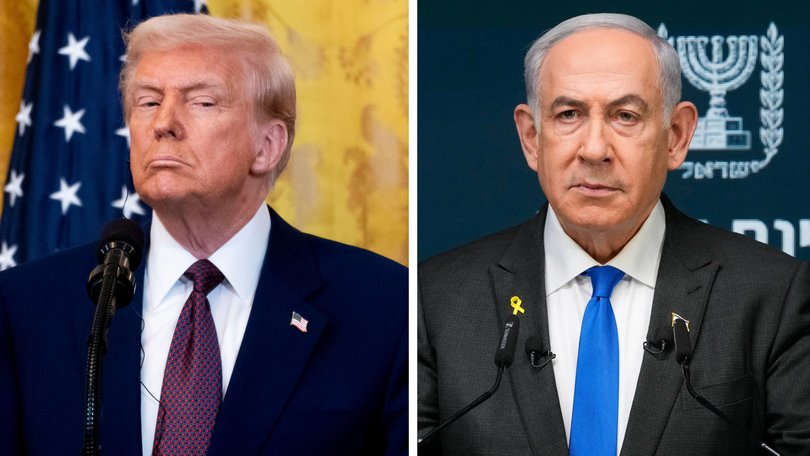
In response, the Israeli Prime Minister Benjamin Netanyahu said he had spoken to Trump and acknowledged the US thought a deal was possible, but vowed to continue striking Iran and Lebanon to protect Israel.

“Trump believes there is a chance to leverage the tremendous achievements of the IDF and the US military in order to realize the war’s objectives in an agreement — an agreement that will safeguard our vital interests,” he said.

“At the same time, we continue to strike both in Iran and in Lebanon.”

Although Oman mediated indirect US-Iran talks prior to the US and Israel launching the war, Egypt, Qatar and Pakistan have been suggested as alternative go-betweens.

On a day of whiplash developments, Iran’s neighbors breathed a sigh of relief after Trump stepped back from his threat to target Iranian power infrastructure.

Tehran had vowed to deploy naval mines and target power and water infrastructure across the region in retaliation, threatening to escalate an energy crisis of already historic proportions.

“Trump blinked first — out of a clear understanding that striking Iran’s energy infrastructure would trigger a direct and significant retaliation,” Danny Citrinowicz, a security analyst and former Israeli intelligence Iran expert, wrote on X.

Trump said his administration was holding talks with an unidentified “top person,” but not the country’s supreme leader, Mojtaba Khamenei, who is believed to be injured.

“We’ve wiped out the leadership phase one, phase two, and largely phase three. But we’re dealing with the man who I believe is the most respected and the leader,” Trump said.

He described the individual as “very reasonable,” while warning if talks failed in the next five days, “we’ll just keep bombing our little hearts out.”

Thousands of US Marines are headed to the Middle East, reinforcing America’s presence amid weekend speculation Trump was mulling ground operations either to seize Iranian oil assets or to forcibly reopen the Strait of Hormuz.

U.S. Embassy Tells Americans To Vacate ‘Israel’ Via Land Routes, Organizes Buses To Jordan

By Sabiu Abdullahi

The United States Embassy in Jerusalem has advised its citizens in ‘Israel’ to consider leaving the country through land borders due to ongoing travel difficulties and limited immediate options.

In a message posted on its official Instagram page, the embassy explained that overland routes currently offer the quickest way out. It pointed to border crossings into neighboring countries such as Egypt and Jordan as the most viable options for departure.

According to the advisory, commercial flights are still operating from airports in Egypt, including Sharm el-Sheikh and Cairo, as well as from Jordan’s capital, Amman.

To support those seeking to leave, the U.S. Department of State has begun arranging bus transportation for American citizens. The service is scheduled to start on March 23 and will move passengers from ‘Israel’ to Queen Alia International Airport in Amman.

As part of the “departure by land” plan, assisted transport will be available through the northern crossing known as the Jordan River/Sheikh Hussein border point. The embassy said this option is intended for citizens who require help exiting the country.

Americans interested in using the service must first complete an online registration form. After that, they will receive information on departure schedules and designated meeting locations. Current arrangements cover departures from both Jerusalem and Tel Aviv.

Officials stressed that travelers will still need to handle their onward journeys themselves, including securing flights from Amman.

The embassy added that it will continue to provide updates to U.S. citizens in ‘Israel’ as the situation develops.

Examining the Sanity of Saner Climes

By Amir Abdulazeez

Several decades into the global modern era, Africans, Asians and Latin Americans continue to be held hostage by their colonially indoctrinated inferior mindsets engineered by the blackmail and mythology of Western moral supremacy. This error is not in observing Western virtues, many of which are real. The error is in the uncritical veneration that renders their vices invisible and their judgements unchallengeable. It is evident from the events of the last three decades alone that the so-called saner climes of Europe and North America are the primary architects of global chaos and instability of nations, all in the name of injecting sanity into ‘less sane’ societies.

The ongoing US-Israel war on Iran, launched in the midst of Ramadan, is a typical doctrine of the saner climes, exhibited in its most naked form. Iran’s Foreign Minister had said three days before the war was declared that a nuclear agreement was ‘within reach’ after a third round of indirect talks in Geneva. 

The IAEA itself confirmed there was no evidence of a structured Iranian nuclear weapons programme at the time of the attack. Yet, the surprise assault assassinated Supreme Leader Ali Khamenei, killed his family members and damaged schools, hospitals and even UNESCO-recognised cultural heritage sites. This is a typical catalogue of barbaric war crimes for which the West has condemned others across generations. 

The Donald Trump administration, whose seemingly rude, dishonest and arrogant officials, has offered a menu of rationalisations and a handful of conflicting justifications for the war. However, when Amnesty International confirmed that the United States was responsible for a strike that killed at least 160 primary school girls, the US officials chose arrogance through denials instead of remorse. 

In fact, the Head of the Federal Communications Commission simultaneously intimidated his own press, threatening the withdrawal of broadcast licenses of American news outlets whose war coverage he deemed unfavourable. Another trademark saner-climes mythology, muzzled in a way only a few non-saner climes can imagine. 

Meanwhile, in all these, it is the ‘lunatic’ Iran that is supposed to apologise and do nothing while it is attacked. The Iranian Regime, branded as autocratic on the premise that it compels women to cover their hair in public, is being lectured by leaders of societies whose women go out naked in the name of civilisation and whose governments topple, kill and abduct Heads of state of other countries for recklessly greedy reasons. 

Now imagine if the erratically behaving Donald Trump were the leader of any African Country, the West would have since declared him incoherent and unstable to deal with or labelled his citizens stupid for voting for him. Worse still, imagine if the Epstein scandal happened in Asia or Latin America. All these contradictions reveal with crystal clarity that Western principles are instruments of convenience. 

To understand the foundations of all these, let us revisit some history. Britain’s Industrial Revolution was fertilised by the profits of the transatlantic slave trade and the systematic plunder of India, a country whose share of global GDP fell from about 25% at the onset of colonial rule to barely 4% at independence. 

France financed much of its republican grandeur on the forced labour of West Africa and the Caribbean. Belgium’s King Leopold II transformed the Congo into a private abattoir, severing the hands of Africans who failed to meet rubber quotas, leaving behind a traumatised country that still bleeds today. 

To speak of the sanity of those climes without acknowledging that they were partly built from organised insanity inflicted elsewhere is to ignore the background to what we are witnessing today.

In the last fifty years alone, the so-called saner climes have unleashed a level of violence and destabilisation that would shame any regime they have ever deemed fit to condemn. The United States, the self-acclaimed sentinel of the free world, has engineered irrational regime changes in Chile (1973), Iran (1953 and subsequently), Guatemala (1954), Nicaragua, Panama, Libya, Iraq, Afghanistan and Syria, among others. The 1973 CIA-backed coup against a democratically elected socialist president of Chile, Salvador Allende, installed Augusto Pinochet, under whose reign thousands were tortured, disappeared, or executed. Henry Kissinger, the American architect of that atrocity, received the Nobel Peace Prize from his fellow saner clime comrades. 

The French Government, through its notorious Françafrique policy, maintained a neocolonial empire across West and Central Africa long after the 1960s, propping up murderous dictators and conducting military interventions to protect economic interests, with a consistency that made a mockery of every democratic principle France professed to uphold.

The invasion of Iraq in 2003 by Western Governments is perhaps the most consequential act of manufactured catastrophe of the modern era. The war resulted in the deaths of an estimated 200,000 to one million Iraqi civilians, the obliteration of the country’s infrastructure, the rise of ISIS from the ashes of a disbanded Iraqi army and the triggering of a refugee crisis that continues to destabilise the Middle East. No one was held accountable. George W. Bush and Tony Blair are living happy lives in their saner countries. The International Criminal Court, which has indicted multiple African heads of state on much lesser crimes with considerable alacrity, found no jurisdiction to examine any of them. Meanwhile, the people of Iraq, Syria and Libya who were dismantled in the name of liberation still live in the ruins and pains of what the saner climes call democracy.

While the West was busy bombing the Middle East, Africa, the so-called backward continent, was largely attending to its own affairs of conflict resolution with a remarkable degree of maturity. The African Union mediated crises in Burundi, the Gambia and Lesotho without firing a single bullet. ECOWAS brokered peace agreements in Sierra Leone and Liberia and deployed peacekeeping forces with genuine multilateral mandates, without the casual trigger-happiness of Western powers. 

Western attitude towards violence is shamelessly selective. When Russia invaded Ukraine in 2022, the Saner Clime’s response was swift, comprehensive and morally unambiguous: sanctions, weapons, diplomatic isolation and a media chorus of civilizational solidarity. This response was appropriate anyway. But the problem is its stark contrast with the Western posture toward other invasions. When Saudi Arabia launched its war on Yemen in 2015, the United States and the United Kingdom did not merely decline to intervene; they allegedly supplied the bombs, refuelled the warplanes and provided intelligence for strikes that killed thousands of Yemeni civilians and engineered one of the worst humanitarian crises on earth. 

Many argue that the actions of Western governments do not accurately reflect what their citizens stand for. This is debatable, especially when one examines certain incidents. During the Obama presidency, Edward Snowden revealed that the US National Security Agency was conducting mass, warrantless surveillance of American citizens and foreign governments, including the personal telephone of former German Chancellor Angela Merkel, in flagrant violation of constitutional protections and international diplomatic norms. The response was not accountability but exile for Snowden and a classification of his revelations as treason. 

The United States has the largest prison population on earth, both in absolute numbers and per capita, administered under a system in which Black Americans are incarcerated at five times the rate of their white counterparts, in conditions that the United Nations has described as cruel. Since 1968, gun violence has claimed more American lives than all of America’s foreign wars combined. One might be inclined to believe that these controversies are ones ordinary Western citizens may not approve of.

Climate change is another damning indictment of Western moral authority in the twenty-first century. The Industrial activities enriching Europe and North America still depend on burning carbon at a scale the planet has never experienced. The United States, historically the world’s largest cumulative emitter of greenhouse gases, withdrew from the Paris Climate Agreement under Donald Trump. 

Australia, another clime reputed to be considerably saner than most, has built its prosperity on coal exports and resisted meaningful emissions reduction. Some Pacific Island nations face sea submersions within this century as a consequence of decisions made in saner capitals. When these nations’ leaders speak at the United Nations with tears in their voices, the saner climes offer symbolic but empty sympathy before later returning to preserving their industrial prerogatives. 

The Western Media’s tactical twisting of narratives regarding other climes is another issue. For example, CNN may not run primetime documentaries on the Swiss banking system’s complicity in laundering the proceeds of African kleptocracy, but will rather concentrate on the primary kleptocrats. The BBC does not lead with investigations into the role of British arms dealers in sustaining African conflicts. The New York Times does not dedicate its front page to the tax avoidance schemes through which Western corporations drain billions of dollars annually from African economies (more than the continent receives in foreign aid).

In addition to all this, there is something more worrisome. The bulk of support received by these saner climes comes from their victims in the third world. In Nigeria, for instance, the blind sympathy for religious affiliations drives people to support the brazen oppression and cruel injustices perpetrated by the West. Our solidarity should be among ourselves, not with those who see and treat us as worthless humans and more like animals because of their superior moral hypocrisy. 

Additionally, our bootlicking governments, which are considered close to valueless in the International arena or even insane just like us, must stop intimidating their own citizens who decide to speak up against Western double standards. Let’s remember, the phrase “saner climes” is a moral verdict and a devastating condemnation of everywhere else except Europe and North America. Africans and all peoples of the marginalised world are owed the intellectual inheritance of critical discernment.

The world does not need more or fewer saner climes; it needs a more honest accounting of what sanity actually requires. It requires consistency: the same rules applied to the powerful and the powerless alike. It requires humility: the acknowledgement that no civilisation holds a monopoly on wisdom. 

And it requires accountability: not the selective justice of indicting the weak and glorifying the mighty, but the universal application of standards that do not bend before a Security Council veto or the impulse of a self-serving superpower. Until that accounting arrives, the presumption of Western moral authority deserves not deference, but fearless interrogation; the kind that the so-called saner climes have always claimed to celebrate and so rarely been prepared to receive.

Judaism and Zionism: Untangling Faith from Politics in a Time of Middle Eastern Turmoil

By Dr. Umar Musa Kallah

As missiles continue to criss-cross the skies over Iran and Israel, and as the devastating consequences of the February 28, 2026, coordinated United States–Israeli strikes reverberate across the region ,  claiming the life of Iran’s Supreme Leader and exacting a heavy toll on civilians on every side, it is imperative that we, as Nigerians who hold faith dear, approach these events with clarity rather than confusion. The images of suffering from Tehran, Tel Aviv and beyond remind us that war spares no one. As a Muslim who abhors violence in all its forms and yearns only for peace to reign across the globe, for the sake of everyone, regardless of creed. I write not to inflame passions, but to illuminate.

Let us begin with precision. Judaism is an ancient monotheistic religion, spanning more than three millennia. It is anchored in the Torah, the prophetic tradition and an enduring covenant between the Divine and the Jewish people. At its core, Judaism is a spiritual and ethical path, one that calls believers to prayer, justice, charity and moral conduct. It is faith, pure and profound.

Zionism, by contrast, is a modern political ideology that emerged in the late 19th century amid the harsh realities of European antisemitism and pogroms. Conceived largely by secular thinkers such as Theodor Herzl, it sought to establish a national homeland for Jews in historic Palestine as a safeguard against persecution. While some religious Jews later embraced a variant known as Religious Zionism, the movement itself remains fundamentally political, an expression of national self-determination rather than religious doctrine. Importantly, Zionism does not equate to Judaism, just as nationalism does not equate to any faith. And crucially, Zionism is not an ideology directed against Muslims; it is a political project whose ramifications, displacement, conflict and geopolitical realignments,  have touched the entire human family, inflaming tensions that now threaten wider instability, economic disruption and the loss of innocent lives far beyond the Middle East.

History bears witness to a different reality before these political currents reshaped the landscape. For more than fourteen centuries, Jewish communities thrived as protected minorities “People of the Book” , under Muslim rule in lands from Baghdad to Cordoba, from Fez to Tehran. They contributed as scholars, physicians, merchants and counsellors. Iran today still hosts one of the largest Jewish populations outside Israel, with citizens enjoying legal recognition, synagogues and parliamentary representation. Similar communities once flourished across the Muslim world. Their peaceful coexistence endured until the political realities surrounding the establishment of the State of Israel, coupled with ensuing wars and nationalisms, altered longstanding neighbourly relations. Zionism transformed the narrative; it did not define the faith.

Even now, Jewish voices are not uniform. Many observant and secular Jews  from organisations such as Jewish Voice for Peace to progressive rabbis and ordinary families have openly opposed escalation, calling for restraint and compassion toward Iranian and Palestinian civilians alike. Iranian Jews themselves have largely distanced themselves from the conflict, prioritising their safety and loyalty to their homeland. Faith and political allegiance, once again, prove distinct.

To my Christian brothers and sisters across Nigeria, whose devotion often finds heartfelt expression in solidarity with “Israel,” I offer this reflection with utmost respect and sincerity. The modern State of Israel is a sovereign nation whose population is approximately 74 per cent Jewish, 18 per cent Muslim and merely 2 per cent Christian. Its policies and security concerns are those of a state, not a church. Judaism, as the elder sibling in the Abrahamic family, gave the world the Hebrew Scriptures that Christians revere as the Old Testament. Yet Judaism does not perceive Christianity as Christians perceive it: practising Jews do not accept Jesus as the Messiah or the Son of God, nor do they regard the New Testament as scripture. They await their own promised redeemer. This theological distinction is not a source of animosity but a simple fact of differing paths within the same monotheistic heritage.
Understanding this does not diminish Christian love for the Holy Land or the Jewish people; rather, it prevents the conflation of ancient faith with contemporary politics. Supporting the legitimate security needs of any nation is one matter; assuming the State of Israel embodies Christian doctrine is quite another. Zionism is the political vehicle of Jewish national aspirations in the modern era, related to Judaism by heritage, yet separate in essence and execution. Clarity here fosters wiser solidarity, rooted in truth rather than assumption.

In this hour of missiles and mourning, as a Muslim who prays daily for the cessation of all bloodshed, I beseech every Nigerian  Muslim, Christian and beyond  to rise above partisan slogans. Let us distinguish religion from politics, faith from ideology. Let us condemn violence wherever it appears, whether in state actions or retaliatory strikes, and advocate instead for dialogue, de-escalation and the protection of all minorities, including Iran’s Jewish citizens. True peace will serve every soul on this earth : Jew, Muslim, Christian and those of other persuasions alike.

May the Almighty, in His infinite mercy, grant wisdom to leaders, solace to the bereaved and swift healing to a wounded region. May bombs fall silent, so that mothers from every shore may once again embrace their children in safety. For in the end, the greatest victory belongs not to any flag or doctrine, but to humanity itself, united under the banner of peace.

That is the fervent prayer of one Nigerian Muslim who believes, without reservation, that only understanding and compassion can light the path forward.

Dr Umar Musa Kallah, a writer and community advocate, can be reached via yakubunasirukhalid@gmail.com.

Iran Declares Global Threat, Says Parks, Tourist Sites Unsafe For US, Israeli Officials

By Sabiu Abdullahi

Iran has issued a strong warning to officials of the United States and Israel, stating that they are no longer safe anywhere in the world after recent attacks linked to both countries.

The warning came from a senior Iranian military spokesperson, Abolfazl Shekarchi, who said the risks faced by their adversaries may extend beyond traditional battle zones.

In a statement aired on Iranian state television, Shekarchi said, “From now on, based on the information we have about you, even parks, recreational areas and tourist destinations anywhere in the world will no longer be safe for you.”

The statement signals a sharp rise in tensions, as Tehran suggests it could widen the scope of its response to what it views as hostile actions.

The development follows a series of reported strikes connected to the United States and Israel. Iranian authorities have since pledged a firm response, which has added to fears of further escalation.

Observers say the latest remarks reflect growing concern over a possible expansion of the conflict, as threats continue to intensify between the sides.

The situation has also been fueled by reports of Israeli operations that led to the killing of senior Iranian officials, which has further deepened hostilities.

Meanwhile, the crisis appears to be drawing in more regional actors. The leader of Yemen’s Houthi Movement, Abdul-Malik al-Houthi, has announced support for Iran in the ongoing confrontation with the United States and Israel.

In a televised address monitored on Friday, Al-Houthi accused Washington of supporting Israel’s military actions in the region. He warned that any US involvement against Iran would be seen as a direct threat to Yemen and the broader “Islamic nation.

“Because he considers it the biggest obstacle in the way of accomplishing his plan,” Al-Houthi said.

He added, “Therefore, any attack or US aggression supporting the Israeli enemy against Iran within the framework of the goal itself, is a throw to empower the Israeli enemy from controlling the entire region. And this is what cannot be silenced.”

The comments mark a notable escalation from the Iran-aligned group, which has previously targeted shipping routes in the Red Sea and launched attacks linked to Israeli interests. Analysts warn that the growing rhetoric and alliances could push the region closer to a wider conflict.

U.S. Counterterrorism Chief Resigns Over Iran War, Alleges Israeli Pressure

By Sabiu Abdullahi

The Director of the United States National Counterterrorism Center, Joseph Kent, has stepped down from his role, citing disagreement with Washington’s military involvement in Iran and questioning the factors behind the conflict.

Kent conveyed his decision in a letter to President Donald Trump. He said he reached the conclusion after careful thought and confirmed that his resignation takes immediate effect.

“After much reflection, I have decided to resign from my position as Director of the National Counterterrorism Center, effective today,” he wrote.

He stated that he could no longer support the administration’s current foreign policy, especially its decision to engage Iran militarily.

“I cannot in good conscience support the ongoing war in Iran. Iran posed no imminent threat to our nation, and it is clear that we started this war due to pressure from Israel and its powerful American lobby,” he stated.

Kent noted that his position reflects principles he believes once shaped U.S. foreign policy.

“I support the values and the foreign policies that you campaigned on in 2016, 2020, 2024, which you enacted in your first term,” Kent wrote.

“Until June of 2025, you understood that the wars in the Middle East were a trap that robbed America of the precious lives of our patriots and depleted the wealth and prosperity of our nation.”

He also accused “high-ranking Israeli officials and influential members of the American media” of driving what he described as a misinformation effort. According to him, the campaign “wholly undermined your America First platform and sowed pro-war sentiments” that encouraged action against Iran.

Kent argued that U.S. leadership received misleading information about the situation.

“This echo chamber was used to deceive you into believing that Iran posed an imminent threat to the United States, and that should you strike now, there was a clear path to a swift victory. This was a lie,” he said, while drawing a comparison with events that preceded the Iraq war.

He pointed to his own military background to stress the human cost of war.

“As a veteran who deployed to combat 11 times and as a Gold Star husband who lost my beloved wife Shannon in a war manufactured by Israel, I cannot support sending the next generation off to fight and die in a war that serves no benefit to the American people nor justifies the cost of American lives,” he said.

Kent urged the president to reconsider the current approach and warned about possible long-term consequences.

“I pray that you will reflect upon what we are doing in Iran, and who we are doing it for. The time for bold action is now. You can reverse course and chart a new path for our nation, or you can allow us to slip further toward decline and chaos. You hold the cards,” he said.

He ended his letter by expressing gratitude for the opportunity to serve. “It was an honor to serve in your administration and to serve our great nation.”

Russia sends humanitarian aid to Iran amid war with US, Israel

Russia has delivered humanitarian assistance to Iran as tensions continue in the Middle East during the ongoing conflict involving the United States and Israel.

The development emerged from a statement shared by the Russian Embassy in Kenya through its official X account. The embassy indicated that Russia had become “the first country to send humanitarian aid to Iran” since the crisis intensified.

According to the statement, an aircraft transported medical materials meant to reach Iranian authorities through a neighbouring country. The embassy explained that the supplies were first delivered to Azerbaijan for onward transfer.

“An Il-76 aircraft delivered more than 13 tons of medical supplies to Azerbaijan which will assist in transferring it to the Iranian authorities,” the post said.

The embassy described the shipment as “first aid & medical supplies” intended to support civilians in Iran during the current conflict.

The humanitarian move follows earlier diplomatic engagement between Moscow and Tehran. Russian President Vladimir Putin recently sent a message to Iran’s new supreme leader, Mojtaba Khamenei, after his emergence as the country’s leader.

In a message released by the Kremlin and cited by Al Jazeera, Putin congratulated Khamenei and expressed confidence in his leadership at a time of mounting international pressure on Iran.

The Kremlin stated that the Russian president commended Khamenei’s potential to lead the country and referred to the legacy of his father. Putin said he believed the new leader would maintain the direction previously set for Iran.

Putin also said he was confident Khamenei would continue his father’s work “with honour” and unite the Iranian ⁠people “in the face of ⁠severe trials”.

He used the message to reiterate Russia’s close ties with Iran. Putin said Moscow would maintain its partnership with Tehran and added that he wished to “confirm unwavering support for Tehran ‌and solidarity with our Iranian friends.”

The Kremlin statement came at a time when hostilities between Iran and the United States-Israel alliance continue to raise global concern.

Russia and Iran have strengthened cooperation in recent years. Their partnership covers areas such as energy, security coordination and diplomatic engagement on international matters.

The aid delivery also follows a decision by the United States to ease restrictions on Iran’s oil exports. Washington said the measure aimed to reduce pressure on global crude oil prices amid disruptions linked to the Middle East conflict.

Iran’s strategic mastery: Why Tehran is poised to emerge victorious in the war against Israel and the US

By Dr. Umar Musa Kallah

As the US-Israeli war against Iran enters its second week, the initial narrative of a rapid Western triumph has collapsed. What began with coordinated strikes on Iranian leadership and infrastructure has instead unleashed a sophisticated Iranian counter-campaign rooted in decades of preparation, control of global chokepoints, and asymmetric warfare. Verifiable maritime data, energy market reports, and military analyses confirm that Iran is not merely holding ground, it is systematically eroding the economic foundations of American power and its Gulf allies.

The closure of the Strait of Hormuz stands as Iran’s most potent immediate weapon. Since Iran’s declaration and attacks on transiting vessels in early March 2026, shipping traffic has effectively halted, with oil and LNG flows, representing roughly 20% of global trade is severely disrupted. Global crude prices have spiked, insurance markets have pulled coverage, and Asian importers face acute shortages. This is no bluff: tanker tracking and satellite imagery show near-total cessation of commercial traffic, directly strangling revenues for US-aligned Gulf states.

Tehran has complemented this blockade with hundreds of ballistic missiles and drones targeting US military installations and infrastructure across Bahrain, Qatar, Kuwait, the UAE, and Saudi Arabia. Strikes have damaged communication systems, radar sites, and air bases, including the US Fifth Fleet headquarters and Al Udeid Air Base. The cost asymmetry is telling: cheap Iranian drones and missiles exhaust multimillion-dollar Western interceptors at a pace that cannot be sustained indefinitely.

Iran has also struck desalination plants and power infrastructure critical to Gulf freshwater supplies. With over 90% of drinking water in several Gulf nations dependent on energy-intensive desalination, these targeted hits are creating humanitarian pressure and accelerating economic paralysis. By weaponizing both energy exports and water security, Tehran is holding civilian populations and regional economies hostage.

This economic siege directly undermines the Gulf sovereign wealth funds that have bankrolled much of America’s AI boom. Saudi Arabia’s Public Investment Fund and Abu Dhabi’s Mubadala have channeled tens of billions into US tech, data centers, and AI ventures. With oil revenues frozen, airspace closed, and infrastructure under fire, these funds are already curtailing new commitments to American projects. The resulting capital drought threatens Silicon Valley valuations and risks triggering a broader stock-market correction, a strategic blow at the heart of US technological supremacy.

None of this is improvised. Iran has spent decades building precisely this capacity: an estimated pre-war arsenal of thousands of ballistic missiles, mass-produced drones, and resilient proxy networks designed for attrition warfare. Its high-ranking scientists and engineers have indigenously advanced these systems through reverse-engineering and innovation, often drawing on historical technological exchanges. Battle-hardened IRGC commanders , seasoned warlords operating with decentralized command, coordinate the response, while a population of over 90 million, tempered by generations of sanctions and pressure, demonstrates profound civilizational resilience and refusal to surrender easily.

This internal steel is coupled with broader strategic depth from longstanding partnerships. Russia, China, North Korea, and Pakistan have provided diplomatic condemnation of the US-Israeli aggression, alongside decades of technological collaboration in missiles, drones, and defense systems that now equip Iran to endure. While direct military intervention has been limited, these ties  combined with Iran’s own preparations will ensure sustained resistance that outlasts Western political will and munitions stockpiles.

The world now faces Tehran’s calculated endgame: choking global energy arteries, disrupting vital water supplies, and redirecting Gulf capital away from American innovation. Every day of blockade, every intercepted drone salvo, and every sign of Iranian societal cohesion deepens the strain on Washington and its partners. Iran did not stumble into this conflict; it prepared for it across a lifetime of strategic patience. As oil prices climb, water crises intensify, AI investments falter, and resilient Iranian forces continue to dictate the tempo, the balance of power is shifting decisively.

The verifiable data from shipping trackers, strike assessments, and resilience analyses  is clear: Iran is not on the defensive. It is leveraging geography, technology, alliances, and unbreakable national will to hold the world ransom. Tehran is on course to prevail.

Dr Umar Musa Kallah, a writer and community advocate, can be reached via yakubunasirukhalid@gmail.com.

Hamas urges Iran to avoid striking Gulf states, condemns aggression against Tehran

By Anwar Usman

The Palestinian group Hamas has urged its ally Iran to end attacks on Gulf states, while affirming Tehran’s right to defend itself against Israel and the United States in the war they launched.

Hamas on Saturday called upon its “brothers in Iran” not to target neighbouring countries, and urged the region to end the ongoing conflict that has embroiled much of the Middle East.

The group fought back against Israel’s genocidal war on Gaza following its October 7, 2023, attack, while Israel razed the besieged and bombarded enclave to the ground, killing more than 72,000, with Gulf nations, particularly Qatar, stepping in through mediation, diplomacy and aid.

Since the start of the Iran war by the US and Israel on February 28, several Gulf states in the region have reported Iranian missile and drone attacks.

Hamas said in a statement, “While affirming the right of the Islamic Republic of Iran to respond to this aggression by all available means in accordance with international norms and laws, the movement calls on the brothers in Iran to avoid targeting neighbouring countries.”

 The statement added that countries of the region should “cooperate to halt this aggression and preserve the bonds of fraternity among them”.

Iran has supported Hamas financially and militarily for decades, the group being a part of the now much-weakened so-called “axis of resistance” that includes Lebanon’s Hezbollah and Yemen’s Houthis.

Last month, Gulf countries pledged more than $4bn in combined financial support to US President Donald Trump’s Board of Peace, signalling backing for efforts to resolve the Israeli-Palestinian conflict.

The pledges were announced during the first meeting of the Board of Peace, which has gone quiet in the wake of the war, in Washington, where Qatar and Saudi Arabia each committed $1bn. Kuwait also pledged $1bn over the coming years, while the United Arab Emirates announced an additional $1.2bn in support for Gaza through the board.

Qatar, throughout the genocidal war on Gaza, also played a leading role as mediator, alongside the US and Egypt.

A US-backed “ceasefire” agreement has been in place in Gaza since October 2025, which was meant to halt Israel’s two-year onslaught that killed more than 72,000 people and injured more than 171,000 since October 2023.

Despite the “ceasefire”, however, Israeli forces have continued hundreds of violations through shelling and gunfire, killing hundreds of Palestinians.