Israel

US strike on Iranian school: China donates $200,000 to families of slain students

By Hadiza Abdulkadir

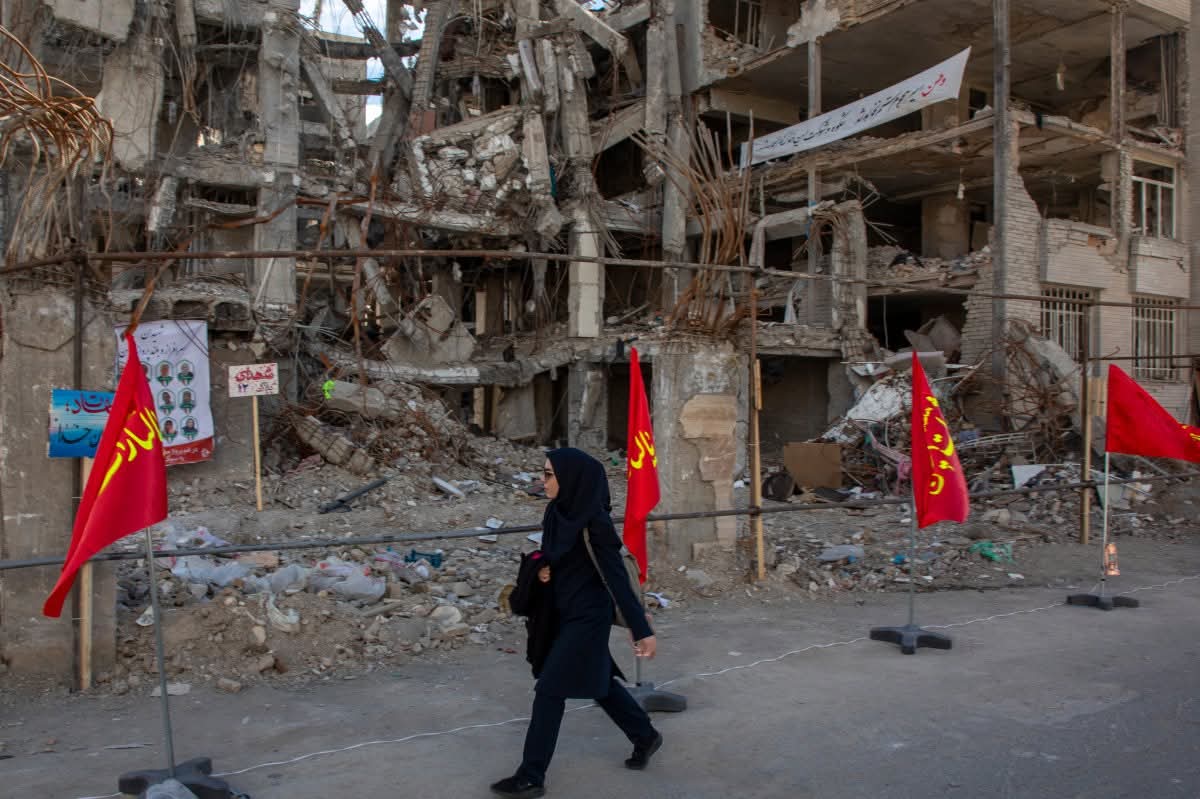
China has announced a $200,000 humanitarian donation to support the families of students killed in a missile strike on a school in Iran earlier in the war, according to reports by Agence France-Presse (AFP).

In a statement on Friday, China’s foreign ministry said the Chinese Red Cross Society will channel the funds through the Iranian Red Crescent Society to assist the parents of the victims.

Beijing described the incident as an “indiscriminate” missile strike carried out by the United States that resulted in the deaths of several students. The donation, officials said, will serve as emergency humanitarian assistance intended for “condolences and compensations” to the bereaved families.

China also reiterated its call for the protection of civilians, particularly children, during armed conflicts.

BREAKING: Spain recalls ambassador from Israel over Iran war, genocide in Gaza

By Sabiu Abdullahi

The Spanish government has withdrawn its ambassador to Israel amid growing diplomatic tension linked to the war in Gaza and the ongoing conflict involving Iran.

An announcement published in Spain’s official state gazette confirmed that the decision took effect on Wednesday. The move reflects Madrid’s strong criticism of Israel’s military actions in Gaza as well as the conflict involving the United States and Israel against Iran.

Spain has emerged as one of the European Union countries that openly condemn Israel’s conduct in Gaza. The government has also opposed the military campaign launched by Washington and Tel Aviv against Iran.

The gazette explained the decision regarding Spain’s diplomatic representation in Israel. It stated: “At the proposal of the Minister for Foreign Affairs, the European Union and Cooperation, and following deliberation by the Council of Ministers at its meeting on 10 March 2026, I hereby order the termination of Ms Ana María Sálomon Pérez’s appointment as Ambassador of Spain to the State of Israel.”

Following the ambassador’s removal, Spain’s embassy in Tel Aviv will now operate under a charge d’affaires, according to a source from the country’s Foreign Ministry cited by Reuters.

Spain’s Prime Minister Pedro Sanchez has been among the few left-wing European leaders who openly criticize the attacks carried out by the United States and Israel against Iran. He described the assault as “unjustifiable” and stressed that Madrid’s position remains “no to the war”.

The Spanish government has also maintained a strong stance against Israel’s operations in Gaza. In October, Spain’s parliament approved legislation that imposed a complete arms embargo on Israel. The law permanently blocks the sale of weapons, military equipment and dual-use technology to the country in response to the genocide.

Israel accuses Iran of hacking security cameras amid Middle East war

By Sabiu Abdullahi

Israel’s cybersecurity directorate has reported “dozens of Iranian breaches into security cameras for espionage purposes” since the outbreak of war in the Middle East, urging the public to remain alert.

“The directorate is working to alert hundreds of camera owners and calls on the public to change their passwords and update their software to prevent any security risk, whether national or personal,” Cyber Israel wrote on X on Monday.

Cyberattacks have been a recurring feature of the tense relationship between Iran and Israel, with both sides engaging in a shadow war that escalated into open conflict last June and again on February 28.

In December 2025, former Israeli prime minister Naftali Bennett — who plans to challenge incumbent Benjamin Netanyahu in this year’s general election — reported a cyberattack on his Telegram account, claiming hackers had accessed his phone.

Private messages, videos, and photographs allegedly taken from Bennett’s phone were later posted on a hacker site named after “Handala,” a character symbolizing the Palestinian cause, and on a related X account.

AFP quoted a cybersecurity expert noting that Iran-linked hackers intensified their activities in the region following attacks on the country.

Israeli cybersecurity firm Check Point highlighted in a report that since the start of the US-Israeli offensive on February 28, hackers have frequently accessed surveillance cameras, which are widely deployed but often poorly secured.

The images were reportedly used to evaluate damage from attacks and to “gather the necessary information” on “the habits (of targeted individuals) or locations to hit,” Gil Messing, head of cyberintelligence at Check Point, told AFP.

Messing added that the hackers “are part of (Iran’s) army” and “are largely supported by the state,” particularly by the Revolutionary Guards and the ministry of intelligence and security.

Last week, the Financial Times reported that Israel had monitored nearly all of Tehran’s traffic cameras for years in preparation for the operation that killed Iran’s supreme leader, Ali Khamenei, on the first day of the offensive.

Amnesty International condemns DSS arrest, detention of X user for allegedly criticising US, Israel amidst Middle East war

By Sabiu Abdullahi

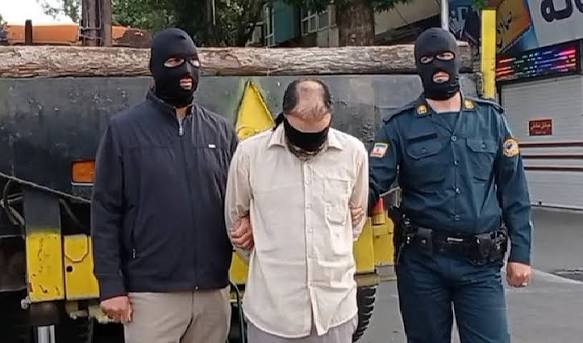
Amnesty International has criticised the detention of Sani Waspapping by the Department of State Services (DSS), describing the arrest as arbitrary and calling on Nigerian authorities to respect the rule of law.

Waspapping was arrested in Kaduna on Friday. He has remained in DSS custody since then. Reports indicate that he has not been granted access to his family members or legal representatives.

Many observers believe the arrest may be connected to posts he made on social media about the ongoing war in the Middle East.

According to available information, Waspapping is the second person detained by the DSS in connection with discussions about the current Middle East crisis.

Some social media users have also expressed the view that his arrest may be linked to his criticism of the United States and Israel as well as posts seen as supportive of Iran.

However, authorities have not publicly confirmed that this was the reason for his detention.

Amnesty International also urged Nigerian authorities to follow due process in handling the case.

“The Nigerian authorities must abide by the rule of law at all times — including in the case of Sani Waspapping. He must be provided with prompt access to family and adequate legal assistance, charge him to court or release him from detention immediately.”

Sirens heard in Jerusalem after Israel warns of Iranian missiles

By Sabiu Abdullahi

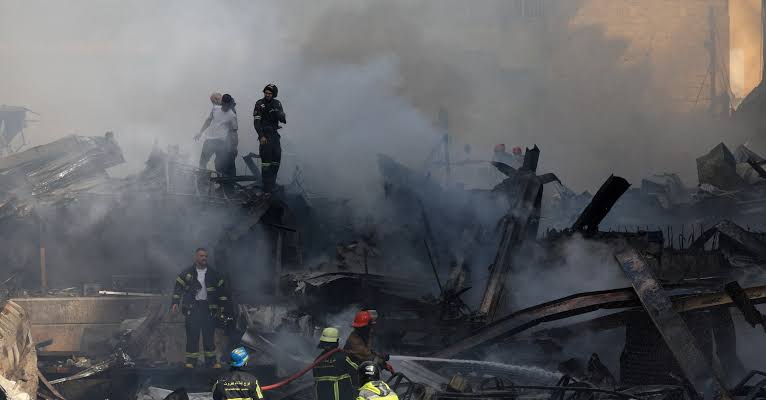
Air raid sirens sounded across Jerusalem and parts of central Israel on Tuesday after the Israeli military alerted residents about missiles launched from Iran. The development came on the 11th day of the ongoing conflict involving the United States, Israel, and the Islamic Republic.

The Israeli military confirmed that its air defence units had been activated in response to the incoming threat. In a statement, the military said, “Defensive systems are operating to intercept the threat.” Shortly after the warning, journalists from AFP reported hearing at least one explosion in Jerusalem.

Emergency service provider Magen David Adom said it had not recorded immediate casualties from the missile attack. However, the agency disclosed that some individuals were hurt while trying to reach shelters. It also stated that several others required medical attention due to shock. According to the service, its teams were attending to “a small number of people who were injured on their way to protected areas, as well as individuals suffering from anxiety.”

Officials said the latest missile strike followed a series of attacks that began after Iran responded to joint military actions carried out by the United States and Israel. First responders reported that at least 11 people have died in Israel since Iran started launching missiles in retaliation. Dozens of others have also sustained injuries.

On Monday, emergency workers reported that shrapnel killed one man and critically injured another in central Israel. Explosions were heard in the area after the Israeli military announced that missiles had been fired from Iran.

Meanwhile, Israeli Prime Minister Benjamin Netanyahu stated that the country’s military campaign against Iran would continue. In a statement issued on Tuesday, he said the operation was “not done yet.” His remarks came after US President Donald Trump suggested that the conflict could end “soon.”

Israeli air strike kills Palestinian journalist Amal Shamali in Gaza

A Palestinian journalist, Amal Shamali, has died after an Israeli air strike hit the Nuseirat refugee camp in central Gaza, according to the Palestinian Journalists Syndicate (PJS).

Shamali worked as a correspondent for Qatar Radio. The PJS said the journalist was killed on Monday when Israeli forces carried out the strike on the camp.

In a statement, the union explained that Shamali had also contributed to several Arab and local media organisations. It added that she remained active in her profession despite the ongoing war in Gaza. The organisation said she was among reporters who continued their work throughout the conflict in the territory.

The PJS described the rising number of journalists killed in Gaza as alarming. It noted that more than 270 journalists and media workers have died since Israel launched its military campaign in the enclave on October 7, 2023. The war began after Hamas-led attacks targeted southern Israel.

The union said: “This represents one of the bloodiest periods for journalists in modern history, reflecting the scale of the deliberate targeting of Palestinian journalism in an attempt to silence the voice of truth and prevent the documentation of the crimes and violations committed against the Palestinian people.”

The organisation added: “Targeting journalists will not succeed in breaking the will of the Palestinian journalistic community or deterring it from fulfilling its professional and humanitarian mission of conveying the truth and documenting the crimes and aggression faced by the Palestinian people.”

Gaza’s Government Media Office also reacted to the killing. In a statement, it said it “strongly condemns the systematic targeting, killing, and assassination of Palestinian journalists by the Israeli occupation”.

The office further stated that it “holds the Israeli occupation, the U.S. administration, and the countries participating in the crime of genocide – such as the United Kingdom, Germany, and France – fully responsible for committing these heinous and brutal crimes”.

It called on international and regional media organisations, as well as human rights groups, to condemn what it described as attacks against journalists in Gaza. The office urged the international community to work toward holding Israel accountable for its “ongoing crimes” against Palestinian journalists.

Data compiled by the monitoring platform Shireen.ps indicates that Israeli attacks have killed roughly 13 journalists every month during the more than two years of fighting. The platform is named after Al Jazeera journalist Shireen Abu Akleh, who died after Israeli forces shot her in the occupied West Bank in 2022.

The monitoring group also reported that at least 10 of the journalists killed during the war worked for Al Jazeera. One of them was Arabic correspondent Anas al-Sharif, who reported extensively from northern Gaza.

Researchers say the war in Gaza has become the deadliest conflict for journalists in modern times. The Costs of War project at Brown University reports that the number of journalists killed in Gaza since October 7, 2023 exceeds the total killed in several major wars combined. These include the US Civil War, both World Wars, the Korean War, the Vietnam War, conflicts in the former Yugoslavia, and the post-9/11 war in Afghanistan.

A report released earlier this year by the International Federation of Journalists (IFJ) also identified Palestine as the most dangerous place in the world for journalists in 2025.

The report said the Middle East recorded the highest number of journalist deaths last year. It accounted for 74 fatalities out of the 128 media workers killed worldwide. Africa followed with 18 deaths. The Asia-Pacific region recorded 15, while the Americas had 11 and Europe reported 10.

Meanwhile, Gaza’s Ministry of Health says that since a ceasefire mediated by the United States and Qatar took effect in October, at least 640 Palestinians have died and about 1,700 others have been wounded.

Health authorities in Gaza say that since the start of the war in October 2023, at least 72,123 Palestinians have died and 171,805 have been injured. Israeli officials say that 1,139 people were killed during the Hamas-led attacks on Israel on October 7, 2023.

Iran launches strikes on Kurdish groups in Iraq over alleged collaboration with U.S., Israel

By Sabiu Abdullahi

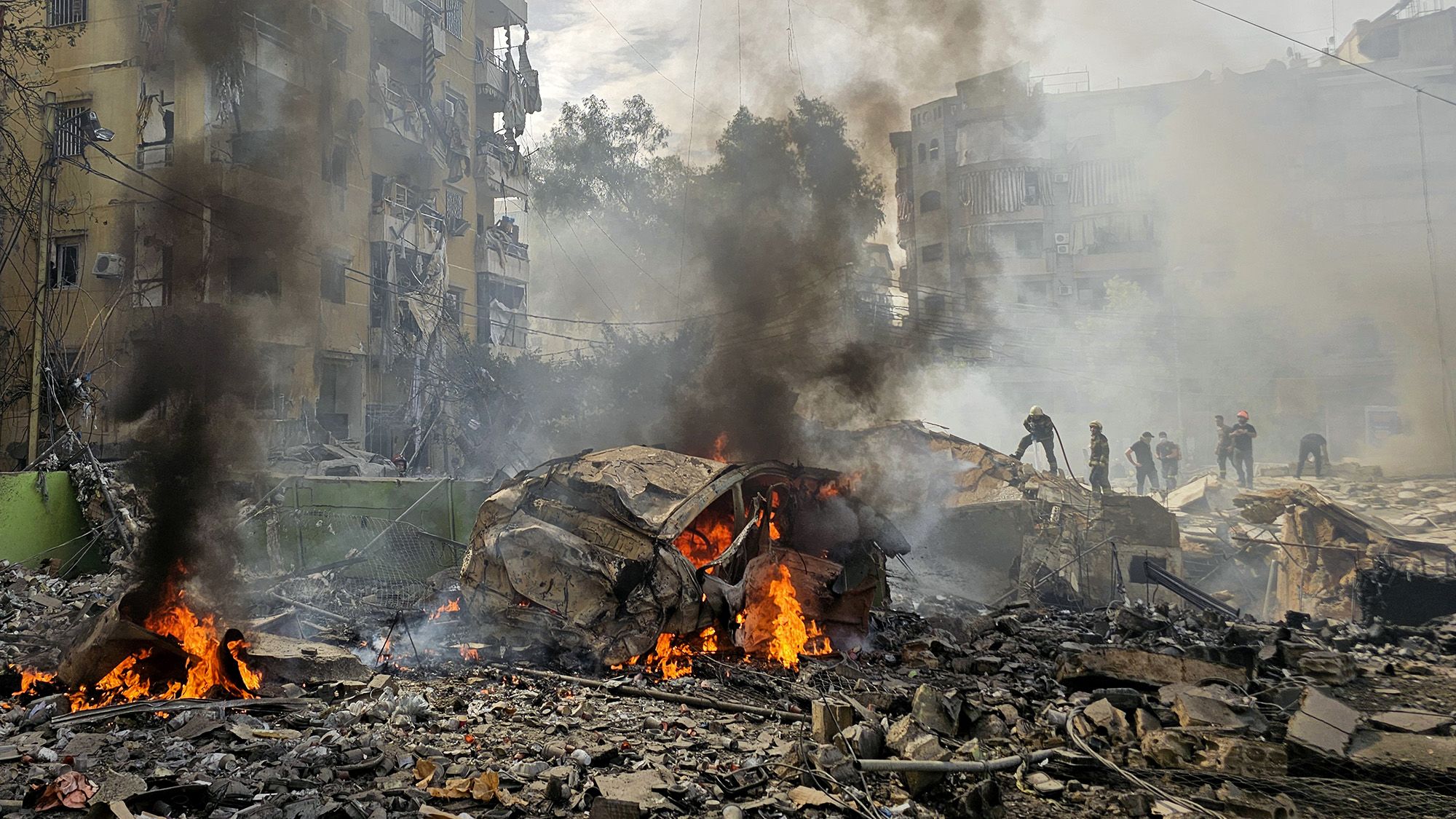
Iranian forces have carried out new military operations against Kurdish armed groups in northern Iraq as the conflict involving Iran, the United States and Israel continues to intensify across the Middle East.

The latest attacks come as Iran also launched another wave of missile and drone strikes targeting Israeli and American assets in the region.

Reports indicate that this marks the 19th round of Iranian strikes since the United States and Israel began coordinated military operations against Iran nearly a week ago. Iran’s semi-official Tasnim news agency said the conflict has already resulted in more than 1,045 deaths across the country.

Iran’s state media said early Thursday that its military struck what it described as “anti-Iran separatist forces” operating in the semi-autonomous Kurdish region of Iraq. Authorities did not immediately disclose the precise locations targeted.

Al Jazeera reported that Iran’s intelligence ministry later confirmed the operation. The ministry stated that Iranian forces attacked positions belonging to “separatist groups” that were allegedly preparing to infiltrate the country through its western border.

The ministry also claimed the armed groups suffered significant losses and accused them of working with the United States and Israel to carry out attacks on Iranian territory.

Officials further said Iranian forces were cooperating with what they called “noble Kurds” in the area to counter what they described as an “Israeli-American plan” to destabilise Iran.

Residents in Iraq’s northeastern province of Sulaimaniyah reported several explosions late Wednesday night. The province lies within Iraq’s autonomous Kurdish region.

Local media outlets said at least four explosions were heard near the areas of Arabat, Zarkuiz and Surdash. Sources in the region indicated that the strikes appeared to target the headquarters of the Kurdistan Toilers Association, widely known as Komala. The group is an Iranian Kurdish armed organisation based in northern Iraq.

Videos circulating on social media showed large fires and blasts lighting up the night sky.

The escalation followed reports that some Iranian Kurdish armed groups along the Iran-Iraq border recently held consultations with United States officials regarding possible coordinated operations against Iranian security forces.

Reuters reported that the Kurdish coalition had trained fighters for potential cross-border operations designed to weaken Iran’s military capacity. However, Tasnim news agency denied earlier claims that Kurdish fighters had already entered Iran from Iraqi territory.

At the same time, Iran’s Islamic Revolutionary Guard Corps announced a new round of missile and drone attacks targeting Israel and American military facilities across the region.

Israeli media reported that air defence systems intercepted two drones over the western Galilee region. Saudi Arabia also said its air defence units shot down at least three drones believed to be linked to the Iranian attack campaign.

In Qatar, authorities instructed residents living near the United States Embassy in Doha to evacuate the area amid fears that American diplomatic sites could become targets.

Meanwhile, the United States and Israel continued large-scale bombardments inside Iran. Explosions were reported in Tehran and in several Kurdish cities including Sanandaj, Saqqez and Bukan.

Iran warns of strikes on Israeli embassies worldwide

By Sabiu Abdullahi

Iran’s armed forces have issued a strong warning to Israel over what they described as a possible attack on Tehran’s diplomatic mission in Lebanon.

A military spokesperson said on Wednesday that Iran would respond by targeting Israeli embassies across the globe if such an action takes place.

Abolfazl Shekarchi, spokesperson for the Iranian armed forces, spoke during a live television broadcast. He said, “if Israel commits such a crime, it will force us to make all Israeli embassies around the world our legitimate target.”

His remarks followed a statement by the Israeli military a day earlier. On Tuesday, Avichay Adraee, the Arabic-language spokesperson for the Israeli army, said it “warns representatives of the Iranian regime who are still in Lebanon to leave immediately before being targeted”, and gave them 24 hours to depart.

The exchange comes amid rising hostilities between Iran, the United States, and Israel. Iran has faced joint US-Israeli airstrikes since February 28. Reports indicate that more than 40 senior Iranian government officials have been killed in the bombardment. Among those reported dead is Iran’s Supreme Leader, Ali Khamenei.

The strikes have also affected civilians. More than 1,000 non-combatants have lost their lives, according to reports. The attacks prompted Iran to launch retaliatory measures.

Washington has accused the government led by Khamenei of suppressing its citizens and pursuing nuclear weapons development. Tehran has denied the claims and rejected the allegations.

The situation has continued to heighten tensions across the region, with both sides exchanging threats as the conflict deepens.

[OPINION]: Israel’s forever war

By Ahmed Musa Husaini

In June last year, during the 12-Day war, I described the situation as the end of peace in the middle-east, arguing that a broader conflict between Iran and its proxies on one hand, and US-Israel and their gulf lackeys on the other, is inevitable.

Israel exists on three myths: that it is the only democracy in the middle-east, that it is a strategic asset for the US and the Christian West’s bulwark against an irrational Islamic and Arab enemy, thus positioning itself as US guarantor of American energy security, protector of western maritime lines, and other US/western interests without the need for permanent American boots on ground.

These myths lack any basis in facts or rational geopolitics. Israel is an apartheid state, a security liability for the US, and the biggest source of instability in the region that continues to occupy territories of it’s neighbors and violates more international laws and UN conventions than any country on earth.

Since its founding in 1948, Israel has fought multiple wars with its Arab neighbors. In the early years post-1948, Egypt emerged as its most sophisticated threat due to its size as the most populous Arab nation and its border with Israel, making it impossible to be decisively defeated by Israel in any conventional way.

Aware of such threats, Israel, worked through the US, to sign a peace treaty with Egypt in 1979, in what Israeli leaders and analysts referred to as the “most important strategic shift in Israel’s history,” one that reshaped Israel’s strategic environment in profound ways. It effectively neutralized the most powerful Arab military power, decapitated the Egypt-led Arab military coalition which had crossed Suez Canal in 1973 and took Israel by surprise. With Egypt now removed from the strategic equation, Israel could focus its resources elsewhere.

That’s why Menachim Begin was able to make far-reaching concessions to the Egyptians in 1979: returning the Sinai peninsula along with dismantling over 170 military Israeli installations, as well as the handing over of the Alma oil fields which at the time supplied half of Israel’s energy needs with estimated $100 billion in untapped reserves. To this day, the US pays Egypt $1.3-1.5 billion annually to maintain that agreement.

With the removal of the Egyptian threat, the years from 1979 to the end of the cold war marked a period of Israeli undisputed military superiority. It was Israel’s golden age, a period of unparalleled conventional military dominance. Nowhere was that superiority displayed than in its invasion of Lebanon in 1982 (and its defeat of Syrian forces) in order to dislodge the Palestinian Liberation Organization (PLO).

Ironically, it was Israel’s invasion of Lebanon in 1982 and its prolonged occupation of southern Lebanon that gave birth to Hezbollah. Hurting from the suffering and humiliation of the Shiite constituents in Southern Lebanon, Hezbollah emerged (under IRGC’s tutelage) with the explicit goal of ending Israeli occupation of southern Lebanon, a feat it achieved in 2000 when Israel was finally chased out of Southern Lebanon.

In the same vein, the eruption of the First Intifada due to years of Israeli occupation and subjugation of Palestinian Arab people led to the birth of Hamas as a military threat. Prior to that, Hamas was a local charity organization with a vast network of schools, clinics, mosques, and youth clubs, providing crucial social services and embedding itself in the daily life of Palestinian communities. Immediately after the outbreak of the first intifada, Sheikh Ahmad Yassin and other leaders announced the formation of Harakatul Muqawama Al-Islamiya – the Islamic Resistance Movement, known by its acronym as Hamas.

With the end of cold war, Israeli focus shifted to Iraq. Israeli illusion of invincibility was shattered during the Gulf War, with Saddam’s Iraq firing 39 scud missiles at Israeli population centers. For the first time, the Israeli home front was attacked by a different type of weapon that renders its air superiority ineffective, an experience that gave birth to Israel’s famed missile defense technology.

With the elimination of Saddam in 2003 in another costly US war at the behest of Israel, Israel’s new focus shifted to Iran. Iran represented a different kind of threat. For a start, Iran is a non-Arab, Shiite power, with a nuclear and missile delivery technology, and a network of proxies in Gaza, Lebanon, Syria, Iraq and Yemen; posing a challenge to Israel’s military dominance in ways its strategists could not have imagined in the heady days after its peace treaty with Egypt in 1979 or the elimination of Saddam in 2003.

In the build up to the Israeli-instigated US invasion of Iraq, Netanyahu even told the US Congress that removing Saddam Hussein from power would usher in a period of peace and stability in the Middle-east. Immediately Saddam was removed, the incitement shifted to Iran, and if Iran were to be removed today, Israel would create a new enemy to continue justifying its belligerence.

The fact is, Israel is created from chaos, from tragedy: the dispossession of millions of indigenous Palestinian Arab populations. The existence and survival of Israel as an occupier, expansionist, racial and ethnic state is predicated on endless chaos and conflict. Even if Hezbollah, Hamas or Iran do not exist, Israel would create one.

The current war with Iran is nothing but a continuation of Israeli impunity under American patronage, in order to guarantee Israel’s qualitative military edge, preserve America’s diplomatic monopoly, and continue to create conditions for continuous US presence in the middle-east.

That’s why Trump’s own objectives for the war keep changing, from regime change and liberating Iranians, to destroying Iranian defense capabilities and industrial infrastructure. Just days ago, the Iranians have agreed to most of Trump’s demands about halting uranium enrichment and the commitment not to pursue nuclear weapons, but negotiations for the US and Israel were just a smokescreen to buy time and reposition forces in the region.

I am under no illusion about American military superiority. If Iran were to fall today, if the Iranian threat were to be eliminated today, Israel would create another threat. Already, Israeli leaders are talking about Muslim nuclear-armed Pakistan and Muslim NATO member Turkey. For Israel to exist, a new enemy must be created after the elimination of the last one, a forever war is needed.

This state of forever war is important for Israel’s domestic population. The Israelis disagree on everything except on the treatment and subjugation of their Arab neighbors. Creating an external enemy serves as a unifying force against an existential threat, thus suppressing internal political and ethnic divisions, distract from their leaders (Netanyahu’s) domestic and personal failures, and delegitimize political dissent as betrayal.

It also has an international dimension. First on the basis of strategic interests by projecting Israel as America’s strategic asset against a common Muslim Arab enemy while conveniently ignoring Palestinian Christian suffering. And most importantly, from an apocalyptic dispensationalist theological belief that the triumph of Israel and the ensuing conflict are prophesied conditions for the “End Times,” culminating in the Battle of Armageddon and guaranteeing the return of Christ. To these groups, which form a core part of the Republican Party’s base and hold immense political influence, unconditional support for Israel is a religious duty and the conflict must continue and even intensify to fulfil a biblical prophecy.

These three elements: the need for an enemy, the value as an American proxy, and the political weaponization of apocalyptic theology make Israel’s policy of forever war not just a failure of American policy in the middle-east, it is the American policy itself. Israel will be locked into a cycle of creating and perpetuating enemies even if all its neighbors surrender.

But nature abhors vacuum. The resistance dynamic will always run its course. Actions will generate reactions. Israeli occupation and subjugation will create collective suffering, and collective suffering creates anger, desperation and desire for revenge, leading to radicalization and the emergence of violent resistance groups whose promise of resistance and dignity will always find fertile ground for recruitment and popular support. And the cycle repeats.

This is exactly what is happening in the current war on Iran. Iran knows quite well it cannot stand the combined military might of the US and Israel, but it chose to fight with dignity rather than face humiliation and surrender. This heroic and noble stand alone, whose story will be told across generations, will galvanize resistance movement across every inch of the middle-east, whose seeds will germinate in the next 20-30 years to trigger seismic geopolitical events across the region as was seen in the Iranian Revolution of 1979 and recently the Arab Spring.

Victory for Iran is not in militarily defeating the US, it is in denying the US and Israel their objectives of regime change and submissive leadership. It is the same victory the Taliban recorded in Afghanistan and the resistance bloc recorded in Iraq after over 20 years of US aggression and occupation.

The solution to all these lies first in saving Israel from itself, from its perpetual sense of forever war and tendency to self-destruct. Israel must be forced to exist as a single biracial state with equal rights for Palestinians and Jews, just as was the case with Apartheid South Africa. And secondly, America’s diplomatic monopoly must end. Asking America to broker a peace involving Israel is akin to asking Iran to broker peace involving Hezbollah. It is against the basic law of natural justice and fairness to ask the state that sponsors, arms, shields, and protects one side to serve as impartial broker.

To Achieve that, the Arabs, Israel’s immediate environment and victims, must do their part. These countries, are run by regimes who continue to ignore the suffering of their people in order to appease their American patrons. The world (Russia or China or any rival power) will not do the job for them. Neither Israel nor their American patrons will change their behavior without incentives. More Abraham Accords can be signed, and more middle-eastern governments can be co-opted into the illusion of American patronage and Israeli security, but as long as the Arab street reeks of domestic discontents and regional outcry against Israeli aggression, as long as the Palestinian question remains unsolved and Israeli belligerence remains untamed, a forever war is in our hands.

Iran clarifies it is at war ith US, Israel, not Gulf nations

By Sabiu Abdullahi

Iran has clarified that it is engaged in conflict with the United States and Israel, not with any countries in the Gulf region.

Speaking on Monday, Iranian Foreign Minister Seyed Abbas Araghchi said, “We’re not attacking our neighbours, we’re attacking US military bases. US soldiers fleeing to hotels will not prevent them from being targeted.” His remarks come amid ongoing US and Israeli strikes on Iranian positions, and retaliatory Iranian attacks on American and Israeli interests in the Middle East.

Al Jazeera reports that Iran accused the US of “betraying diplomacy” by launching attacks during ongoing negotiations. Araghchi also urged Gulf nations to pressure Washington to halt its military actions against Iran.

The Iranian minister emphasized that US military installations, including those located within Gulf countries, and facilities housing American troops, are considered legitimate targets.

For the third day in a row, loud explosions were reported in Dubai, UAE, and Qatar as Iran continues to respond to US and Israeli attacks. Bloomberg notes that both the UAE and Qatar have been quietly appealing to international allies to encourage President Trump to pursue a diplomatic solution instead of extending the conflict.

Qatar warned that ongoing disruptions to regional shipping could further drive up global natural gas prices. The country also announced that it intercepted two Iranian fighter planes, along with missiles and drones, which had entered its airspace. Gulf nations have pledged to continue defending their territories.

Meanwhile, the conflict between Israel and Hezbollah continues to escalate as both sides exchange attacks.