
By Sabiu Abdullahi
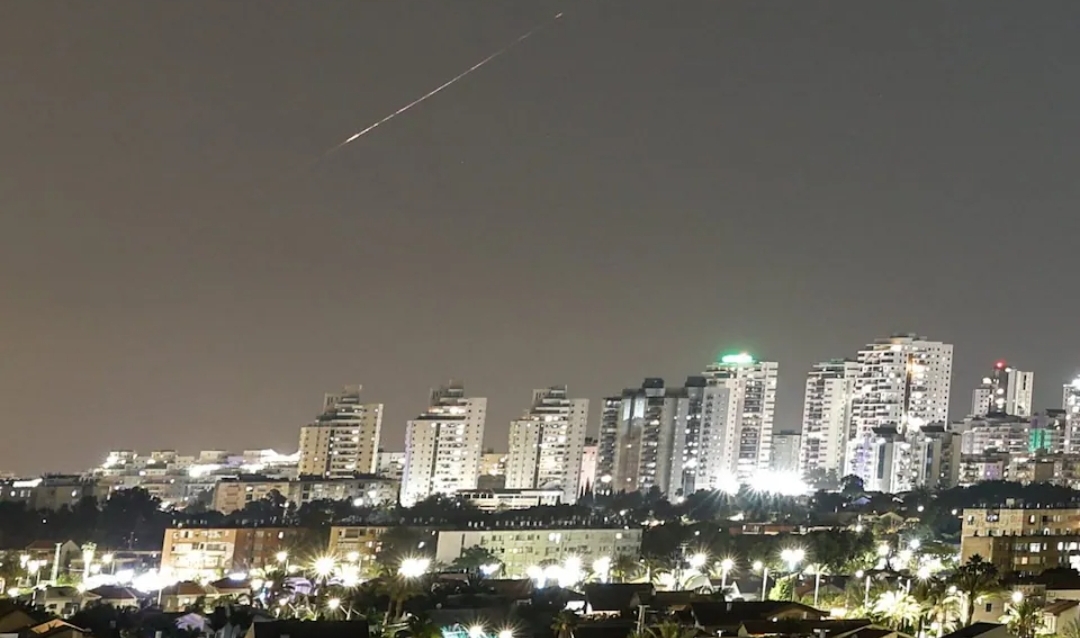
Iran on Sunday night fired missiles toward Israel in a move that has heightened tensions in the Middle East and raised concerns about the future of ongoing diplomatic efforts in the region.
According to the Israeli military, about 10 ballistic missiles were launched toward northern Israel. Authorities said the missiles were either intercepted by air defence systems or landed in open areas. There were no immediate reports of casualties or significant damage.
The attack marked Iran’s first direct strike against Israel since a ceasefire between Iran, Israel and the United States took effect in early April.
Iran said the missile launch was a response to Israeli air strikes on Beirut earlier in the day. Tehran accused Israel of violating the ceasefire in Lebanon and warned of further action if such attacks continue.
In a statement reported by Iran’s Tasnim news agency, the Islamic Revolutionary Guard Corps (IRGC) described the operation as a warning.
“Tonight’s operation was a warning declaration, and in the event of repeated aggressions, the responses will be more extensive and will encompass all American-Zionist targets in the region,” the IRGC said.
Iran’s military leadership also cautioned Israel against further military action in Lebanon, warning that the country could face “more devastating and regretful blows”.
Israel responded by promising a strong reaction to the missile barrage. Military spokesman Brigadier General Effie Defrin said Iran was attempting to create a new security equation through direct attacks on Israeli territory.
“The (Iranian) regime is attempting to establish a new equation through direct attacks on Israeli territory in response to IDF operations in Dahiyeh,” Defrin said.
“We struck in Dahiyeh in response to Hezbollah’s relentless attacks on the communities of northern Israel. The IDF will continue to operate throughout Lebanon and will intensify its actions against the Hezbollah terrorist organisation.”
He added: “The Iranian terrorist regime has made a grave mistake by once again choosing the path of terror.”
Meanwhile, US President Donald Trump urged restraint and called on both sides to avoid further escalation.
Speaking to Israel’s Channel 12, Trump said: “The Iranian strikes didn’t hurt anybody. Hopefully Israel is not going to retaliate. If Bibi [Netanyahu] strikes them back, it’s just gonna keep going like the last 47 years, or the last 3000 years.”
He also expressed optimism about ongoing diplomatic contacts with Tehran.
“We are very close to a final deal with Iran. It is going to be a good deal. I don’t want it to blow up because of what is happening now,” Trump said.
“I am going to call Bibi right now and tell him not to retaliate,” Mr Trump added. “Each of them had their fun. Israel had its strike and Iran had its strike. We don’t need another one.”
“I don’t want to see an additional attack tonight,” he added.
Trump also criticized Israel’s earlier strikes on Beirut, telling Fox News that Washington had not been informed in advance.
“I’m not happy about it,” he said.
Regarding Iran’s response, Trump stated: “It’s certainly not going to help negotiations.”
Elsewhere, Iraq temporarily closed its airspace and suspended air navigation following the missile launches, citing safety concerns. Iraqi aviation authorities said the restriction would remain in place for 72 hours.
Iranian Foreign Minister Abbas Araghchi also held discussions with officials from Britain, Turkey and Pakistani mediators on Sunday evening. According to Iran’s foreign ministry, the talks focused on the latest regional developments and Israel’s “repeated violations of the ceasefire in Lebanon”.
In Israel, Clalit, the country’s largest healthcare network, began relocating operations at its hospitals to underground facilities as a precaution following the attack.
Pro-government supporters in Tehran later gathered in the streets to celebrate the missile strike, waving Iranian and Hezbollah flags.
The latest exchange has increased fears of a broader regional conflict despite ongoing diplomatic efforts aimed at preventing a new escalation.