

Middle East, Israel targeted assassinations and the increasing risk of all-out war
By Ismail Obansa Nimah
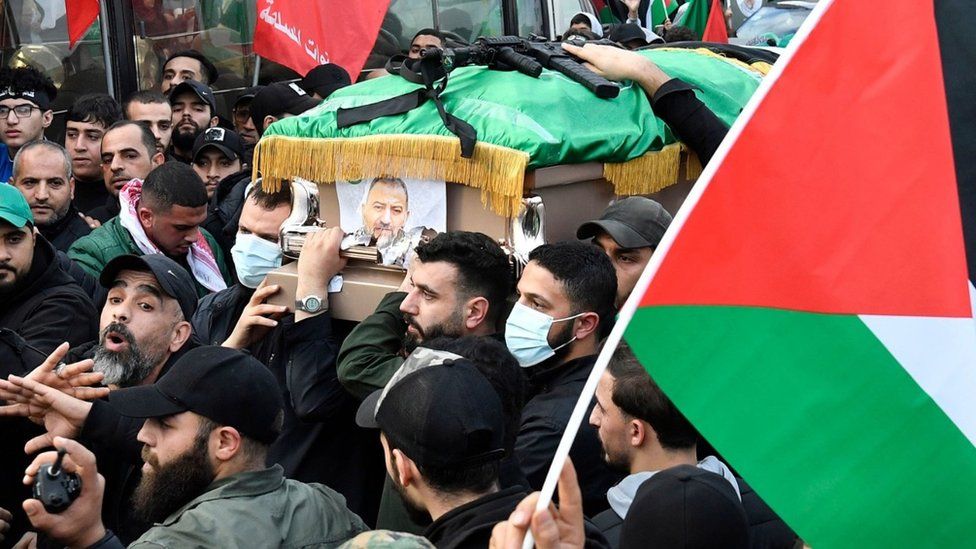
Yesterday again saw another targeted Israeli assassination of a high-profile leader of the Palestinian resistance axis, Hamas deputy leader Saleh Al Arouri. The assassination by Israel took place in the heart of Beirut, the capital of Lebanon, at about 5:45 pm Local time. It comes roughly 24 hours before the 4th anniversary of the assassination of Qassem Soleimani, former Commander of Iran’s elite Quds brigades of the Iranian Revolutionary Guard corps.
On the 3rd of January, 2020, turmoil was yet again unleashed in the Middle East when the United States of America (USA), in collaboration with her Israeli ally, assassinated Major-General Qassem Soleimani, a man who doubled as the commander of the Iranian Elite Revolutionary Quds Force and the second most potent/influential man in Iran after Ayatollah Al-Khamenei (Iran’s supreme leader).
Citing the preservation of the interest and national security of America, the United States launched a drone strike at a convoy conveying Soleimani and Iraqi militia leader Abu Mahdi Al-Muhandis, killing them both and eight others near Baghdad airport in Iraq.
The conflict between the US and Iran dates as far back as the 1970s, and as almost always, the killing of Soleimani immediately rattled up tensions, bringing the US and Iran to the brink of war. According to some Iranian sources, General Soleimani was on an important mission to deliver a message to the Iraqi prime minister about its gulf neighbours and reconciliatory steps taken between Iran and its neighbours, especially its regional rival Saudi Arabia, suggesting that Riyadh may have leaked intelligence to Washington.
The killing of Soleimani was met with shock, worldwide condemnation and fierce declarations of avenge from Iranian officials and Iranians, generally with the supreme leader, President and military commanders/leaders pledging a harsh retaliation. Following the killing, massive protests and mourning broke out in the cities of Iran and Iraq, with hundreds of thousands of Iranians pouring out into the streets, mourning and chanting their desires for revenge.
On January 5th, 2020, the remains of General Soleimani and the other Iranians killed alongside him were flown into Iran amidst a sea of millions of mourners. The funeral and national procession of the Iranian legend was planned for the 7th of January, at his home town in ‘Kerman’, but an ensuing stampede due to massive crowds led to the death of at least 56 people and injuring 213 people, resulting in the immediate postponement of the burial.
In the early hours of the 5th day after Soleimani’s assassination, on the 8th of January 2020, Iran retaliated and launched over a dozen ballistic missiles on two US bases in Iraq. The attack by Iran injured over 100 US soldiers, with most of them reportedly suffering traumatic brain injuries, and also resulted in the destruction of important US assets in the bases. Tensions immediately skyrocketed following the Iranian counterattack, with oil prices rising to levels not seen in 3 months and countries including the US ordering their citizens to evacuate and leave Iraq and its environments, as well as airliners being told to avoid the airspace over Iran and Iraq.
As the world woke up to the news of an Iranian response, so did the news of the downing of Ukrainian International Airlines flight 752, killing all 176 on board. The Iranian Revolutionary Guard Corps placed its defences on high alert following the counterattack, allowing its surface-to-air missile defence system to mistakenly shoot down the Kyiv-bound airliner shortly after take-off from Tehran. Following damages to the US bases and injuries to personnel, President Trump and the Pentagon ordered the immediate deployment of more US military assets to the Gulf region. Consequently, an airstrike on Iran that would be called off at the last minute by President Trump was ordered.
Iraq, caught in a conflict between the world’s superpower and a Middle Eastern regional power, became destabilised. With the outright violations of its national sovereignty by a supposed ally, protest broke out with both ordinary Iraqis and the Iraqi parliament calling for the expulsion of American troops and other foreign forces from its soil. For a lot of them (Iraqis), the horrors and consequences of decades of war can still very much be remembered and felt, and they, by all means, want to be left out of another regional conflict.
Four years on, tensions remain at a ceiling level between Iran and the US/its Middle Eastern allies, particularly Israel. Israel’s brutal genocidal war on Gaza has killed more than 22,000 Palestinians, as well as more Israeli-targeted killings of Iranian officials. It’s regional allies with American support, including Mohsen Fakhrizadeh; it is yet to be fully known how close an all-out war is between Iran and American-backed forces within the region, particularly Israel. Although so many structures have been re-named after Soleimani, the void created in the hearts of Iranians, the Palestinian resistance axis and the Islamic Republic of Iran by his death will take a long time to heal and will require more than an anniversary celebration for the already sanction crippled nation.
Ismail Obansa Nimah wrote via nimah013@gmail.com.

Rethinking my legacy: How our local tradition wowed Western intellectuals at an Ivy League University
By Umar Sheikh Tahir (Bauchi)
Columbia is an Ivy League University, one of the eight most prestigious institutions in the United States of America. Ph.D. students at this university undergo two years of coursework. One of the classes I took was Islam, Knowledge and Forms, which a visiting professor from Germany taught. Part of the course is a library visit to the exhibitions section under the project of Islamic Sciences, Science, Nature, and Beauty: Harmony and Cosmological Perspectives in Islamic Science (2022) at Butler Library, the largest library of Columbia University with millions of resources.
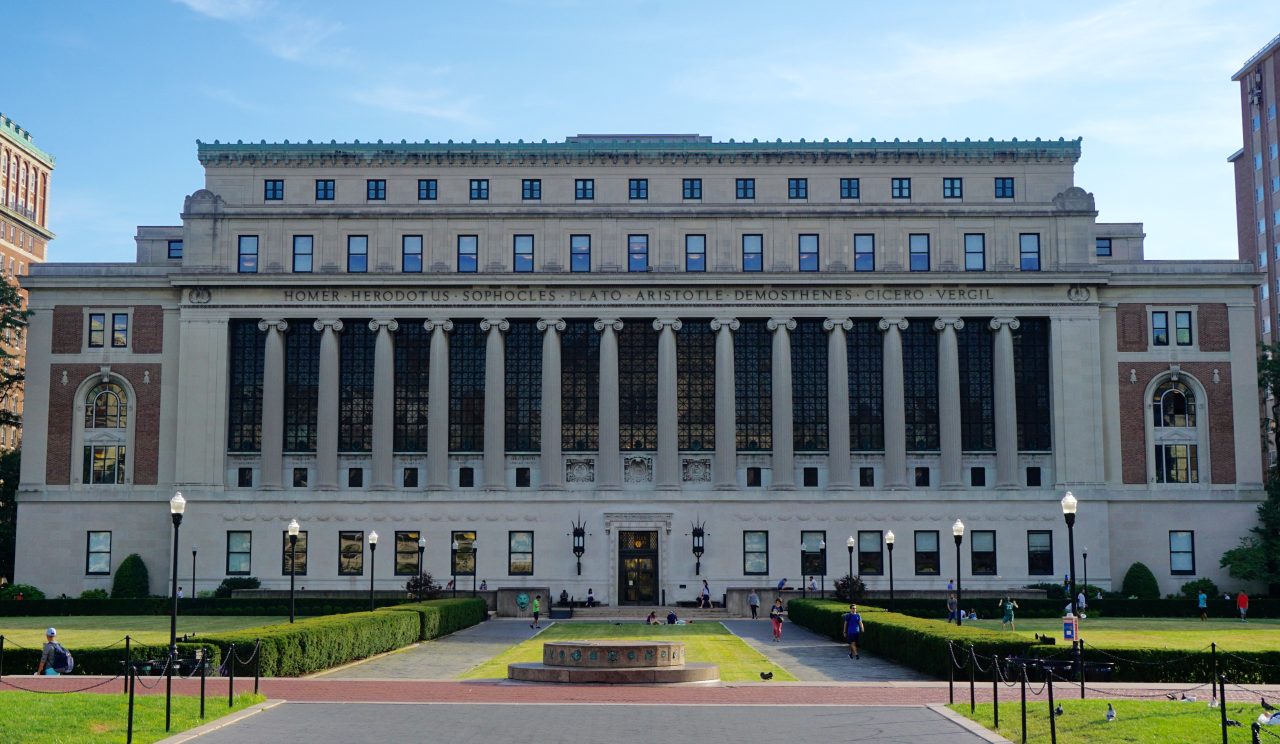
The exhibition contained objects, images, rare manuscripts, and other learning materials. Two materials, among others, became the most astonishing factors in the exhibition: one of them is a rare copy of the Holy Quran, and the second is a locally handmade wooden tablet (Allo).
The instructor asked everyone to talk about any material in the exhibition. Students gave their feedback on the experiences passionately; different things wowed everyone. When it came to my turn as someone who had known these items since childhood in my father’s private library, where we sneaked as children, which housed similar treasures. To us, these are the most useful items in his library as we do not read books; we only view images and magazines, such things that are not viewed as essential to the readers. Then, I shared my familiarity with these items, telling them I was exposed to most of the exhibited materials from my upbringing in Northern Nigeria, including “rare manuscripts” of the Quran.
The Quran displayed was a giant copy of the original Uthmanic Quran, denoted to the third Caliphate of the Muslim nations who reigned (644/23H–656/35H). It was so amazing to all of us. As for me, the Quran is the most frequently read book in my entire life, and to their surprise, I can read this copy fluently without diacritical marks. I highlighted that memorising the holy Quran, even without understanding Arabic, is common in Northern Nigeria. Most of my fellows never knew that sometimes people memorise it at an early age. I did not shock them with that, as I am one of them.

In the second incident, Professor Brinkley Messick invited me to speak in his class on Islamic Shariah Law as someone with experience with an Islamic Madrasa background and went to Azhar University in Egypt. The theme of the class is the Islamic madrasa. He is interested in the Islamic tradition, as evident from the cover of his book, “Calligraphic State.”

The Professor brought Allo a wooden tablet to the class and circulated it to students. Everyone was looking at it with surprise. I named it to them as a personal tablet for inscription and memorisation of the holy Quran, and the students asked for more details. I said we write verses from the holy Quran for memorisation after repeating it several times; not everyone understands how that works, except those with Islamic background. However, when I told them when we wash the script, we drink it, everyone was left with open mouths, surprising our embodiment of the holy book, including the professor. They could not process as modernised individuals with high sensitivity to germs and bacteria. Again, as I told our class last semester, this is very common in Northern Nigeria.
Coincidently, one of the attendees from a Saudi background added that people used some scripts for Talismite and protection from Djinn (Ruqyā in Arabic or Ruqiyya in Hausa) by reciting some verses in water. I told her this is true; we have that part in our culture too, but the biggest part is that we drink washed script for the embodiment and show respect for not letting a drop of that water on the ground as a sacred word. As kids, we were told that whatever verses we memorise from the holy Quran and drink will stay in our hearts for a long time.
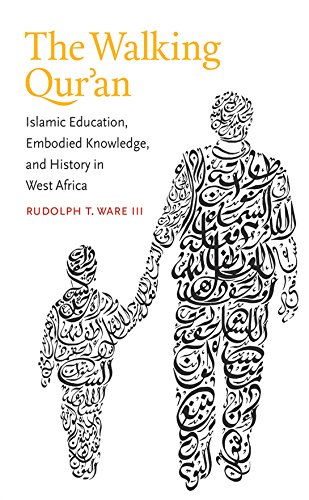
In reference to that, American Professor of Islam in Africa Rudolph Ware published his book Walking Quran on the Madrasa system in West Africa. He referred to those Quranic students’ embodiment as the Walking Quran in relation to the narration of the Hadith reported in the books of Hadith such as Ṣaḥīḥ Muslim; Aisha was asked about Prophet Muhammad’s PBUH character, and she said he was a Walking Quran.
Our cultural legacy, often undervalued by some of us in our region, gained recognition at Ivy League institutions. Those people appreciate a centuries-old Quranic educational tradition or Almajiri system and show their respect to our subregion. Even our way of drinking the washed script of the Quran mesmerised them.
A professor dedicated his projects to studying a school system called Daara schools in Senegambia or the Tsangaya schools in Northern Nigeria, making it evident that our legacy is an astonishing point to those communities. Then, as indigenous Africans who were introduced to the colonial system of Education less than a century ago in Northern Nigeria, we should be more proud of our system by appreciating those communities who choose to preserve it, as they make our subregion a central point of high intellectual conversation around the world.
We should not deny our legacy by stigmatising the Almajiri system of education. Instead, we should support it and create a way of modernising it to empower and preserve our centuries-old legacy. Whoever shows kindness to the Quran and its reciters will receive people’s applauses in this life, including Western intellectuals, and God’s reward in the hereafter. Thanks to those state governments in Northern Nigeria who support and recognise this system of education.
Umar Sheikh Tahir is a PhD student at Columbia University, New York, USA. He can be reached via ust2102@columbia.edu.

Neo-liberalism and Cotonou degree alternative
By Dr Kabiru Danladi Lawanti
The whole Cotonou degree is criminal and all those involved need to be fished out and punished. Some people might see us as harsh or maybe insensitive for saying this.
There are things we cannot say in public, but one needs not to be prophet of doom to predict that Nigeria cannot withstand this onslaught and will eventually crash.
Our desperate quest for certification through whatever means led us to this situation. Parents are desperate to have their kids in the university, some even underage (we saw 15, 16 and 17 year olds being pushed to universities), whose mental capacity is too elementary to grasp or cope with challenges of university education.
The crises in higher education and the adoption of neo-liberal policies that have no place in a developing country like ours also contributed to this confusion. Consequences of commodification of knowledge is enormous in a country with no strong institutions to checkmate excesses and greed of capitalists. The results is the proliferation of degree mills all over.
Adoption of neo-liberal policies means cutting funding for public services like education, health and sanitation. Nigerian public universities suffer from these policies. Funding was cut, citing many reasons. The results is restrictions in admissions. When you have many applying to enter university and the slots are few, universities have to admit based on quota. Therefore, few can be admitted.
Parents, in their desperate efforts to get their children into universities, started sending their kids to some African countries for bachelor’s degrees – Uganda, Benin Togo, Ghana, Sudan, Niger Republic, etc.
Another reason is the dichotomy between degree and HND. Many people affected by stagnation in their places of work because of HND opted for a way to have a degree that can help them get promoted. Many went for the Cotonou degree. Since it is acceptable by MDAs or they made it acceptable, most of them started trooping to these mushroom universities to obtain these degrees to get promoted.
Then we have people who can’t cope with rigorous nature of our public university system. I know a lot who not only failed exams, but are withdrawn from diploma programmes, but appear after 6 months with a degree from these degre milling centres. Others could not pass UTME therefore unqualified to enter public universities. Cotonou degree provide an alternative.
The last, in my opinion, are those running from ASUU strike. Many parents justify purchasing the Cotonou degree because of the unending industrial disputes in the public universities.
I don’t want to talk about the “motor park gang” led by former minister of education Adamu Adamu and his National Universities Commission (NUC) executive secretary, who bastardised the university system for only God knows why. They have killed what remained of our public university system.
Lastly, some of our private universities are not any different from the “Cotonou universities”.
President Bola Tinubu needs to do a lot more to rescue the situation. I like how the Minister of Education, Prof. Tahir Mamman, handles the situation. But sincerely, the students of these dubious universities, their agents, officials from Federal Ministry of Education, NUC and the other places need to be rounded up, arrested and punished according to our laws.
Kabiru Danladi Lawanti, PhD, wrote from the Department of Mass Communication, ABU Zaria, via kblondon2003@yahoo.com.

Revitalisation plans unveiled as Nigeria Customs Service spokesperson tours NCBN
By Sabiu Abdullahi
Chief Superintendent of Customs, Abdullahi Maiwada, embarked on a working visit to the Nigeria Customs Broadcasting Network (NCBN) on Tuesday, 2nd January 2024.
This is part of the strategic move towards enhancing communication and information dissemination on matters crucial to the nation’s economy.
Welcomed warmly by NCBN’s Managing Director, Jamilu Yusuf, at the network’s Head Office in Guzape, Abuja, CSC Maiwada confirmed comprehensive arrangements by the Nigeria Customs Service to revive NCBN to its full potential under the leadership of CGC Bashir Adewale Adeniyi, MFR.
Having previously served as NCBN’s pioneer Liaison Officer during its early stages in 2020, CSC Maiwada expressed optimism about the network’s prospects and underscored the importance of a specialized broadcast station focusing on commerce, trade, and national economic issues.
“We are back, and this time around, we are going to get it right,” declared CSC Maiwada. “We’ll make sure that the station will succeed, contributing to a broader reach in specialized broadcasting.”
Highlighting the commitment of the Nigeria Customs Service to strengthen its relationship with Nigerians, CSC Maiwada emphasised the connection between these efforts and CGC Bashir Adeniyi’s initiatives to facilitate trade, suppress smuggling, and generate more revenue for infrastructural development within the nation.
In response, Managing Director Jamilu Yusuf expressed gratitude for the timely and long-awaited visit, emphasizing its significance in assessing NCBN’s preparedness for relaunch.
Mr. Yusuf reiterated the network’s commitment to providing quality broadcasting aligned with national economic interests.
The Managing Director also took the PRO and his team on a comprehensive tour of all the offices in the station.
This tour provided valuable insights into the current state of the facilities and allowed for discussions on areas requiring attention as part of the network’s re-establishment process.
Kano police make arrests as young man kills relative after impregnating her
By Uzair Adam Imam
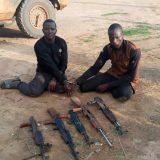
The Kano State Police Command has apprehended two men, including a self-proclaimed doctor, for their involvement in a tragic incident that saw the death of a young girl after she was impregnated by her relative.
SP Abdullahi Haruna Kiyawa, the Kano State Police Public Relations Officer, revealed the details in a video seen by the Daily Reality on Thursday.
The Kano State Police Command, under the leadership of CP Muhammad Usaini Gumel, acted swiftly to arrest two individuals involved in a disturbing case.
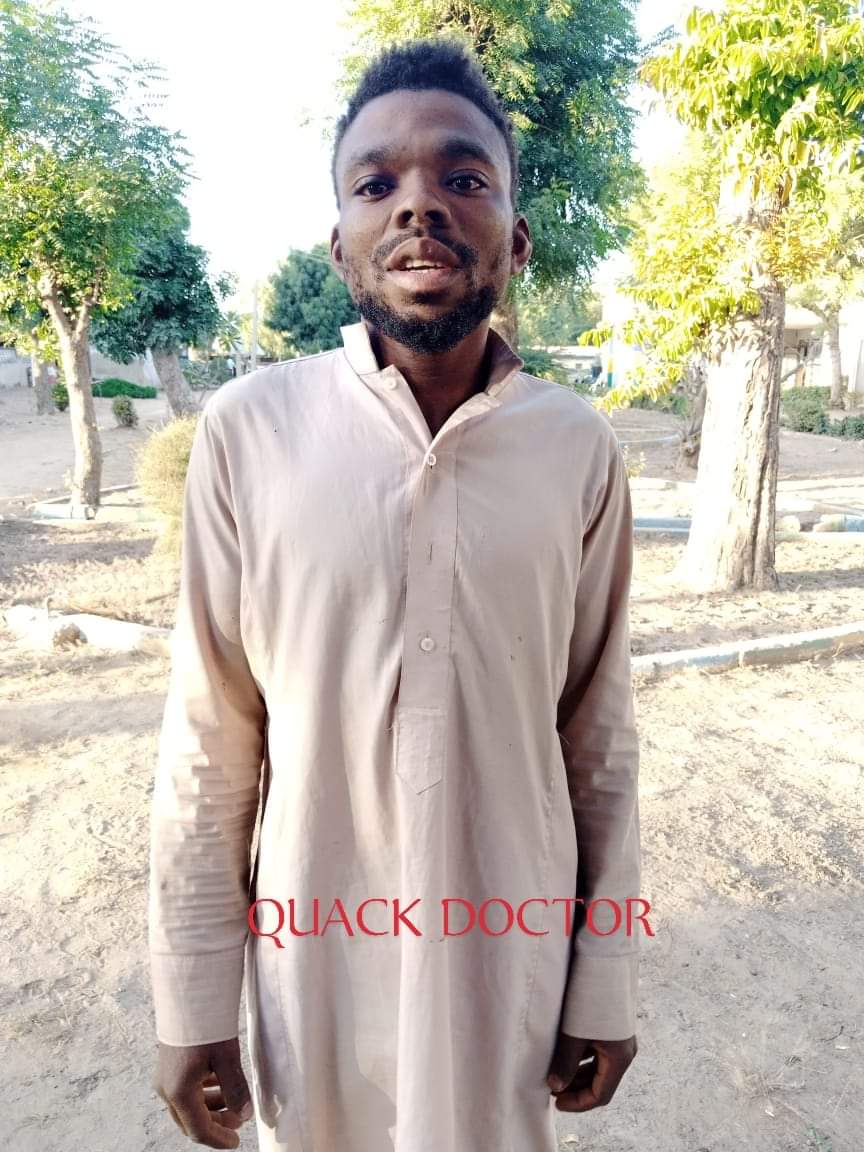
The primary suspect, a fake doctor named Gugu Chidera, was taken into custody for allegedly attempting to perform an abortion that resulted in the unfortunate death of a young lady.
According to SP Kiyawa’s disclosure in the video, the fake doctor injected the lady and administered drugs that made her unwell, ultimately leading to her demise.
The victim had reportedly been brought to Chidera by her boyfriend, who impregnated her. The couple, for reasons undisclosed, did not want the child to be born.
The boyfriend, explaining the sequence of events, stated that Chidera provided drugs and injections to the lady, leading to her untimely death three weeks later.
He clarified that, although he accompanied his girlfriend to the fake doctor, it was she who paid for the drugs. Chidera, during police interrogation, confessed that he lacked any medical qualifications.
He claimed to have only attended primary and secondary school and is currently a chemist in Kano. The self-proclaimed doctor admitted that the boyfriend sought his assistance because his girlfriend was five months pregnant.
The dubious procedure performed by Chidera involved a payment of N2000, and he administered a concoction of vitamin C and VCM injections.
The tragic consequences of this unlicensed and unauthorised medical intervention have left the community in shock.
As investigations continue, the Kano State Police Command is determined to bring justice to this distressing case.
Nigerian Law School reschedules resumption date for Bar II students
By Ahmad Deedat Zakari
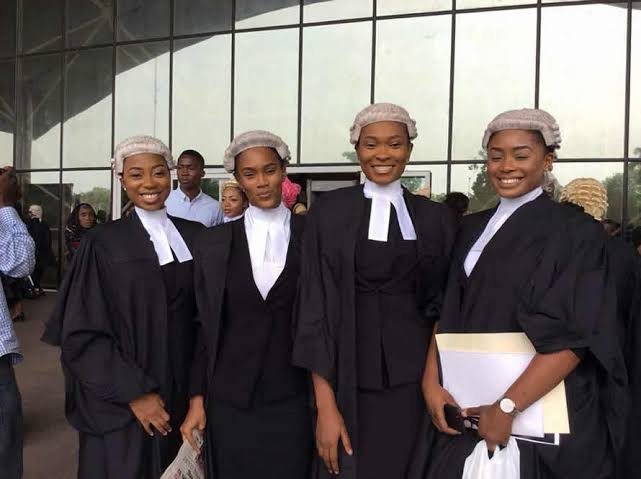
The Nigerian Law School, NLS, has rescheduled its resumption date for Bar Part II students.
The students are now to resume on January 29th, 2024, a shift from the earlier stated date of January 15th, 2024.
A statement signed on Wednesday by the Director General of the Nigerian Law School, Prof. Isa Hayatu Chiroma, SAN, communicated the new development to the newly admitted Bar Part II students.
The update was also published on the Nigerian Law School’s website.
The statement informs all prospective Bar Part II students of the change in the academic calendar.
The change is attributed to the ongoing renovation of facilities across all campuses and the headquarters of the Nigerian Law School.
Consequently, the 2024 Academic Session will now kick off on Monday, 29th January 2024, a deviation from the previously announced date.
#2: Kannywood Chronicles – Aminu Hassan Yakasai and Turmin Danya
By Prof. Abdalla Uba Adamu
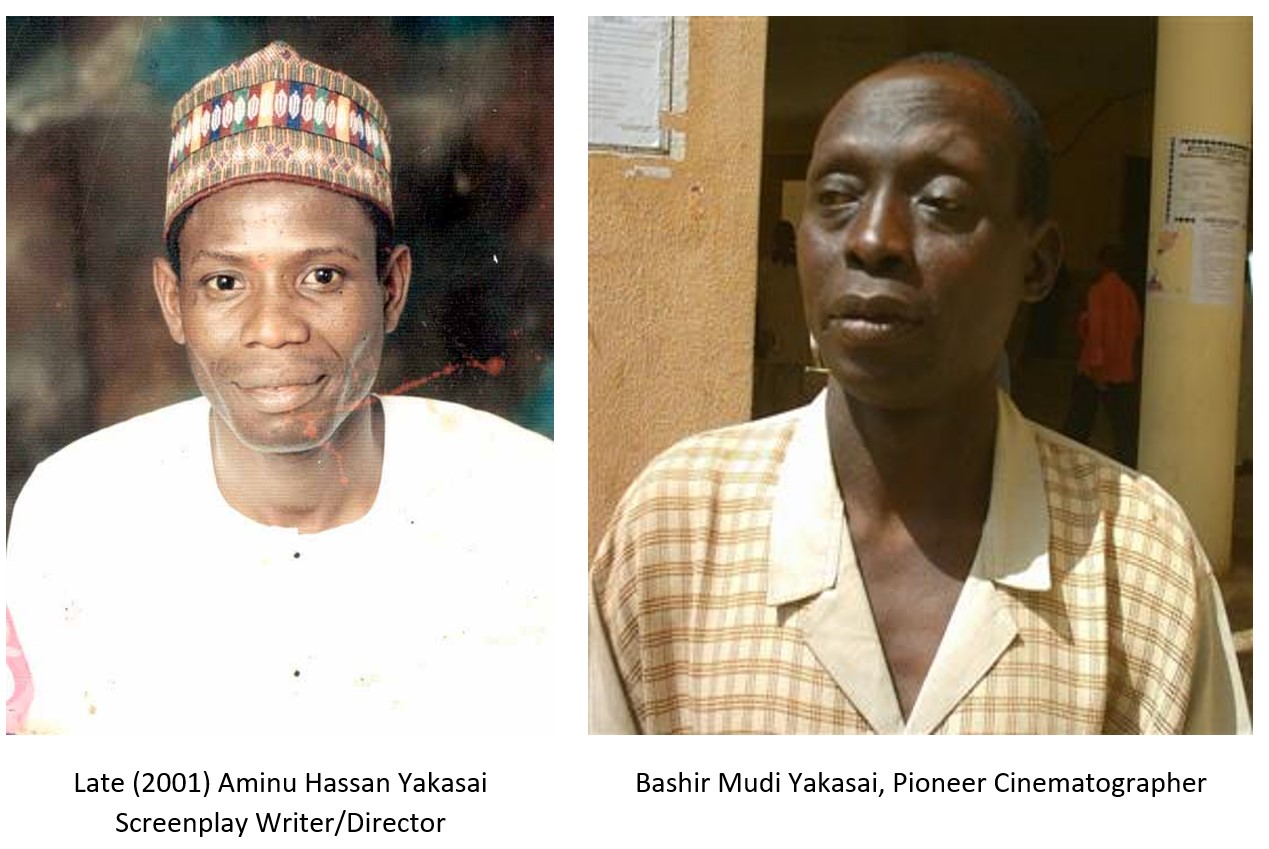
An industry is a system made up of interconnecting parts that synchronise together to create a perfect dynamic and functional entity. However, there is a central creative focus. Thus, while no one can claim to have been the actual originator of commercial Kannywood since many people – and processes contributed to its development – nevertheless, the creative spark that lit the fire of Kannywood was the late novelist Aminu Hassan Yakasai. If one person can be credited with creating the industry, it was him and only him.
In the late 1970s, the Nigerian film director Ola Balogun directed two successful Yoruba films. The first, “Ajani Ogun”, was co-produced with the actor Ade Love. The second, “Ija Ominira”, starred Ade Love. Hubert Ogunde, a famous Yoruba travelling theatre showman, decided to join the trend. He invited Ola Balogun to direct Aiye, which was hugely successful and led to a follow-up, Jaiyesinmi.
These Yoruba films found their way to Kano’s bustling “stranger” (or, more appropriately, “guest settlers”) communities of Sabon Gari in the 1980s, where they were shown in cinemas and hotel bars. This attracted the attention of Hausa amateur TV soap opera stars and crew, such as Bashir Mudi Yakasai (cinematographer), Aminu Hassan Yakasai (scriptwriter) and Tijjani Ibrahim (director). Surprisingly, despite the massive popularity of Hausa drama in television houses and government financial muscle, the idea of full-scale commercial production of Hausa drama episodes by the television houses was never considered. Individuals wishing to own certain episodes simply go to the television station and pay the cost of the tape and a duplication fee, and that was it. There was no attempt to commercialise the process on a full scale.
In the same period, the northern cities of Kano, Kaduna, and Jos benefitted immensely from the massive transfusion of modern media influences caused by not only a liberal society but also the tolerant interaction of diverse cultures and religions in the same public spaces. They were, undoubtedly, the creative hubs of northern Nigerian popular culture. Jos was famous for its vibrant nightclub and music scene. Kaduna also had a rich musical heritage, coupled with a TV culture. Kano was more muted and relied on music and club life inflows to Sabon Gari from other regions.
However, one aspect of popular culture Kano had that was absent in Kaduna and Jos was prose fiction. While other cities were grooving the night away, residents of Kano were burning the midnight oil. The first published modern Hausa fiction was “So Aljannar Duniya” by Hafsat AbdulWaheed from Kano in 1980`. It opened the floodgates and led to hundreds of novelists creating a whole genre of African indigenous fiction referred to informally as Kano Market Literature.
Also, at the same time, Kano had many drama groups that enjoyed stage plays that were often improvisational and not based on any script but with a general focus on social responsibility. These drama groups became spawning grounds for those who established the Kannywood film industry. These included Tumbin Giwa Drama Group (Auwalu Isma’ila Marshall, Shu’aibu Yawale, Ibrahim Mandawari, Adamu Muhammad, Ado Abubakar, Jamila Adamu. (Gimbiya Fatima), Hajara Usman, Ɗanlami Alhassan, etc.), Jigon Hausa Drama Club (Khalid Musa, Kamilu Muhammad, Fati Suleiman, Bala Anas Babinlata), Tauraruwa Drama & Modern Film Production (Abdullahi Zakari Fagge, Shehu Hassan Kano, Iliyasu Muhammad, Hajiya Rabi Sufi, Auwalu Ɗangata, Ado Ahmad G/Dabino, Asama’u Jama’are), and Hamdala Drama Wudil ( Its members include Rabilu Musa Ɗanlasan (lbro), Mallam Auwalu Dare, Ishaq Sidi Ishaq, Bappah Yautai, Bappah Ahmad Cinnaka, Haj. Hussaina Gombe (Tsigai), Shua’ibu Ɗanwamzam, Umar Katakore etc.) There were many more, of course, but these were foundational to Kannywood.
The TV shows from then Radio Television Kaduna were gripping and inspiring to these drama groups. TV show stars that became role models to these Kano drama groups included Ƙasimu Yero, Usman Baba Pategi Samanja, Haruna Ɗanjuma, Harira Kachia, Hajara Ibrahim, Ashiru Bazanga (Sawun Keke) and others.
Thus, it was that at the time of producing Bakan Gizo in Bagauda Lake Hotel 1983 to 1984 Aminu Hassan Yakasai, Ali “Kallamu” Muhammad Yakasai, Bashir Mudi Yakasai started strategising creating a drama for cinema settings (thus Kannywood was often seen as the creation of a ‘Yakasai Mafia’ as those from Yakasai dominated its creative direction!).
The tentative title of the film they were thinking of shooting was to be called Shigifa. It was a story of four unemployed graduates thinking about setting up a company – a departure from the romantic or comedic focus of then-then-popular TV shows. A script idea was floated, and Aminu Hassan Yakasai was to be the scriptwriter. However, before the idea matured, the group started getting contracts for video coverage of social events, etc. Actually, part of the coverage was also stored as footage, although the film was not eventually made.
The precise decision to commercialise the Hausa video film, and thus create an industry, was made by Aminu Hassan Yakasai in 1986, with technical support of Bashir Mudi Yakasai, the leading cinematographer in Kano, and Tijjani Ibrahim, a producer with CTV 67.
Aminu Hassan Yakasai was a member of the Tumbin Giwa Drama Group. He was also a writer and a member of the Raina Kama Writers Association, which spearheaded the development of what became known as Kano Market Literature in the 1980s. Thus, the idea of putting Hausa drama—and extending the concept later—on video films and selling it was a revolutionary insight, simply because no one had thought of it in the northern part of Nigeria. The project was initiated in 1986, and by 1989, a film, Turmin Danya, had been completed. It was released to the market in March 1990—giving birth to the Hausa video film industry. Salisu Galadanci was the producer, director, and cinematographer, while Bashir Mudi Yakasai provided technical advice.
The moderate acceptance of Turmin Danya in Kano encouraged the Tumbin Giwa drama group to produce another video, Rikicin Duniya in 1991 and Gimbiya Fatima in 1992 — all with resounding success. By now, it was becoming clear to the pioneers that there seemed to be a viable Hausa video film market, and this viability laid the foundation of the fragmented nature of the Hausa video film industry. While organised groups formed to create the drama and film production units, individual members decided to stake out their territories and chart their future. Thus, Adamu Muhammad, the star of Gimbiya Fatima, decided to produce his own video film, independent of the Tumbin Giwa group in 1994. The video film was Kwabon Masoyi, based on his novel of the same name, and outlined the roadmap for the future of the Hausa video film. At the same time, it sounded the death knell of the drama groups. This was because Aminu Hassan Yakasai, who created the very concept of marketing Hausa video films—and thus created an industry—broke away from Tumbin Giwa and formed Nagarta Motion Pictures. Others followed suit.
Other organised drama groups in Kano did not fare too well either. For instance, Jigon Hausa, which released a genre-forming Munkar in 1995, broke up with the star of the video film, Bala Anas Babinlata, forming an independent Mazari Film Mirage production company (Salma Salma Duduf). Similarly, Ado Ahmad Gidan Dabino broke away from Tauraruwa Drama and Modern Films Production (which produced In Da So Da Ƙauna) and formed Gidan Dabino Video Production (Cinnaka, Mukhtar, Kowa Da Ranarsa). While Garun Malam Video Club produced Bakandamiyar Rikicin Duniya, written by Ɗan Azumi Baba, after the video film was released, Baba left the group and established RK Studios (Badaƙala).
From field studies and interviews with the producers in Kano, most of these break-ups were not based on creative differences but on financial disagreements or personality clashes within the groups. The number of officially registered “film production” companies in Kano alone between 1995 and 2000 was more than 120. There were many others whose “studio heads” did not submit themselves to any form of registration and simply sprang into action whenever a contract to make a film was made available.
Interestingly, Adamu Muhammad of Kwabon Masoyi Productions produced the first Hausa video film entirely in English. It was “House Boy”. Although it was an innovative experiment by a Hausa video filmmaker to enter into the English language video genre, it was a commercial disaster. Hausa audience refused to buy it because it seemed too much like a “Nigerian film”, associating it with southern Nigerian video films. When the producer took it to Onitsha—the main marketing centre for Nigerian films in the south-east part of the country—to sell to the Igbo marketers, they rebuffed him, indicating their surprise that a Hausa video producer could command enough English even to produce a video film in the language. Further, the video had no known “Nigerian film” actors and, therefore, was unacceptable to them. Thus, the Hausa audience rejected it because it looked too much like a “Nigerian film”, while non-Hausa left it because it used “unknown” Hausa actors, so it must be a Hausa film, even though the dialogue was in English!
Tragically, Aminu Hassan Yakasai died in an automobile accident on Saturday, June 16, 2001, on his way to Katsina to participate in a film, “Arziki da Tashin Hankali”.

‘Mu Farka Youth Development Initiative’ lights up Kano as over 240 children embrace gift of education
By Uzair Adam Imam
“Mu Farka Youth Development Initiative,” in collaboration with the Ministry of Women Affairs and Social Development and UNICEF, orchestrated an event that brought unparalleled joy to the faces of over two hundred children in Kano.

The grand enrollment ceremony took place on Wednesday at the Kano State Hisbah Board, Kano Municipal, unfolding a new chapter of education and sparking excitement and hope among the children and their families.
Nura Ahmad Muhammad, the Executive Director of Mu Farka Youth Development Initiative, radiated enthusiasm as he spoke about the collaborative effort with the Ministry of Women Affairs and Social Development and UNICEF.
The foundation’s achievement involved enrolling more than 240 children, a significant number of whom were Almajiri and girls who had discontinued their studies for various reasons.
As a beacon of educational empowerment, Mu Farka did not merely open the doors to classrooms but generously provided the children with essential reading materials, school bags, uniforms, and books.
The foundation has placed education at the forefront of its initiatives.
This includes specialised programmes designed to teach the girl child and Almajiri various businesses, all while ensuring their protection from any form of abuse.
Moreover, the foundation takes on the responsibility of safeguarding the health and well-being of these budding scholars.
Nura Ahmad Muhammad urged the government to lend its support to such noble initiatives, emphasising the significant role communities play in nurturing the moral upbringing of children.
The collaborative effort of Mu Farka, the Ministry of Women Affairs, and UNICEF showcased the potential for positive change when organisations and communities unite for a common cause.

The jubilant voices of the children echoed stories of newfound joy and opportunity
Fatima Tijjani from Dukawa, overwhelmed with happiness, expressed gratitude for being enrolled in school and fervently prayed for continued assistance from Allah.
She also appealed to the government to promote and support similar programmes.
Usman Muhammad, another excited beneficiary, pledged to do his best to make the most of the educational opportunity presented to him.
Zainab Sa`ad Muhammad, who had to pause her education due to financial constraints, now revels in the happiness of returning to the classroom.

Students have their choices – Hajiya Jamila
One notable aspect of Mu Farka’s initiative was affording the children the liberty to choose the school they wished to attend.
Hajiya Jamila Garba Umar, expressing her excitement, affirmed the importance of considering proximity to prevent future challenges associated with transportation.
Sheikh Nasir Abdullahi, the Imam of the Al-Hamsad Juma`a Mosque, applauded the event and called upon the government and affluent individuals in the community to join hands in supporting such impactful programs.
He stressed the crucial role parents play in ensuring that the children enrolled in school continue their educational journey.

List of 18 foreign universities FG banned over allegations of issuing fake degrees
By Abdurrahman Muhammad
Following the report of how the Daily Nigerian journalist obtained a university degree from Cotonou in six weeks and participated in the NYSC scheme, the Federal Government of Nigeria, through the Ministry of Education, had on Tuesday, January 2, 2024, suspended the evaluation and accreditation of degree certificates from Togo and Benin Republic universities.
In a statement on its website, the National University Commission labelled the blacklisted foreign universities as ‘degree mills.’
The statement reads in part, “The under-listed “degree mills” have not been licensed by the Federal Government and have therefore been closed down for violating the Education (National Minimum Standards, etc.) Act of the Federation of Nigeria, 2004.”
The affected institutions include five universities from the United States, three from the Republic of Benin, six from the United Kingdom, and three from Ghana.
Below is the list of the 18 foreign universities the Federal Government banned from operating within its borders.
1. University of Applied Sciences and Management, Port Novo, Republic of Benin or any of its other campuses in Nigeria.
2. Volta University College, Ho, Volta Region, Ghana or any of its other campuses in Nigeria.
3. The International University, Missouri, USA, Kano and Lagos Study Centres, or any of its campuses in Nigeria.
4. Collumbus University, UK, operating anywhere in Nigeria.
5. Tiu International University, UK, operating anywhere in Nigeria.
6. Pebbles University, UK, operating anywhere in Nigeria.
7. London External Studies UK operating anywhere in Nigeria.
8. Pilgrims University operating anywhere in Nigeria.
9. West African Christian University operating anywhere in Nigeria.
10. EC-Council University, USA, Ikeja Lagos Study Centre.
11. Concept College/Universities (London) Ilorin or any of its campuses in Nigeria.
12. Houdegbe North American University campuses in Nigeria.
13. Irish University Business School London, operating anywhere in Nigeria.
14. University of Education, Winneba Ghana, operating anywhere in Nigeria.
15. Cape Coast University, Ghana, operating anywhere in Nigeria.
16. African University Cooperative Development, Cotonou, Benin Republic, operating anywhere in Nigeria.
17. Pacific Western University, Denver, Colorado, Owerri Study Centre.
18. Evangel University of America and Chudick Management Academic, Lagos.

MURIC hails FG for suspending degrees from Benin, Togo
By Abdurrahman Muhammad
An Islamic human rights organisation, the Muslim Rights Concern (MURIC), has commended the Federal Government (FG) for suspending the accreditation of degrees obtained from the Republic of Benin and Togo.
The ban on accreditation followed the discovery of irregular and fraudulent practices in the admission and course programs of some universities in the two countries.
MURIC’s commendation came through a statement issued by its Executive Director, Professor Ishaq Akintola, on Wednesday, 3rd January 2024.
He said:
“A laudable move was made yesterday by the Federal Government (FG) when it suspended the accreditation of degrees from the Republic of Benin and Togo for their irregularities and fraudulent practices” (FG Suspends Accreditation Of Degree Certificates From Benin Republic, Togo – Channels TV).
“It will be recalled that Umar Audu, an investigative journalist of Daily Nigeria newspaper, reported recently that he bagged a degree within six weeks of being admitted into one of such universities and also served as a corper in the National Youth Service Corps (NYSC) with the certificate obtained. The undercover journalist received both the transcript and certificate of the Ecole Superieure de Gestion et de Technologies (ESGT), Cotonou, Benin Republic, after six weeks only.
It was this story that prompted FG to ban the accreditation of certificates obtained from universities in those countries (https://dailynigerian.com/undercover-how-daily-nigerian/).
“MURIC lauds FG for banning those fraudulent certificates. The holders of such fake credentials pose a grave danger to the lives of Nigerians and the quality of public service, too.
“We charge the ministries of education at both federal and state levels to be wary of holders of such certificates. Those found to have been employed with them should be shown the way out. Furthermore, the security agencies should fish out those behind the fraudulent admissions within Nigeria. Those are agents of the fake tertiary institutions in faraway Benin and Togo. They should be made to face the full wrath of the law.
“We demand an investigation into circumstances surrounding the clearance letter issued by the Federal Ministry of Education, which confirmed that the university (ESGT) is on the ministry’s list of accredited institutions. It was this letter which enabled NYSC to accept 51 fake graduates to serve in the scheme. On its own part, NYSC authorities must take necessary action on the 51 fake corpers from ESGT who are serving illegally. They must be flushed out.
“We also advise gullible but innocent Nigerians who have obtained the certificates to quickly set the machinery in motion to correct the anomaly. They should upgrade themselves by seeking authentic university admission either within or outside the country.
“Education may be the key to technological breakthrough and the concomitant industrial progress, but half-baked education and fake certificates are deadly dynamites in the system which is capable of destroying everything that may have been achieved.
“Before we draw the curtain, we find the undercover journalist equally worthy of encomiums. He went underground to unearth this educational fraud. He put his life on the line for the sake of his country. Umar Audu is worthy of emulation by his colleagues in the Fourth Estate of the Realm.”