


The return of Emir Sanusi II and Shaykh Ja’far’s polemics: What many critics of Emir Sanusi don’t know
Isma’il Hashim Abubakar, PhD
Being one of the followers and now among proponents (perhaps pioneers) of Jafarology, an ongoing hypothetical intellectual formulation of a school of thought that seeks to document, survey and study the scholarly legacies of Shaykh Ja’far Mahmud Adam from multiple angles and diverse approaches, I ought to blindly oppose, like many fellows, anything favourable connected to Sanusi Lamido Sanusi. The reason for this is apparent: Shaykh Ja’far, my favourite scholar, had a bitter polemical engagement with Sanusi, and the duo exchanged hot tirades that escalated to the use of deregulatory labels and scathing monikers to attack each other.
As someone who always aspires to operate objectively and dispassionately, in addition to having conducted a broad investigation on the pros and cons of the dispute between the two prominent figures, I feel it a duty-bound and personal responsibility to reveal what many people are oblivious of, mainly as thousands of people rely on the recorded and widely circulated sermons of the late Shaykh Ja’far against Sanusi to not only point to the latter’s lack of competence to rule the Islamic society of Kano but to go to the extent of excommunicating him.
My decision to join issues with Sanusi’s critics on this saga, most of whom I believe are sincere, was informed by the desire to clear many misconceptions and set the record straight. Perhaps it will sound shocking if I boldly suggest that were Shaykh Ja’far alive today, having witnessed the many transformations in Sanusi’s career and the onerous memorable developments witnessed as a result of his adventurous capacity in the various roles he served, including as the 14th Emir of Kano, the late prominent cleric would have hailed and applauded Emir Sanusi in the same degree, if not higher than, he praised a few traditional figures.
During his reign before the government of the day’s interruption, Emir Sanusi presided over a lively empire that revived, to a greater degree, the culture of intellectual debate and involvement of scholars and luminaries in various fields in the decision-making exercise. Sanusi’s leadership in prayer, his daily free-feeding scheme for the poor and regular comments on the goings-on, which were sometimes controversial, were all rendered dormant by his dethronement. Therefore, in as much an admirer of Shaykh Ja’far criticises Sanusi relying on the positions of Shaykh Ja’far on the former in some respects, one cannot help but align with Sanusi for epitomising what Shaykh Ja’far had been preaching, perhaps more than many of his peers who served similar roles as his.
Having conducted my PhD research and written the thesis on the career, thoughts and ideas of Shaykh Ja’far and awarded a doctoral degree in July 2023 by Mohammed V University, Rabat, I present below a section in which I examine the engagement between the cleric and Sanusi, a social analyst by then. Enjoy.
Ja‘far had a bitter engagement with Sanusi Lamido Sanusi for the latter‘s critical view of the Shari‘ah project and other issues associated with Islam and Muslims in Nigeria. In one Friday sermon, the content of which was partly reflected in a newspaper interview by the Weekly Trust with the late Shaykh, Ja‘far depicted Sanusi as (a nominal) Muslim who imbibed some features of hypocrisy, which then informed his criticism of Islamic values and Shari‘ah, while attacking Muslim governors who were committed to the return and implementation of Shari‘ah. Ja‘far argued that Sanusi, who was then residing in Lagos, did not, conversely, pen a single essay to condemn the massacres of Muslims by the OPC in the Southwest. Ja‘far further expressed disappointment over what he regarded as a brazen act of Sanusi, who paraded himself as a social critic and intellectual, only to rubbish northern Muslim leaders who, in their effort to resist the marginalisation of Muslims by President Obasanjo, held meetings in Kaduna on the issue.
Ja‘far‘s dismay over Sanusi‘s rubbishing of Muslim leaders who complained of marginalisation of Muslims by the Obasanjo administration was a reference to Sanusi‘s article in which he argued that having fewer Muslims in the executive arm of the federal government was nothing scary, as scholars like Ja‘far and the northern leaders were ―needlessly – crying out. In the words of Sanusi, to reduce Obasanjo‘s crime to the number of members of the Muslim elite he has appointed-or rather not appointed – to key positions and to pretend that if we had more Muslim appointees,then Muslims would be better off automatically, to say this, is to speak from an ethically blind perspective (https://www.gamji.com/sanusi/sanusi48.htm).
Sanusi‘s concern that there was virtually no difference between Muslims and non-Muslims in terms of performance and citizen-concerned leadership was, to a large extent, correct. Ja‘far himself mostly criticised Muslim politicians who, in some regimes, dominated the echelons of power but failed to solve the myriad problems of their people, while in some occasions, he indirectly upheld the records of some non-Muslims who did better than their Muslim counterparts in some capacities. Nevertheless, equitable representation and centralisation of power are important ingredients of democratic dispensation, the absence of which has the potential of throwing political entities into chaos. Sanusi‘s criticism came at a time when sentiments among Muslims over marginalisation were heightening. Not only that, but it came at a time.
Obasanjo was convening a national constitutional review conference, which was seen as a robust chance to further shut out Muslims in the scheme of things. After all, despite being in the minority, Christians were given slots for delegation,which outnumbered Muslim delegates, hence the too much anxiety from the Muslim quarters.
When he took a swipe at Sanusi about Shari‘ah, Ja‘far was obviously referring to Sanusi‘s arguments in some of his writings where he portrayed the Shari‘ah as a tool for politicians to promote their popularity, while in essence, not applying the Shari‘ah to themselves but limiting it to the poor. Similarly, Sanusi had intensely criticised some rulings of Shari‘ah courts, which passed hudud verdicts over convicted criminal cases like flogging in the case of fornication, stoning for adultery and amputation for thievery. This had, at the time, led many Muslims in the country to conclude that Sanusi was a secularist Muslim or even a Marxist pursuing an anti-Shari‘ah agenda. But at the same time, he earned accolades and commendations from the Southern press and intellectuals who hailed him as an enlightened, progressive, reformist, modernist Muslim, etc.
Ja‘far‘s Friday sermon and newspaper interview were greeted with Sanusi‘s ripostes in which he challenged Ja‘far‘s view of him and descended on the Kano-based scholar‘s personality. Sanusi dismissed Ja‘far as “an unknown quantity that rides on the back of religious fundamentalism to gain social relevancy” but also described him as “a Nigerian who was educated on the charity of Saudi Arabia and whose mosque and school – his source of livelihood – are funded by Arabs (http://www.gamji.com/sanusi/sanusi49.htm).
This attack opened floodgates of defensive rejoinders from supporters of both Ja‘far and Sanusi, with some accusing the latter of pontificating about his “privileged background” and someone who “can tangle with the Karl Marx‘s of this world but not Qur‘an and Sunnah”, hence he “could not contribute to his society and religion as Sheikh Ja‘far does”. Although he admitted that Sanusi‘s response was too offensive for a respected scholar like Shaykh Ja‘far, one defender of the then-Kano prince observed that Sanusi‘s arguments were “not entirely bereft of its merit and sound judgment”, particularly his call for the adoption of “national identity”, rather than clinging onto ethnic and geographic proclivities.
Whatever the case, Sanusi seems to have developed an ambivalent position toward the Shari‘ah project in Nigeria, either because of the persons involved in the project or due to some personal interpretations of his on the Shari‘ah codes which might differ from the mainstream conception of Shari‘ah. As an independent thinker and intellectual, a quasi-Islam scholar, Sanusi is sometimes a complex person who is too difficult to predict. As opposed to Ja‘far‘s allegation that there was not a single instance in which Sanusi mounted a public discourse in defence of Islam, some other developments showcased Sanusi siding with Shari‘ah and championing the cause of some
fundamental aspects related to it. In one conference held in London in 2005, Sanusi not only defended the Shari‘ah but also juxtaposed it against Western legal values, pointing out the defects and hypocrisy in the normalisation of free sexual relationships with multiple women while ridiculing polygamy, the myopic legal protection of a murderer by not subjecting him to the same death process, etc (http://www.gamji.com/sanusi/sanusi51.htm).
Similarly, in one other article, Sanusi countered the growing sentiments from Christian quarters about the potential of Shari‘ah controversy to plunge Nigeria into crisis, arguing that it was the portrayal of Shari‘ah in a bad light, that was an “attribute of injustice, this tendency to give a dog a bad name in order to hang it that will destabilise Nigeria, and not introduction of sharia”. Exonerating the Zamfara State government from some unfounded stories related to Shari‘ah implementation, Sanusi accused Christian leaders of threatening peace in the country by convening conferences to propagate anti-Shari‘ah rumours, calling on Christians to “judge Shari‘ah by what the Shari‘ah is” while arguing that “the historical church is no yardstick for measuring Islam”. Sanusi boldly declared that if “Christians fear intolerance from Shari‘ah, or accuse Islamic law of being barbaric, therefore, it is because their knowledge of Shari‘ah is limited to the bible and their experience under catholic popes which led to rebellion and secularism” (http://www.gamji.com/sanusi/sanusi8.htm).
Therefore, Sanusi advised one Christian-owned newspaper, the Guardian, to listen to the Zamfara state government. It is time to know that the Qur’an and Sunnah enjoin creating a just and honest society and protecting freedom of religion and conscience. It is time to ask those who feel there are legal problems to go to a court of competent jurisdiction. Alhaji Ahmed Sani has repeatedly said his priorities are good government, education, poverty alleviation, and moral rebirth. He has assured non-Muslims of the full protection of their rights. He has never declared Zamfara an Islamic state (see http://www.gamji.com/sanusi/sanusi8.htm).
Above all this, as detailed in chapter two, it was when Sanusi served as the governor of the Central Bank of Nigeria that Muslims finally got the approval for non-interest banking and financial transactions, otherwise known as the Islamic banking system, to operate despite the vehement rejection by Nigerian Christians. Sanusi, who was once hailed by Christians and upheld as “progressive” in the Southern press, had quickly transformed into an agent of Islamization of Nigeria and was labelled with different dismissive names. Sanusi was subsequently promoted in the Muslim milieus as a hero and champion for Muslims and Islam, particularly as Christians united against him, calling for his removal from his post as CBN governor.
Interestingly, although this development was realised in 2012, five years after Ja‘far‘s assassination, Ja‘far‘s public discourses were full of advocacy and agitation as early as the late 1990s for the introduction of interest-free, Islamic-compliant banking and financial transactions.
Furthermore, when Sanusi became the emir of Kano in 2014, he transformed into a religious scholar who not only closely related with scholars, some of whom were members of Ja‘far‘s circle, but he uniquely led religious functions like serving as an imam and giving a weekly sermon, addressing the topic of public concern, much tallying with the way Ja‘far had been advocating for Muslims rulers. Sanusi built a reputation as one of the few traditional chiefs who used to boldly challenge the policies of governments, a move that largely contributed to his deposition in 2020 by the Kano State Government. As shown elsewhere in this chapter, Ja‘far gave special emphasis on the role he envisaged Muslim rulers to play in defending the interests of their subjects and uplifting them in multidimensional spheres of life, and this seemed to be one of Sanusi‘s priorities as the emir of Kano. It is safe, therefore, to trace some fundamental areas of convergences between the two fearless figures, born nearly the same year and at some point both went to Sudan and studied at the OIC-funded International University of Africa, Khartoum.
If Ja‘far were alive when Sanusi navigated the later developments that catapulted his prestige among religious leaders and ordinary Nigerian Muslims, Ja‘far would have been most outspoken in celebrating the achievements recorded by Muslims through Sanusi. Interestingly, as two informants have revealed to me and later confirmed to me by Sanusi himself, before Ja‘far died, a meeting was arranged by Sanusi‘s mother where the duo had reconciled, understood each other and sheathed their swords.
Isma’il writes from Rabat and is reachable via ismailiiit18@gmail.com.
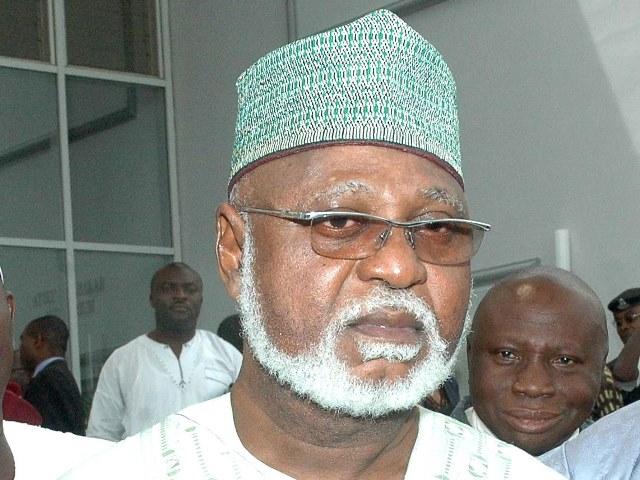
I’ve no regrets handing over to civilian government – Gen. Abdulsalami
By Uzair Adam Imam
Former Head of State General Abdulsalami Abubakar expressed his satisfaction with handing power over to a democratically elected president in 1999.
Abubakar made this disclosure during an interview with journalists over the weekend.
He stated, “Not at all! Not at all! Not at all! I am happy with what is going on. Yes, everything is not perfect, but here we are today, celebrating 25 years of unbroken democracy.”
Abdulsalami, who handed over power to former President Olusegun Obasanjo, acknowledged that while there are still challenges, Nigeria has made significant progress since 1999.
“We are not yet there but have come a long way since 1999. The only drawback we have in the system is people still sell their votes, and they do all types of things; they allow the politicians to use them in ballot box snatching here and there – unnecessary things that we should have overcome at this age.”
He emphasised the importance of voters holding elected officials accountable and lamented that some individuals still engage in vote-buying.
“Unfortunately, I still maintain, there are some very few people who abuse the process and they allow their votes to be bought.
“And if they are buying these votes, certainly they cannot be called to be accountable, the people who are being so elected.”
Despite these challenges, Abdulsalami expressed optimism about Nigeria’s democratic progress and the growing awareness among citizens that their votes matter.

BREAKING: Finally, Kylian Mbappé joins Real Madrid
By Sabiu Abdullahi
Kylian Mbappé has officially signed with Real Madrid, with the club set to announce the French superstar as their new signing next week.
According to sources, “every document has been signed, sealed, completed,” confirming Mbappé’s decision to join the Spanish giants.
The 24-year-old made his decision in February and has since completed all necessary steps for the transfer.
“He can be considered a new Real Madrid player,” a source revealed.
Mbappé’s transfer comes on the heels of Real Madrid’s Champions League victory, marking a historic moment for the club.
The announcement is expected to be made next week, cementing Mbappé’s place in Real Madrid’s history.

FG rejects labour’s demand for N494,000 minimum wage
By Uzair Adam Imam
The Federal Government has stated that it cannot meet the labour unions’ demand to increase the national minimum wage from N30,000 to N494,000.
According to the Minister of Information and National Orientation, Mohammed Idris, the demand would result in a total wages bill of N9.5 trillion yearly for federal workers alone, potentially destabilizing the economy and jeopardizing the welfare of over 200 million Nigerians.
The government offered a 100% increase to N60,000, which has been accepted by the private sector.
However, labour is seeking a 1,547% increase to N494,000.
The minister appealed to labour to return to negotiations and embrace realistic wages.
The government prioritizes affordability, sustainability, and the overall health of the nation’s economy, considering the welfare of all Nigerians, not just workers.

JUST IN: ASUU suspends warning strike
By uzair Adam Imam
The Academic Staff Union of Universities (ASUU) at Kano University of Science and Technology (KUST) Wudil has called off its two-week warning strike, which was launched to protest the state government’s handling of several issues.
ASUU had complained about the government’s reluctance to address issues related to university autonomy, staff welfare, and funding, despite efforts by the union and other stakeholders to resolve the matter.
However, following interventions by the Kano State House of Assembly, the House Committee on Higher Education, and the Governor of Kano State, the union has agreed to suspend the strike to allow for further dialogue and implementation of agreed-upon resolutions.
In a statement, ASUU-KUST Chairperson Dr. Aliyu Yusuf Ahmad said they appreciated the prompt intervention by the Kano State Government and relevant stakeholders.
He stated, “We appreciate the prompt intervention of the Governor and other stakeholders, which has created an opportunity for constructive engagement and resolution of the outstanding issues.”
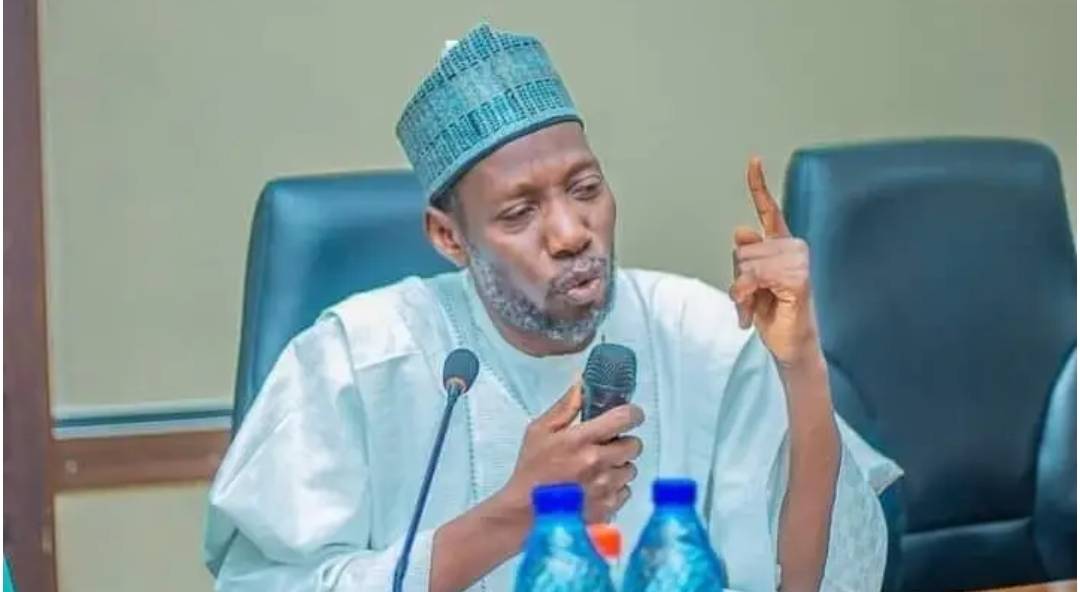
Bauchi commissioner, Ahmad Jalam, dies in car crash
By Uzair Adam Imam
Bauchi State Commissioner for Local Government and Chieftaincy Affairs, Ahmad Jalam, died in a car accident on Saturday.
Governor Bala Mohammed announced the death and described Jalam as a dedicated public servant who championed good governance and community relations.
The commissioner was known for his tireless work, integrity, and compassion.
He will be buried on Sunday in his hometown in Dambam Local Government Area according to Islamic rites.
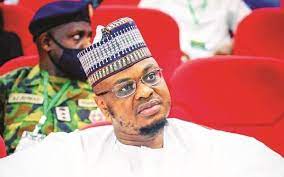
Pantami’s three faces
By Zayyad I. Muhammad
Isa Ali Ibrahim Pantami, former Honourable Minister of Communication and Digital Economy, an Islamic sheikh, and a UK-trained Ph.D. holder, has found himself in a triangular situation: an Islamic sheikh, a politician, and an academic. This revered status means any issue that affects his personality will always be a hot topic and attract public scrutiny.
Pantami’s full transformation into a politician who is eyeing the ‘ballot box’ was noticed during this year’s Ramadan Tafsir; his style of delivery and the content of his messages were noticeably altered. Traditionally known for his sticking to religious contents during tafsirs, this time, the sheikh took every opportunity to showcase his extensive knowledge of the economy, geography, and global politics. This shift did not go unnoticed by the audience and observers.
Pantami’s discussions were peppered with references to economic policies, geographic strategies, and the intricacies of international relations, signalling a significant change in his focus and priorities. Pantami continues to align himself more closely with political aspirations, and his body language has also evolved to reflect this new ambition.
Recently, controversies, debates, and discussions have emerged about Pantami’s books, Skills, Rather than Just a Degree and A Scholar’s Journey: Navigating the Academia. These books trended for a while and reignited old controversies about how he obtained his professorship. This situation has also awakened Pantami’s political adversaries, who view his behind-the-scenes early efforts to enter the Gombe state governorship race as an encroachment on their territory.
Many politicians, especially in his home state of Gombe, are upset with Pantami because they view him as an outsider who seized opportunities to occupy their ‘slots,’ first as the Director-General of NITDA and later as a federal minister representing Gombe State. However, after eight years of working independently, he now seeks their support to establish himself in their domain.
Conversely, the majority of Pantami’s critics regarding his appointment as a professor are academics. In contrast, most of those who backed the critics were Pantami’s political opponents and their supporters.
One of Pantami’s critics was reported to have penned this:
“Mr. Pantami was only for the most part a Lecturer 1 or 2 where he first served and didn’t spend a whole working career in the university system or in a university’s employment,” he was “made” a Professor by a university where he never worked, taught, sat in its Senate, worked in its committees, never examined or marked UG or PG exam scripts, and his whole promotion papers were never processed at the departmental and faculty levels, and, indeed, he never had a payroll number… Mr. Pantami was thus never a scholar in the classical or academic sense of that word. I wonder whether he’s now teaching or giving classes or seminar papers at any university after his leaving office in May 2023.”
On the other hand, supporters of Pantami’s professorship encompass academics with a fondness for him, members of religious groups, his students, and his political associates.
In fairness to Pantami, having held a ministerial position, he is already entrenched in politics. Moreover, the criticisms in his books predominantly consist of one-off comments rather than comprehensive analyses or academic discourse. Furthermore, Pantami’s challenge for a debate on his book is yet to take place.
The debate about Isa Pantami’s books, professorship, and foray into politics has three divides: his adherents, his opponents, and those sitting on the fence. The views of his followers and critics are well known and are often based on their perspectives. However, those sitting on the fence have, on many occasions, provided valid points both for and against Pantami.
Isa Ali Pantami’s transition from an Islamic scholar to a politician and professor has sparked both controversy and applause. His political opponents view his entry into politics as an intrusion into their territory, while his academic critics regard his professorship as ‘unearned.’ On the other hand, his supporters perceive his multifaceted identity—as a sheikh, a politician, and a professor—as exceptional among his peers.
Zayyad I. Muhammad writes from Abuja via zaymohd@yahoo.com.
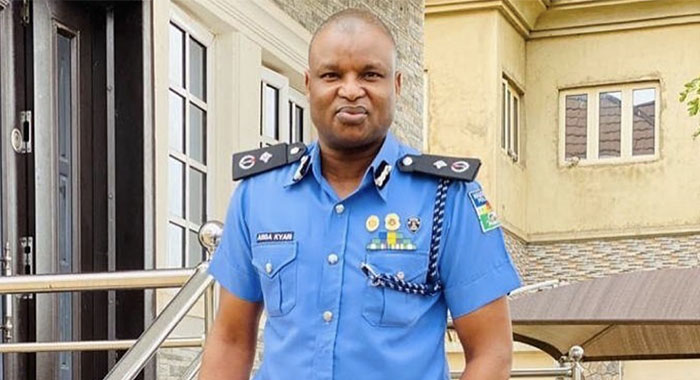
Super cop Abba Kyari regains freedom after 27 months in detention
Suspended Deputy Commissioner of Police, Abba Kyari, has been released from the Kuje Custodial Centre after spending almost two years in detention.
Kyari’s release was confirmed by the Nigerian Correctional Service spokesperson, Adamu Duza, who said the former police chief had met his bail conditions.
The Federal High Court in Abuja had granted Kyari bail on May 22, 2024, to enable him to bury his mother, Yachilla Kyari, who died on May 5.
Kyari was arrested in February 2022 by the National Drug Law Enforcement Agency (NDLEA) for alleged involvement in international drug trafficking.
He was arraigned in court alongside four other police officers and two suspected drug traffickers.
The case is still ongoing, with the next hearing scheduled for May 31, 2024.
Kyari’s release has sparked mixed reactions, with some calling for his reinstatement and others demanding that he face justice for his alleged crimes.
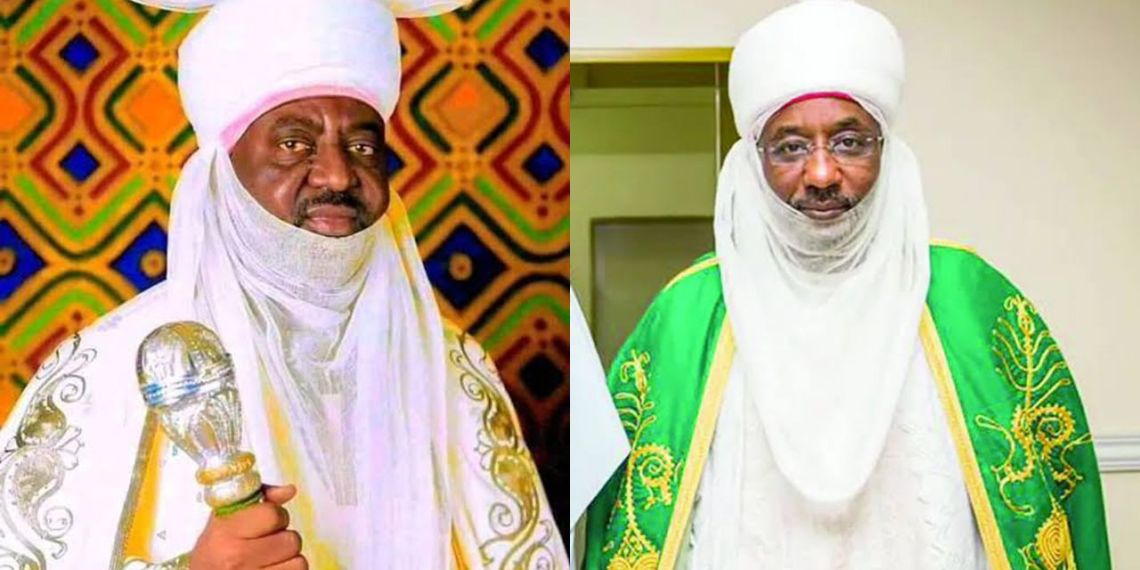
Kano Emirship Crisis: It always helps to live in the real world
By Dr Raji Bello
Following encouragement from some friends, let me say what I’ve been a bit reluctant to say. It is based on my conviction as a dispassionate and non-partisan observer and of course, as a non-indigene of Kano State.
The root cause of the emirship imbroglio in Kano, in my view, was the inability of Muhammadu Sanusi II to subordinate himself and his office to the Ganduje administration as required by the terms of his appointment. This is essentially what triggered every other thing that has happened and which has led us to where we are today. To correct any problem permanently, we need to examine its root cause.
I am not saying that Sanusi is not an emir of high intellect who is enormously popular among the people. This assessment of mine is based on only one criterion — his willingness or ability to comply with the terms of his appointment — and it is made without prejudice to his qualities, endowments and accomplishments as an individual, technocrat and emir. Like other human beings, the emir is not perfect. He might have excelled in 9 out of 10 criteria but his failure in the 10th is the cause of the emirship crisis because it happened to be a very important criterion.
All post-colonial emirs and traditional rulers have been obligated to demonstrate loyalty and due courtesy to government be it colonial, democratic or military. History is replete with examples of the huge price that was exacted each time an emir fell short on loyalty towards government.
As an intellectual of high standing, the emir must have been aware of that history. When he set out to be emir, he should have been conscious of the terms of appointment and should have fully reflected on whether it was the appropriate platform for someone of his disposition or not. The emir seems to want the Kano emirship in its pristine 19th century form when it didn’t answer to a non-traditional authority. This betrays a lack of situational awareness and good judgement because the reality is that the 19th century is long gone and can never be brought back. So if anyone is interested in becoming emir in the 21st century, it has to be under 21st century terms.
The Ganduje administration had accused the emir of multiple infractions from political partisanship, insurbordination and failure to demonstrate courtesy towards it. Some of these infractions had played out in public for all to see and hear which means that they were not false accusations. I do not fully endorse the former government’s actions (which bore traces of the usual Nigerian impunity) but it is clear that it was provoked into taking actions against the emir. I believe that all state governments are inclined by default to respect the traditional institutions within their states and hostilities only break out when there is a breach of the terms of appointment (usually, but not always) on the part of the traditional rulers.
There is no individual who is so important or popular that they would enjoy exemptions from complying with the terms of their appointment. This is an incontrovertible fact. A friend told me that the emirship style of Aminu Ado Bayero is a bit bland compared to that of Muhammadu Sanusi II. I replied that this is true but the Aminu style is actually the correct one.
Post-colonial emirship is not a radical or revolutionary platform and, after the 1976 Local Government Reforms, the traditional institutions in northern Nigeria lost all the vestiges of authority that were previously delegated to them under the Native Authority system. The post of traditional ruler is now just a custodianship of heritage whose essential features are loyalty, co-operation and circumspection.
Yes, Sanusi is wildly popular, has a deeper intellect, a gifted oratory and displays a higher sartorial elegance but it was Aminu Bayero who was doing the emirship correctly under its current terms. Those who cheered Sanusi as he breached the terms of his appointment were not helping him or the Kano emirship institution.

Reorganizing NOUN for excellence under new neadership
By Mukhtar Jarmajo
The recent appointment of Mallam Isa Yuguda as the Chairman of the Governing Council of the National Open University of Nigeria (NOUN) has sparked hope for a new era of growth and excellence at the institution.
As a former minister and governor, Yuguda brings a wealth of experience to the table, which will be crucial in shaping the future of NOUN.
However, the new leadership faces significant challenges. NOUN has struggled with issues of funding, infrastructure and quality of education, which have hindered its ability to reach its full potential.
One of the primary challenges is the need to improve the university’s infrastructure, including its virtual learning platform, to enhance the learning experience for students.
Another challenge is addressing the issue of funding, which has been a perennial problem for NOUN. The new leadership must explore innovative ways to secure sustainable funding to support the university’s programs and initiatives.
The quality of education is also a critical area that requires attention. NOUN must ensure that its programs meet the highest standards of academic excellence, and that its graduates are competitive in the job market.
Despite these challenges, the prospects for NOUN are bright. With the right leadership and support, the university has the potential to become a center of academic excellence, providing access to quality education for millions of Nigerians. The new leadership must also focus on building strategic partnerships with local and international organizations to enhance the university’s research and innovation capabilities.
Furthermore, NOUN must leverage technology to expand its reach and improve its services, including online learning platforms and digital resources. It has the potential to play a critical role in addressing Nigeria’s development challenges, including poverty, inequality, and unemployment. By providing access to quality education, NOUN can help build a more skilled and competitive workforce, which is essential for driving economic growth and development.
The new leadership at NOUN faces significant challenges, but the prospects for growth and excellence are bright. With the right vision, leadership, and support, NOUN can become a beacon of hope for millions of Nigerians, providing access to quality education and driving national development.
Jarmajo wrote from Lobito Crescent, Wuse 2, Abuja.