


Tragedy as landlord dies after argument with tenant over unpaid rent
By Uzair Adam Imam
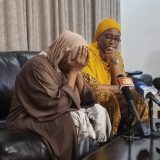
A landlord, Benjamin Apeh, has tragically died after collapsing during an argument with his tenant over unpaid rent.
The incident occurred on Sunday at Arigbabu Village, Sotubo, in the Sagamu local government area of Ogun.
“The suspect fled the scene, but efforts are underway to apprehend him,” said SP Omolola Odutola, the Public Relations Officer, Police Command, Ogun.
According to the police, the argument started on Saturday evening and continued on Sunday morning, with the tenant threatening to kill the landlord.
“At around 6:30 a.m., on Sunday, she (the daughter of the deceased) heard her father again arguing with the tenant, who threatened to kill him,” said Odutola.
Unfortunately, the landlord collapsed and was rushed to NNPC Hospital, Mosimi, where he was pronounced dead. “He was later confirmed dead by the doctor on duty,” said Odutola.
The body of the deceased has been deposited at Olabisi Onabanjo University Teaching Hospital (OOUTH) Morgue, Sagamu.

How to detect Internet fraud
By Muhsin Ibrahim
There are many ways to detect scammers, especially those “offering” jobs (or scholarships) in foreign countries.
Here are a few tips:
1. Your employers will never ask you for money. They should, in fact, give you money. Once anyone asks you to deposit any amount of money into any account, run.
2. Visas are processed and issued solely at the embassies of the countries where you secure a job. In Nigeria, these embassies are primarily located in Abuja or Lagos.
3. Most jobs are offered only after a thorough review of your application, an aptitude test, and an interview.
4. In contrast, fraudulent jobs are effortlessly secured, often after submitting application documents or filling out forms online.
5. Please contact people who possibly know better or live in those countries before accepting a suspicious job offer. Contrary to the general belief, most of us are excited to see you here.
May you land the job of your dreams, amin.
Muhsin Ibrahim is a lecturer at the University of Cologne and he can be reached via muhsin2008@gmail.com.

NANSU: Past, present and future
By Salihi Adamu Takai
This will take us on a nostalgic – National Association of Nigerian Students in Uganda – NANSU’s heyday that exited in the time when Nigerian Students studied in Uganda, enjoying the value of the Naira currency from 2013 to present.
National Association of Nigerian Students in Uganda (NANSU) was a strong association that showcased its values, with the Ugandan Shilling being significantly weak compared to Naira currency. This has led to the braggadocio in the association, attracting other nationalities to the financial value of the Naira.
Yesterday, I was listening to a brother, who was a student at IUEA from 2013 to 2015, discussing about how Naira’s value was in those days; “I was recieving 60 thousands Naira monthly from home, and that amount was equivalent to 1.5 Million Shillings”, said by him. He added that “I used to deliberately go to shop, buy foodstuff, and I don’t collect my balance regardless of the amount”.
Some of the Nigerian students don’t sleep at night, frequenting clubs, lavishly flowing money for show-off. They were like British men in Uganda, when going to some places, people used to be around in order to get their shares. Someone was reminiscing about his life then, unveiling how he was attractive to Ugandan ladies; “I used to receive calls of around 20 different ladies in a day”, he said.
He added that also, “I didn’t cook myself. I used to buy from the first class restaurants in Kampala”. They used to withdraw money with their MasterCard from Ugandan Banks, and, they were being paid in official rates. One thousand Naira (₦1000) was equivalent to 15 thousand Ugandan Shillings (15,000).
As time kept going, it reached to a time when the then President, Godluck, was defeated, and Buhari came in, and, upon his swearing in, different policies were made, affecting the value of Naira.
The first policy, was the directive to block the use of MasterCard overseas. This led certain difficulties, which started facing Nigerian Students. In just a year, Naira dipped woefully, and Shillings started bouncing. Towards the end of Buhari’s tenure, the rate was so shocking.
Tinubu was sworn in last year. Upon the swearing in, he made a statement over the fuel supsidy removal, and this was the first recipe for the first hardship in Nigeria. Fuel prices increased by more than 200 percent compared to how it was prior to the statement. Tinubu didn’t stop there, he also directed for the removal of the Dollar subsidy. This was the first time when Dollar lost control in Nigeria, Naira keeps devaluing against Dollar.
International Nigerian students have been stranded, waiting for a time when Naira will bounce back to its value. This has led to the deferral for studies by many Nigerian students studying abroad. They can’t afford it with the current rate. They have been used to it when it was affordable to them, but now, the rate is very bad. Those who can live hand to mouth are very few as hundreds can’t afford simple meal twice in a day while staying overseas.
As few are managing to cope with the situation smoothly despite the skyrocketing of exchange rates, which is, of course, determining the comfortability of the students. Whenever the exchange rate goes down, students afford many things, and if it goes up, it messes up everything. Students are now pessimistic about their studies. Many of them are now admitting that, if things keep going like this, they will definitely lose their ways here.

Northern Nollywood, Southern distorted mirrors: Nollywood and the rest of us
By Prof. Abdalla Uba Adamu
Recently, an extremely prestigious academic journal requested that I review a film made by a Nigerian. I was surprised, as that is Muhsin Ibrahim’s forte. Further, I really don’t watch Nigerian films, aka Nollywood, personally preferring African Francophone directors. Nevertheless, I agreed to do the review.
However, the link they sent for the film was password-protected. I informed them, and they requested the filmmaker to send the password. Being a request from a highly prestigious journal, he sent the code, and I was able to get on the site and watch the film online. I was surprised at what I saw and decided to delve further into these issues. Before doing that, I wrote my review and sent it off. The film, however, set me thinking.
Like a creeping malaise, Nollywood directors are rearing their cameras into the northern Nigerian cultural spaces. Again. The film I reviewed for the journal was “A Delivery Boy” (dir. Adekunle Adejuyigbe, 2018). It was in the Hausa language. None of the actors, however, was Hausa, although the lead actor seems to be a northerner (at least from his name since an online search failed to reveal any personal details about him).
Nothing wrong with that. Some of the best films about a particular culture were made by those outside the culture. Being ‘outliers’, it often gave them an opportunity to provide a more or less balanced and objective ‘outsider’s perspective’ of the culture. Alfonso Cuarón, a Mexican, successfully directed “Harry Potter and the Prisoner of Azkaban” (2004), while Taiwanese director Ang Lee did the same with “ Brokeback Mountain” (2005), even earning him an Oscar.
In 2006 Clint Eastwood, an American, directed “Letters From Iwo Jima.” The cast was almost entirely Japanese, and almost all of the dialogue was in Japanese. It was very well-received in Japan, and in fact, some critics in Japan wondered why a non-Japanese director was able to make one of the best war movies about World War II from the Japanese perspective. Abbas Kiarostami, an Iranian filmmaker, directed his film, “Certified Copy” (2020) in Italy, which contained French, Italian, and English dialogue starring French and British actors.
British director Richard Attenborough successfully directed Ben Kingsley in the Indian biopic Gandhi (1982). The film was praised for providing a historically accurate portrayal of the life of Gandhi, the Indian independence movement and the deleterious results of British colonization of India. It took away eight Oscars. American director Steven Spielberg’s “Schindler’s List” (1993) on a German, Oskar Schindler, was equally a powerful portrayal of an auteur genius by a “non-native”. The film won seven Oscars.
In each of these examples, the directors approached their subject matter with a clean, fresh and open mind that acknowledges the cultural sensitivities of the subject matter. My point is that a person, outside of a particular cultural context, can make sensitive films that portray the culture to his own culture as well as other cultures. That is not, however, how Nollywood plays when it focuses its cameras on northern Nigerian social culture. Specifically Muslims.
I just can’t understand why they are so fixated on Muslims and the North. If the purpose of the ‘crossover’ films (as they are labelled) they make is to create an understanding of the North for their predominantly Southern audiences, they need not bother. Social media alone is awash with all the information one needs about Nigeria—the good, the bad and the ugly. You don’t need a big-budget film for that. Or actors trying and failing to convey ‘Aboki’ accents in stilted dialogues that lack grammatical context.
Yet, they insist on producing films about Muslim northern Nigeria from a jaundiced, bigoted perspective, often couched with pseudo-intellectual veneer. To sweeten the bad taste of such distasteful films, they pick up one or two northern actors (who genuinely speak the Hausa language, even if not mainstream ethnic Hausa) and add them to the mix, believing that this will buy them salvation. For southern Nigerians, anyone above the River Niger is ‘Hausa’.
They started in the early 2000s, and people just ignored them. The directors then included Oskar Baker (Ɗan Adamu Butulu, Abdulmalik), Yemi Laniyan (Makiyi, Uwar Gida), Tunji Agesin (Halin Kishiya), Matt Dadzie (Zuwaira), I. Nwankwo (Macijiya) and many others. These came on the heels of the massive success of “Sangaya” (dir. Aminu Muhammad Sabo, 1999) when this particular film opened up the northern Nigerian film market.
Those Nollywood producers jumped into cash on the popularity of Hausa films and made their own for northern markets. For the most part, these early ‘crossover’ films that I refer to as ‘Northern Nollywood’ were fairly mild and evoked no reaction. They were still rejected, as the Hausa can be the most discriminatory people you can come across. If you are outside their cultural universe, you remain there. Forever.
The few Kannywood actors eager to be seen on the ‘national stage’ allowed themselves to be used to deconstruct Islam and Muslims on the altar of filmmaking in subsequent Northern Nollywood films. Let’s not even talk about character misrepresentation, which Muhsin Ibrahim has written extensively about. In these scenarios, the usual tropes for northerners in Nollywood films is that of ‘Aboki’ (a term southern Nigerians believe is an insult to northerners, without knowing what it means), ‘maigad’ (security), generally a beggar. If they value an actor, they assign them an instantly forgettable role rather than a lead. Granted, this might be more astute and realistic marketing than ethnicity because it would be risky to give an unknown Hausa actor a significant role in a film aimed at southern Nigerians.
A few of these types of portrayals in Nollywood included Hausa-speaking actors in films such as The Senator, The Stubborn Grasshopper, The World is Mine, Osama Bin La, Across the Border and The Police Officer.
When Shari’a was relaunched from 1999 in many northern Nigerian States, it became an instant filmic focus for Nollywood. A film, “Holy Law: Shari’a” (dir. Ejike Asiegbu, 2001) drew such a barrage of criticism among Hausa Muslims due to its portrayal of Shari’a laws then being implemented in northern Nigeria that it caused credibility problems for the few Hausa actors that appeared in it. With neither understanding of Islam nor its context, the director ploughed on in his own distorted interpretation of the Shari’a as only a punitive justice system of chopping hands, floggings, and killings through foul-mouthed dialogue. As Nasiru Wada Khalil noted in his brilliant essay on the film (“Perception and Reaction: The Representation of the Shari’a in Nollywood and Kanywood Films”, SSRN, 2016) “the whole story of Holy Law is in itself flogged, amputated and killed right from the storyline.”
“Osama bin La” (dir. MacCollins Chidebe, 2001) was supposed to be a comedy. No one found it funny in Kano. Despite not featuring any northern actor, it was banned in Kano due to its portrayal of Osama bn Ladan, then considered a folk hero. The film was banned to avoid a reaction against Igbo merchants marketing the film. I was actually present in the congregation at a Friday sermon at Kundila Friday mosque in Kano when a ‘fatwa’ was issued on the film. Even a similar comedy, “Ibro Usama” (dir. Auwalu Dare, 2002), a chamama genre Hausa film, was banned in Kano, showing sensitivity to the subject matter.
The reactions against crossover films seemed to have discouraged Nollywood producers from forging ahead. They returned in the 2010s. By then, northern Nigeria had entered a new phase of social disruption, and Nollywood took every opportunity to film its understanding of the issues—sometimes couched in simpering distorted narrative masquerading as social commentary—on society and culture it has absolutely no understanding of.
In “Dry” (dir. Stephanie Linus, 2014), the director developed a sudden concern about ‘child marriage’ and its consequences. Naturally, the culprits of such marriage, as depicted in the film, are sixty-year-old men who marry girls young enough to be their granddaughters. The director’s qualification to talk about the issue (which was already being framed by child marriage controversy in the north) was that she has ‘visited the north’ a couple of times. With the film, if she could get at least “one girl free and open the minds of the people, and also instruct different bodies and individuals to take action, then the movie would have served its purpose.” The ‘north’ was living in darkness, and it required Stephanie Linus to shed light on ‘civilization’.
“A Delivery Boy” (dir. Adekunle Adejuyigbe, 2018) that I reviewed was about an ‘almajiri’ in an Islamic school who was kidnapped from the school, to begin with and repeatedly raped by his ‘Alamaramma’ (teacher). The almajiri somehow acquired sticks of dynamite to create a suicide vest and vowed to blow himself up—together with the teacher. The Alaramma in the film lives in an opulent mansion, far away from the ‘almajirai’. In this narrative universe, the ‘almajiri’ do not learn anything and are unwilling rape victims of their teaches who actually kidnapped them and forced them into the schools.
“The Milkmaid” (dir. Desmond Ovbiagele, 2020) evokes the idealistic picture of a Fulani milkmaid and became a basis for a Nollywood film. Instead of focusing on the political economy of the Fulani milk trade, the film focused on the trope of terrorism. “The Black Book” (dir. Editi Effiong, 2023), touted as ‘Nigeria’s John Wick’ shoots a significant portion in ‘the north’ – with ‘Islamist’ hijab-wearing females touting assault rifles hidden underneath their hijab. “Jalil” (dir. Leslie Dapwatda, 2020) visits the recurrent theme of kidnapping for ransom. In the north, of course.
Then came the latest, “Almajiri” (dir. Toka McBaror, 2022). Claimed to be a true-life story (although it is not clear whether it happened to specific people or based on what the director believed to be a common event), it featured muscle-bound badass types of thugs with guns and dreadlocks as Almajirai. The film reinforces the southern Nigerian trope of any beggar in the north being an Almajiri. Such ‘almajiris’ are kidnapped and sold into virtual slavery and horribly abused. The idea is to blame the parental irresponsibility of northerners.
For southern Nigerians, especially the Nollywood crowd, an ‘Almajiri’ is a beggar, a product of a failed education system, a terrorist, a bandit, and an ‘aboki’. They use concocted figures bandied about by alphabet soup agencies to proclaim ‘over 10 million almajiri are out of school’ and, therefore, twigs of the terrorism inferno. How can someone who has been part of a system of education for over half a century be considered out of school? But for Nollywood, if it is not ABCD, then it is not education.
“Northern Nollywood” films are the precise reasons why there will ALWAYS be different film cultures in Nigeria. Kannywood talks to its publics, happily churning out now TV shows that address issues it deems relevant—in its own way. Both the northern and southern parts of the country (covering the three major languages) were actively engaged. However, they were mutually non-legible to each other. This was essential because they operate on virtually opposing cultural mindsets – making the emergence of a truly “Nigerian cultural film” impossible.
Quite a few writers seem to suggest that Kannywood is a ‘subset of Nollywood’, and indeed, many would prefer for the term Kannywood (created in 1999 by a Hausa writer) to be dispensed with and replaced with Nollywood (created in 2002 by a Japanese Canadian writer). It is to protect our cultural representation in films that I stand as a lone voice in advocating for a ‘Hausa Cinema’ to reflect the cultural universe of the Hausa.
Professor Abdalla Uba Adamu can be reached via auadamu@yahoo.com.

JUST IN: Labour unions call off strike after one day
By Sabiu Abdullahi
The Nigeria Labour Congress (NLC) and the Trade Union Congress (TUC) have suspended their industrial action, just one day after it began.
The strike, which started on Monday, was called to protest the recent hike in electricity tariff and the lack of agreement on a new minimum wage.
However, following an emergency meeting on Tuesday, the labour unions agreed to suspend the action for one week.
“The strike is suspended for now, but we will resume if our demands are not met,” said Festus Osifo, TUC President.
The strike had caused widespread disruptions, with schools, businesses, hospitals, and airports shut down. The national grid was also affected, leaving many without power.
The suspension of the strike provides a temporary reprieve for the government, but the labour unions remain resolute in their demands.
A communique is expected to be issued soon, outlining the next steps in the negotiations.
The outcome of the talks will be closely watched, as the nation waits with bated breath to see if a resolution can be reached.

BREAKING: FG, labour reach agreement on minimum wage
By Uzair Adam Imam
The Federal Government and the organised labour have reached an agreement on the minimum wage, ending the strike action that started on June 3, 2024.
The agreement was signed on Monday night after a meeting that started at 5:00 pm and ended at 11:00 pm.
Although the details of the agreement are not yet public, the Secretary to the Government of the Federation, George Akume, confirmed that the government is committed to paying a minimum wage higher than N60,000.
He also assured that no worker would be victimized for participating in the strike.
The national tripartite committee on minimum wage will meet daily for the next week to finalize the details of the agreement.
The labour leaders and government officials expressed optimism that the agreement would bring an end to the strike and restore normalcy to the country.
The strike, which started on June 3, had paralyzed economic activities in the country, with many businesses forced to shut down.
The agreement is seen as a positive development, and many are hoping that it would bring an end to the strike and restore normalcy to the country.

Reinstatement of Emir Muhammadu Sanusi II and the resurgence of thuggery in Kano
By Aliyu Dalhatu Adamu
Kano people are known as peace-loving, as inculcated by the longest-serving Emir of the kingdom, Alhaji Ado Bayero,who led for over 50 years. His charisma and love for his people made him unique among all African traditional rulers.
Kano people were traumatised by His Highness Alhaji Ado Bayero’s demise in June 2014, and the loss remained irreplaceable until 2020 when His Highness Alhaji Aminu Ado Bayero became the Emir of Kano. His emergence renewed the hope of the Kano people because he exhibited the same characteristics as his father. This makes him earn the love that people have for his father, which no one has in Kano.
The recent development of the Emir and reinstatement of the deposed Emir Sunusi Lamido Sunusi have seriously disrupted peace and stability in the state. This has opened doors for hooligans and thugs to widen their operations in the state.
It is a known fact that hooliganism and thuggery threaten the security of lives and property in every society. Hence, leaders are saddled with the responsibility of maintaining law and order to prevent potential offenders from engaging in such acts.
It is unfortunate to say that the current administration of Governor Abba Kabir Yusuf has begun to do the other way around, as hoodlums and thugs are allowed to take over the Kano palace in the name of protecting the selfish and politically motivated interest of his political godfather. This has become a serious threat to the peace and safety of people in Kano as the hoodlums are harassing and intimidating people at will within the vicinity of the Kano Emir’s palace, all in the name of imposing Sunusi on the throne, which is facing outright absolute rejection by the good people of Kano.
This unbecoming attitude is becoming an eye-opener for young children who are now growing to witness this evil as a condoned behaviour. This may contribute to making hooliganism a wider phenomenon, a useful symbol, and a social obsession in the future tradition of the Kano Emirate traditional system.
Since the reinstatement of Sunusi Lamido Sunusi to Gidan Dabo, the palace and areas such as Kofar Kudu, Kano Municipal, Gwale, Dala, and the surrounding areas become the headquarters of thugs. Even medical workers at Hasiya Bayero Paediatric Hospital were attacked on the 27th of May, 2024. The Nigerian Medical Association (NMA) issued a statement condemning the barbaric development. Many other people living in the neighbourhood are not spared either.
This situation arose when the city’s public spaces were “swarming” with thousands of newly armed groups mandated to “protect” and pay allegiance to Emir Sunusi. These groups were recruited by the Kano state government only to praise their political master at the detriment of public safety.
Indeed, Gov Yusuf’s incompetence, ineptness, and clueless leadership style are undoubtedly taking Kano back to square zero. The pickle of the Kano emirship brawl is a cessation of Kano peace and stability as a courtesy to Senator Rabi’u Musa Kwankwaso, former Governor of the state Kwankwaso, by Governor Yusuf and the former Emir Sunusi Lamido Sunusi, in a bid to drag Kano to the state of anarchy.
Hooligans also came to represent the dangers inherent in loosening constraints on society. Even when hooligans victimised people far from their concerns, the increase in their numbers, the apparent pettiness of their motives, and the savagery of their actions within Gidan Dabo suggested that certain members of the lower classes were either very beastly or very angry and that the mechanisms of state’s control were no longer in place to checkmate this.
Now, what we ask is, does the state government prioritise praising its political godfather over protecting the blood of theKano people?
Ironically, hooliganism and thuggery that previous administrations fought have now been revived by the present administration as the number 2IC in the government triggered the infiltration and indoctrination of youth into hooliganism and thuggery.
On this note, we are calling on the federal government, security agencies, intelligence communities, Nigerian Bar Association (NBA), northern traditional rulers, religious leaders and all other relevant authorities to intervene. They should also advise the Kano state government to obey the court order restraining them from reinstating the deposed Emir Sunusi Lamido Sunusi and dissolving the remaining four Emirates in the interest of the good people of Kano. This will bring an end to hooliganism, public disrespect, defiance, chaos, and violence that are capable of destabilising the peace and security of Kano State.
Aliyu Dalhatu Adamu wrote from the Federal University, Dutsinma, Katsina State, via
NLC strike stalls court hearing on Kano emirate tussle
By Uzair Adam Imam
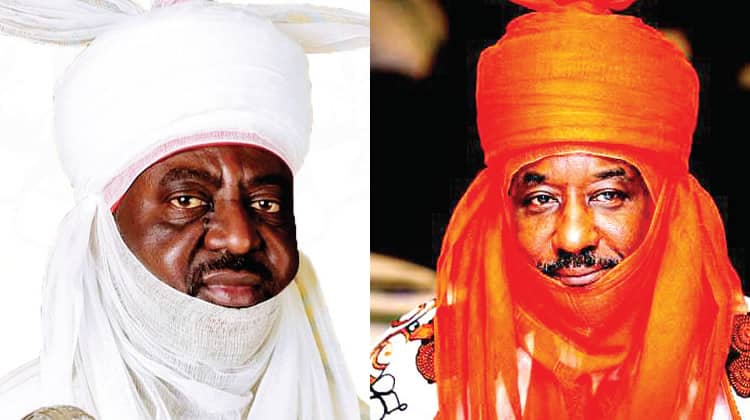
The ongoing strike by the Nigeria Labour Congress (NLC) and Trade Union Congress (TUC) has stalled the hearing on the Kano emirate tussle at the Federal High Court in Kano.
The court had previously granted an order restraining the implementation of the Kano State Emirate Council (Repeal) Law, which dissolved the five Kano Emirates and reinstated Muhammadu Sanusi II as Emir of Kano.
According to the court order, “parties are hereby ordered to maintain status quo ante the passage and assent of the bill pending the hearing of the Fundamental Rights application.”
The hearing was scheduled for June 3, 2024, but due to the strike, the matter has been postponed until further notice.
The suit involves the Kano State Government, Kano State House of Assembly, the Speaker of Kano State, Attorney General of Kano State, Commissioner of Police of Kano State, Inspector General of Police, Nigeria Security and Civil Defence Corps, and Department of State Security (DSS).
As a result of the strike, the court was unable to hold the hearing as expected, and a new date has not been announced.
Unlocking career opportunities with a fisheries degree
By MD Aminu, PhD
Yesterday, I met a young lady who graduated with a degree in fisheries from the University of Port Harcourt. She was hesitant to tell me about her field of study because she often encountered scepticism about its prospects. Initially, she had wanted to pursue engineering but was assigned to fisheries. Many of her classmates transferred to other departments after their first year, driven by the belief that fisheries lacked career opportunities.
The lady shared her concerns that people often looked down on her course of study, assuming it had no potential for a sustainable livelihood or a great career. However, I assured her that a fisheries degree holds significant promise and began to outline various opportunities, although our conversation was cut short.
If I had pursued a degree in fisheries, here is the approach I would take to maximize its potential. With a good first degree in fisheries, I would utilize my national service year to study diligently for the GRE, preparing for graduate school in the United States or Canada. Prior to graduation, I would research the top researchers in fisheries globally and identify the institutions they belong to. By examining their research trends over the years, particularly focusing on the last five years, I would gain insights into the latest advancements and focal areas in the field.
I would then reach out to these researchers, discussing my plans for graduate school and exploring potential funding opportunities within their departments. This proactive approach would demonstrate my interest and alignment with their work.
Additionally, I would investigate the practical applications of these research trends beyond academia, specifically looking at what employers of fisheries graduates, such as FAO, IFAD, and the World Fish Centre, are currently focused on. Understanding that these organizations emphasize sustainability in their programs, I would delve into the major issues concerning sustainable livelihoods and fisheries management.
As an African, I would pay particular attention to sustainability challenges relevant to African fisheries. This would ensure that my studies and future research remain pertinent and impactful within my regional context. Additionally, I would explore what researchers in sustainable fisheries in the tropics are identifying as future problems, aiming to stay ahead by addressing medium- and long-term challenges.
Securing admission to a reputable university under leading fisheries researchers would be a significant milestone. My goal would be to produce a doctoral thesis that is futuristic, globally relevant, and applicable to Africa. I would aim to publish at least three research papers in leading fisheries journals, establishing my expertise and credibility in the field. Throughout my graduate studies, attending leading conferences where fisheries experts convene would be essential. Presenting my research at these events would enhance my visibility and allow me to network with professionals from both industry and academia.
As I near the completion of my research, I will actively seek positions at global organizations like FAO, IFAD, and the World Fish Centre. Additionally, I would monitor the activities of institutions like the African Development Bank and other UN organizations involved in fisheries and food security in Africa, aiming to identify relevant vacancies.
Securing a position in a global organization would provide not only an exciting career opportunity but also a platform to make a significant impact. My work would contribute to global initiatives in fisheries management and sustainability, and my expertise would be recognized internationally.
By strategically planning my education and career path, networking with top researchers, understanding industry trends, and focusing on sustainability, I would be able to carve out a successful and impactful career in fisheries. By leveraging available resources, staying informed about industry trends, and aligning my studies with global and regional sustainability challenges, I would ensure that my fisheries degree opens doors to a fulfilling and globally influential profession.
The young lady I met need not worry about the perceived limitations of her degree. With determination and strategic planning, she can transform her fisheries education into a thriving career with significant impact.
MD Aminu can be reached via mohd.aminu@gmail.com.
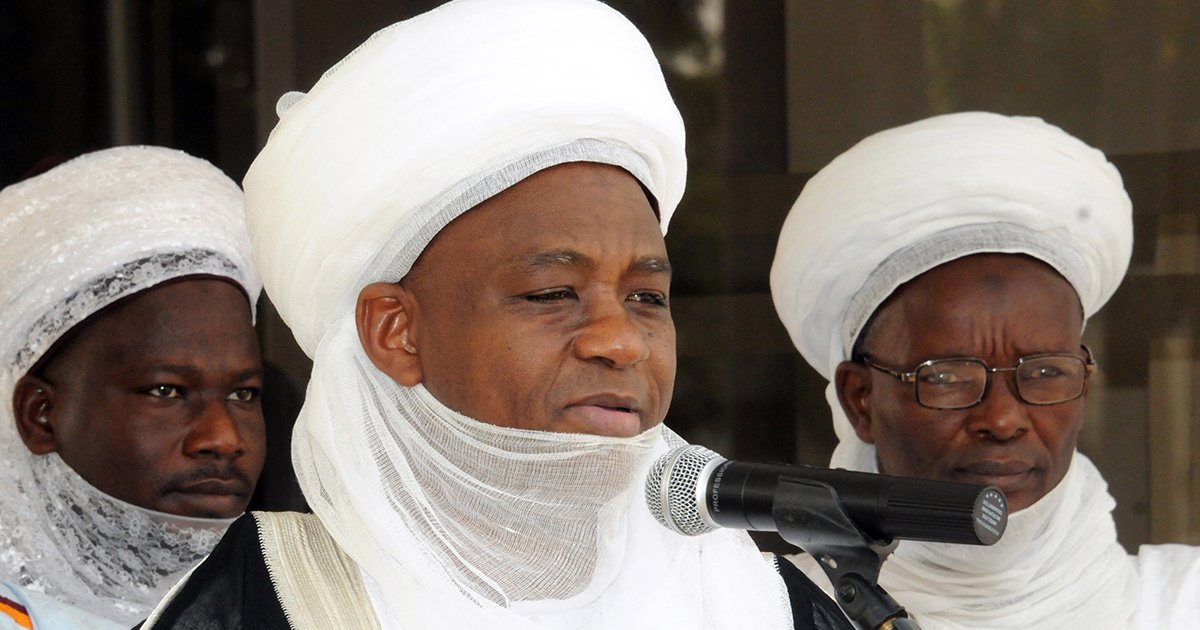
Sultan of Sokoto appeals to labour to shelve strike action
By Uzair Adam Imam
The Sultan of Sokoto, Alhaji Muhammad Sa’ad Abubakar, has urged the Organised Labour in Nigeria to reconsider their planned strike action scheduled to commence on Monday, June 3, 2024.
In a statement released by his media team on Sunday night, the Sultan appealed to the labour leaders to consider the potential hardships their action may cause Nigerians.
“The Labour leaders should consider the overbearing effects of the strike action they plan to embark upon on the wellbeing of the same Nigerians, whose interest they are fighting to protect, and therefore shelve the industrial action,” he said.
The Sultan emphasized the importance of negotiation, encouraging the labour leaders to continue engaging with the government.
“We appeal to Labour not to take the nation through another leg of hardship… They should try to listen to the government while the government should listen to them and both parties arrive at a conclusion that will be beneficial to all Nigerians, with the working class inclusive,” he said.
Drawing from his personal experience in past negotiations between labour and government, the Sultan acknowledged the labour leaders’ efforts to advocate for better welfare for their fellow workers.
However, he cautioned them to consider the potential consequences of their actions and to prioritize compassion.
“You are doing what is right for your class of fellow workers, but you should do it within the ambit of compassion and see strike always as the last option,” he said.