
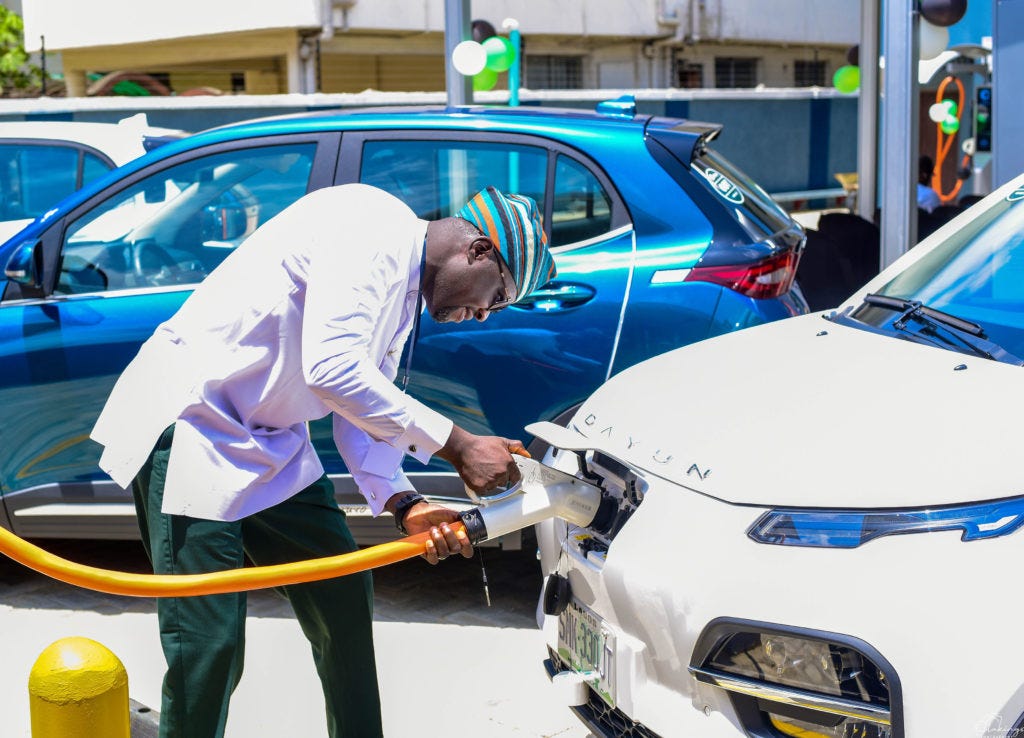
Why the Combustion Engine Will Outlast the Electric Vehicle Hype — In Nigeria and Everywhere Else
By Hamisu Adamu Dandajeh
Electric vehicles (EVs) are often called “inevitable”. The only question, we’re told, is timing. Nevertheless, the data says otherwise. Even the world’s most electrified economies remain overwhelmingly combustion-powered on the road. Nigeria’s constraints run deeper still. They are not only rooted in physics, minerals and money, but also on political willpower.
Start with Norway. It is the closest thing the world has to a completed EV transition. Battery-electric vehicles made up 96–97% of new car sales in 2025. Decades of tax breaks, toll discounts and bus-lane access built that number. But look at the cars actually on Norwegian roads, not the ones sold this year. Only a third of the total fleet is electric. That is the highest share in the world. And it still leaves two-thirds of Norway’s cars running on combustion. Sales dominance and fleet electrification are not the same thing. That gap is the central fact of this entire debate.
Other countries make the point harder. China crossed 50% EV sales penetration in 2025. Its road fleet is still only about 13% electric. Germany’s EV sales share collapsed from 29% to 19% when subsidies were cut, then recovered to 28% once they returned. Adoption moves with subsidy, not momentum. The US sits at roughly 10% of new car sales, stalled since federal tax credits expired. Japan’s EV sales share fell from 3% to 2% in 2025.
Globally, the EV fleet reached about 116 million units in 2026. The world’s total car fleet exceeds one billion vehicles. China alone holds 61% of all EVs on earth. A 30% sales share this year still means a fleet penetration of five to seven per cent. Cars last fifteen to twenty years. Old stock does not disappear because new sales shift. This is steady progress. It is not imminent replacement.
Nigeria’s problem is a different category of constraint. The national grid serves over 220 million people. It generates between 4,000 and 4,800 megawatts on a good day. That is about 20 watts per person. Pakistan manages 180. Indonesia manages 250. The United States manages 3,530; 176 times Nigeria’s figure. You cannot charge an EV fleet on a grid that cannot keep the lights on. Nigeria’s grid still collapses outright. Generation crashed to 20 megawatts nationwide in January 2026.
Nigeria’s Energy Transition Plan targets 60% EV fleet share by 2050. Today, EVs are under 1% of the country’s vehicles. That is a few tens of thousands of cars; by industry estimate, no official figure exists. Import duty waivers pushed nearly 4,000 more EVs into the country in the first half of 2026. They are landing in a market where the grid runs at 30% of installed capacity. Barely half the population has a grid connection at all. Public charging stations number around a dozen nationwide.
Here is the telling part. Nigerian charging operators now run diesel and petrol generators to keep their own chargers working when the grid fails. The EV system depends on the fuels it is meant to replace. A car charged from a diesel generator is not a clean-energy solution. It is a combustion engine with an expensive extension cord.
Electric two- and three-wheelers are the exception. They are gaining real ground, often paired with solar charging. They already beat petrol bikes on lifetime cost. But a solar-charged motorcycle and a grid-dependent passenger car are different problems. Confusing the two is where much of the optimism about Nigeria’s EV transition breaks down.
Four structural constraints hold the combustion engine in place even in wealthy, grid-secure economies. Minerals come first. The cobalt supply gap is projected to widen from 15% to over 25% by 2040. Lithium demand is set to more than triple. The real bottleneck is refining, not mining. China controls most of that capacity, regardless of where the ore comes from. Battery supply chains are nearly as exposed as the oil trade they aim to replace.
Grid capacity is the second constraint, and it is not just a developing-world problem. The US grid faces simultaneous demand growth from data centres, reshored industry, building electrification and EV charging. Data centre demand alone is forecast to more than double by 2035. Ninety per cent of US charging operators cite grid limits, not construction cost, as their biggest obstacle. Lagos and Chicago differ in degree, not in kind.
Fleet turnover is the third. Cars stay on the road for over a decade. Fleet electrification always lags sales electrification. Norway proves it: a third of its fleet is electric, compared with 97% of its sales. Even a Nigeria that hit 100% EV sales tomorrow would run a majority-combustion fleet well into the 2040s.
Heavy-duty transport is the fourth. Electric truck sales more than doubled in 2025. They still make up barely one in ten trucks sold worldwide, and mostly in China. Long-haul freight, shipping, aviation and heavy equipment remain unsolved. Battery energy density per kilogram still trails diesel and jet fuel by a wide margin. These are the vehicles moving most of the world’s freight.
None of this argues against electric vehicles. Norway’s numbers are real. China’s manufacturing scale is real. The direction of travel is toward more electrification. But “more” is not “complete replacement,” and only the first claim survives contact with the data.
Nigeria’s real constraint is a 4,000-megawatt grid serving a quarter-billion people. That leaves meaningful EV penetration limited, for now, to solar-charged two- and three-wheelers and isolated pilot fleets. The industrialised world faces a different but equally real constraint: a mineral supply chain that cannot yet support the scale being promised, a grid under pressure from EVs and data centres at once, and a vehicle stock so large that even a fully electrified sales market takes a decade or more to become a fully electrified road.
The honest forecast is not replacement. It is long, uneven coexistence. EVs will take a growing share of new sales where grids and supply chains allow it. Combustion engines will keep doing the heavy lifting for the existing fleet, and for the jobs battery technology still cannot do. Anyone promising a firm end date for the petrol or diesel engine is selling a story the numbers do not support.
Hamisu Adamu Dandajeh is an Associate Professor of Sustainable Fuels, Energy and Climate Change, Department of Mechanical Engineering, Ahmadu Bello University, Zaria, Nigeria. Email: hadandajeh@gmail.com
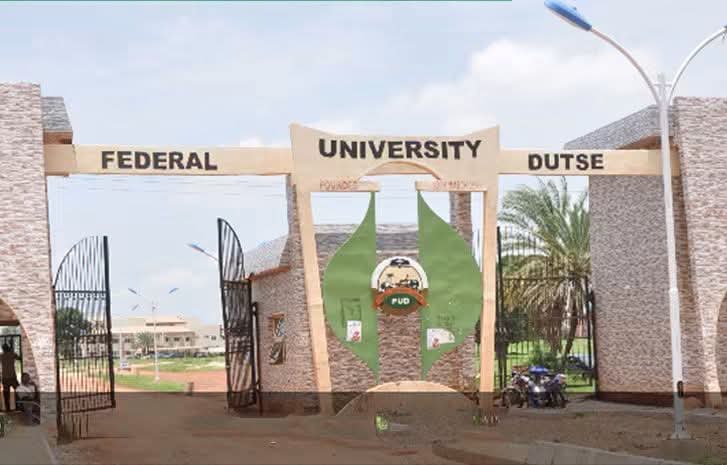
NUC Approves 30 New Programmes for FUD, Including Law, AI, Data Science
By Ibrahim Yunusa
The National Universities Commission (NUC) has approved the commencement of the Faculty of Law at Federal University Dutse (FUD), alongside 30 new full-time academic programmes beginning from the 2026/2027 academic session. The approval was contained in a letter dated September 11, 2026, signed by the Director of Academic Planning, NUC, Abubakar M. Girei, and addressed to the Vice-Chancellor, Prof. Ahmad Mohammed Gumel.
The newly approved programmes cover diverse fields, including Artificial Intelligence, Data Science, Information Systems, Common and Islamic Law, Community Health, Medical Laboratory Science, Human Nutrition and Dietetics, Physiotherapy, Radiography, Optometry, Parasitology and Entomology, Environmental Standards, Water Sanitation and Hygiene, Applied Geology and Remote Sensing, as well as several education programmes.
At the postgraduate level, NUC also approved PGD, M.Sc. and Ph.D. programmes in Forestry and Wildlife, Accounting, Treasury and Finance, Banking and Finance, and Information Technology, alongside Master’s programmes in Banking and Finance and Accounting and Finance. The development expands FUD’s academic offerings across technology, health, science, education and management disciplines.
The Vice-Chancellor, Prof. Ahmad Mohammed Gumel, described the approval as a significant milestone in his administration’s effort to introduce new academic programmes. He said the programmes were designed to respond to emerging educational needs and equip students with relevant skills for industry and societal challenges. However, admission into the MBBS programme will not take place in the 2026/2027 academic session due to ongoing restructuring and adjustments in the College of Medicine and Health Sciences.
Four Girls Die in Jigawa Boat Accident
By Uzair Adam
Four female passengers have died after a boat carrying eight people capsized at Dudduru Pond in Dutse Local Government Area of Jigawa State.
The incident occurred around 4:00pm on Wednesday, September 23, 2026, at the pond, located about three kilometres from Kwadige Village.
The Jigawa State Command of the Nigeria Security and Civil Defence Corps (NSCDC) confirmed the incident in a statement issued on Thursday by its Public Relations Officer, ASC Badruddeen Tijjani Mahmud.
According to the NSCDC, the boat was transporting eight passengers from Kwadige Village to Chai Chai Sabuwa Market when it capsized while crossing the pond.
It was gathered that strong winds prevailing at the time may have contributed to the accident.
Four passengers died in the incident, while the other four were rescued.
The deceased were identified as Hasiya Mu’azu, 13; Hauwa Lawan, 13; Fatima Lawan, 12; and Dawsiyya Lawan, 13.
The NSCDC said the remains of the four victims had been buried in accordance with Islamic rites.
The four survivors were rescued by farmers working around the pond shortly after the boat capsized.
Residents of Kwadige and Kuna communities also joined the rescue and recovery operations, assisting those affected by the incident.
The NSCDC State Commandant, CC Muhammad Kabiru Ingawa, expressed condolences to the victims’ families and the people of Kwadige community over the tragedy.
Ingawa urged residents who use waterways for transportation to exercise caution, especially during periods of strong winds and unfavourable weather conditions.
He also advised boat operators and passengers to observe basic water-safety measures and avoid travelling when weather conditions pose risks to their lives.
The NSCDC further urged communities and boat users to prioritise safety measures to prevent similar incidents on waterways across the state.
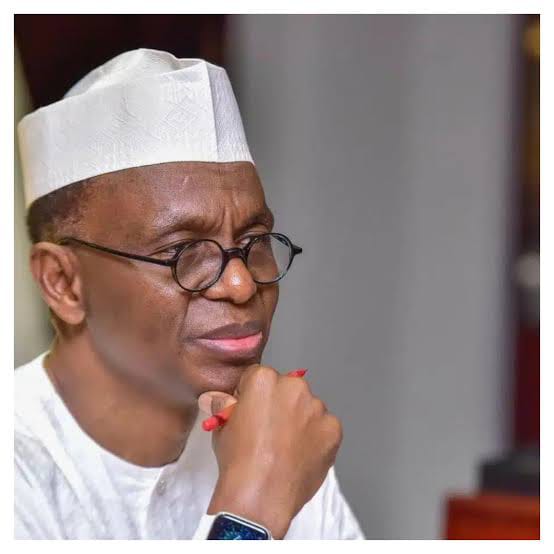
El-Rufai Breaks Silence on Friends Who Stayed Quiet: ‘I Bear No Resentment’
By Anas Abbas
Former Kaduna State Governor, Nasir El-Rufai, says he holds no bitterness toward friends, colleagues and relatives who have stayed silent during his current troubles. He says he leaves any judgment on those who wronged him to Almighty Allah.
In a statement titled “My Relationships and the Aftermath,” dated September 23, 2026, El-Rufai said some people had expressed concern over the apparent silence of those he had publicly stood by in the past. He described his own view as “quite simple.”
He said his support for people and causes over the years was guided by his Islamic faith, his Arewa upbringing, his personal values and his conscience. It was never done in expectation of praise, gratitude or reciprocity, he said, and he remains answerable for those choices.
El-Rufai said those he supported are equally free to choose how to respond now that circumstances have changed. Some may speak, others may stay silent, and some may even deny their past association with him. He said he would not judge them for responding differently from what he or others might have expected.
“Adversity has a way of illuminating relationships,” he said.
He added that what he has learnt in recent months may lead him to “quietly and without regret” reconsider certain relationships. He stressed that this was not reproach or condemnation, only “part of seeing people, and life, more clearly.”
He said he has no regrets about standing by anyone, would rather stay true to his principles than let others’ conduct redefine them, and seeks “neither revenge nor retribution” for any injustice or ingratitude.
He said ultimate accountability belongs to Almighty Allah, “in this world and in the Hereafter.”
El-Rufai closed by saying posterity will deliver its own verdict, and that his only concern is to remain at peace with his conscience and with Allah.
El-Rufai has been in the custody of the Independent Corrupt Practices and Other Related Offences Commission (ICPC) since February 19, as it investigates corruption allegations from his time as governor between 2015 and 2023.
He has cast himself as a victim of political victimisation.
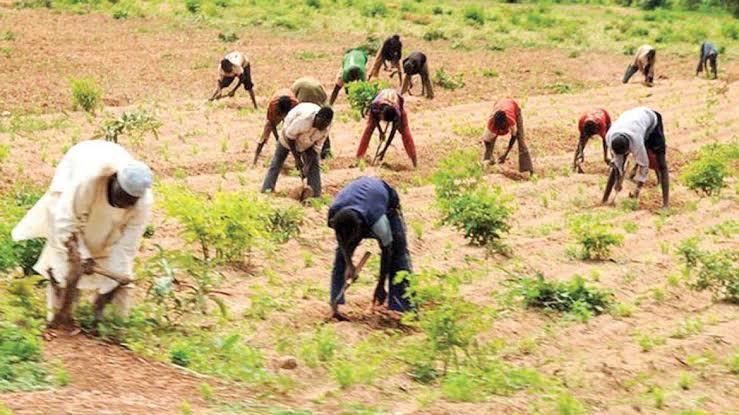
Kano Farmers, Herders Fear Fresh Clashes As Harvest Season Draws Near
By Sabiu Abdullahi
Farmers and herders in Kano State have expressed concern over a possible resurgence of clashes as the 2026 harvest season approaches.
The warning was issued by the state chairman of the All Farmers Association of Nigeria (AFAN), Abdullahi Ali Maibiredi, who said the longstanding dispute between farmers and herders had continued to affect livelihoods and, in some cases, led to destruction of property and loss of lives.
Maibiredi said authorities had yet to provide a lasting solution to the conflict despite its effects on agricultural activities across the state.
“I personally lost about 85 per cent of my crops last year, yet I did not see the necessary action taken to address the problem,” Maibiredi said.
He appealed to the relevant authorities to take preventive measures before the situation worsens and to promote peaceful relations between farmers and herders.
“We are calling on the authorities concerned to intervene and address this problem before it gets worse, especially now that we are entering the harvest period,” he said.
The chairman of the Miyetti Allah Cattle Breeders Association of Nigeria (MACBAN) in Kano State, retired Captain Abdullahi Bakoji, also acknowledged the concern and said the association had warned its members about the potential risks.
According to Bakoji, the anticipated return of transhumant herders from Niger to Kano before local farmers finish harvesting could create additional tension this year.
“In previous years, herders migrating to other areas, particularly from Niger, usually returned to Kano after the harvest. But this year, they are expected to return while harvesting is still ongoing,” Bakoji said.
He linked the expected early movement of the herders to water shortages in Niger and cautioned that their return could heighten the possibility of confrontations with farmers.
Bakoji said MACBAN had already communicated its concerns to the Kano and Jigawa state governments as well as security agencies.
“We have already sent reports and recommendations to the Kano and Jigawa state governments, as well as security agencies, so that preventive measures can be taken before the problem arises,” he said.
He also cited the closure and alleged illegal occupation of cattle routes, grazing areas and livestock resting points as some of the issues that have continued to fuel disagreements between farmers and herders.
“One of the roots of the problem is the way some cattle routes, grazing areas and livestock rest points have been closed or occupied illegally. We are therefore calling on the government to urgently look into the matter,” he said.
Bakoji further said MACBAN was prepared to work with relevant stakeholders towards resolving the issues and preventing further conflict.
Farmer-herder disputes have remained a longstanding issue in several parts of Nigeria, with some incidents resulting in deaths and the destruction of property.
In Kano State, however, the situation has reportedly recorded some improvement in recent years, although stakeholders remain concerned about possible tensions during the current harvest period.
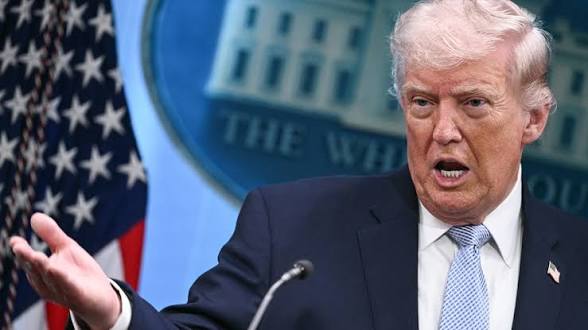
US Lobbying Firm Says Washington Won’t Allow Tinubu To Rig 2027 Election
By Sabiu Abdullahi
A United States-based political advisory and lobbying firm, Von Batten-Montague-York, has claimed that the US would not allow President Bola Tinubu to rig Nigeria’s 2027 general elections.
The firm made the claim in a post published on its verified X account on Thursday.
Von Batten-Montague-York also alleged that there is growing agreement across Nigeria’s political divide that the Federal Government and President Tinubu represent what it described as a bastion of corruption.
The firm further alleged that Tinubu appointed as Nigeria’s budget minister an individual whom the US Department of Justice had accused of embezzling billions of dollars from Nigeria’s treasury under a previous administration.
In its post, the firm said:
“The US cannot afford to allow President Tinubu to rig the upcoming Nigerian election.
“This level of lawlessness in the Nigerian government puts Nigeria on a path similar to those seen in Niger, Mali and Burkina Faso.
“Free and fair elections in Nigeria are essential to protecting US interests in Nigeria and the broader region,” the firm tweeted.
The latest comments come amid growing political activity ahead of the 2027 general elections, with opposition parties and political actors intensifying their preparations for the poll.
Von Batten-Montague-York has previously made several claims about the Tinubu administration and Nigeria’s electoral process. Public filings with the US Department of Justice show that the firm entered into a government-affairs and strategic-advisory agreement with former Vice President Atiku Abubakar in February 2026.
The firm’s latest statement represents its own position and should not be taken as an official statement from the United States government.
The allegations concerning the proposed conduct of the 2027 election and the claims about corruption were not independently established in the statement.
The 2027 general elections are expected to be a major political contest, with President Tinubu and opposition figures preparing for the race.
Borno Vigilante Commander, Four Others Killed In Kala-Balge Attack
By Sabiu Abdullahi
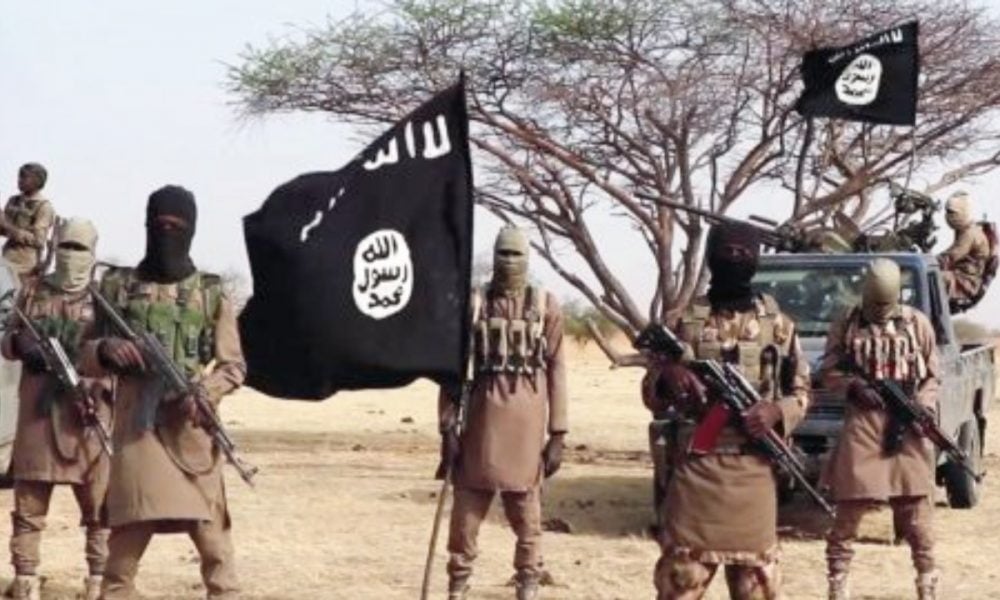
A suspected Boko Haram/ISWAP attack on Wumbi community in Kala-Balge Local Government Area of Borno State has left a vigilante commander and four civilians dead.
The Borno State Police Public Relations Officer, ASP Kenneth Daso, confirmed the incident on Wednesday.
Daso said a vigilante leader and four other people were killed during the attack, adding that further details would be made available when they become known.
Sources said the incident occurred on Monday, September 21, but news of the attack was delayed because telecommunications services were unavailable in the area.
According to one of the sources, the terrorists arrived in large numbers and were armed with rifles, improvised explosive devices and other weapons.
The attack reportedly forced several farmers to flee the community.
The vigilante commander, according to the source, remained behind but was eventually surrounded and killed by the attackers. The terrorists were also said to have placed an explosive device on his remains before leaving the area.
Members of the Civilian Joint Task Force (CJTF), other vigilantes and civilians later mobilised to evacuate the remains. However, the explosive device reportedly detonated, killing four more people and injuring several others.
Wumbi is an agrarian community close to the Cameroon border. The community has largely been deserted due to insecurity, while some residents have reportedly moved across the border and return to the area to farm under the protection of CJTF members and vigilantes.
The circumstances of the attack could not be independently verified.
Meanwhile, Mustapha Babani, the All Progressives Congress (APC) candidate for Bama/Ngala/Kala-Balge Federal Constituency in the 2027 elections, expressed condolences to the families of the victims and residents of Wumbi.

Former Super Eagles Captain Troost-Ekong Embraces Islam
By Muhammad Abubakar
Former Super Eagles captain William Troost-Ekong has embraced Islam in Doha, Qatar, where he currently plays club football.
A video circulating online shows the Nigerian international reciting the Shahadah, the Islamic declaration of faith, marking his reported conversion to Islam.
Troost-Ekong, who has captained Nigeria at international level, has attracted widespread attention from football fans following the development.
TMG Appeals To Atiku For Talks On Unified Opposition Ahead Of 2027
By y Sabiu Abdullahi
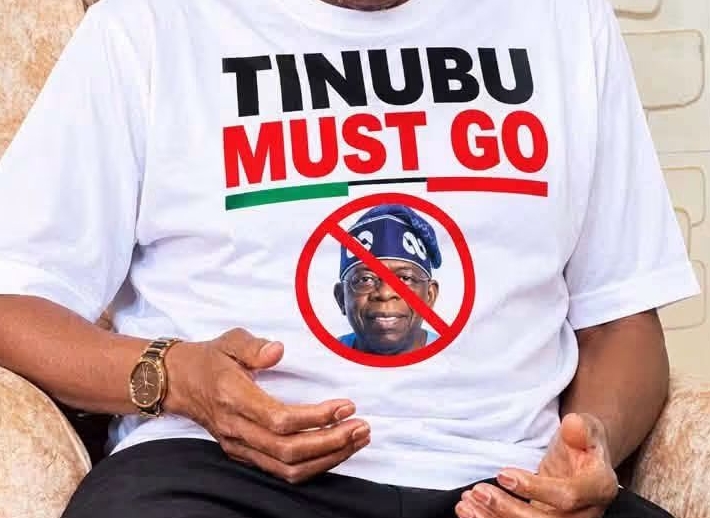
The Tinubu Must Go (TMG) movement has appealed to former Vice President Atiku Abubakar, the presidential candidate of the African Democratic Congress (ADC), to enter discussions with other opposition figures on the possibility of forming a united platform ahead of the 2027 presidential election.
The appeal was contained in a letter dated September 22, 2026, with the reference number TMG/NAT/2026/001 and addressed to Atiku through the National Chairman of the ADC.
The letter, titled “REQUEST FOR DIALOGUE TOWARDS A UNITED OPPOSITION FRONT FOR THE 2027 PRESIDENTIAL ELECTION,” said the group seeks discussions among major opposition figures on a possible consensus presidential candidate.
TMG described itself as a citizen-led movement whose members have put aside individual and partisan preferences in pursuit of what it described as a united opposition capable of presenting an alternative to the current administration.
The movement cited insecurity, economic pressures, inflation, poverty and unemployment among the issues it said have strengthened the case for opposition cooperation.
On insecurity, the group referred to figures from SBM Intelligence’s report, “The Capture of the Kidnap Economy”, which covers the period from July 2025 to June 2026. According to the letter, the report recorded 7,825 abducted persons and 1,142 deaths across 1,411 recorded kidnapping incidents out of 1,713 total kidnapping-related events.
The letter also stated that Northern Nigeria accounted for 93.7 per cent of reported abductions and 96 per cent of civilian fatalities in the period covered by the report, while Southern Nigeria accounted for 6.3 per cent of abducted victims.
On the economy, TMG said high inflation and food prices had reduced household purchasing power and placed essential commodities beyond the reach of many families.
The movement also cited rising energy costs, electricity and fuel tariffs, grid failures, poverty and youth unemployment as issues it said required urgent attention.
TMG said its immediate request was for opposition leaders to meet, engage in good faith and consider possible compromises that could produce a single consensus presidential candidate.
“We do not presume to dictate who should lead, who should concede, or what specific power-sharing arrangement should emerge,” the letter stated.
It added that such matters should be resolved through direct discussions among the opposition leaders.
“Our guiding principle is clear: the broader national interest must be given room to prevail before individual political ambitions become irreconcilable.”
The movement said it plans to hold an internal consultation among its supporters on Thursday, September 24, 2026, to assess their current preferences in the event that the organisation eventually decides to consolidate its grassroots structure behind a single platform.
However, TMG stressed that any internal consultation would remain secondary to whatever voluntary consensus the opposition candidates themselves might reach.
“Every major opposition figure, along with their respective political structures and supporters, remains indispensable to this national rescue project before, during, and after the election,” the letter said.
“Our mission is coalition-building, not exclusion.”
The group further told Atiku that it recognised his presidential ambition as part of a broader desire to serve Nigerians and change the country’s direction.
It argued that opposition cooperation could provide a means for the various political figures to work together, while also allowing their respective political structures and supporters to retain a role in the wider political process.
TMG urged whoever eventually emerges as the consensus candidate to maintain cooperation with other opposition leaders and their supporters.
It also called for an administration that would draw on the capabilities of the various partners if the coalition receives the mandate of Nigerian voters.
The movement specifically asked Atiku to open high-level discussions with other leading opposition candidates in order to identify areas of common ground.
“Political dynamics evolve rapidly as elections approach; consequently, the door to dialogue, compromise, and strategic alliance must remain open to the very end.”
TMG also requested an opportunity for a delegation from the movement to meet Atiku in person to formally present its appeal and discuss practical steps towards further dialogue.
The letter was signed by Abba Hikima, Esq., for Tinubu Must Go (TMG).
In a separate statement contained at the end of the letter, TMG said any formal response from Atiku or his political party could be communicated through verified social media accounts.
The statement reads:
“In the interest of complete transparency and to engage the millions of young, digital-first Nigerians following this initiative, any formal reply or statement regarding this appeal may simply be posted directly on the verified social medial handle (X, Facebook, Instagram) of Your Excellency or your political party under the hashtag #TMG. Any such post shall be deemed as having officially reached us and served upon the TMG leadership and nationwide community”.
CBN’s New Monetary Reset: Recalibrating Policy for a More Stable Nigerian Economy
By Salmanu Isah Darazo
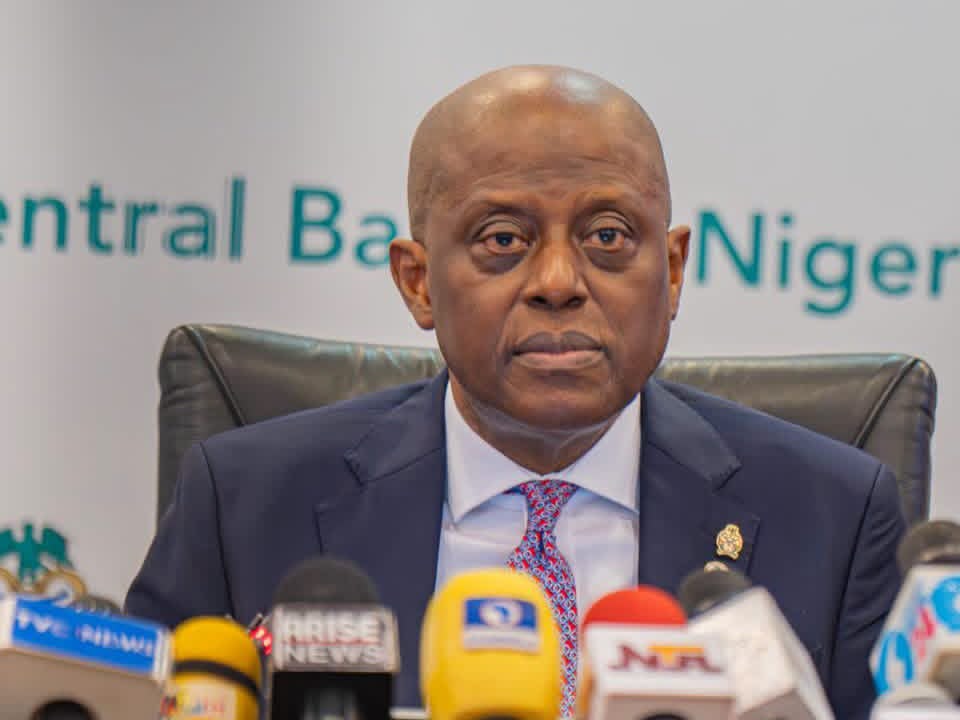
The Central Bank of Nigeria (CBN), is entering another important phase in its monetary-policy reform journey, with the Monetary Policy Committee’s latest decision to reset the Monetary Policy Rate (MPR) at 23 per cent and recalibrate the Standing Facilities Corridor marking a significant operational adjustment in the way monetary policy is transmitted across the Nigerian financial system.
At its 307th meeting held on September 21 and 22, 2026, the MPC approved a corridor of +50/-300 basis points around the MPR, while retaining the Cash Reserve Requirement at 45 per cent for Deposit Money Banks, 16 per cent for Merchant Banks and 75 per cent for non-TSA public-sector deposits. The CBN says the measures are designed to strengthen monetary-policy transmission and reinforce the MPR as the principal signal of monetary policy.
The significance of the decision goes beyond the headline 23 per cent rate. At the heart of the latest move is the CBN’s attempt to correct a structural weakness that had emerged between the official policy rate and prevailing market rates. According to the MPC, this divergence had weakened the effectiveness of monetary-policy transmission. The Bank’s ongoing repair of its monetary-policy implementation framework, including the adoption of the Nigerian Overnight Funding Rate (NOFR) as a transaction-based operational benchmark, is intended to make money-market operations more transparent and ensure that the MPR carries greater influence over financial conditions.
This is therefore less about simply moving an interest-rate number and more about strengthening the machinery through which the CBN implements monetary policy. The Committee was explicit that the corridor recalibration should not be interpreted as a change in the underlying monetary-policy stance. Rather, it described the move as an operational realignment intended to improve transmission and support Nigeria’s transition towards an inflation-targeting framework.
The timing is equally important. The CBN is making this adjustment against the backdrop of improving macroeconomic indicators. Headline inflation fell marginally from 15.43 per cent in July to 15.39 per cent in August 2026, while food inflation declined from 20.31 per cent to 19.57 per cent. Core inflation also fell significantly, from 14.97 per cent to 13.29 per cent. The 12-month moving average of headline inflation has now moderated for 20 consecutive months, according to the MPC.
For the CBN, perhaps more important than the individual monthly figures is the broader direction of travel. The Committee linked the moderation in inflation to the effects of earlier monetary-policy tightening, exchange-rate stability and improved inflation expectations. That assessment suggests that the Bank believes previous policy measures are increasingly feeding through into the wider economy, creating room to concentrate more heavily on improving the efficiency of its policy framework.
The real economy is also providing the CBN with a stronger platform for this recalibration. Nigeria’s real GDP expanded by 4.43 per cent in the second quarter of 2026, compared with 3.89 per cent in the first quarter. Both oil and non-oil sectors recorded stronger performances, while the Purchasing Managers’ Index climbed to 52.7 points in August from 51.1 points in July, pointing to continued expansion in business activity.
Perhaps the strongest evidence of improved external-sector conditions is found in the country’s reserves and balance-of-payments position. Gross external reserves stood at US$55.25 billion as of September 18, 2026—the highest level in 18 years and equivalent to approximately 11.3 months of import cover. Meanwhile, the balance-of-payments surplus increased to US$3.51 billion in the second quarter from US$2.38 billion in the first quarter, while the current-account surplus rose by 67.92 per cent to US$7.54 billion.
Taken together, these indicators explain why the CBN sees sufficient “headroom” for the operational reset. The Bank is effectively trying to consolidate gains already made in inflation, foreign-exchange stability, external reserves and financial-system resilience while making its monetary-policy transmission mechanism more coherent and predictable. The successful recapitalisation of the banking sector, which the MPC says has strengthened capital buffers and banks’ capacity to finance long-term projects, forms another important component of this evolving architecture.
The recalibration also comes at a time when the CBN is placing greater emphasis on coordination between monetary and fiscal authorities. The communiqué highlights the Memorandum of Understanding on fiscal-monetary coordination between the Federal Government, represented by the Ministry of Finance, and the CBN. The stated objective is to provide a structured framework for policy harmonisation towards achieving low and stable inflation.
That coordination could prove particularly important because the CBN’s outlook is not without risks. The Bank identifies prolonged geopolitical tensions in the Middle East, elevated global energy prices and election-related spending as potential sources of renewed inflationary pressure. Globally, growth is projected at 3.0 per cent in 2026, down from 3.5 per cent in 2025, while supply-chain disruptions, commodity-price pressures and trade fragmentation continue to pose risks to the global inflation outlook.
The emerging picture, therefore, is one of a CBN seeking to move from emergency-style monetary tightening towards a more structured and rules-based monetary-policy framework. The 23 per cent MPR is only one part of that story. The deeper story is the effort to ensure that the policy rate actually performs its intended function as the principal monetary-policy signal, with market operations, benchmarks and standing facilities working around it in a more transparent and effective manner.
For Governor Olayemi Cardoso and the CBN, the latest MPC decision consequently represents another chapter in the broader institutional rebuilding of Nigeria’s monetary-policy framework. The immediate challenge will be implementation: whether the recalibrated corridor succeeds in improving transmission without disrupting the disinflation process, while maintaining exchange-rate stability and supporting economic expansion.
The MPC has committed to evaluating the effectiveness of the new corridor and keeping future decisions data-dependent. Its next meeting is scheduled for November 23 and 24, 2026. The direction of monetary policy from that point will provide another important test of whether the current combination of easing inflation, stronger external buffers, expanding output and improved market transmission can be sustained.
Ultimately, the September 2026 decision is best understood not simply as another MPC rate announcement, but as an attempt by the CBN to make Nigeria’s monetary-policy system work more precisely. With inflation moderating, reserves strengthening, output expanding and the financial system undergoing recapitalisation, the Bank is using the present macroeconomic window to recalibrate the machinery of monetary policy—placing the MPR more firmly at the centre of the framework and laying another institutional foundation for a more effective inflation-targeting regime.
Salmanu Isah Darazo is a publisher, analyst and editor. He can be reached via Salmanudrz@gmail.com