
Trump Presses Xi To End Chinese Support For Iran
By Sabiu Abdullahi
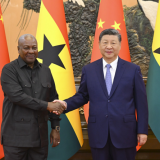
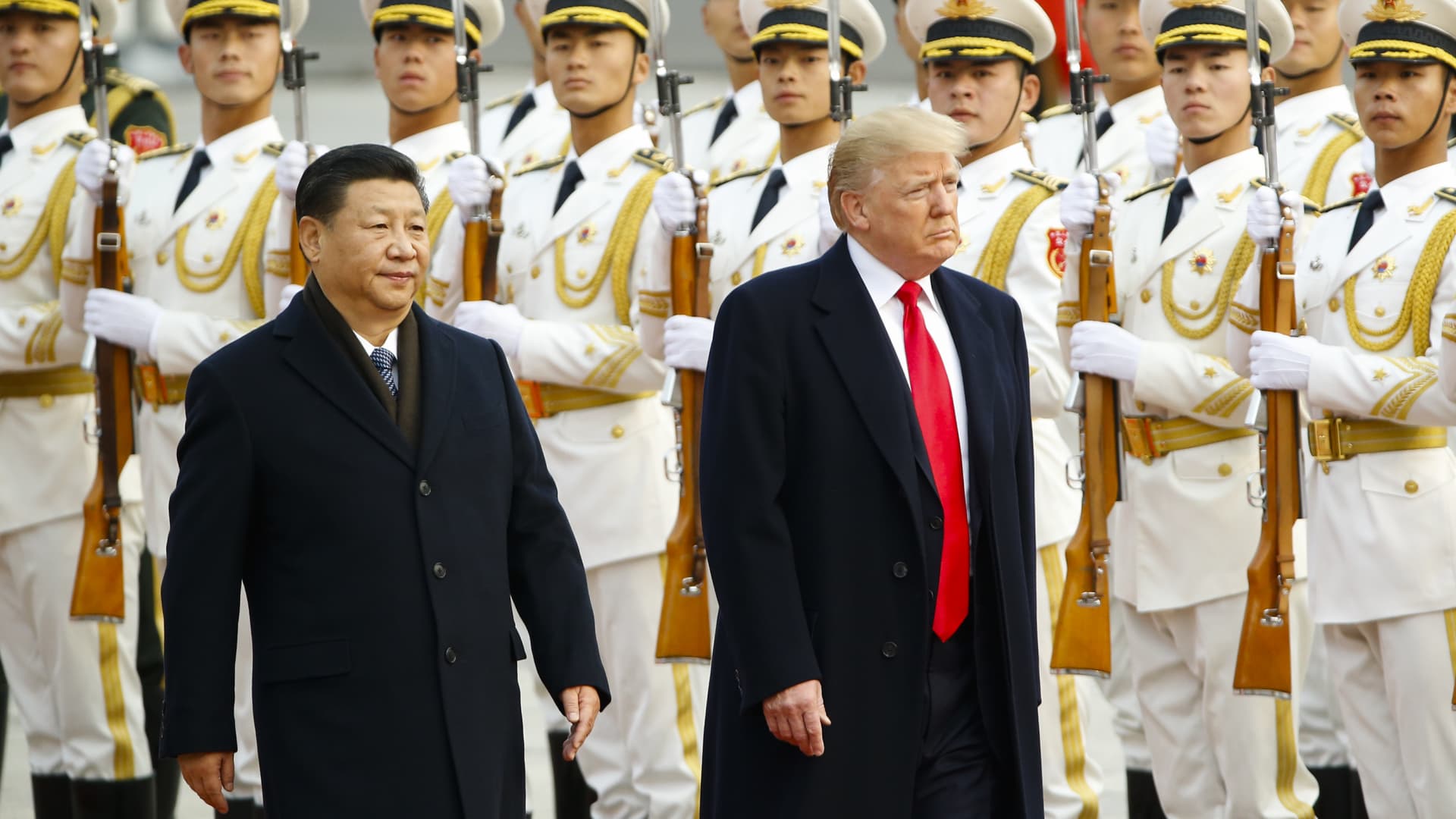
US President Donald Trump has urged Chinese President Xi Jinping to stop any form of Chinese assistance to Iran, according to the US ambassador to China, David Perdue.
Perdue disclosed the matter after Trump and Xi met at the White House, saying Washington considers any support from Beijing to Tehran unacceptable.
The ambassador said Trump “did a great job making sure China knows this is unacceptable,” and indicated that the US had observed some movement from China on the issue.
“We’ve seen movement on that already,” Perdue told Fox News. “That’s what commitment is. They assured us they aren’t doing that.”
Trump and Xi met again at the White House on Friday before visiting the National Archives, as the Chinese president concluded a three-day conference.
During remarks over tea in the White House Red Room, both leaders spoke positively about relations between the two countries.
“America is very happy about this visit,” Trump stated. “I’m sure China is very happy also.”
Xi described China-US relations as having reached a state of “strategic stability”.
The Chinese president also said he looked forward to meeting Trump at the APEC summit in China and the G20 summit in Miami.
Xi’s visit took place amid the ongoing 81st session of the United Nations General Assembly in New York. However, the Chinese president did not attend the gathering of world leaders.
The reported discussion over Chinese assistance to Iran comes amid heightened tensions involving Tehran and the United States and its allies.
UK Foreign Secretary Faces Backlash Over Handshake With Iranian Counterpart
By Anwar Usman
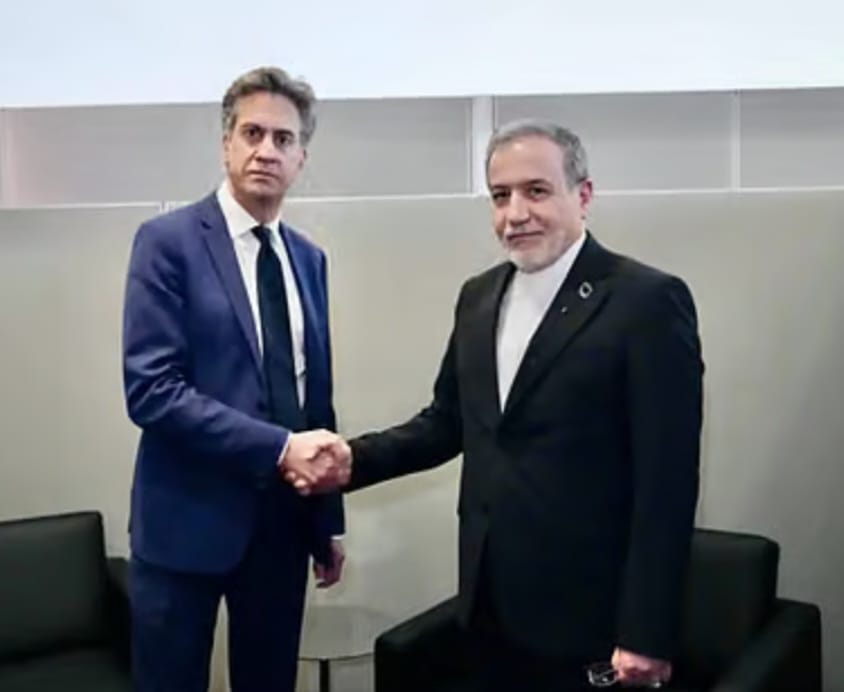
British Foreign Secretary Ed Miliband has come under criticism after he was photographed shaking hands with Iranian Foreign Minister Abbas Araghchi during a meeting on the sidelines of the United Nations General Assembly in New York.
According to GB News on Friday, Miliband met Araghchi on Thursday as the two discussed the conflict in the Middle East, the importance of reopening the Strait of Hormuz and threats linked to Iran on British soil.
The meeting prompted criticism from Shadow Foreign Office Secretary Tom Tugendhat, who described the encounter as “legitimising a regime that has often tried to harm our people.”
He said: “The Iranian regime has done nothing to justify any senior British minister meeting their envoys.
“They are murdering protesters, threatening our allies and arming terror groups, including the Houthis. As well as threatening communities in the UK. Shaking hands gives them a credibility they have failed to achieve through violence.
“This is just grandstanding. Iran’s civilian government isn’t even in charge. Today, the Islamic Revolutionary Guard Corps is running the country.
“Our foreign policy should be about protecting Britain’s interests, not legitimising a regime that has often tried to harm our people, fund terror groups, and destroy the freedoms that keep us safe.
“Our government fundamentally misunderstands the challenges we face, using old tactics to fight new threats. Our enemies are organising, so we need to show strength and unity with our allies.”
Shadow Foreign Office minister Alicia Kearns also criticised the meeting in a post on X.
She said: “How dare Miliband shake Araghchi’s hand. He owes Parliament, British Jews, and the Foreman family an explanation and an apology.
“A propaganda win for Tehran, that’s what Miliband has given Iran. This is not an ally who’s misbehaving, so you make a stern face while shaking their hand.”
However, the UK Foreign Office said Miliband used the meeting to warn Araghchi that Britain would not tolerate intimidation, threats or hostile activity on British soil from groups linked to Iran.
The Foreign Office said the discussions also covered the war in the Middle East and the importance of reopening the Strait of Hormuz.
The meeting came as world leaders and senior officials gathered in New York for the 81st UN General Assembly.
US Must Decide Whether to End War, Iran President Says
By Anwar Usman
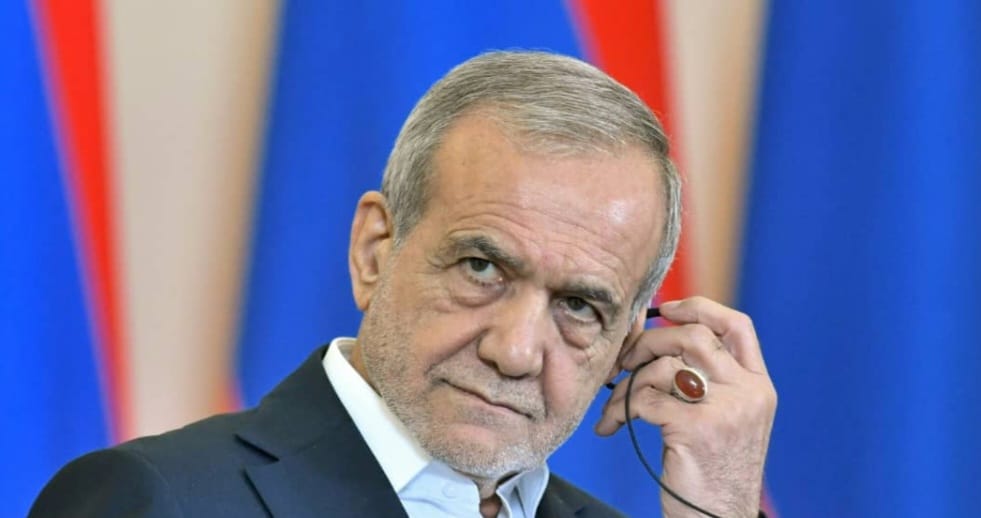
Iranian President Masoud Pezeshkian has said it is up to the United States to decide whether to end the ongoing war with Iran, stressing that Tehran does not want the conflict to continue. Pezeshkian made the remarks during an interview with a US television station on Thursday.
Pezeshkian took a defiant stand at the UN Wednesday, for which he travelled to New York, telling the world that Iran would not “bend at the knee” to Washington — even as US President Donald Trump acknowledged ongoing US-Iran talks.
“When we can resolve issues through dialog, we shouldn’t resort to killing one another. But with the instigations conducted by Israel, they have imposed this war on us,” he said on Fox News’ “Special Report with Bret Baier.”
“But we do not wish to continue. It’s America that must choose whether it wants to end this or not,” he remarked.
Pezeshkian insisted Iran was ready to strike a deal with Trump to end the conflict.
“Why is it that within two weeks after the signing of an agreement, they chose to blow it up?” he said of the collapse of a shaky ceasefire.
“If the current American government, within international legal frameworks, wishes to reach an agreement, fine. If not, before the (US midterm) elections or after the elections, what difference does it make for us?”
Recall tht, the Iranian Foreign Minister Abbas Araghchi took part in a meeting with Trump’s roving envoy Steve Witkoff and son-in-law Jared Kushner on the sidelines of the UN General Assembly in New York. Their talks did not immediately yield a breakthrough.– Houthi backers?
As violence raged between Yemen’s Houthi militant movement which is widely seen to be Iran-backed and Saudi Arabia and its Yemeni allies, Pezeshkian insisted the Houthis do not take direction from Tehran’s government.
Washington and its allies, including Saudi Arabia, and the Saudi-backed Yemeni government, accuse Iran of backing the Houthi militant movement that is raining ballistic missiles on the kingdom, and battling Riyadh-backed forces for control of Yemen.
AFP reports that, Saudi Arabia intercepted Houthi ballistic missiles on Thursday after issuing warnings for several regions including Mecca.
The Houthis have imposed a naval blockade on Saudi Arabia, hitting its tankers and territory and seizing swathes of Yemen’s Red Sea coast, which is vital for Saudi oil exports, causing energy prices to jump.
Their gains cemented the hold of Iran and its allies on the two waterways that the wider Gulf, including top crude exporter Saudi Arabia, relies on to ship out its oil and other fuel products.
Jigawa Police Arrest Seven Over Alleged Cattle Rustling, Recover Eight Cows
By Uzair Adam
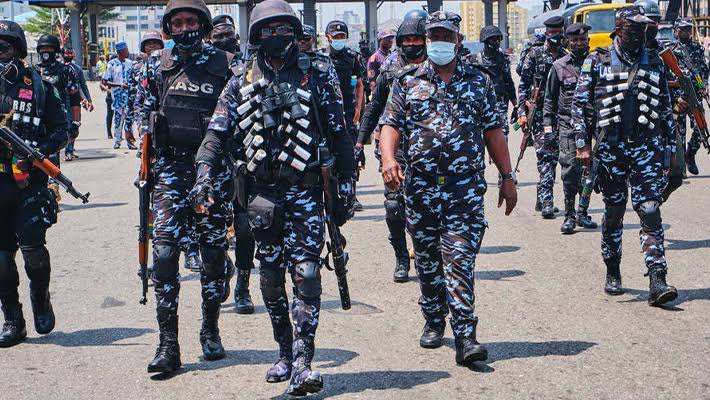
The Jigawa State Police Command has arrested seven suspected members of a cattle-rustling syndicate allegedly operating across Garki, Jahun and Miga Local Government Areas of the state.
The Daily Reality reports that the suspects were arrested during routine patrols following actionable intelligence and information from members of the public about their alleged activities.
The operation also led to the interception of two vehicles allegedly used by the suspects and the recovery of eight cows suspected to have been rustled.
The Police Public Relations Officer, DSP Lawan Shiisu Adam, disclosed this in a statement issued on Thursday, September 24, 2026.
According to him, the arrests and recoveries followed sustained intelligence gathering, community engagement and intensified patrols in identified flashpoints and vulnerable areas across the state.
The suspects were identified as Sulaiman Tijjani, 20, of Gunka Village, Jahun LGA; Abdullahi Musa, 40, of Chai-Chai Village, Ringim LGA; Bala Muhammad, 30, of Ayama Village, Auyo LGA; Isah Adamu, 27, of Tagwai Village, Miga LGA; Yusuf Sa’idu, 32, of Kukui Village, Taura LGA; Mansur Usaini, 29, of Majiyawa Village, Ringim LGA; and Kaku Abubakar, 27, of Jajimaje Village in Yobe State.
The command said the vehicles recovered were a dark blue Golf car with registration number WRA 158 FU and an ash-coloured Golf 3 Wagon with registration number ABJ 493 HN, Abuja.
The eight cows were also recovered and are being kept as exhibits.
The Commissioner of Police, Jigawa State Command, CP Tijjani Murtala, commended the officers involved in the operation for their vigilance, courage and professionalism.
He also appreciated members of the public whose timely information contributed to the arrest of the suspects and recovery of the livestock.
The police said the seven suspects remain in custody and are assisting investigators with useful information.
It added that efforts were ongoing to identify other alleged members of the syndicate and recover additional rustled livestock.
The command urged residents to continue providing timely and credible information to security agencies to help combat cattle rustling and other criminal activities across the state.

Ulama Forum Condemns Niger State Killings, Mambilla Attacks, Demands Justice
By Muhammad Abubakar
The Ulama Forum in Northern Nigeria has strongly condemned the killing of 37 young Nigerians, including teenagers as young as 16, by personnel of the Nigeria Security and Civil Defence Corps (NSCDC) in Niger State.
In a press release signed by Convener Aminu Inuwa Muhammad and Secretary Engr Basheer Adamu Aliyu, the Forum described the killings as “shocking, disgusting and dastardly” and called for a thorough, independent and transparent investigation.
The Forum also raised alarm over reports of armed tribal militants attacking Fulani settlements in Mbamnga, Mambilla, Taraba State, particularly Wuro Geroji, where several people and livestock were reportedly killed, homes burnt, and hundreds of women and children forced to flee to Cameroon.
The Ulama Forum urged the Federal Government to ensure appropriate compensation and relief (diyyah) for victims’ families, strengthen security in vulnerable communities, prosecute those found culpable, provide humanitarian assistance to displaced persons, and facilitate the safe return of those who fled to Cameroon.
It emphasised that the protection of human life remains a fundamental responsibility of government and security institutions, stressing that every Nigerian deserves protection regardless of ethnicity, religion or location.
The Forum extended heartfelt condolences to the families of the victims and prayed for eternal rest for the departed, healing for the injured and displaced, and lasting peace, security and justice for Nigeria.

Rodri Lists Six Spain Teammates He Believes Deserve 2026 Ballon D’Or
By Sabiu Abdullahi
Barcelona midfielder Rodri has identified six Spain teammates he believes have strong claims to win the 2026 Ballon d’Or.
The prestigious individual award is scheduled to be presented next month in London, with Rodri himself among the 30 nominees.
The midfielder was part of the Spain squad that won the 2026 FIFA World Cup, where he was also named the tournament’s best player.
Rodri said he would prefer to see a Spanish player receive the award this year.
“What I would really like is for a Spaniard to win it,” Rodri said as per Goal.
He went on to mention five other Spain players alongside himself who are nominated for the prize.
“There are six of us [nominated]: Cucurella, Cubarsi, Rodri, Ruiz, Lamine, and Ferran.
“I can tell you that, individually, every one of them absolutely deserves the Ballon d’Or. I think all my teammates have solid arguments.”
The players named by Rodri are Marc Cucurella, Pau Cubarsí, Rodri, Fabián Ruiz, Lamine Yamal and Ferran Torres.
The final winner of the 2026 Ballon d’Or will be announced at the ceremony in London next month.
Iran Warns War Could Spread to Indian Ocean
By Abdullahi Mukhtar Algasgaini
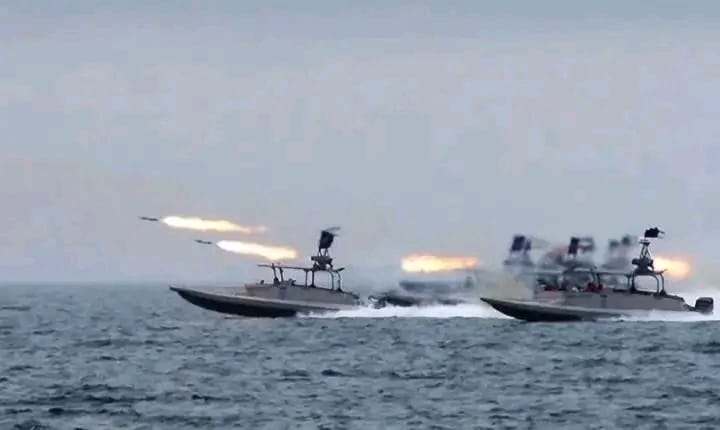
A senior Iranian military adviser has warned that Iran could expand the battlefield to the Indian Ocean if the United States or Israel launches another attack.
Yahya Rahim Safavi said the conflict has already spread from the Persian Gulf and the Strait of Hormuz toward the Red Sea, and that further escalation could push fighting into the Indian Ocean.
The warning carries strategic significance because the Indian Ocean hosts key military installations, including the US-British base at Diego Garcia.
Safavi’s remarks came as Iranian and US representatives continued indirect talks on the sidelines of the UN General Assembly in New York, aimed at preventing further escalation.
Iran maintains that sanctions relief and the unfreezing of its assets are essential to ending the conflict and restoring shipping through the Strait of Hormuz.
Delegates Walk Out As Netanyahu Addresses UN General Assembly
By Sabiu Abdullahi
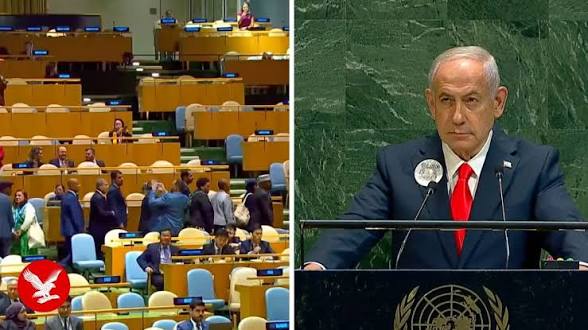
Delegates from several countries staged a walkout at the United Nations General Assembly (UNGA) on Thursday as Israeli Prime Minister Benjamin Netanyahu began his address.
The protest echoed a similar demonstration during Netanyahu’s speech at the UNGA session last year.
While many diplomats left the chamber, some remained in the hall and applauded the Israeli prime minister. A section of those who stayed also chanted “Am Yisrael Chai,” which translates to “The people of Israel live”.
Netanyahu responded by attacking those who walked out, describing them as “moral cowards”.
“If there are any other moral cowards who haven’t yet left this hall, please do so now,” Netanyahu said.
The Israeli leader also defended Israel’s military action against Iran, arguing that the operation was necessary to prevent a greater threat.
He said that if Israel had not carried out the strikes, “we’d all be dead”.
“Devastating Iran’s nuclear facilities was hard. It was very hard to do. But for me, it was one of the easiest decisions I’ve ever had to make as prime minister,” he said.
Netanyahu further claimed that the collapse of the Iranian government was “only a matter of time”.
He said the Iranian people “will be free” one day.
The Israeli prime minister also criticised European countries over their decision to impose sanctions on Israeli settlements in the occupied West Bank.
During the address, Netanyahu also criticised Turkish President Recep Erdoğan, whom he described as a “tyrant” who hosts Hamas leaders.
Why the Combustion Engine Will Outlast the Electric Vehicle Hype — In Nigeria and Everywhere Else
By Hamisu Adamu Dandajeh
Electric vehicles (EVs) are often called “inevitable”. The only question, we’re told, is timing. Nevertheless, the data says otherwise. Even the world’s most electrified economies remain overwhelmingly combustion-powered on the road. Nigeria’s constraints run deeper still. They are not only rooted in physics, minerals and money, but also on political willpower.
Start with Norway. It is the closest thing the world has to a completed EV transition. Battery-electric vehicles made up 96–97% of new car sales in 2025. Decades of tax breaks, toll discounts and bus-lane access built that number. But look at the cars actually on Norwegian roads, not the ones sold this year. Only a third of the total fleet is electric. That is the highest share in the world. And it still leaves two-thirds of Norway’s cars running on combustion. Sales dominance and fleet electrification are not the same thing. That gap is the central fact of this entire debate.
Other countries make the point harder. China crossed 50% EV sales penetration in 2025. Its road fleet is still only about 13% electric. Germany’s EV sales share collapsed from 29% to 19% when subsidies were cut, then recovered to 28% once they returned. Adoption moves with subsidy, not momentum. The US sits at roughly 10% of new car sales, stalled since federal tax credits expired. Japan’s EV sales share fell from 3% to 2% in 2025.
Globally, the EV fleet reached about 116 million units in 2026. The world’s total car fleet exceeds one billion vehicles. China alone holds 61% of all EVs on earth. A 30% sales share this year still means a fleet penetration of five to seven per cent. Cars last fifteen to twenty years. Old stock does not disappear because new sales shift. This is steady progress. It is not imminent replacement.
Nigeria’s problem is a different category of constraint. The national grid serves over 220 million people. It generates between 4,000 and 4,800 megawatts on a good day. That is about 20 watts per person. Pakistan manages 180. Indonesia manages 250. The United States manages 3,530; 176 times Nigeria’s figure. You cannot charge an EV fleet on a grid that cannot keep the lights on. Nigeria’s grid still collapses outright. Generation crashed to 20 megawatts nationwide in January 2026.
Nigeria’s Energy Transition Plan targets 60% EV fleet share by 2050. Today, EVs are under 1% of the country’s vehicles. That is a few tens of thousands of cars; by industry estimate, no official figure exists. Import duty waivers pushed nearly 4,000 more EVs into the country in the first half of 2026. They are landing in a market where the grid runs at 30% of installed capacity. Barely half the population has a grid connection at all. Public charging stations number around a dozen nationwide.
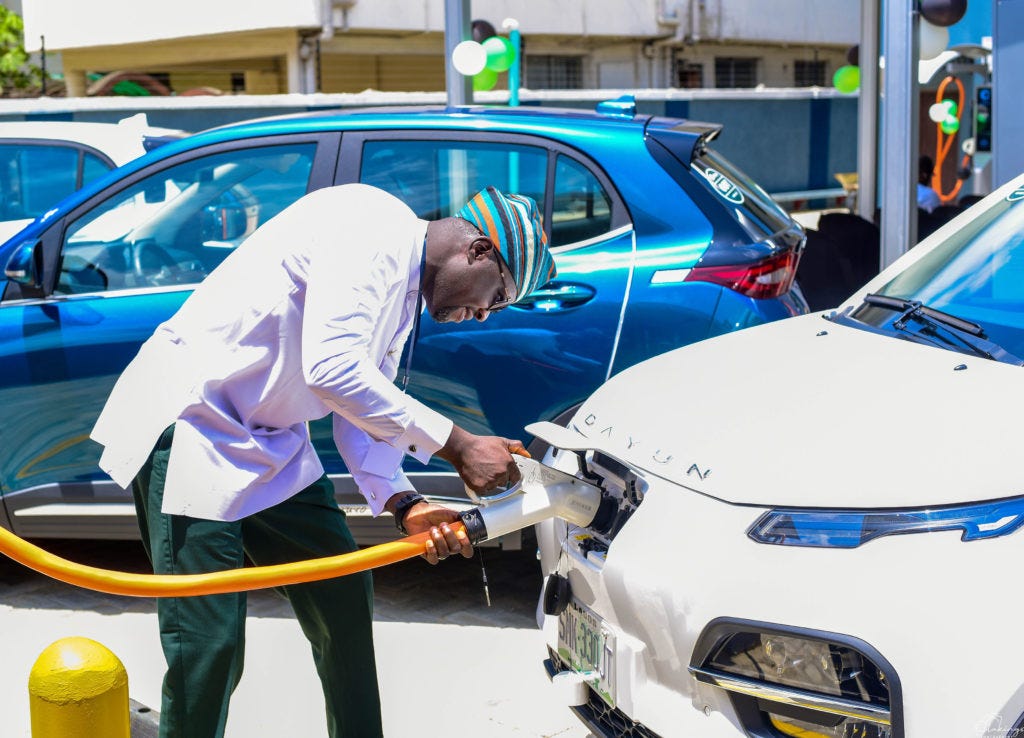
Here is the telling part. Nigerian charging operators now run diesel and petrol generators to keep their own chargers working when the grid fails. The EV system depends on the fuels it is meant to replace. A car charged from a diesel generator is not a clean-energy solution. It is a combustion engine with an expensive extension cord.
Electric two- and three-wheelers are the exception. They are gaining real ground, often paired with solar charging. They already beat petrol bikes on lifetime cost. But a solar-charged motorcycle and a grid-dependent passenger car are different problems. Confusing the two is where much of the optimism about Nigeria’s EV transition breaks down.
Four structural constraints hold the combustion engine in place even in wealthy, grid-secure economies. Minerals come first. The cobalt supply gap is projected to widen from 15% to over 25% by 2040. Lithium demand is set to more than triple. The real bottleneck is refining, not mining. China controls most of that capacity, regardless of where the ore comes from. Battery supply chains are nearly as exposed as the oil trade they aim to replace.
Grid capacity is the second constraint, and it is not just a developing-world problem. The US grid faces simultaneous demand growth from data centres, reshored industry, building electrification and EV charging. Data centre demand alone is forecast to more than double by 2035. Ninety per cent of US charging operators cite grid limits, not construction cost, as their biggest obstacle. Lagos and Chicago differ in degree, not in kind.
Fleet turnover is the third. Cars stay on the road for over a decade. Fleet electrification always lags sales electrification. Norway proves it: a third of its fleet is electric, compared with 97% of its sales. Even a Nigeria that hit 100% EV sales tomorrow would run a majority-combustion fleet well into the 2040s.
Heavy-duty transport is the fourth. Electric truck sales more than doubled in 2025. They still make up barely one in ten trucks sold worldwide, and mostly in China. Long-haul freight, shipping, aviation and heavy equipment remain unsolved. Battery energy density per kilogram still trails diesel and jet fuel by a wide margin. These are the vehicles moving most of the world’s freight.
None of this argues against electric vehicles. Norway’s numbers are real. China’s manufacturing scale is real. The direction of travel is toward more electrification. But “more” is not “complete replacement,” and only the first claim survives contact with the data.
Nigeria’s real constraint is a 4,000-megawatt grid serving a quarter-billion people. That leaves meaningful EV penetration limited, for now, to solar-charged two- and three-wheelers and isolated pilot fleets. The industrialised world faces a different but equally real constraint: a mineral supply chain that cannot yet support the scale being promised, a grid under pressure from EVs and data centres at once, and a vehicle stock so large that even a fully electrified sales market takes a decade or more to become a fully electrified road.
The honest forecast is not replacement. It is long, uneven coexistence. EVs will take a growing share of new sales where grids and supply chains allow it. Combustion engines will keep doing the heavy lifting for the existing fleet, and for the jobs battery technology still cannot do. Anyone promising a firm end date for the petrol or diesel engine is selling a story the numbers do not support.
Hamisu Adamu Dandajeh is an Associate Professor of Sustainable Fuels, Energy and Climate Change, Department of Mechanical Engineering, Ahmadu Bello University, Zaria, Nigeria. Email: hadandajeh@gmail.com
NUC Approves 30 New Programmes for FUD, Including Law, AI, Data Science
By Ibrahim Yunusa
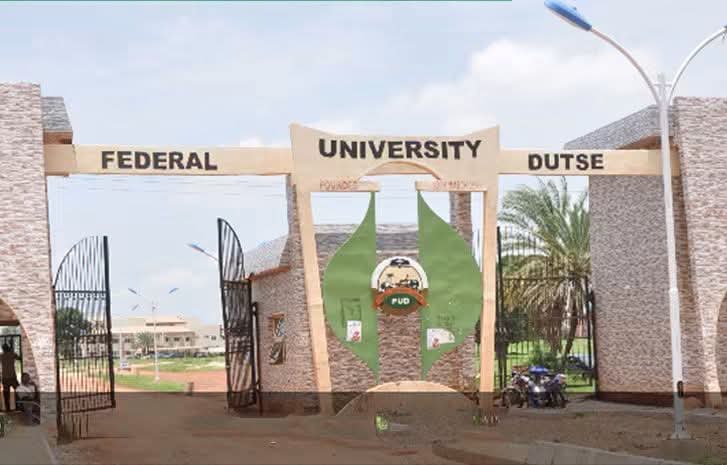
The National Universities Commission (NUC) has approved the commencement of the Faculty of Law at Federal University Dutse (FUD), alongside 30 new full-time academic programmes beginning from the 2026/2027 academic session. The approval was contained in a letter dated September 11, 2026, signed by the Director of Academic Planning, NUC, Abubakar M. Girei, and addressed to the Vice-Chancellor, Prof. Ahmad Mohammed Gumel.
The newly approved programmes cover diverse fields, including Artificial Intelligence, Data Science, Information Systems, Common and Islamic Law, Community Health, Medical Laboratory Science, Human Nutrition and Dietetics, Physiotherapy, Radiography, Optometry, Parasitology and Entomology, Environmental Standards, Water Sanitation and Hygiene, Applied Geology and Remote Sensing, as well as several education programmes.
At the postgraduate level, NUC also approved PGD, M.Sc. and Ph.D. programmes in Forestry and Wildlife, Accounting, Treasury and Finance, Banking and Finance, and Information Technology, alongside Master’s programmes in Banking and Finance and Accounting and Finance. The development expands FUD’s academic offerings across technology, health, science, education and management disciplines.
The Vice-Chancellor, Prof. Ahmad Mohammed Gumel, described the approval as a significant milestone in his administration’s effort to introduce new academic programmes. He said the programmes were designed to respond to emerging educational needs and equip students with relevant skills for industry and societal challenges. However, admission into the MBBS programme will not take place in the 2026/2027 academic session due to ongoing restructuring and adjustments in the College of Medicine and Health Sciences.