
Kano Emerges Top State in 2026 NECO Results
By Uzair Adam
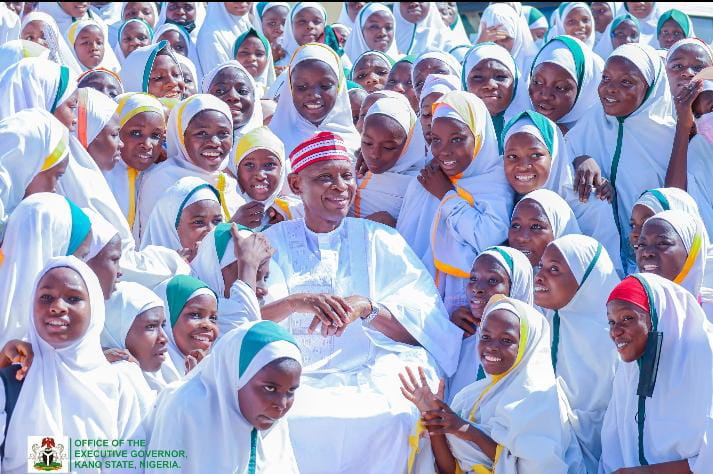
Kano State has emerged as the leading state in Nigeria based on the number of candidates who obtained at least five credits, including English Language and Mathematics, in the 2026 Senior School Certificate Examination (SSCE) conducted by the National Examinations Council (NECO).
The development was contained in a statement issued on Saturday by Sunusi Bature Dawakin Tofa, Director-General, Media and Publicity, Government House, Kano, on behalf of the Kano State Government.
According to the statement, Kano recorded 74,413 candidates who secured at least five credits, including English Language and Mathematics, ahead of Lagos State, which placed second with 72,496 candidates, while Oyo came third with 55,543 candidates.
The result marks the second consecutive year Kano has recorded the highest number of candidates meeting the five-credit benchmark, including English Language and Mathematics, after achieving a similar feat in the 2025 NECO examination.
Reacting to the development, Governor Abba Kabir Yusuf congratulated the students, teachers, parents and other stakeholders, describing the performance as an indication of the progress being recorded in the state’s education sector.
Governor Yusuf said the back-to-back performance demonstrated that the government’s sustained investment in education was producing measurable outcomes.
He assured residents that his administration would continue to prioritise education through increased funding, improved learning facilities, recruitment and training of teachers, scholarships and support for indigent students.
The governor said the state government spent more than N4.4 billion in 2026 to sponsor candidates for the Senior School Certificate Examination, particularly students from disadvantaged backgrounds.
According to him, the intervention was aimed at removing financial barriers that could prevent students from participating in the examinations and ensuring they sat for the examinations under improved conditions.
Yusuf said the latest NECO performance was part of the broader improvement being recorded by students in the state under his administration.
Education has continued to receive a significant share of Kano State’s budget under the current administration. In 2024, about 29.95 per cent of the state budget was allocated to the sector, while the allocation rose to N168.35 billion, representing 31 per cent, in the 2025 budget.
For 2026, the state allocated N405.35 billion to education out of a total budget of N1.478 trillion, representing about 30 per cent of the overall budget.
The governor said the government’s investment in education extends beyond examination sponsorship to include classroom renovation, recruitment of teachers, provision of learning materials and uniforms, scholarships and other interventions aimed at improving the quality of education.
The statement also highlighted several awards and recognitions received by Governor Yusuf for his administration’s education-related policies.
In 2024, Leadership Newspaper named him Governor of the Year for Education, while New Telegraph recognised him as its Education Development Governor of the Year. The Nigeria Union of Teachers also named him Teachers’ Friendly Governor of the Year in the same year.
In 2025, Blueprint Newspaper recognised Yusuf as Governor of the Year for Education at its national conference in Abuja, while ThisNigeria honoured him as its Courageous Governor of the Year.
The statement further said the administration received education-related recognition internationally in 2026, including an international literacy and learning award and an education spending award attributed to Universal Learning Solution and City University, Paris.
Other recognitions listed in the statement include the Vanguard Governor of the Year Award for Good Governance in 2024, the BusinessDay Governor of the Year Award in 2025 and the African Governor of the Year Award presented by African Leadership Magazine in Casablanca, Morocco.
Yusuf dedicated the latest NECO achievement to the students, teachers, parents and people of Kano State, assuring them that his administration would sustain its investment in the sector.
He said the ultimate objective was to build an education system capable of equipping young people in the state with the knowledge and skills needed for higher education, employment, innovation and leadership.
The governor also referenced the scale of the state’s education system, noting that Kano recorded more than five million schoolchildren in the latest annual school census.
El-Rufai’s Wife Dismisses Kperogi’s ‘Betrayal’ Claims Against Sanusi
By Uzair Adam
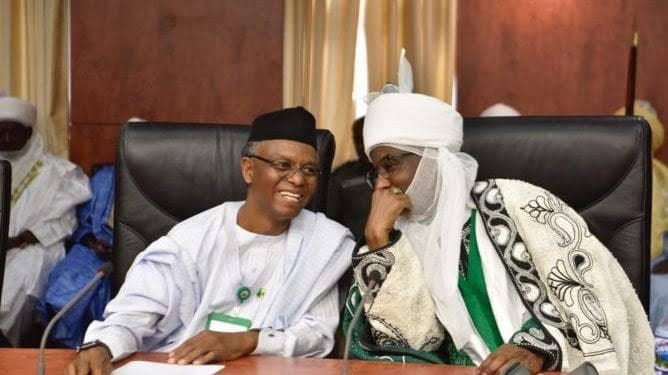
Asia Mohammad Ahmad, wife of former Kaduna State Governor Nasir El-Rufai, has dismissed claims that the Emir of Kano, Muhammadu Sanusi II, was the subject of her husband’s recent remarks about the silence of some of his friends and associates.
Ahmad made the clarification in a post on her verified Facebook page on Saturday while reacting to a column by Professor Farooq Kperogi titled, “Sanusi and the Betrayal of El-Rufai,” published in the Saturday Tribune.
She said Sanusi remained with the family and urged the public to stop linking the Emir to El-Rufai’s statement.
“I want to clarify that HH is with us and Mallam’s post has nothing to do with HRH SLS, so pls stop alluding to things that you don’t know!” she wrote.
Kperogi’s column examined whether Sanusi was among those El-Rufai referred to in a September 23 statement in which the former governor reflected on the silence of some friends, family members and associates whom he had previously supported.
El-Rufai did not mention any individual in the statement but said some people who had benefited from his support were now free to decide whether to speak out or remain silent over his current circumstances.
He also said the experience could make him reconsider some relationships, while stressing that he held no resentment towards those who chose not to support him.
Kperogi argued that Sanusi could be one of the people referred to, citing the longstanding relationship between the two men and the support El-Rufai offered Sanusi following his dethronement as Emir of Kano in 2020.
However, Ahmad has now rejected that interpretation, saying El-Rufai’s remarks had nothing to do with the Emir.
“I am glad to note that Kperogi mentioned that there may be things people don’t know,” she added.
Kperogi had acknowledged in his column that El-Rufai did not name anyone and that attempts to identify the people referred to in the statement remained speculative.
He nevertheless pointed to the history between El-Rufai and Sanusi, particularly the events that followed Sanusi’s removal from the Kano throne in March 2020.
Following Sanusi’s dethronement, El-Rufai appointed him Vice Chairman of the Kaduna State Investment Promotion Agency board and later Chancellor of Kaduna State University.
El-Rufai also visited Sanusi in Awe, Nasarawa State, where the former Emir had been taken after his removal from the throne.
Kperogi cited those events while questioning whether Sanusi could have been among the people El-Rufai had in mind when he spoke about individuals he had previously supported during difficult periods.
The professor, however, cautioned against reaching a definitive conclusion, noting that there could have been private conversations or interventions that were not known to the public.
He also argued that Sanusi’s current position differs from El-Rufai’s circumstances in 2020, when the former governor wielded executive authority, while Sanusi, as a traditional ruler, does not exercise comparable political powers.
The clarification from Ahmad has now added a different account to the speculation surrounding El-Rufai’s statement, with the former governor’s wife insisting that Sanusi was not the person being referred to.
El-Rufai is currently in the custody of the Independent Corrupt Practices and Other Related Offences Commission (ICPC) in connection with investigations into his administration. He has denied wrongdoing.
His September 23 statement generated widespread discussion over the identity of the people he referred to, particularly after he said adversity had enabled him to see some relationships differently.
Neither El-Rufai’s original statement nor Ahmad’s latest clarification identifies who the former governor specifically had in mind.
Ahmad’s intervention has, however, sought to end speculation linking Sanusi to the remarks, insisting that the Emir remains with the family and that Kperogi’s interpretation does not reflect the circumstances known to them.
Atiku Calls On Tinubu To Apologise, Quit Office Over Economic Hardship
By Sabiu Abdullahi
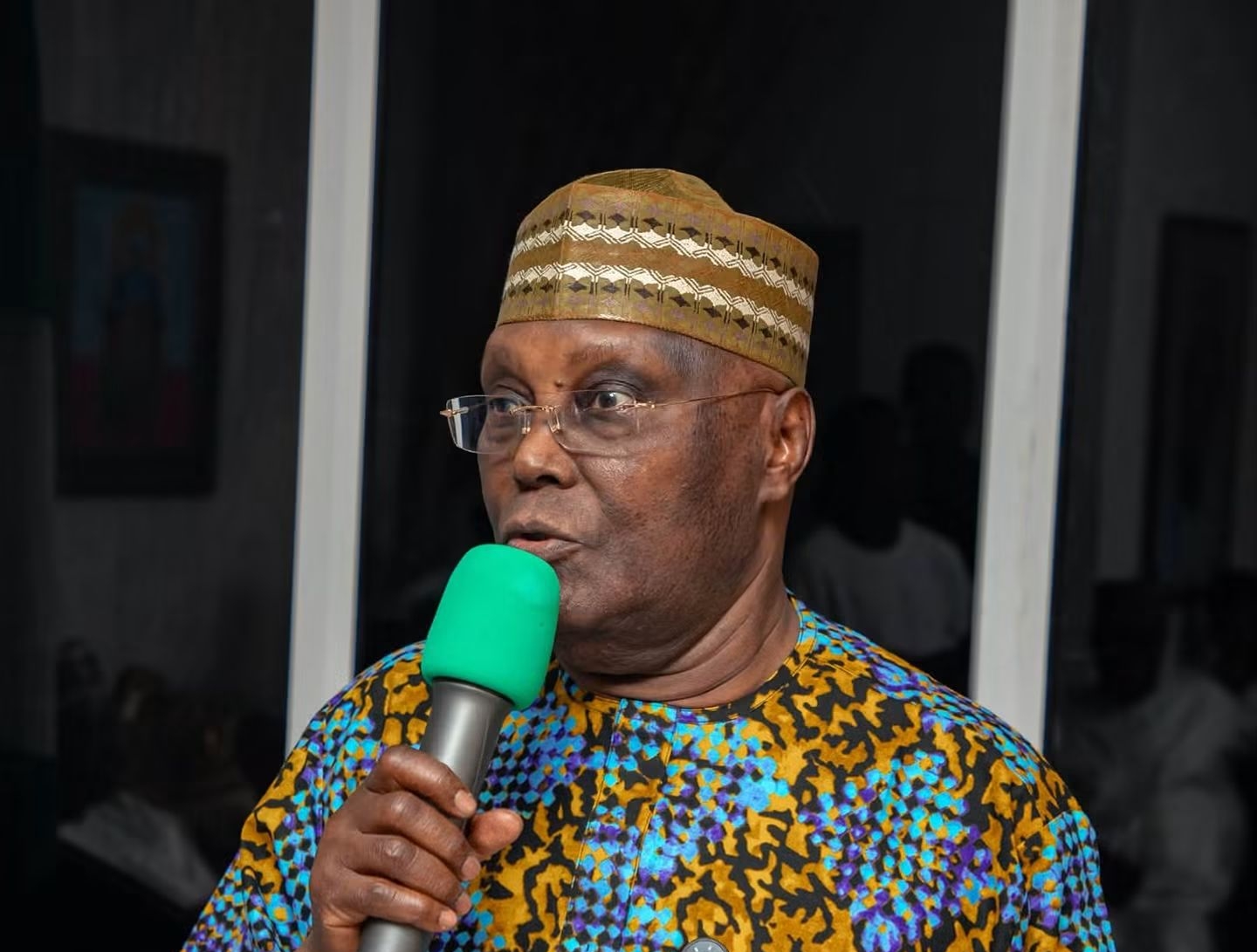
Former Vice-President Atiku Abubakar has criticised President Bola Tinubu’s administration over the state of the Nigerian economy, calling on the President to apologise to Nigerians and leave office.
Atiku made the demand in a statement issued by Phrank Shaibu, Director of Strategic Communications of the ADC Presidential Campaign Council.
The former vice-president described the Tinubu administration as one of the most ruinous governments Nigeria has experienced and accused it of making life increasingly difficult for citizens while continuing to accumulate debt.
“A government that says more money is coming in must explain why it keeps borrowing and why the people paying for its policies cannot see the promised gains.”
He cited figures from the Debt Management Office, which put Nigeria’s public debt at ₦166.79 trillion as of June 30, 2026, compared with ₦49.85 trillion in March 2023.
“After more than three years of demanded sacrifice, Nigerians are left with higher food, transport and energy bills, strained public services and a recorded public debt of ₦166.79 trillion as at 30 June 2026, according to the Debt Management Office.
“Nigeria’s recorded public debt stood at ₦49.85 trillion in March 2023 and ₦166.79 trillion by June 2026.
“I expect President Tinubu to put the full account before Nigerians. He should identify the old debt newly recorded, the foreign debt whose naira value rose with the exchange rate, and every new loan contracted since he assumed office. He should show what has been repaid and what remains outstanding. Accounting explanations must not become a hiding place for fresh borrowing,” he said.
Atiku also criticised what he described as a gap between official claims of economic recovery and the experience of ordinary Nigerians.
“The Tinubu economy is producing two Nigerias: one in which ordinary citizens are suffocating under rising food, fuel, transport, electricity, education and housing costs, and another in which those with wealth, access and privilege are far better positioned to protect and multiply their fortunes.”
“That is the fundamental contradiction at the heart of these reforms. Government celebrates macroeconomic indicators while millions of citizens struggle to translate those statistics into food on the table.
“An economy cannot be declared successful simply because government revenue is rising, reserves are improving or official statistics look better while the purchasing power of ordinary citizens is being destroyed. The true test of economic policy is whether Nigerians can afford food, transportation, housing, education, healthcare and electricity,” he said.
He further pointed to rising fuel prices, saying petrol had sold for about ₦1,400 per litre in Lagos and Abuja and as high as ₦1,500 in parts of northern Nigeria in September. He also said diesel prices had exceeded ₦2,000 per litre.
“The philosophy of an economic reform cannot be that the poor surrender more and more while those already insulated from hardship become increasingly comfortable. Nigerians were promised that today’s pain would produce tomorrow’s gain. After more than three years, they are entitled to ask: gain for whom?
“A mother cannot feed her children with a government revenue announcement. A worker cannot pay transport fare with a speech about reform. Nigerians do not eat GDP figures, FAAC allocations or PowerPoint presentations. The numbers must eventually arrive at the dinner table,” he said.
Atiku also raised concerns over the amount of government revenue being used to service Nigeria’s debt.
“BudgIT reported that by the third quarter of 2025, debt service had reached ₦12.52 trillion against ₦18.63 trillion in revenue — 67.2 per cent. In practical terms, roughly ₦67 out of every ₦100 of the revenue reflected in those figures went to debt service.”
“Money committed to debt service is money unavailable for competing public needs. Nigerians were told to endure the pain because there would be gains. Where are those gains?”
He referred to remarks made by Tinubu at the Africa Forward Summit in Nairobi in May, where the President reportedly said Nigeria expected to spend about $11.6 billion on debt servicing in 2026.
“If President Tinubu understands abroad what debt payments are taking away from Nigeria, then he must explain at home why the borrowing bill continues to grow.
“History warns us where this road can lead. Fiscal distress does not begin on the day a bailout is announced. It develops when borrowing becomes routine, debt service consumes an ever-larger share of available revenue and governments repeatedly borrow to finance gaps that previous borrowing failed to close.
“Nigerians should not have to wait for creditors to tell them what their household budgets already reveal.”
Atiku also called for greater disclosure of the country’s external debt-service obligations for the second quarter of 2026.
He said the President and the All Progressives Congress (APC) should apologise to Nigerians over the hardship he attributed to the administration’s economic policies since 2023.
“President Tinubu should apologise to the families who can no longer afford decent meals; to workers whose wages disappear on transportation before the month has properly begun; to parents struggling to pay school fees; to pensioners whose incomes have been destroyed by inflation; and to businesses fighting daily to keep their doors open.
“Nigerians were asked to sacrifice. Fuel subsidy was removed. The naira was allowed to depreciate sharply. Electricity and transportation costs rose. Government revenues increased, yet borrowing continued. After all of this, the Nigerian people are entitled to ask one simple question: what exactly did our sacrifice buy?
“An apology is not too much to ask from a government under whose watch millions of Nigerians have been pushed into deeper economic distress. Leadership must have the humility to admit when policies have inflicted enormous pain on the people they were supposed to serve.
“Good economics must ultimately improve human life. If government revenue rises while families become poorer; if debt rises while public services remain inadequate; if citizens surrender subsidies, pay higher prices and endure declining purchasing power while government continues borrowing, then Nigerians have every right to demand a full account of where their sacrifice has gone.
“President Tinubu and the APC owe Nigerians that account and they owe them an apology. Apologise to Nigerians. Account for the money collected. Reconcile the borrowing. Explain the charges. Show the people what their sacrifice bought. Then make a solemn pledge to step away from governance rather than ask Nigerians for another mandate to endure this suffering.
“The real test of this economy is not whether the numbers look good in government presentations. It is whether ordinary Nigerians can afford to live.
“Reconcile the borrowing. Explain the charges. Show Nigerians what their sacrifice bought. Apologise for the hardship. And leave governance to those prepared to make life affordable again.”
Five Miners Killed, Two Injured In Plateau Gunmen Attack
By Sabiu Abdullahi
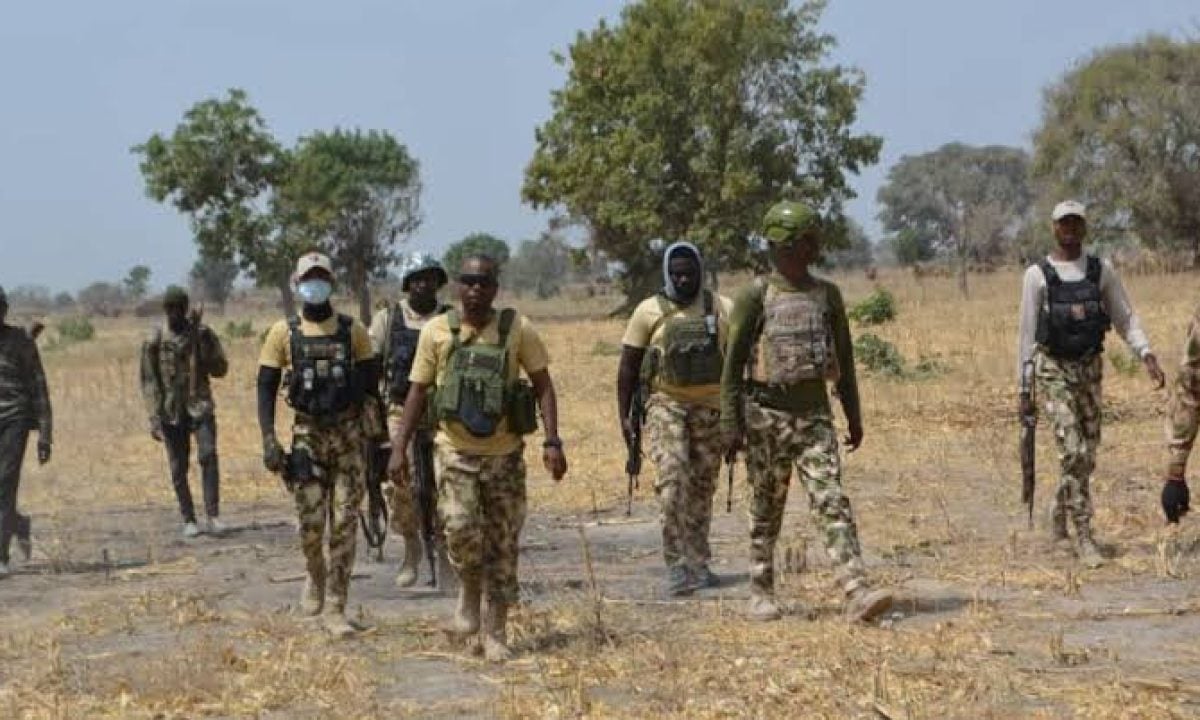
At least five miners have been killed and two others injured after gunmen attacked a mining site in Marit village, Barkin Ladi Local Government Area of Plateau State.
The incident occurred on Saturday amid heightened tension in parts of the state.
The spokesman of the Berom Youth Moulders-Association (BYM), Rwang Tengwong, confirmed the attack and said it occurred at about 1pm.
He said, “Five persons were killed while two others sustained injuries in the attack. It is a very sad and painful development. Our people are once again mourning the loss of lives to violence.
“We condemn this attack and call on the security agencies to urgently take steps to protect our communities and prevent further attacks.”
A member of the community, Simon Mundat, also confirmed the incident and described the loss of lives as devastating.
Mundat said, “We are deeply saddened by this attack. Five people have been killed and two others injured.
“This is a very painful situation for the community. We appeal to the authorities to strengthen security in the area so that our people can go about their legitimate activities without fear.”
Attempts to obtain comments from the spokespersons of Operation Enduring Peace and the Plateau State Police Command, Captain Polycarp Oteh and SP Alabo Alfred, were unsuccessful as of press time.
The attack came days after the Plateau State Government imposed a dusk-to-dawn curfew in three local government areas, including Barkin Ladi, following a series of attacks and killings.
The state government, through the Commissioner for Information and Communication, Joyce Ramnap, had on Friday condemned the continued attacks in affected communities and urged residents to remain calm and law-abiding.
Meanwhile, security operatives, with support from local hunters, reportedly repelled an attack by suspected terrorists on Latok community in Qua’an-Pan Local Government Area.
A resident, Danat Noel, said security personnel and local hunters responded to the attack and engaged the assailants, forcing them to retreat from the community.
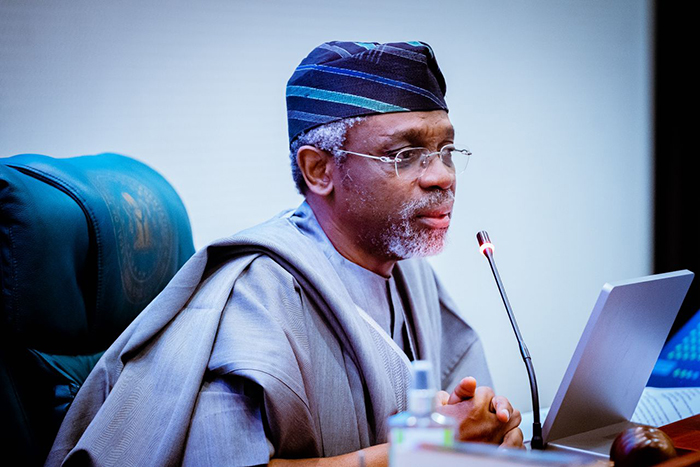
Gbajabiamila: I Remained Loyal, Never Betrayed Tinubu’s Trust
By Sabiu Abdullahi
Chief of Staff to President Bola Tinubu, Femi Gbajabiamila, has denied allegations that he betrayed the confidence placed in him by the President, saying investigations into the accusations against him have been made public.
Gbajabiamila spoke on Saturday at the 2026 Gbajabiamila Mega Empowerment Programme held at the National Stadium in Surulere, Lagos.
The allegations against the former Speaker of the House of Representatives were linked to a probe into the activities of the Presidential Foreign Intervention Promotion Council (PFIPC), a body described in the report as fictitious.
Gbajabiamila said investigations, including an inquiry conducted by the House of Representatives, had cleared him of wrongdoing.
According to him, the investigations were allowed to run their course despite calls from some quarters for him to be condemned before the process was completed.
He said, “The past few months have tested me in ways I never expected. Stories were written, strange accusations were made, lies were told, and my integrity was questioned. Three years ago, the people of Surulere, the people of Lagos State, and those who love me in Nigeria, stood me in their prayers and spoke up for me when it mattered.
“I will never forget that. I thank you all. The investigative reports are in the public domain.
“Many people wanted me to rush to judgement and give a verdict before the investigation. They refused and insisted on due process. Let me also say, Mr. President knows his Chief of Staff very well. Having worked closely with me for many years, he was therefore supremely confident that I was not in any way involved in those nefarious things.”
Gbajabiamila said the controversy had not affected his commitment to his duties in the Presidency.
He also warned those he accused of orchestrating attacks against him that he would not be distracted from his responsibilities.
“Let me speak plainly and directly to all those behind the attacks. No amount of money, no amount of blackmail or lies, whether sponsored from within or outside, will detract me from my work and the work Mr. President has given me to do.
“And to anyone using my name to defame people or misrepresent me, know that the law will always catch up with you.”
The Chief of Staff also spoke about his relationship with Tinubu, saying his loyalty to the President had remained intact despite occasions when he might disagree with some political decisions.
“In politics, loyalty is the currency we spend the most. I have been with Mr. President for many years…I did not question his leadership and never betrayed his trust in me. I stayed loyal then and I remain loyal now. My commitment to his Renewed Hope agenda is unshaken,” he said.
Gbajabiamila said the empowerment programme was designed to support about 5,000 residents from communities across Surulere.
He listed cash assistance, vehicles, electric tricycles, buses, security patrol vehicles and an ambulance among the items provided under the programme.
The Lagos State Deputy Governor and APC governorship candidate, Obafemi Hamzat, commended Gbajabiamila for maintaining close ties with his constituents.
Hamzat also called for support for President Tinubu’s re-election, arguing that other candidates he described as politically unstable could not match the President’s political experience and capacity.
He said a politician who could not manage a political party would struggle to manage a complex country such as Nigeria, while describing Tinubu as a politician who had remained with his party and helped build it from its foundation into what he called the largest political party in Africa.
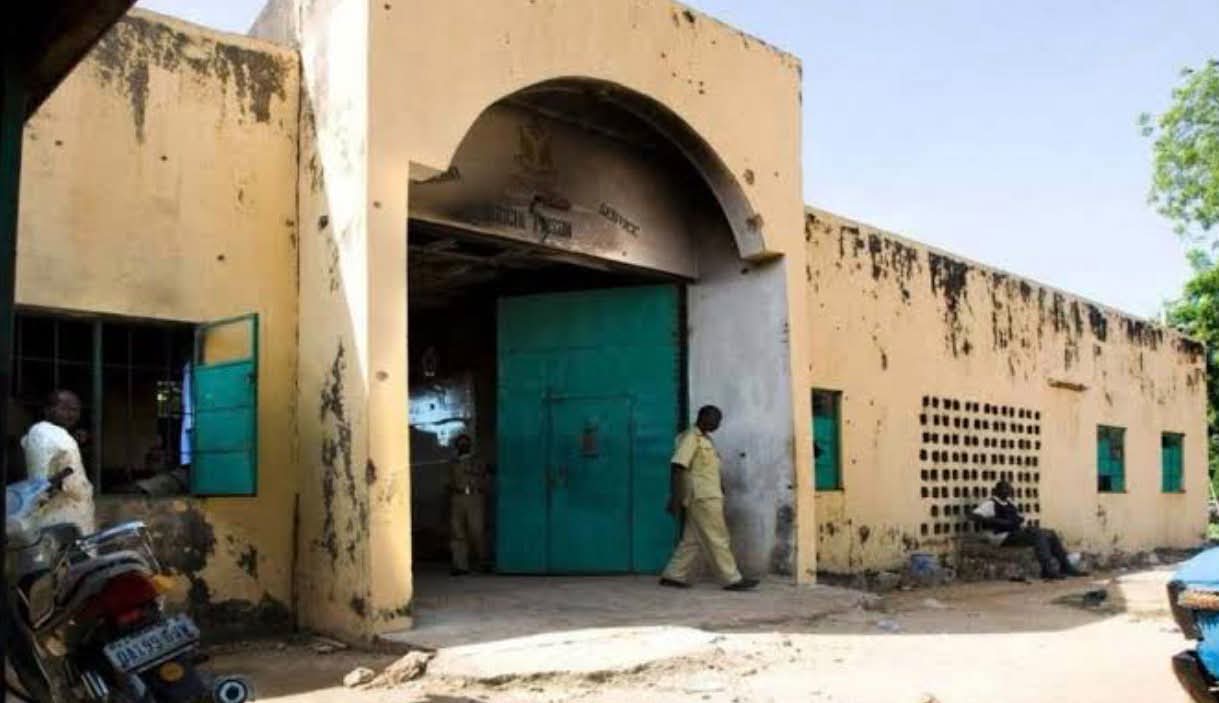
At Least Six Inmates Die in Suspected Cholera Outbreak at Kano Prison
By Hadiza Abdulkadir
At least six inmates have died within a week following a suspected cholera outbreak at the 115-year-old Kurmawa Maximum Prison in Kano, with Amnesty International Nigeria calling on the authorities to declare an emergency and take immediate action to prevent further deaths.
The rights organisation said a number of inmates are currently receiving treatment as the suspected disease continues to spread within the prison. It warned that the actual number of deaths could be higher.
Amnesty particularly raised concern over the condition of critically ill inmates and called for their immediate transfer to hospitals for appropriate medical treatment.
The organisation also expressed concern about the large number of awaiting-trial inmates held at the facility, noting that some prisoners can spend years behind bars without being convicted of a crime.
According to Amnesty, overcrowding, poor sanitation, inadequate food and limited access to healthcare remain serious problems in Nigeria’s correctional facilities.
It warned that failure by the authorities to respond urgently to the situation at Kurmawa Prison could result in additional deaths and potentially amount to arbitrary deprivation of life, a serious human rights violation under international law.
Amnesty called for urgent measures to contain the suspected outbreak and improve conditions in Nigerian prisons, stressing the need for the country to ensure that the treatment of inmates complies with human rights obligations and international standards.
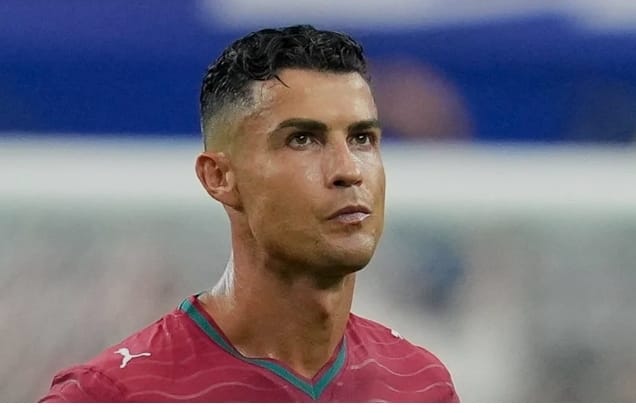
Ronaldo Vows to Keep Inspiring Young Fans After Retirement
By Abdullahi Mukhtar Algasgaini
Cristiano Ronaldo has spoken about how young people view him and the influence he believes he has on their lives, saying he understands why many children and youths love him.
Ronaldo said he believes young people see him as a role model, adding that this is part of what motivates him to continue being an example to those who look up to him.
“I know why young children love Cristiano. They see me as a role model, and I will continue to do that,” Ronaldo said.
The Portugal star also made it clear that this is not something he plans to stop soon. According to him, even after he hangs up his football boots, he wants to remain someone young people can look to and learn from through his life and career.
“Even after I retire in 10 years,” said CR7.
Ronaldo has spent years as one of the world’s most prominent footballers, and over that time he has built a huge fan base, especially among children and young people who grew up watching him as a player to emulate.
Now, Ronaldo says his ambition is not limited to what he does on the pitch; he also wants to remain an example for a new generation, even when the day comes for him to say goodbye to football.
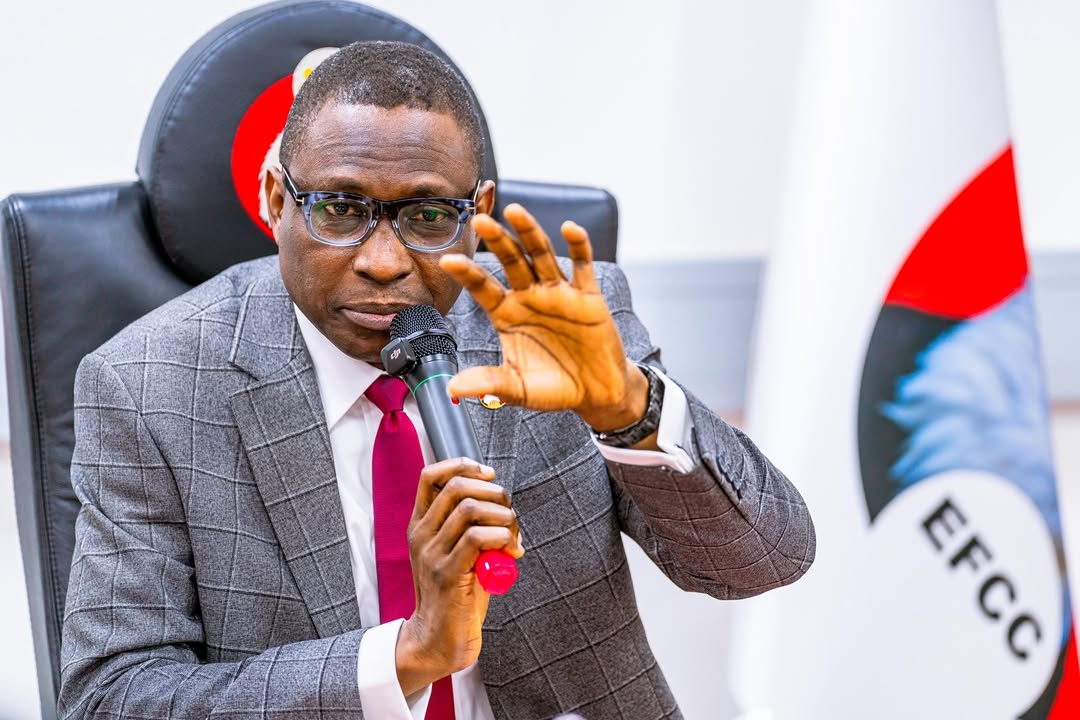
EFCC Chairman Raises Alarm Over Alleged Looting Of Public Funds
By Sabiu Abdullahi
The Chairman of the Economic and Financial Crimes Commission (EFCC), Ola Olukoyede, has raised concerns over the scale of alleged corruption involving public officials in Nigeria.
Olukoyede spoke in Abuja on Thursday at an event organised to mark the 80th birthday of former Attorney-General of the Federation, Kanu Agabi.
According to the EFCC chairman, the commission receives more than 20,000 petitions concerning alleged public-sector corruption each year. He said some of the cases reveal disturbing levels of financial misconduct.
“I receive over 20,000 petitions in a year in respect to public corruption, all terrible. What is going on? Like every minute, public officers take money, and if you go through some of our case files you will weep.
“The way people take national resources and Nigerians are victims of these fraudulent activities. And we must come together for once in our lifetime and say no to the activities of some of our leaders,” Olukoyede said.
He alleged that some public officials enter government with less than N100,000 in their bank accounts but accumulate substantial wealth within a few years of assuming office.
Olukoyede said investigations by the commission had traced millions of dollars to some officials who allegedly had modest financial resources before taking public positions.
He also alleged that some officials acquire hundreds of houses while still serving in government.
The EFCC chairman said the alleged misuse of public resources was having serious consequences for the country and described corruption as a major threat to Nigeria’s development.
He called on public officials to account for their activities and decisions while in office.
Olukoyede further stressed the need for accountability and transparency across the public service, saying those entrusted with public resources must be prepared to explain how they handled them.
EFCC Returns N84m To Edo Businessman After Land Deal Dispute
By Sabiu Abdullahi
The Economic and Financial Crimes Commission (EFCC) has returned N84 million to an Edo State businessman, Ekhahon Abraham, after recovering the money from a woman accused of diverting the funds.
The EFCC’s Benin Zonal Directorate presented a draft for the recovered amount to Abraham, according to a statement issued by the commission.
The commission said its operatives recovered the money from Anita Eborome after an investigation into a petition filed by the businessman.
According to the EFCC, Abraham had paid Eborome N84 million for a parcel of land measuring 115ft by 135ft in a community in Edo State.
The businessman reportedly constructed a perimeter fence on the property after making the payment. However, the fence was later demolished by a man who claimed to be the rightful owner of the land.
The development prompted Abraham to seek a refund of his money from Eborome, but he reportedly failed to recover the funds.
The EFCC said its investigation later established that Abraham transferred the money to Eborome, who allegedly diverted it for personal use.
The commission quoted Abraham as saying:
“Abraham said after making payment, he erected a parameter fence on the land but it was pulled down by a man who claimed to the be rightful owner.
“Based on that incident, he sought for a refund of his money but met a brick wall as Eborome came evasive hence he was advised to petition the Commission.
“During investigation, it was discovered that Abraham transferred the money to Eborome but she diverted the money for her personal use.”
The draft was presented to Abraham by the acting Zonal Director of the EFCC, Deputy Commander Sa’ad Hanafi.
Hanafi said the commission would continue to carry out its responsibilities professionally and prevent fraudsters from benefiting from funds that do not belong to them.
The EFCC said the recovery followed its investigation into the complaint and the tracing of the funds transferred to Eborome.
Manchester City Face Possible Points Deduction, Relegation After 114 Charges Upheld
By Sabiu Abdullahi
Manchester City have reportedly been found guilty of 114 out of 115 alleged breaches of the Premier League’s financial regulations.
The verdict was reportedly reached by an independent panel after a lengthy hearing into the club’s financial affairs.
The charges relate to allegations that City failed to provide accurate financial information across nine seasons, from 2009-10 to 2017-18. The Premier League formally brought the case against the club in 2023 after a four-year investigation.
The independent hearing concluded in 2024, but the outcome was delayed for almost two years before reports of the verdict emerged.
Manchester City have consistently denied wrongdoing and are expected to appeal the findings. The club has also indicated that the Premier League process remains ongoing, with significant elements still to be completed.
No punishment has yet been announced. Possible sanctions under the Premier League rules include a points deduction, financial penalties and removal from the competition.
There has also been speculation about the possible effect of any points deduction on previous seasons. However, no decision has been made to strip Manchester City of any Premier League titles.
The reported findings cover alleged breaches involving financial reporting and other financial regulations. City’s position remains that it has not breached the rules and the club is expected to challenge the verdict through the available appeal process.
The case is one of the most significant financial disputes in Premier League history, with the final sanctions and outcome of any appeal still to be determined.